Periodic Table
 Call Kai
 Learn
Learn Practice Test
 Spaced Repetition
 Match
Match Flashcards
 Knowt Play
1/50

There's no tags or description
Looks like no tags are added yet.
Name | Mastery | Learn | Test | Matching | Spaced | Call with Kai | Chat |
|---|
No analytics yet
Send a link to your students to track their progress
51 Terms
Give an example of a transition metal and describe one of its uses and properties.
Describe one real world application of the reactivity series (e.g, in metal extraction or corrosion prevention.)
If you add a piece of zinc to a solution of copper sulphate, the zinc will replace the copper in the compound because zinc is more reactive than copper
Give an example of metal displacement reaction, and explain what happens
Magnesium displaces copper from a solution of copper sulfate
Why are all alkaline earth metals less reactive than alkali metals?
It takes more energy to remove two valence electrons from alkaline earth metals than one valence electron from alkali metals.
How does the melting point trend differ between metals and non-metals in the periodic table?
In general, metals have higher melting points than non-metals.
What happens during a metal displacement reaction between iron chloride and calcium.
calcium, being more reactive, will displace iron from its compound
Draw the electron dot diagram for a single atom of oxygen (0)
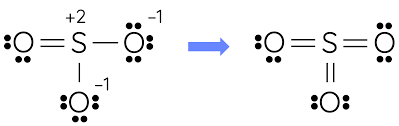
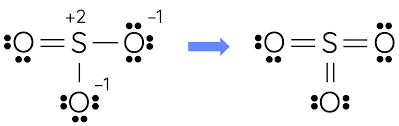
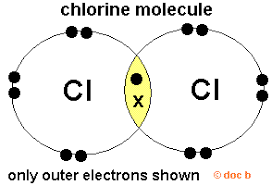
Draw the electron dot diagram for chlorine (CI) molecule showing covalent bonding.
What type of bonding occurs in H20, and how is it shown in an electron dot diagram.
polar covalent bonds
Explain how covalent bonds are formed between two non-metal atoms using HCI as an example
a hydrogen atom and a chlorine atom each contribute one electron to a shared pair, forming a single covalent bond.
List two properties each of substances with ionic and covalent bonds.
ionic= High melting and boiling points, conduct electricity when dissolved or melted. covalent=Low melting and boiling points, Poor conductors of electricity.
Why do ionic compounds typically have high melting points compared to covalent compounds
they are held together by strong electrostatic forces between ions
Why do ionic compounds typically have high melting points compared to covalent compounds
they are held together by strong electrostatic forces between ions
Describe how atomic radius changes across a period and down a group in the periodic table.
decreases across a period (left to right) and increases down a group (top to bottom)
What is metallic character, and how does it vary across the periodic table.
a measure of an element's ability to lose electrons and form positive ions,
Use the periodic table to compare the reactivity of potassium (K), magnesium (Mg), and zinc (Zn).
Potassium is the most reactive, followed by magnesium, and then zinc.
Name one alkali metal and describe a key property and use of it.
sodium (Na).
What is a metalloid? Give one example and a common use
An element that is not a metal but that has some properties of metals.
explain why noble gases are chemically
•Elements in the same group all have-
the same number of valence (outer shell) electrons.
Group 1=
the alkali metals

Group 2-
the alkaline earth metals
Group 16=
the chalcogens / the oxygen family
Group 17 = the halogens
the halogens
•Group 18 =
the Noble gases
Periods are the
horizontal rows
Groups, or families, are the
vertical arrangements of elements (1-18)
atomic number
is the number of protons in an atom.
Where are the mass number and atomic number on an element
Mass number on top, Atomic number on bottom.
The mass number
is the total number of protons and neutrons in the nucleus (nucleons).
Number of neutrons =

Mass number – Atomic Number
Number of electrons =
Atomic number
• isotopes=
Atoms of the same element with different numbers of neutrons.
transition metal block.

The block of elements in the middle of the table.
All metals are:
•Shiny when polished : e.g., silver jewelries, gold trophies
•Good conductors of heat, electricity, sound
•e.g., copper wires for electricity
•Ductile meaning, they can be made into wires
•Malleable meaning, they can be bent or shaped into sheets.
Transition metal examples-
•Some common transition metals are:
•Iron (Fe)
•Copper (Cu)
•Zinc (Zn)
Titanium (Ti)
Lanthanides and Actinides
Bottom of the periodic table.
Alkali elements all have how many valence electrons
1 valence electron.
Alkali metals become more or less reactive as you go down the group-
Alkali metals become more reactive as you go down the group.
Reactivity for non-metals goes
less reactive
Reactivity for metals
becomes more reactive
Metallic character
Pattern down a group increases, and pattern across a period decreases.
Valence electrons
Electrons in the outmost shell
Electrons all have _____ charge
negative
The inner shell can hold ___ electrons
2
The 2nd shell can hold _____ electrons
8
The 3rd shell can hold______ electrons
18
The 4th shell can hold ______ electrons
32
•When an atom loses or gains 1 (or more) e’s, it forms
an ion (a charged atom).
The total charge =
the number of protons (in the nucleus) – the number of electrons (in the shells)