Bones of the Axial Skeleton 2
 Call Kai
 Learn
Learn Practice Test
 Spaced Repetition
 Match
Match Flashcards
 Knowt Play
1/180

There's no tags or description
Looks like no tags are added yet.
Name | Mastery | Learn | Test | Matching | Spaced | Call with Kai | Chat |
|---|
No analytics yet
Send a link to your students to track their progress
181 Terms
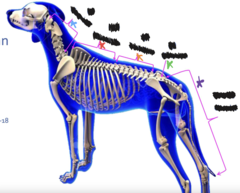
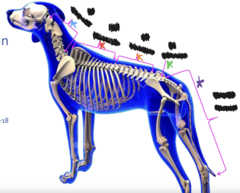
cervical
What is the region labeled with a blue star?
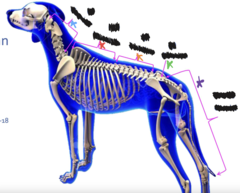
thoracic
What is the region labeled with a red star?
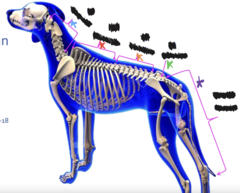
lumbar
What is the region labeled with an orange star?
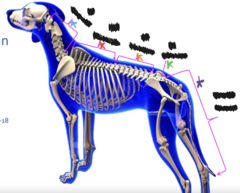
sacrum
What is the region labeled with a green star?
caudal
What is the region labeled with a purple star?
spinous process
What is labeled with a light blue circle?

cranial articular surface
What is labeled with a purple circle?
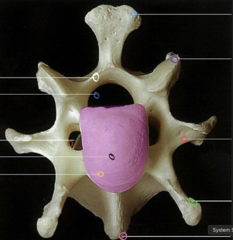
transverse process
What is labeled with a red circle?

ventral crest
What is labeled with a pink circle?

ventral body
What is labeled with a yellow circle?
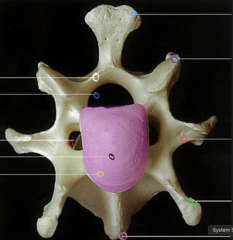
transverse foramen
What is labeled with a brown circle?
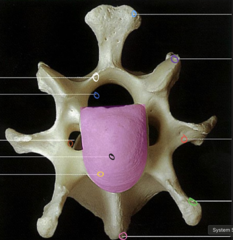
cranial extremity
What is labeled with a black circle?
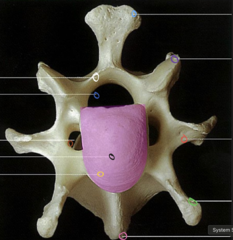
vertebral foramen
What is labeled with a dark blue circle?

vertebral arch
What is labeled with a white circle?

spinous process, transverse process, and ventral crest
What are the processes of the vertebrae?
lamina
What is the top line pointing to?
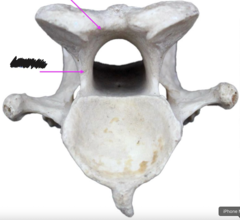
pedicle
What is the bottom line pointing to?

cranial articular surface
What is #1?

caudal articular surface
What is #2?

synovial joint formed by the junction of the pedicle and lamina
Describe with detail

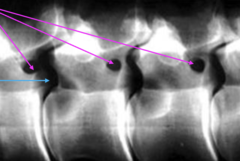
intervertebral foramina
What are the lines pointing to?
lateral vertebral foramina in a horse formed by enclosure of a vertebral notch
Describe with detail
have the morphological characteristics of both regions
What is significant about transitional vertebrae?
the transverse foramina together form the transverse canal for the vertebral VAN
What is shown?
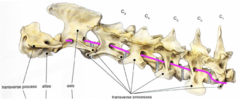
it does not have a transverse foramen
What is special about C7 in regards to the transverse canal for the vertebral VAN?
alanto-occipital joint
What is circled in blue?
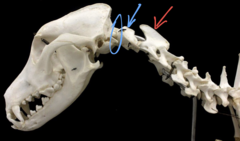
atlas
What is the blue arrow pointing at?
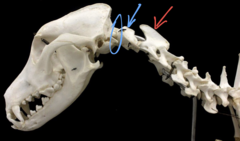
axis
What is the red arrow pointing at?

alar foramen
What is light blue circle?
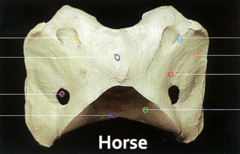
wing
What is orange circle?
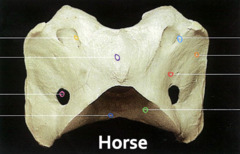
dorsal arch
What is red circle?

ventral arch
What is green circle?
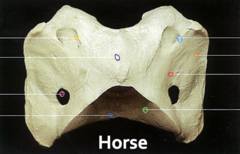
caudal articular fovea with the fovea for dens
What is dark blue circle?

transverse foramen
What is pink circle?
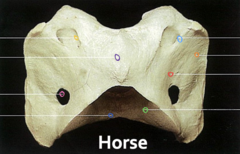
dorsal tubercle
What is purple circle?

lateral vertebral foramen
What is yellow circle?

lateral vertebral foramen
What is light blue circle?
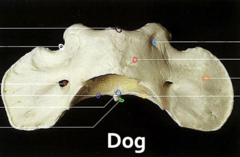
dorsal arch
What is red circle?
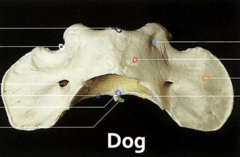
wing
What is orange circle?

ventral arch
What is yellow circle?

ventral tubercle
What is green circle?
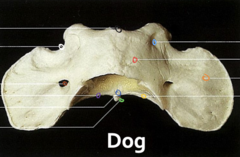
fovea for dens
What is dark blue circle?

caudal articular fovea
What is purple circle?
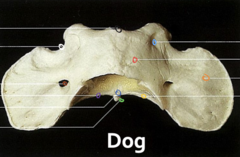
transverse foramen
What is brown circle?

alar notch
What is white circle?
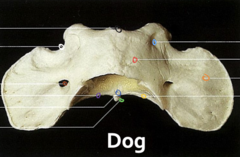
dorsal tubercle
What is black circle?
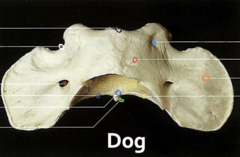
atlantooccipital joint
What is blue circle?

atlas
What is yellow circle?
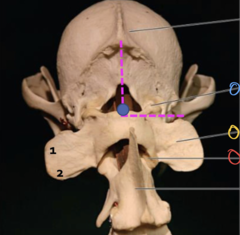
atlantoaxial joint
What is red circle?

axis
What is the line below the one labeled with a red circle?
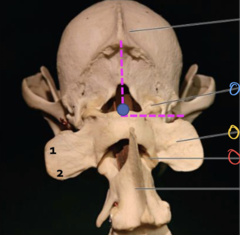
body
#1?
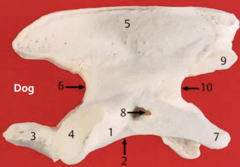
ventral crest
#2?
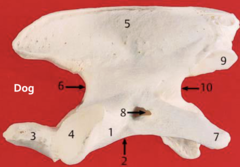
dens
3?
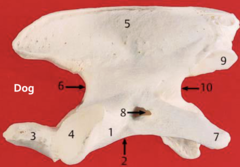
cranial articular process
4?
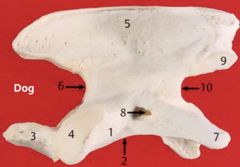
spinous process
5?
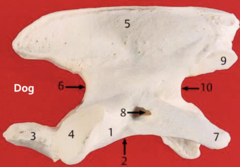
cranial vertebral notch
6?
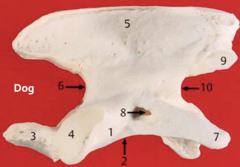
transverse process
7?

transverse foramen
8?
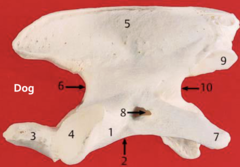
caudal articular process
9?
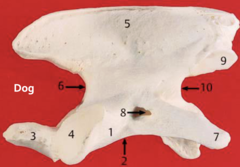
caudal vertebral notch
10?

it is the axis for the head to rotate
What is the significance of the dens of the axis?
body
1?

ventral crest
2?
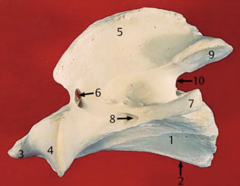
dens
3?
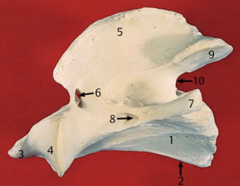
cranial articular process
4?
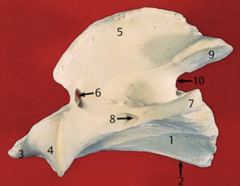
spinous process
5?

lateral vertebral foramen
6?
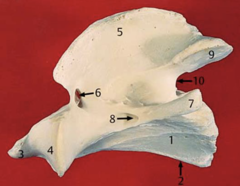
transverse process
7?
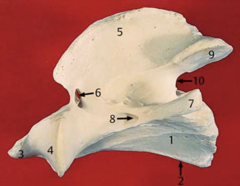
transverse foramen
8?
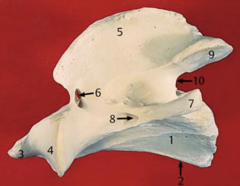
caudal articular process
9?

caudal vertebral notch
10?

body
1?
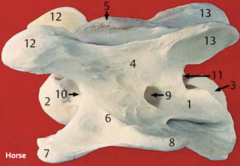
cranial extremity
2?

caudal extremity
3?

vertebral arch
4?

spinous process
5?
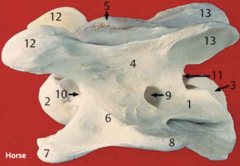
transverse process
6?
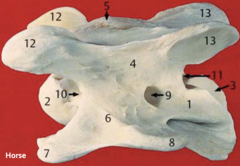
ventral tubercle
7?
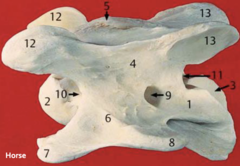
dorsal tubercle
8?

transverse foramen
9?
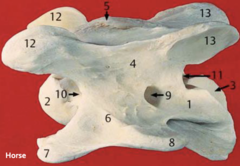
cranial vertebral notch
10?
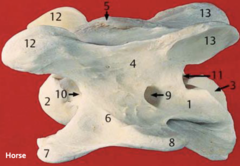
caudal vertebral notch
11?
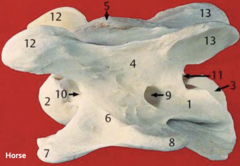
cranial articular process
12?

caudal articular process
13?

C6
CX?
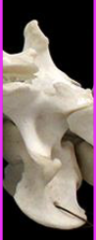
C7
CX?
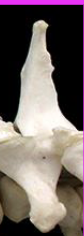
spinous process
1?
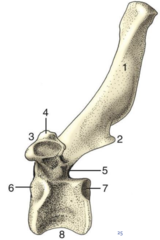
caudal articular process
2?
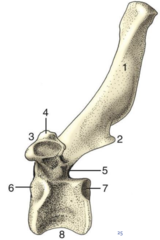
transverse process with costal fovea
3?
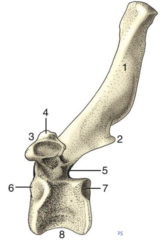
mammillary process
4?
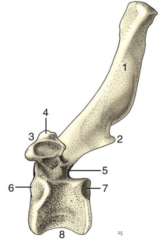
caudal vertebral notch
5?
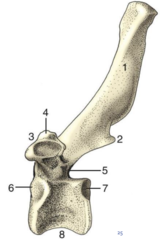
costal foveae
6 and 7?

body
8?

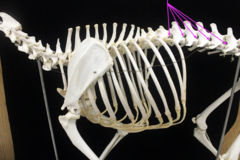
T15 and T16 of the horse and T11 of the dog are the anticinal vertabra, which is a radiographic landmark due to them being vertical
What is this and why is it significant?

kissing spines (spinal impingement)
In horses overcrowing and impingement of the DSPs --> back pain
Treated by anti-inflammatory drugs, acupuncture, or removing the spinous processes
What is this and why is it significant?

sternebrae
1-7?
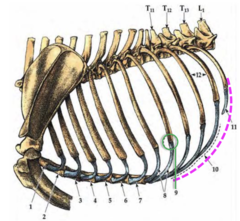
combined costal cartilages of ribs 8 & 9
8?

costochondral junction
9?

costal arch
10?
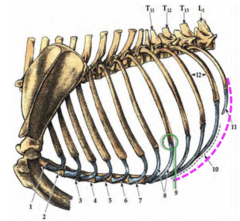
cartilage of the floating rib
11?
