Citric Acid Cycle
 Call Kai
 Learn
Learn Practice Test
 Spaced Repetition
 Match
Match Flashcards
 Knowt Play
1/36

Earn XP
Description and Tags
CHEM 111
Name | Mastery | Learn | Test | Matching | Spaced | Call with Kai | Chat |
|---|
No analytics yet
Send a link to your students to track their progress
37 Terms
Additional Energy Can Be Extracted
From Pyruvate after Glycolysis
Complete Oxidation of Glucose:
C 6 H 12 O 6 + 6 O2 6 CO 2 + 6 H 2 O
ΔGo' = -2,840 kJ/mol
Glycolysis: ΔG o’ = -85 kJ/mol
A lot of energy remains in Pyruvate.
Under aerobic conditions, this
energy is extracted through the
Citric Acid Cycle
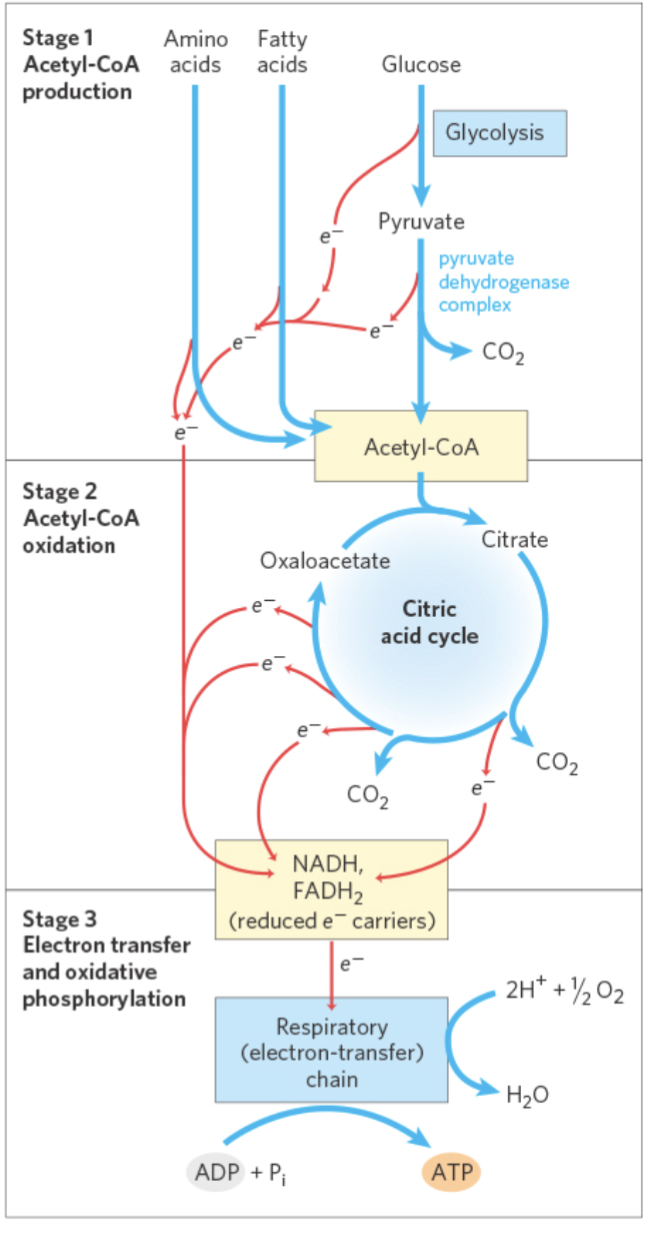
Stage 1: Acetyl-CoA Production
Oxidative decarboxylation of pyruvate: carboxyl group of pyruvate leaves as CO2
• Pyruvate diffuses into mitochondria through
large pores in outer membrane
• Then transported across inner membrane via
H+-coupled pyruvate specific symporter
• Mitochondrial Pyruvate Carrier (MPC)
• Pyruvate that enters mitochondrial matrix is
converted to Acetyl-CoA for further oxidation
or to serve as precursors for other
macromolecules
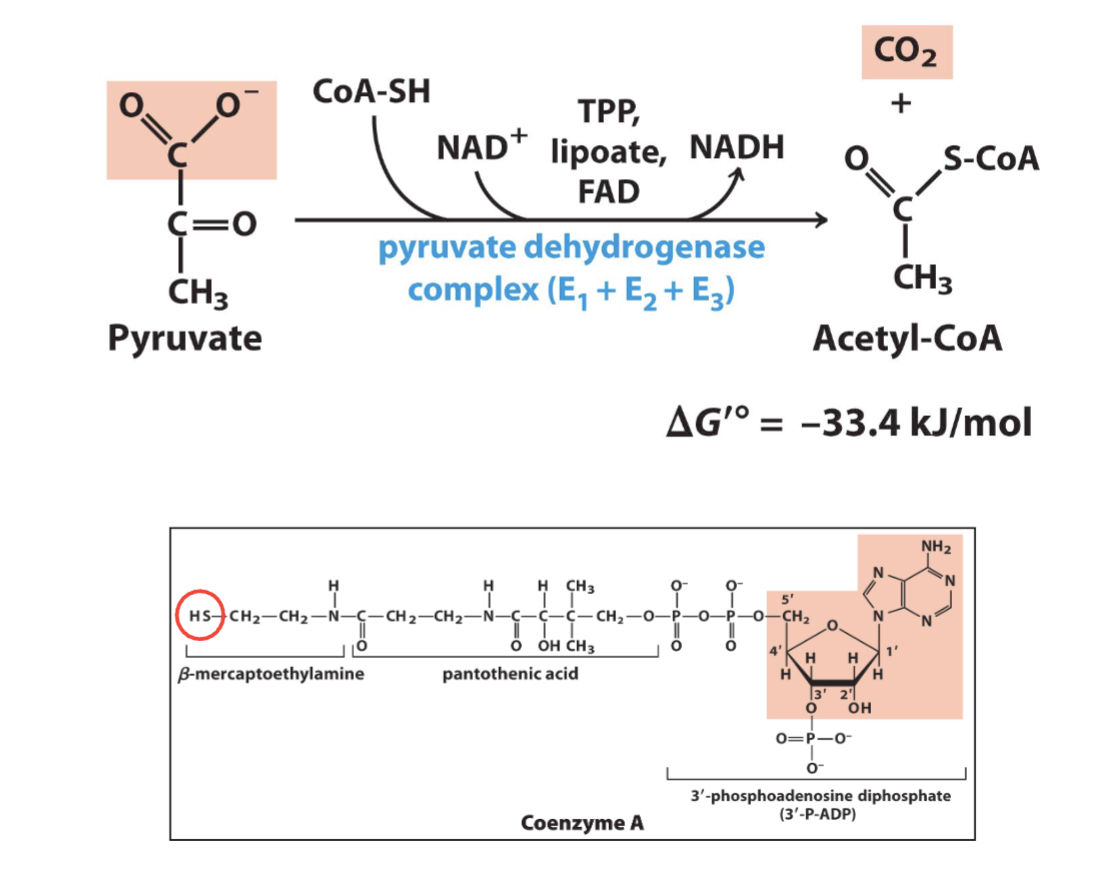
Overall PDH Reaction
Enzyme 1 – Pyruvate Dehydrogenase
• Step 1: Decarboxylation of pyruvate,
forming CO 2 and hydroxyethyl TPP.
• Step 2: Two electrons and the acetyl
group are transferred from TPP to the
oxidized form of the lipoyllysine in E2.
Enzyme 2 – Dihydrolipoyl Transacetylase
• Step 3: Formation of acetyl-CoA, and
reduction of lipoyllysine.
Enzyme 3 – Dihydrolipoyl Dehydrogenase
• Step 4: Reoxidation of lipoyllysine (FAD
accepts both electrons, H).
• Step 5: Regeneration of oxidized FAD
(NAD+ is reduced).
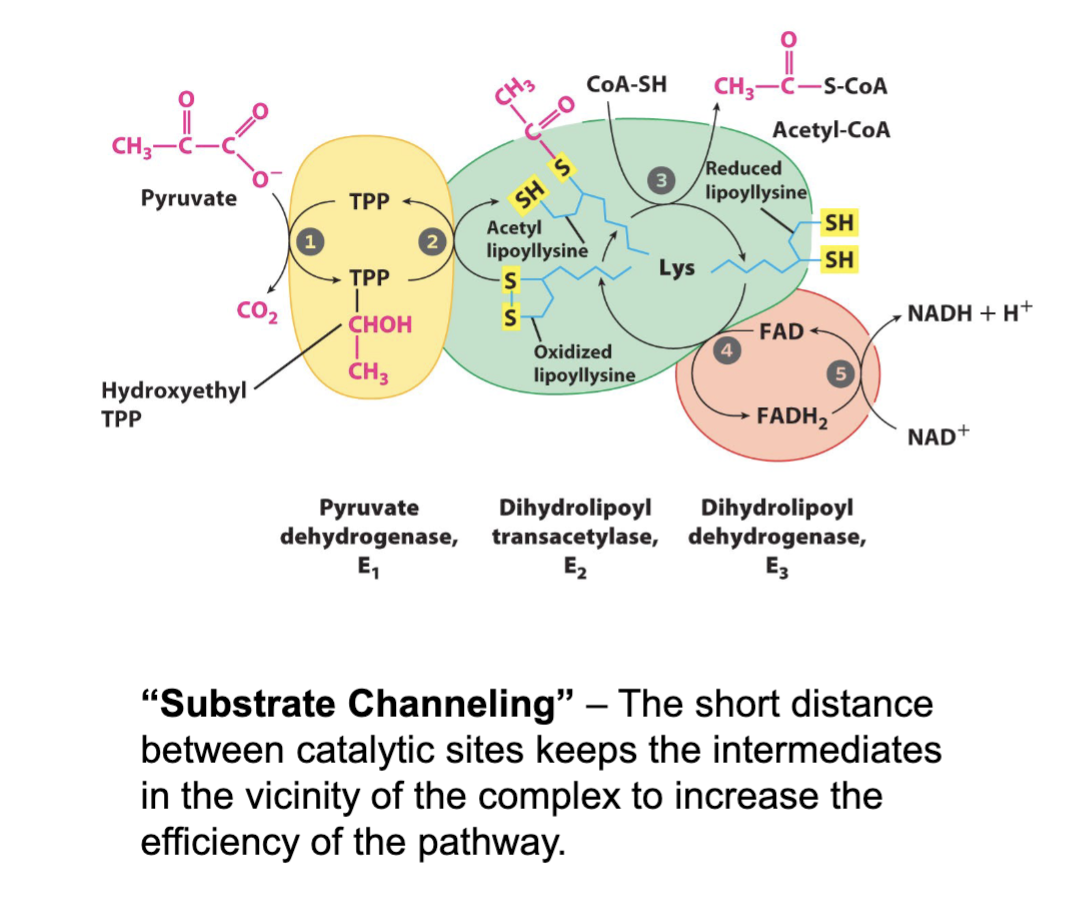
Enzyme 1 – Pyruvate Dehydrogenase
• Step 1: Decarboxylation of pyruvate,
forming CO 2 and hydroxyethyl TPP.
• Step 2: Two electrons and the acetyl
group are transferred from TPP to the
oxidized form of the lipoyllysine in E2
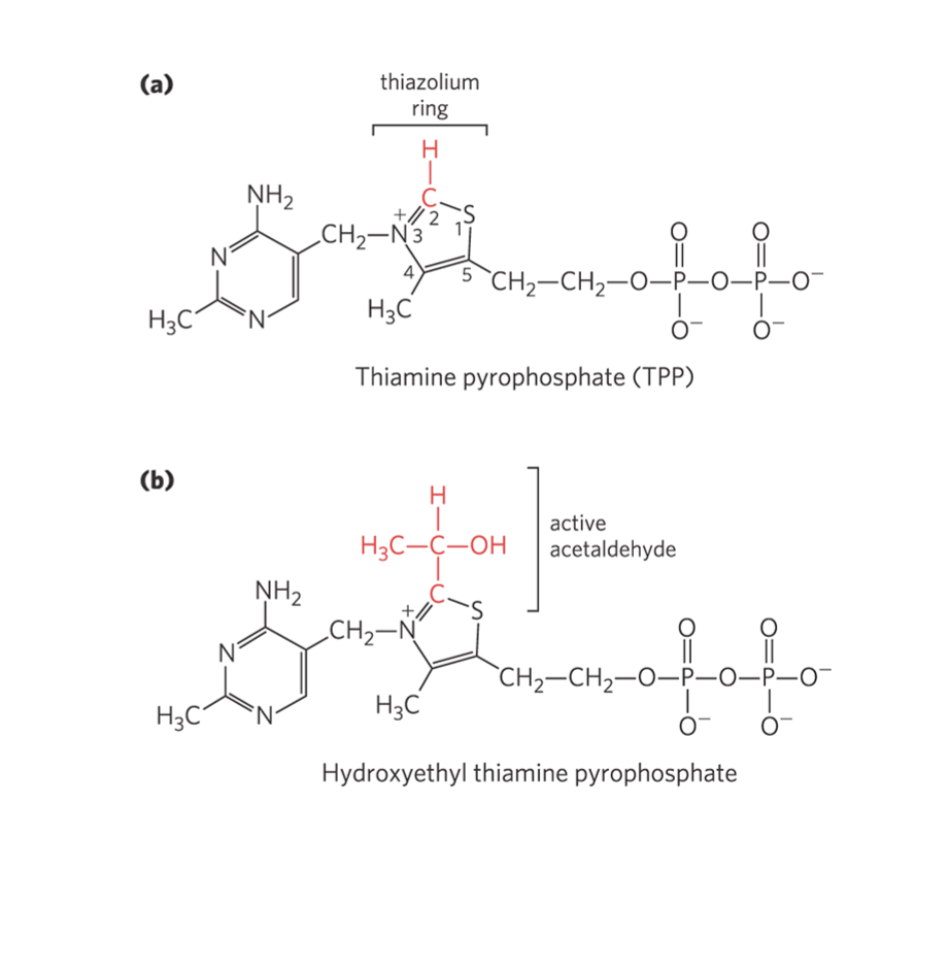
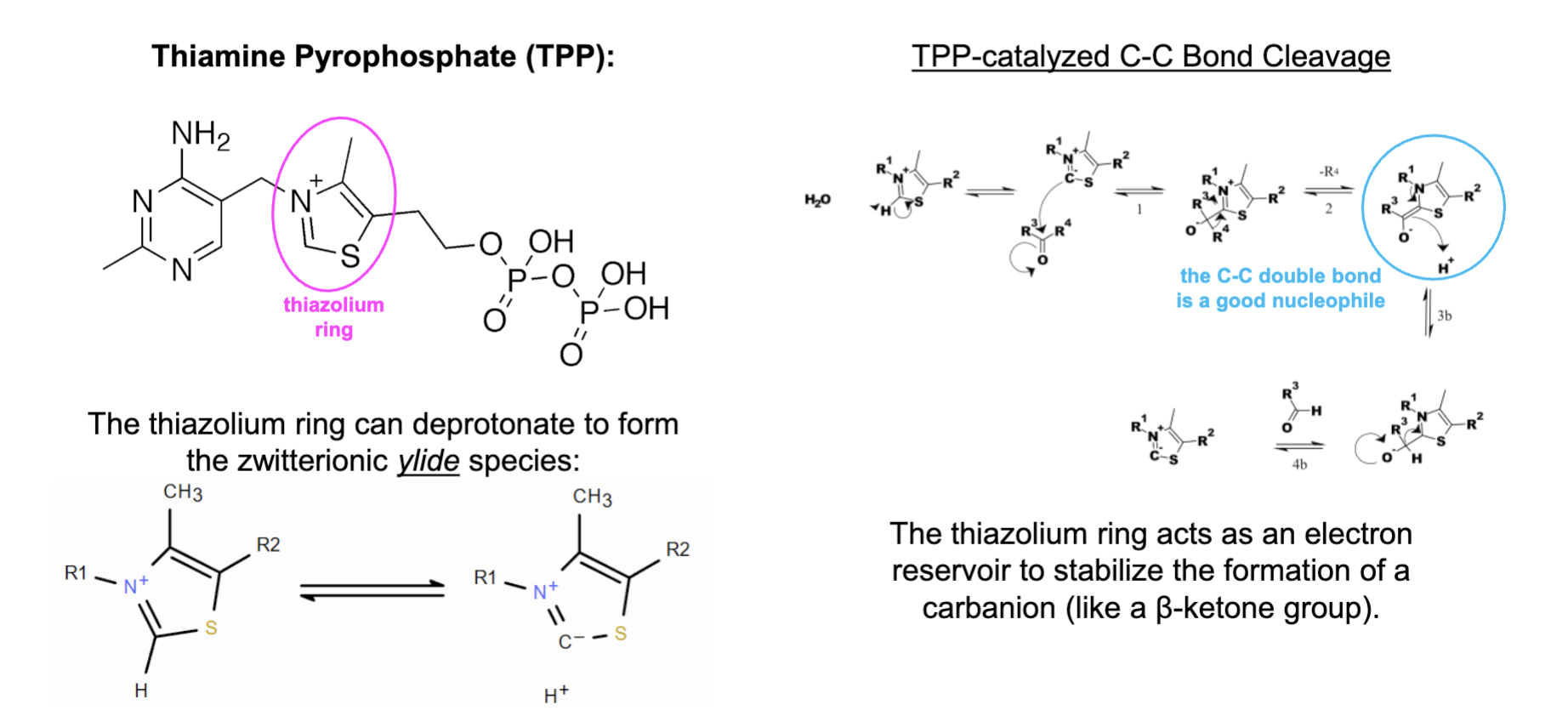
Thiamine Pyrophosphate (TPP) in C-C Bond Cleavage Reactions
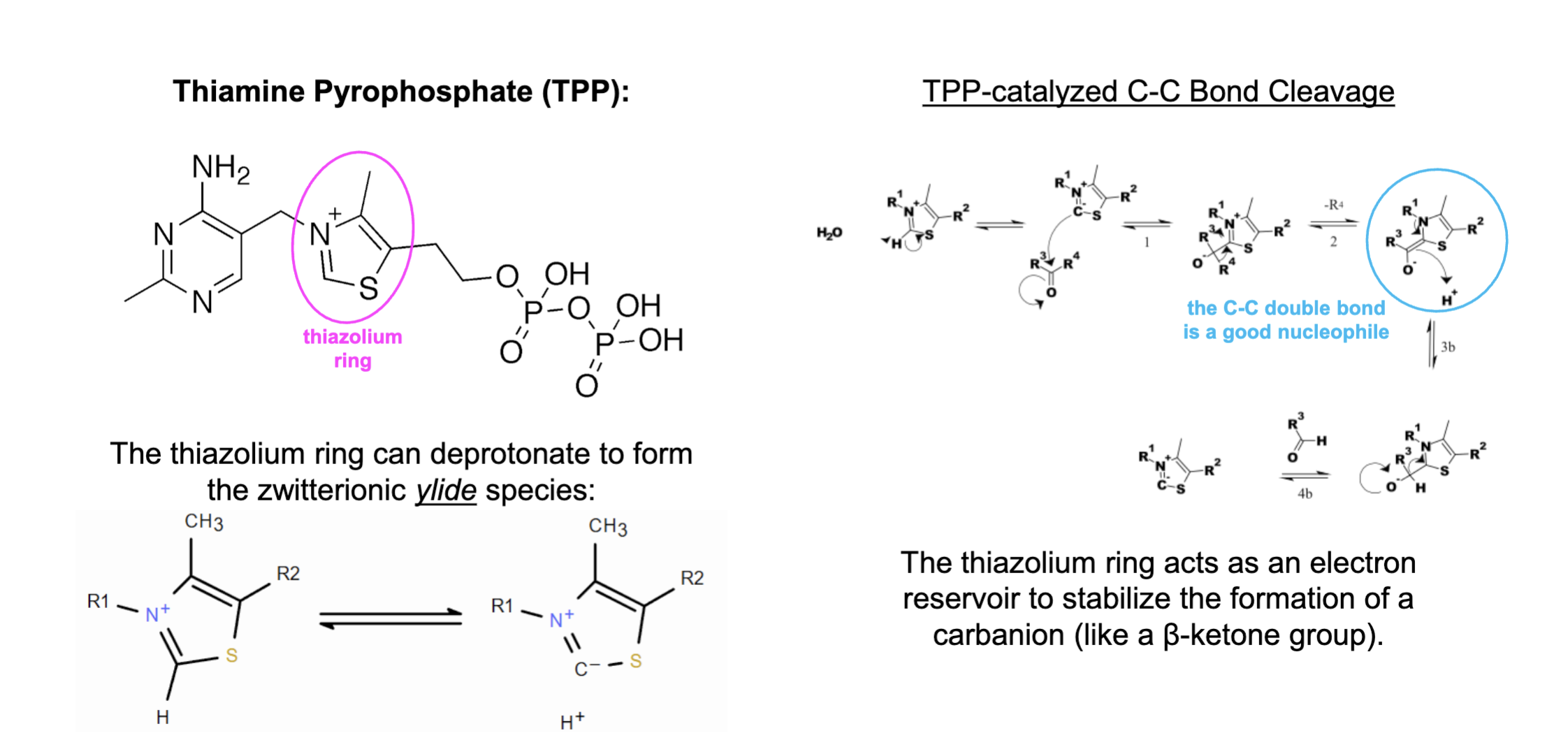
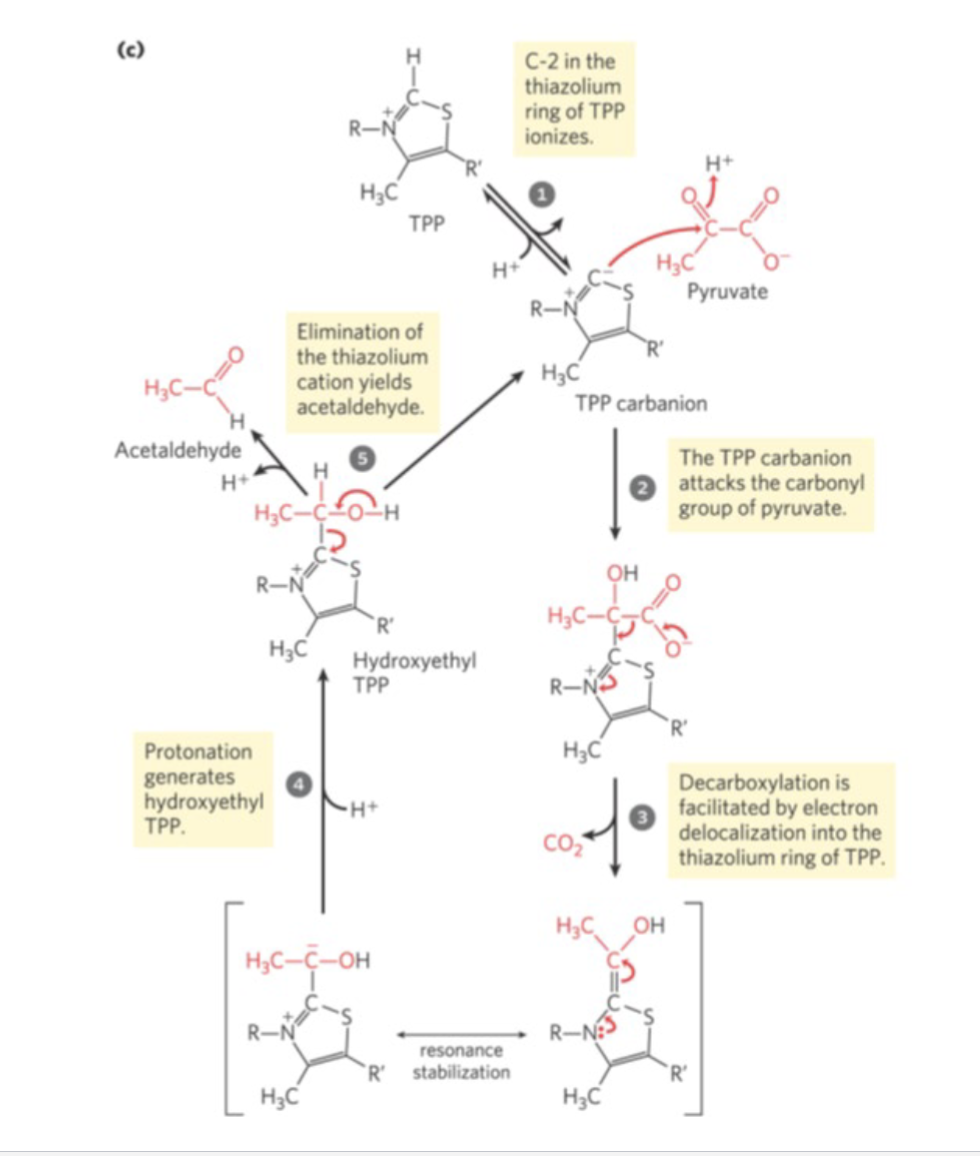
Enzyme 1 – Pyruvate Dehydrogenase
Step 1: Decarboxylation of pyruvate,
forming CO 2 and hydroxyethyl TPP.
• Step 2: Two electrons and the acetyl
group are transferred from TPP to the
oxidized form of the lipoyllysine in E2.
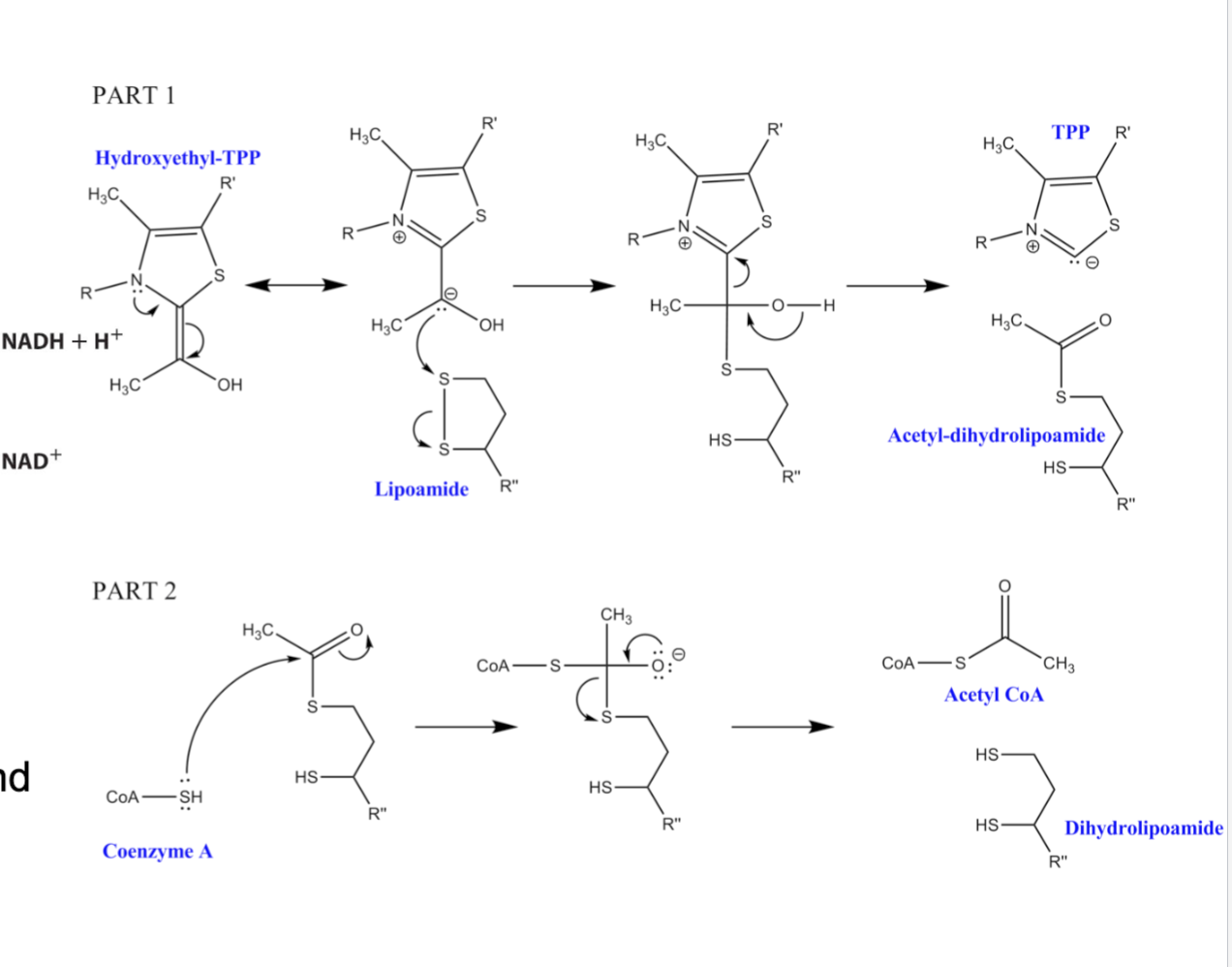
Enzyme 2 – Dihydrolipoyl Transacetylase
Step 3: Formation of acetyl-CoA, and
reduction of lipoyllysine.
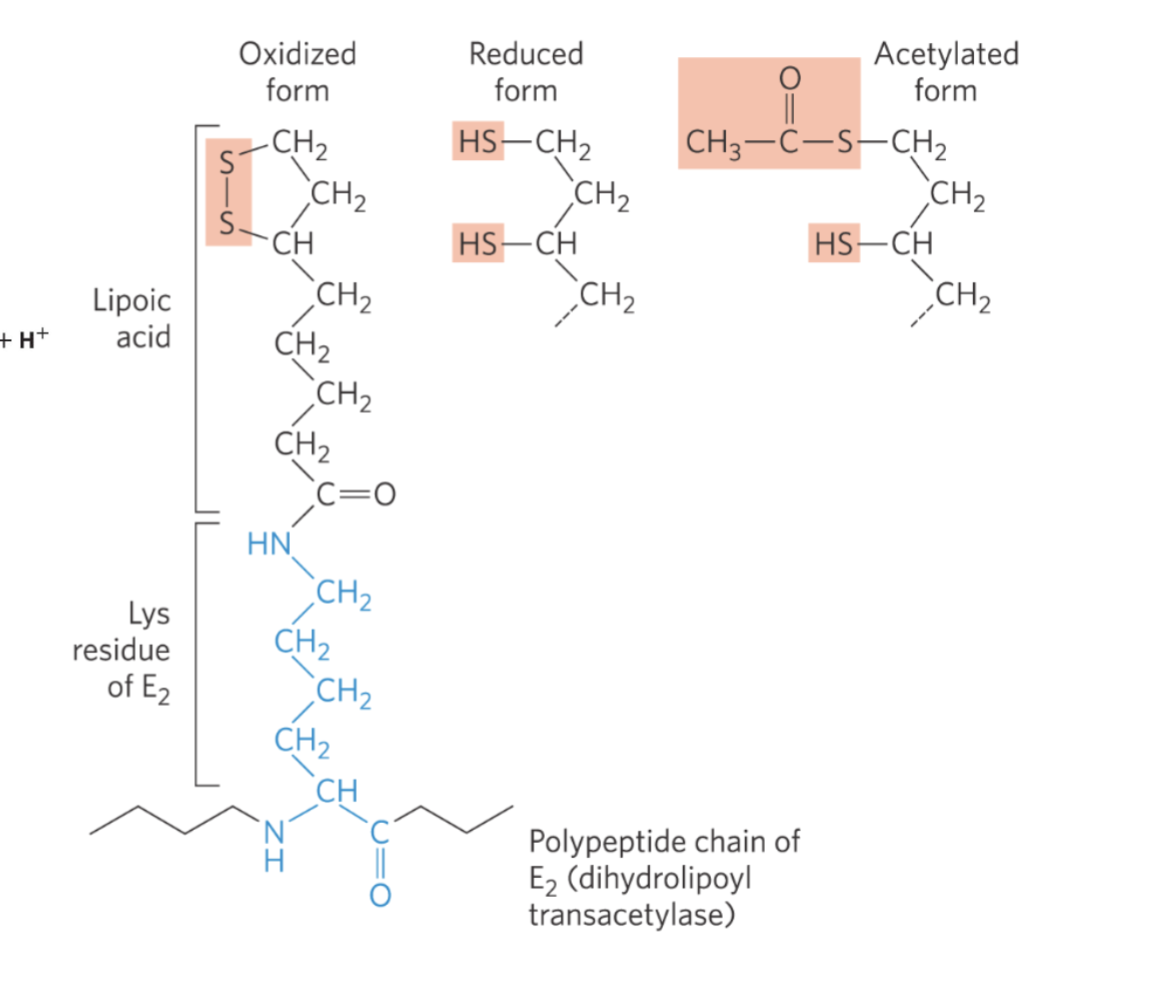
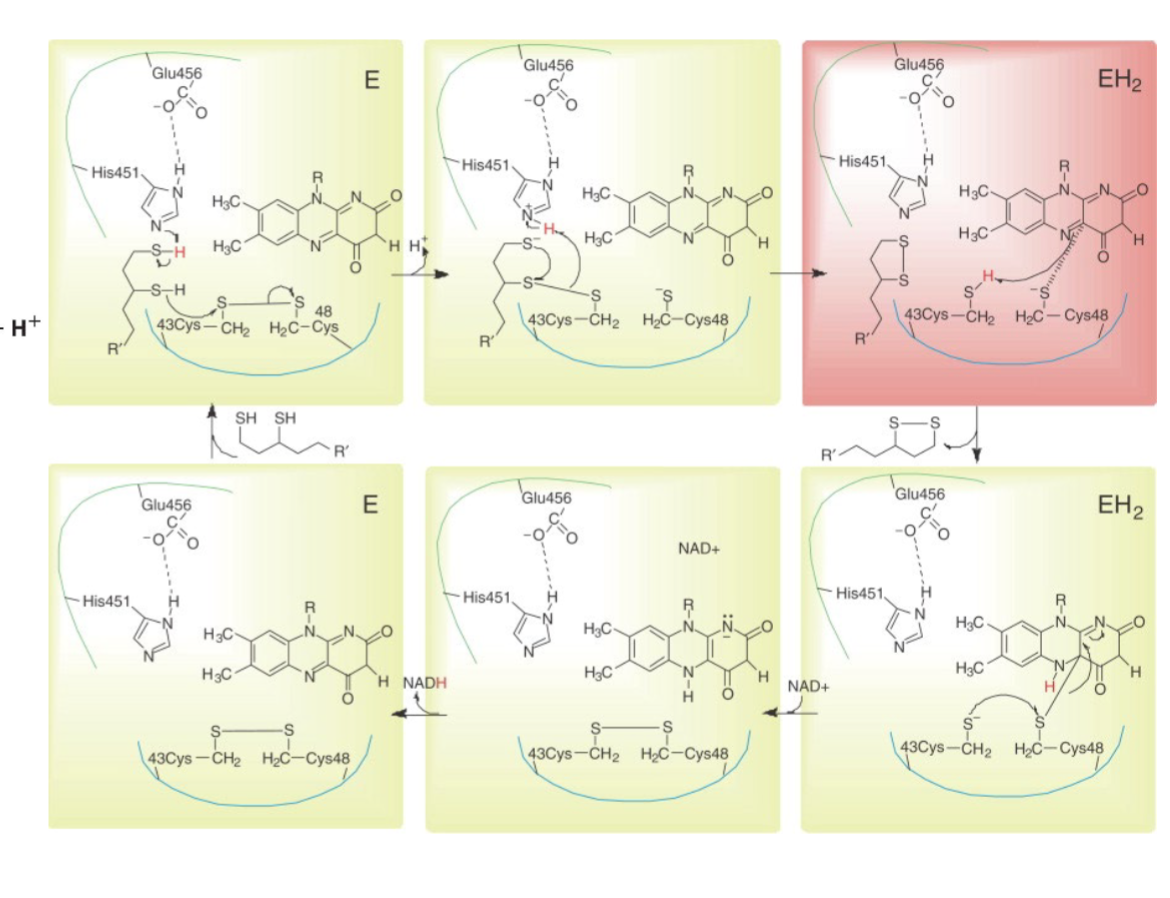
Enzyme 3 – Dihydrolipoyl Dehydrogenase
• Step 4: Reoxidation of lipoyllysine (FAD
accepts both electrons, H).
• Step 5: Regeneration of oxidized FAD
(NAD+ is reduced)
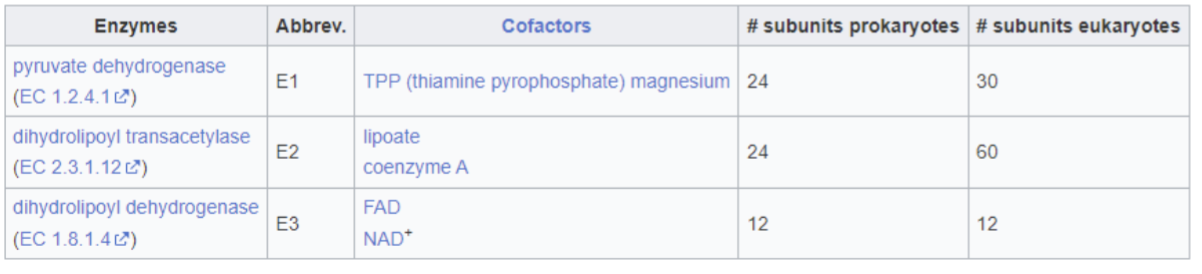
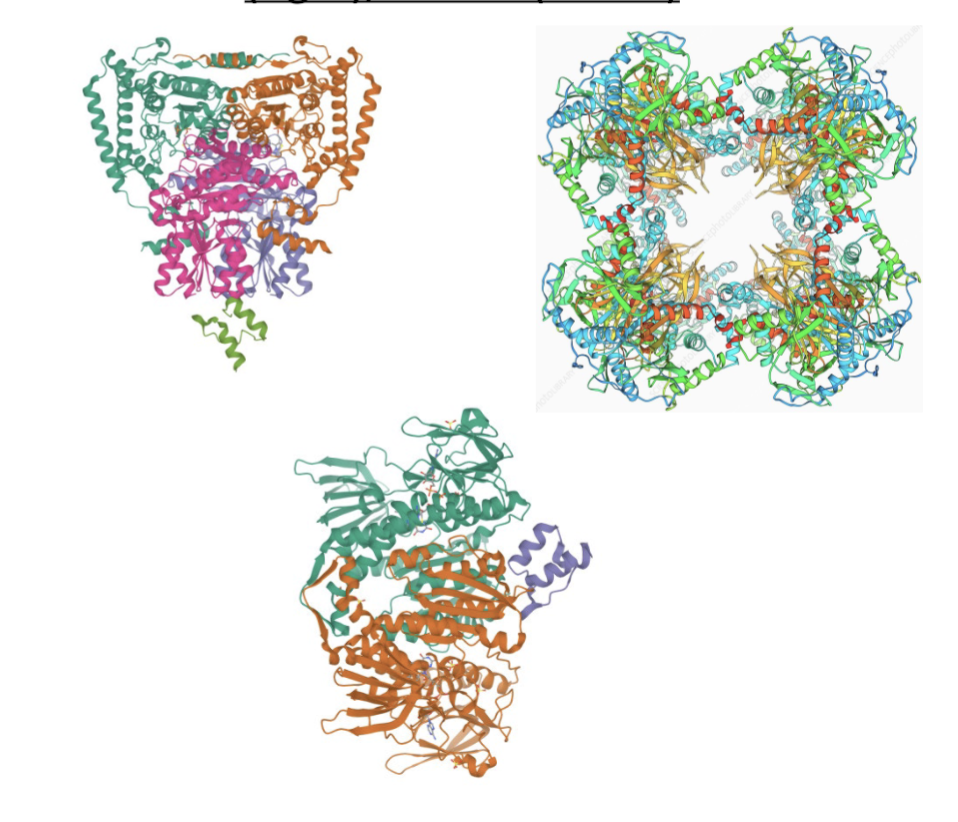
Pyruvate Dehydrogenase (PDH) Complex
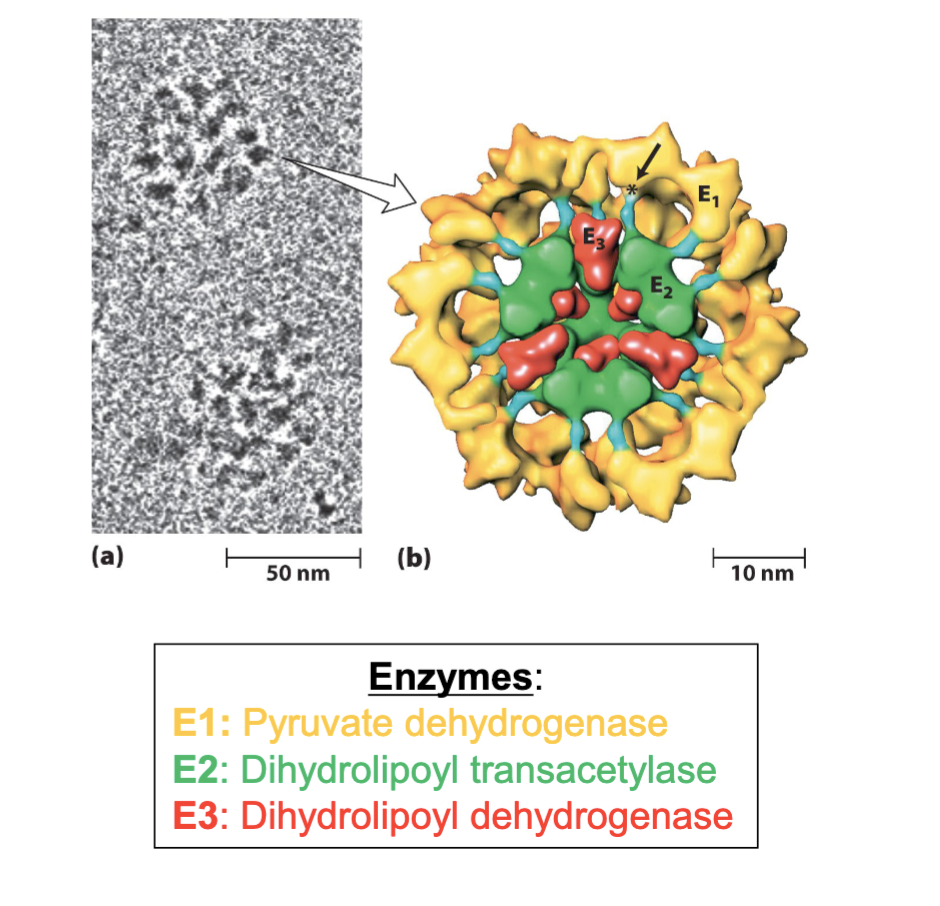
PDH contains multiple copies of three enzymes (E1, E2, and E3)
Low-resolution CryoEM structure of PDH complex
High-resolution crystal
structures of E1 (left), E2
(right), and E3 (below)
Stage 2: Acetyl-CoA Oxidation
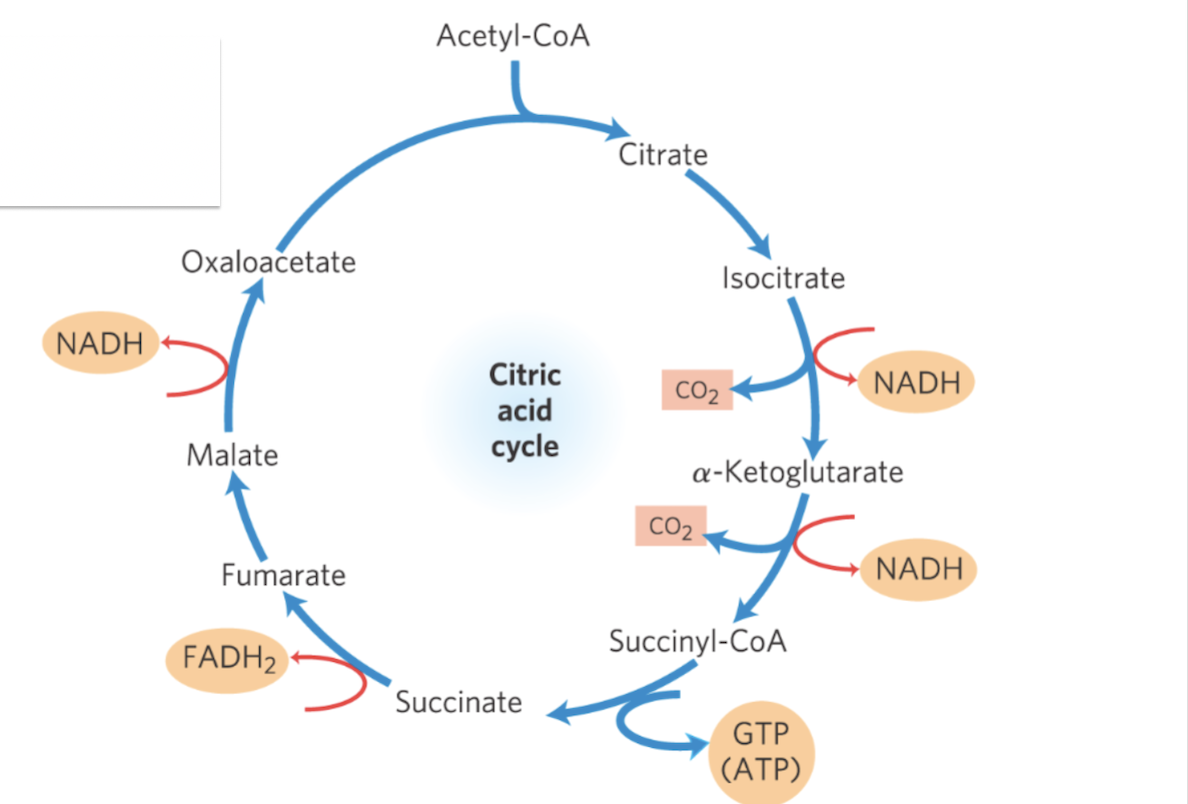
1 molecule of Acetyl-CoA 3 NADH, 1 FADH2 , and 1 ATP (or GTP)
The pathway that performs this chemistry
is called the Citric Acid Cycle, also known
as the Tricarboxylic Acid (TCA) Cycle
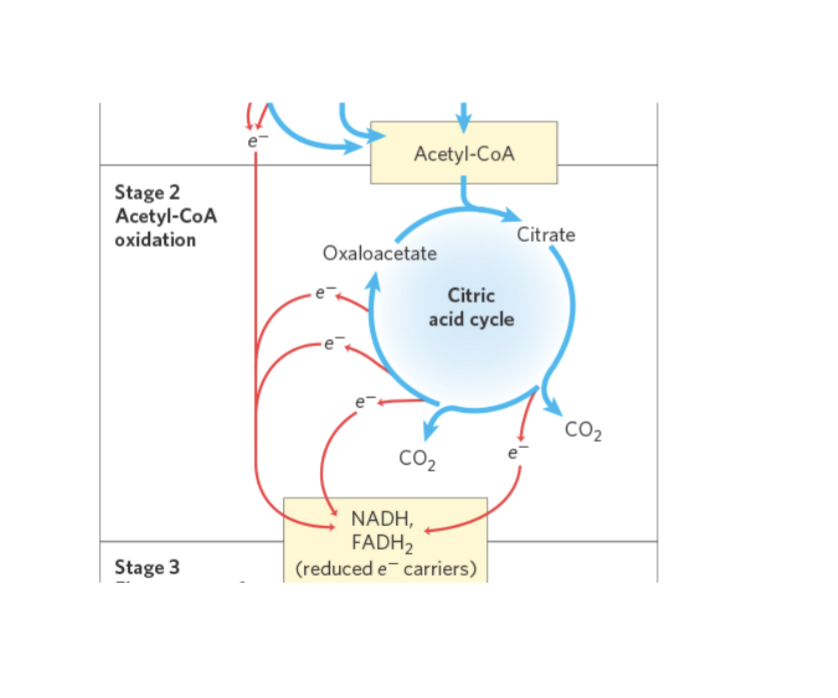
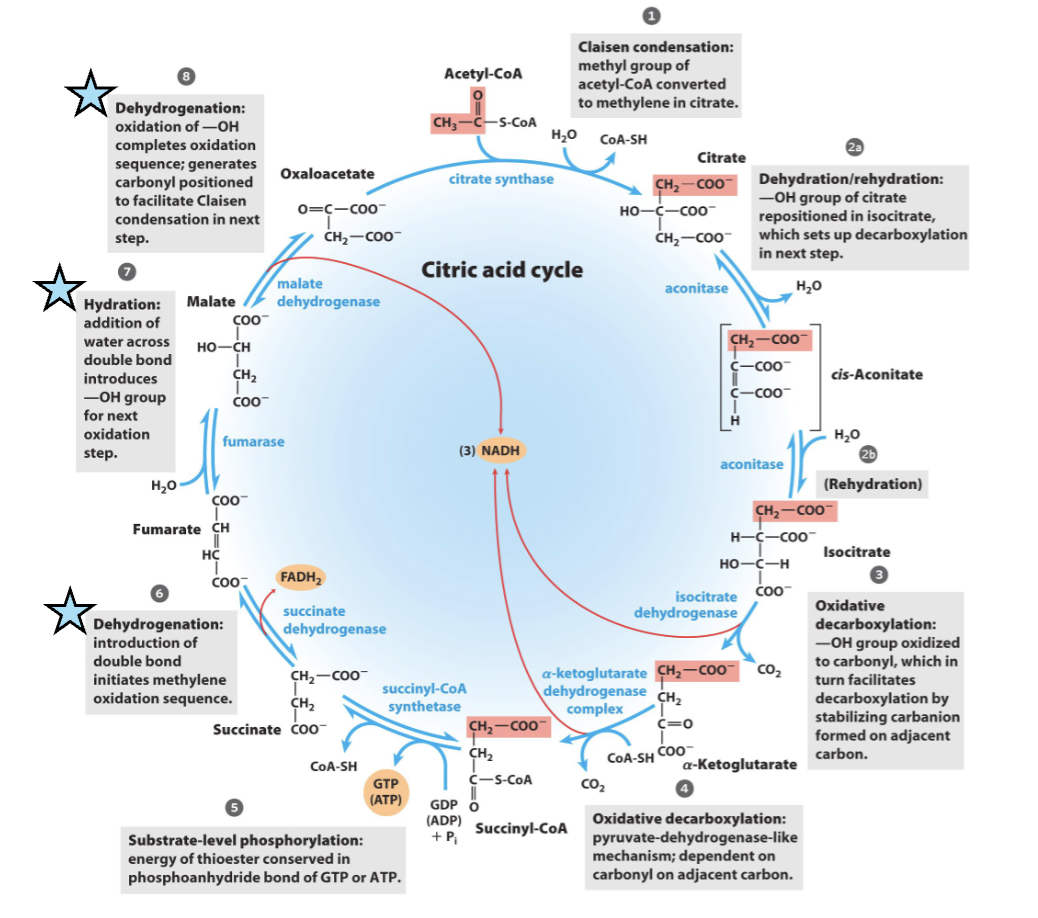
Overview of the Citric Acid Cycle
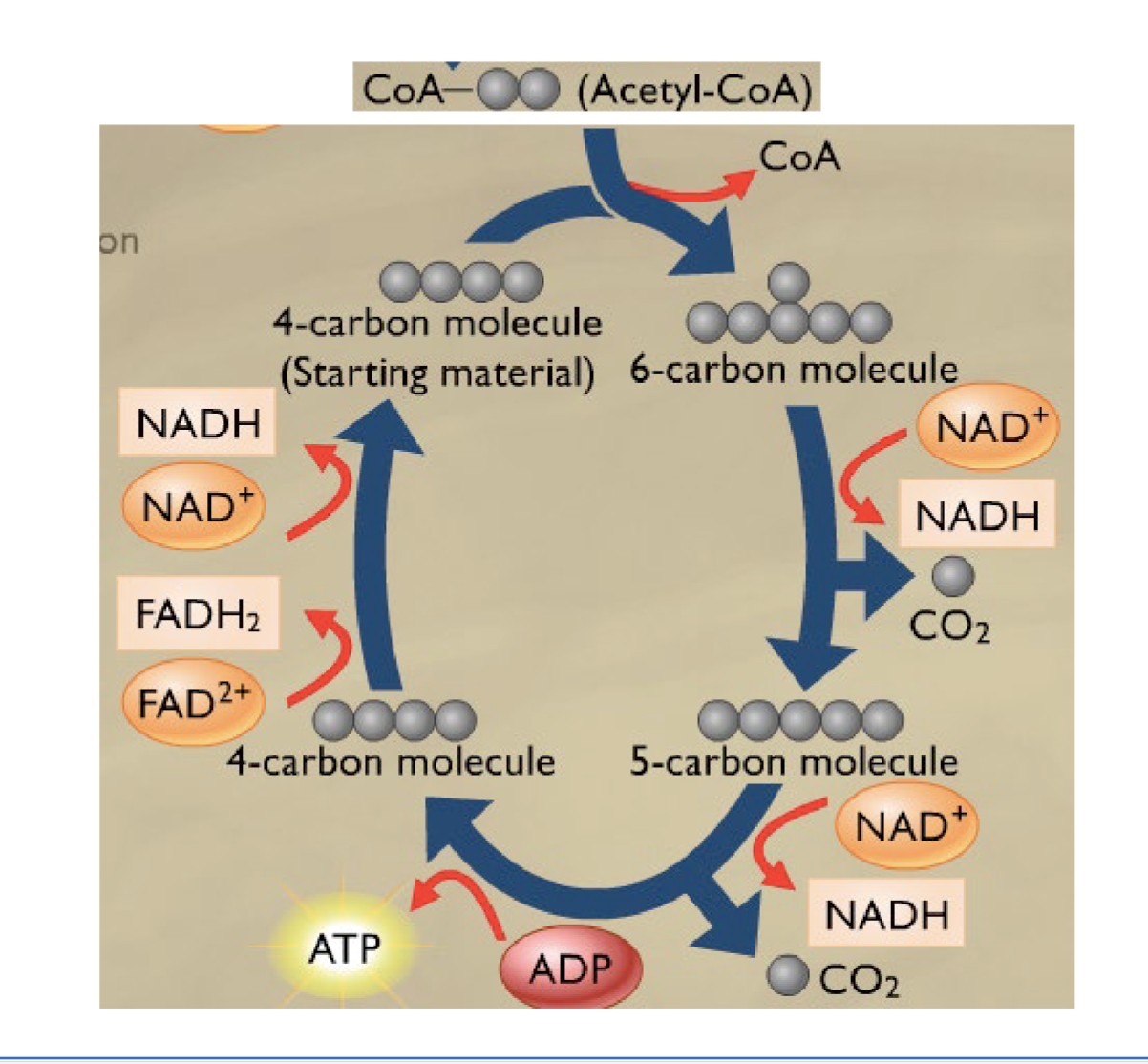
Chemical Logic of the Citric Acid Cycle
After the PDH reaction, we are basically left with acetate in the form of acetyl-CoA.
• There is still chemical energy that can be extracted via oxidation.
• Acetate/acetyl-CoA do not have functional groups positioned to facilitate
oxidation chemistry.
• Every reaction of the Citric Acid Cycle is either:
1. An oxidation (with or without accompanying decarboxylation).
2. Positioning functional groups to facilitate oxidation or oxidative decarboxylation
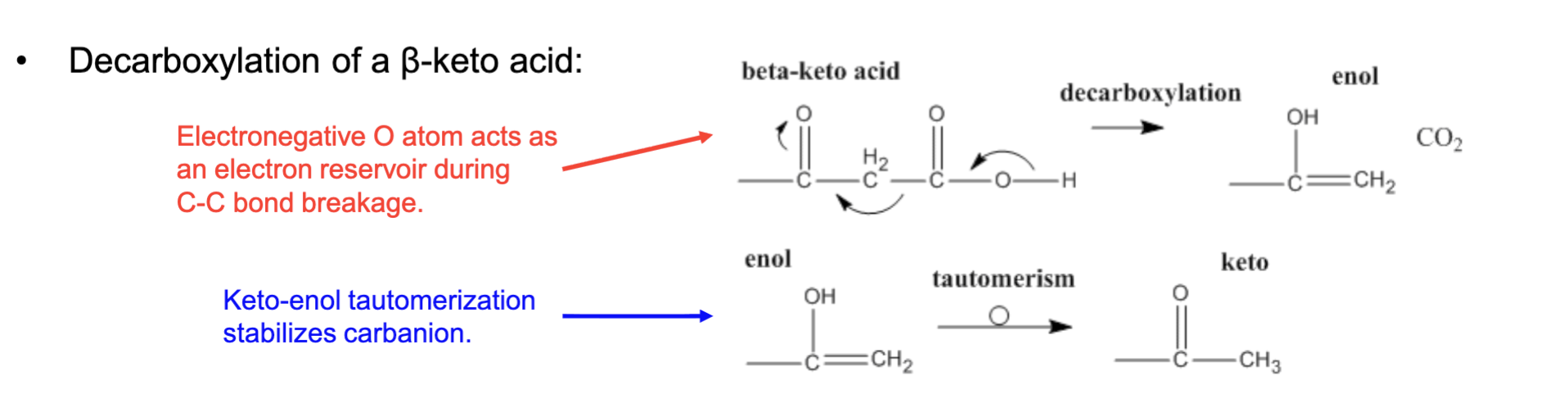
Decarboxylation of a β-keto acid:
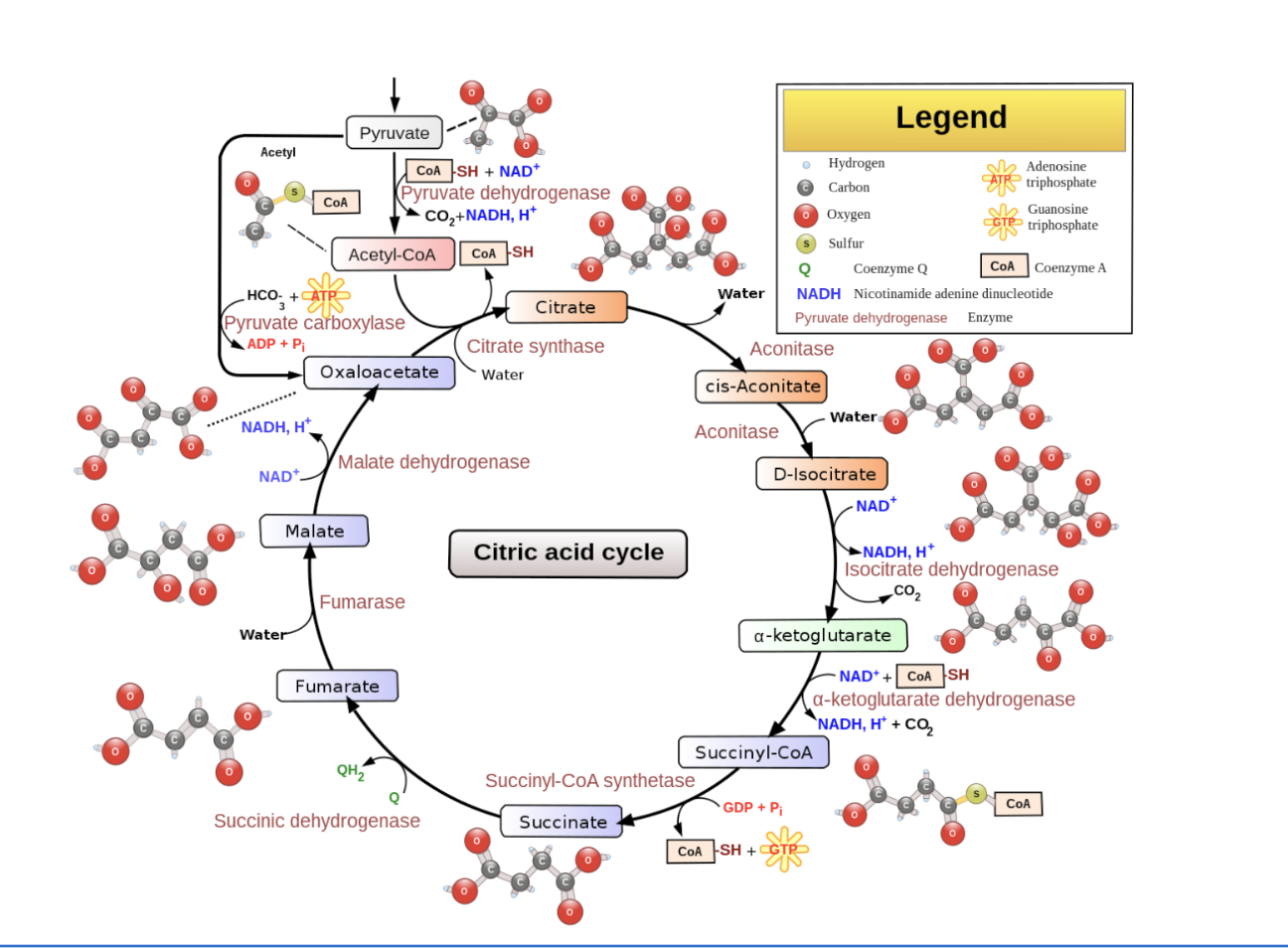
Details of the citric acid cycle
Follow the Carbons:
•Carbons from acetate (coming from glucose) are
in red. None of them are lost in one turn of the
cycle.
•All CO2 generated during the citric acid cycle is
produced before succinyl-CoA is made. Both CO2
molecules lost were present on the oxaloacetate
used to begin the cycle.
•Succinate is symmetrical, so we can’t keep track
anymore.
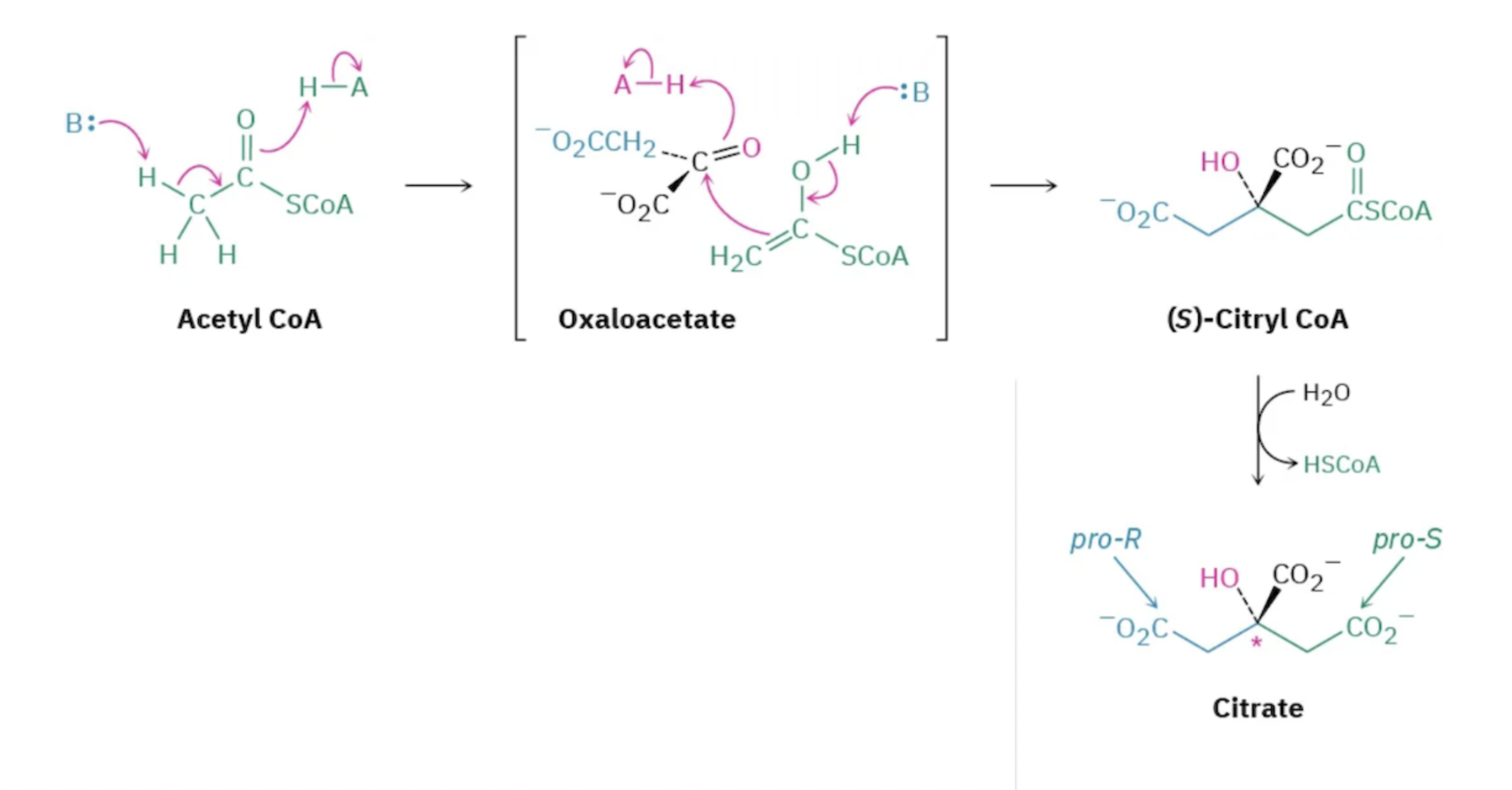
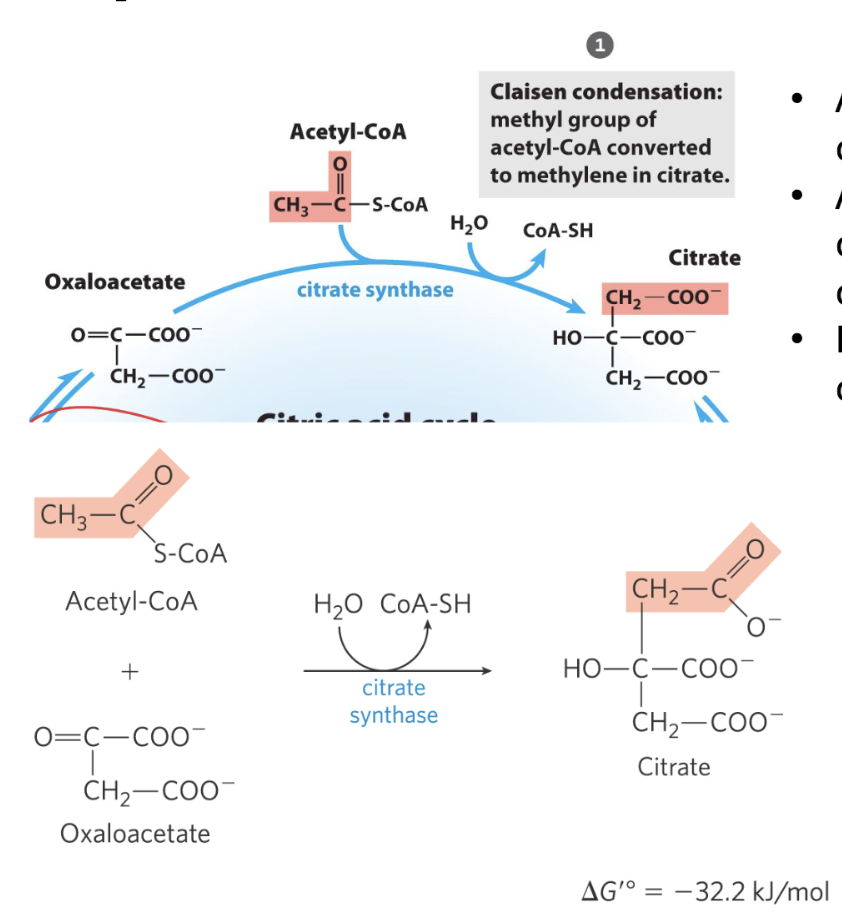
Step 1: Addition to Oxaloacetate – Formation of Citrate
Acetyl-CoA enters TCA
cycle
• Addition is an aldol
condensation catalyzed by
citrate synthase
• Forms pro-chiral product –
citrate
Importance of Prochirality
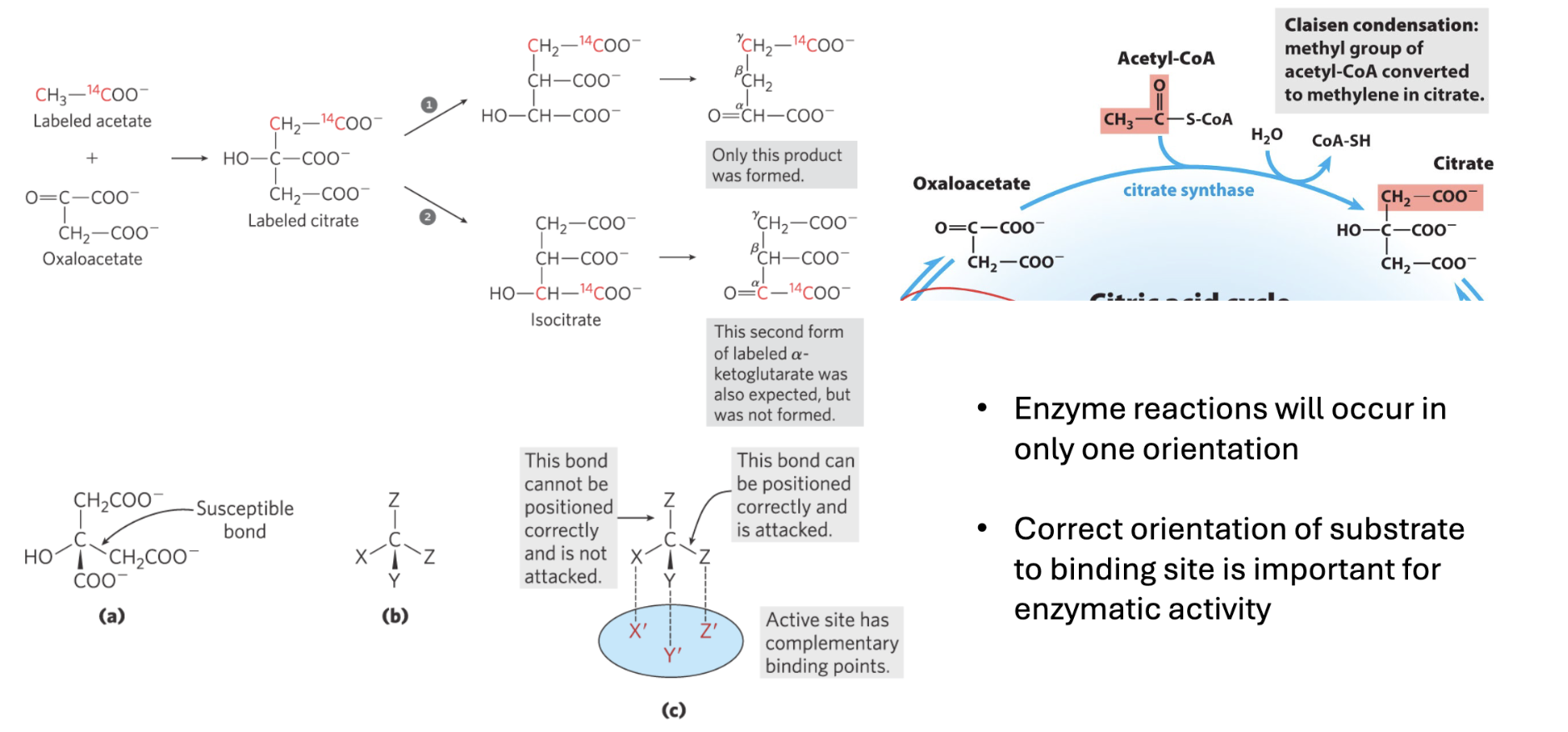
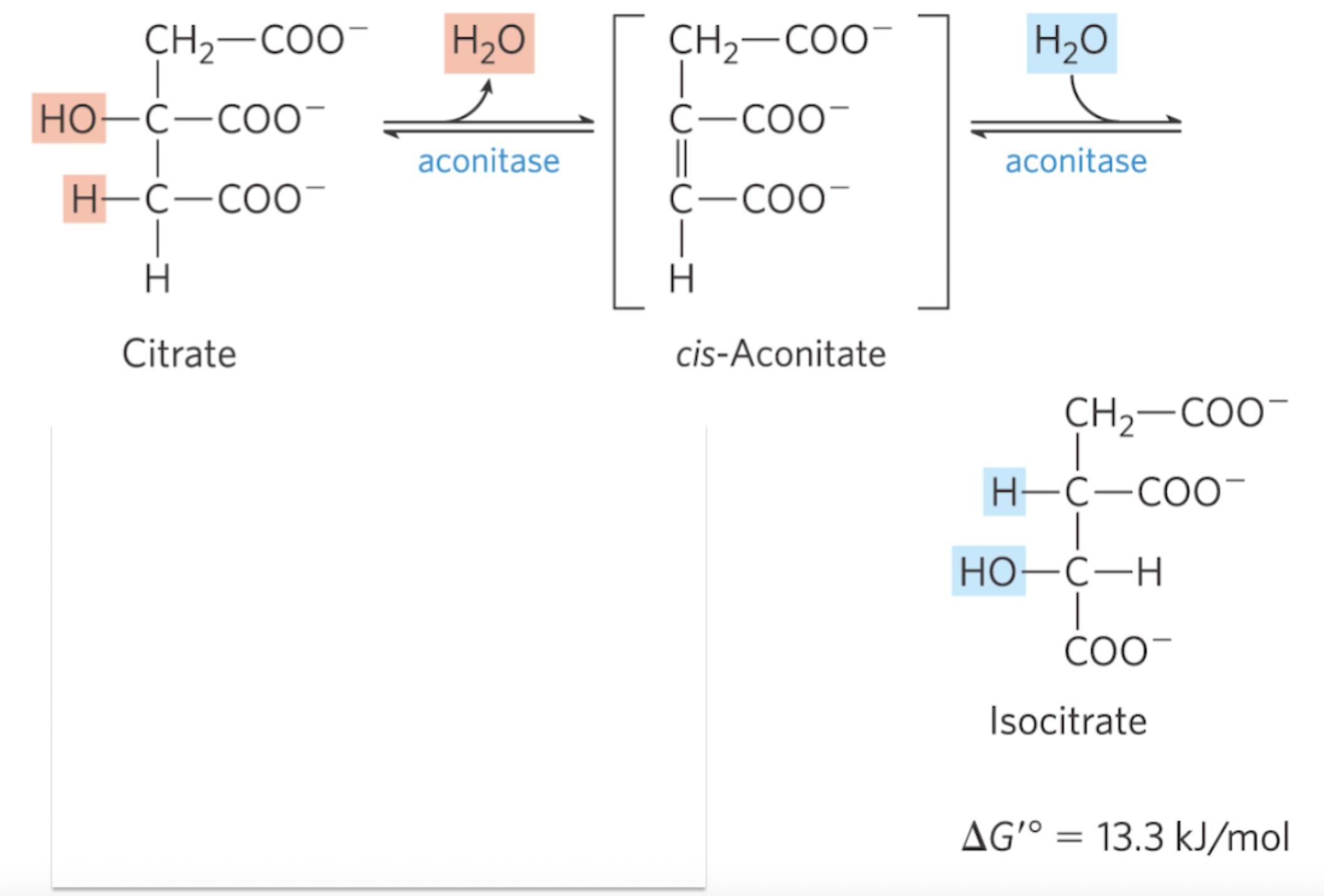
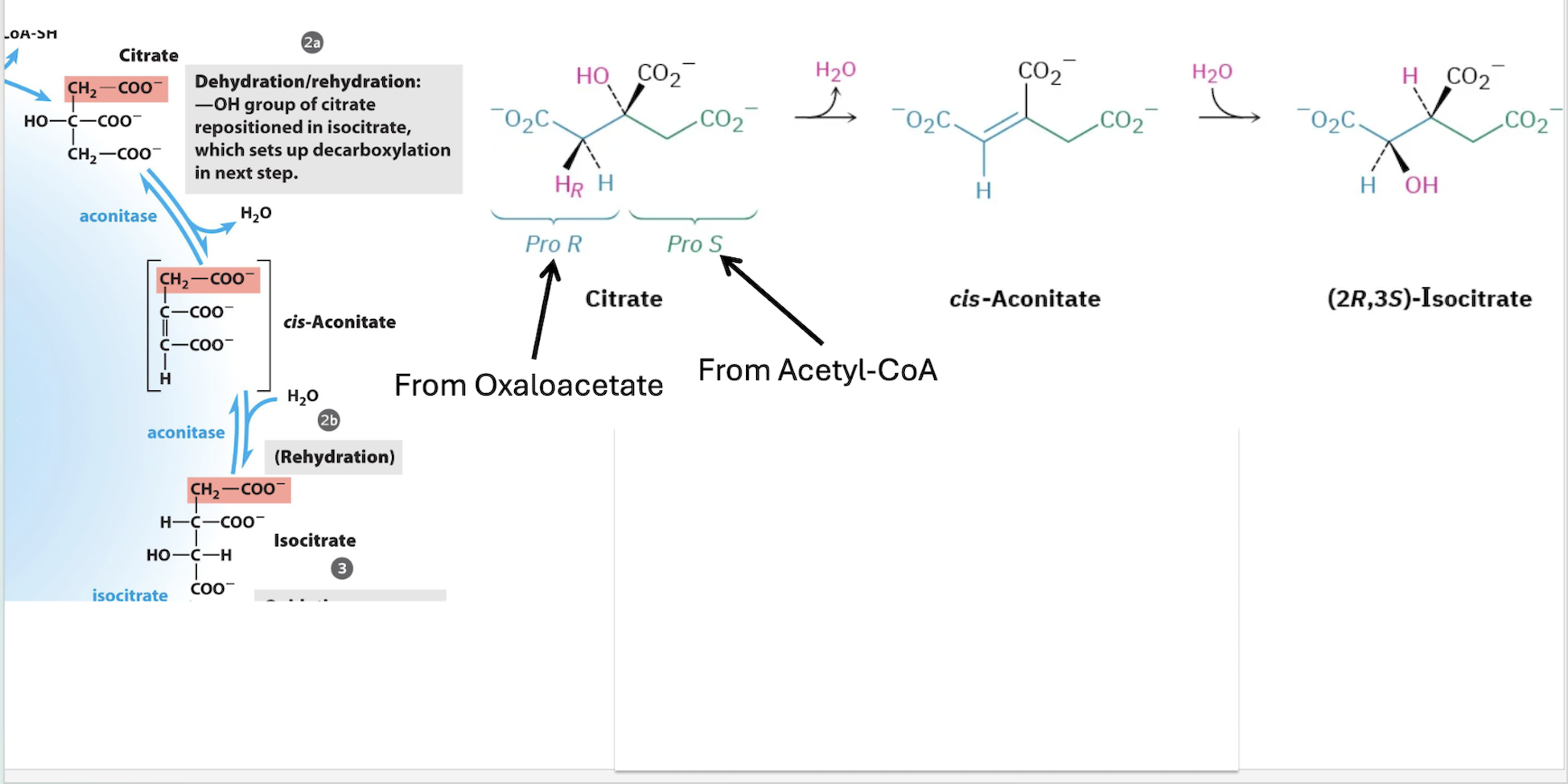
Step 2: Isomerization – Formation of Isocitrate via cis-
Aconitate
Prochiral tertiary alcohol is converted
to a chiral secondary alcohol
• Isomerization occurs in two steps
both catalyzed by the same enzyme
• Dehydration takes place on the pro-R
arm of citrate
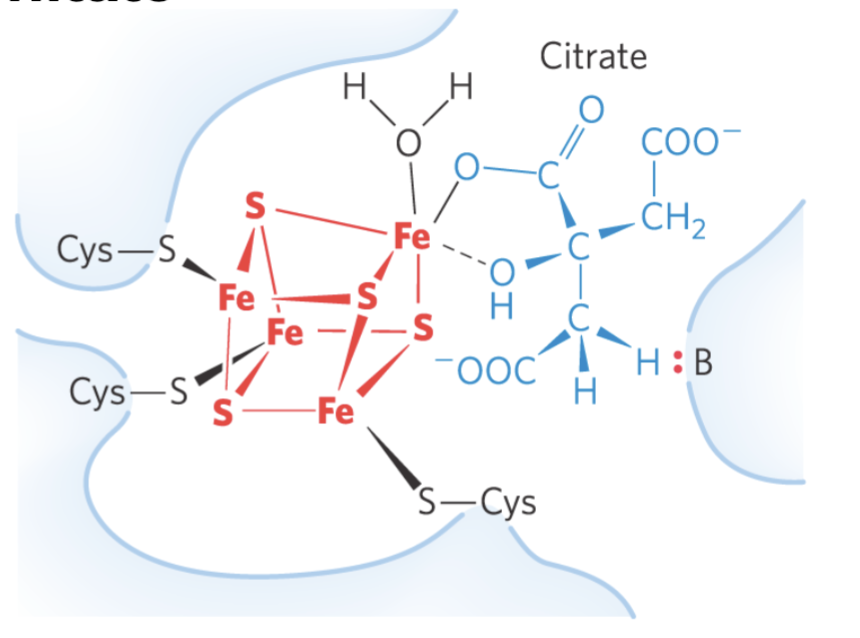
Iron-sulfur center of aconitase
• 3 Cys bind 3 Fe atoms
• 4th Fe is bound to one of the carboxyl groups of
Citrate and interacts noncovalently with the hydroxyl
group
• Basic residue helps position Citrate in active site
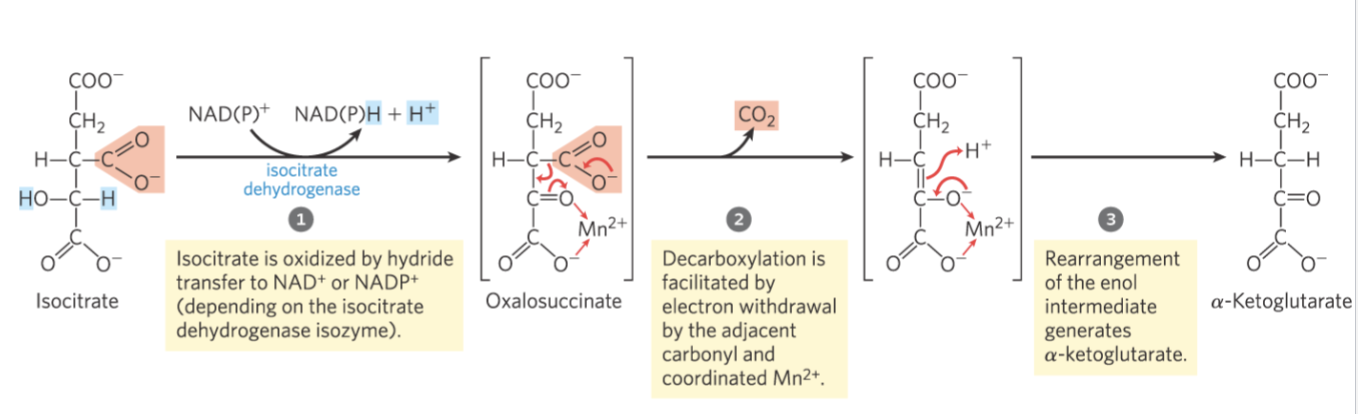
Step 3: Oxidative Decarboxylation – Oxidation of Isocitrate to
α-Ketoglutarate and CO
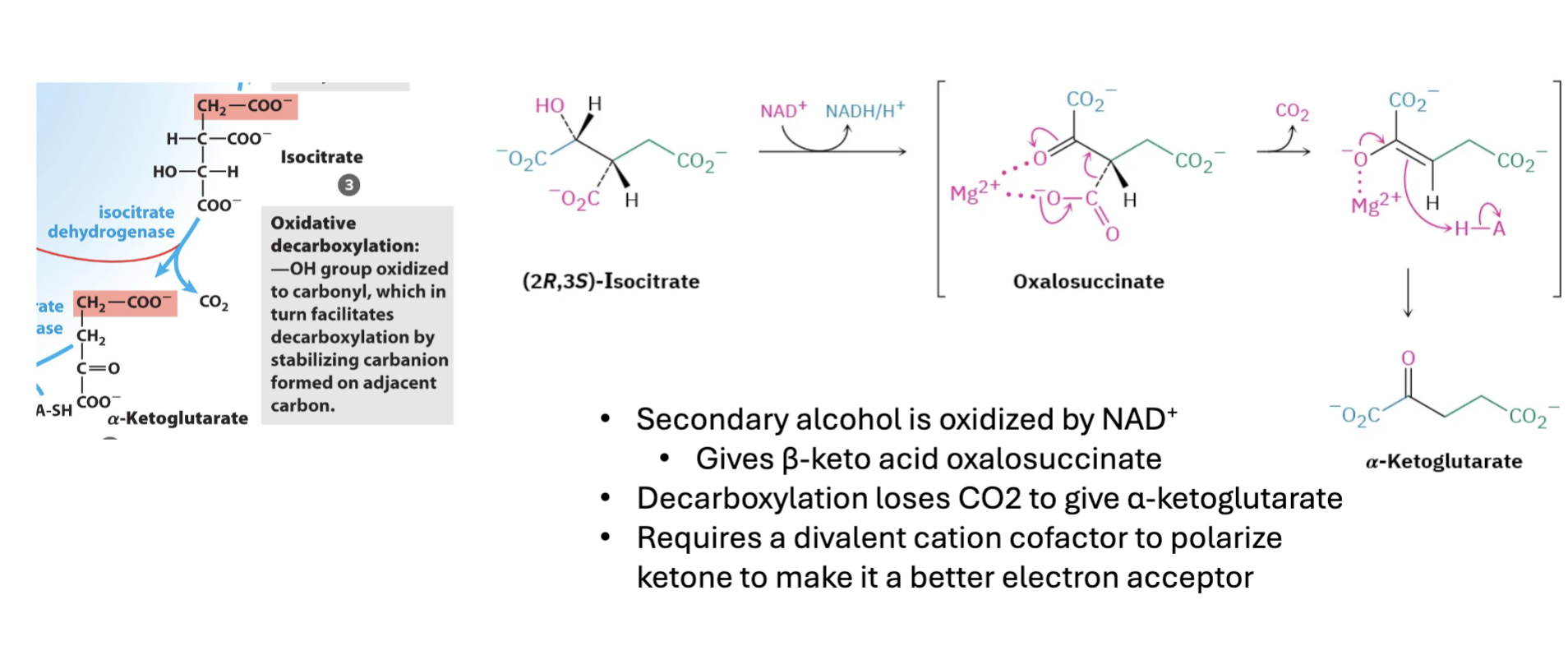
Oxidation and decarboxyation of Isocitrate to α-Ketoglutarate
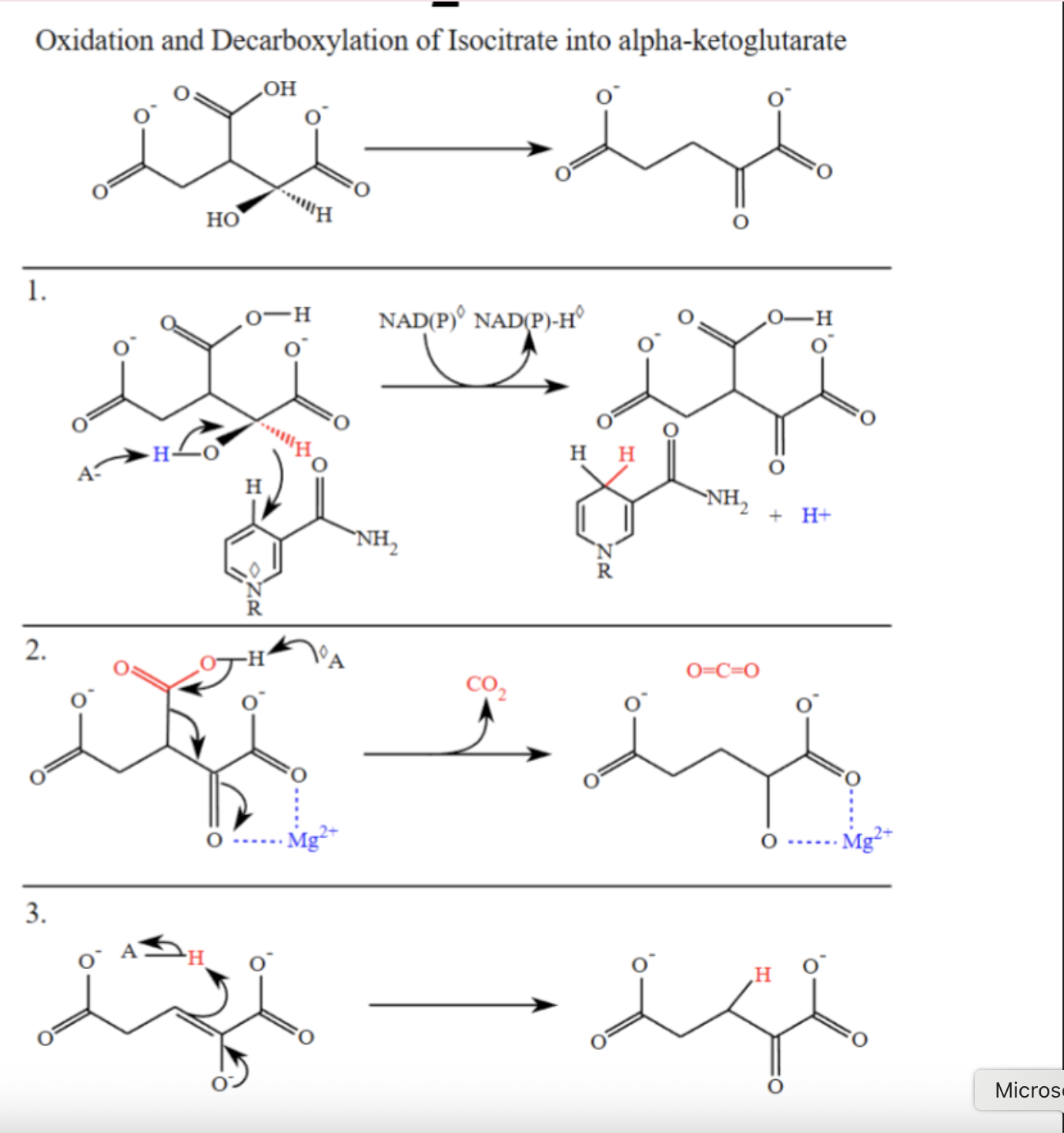
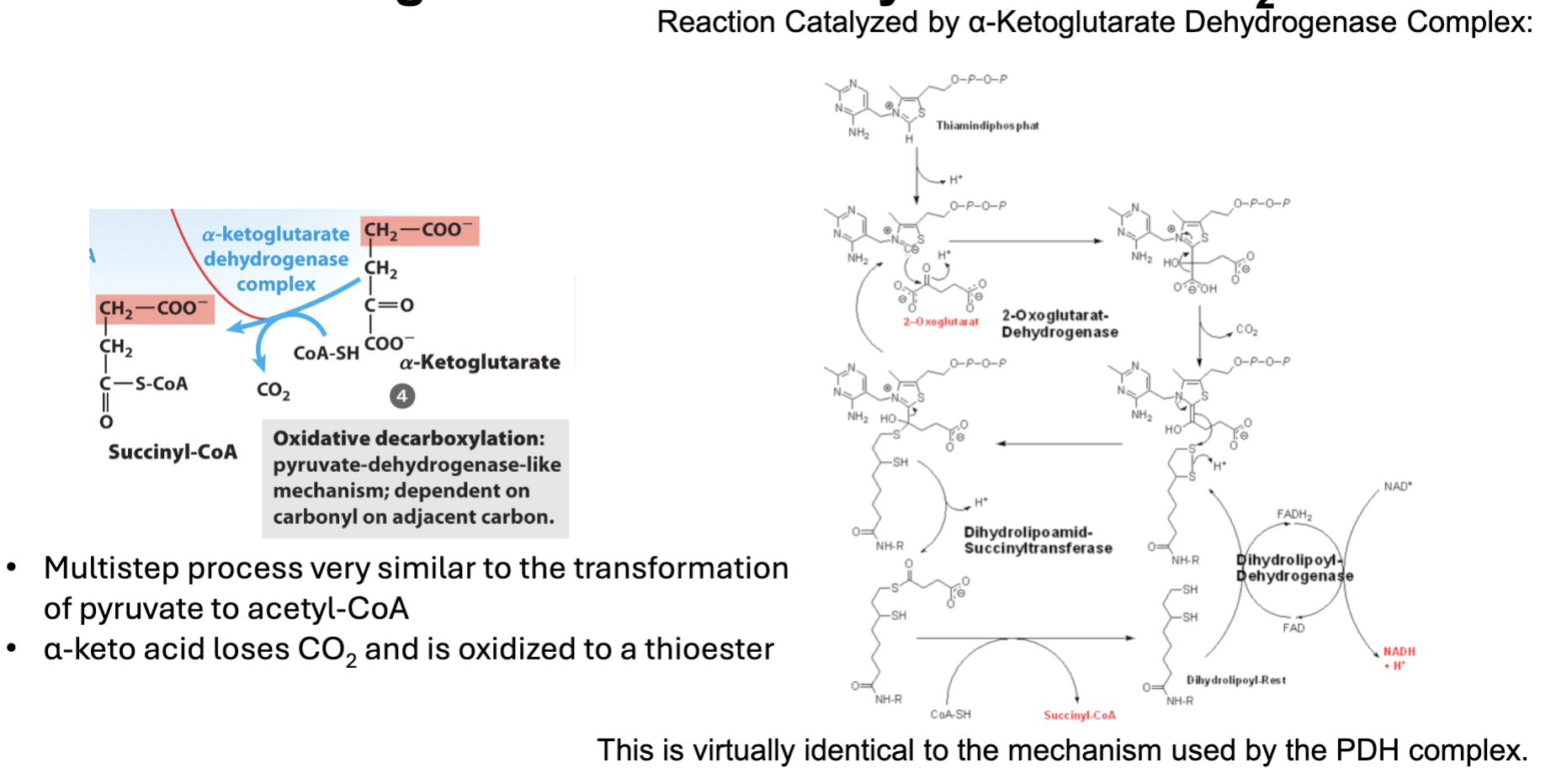
Step 4: Oxidative Decarboxylation – Oxidation of α-Ketoglutarate to Succinyl-CoA and CO 2
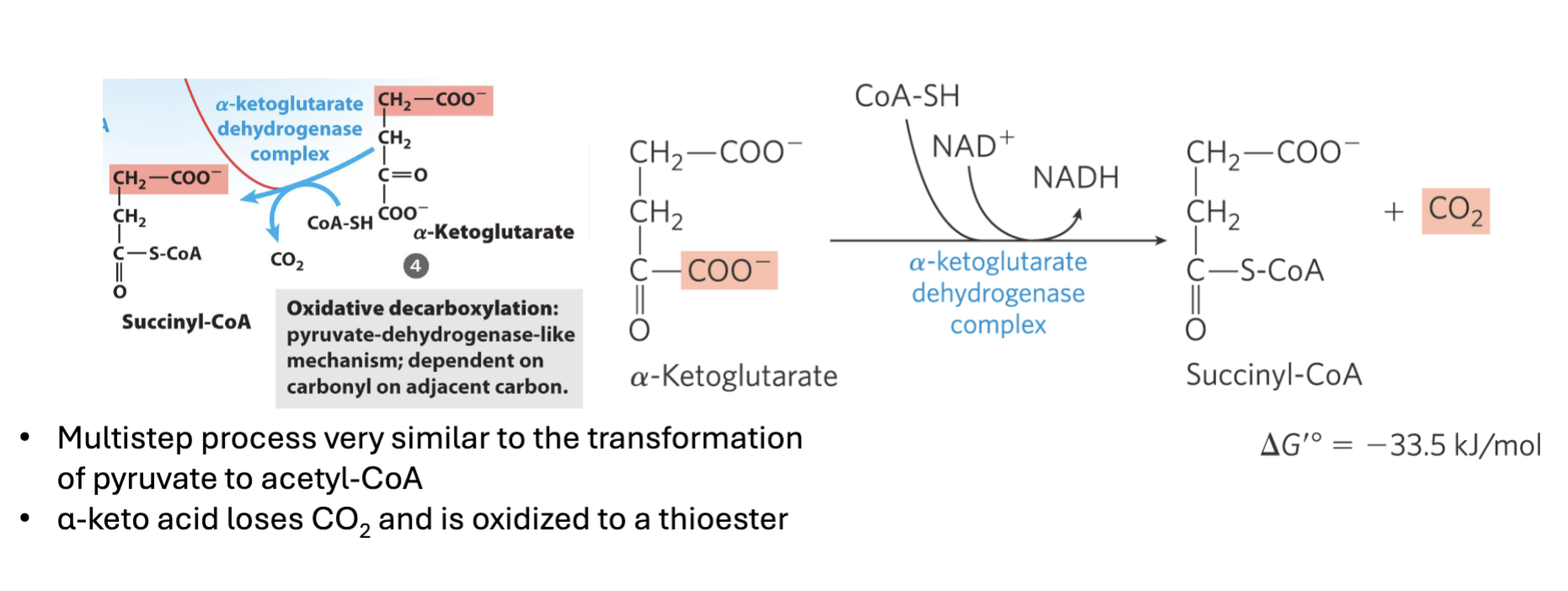
Reaction Catalyzed by α-Ketoglutarate Dehydrogenase Complex:
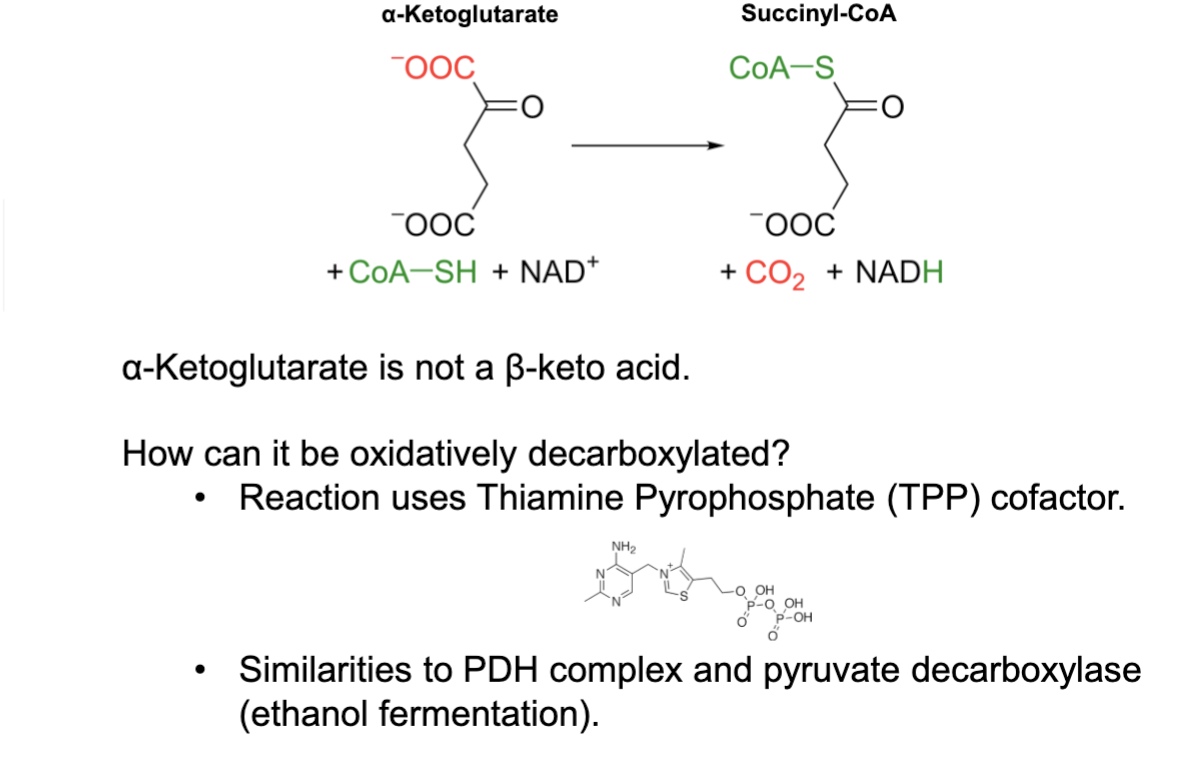
Thiamine Pyrophosphate (TPP) in
C-C Bond Cleavage Reactions
Step 4: Oxidative Decarboxylation – Oxidation of α-
Ketoglutarate to Succinyl-CoA and CO 2
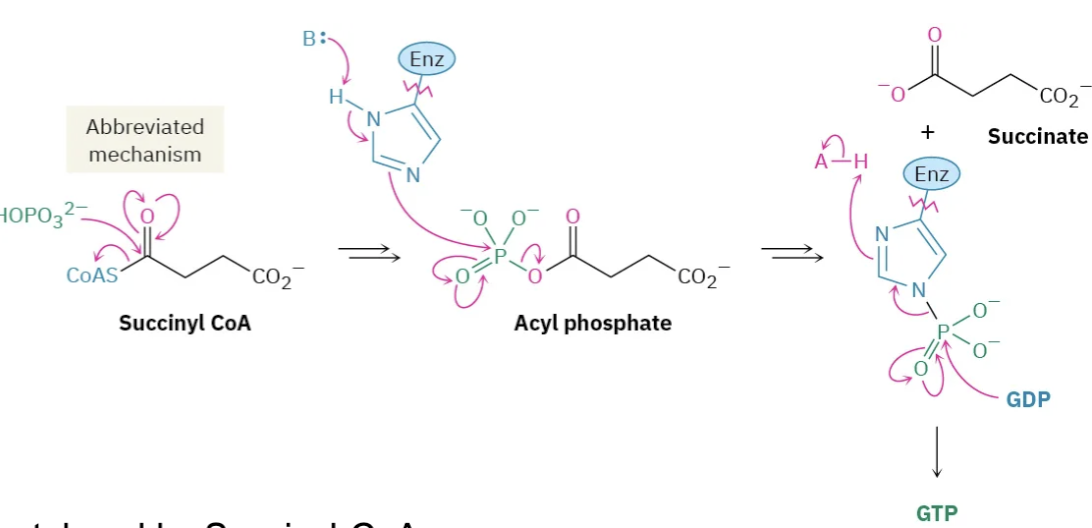
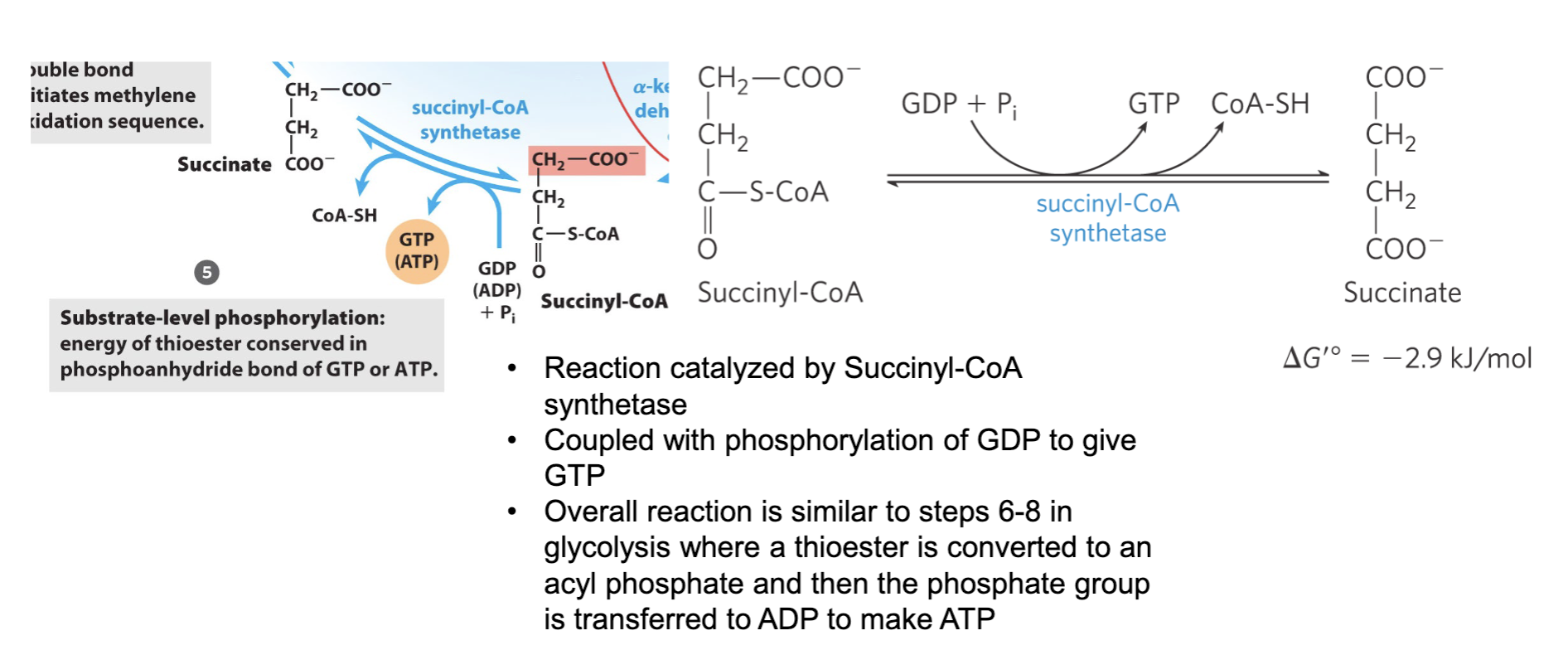
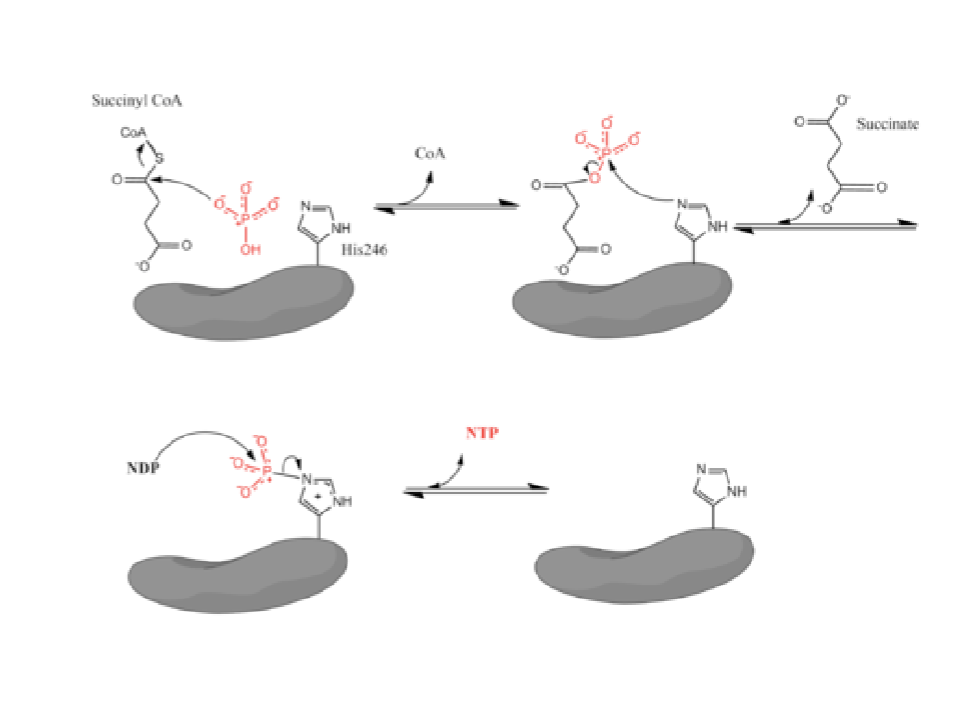
Step 5: Acyl-CoA cleavage – Conversion of Succinyl-CoA to
Succinate
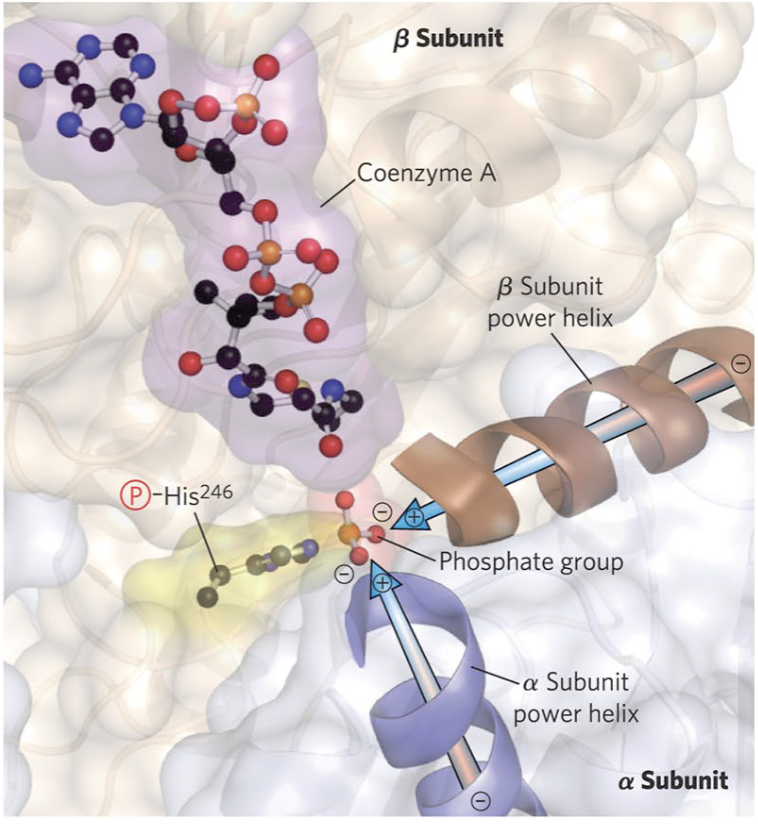
Enzyme does not use metal cation cofactors,How does this enzyme stabilize the highly
charged His-Pi intermediate?
Utilizes dipole moment of two α-helices to stabilize the charged His-Pi intermediate
The Last Three Reactions Regenerate Oxaloacetate
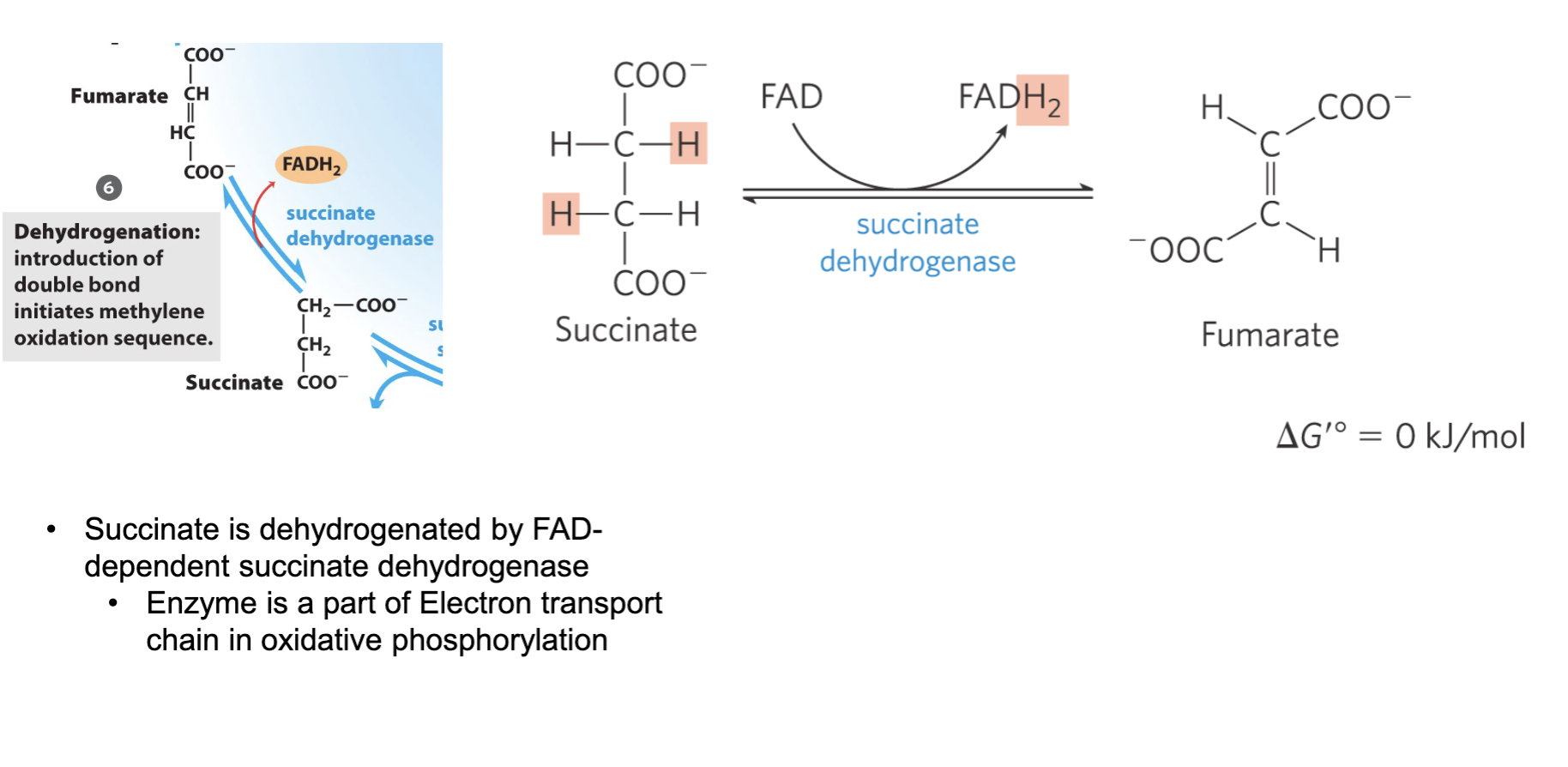
• First, a C-C single bond in Succinate
is oxidized to a double bond, giving
Fumarate. Electrons and protons are
transferred to FAD, reducing it to
FADH 2.
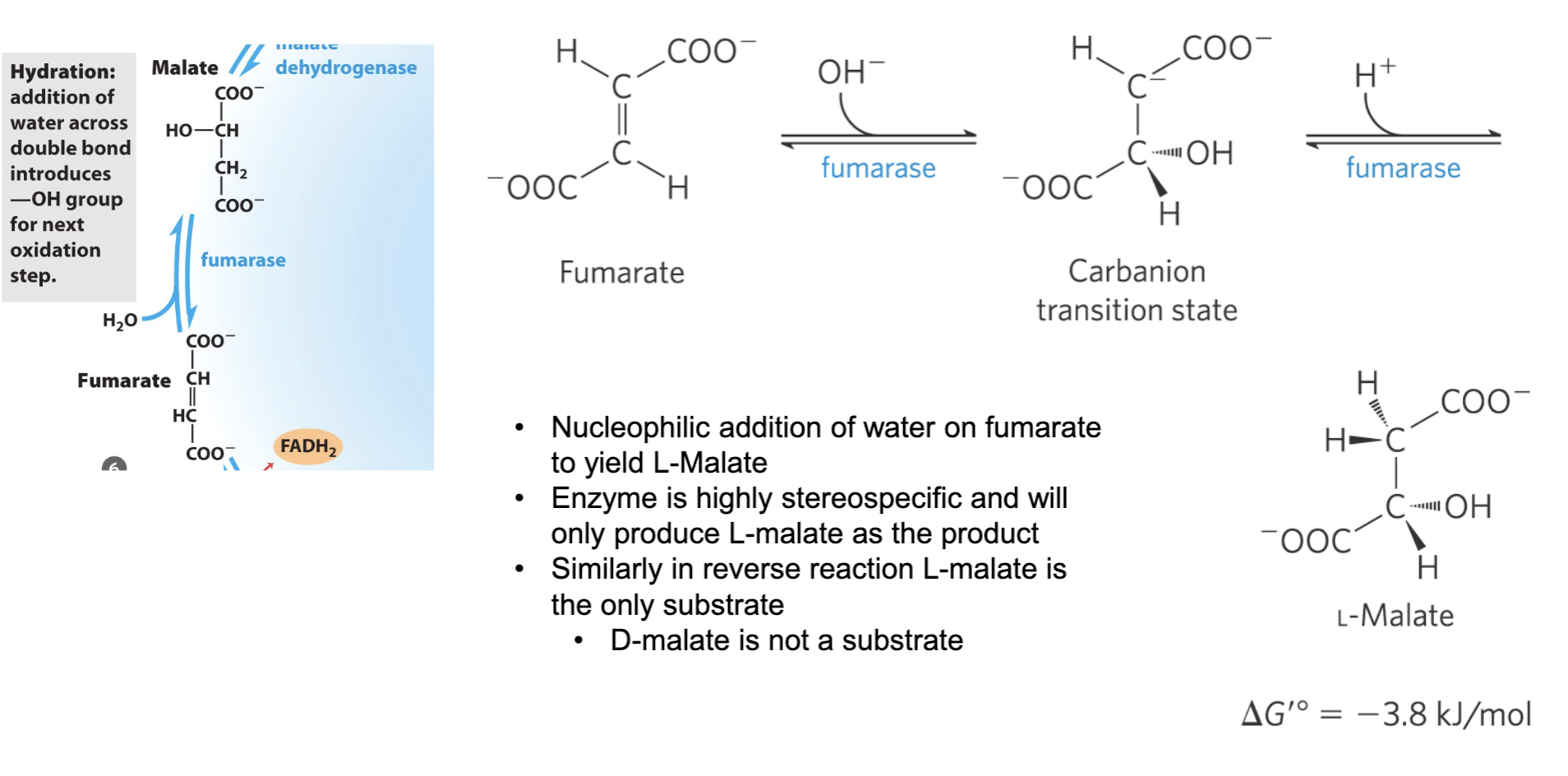
• Next, the double bond in Fumarate
gets hydrated, yielding Malate.
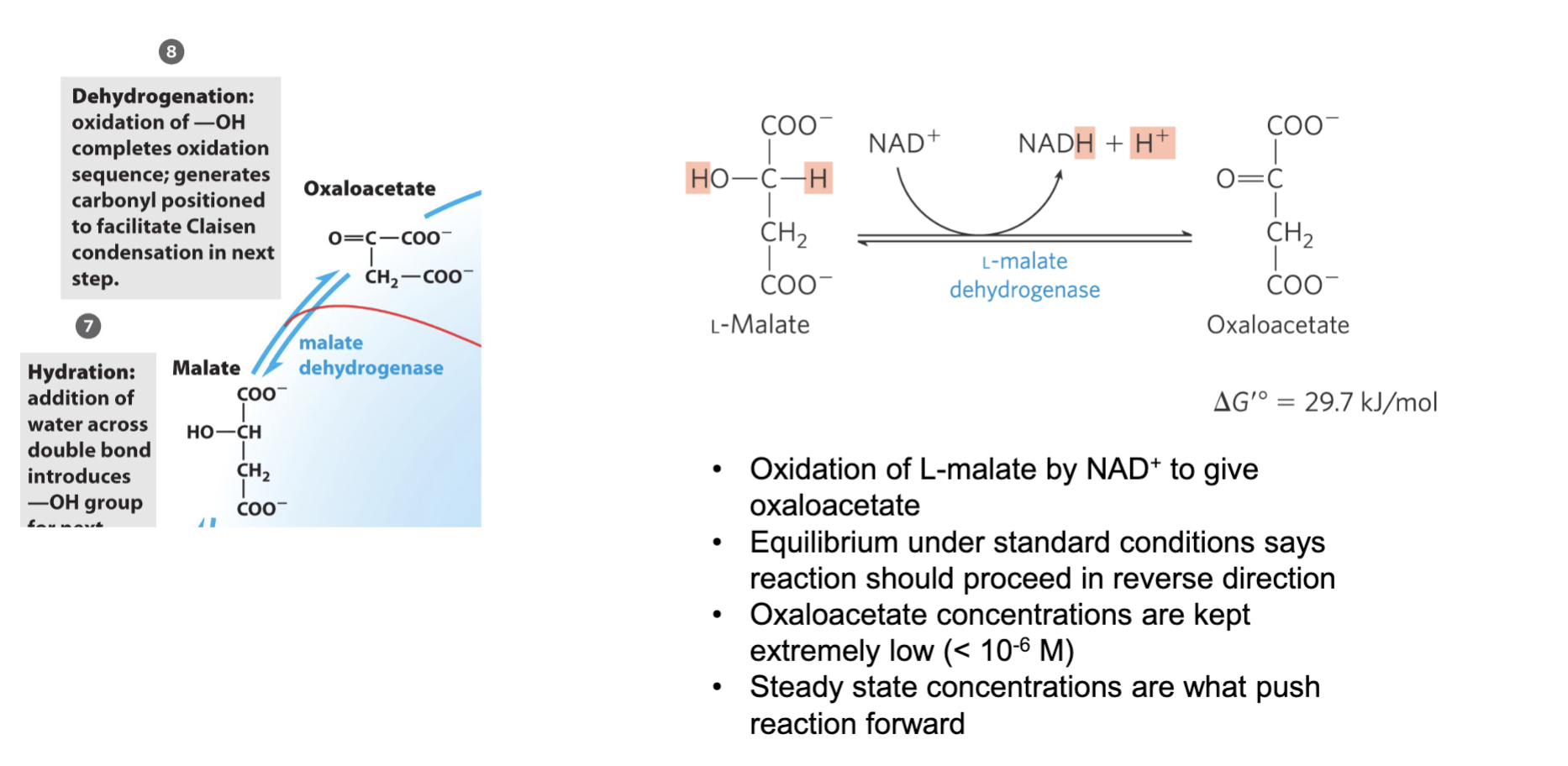
• Finally, Malate is oxidized to
Oxaloacetate. NAD+ is reduced to
NADH.
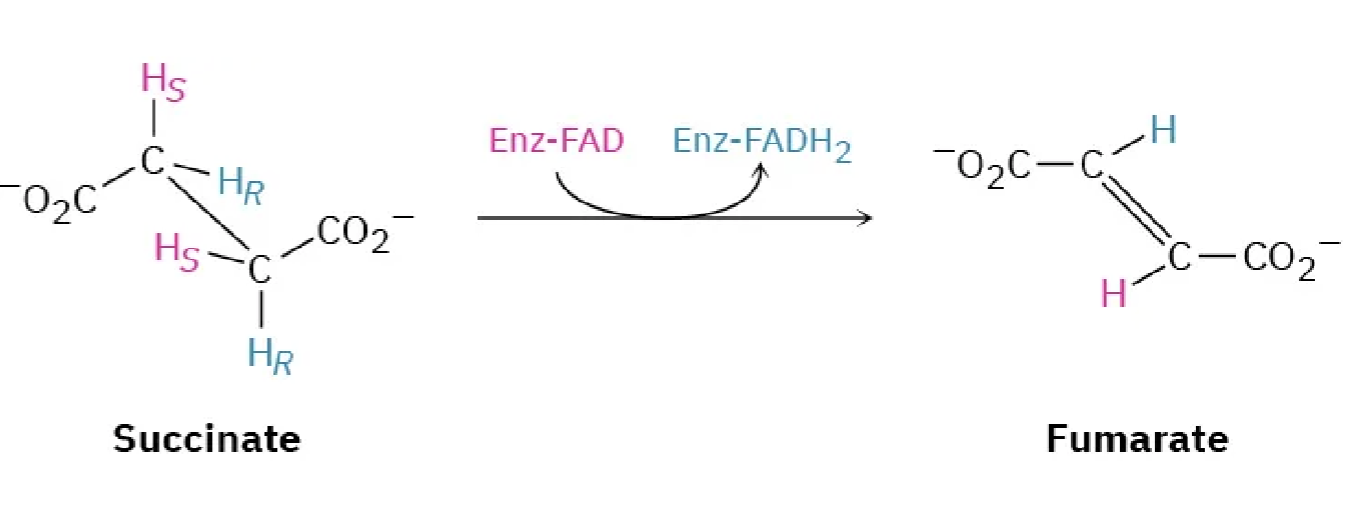
Step 6: Dehydrogenation – Oxidation of Succinate to Fumarate
Stereospecific reaction, removing pro-S
hydrogen from one carbon and pro-R
hydrogen from the other
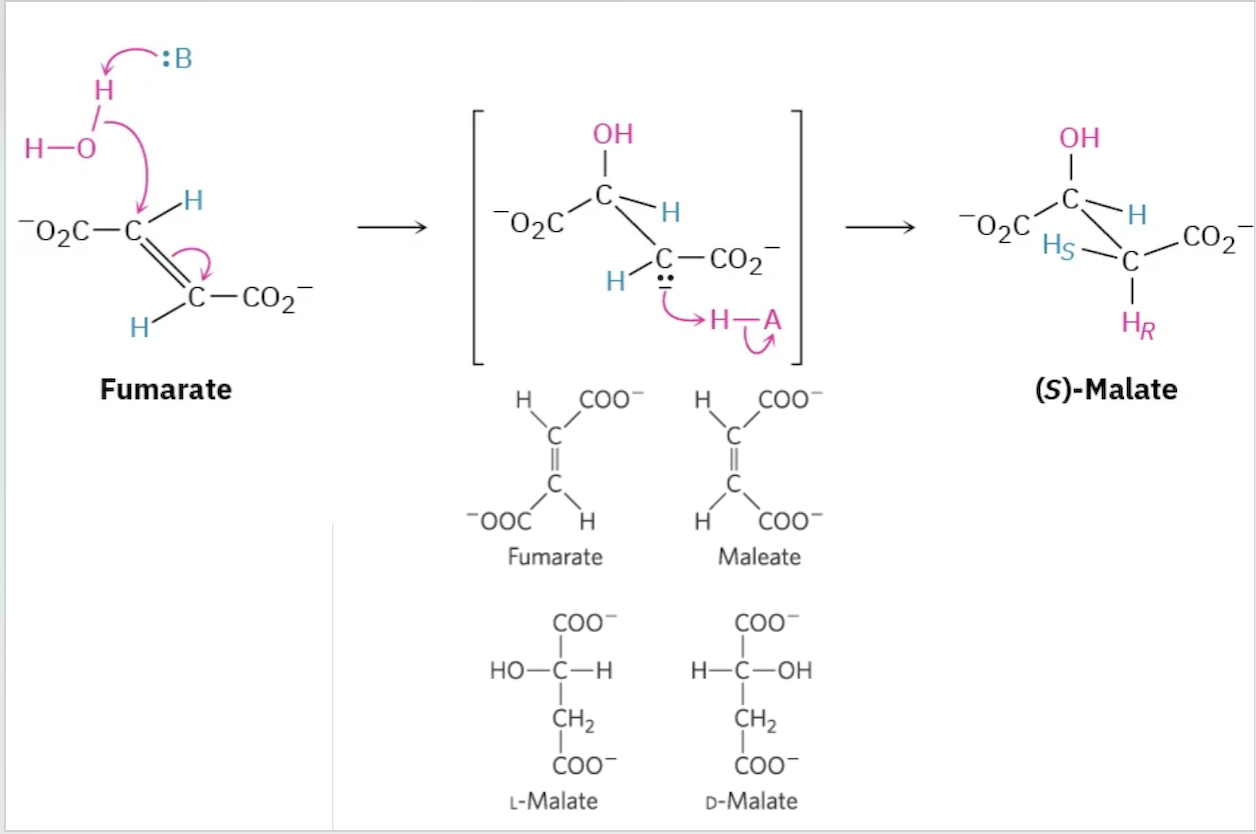
Step 7: Hydration – Hydration of Fumarate to Malate
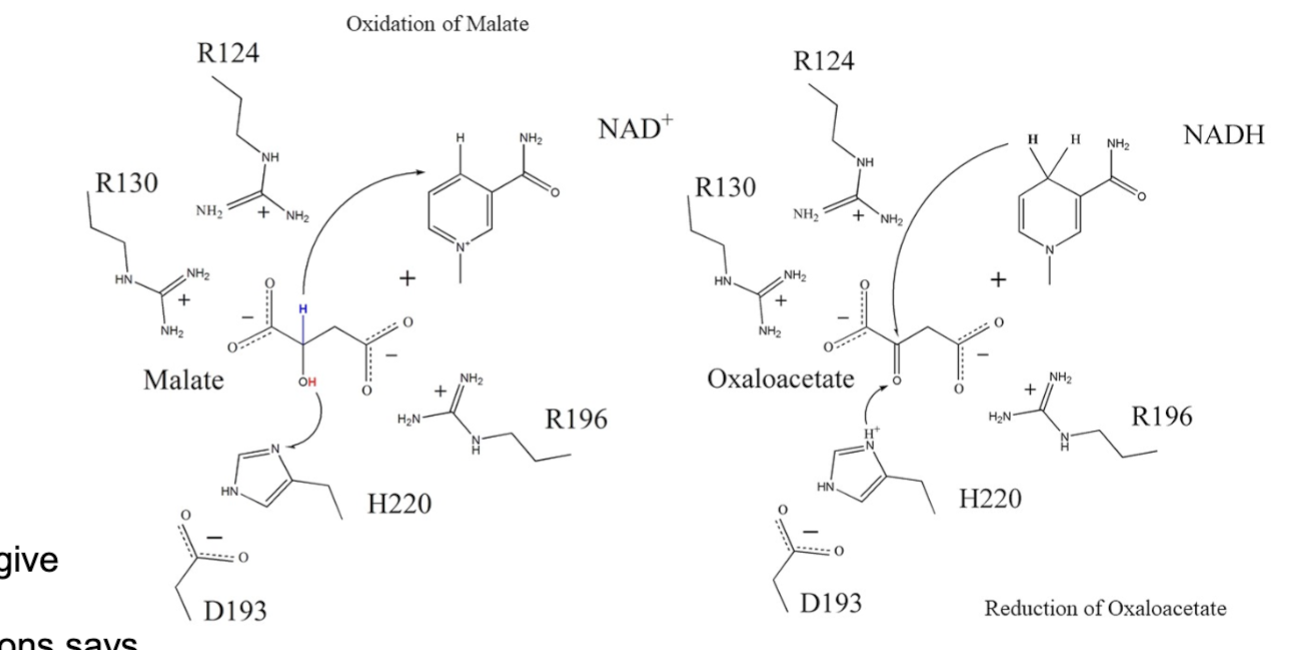
Step 8: Oxidation – Oxidation of Malate to Oxaloacetate
Overview of the Citric Acid Cycle
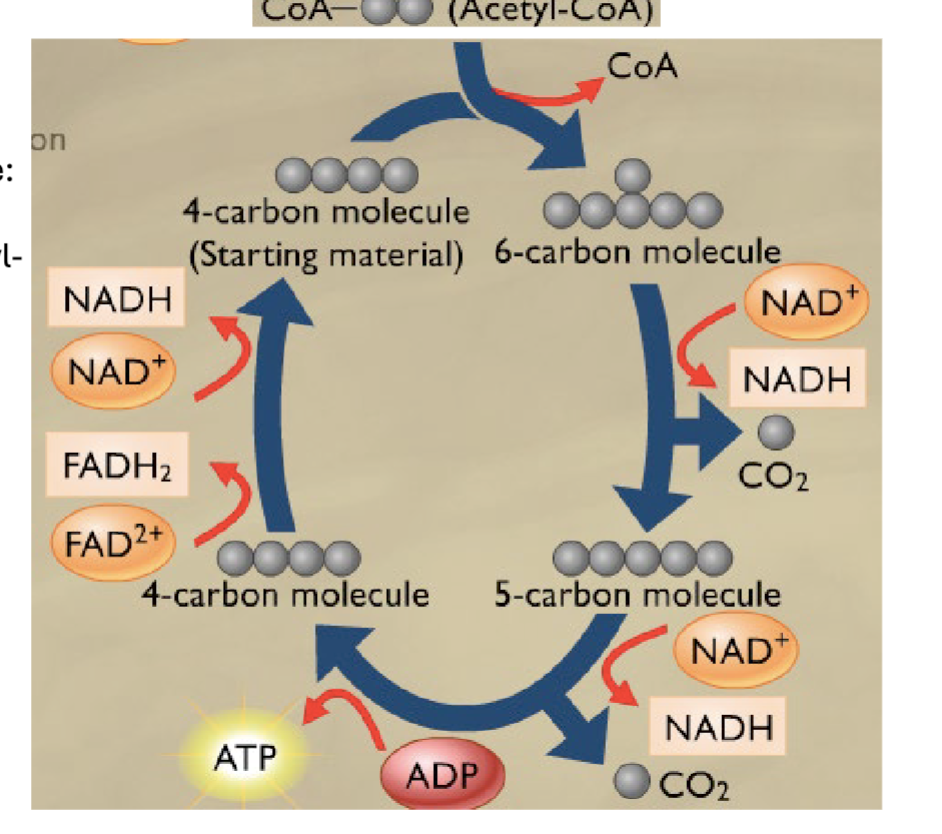
• Net yields for every one cycle:
• 4 NADH
• 1 from Pyruvate to Acetyl-
CoA
• 3 from TCA cycle
• 1 FADH 2
• 2 CO 2
• 1 GTP (ATP)
Acetyl − CoA + 3NAD+ + FAD + GDP + Pi + 2H2O → 2CO2 + CoA − SH + 3NADH + 3H+ + FADH2 + GTP
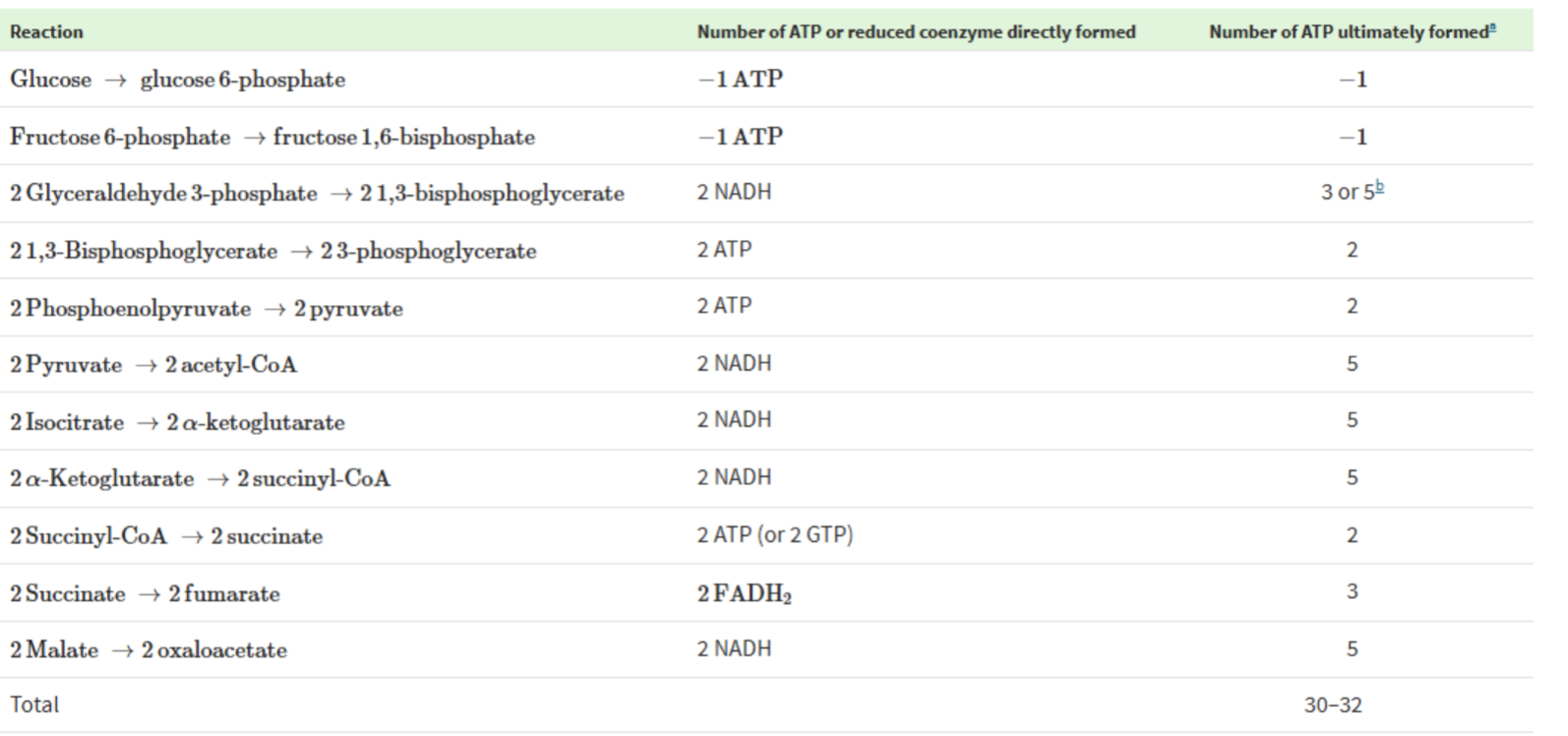
Energy of Oxidations in Cycle is Efficiently Conserved
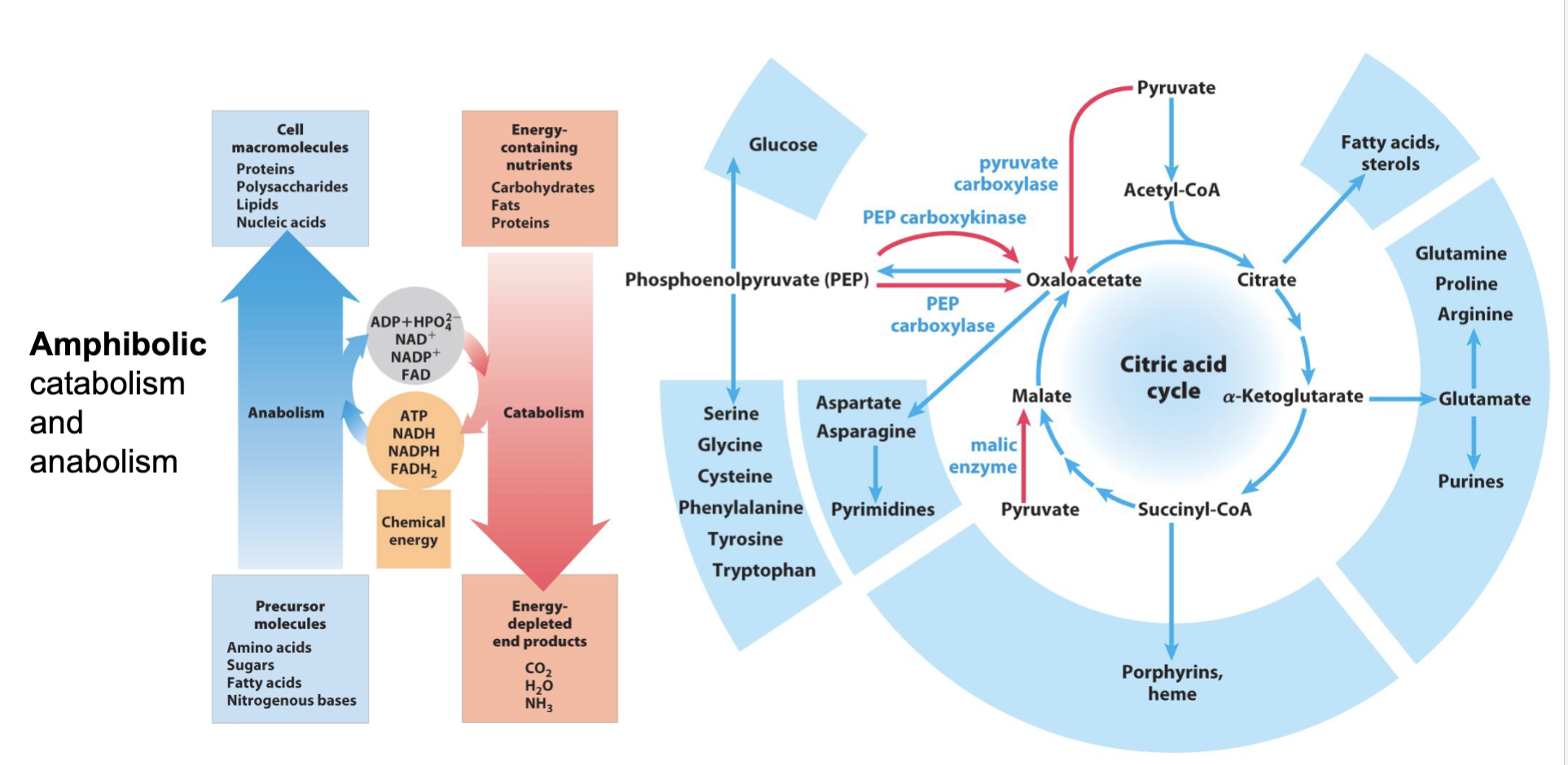
TCA Cycle is the Hub of Intermediary Metabolism
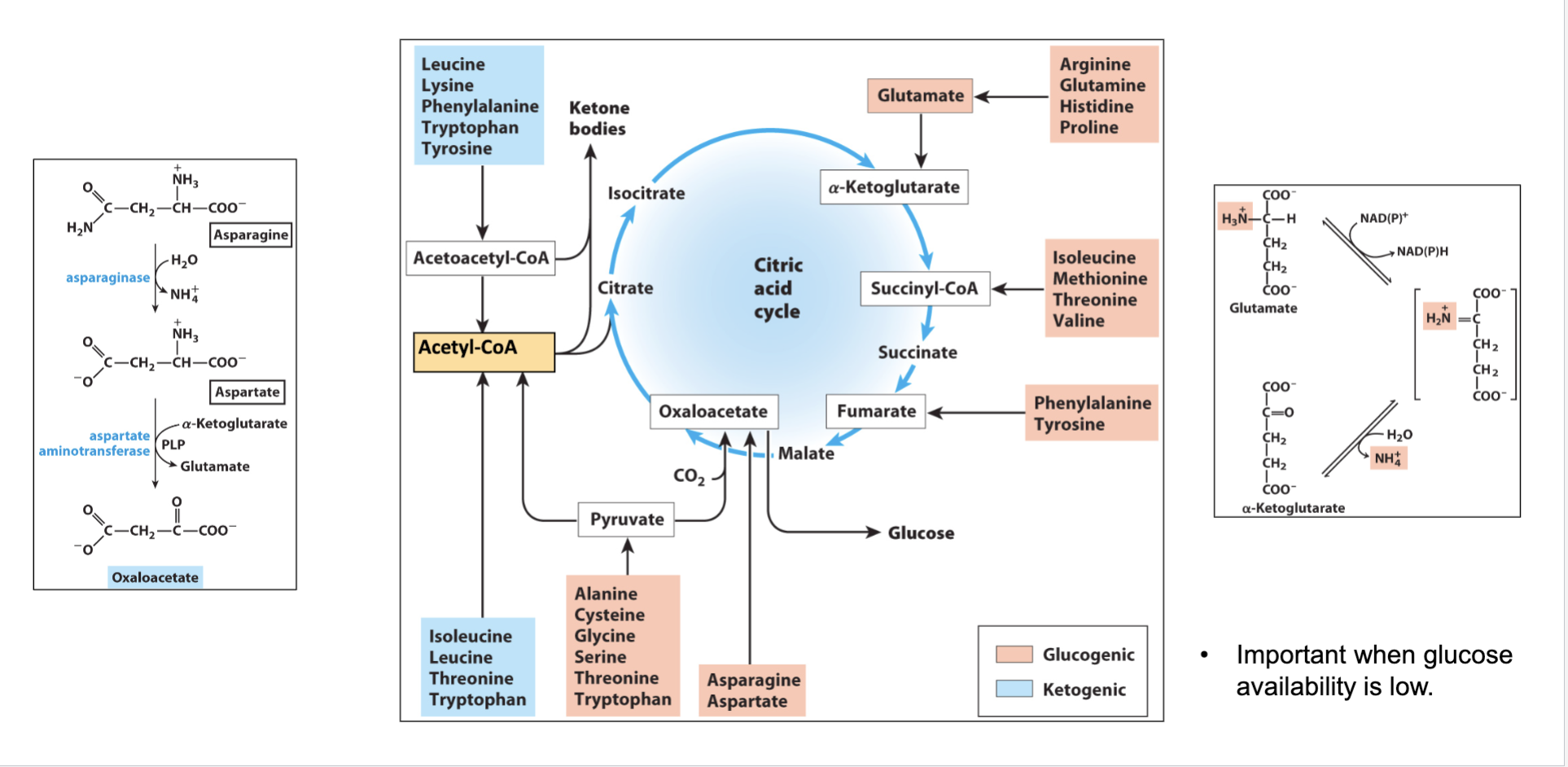
Amino Acids can Enter the CAC
The CAC in Anabolism