Chapter 1: Introduction to the Human Body (LECTUR/BIOL-201)
 Call Kai
 Learn
Learn Practice Test
 Spaced Repetition
 Match
Match Flashcards
 Knowt Play
1/157

Earn XP
Description and Tags
Anatomy and Physiology
Name | Mastery | Learn | Test | Matching | Spaced | Call with Kai | Chat |
|---|
No analytics yet
Send a link to your students to track their progress
158 Terms
Anatomy is…
The scientific study of the body’s structure.
Where does the word “anatomy” come from?
The greek root “to cut apart”
How was anatomy first studied?
By observing the exterior of the body and observing the wounds of soldiers and other injuries.
Gross Anatomy (or Macroscopic Anatomy) is…
The study of the larger structures of the body, those visible without the aid of magnification.
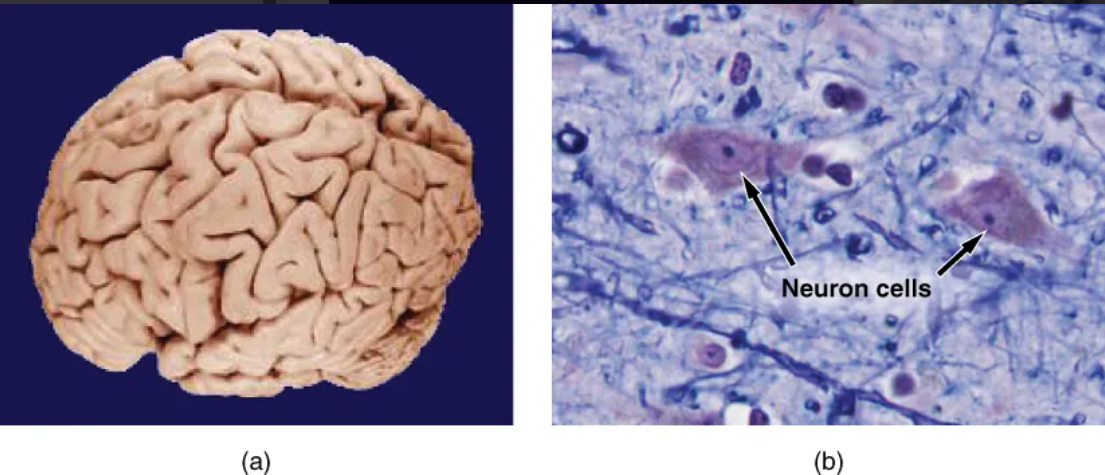
Microscopic Anatomy is…
The study of structures that can be observed only with the use of a microscope or other magnification devices
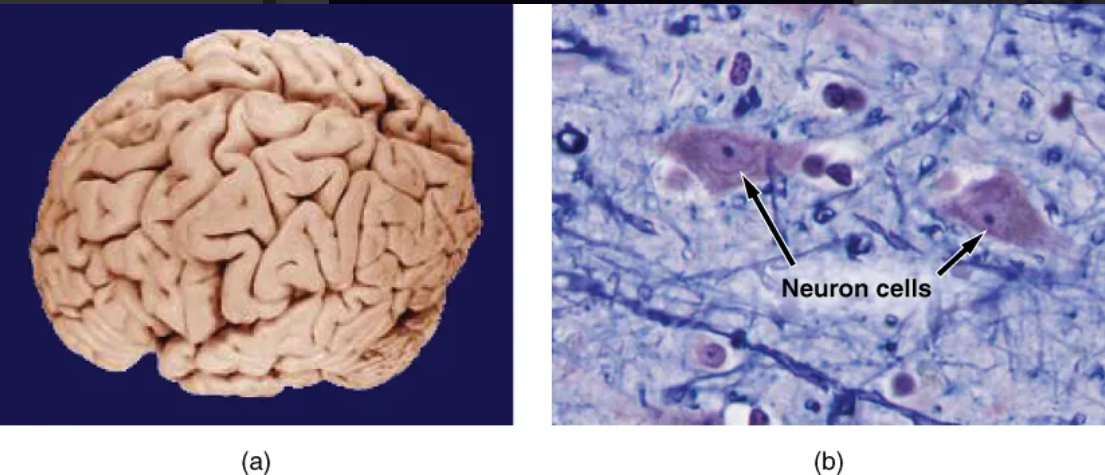
Microscopic anatomy includes…
Cytology and Histology
Cytology is…
The study of cells
Histology is…
The study of tissues
Regional anatomy is…
The study of the interrelationships of all of the structures in a specific body region.
Systemic anatomy is…
A group of structures that work together to perform a unique body function.
An example of Systemic anatomy is…
A study of the muscular system while considering all of the skeletal muscles of the body.
Human physiology is…
The scientific study of the chemistry and physics of the structures of the body and the ways they work together to support the functions of life.
Homeostasis is…
The state of steady internal conditions maintained by living things.
Neurophysiology is…
the study of the brain, spinal cord, and nerves and how these work together to perform functions such as vision, movement, and thinking
The smallest structure of the body:
atoms (the smallest units of an element that retain the properties of that element and cannot be divided by ordinary chemical means)
The second smallest structure of the body:
molecules (two or more atoms bonded together, typically by covalent bonds)
The third smallest structure of the body:
organelles (structures inside cells that perform specific functions such as energy production, protein synthesis, and waste processing (e.g nucleas, mitochondria, ribosomes)
The fourth smallest structure of the body:
cells (the structural and functional units of all living organisms, typically microscopic and enclosed by a membrane that contains cytoplasm and genetic material)
The fourth largest structure of the body:
tissues (a collection of cells that share structural similarities and cooperate to carry out a particular function)
The third largest structure of the body:
organs (specialized structures in the body made of tissues that work together to perform specific functions essential for life)
The second largest structure in the body:
organ systems (groups of organs that work together to perform specific bodily functions essential for life)
The largest structure in the body:
organisms (any complete living system capable of performing essential life processes independently)
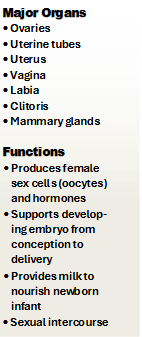
What system is this?
Female Reproductive System

What system is this?
Male Repoductive System
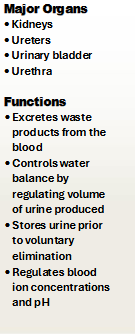
What system is this?
Urinary System

What system is this?
Digestive System
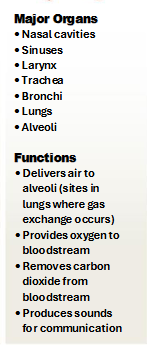
What system is this?
Respiratory System

What system is this?
Lymphatic System

What system is this?
Cardiovascular System

What system is this?
Endocrine System

What system is this?
Nervous System

What system is this?
Muscular System

What system is this?
Skeletal System
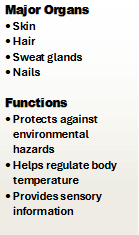
What system is this?
Integumentary System
The body’s largest organ system is…
the integumentary system.
Your basic function as an organism is…
to consume energy and molecules in the foods you eat, convert some of it into fuel for movement, sustain your body functions, and build and maintain your body structures.
Anabolism is…
the process whereby smaller, simpler molecules are combined into larger, more complex substances.
Catabolism is…
the process by which larger more complex substances are broken down into smaller simpler molecules.
Describe what Anabolism does
Directs your body in assembling, by utilizing energy, the complex chemicals it needs by combining small molecules derived from the foods you eat
Describe what Catabolism does
It releases energy. The complex molecules found in foods are broken down so the body can use their parts to assemble the structures and substances needed for life.
Catabolism and Anabolism together are…
metabolism.
Metabolism is…
the sum of anabolic and catabolic reactions that take place in the body.

What is ATP?
Adenosine Triphosphate
Fill in the blank.
Every cell in your body makes use of a chemical compound, ________ , to store and release energy.
adenosine triphosphate (ATP)
Describe cellular respiration (The ATP cycle)
The cell stores energy in the synthesis (anabolism) of ATP, then moves the ATP molecules to the location where energy is needed to fuel cellular activities. Then the ATP is broken down (catabolism) and a controlled amount of energy is released, which is used by the cell to perform a particular job.
Responsiveness is…
the ability of an organism to adjust to changes in its internal and external environments.
Development is…
all of the changes the body goes through in life.
Development includes the process of…
differentiation, in which unspecialized cells become specialized in structure and function to perform certain tasks in the body
Growth is…
the increase in body size
Reproduction is…
the formation of a new organism from parent organisms.
Brain cells are especially sensitive to lack of oxygen because…
of their requirement for a high-and-steady production of ATP.
Brain damage is likely within _______ without oxygen, and death is likely within ______.
5 Minutes, 10 Minutes
A nutrient is…
a substance in foods and beverages that is essential to human survival.
The three basic classes of nutrients are…
water, the energy-yielding and body-building nutrients, and the micronutrients (vitamins and minerals).
What is the most critical nutrient for human survival and how does it support the body’s functions?
Water — it makes up ~70% of an adult’s body mass, dissolves and transports chemicals, supports all cellular reactions, regulates internal temperature, and cushions/protects body structures. Humans can only survive a few days without it.
The energy-yielding nutrients are primarily…
carbohydrates and lipids, while proteins mainly supply the amino acids that are the building blocks of the body itself.
Water and the energy-yielding nutrients are also referred to as…
macronutrients, because the body needs them in large amounts.
micronutrients are…
vitamins and minerals
Decompression sickness (DCS) is a condition in which…
gases dissolved in the blood or in other body tissues are no longer dissolved following a reduction in pressure on the body
A set point is…
the physiological value around which the normal range fluctuates.
A normal range is…
is the restricted set of values that is optimally healthful and stable.
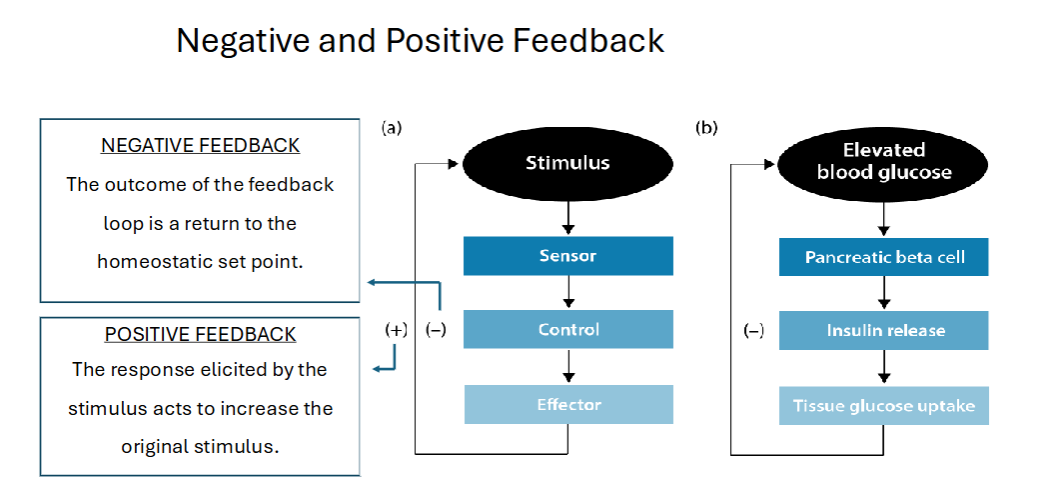
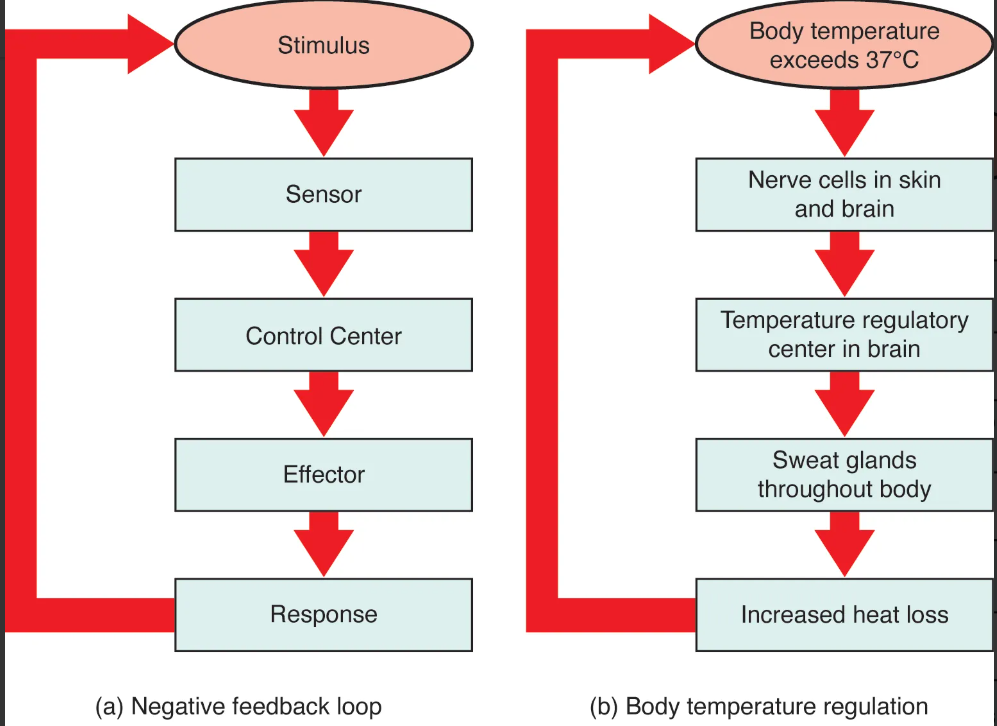
Negative feedback is…
The outcome of the feedback loop is a return to the homeostatic set point.
A negative feedback system has three basic components. What are they?
A sensor, also referred to a receptor, the control center and an effector.
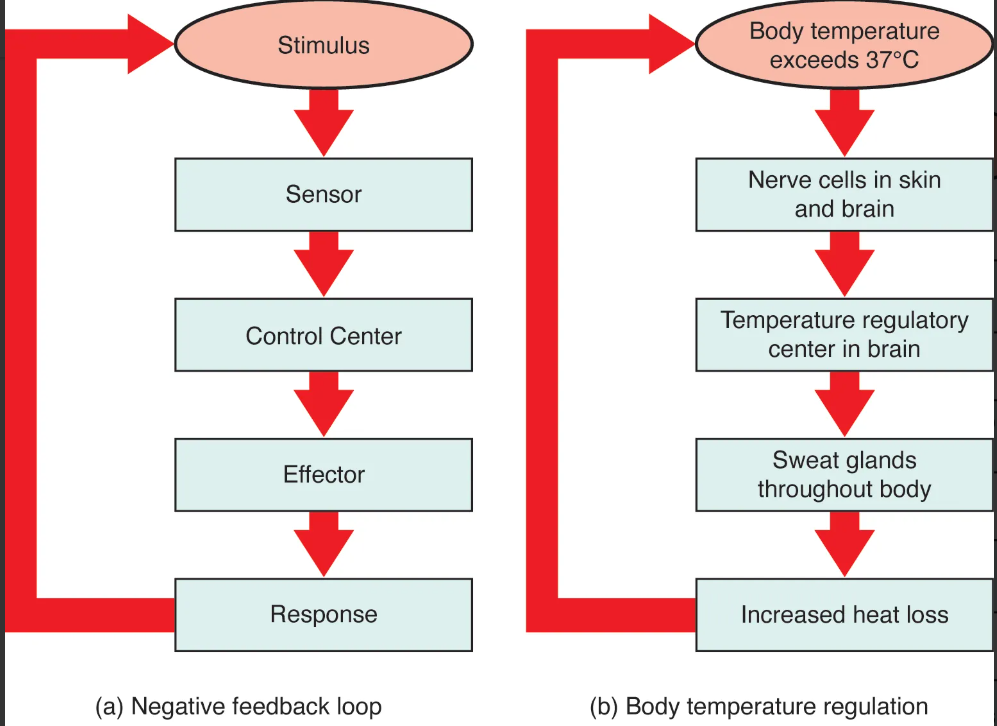
What is a sensor (or a receptor)?
A component of a feedback system that monitors a physiological value, this value is reported to the control center.
What is the Control Center?
The component in a feedback system that compares the value to the normal range. If the value deviates too much from the set point, then the control center activates an effector.

What is an effector?
The component in a feedback system that causes a change to reverse the situation and return the value to the normal range.
What is the difference between a set point and a normal range?
A set point is the specific physiological value the body aims to maintain (ex: ~37°C body temperature). A normal range is the small span of values around that set point where the body can fluctuate and still remain healthy and stable.
Give an example of the Negative Feedback System

Positive feedback is…
intensifying a change in the body’s physiological condition rather than reversing it.
Positive feedback in the body is normal only when…
there is a definite end point.
Two examples of positive feedback loops are…
Childbirth and the body’s response to blood loss.
Anatomical terms are made up of…
roots, prefixes, and suffixes
The root of a term often refers to an…
organ, tissue, or condition.
The prefix or suffix often…
describes the root.

Label this image
Cranial (Skull)

Label this image
Frontal (forehead)

Label this image
Oculus, or eye (orbital, in reference to eyesocket or ocular, in reference to the eye itself)

Label this image
Buccal (Cheek)

Label this image
Cephallic (head)

Label this image
Otic (ear)

Label this image
Oral (mouth)

Label this image
Mental (Chin)

Label this image
Cervical (neck)

Label this image
Thoractic (thorax, chest)

Label This Image
Mammary (breast)

Label this Image
Brachial (arm)

Label this image
Axillary (armpit)

Label this image
antecubital (front of elbow)

Label this image
Abdominal (abdomen)
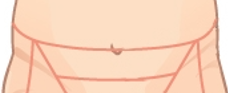
Label this image
Umbillical (navel)
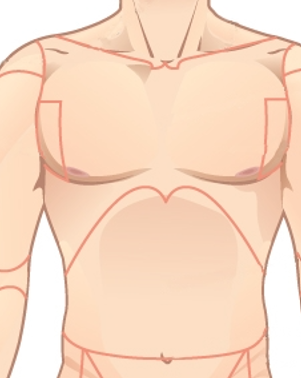
Label this image
Trunk
Anterior (or ventral)
Describes the front or direction toward the front of the body. The toes are anterior to the foot.
Posterior (or dorsal)
Describes the back or direction toward the back of the body. The popliteus is posterior to the patella.
Superior (or cranial)
describes a position above or higher than another part of the body proper. The orbits are superior to the oris.
Inferior (or caudal)
describes a position below or lower than another part of the body proper; near or toward the tail (in humans, the coccyx, or lowest part of the spinal column). The pelvis is inferior to the abdomen.
Lateral
describes the side or direction toward the side of the body. The thumb (pollex) is lateral to the digits.
Decompression sickness (DCS)
A condition in which gases dissolved in the blood or in other body tissues are no longer dissolved following a reduction in pressure on the body.
Medial
Describes the middle or direction toward the middle of the body. The hallux is the medial toe.
Proximal
Describes a position in a limb that is nearer to the point of attachment or the trunk of the body. The brachium is proximal to the antebrachium.