Differences of Prokaryotic Cells
 Call Kai
 Learn
Learn Practice Test
 Spaced Repetition
 Match
Match Flashcards
 Knowt Play
1/26

There's no tags or description
Looks like no tags are added yet.
Name | Mastery | Learn | Test | Matching | Spaced | Call with Kai | Chat |
|---|
No analytics yet
Send a link to your students to track their progress
27 Terms
What is a key difference between prokaryotic and eukaryotic cells regarding chromosomes?
Prokaryotes have one circular chromosome not in a membrane, while eukaryotes have paired chromosomes in a nuclear membrane.

Do prokaryotic cells contain organelles?
No, prokaryotic cells do not contain organelles.
What type of cell wall do bacteria have?
Bacteria have peptidoglycan cell walls.
How do prokaryotic cells divide?
Prokaryotic cells divide by binary fission.
What are the shapes of bacterial cells?
Bacterial cells can be bacillus (rod-shaped), coccus (spherical), spiral, vibrio, spirillum, spirochete, star-shaped, or rectangular.
What is the average size range of bacterial cells?
Bacterial cells typically range from 0.2 to 2.0 µm in diameter and 2 to 8 µm in length.
What is the function of glycocalyx in bacterial cells?
Glycocalyx serves as a source of nutrition, protects from dehydration, and contributes to virulence.
What are the two types of glycocalyx?
The two types are capsule (neatly organized and firmly attached) and slime layer (unorganized and loose).
What is the structure of flagella in prokaryotic cells?
Flagella consist of three parts: filament, hook, and basal body.

What is the role of fimbriae in bacteria?
Fimbriae are hairlike appendages that allow for attachment.
What is the primary component of bacterial cell walls?
The primary component is peptidoglycan.
What distinguishes gram-negative cell walls from gram-positive?
Gram-negative cell walls have an outer membrane and a periplasmic space, while gram-positive cell walls are thicker and contain teichoic acids.

What is the function of lipopolysaccharide (LPS) in gram-negative bacteria?
LPS protects from phagocytes and antibiotics and contains an endotoxin (Lipid A).
What is the significance of the plasma membrane in prokaryotic cells?
The plasma membrane is a phospholipid bilayer that encloses the cytoplasm and is selectively permeable.

What are the two types of processes for material movement across membranes?
Passive processes (no energy required) and active processes (energy required).
What is osmosis?
Osmosis is the movement of water across a selectively permeable membrane from an area of high water concentration to an area of lower water concentration.
What are plasmids?
Plasmids are extrachromosomal genetic elements that carry non-crucial genes and replicate independently of chromosomal DNA.
What are ribosomes made of in prokaryotic cells?
Ribosomes are made of protein and ribosomal RNA and are classified as 70S with 50S and 30S subunits.
What are endospores?
Endospores are resting cells produced when nutrients are depleted, resistant to desiccation, heat, chemicals, and radiation.

What is the process of sporulation?
Sporulation is the formation of endospores.
What is the function of teichoic acids in gram-positive bacteria?
Teichoic acids link the cell wall to the plasma membrane and carry a negative charge, regulating cation movement.
What is the role of aquaporins in bacterial cells?
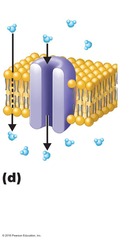
Aquaporins are water channels that facilitate the movement of water across the plasma membrane.
What happens to a bacterial cell in a hypotonic solution?
Water moves into the cell, which can cause it to swell and potentially burst if the cell wall is weak.
What is the composition of peptidoglycan?
Peptidoglycan is a polymer of repeating disaccharides (N-acetylglucosamine and N-acetylmuramic acid) linked by polypeptides.
What is the difference between exotoxins and endotoxins?
Exotoxins are produced by gram-positive bacteria, while endotoxins (Lipid A) are part of the gram-negative cell wall.
What are gas vacuoles in bacteria?
Gas vacuoles are protein-covered cylinders that maintain buoyancy in aquatic bacteria.
What is the significance of the nucleoid in prokaryotic cells?
The nucleoid contains the bacterial chromosome, which is a circular thread of DNA that holds the cell's genetic information.