Development of Israel
 Call Kai
 Learn
Learn Practice Test
 Spaced Repetition
 Match
Match Flashcards
 Knowt Play
1/70

There's no tags or description
Looks like no tags are added yet.
Name | Mastery | Learn | Test | Matching | Spaced | Call with Kai | Chat |
|---|
No analytics yet
Send a link to your students to track their progress
71 Terms
Yishuv
Jewish community
Mapai
A centre-left political party, and was the dominant force in Israeli politics until its merger into the modern-day Israeli Labor Party in 1968.
David Ben-Gurion (1949-1963)
Israeli statesman (born in Poland) and active Zionist who organized resistance against the British after World War II. First Prime Minister of Israel and primary national founder. Also largely responsible for the planning of Plan D.

Altalena Affair (1948)
A shipment of arms for the Irgun arrived, but the IDF was ordered to prevent the unloading. Struggle ensued. The ship was shelled and eventually sank, and several Irgun members were killed. The remaining autonomous units of Irgun and Lehi were absorbed into the IDF after this affair. The incident also consolidated support for Ben-Gurion and Begin.
Knesset
The unicameral Israeli parliament. It is composed of 120 members.
Original Minimum Percentage of Vote for Party Representation in Knesset
1 %
Raised Minimum Percentage of Vote for Party Representation in Knesset
1.5%
Coalition Government
When two or more parties join together to form a majority in a national legislature. This form of government is quite common in the multiparty systems of Europe.
Highest Number of Seats the Mapai Party Ever Held in Knesset
47
Sephardic Jews
Jews from Arab Countries
Ashkenazi Jews
Jews from European Countries
# of Sephardic Immigrants into Israel from 1948-1956
450,000
Nationality Law (1952)
It provided citizenship to Arabs who could prove their long-standing residence in Palestine.
# of Palestinian Arabs within the post 1949 boundaries of Israel
160,000
Identity Cards & Travel Permits
Israeli Arabs required to carry special identity cards and obtain travel permits to go from one village to another
The Law of Return (1950)
It gave every Jew in the world the right to immigrate to Israel.
"Millet" Judiciary
Separate courts for Jewish, Islamic, and Christians. Separation continues to identity cards.
Reserve Military
Because Israel could not afford to keep a large standing military, nearly all men and women are/were required to serve military (3 years for men/2 years for women) and remain in the reserves (40's for men/30's for women). Exemptions only granted for Arab Israeli's ultra religious, and women with special family responsibilities.

Ben Gurionism
A retaliatory principle--every act of aggression against Israel met with an armed response out of proportion to the initial aggression. Intended to dissuade Arab nations from conflict with Israel and to sue for peace. Arguably had the opposite effect--EX: Nasser seeking advanced weapons from Soviets.
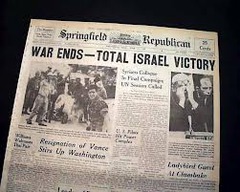
6 Day War (1967)
Israel preemptively attacks Syria, Jordan, and Eqypt taking out air forces. Israel wins and gets Golan Heights from Syria, West Bank from Jordan, and Sinai Peninsula and Gaza form Egypt.
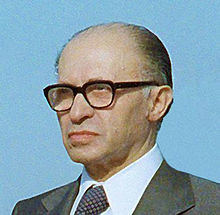
Menachem Begin (1977-1983)
Prime Minister of Israel, former head of the Irgun, and proponent of Jabotinsky Revisionist Zionism. Signed a peace treaty with Egypt withdrawing from Sinai Peninsula and Gaza Strip and returning them to Egypt. Also signed the Camp David Accords. Also bombed an Iraqi nuclear reactor in 1981 and invaded Lebanon in 1982.
Palestinian Liberation Authority (1964-present)
Founded by the Arab League and based in first based in Cairo in an attempt to restrict Palestinian resistance activity and prevent them from operating independently, they represented Palestinian interests in the West Bank and Gaza. An organization comprising multiple groups.
# of Palestinians registered for relief by the UN in 1950
960,000
# of Palestinian refugees in 1968
1.3 million
Only Arab nation that granted Palestinians citizenship
Jordan
al-Fatah (Late 1950's)
The largest and most influential organization within the Palestine Liberation Organization. Leading guerrilla group operating in Gaza and Jordan. Eventually led by Yasir Arafat. Focused on secular, Palestinian nationalism. Refused to recognize Resolution 242.

Yasir Arafat (1969-2004)
Began as an opposition leader with response to the 6 Day War, but elected chairman of the PLO. Invasion of Lebanon, and First Intifada. Later focuses on Palestinian Independence with Oslo I and II and Camp David II.

Black September (1970)
Commando groups operating in Jordan were crushed by the Jordanian troops. Refugees and PLO members were both targeted, and 3,000 Palestinians were killed. The PLO moved their headquarters to Lebanon in response.
East Jerusalem
Officially annexed by Israel in 1967. The annexation is recognized by no one.
Likud
Right wing party with roots in revisionist Zionism, favors privatization, no negotiation with Arabs, revival of Jewish culture, main people: Menachem Begin, Yitzhak Shamir, and Benjamin Netanyahu.
Settlements
Places in the West Bank or Gaza Strip where Israelis have settled in occupied areas.

First Intifada (1987)
"Shaking Off" in Arabic, uprising against Israeli rule in Palestinian Territories. It included strikes, boycotts, refusal to pay taxes and stone throwing at IDF. Made a conscious effort to disavow the use of guns and knives, which was less effective as the conflict continued. 1,025 Palestinians died, 37,000 wounded, and 35,000-40,000 arrested.

Yitzhak Shamir (1983-84 & 1986-92)
Israeli Prime Minister, former Lehi leader, and Mossad member. His policies included the construction of new settlements, preparation to annex territory, and measures designed to subjugate Palestinians.

Hamas
An Islamic fundamentalist political movement that opposes peace with Israel, employs terrorism, and competed with the PLO for leadership. It won election in Gaza in 2006.
PLO Recognition of Israel's Right to Exist
Arafat know that the only country able to persuade Israel to modify its policies about occupied territory was the US. The US wouldn't excise its influence without PLO recognition of Israel's right to exist. in 1988 the PLO acknowledged Israel's right to exist within its pre-1967 borders. A splinter group within the PLO attempted a raid in Israel, which the US broke of PLO relations over. Arafat turned to Saddam Hussein ...
Oslo I (1993)
The first treaty between Israel and the PLO, signed in September. The treaty stipulated that Israel recognize the PLO as the representative of the Palestinians, while the PLO was committed to recognize Israel's right to exist and cease terrorist activity. They also stated that Israel would withdraw from the Palestinian territories in the West Bank and Gaza Strip, and that a Palestinian state would (eventually) be established
Oslo II (1995)
Israeli-Palestinian Interim Agreement on the West Bank and Gaza Strip (or Interim Agreemet) established three areas in the West Bank: Area A (majority of concentrated population, controlled by the PA), Area B (joint control of PA and Israel), and Area C (complete Israeli control). There would also be three phased redeployments of Israeli forces (territorial transfers) - C to B and B to A; all three redeployments are not implemented in part because Netanyahu dragged his feet (ideologically opposed to peace) and because Barak wanted to bypass this plan and go straight to final peace settlement (more committed to peace)
Enforcement of US anti-annexation policies
President Bush linked US financial aid to Israel to Israel's willingness to curb West Bank and Gaza settlements. He withheld $10 Billion. Israel badly needed the money to fund the settlement of a new wave of immigrants from the recently collapsed Soviet Union. Bush authorized the loan once Rabin was elected and a partial freezing of settlements was enacted.
Ariel Sharon (2001-2006)
Israeli Prime Minister responsible for the policy of disengagement, which isolated and divided Palestinians--especially in the West Bank, and evacuated all settlers from Gaza, and some from the West Bank.

Yitshak Rabin (1993-95)
Israeli Prime Minister who greed to grant the Palestinians self-rule in the Gaza Strip and the West Bank. Famously said, "Engouh of blood and tears. Enough!" defending Oslo I although also expressing his uncomfortableness with the agreement. Assassinated by a right wing Israeli terrorist.

Bejamin Netanyahu (1996-99 & 2009-21)
Prime Minister of Israel and proponent of Jabotinsky Revisionist Zionism and Likud leader. He authorized the construction of new settlements in violation of the Oslo Accords, refused to acknowledge any connection between occupied territory and peace, and signed and then violated the Wye Accords a month later.

Wye Accords (1998)
Clinton hosted in October a meeting between Netanyahu and Arafat here. The two sides agreed to the Wye Accords under which Israel agreed to yield territory in exchange for security guarantees from the Palestinians. However, these agreements produced few improvements as extremist groups continued to frustrate the peace process.
Ehud Barak (1999-2001)
The most decorated soldier in Israeli history and Labor leader as well as Israeli Prime Minister. He ordered the withdrawal of Israeli forces from Gaza in 2000 in the face of Hezbollah attacks. Invited to Camp David to discuss unresolved issues with Bill Clinton; agreed to the creation of a Palestinian state in all of Gaza and about 95 percent of the West Ban. Camp David II ended in an impasse.

Second Intifada (2000-2005)
A period of intensified Palestinian-Israeli violence sparked by Sharon's visit to Al-Aqsa, a prominent Muslim mosque and cite of the Temple Mount. The IDF response to initial demonstrations killed 18 Palestinians. The violence quickly spread beyond Arafat's control. Palestinians viewed the visit as an affront to Islam, and Jews viewed the response as Arafat's unfitness as a partner for peace. The second intifada was deadlier and more militarized from both sides, with Palestinians using light automatic weapons, but Israel using tanks, Apache helicopters, and F-16 jets. Israel closed the West Bank, which was an economic disaster for Palestinians.

Palestinian Casualties in Second Intifada
2400
Israeli Casualties in Second Intifada
780
Taba (2001)
Last ditch effort by Clinton and Barak on peace plan. Set forth the idea of Palestinian refuges right to return, planned 94-96% of West Bank for a future Palestinian state. Israel would annex portions of West Bank, but Palestinians would receive compensation. Agreements for a corridor connecting Gaza and West Bank. Taba was too late, though. Both Clinton and Barak didn't have enough time left in office to implement agreements.
Disengagement (2004)
Sharon's plan to unilaterally separate from Palestinians. It removed all settlers from Gaza and from four settlements in the West Bank. It was enough to placate President Bush and the US, but it put the peace process on the back burner. A physical barrier was constructed in the West Bank, which isolated and divided Palestinians.

Kadima
"Forward" The new party Sharon formed in response to conservative critics of his partial withdrawal under disengagement.
Mahmoud Abbas (2005-Present)
President of PLO after Arafat's death. Negotiating with Israel for creation of a separate Palestinian state in the West Bank and Gaza.

Elections of 2006, PLO v. Hamas
Abbas attempted to bring Hamas into peace planning, which western nations and Israel rejected. Unwilling to confront Hamas militarily, Abbas called for elections in an effort to stem Hamas's rising power. Hamas won 76 seats to the PLO's 43. Abbas retained the presidency, but there was an international boycott of the Hamas government. Hamas, fearing a takeover, seized Al-Fatah bases in Gaza in 2007. Abbas accused Hamas of staging a coup, and he dismissed the Hamas led government to rule the West Bank separately.
Gaza Blockade (2007)
Israel placed a trading restriction here with devastating economic repercussions. Hams responded by increasing tunneling into Egypt for supplies.
War of Attrition (1967-70)
Nasser is determined to retake Sinai Peninsula. The Soviets helped Egypt rebuild, and Israeli forces take heavy losses in early fighting, but Israeli airstrikes cripple the Egyptian Air Force. The Soviets start directly patrolling Egyptian airspace and a ceasefire is reached in 1970.
Yom Kippur/Ramadan War (1973)
Egypt and Syria hoped regain land taken in 1967. Egyptians retake Suez Canal and Syrians broke through the Golan Heights, but Israeli forces, led by Ariel Sharon, retake the Golan Heights. Cease fire in 1974, and Israel withdrew further into Sinai Peninsula.

Camp David I (1978)
Accomplishments:
*Established an autonomous, self-governing Palestinian in the West Bank and the Gaza Strip.
*The withdrawal of troops from the West Bank and Gaza (the accords did not mention the Golan Heights).
*The accords purposefully excluded the fate of Jerusalem. It was not a comprehensive agreement that many had hoped for.

Camp David II (2000)
(2000) Bill Clinton, Barak, and Arafat attempted to hammer out a deal.
central issues discussed:
◦A. Territory. Israel offered to withdraw from 73% of the West Bank, but keep 27%. Israel would have withdrawn from 63 settlements in the West Bank
Independence of East Jerusalem.
◦B. Right to Return of Refugees.
◦C. Security Arrangements.

The Basic Law: Human Dignity and Liberty (1992)
The Knesset found a way to circumvent the opposition of the religious parties to a constitutional principle of equality by introducing a partial constitutional bill of rights, the Basic Law. It is applied to women's and minority rights when applicable.
Affirmative Action and the IWN (Israeli Women's Network)
In two Supreme Court decisions the practice of affirmative action for women was upheld by the Supreme Court in cases dealing with the Israeli government. They argued it was justified under Human Dignity and Liberty to give preference to a historically disadvantaged group. The Supreme Court ruled against Affirmative Action in Miller (the case where the female pilot sued the IDF).
Gender Pay Gap (2002-2012)
Israeli Gender Pay Gap was an average of 65%.
Oil Embargo (1973)
Arab members of OPEC (Organization of the Petroleum Exporting Countries) stopped selling oil to the US and other Israeli allies to protest military support for Israel. This resulted in an energy crisis in the early 1970s where rationing of gasoline took place and significant economic instability in the 70s--including high inflation.

Kibbutz-im
Collective farm(s) in Israel credited with high economic success. While they did develop drip irrigation in the in the sixties, the impact of kibbutzim is overstated despite significant establishment of kibbutzim from independence to 1980.
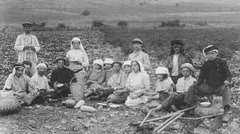
Moshavim
A small cooperative farming village in Israel, but land is owned privately.
US Aid to Israel
The US has provided more than $121 billion dollars to aid in Israel since 1949, however, almost all of that aid was given after 1970 and in the form of military grants.
Holocaust Reparations
The West German government agreed to make payments of $1 Billion to Israel, which the Knesset hotly debated if they would even accept. The German government and German businesses also set up a fund in the eighties and nineties that distributed over $5 billion to Holocaust survivors.
Annual Israeli GDP growth from 1950-65
11%
Israeli Hyperinflation (1984)
Inflation levels reached 445% after a change in monetary policy and the effects of Arab Israeli Conflict starting with the Six Days War and corresponding embargo.
Economic Liberalization
From the rationing and socialist economic planning of resources to help absorb immigrants in the 1950s, the Israeli economy liberalized and privatized significantly in the 80's and 90's.
90's Tech Boom
A wave of immigration from the Soviet Union fueled Israel's development in this sector of the economy.
Debt Management (early 2000's)
Israel's ratio of debt to GDP was around 110%-115%, today it is around 55%.
Camp David II Consequences (2000)
◦Both sides met again in October and December, but postponed. Both sides issued a statement in January of 2001 stating they had never been closer to peace.
◦Barak's popularity dropped and he lost his next election to Sharon. Arafat's popularity increased somewhat.
Camp David I Consequences ( 1978)
◦The UN rejected the accords because: a) The PLO and UN were not part of the negotiations, b) the right of Palestinian refugees to return had not been guaranteed, and c)
◦Sadat and Begin were awarded the 1978 Nobel Peace Prize.
◦Egypt was kicked out of the Arab League until 1989.
◦Sadat was assassinated in 1981 by members of the Egyptian Islamic Jihad.
◦Egypt and Israel normalized relations in 1980, which included the return of the Sinai Peninsula and a peaceful border.
◦Egypt lost quite a bit of respect in the Arab world.