Neuroendocrine System: Homeostasis, Control Systems, and Hormone Regulation
 Call Kai
 Learn
Learn Practice Test
 Spaced Repetition
 Match
Match Flashcards
 Knowt Play
1/48

There's no tags or description
Looks like no tags are added yet.
Name | Mastery | Learn | Test | Matching | Spaced | Call with Kai | Chat |
|---|
No analytics yet
Send a link to your students to track their progress
49 Terms
What is homeostasis?
The maintenance of a stable internal environment essential for survival.
What are the basic components of a homeostatic system?
Receptor, Control (Integration) Centre, and Effector.
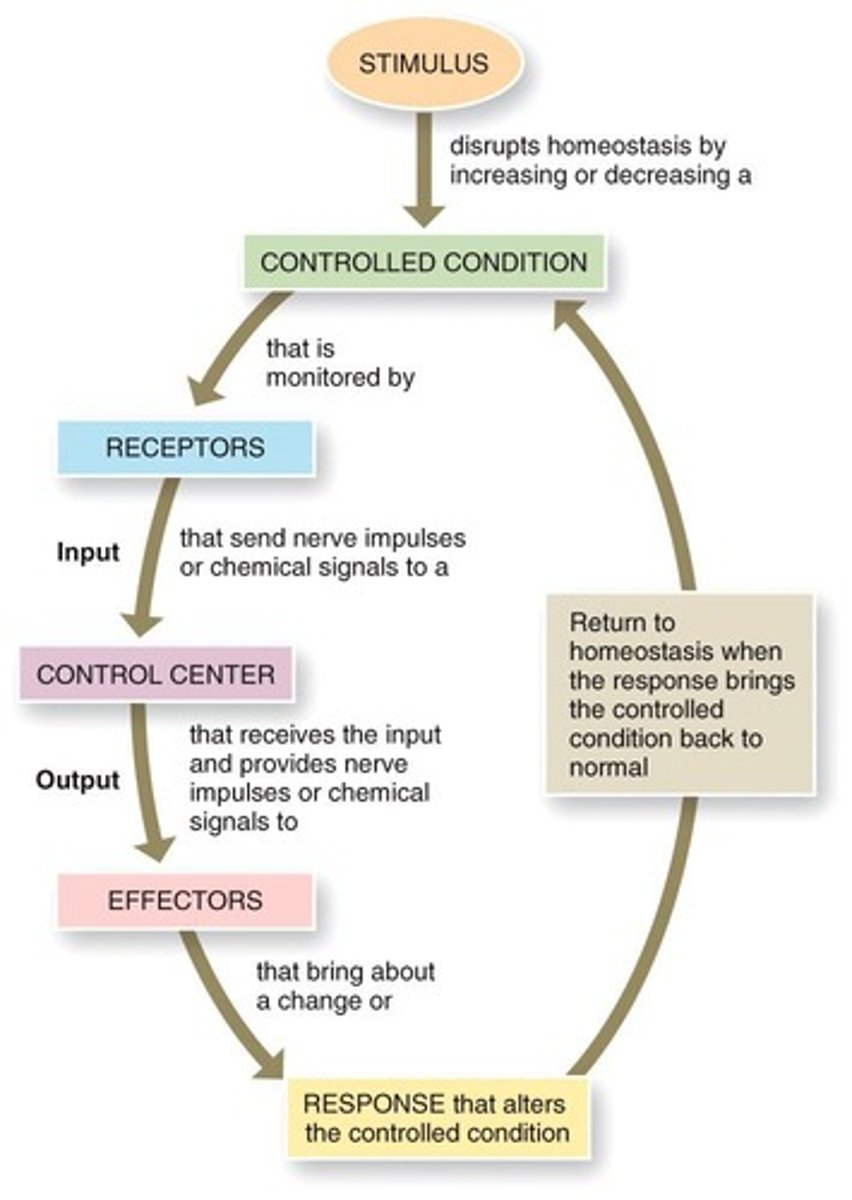
How does a receptor function in a homeostatic system?
It receives the stimulus (change in controlled condition).
What role does the Control (Integration) Centre play?
It receives and processes information and determines the response.
What is the function of an Effector in homeostasis?
It produces a response that alters a controlled condition.
What type of feedback primarily regulates homeostasis?
Negative feedback.
What is an example of negative feedback in the human body?
The maintenance of core body temperature.
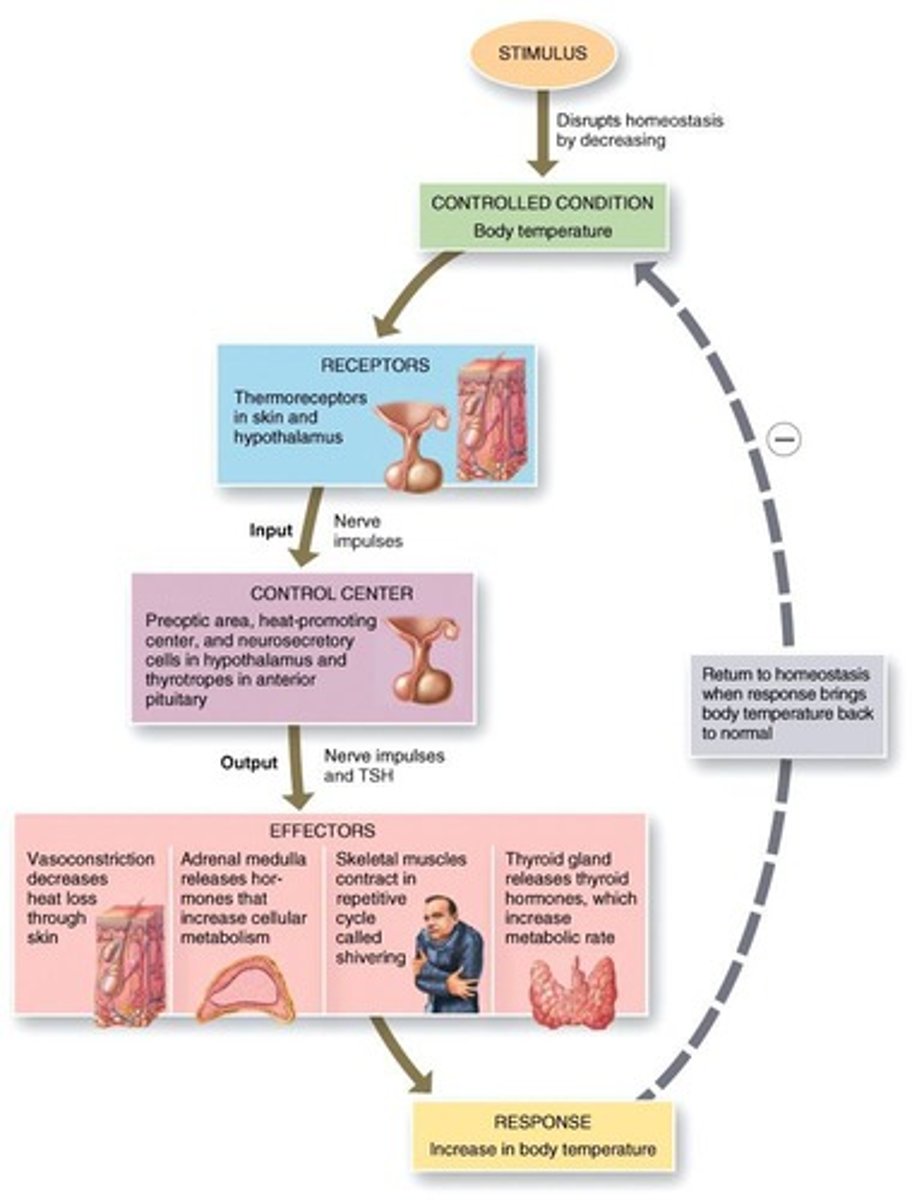
What is the normal range for core body temperature?
36.7-37.2°C with a set point of 37°C.
What occurs when body temperature rises above the normal range?
Sweating occurs and blood vessels in the skin dilate.
What happens when body temperature drops below the normal range?
Sweating ceases, shivering occurs, and blood vessels in the skin constrict.
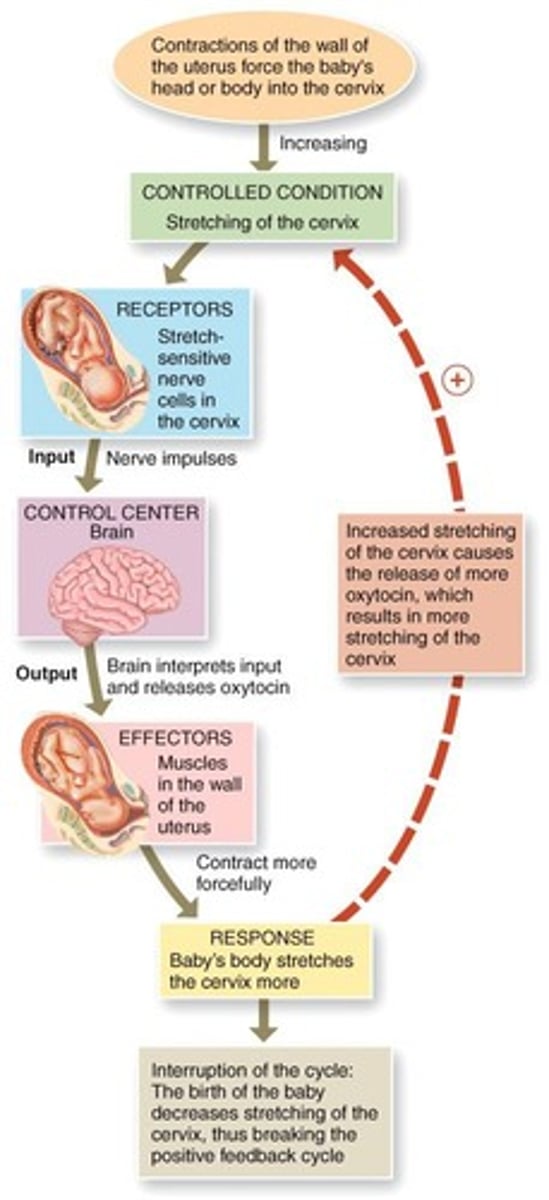
What is positive feedback?
A response that enhances the stimulus rather than opposing it.
Give an example of positive feedback.
Blood loss or childbirth.
What are the two control systems in the human body?
The nervous system and the endocrine system.
How does the nervous system control body functions?
Through direct immediate control via action potentials (nerve impulses).
How does the endocrine system control body functions?
By utilizing chemical messengers (hormones) secreted in the blood.
What types of communication ensure homeostasis?
Direct, paracrine, endocrine, and synaptic communication.
What is direct communication?
Transmission through gap junctions using ions and small solutes.
What is paracrine communication?
Transmission through extracellular fluid using paracrine factors.
What is endocrine communication?
Transmission through the bloodstream using hormones.
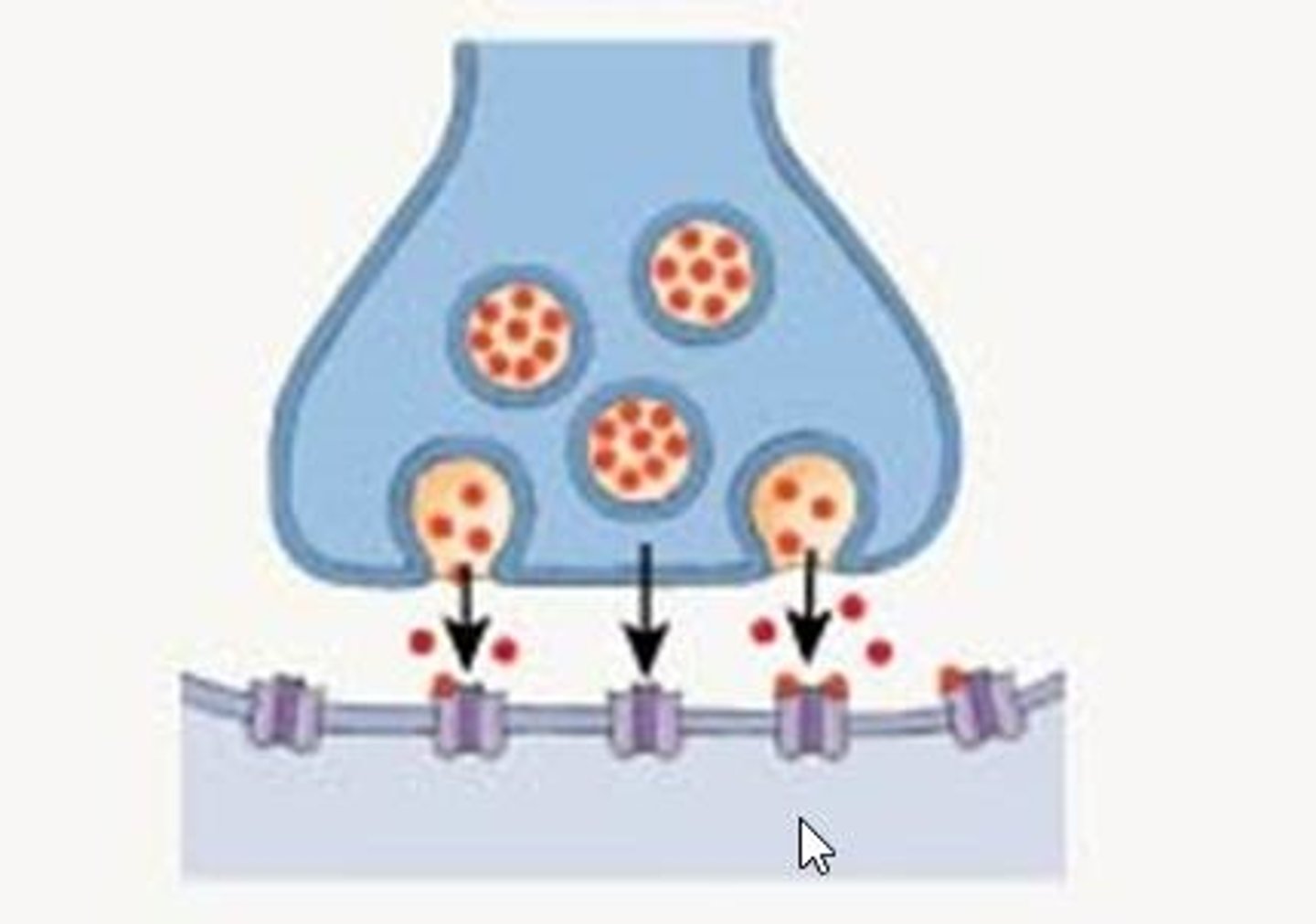
What is synaptic communication?
Transmission across synapses using neurotransmitters.
What is the significance of having appropriate receptors in communication?
Target cells must have appropriate receptors to respond to the signals.
What is the primary goal of homeostatic systems?
To adjust physiological systems in response to internal and external conditions.
What does homeostatic regulation maintain?
A normal range rather than an absolute value.
What is the relationship between the nervous and endocrine systems?
Both systems have similarities in control but differ in speed and method of communication.
What is the primary function of endocrine glands?
To secrete hormones (chemical messengers) into the circulatory system.
Name three endocrine glands located in the central nervous system.
Hypothalamus, pituitary gland, and pineal gland.
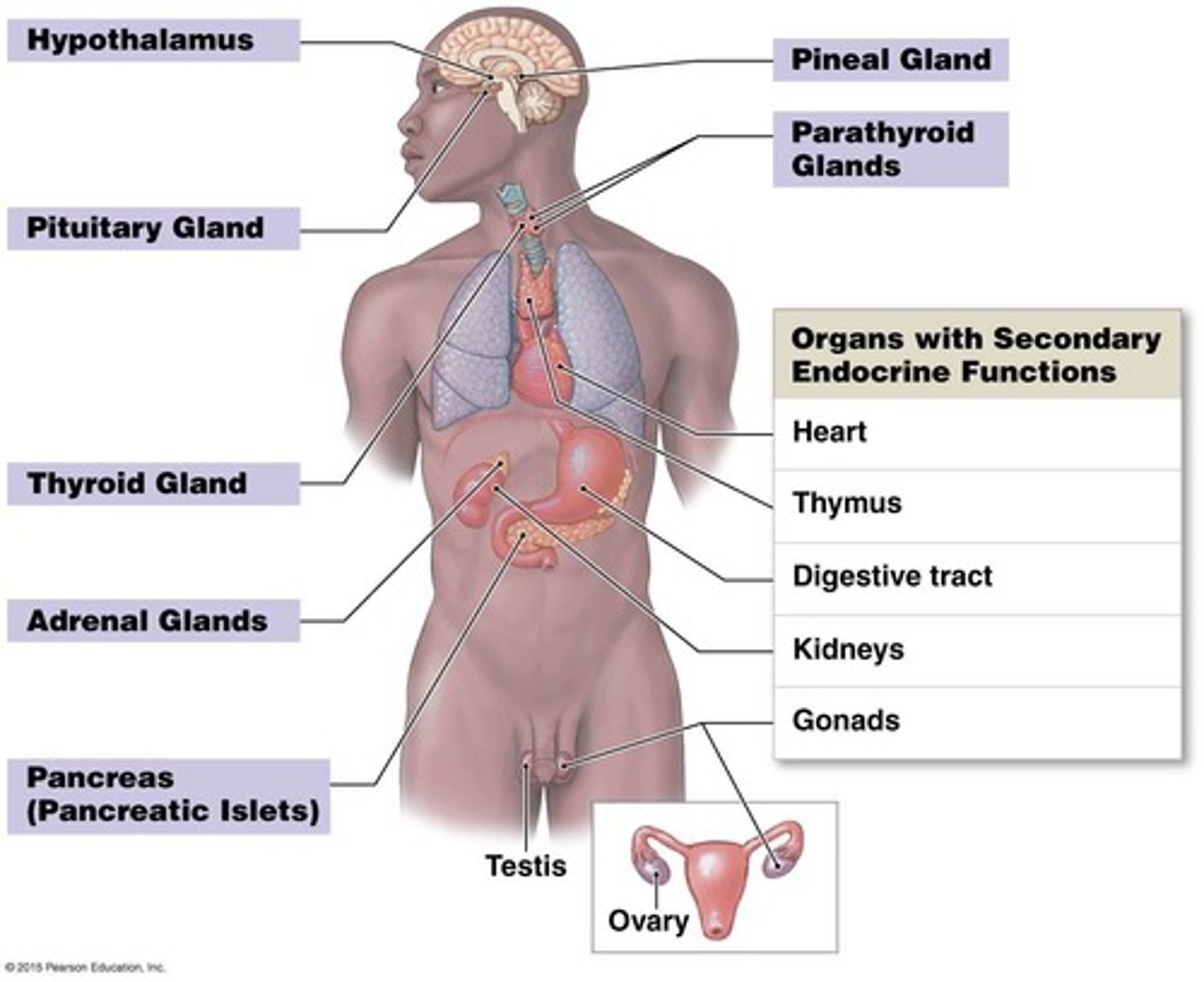
What hormones do the heart secrete?
Natriuretic peptides to control water and salt balance.
Which hormones are secreted by the small intestines?
Cholecystokinin, secretin, and gastric inhibitory peptide.
What hormones do the gonads secrete?
Steroid hormones such as testosterone (testes) and oestrogens/progesterone (ovaries).
What is the function of thymosins secreted by the thymus?
To coordinate and regulate the immune response.
What role do the kidneys play in hormone secretion?
They secrete calcitrol to regulate calcium homeostasis and erythropoietin to stimulate red blood cell production.
What hormone does adipose tissue secrete?
Leptin, which controls appetite.
What are the three groups of endocrine hormones?
Amino acid derivatives, peptide hormones, and lipid derivatives.
Give an example of an amino acid derivative hormone.
Thyroid hormones or catecholamines.
What are peptide hormones?
Hormones such as anti-diuretic hormone, insulin, and prolactin.
What are lipid derivatives in the context of hormones?
Steroid hormones released from reproductive organs and adrenal glands, and local hormones (eicosanoids).
How are amino acid-based and peptide hormones transported in the blood?
They are usually water soluble and can diffuse easily from their site of release to target tissues.
What is the transport requirement for steroid-based hormones?
They are not water soluble, require a carrier protein for transport in the blood.
What stimulates the release of hormones from endocrine glands?
Specific stimuli such as neural, hormonal, or humoral changes.
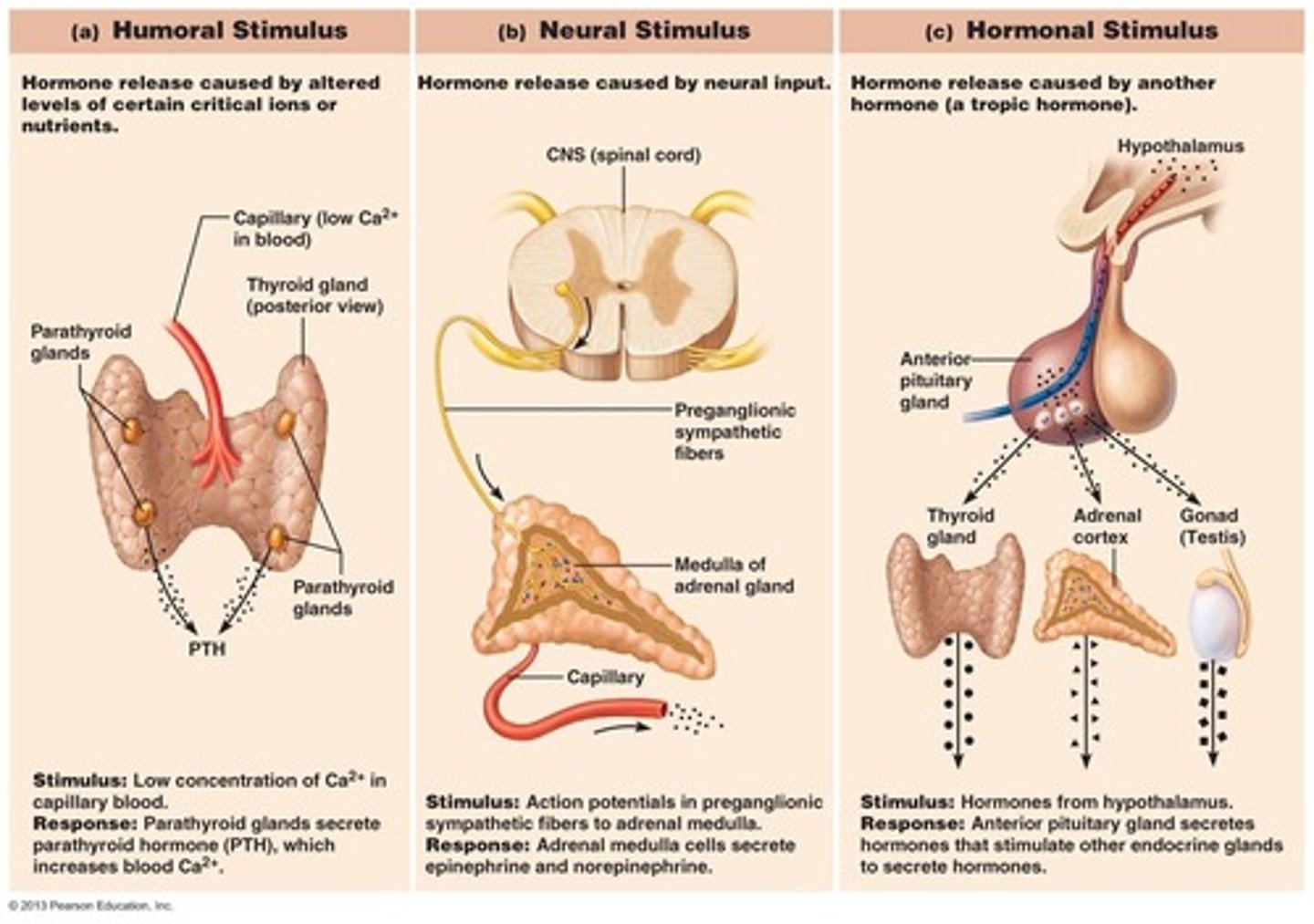
What is negative feedback in hormone regulation?
A process where an increase in a hormone level leads to a response that decreases its production.
Provide an example of negative feedback regulation.
Increased blood glucose levels stimulate insulin release, which decreases blood glucose levels.
What is positive feedback in hormone regulation?
A process where an increase in a hormone level leads to a response that further increases its production.
Give an example of positive feedback regulation.
Baby suckling stimulates oxytocin release, which increases milk secretion until lactation ceases.
What is the role of the hypothalamus in hormone regulation?
It stimulates the release of hormones from the pituitary gland.
What is the significance of homeostasis in the endocrine system?
It refers to the maintenance of stable internal conditions through hormone regulation.
What is the function of erythropoietin secreted by the kidneys?
To stimulate red blood cell production.
What hormones are involved in the regulation of appetite?
Leptin from adipose tissue.
What is the role of secretin in the gastrointestinal tract?
To control secretions from organs in the gastrointestinal tract.
What is the primary function of the pancreas in the endocrine system?
To regulate blood glucose levels by releasing insulin.