The Chemical Foundation of Life Critical Question
 Call Kai
 Learn
Learn Practice Test
 Spaced Repetition
 Match
Match Flashcards
 Knowt Play
1/44

There's no tags or description
Looks like no tags are added yet.
Name | Mastery | Learn | Test | Matching | Spaced | Call with Kai |
|---|
No analytics yet
Send a link to your students to track their progress
45 Terms
If an element were to lose a neutron, how would its chemical reactivity change? If it were to lose an electron, how would its biological function change?
Losing a neutron only changes an element's mass and creates a lighter isotope, leaving its chemical reactivity largely unchange. Conversely, losing an electron transforms an atom into a cation, which alters its electrical charge and fundamentally redefines its biological function
Why does the high electronegativity of oxygen make water the ideal solvent for life, but a potential danger for some non-polar biological structures (like lipid membranes)?
The high electronegativity of oxygen creates a permanent dipole in water. This allows it to dissolve diverse biochemicals. However, this same highly electronegative property drives the hydrophobic effect, forcing non-polar lipid tails together. If exposed to reactive oxygen, it destabilizes these membranes via lipid peroxidation
In a drought, a plant relies on capillary action to transport water to its leaves. How does the disruption of hydrogen bonding specifically hinder this process?
During a drought, water loss increases, placing extreme tension on the plant's vascular system. When hydrogen bonds rupture under this intense negative pressure, the continuous liquid column snaps—a process called cavitation. This introduces air embolisms that permanently halt both the Cohesion-Tension Theory pull and Capillary Action and Water, resulting in transport failure.
If a metabolic process suddenly produces an excess of H+ ions in the blood, describe the step-by-step chemical reaction a buffer system would perform to prevent a decrease in blood pH.
The primary extracellular defense is the bicarbonate buffer system, which prevents a decrease in blood pH by binding excess H+ ions to bicarbonate (HCO3-). This shifts the chemical equilibrium to the left, generating water and exhaled carbon dioxide (CO2)
Imagine a life form that evolved using Silicon instead of Carbon. Based on the periodic table and valence electron configurations, what fundamental limitation would this life form face compared to carbon-based life?
Because silicon's valence electrons occupy the third shell (n=3) rather than the second (n=2), they are further from the nucleus. This larger atomic radius leads to weaker, longer covalent bonds (Si-Si) and (Si-C) and poorer orbital overlap
Why is the specific "bent" shape of the water molecule essential for the formation of hydrogen bonds, and how would life differ if the molecule were linear?
The bent shape of H2O (approx 104.5o bond angle) creates an asymmetrical distribution of charge, giving it a strong net dipole moment. This polarity allows the partially negative oxygen atom to attract the partially positive hydrogen atoms of neighboring molecules, forming vital hydrogen bonds.
Why does an atom’s valence shell determine its reactivity more than its total number of electrons?
An atom's valence shell dictates its reactivity because chemical reactions exclusively involve the gaining, losing, or sharing of outermost electrons to achieve a stable, filled energy level. Inner, core electrons are shielded by the nucleus and do not participate in bonding, making the total electron count irrelevant to chemical behavior.
How does the concept of "electronegativity" explain the difference between a polar and a nonpolar covalent bond?
Electronegativity is an atom's ability to attract shared electrons in a chemical bond. The difference in electronegativity (∆EN) between two bonded atoms determines whether a covalent bond is polar or nonpolar
Nonpolar Covalent Bonds (∆EN< 0.5): Electrons are shared equally because both atoms have similar or identical pulling power. Example: H2 or O2
Polar Covalent Bonds (0.5 ≤ ∆EN < 2.0): Electrons are shared unequally because one atom is significantly more electronegative. The "greedy" atom pulls the electron cloud closer, acquiring a partial negative charge (\(𝛿-), while the less electronegative atom gets a partial positive charge (\(𝛿+). Example: H2O, where highly electronegative oxygen hog the shared electrons from hydrogen
Why are noble gases (e.g., Neon, Argon) chemically inert?
Noble gases like Neon and Argon are chemically inert because they possess a completely filled outer valence electron shell (an octet, or a duet for Helium). This stable configuration leaves them with no energetic tendency to gain, lose, or share electrons
If an element had an atomic mass of 14 and an atomic number of 6, how many neutrons would it possess?
8 Neutrons
How does the transfer of an electron change the chemical properties of a neutral atom into an ion?
Electron transfer alters an atom's net charge, creating an Atoms vs. Ions with different electrostatic and chemical properties. A neutral atom has an equal number of protons and electrons. Transferring electrons changes this balance without altering the nucleus
Compare the energy required to break an ionic bond versus a covalent bond. Why does this matter in an aqueous cellular environment?
In a vacuum or solid state, ionic bonds (requiring 400 - 4000 kJ/mol to disrupt a crystal lattice) are technically much harder to break than standard covalent single bonds ( 300 - 400 kJ/mol). However, in an aqueous solution, covalent bonds are far stronger because ionic interactions dissociate instantly upon contact with water, whereas covalent bonds require dedicated enzymatic action to sever
How do Van der Waals interactions contribute to the shape of complex proteins despite being "weak" individually?
Van der Waals interactions shape complex proteins through a cumulative 'summation' effect. While an individual interaction is weak (about 0.1 - 1 kcal/mol), the tightly packed core of a folded protein contains thousands of atoms in close contact (approx 3.5 Å). This sheer density creates a substantial collective energetic force.
Fluctuating Dipoles: Temporary shifts in electron clouds create transient dipoles that attract nearby atoms
Core Stabilization: Hydrophobic, polarizable amino acid side chains (like leucine and valine) pack closely in the protein's interior, maximizing these stabilizing contacts while keeping structural cavities as small as possible.
If an isotope is radioactive, how does its decay potentially disrupt biological processes if it is incorporated into a molecule like DNA?
When a radioactive isotope is incorporated into DNA, its decay causes severe localized damage. This occurs through direct atomic disruption, transmutation into a different element, and the creation of reactive oxygen species, ultimately leading to strand breaks, mutations, or cell death
Transmutation: The decaying nucleus physically transforms into a different element. If an incorporated isotope decays, the sudden change in atomic number breaks the covalent bond holding the nucleotide together, destroying the DNA's structural integrity
Direct Ionization: Emitted energetic particles (like alpha or beta radiation) strike the DNA directly, knocking out electrons and breaking the chemical bonds of the sugar-phosphate backbone or nucleotide bases. [1, 2]
Indirect Radiolysis: The decay energy ionizes surrounding water molecules within the nucleus. This generates highly reactive free radicals (like hydroxyl radicals, OH) that rapidly oxidize and damage adjacent DNA strands.
Strand Breaks & Repair Failure: This localized energy deposit typically causes Single-Strand Breaks (SSB) or Double-Strand Breaks (DSB). While the DNA damage response attempts repair via pathways like Homologous Recombination or Non-Homologous End Joining, complex breaks often lead to permanent mutations, chromosomal aberrations, or trigger apoptosis (cell death).
Why do atoms "want" to fill their octet shell? What is the physical driver behind this "want"?
The true physical driver is thermodynamic minimization of energy. An unfilled shell means high potential energy; by rearranging, sharing, or transferring electrons to form an ns2np6 valence configuration, atoms achieve a state of maximum electrostatic stability
Coulomb's Law
a fundamental principle in physics that calculates the electrostatic force of attraction or repulsion between two charged particles
How would the chemical behavior of carbon change if it had 5 valence electrons instead of 4?
If carbon had 5 valence electrons, it would shift to Group 15, behaving like nitrogen. It would lose its tetravalency, shifting from forming 4 single bonds to forming 3 bonds with 1 lone pair. This would prevent the complex, stable long-chain backbones that make organic chemistry—and life itself—possible.
Why is water considered a "universal solvent," and what substances does it fail to dissolve?
A water molecule has a bent shape where the oxygen atom pulls electrons closer, giving it a partial negative charge, while the hydrogen atoms hold a partial positive charge. This uneven distribution allows water molecules to act like tiny magnets. When an ionic substance like table salt NaCl is submerged, the negative ends of the water molecules surround positive sodium ions, while the positive ends surround negative chloride ions, pulling the crystal lattice apart. Hydrogen Bonding: Because of this polarity, water easily forms hydrogen bonds with other charged or polar molecules (hydrophilic substances) like sugars, proteins, and acids, keeping them stably suspended in solution. Water struggles to dissolve materials primarily composed of uncharged, nonpolar molecules (hydrophobic substances). Because these materials lack charged parts, water molecules cannot get a grip on them
How does the "bent" molecular geometry of water contribute to its polarity?
The "bent" shape of H2O prevents its polar (O - H) bond dipoles from canceling out, creating an asymmetrical charge distribution. This geometry gives water a net dipole moment, with a partially negative charge near the oxygen atom and partially positive charges near the hydrogen atoms
If water were a linear molecule (like CO2), how would its ability to support life change?
If water were linear like CO2, its dipole moments would cancel out, making it nonpolar. Consequently, it would lose its ability to form a strong hydrogen-bonded liquid network. It would exist only as a gas at room temperature, making the emergence of life as we know it impossible
Why does ice float? Discuss the crystalline lattice structure vs. liquid water.
When water freezes, kinetic energy drops, allowing stable H-bonds to lock the V-shaped molecules into a rigid, geometric network. Each oxygen atom forms a tetrahedral arrangement with four neighbors, resulting in an expansive, orderly hexagonal lattice. This lattice creates significant empty space or "holes" between the molecules, forcing the solid structure to occupy a greater volume than its liquid counterpart
How does the high specific heat of water act as a thermal buffer for marine organisms?
Water requires a large amount of heat energy—specifically (4,184J) to raise 1kg of water by 1oC due to extensive hydrogen bonding. This high specific heat capacity functions as a thermal buffer by absorbing or releasing massive quantities of heat with minimal temperature fluctuation
Why is "evaporative cooling" a highly effective mechanism for organisms living in high-temperature environments?
Evaporative cooling is highly effective because water possesses an exceptionally high heat of vaporization. As liquid water converts to vapor (via sweating, panting, or transpiration), it absorbs large amounts of thermal energy from the organism to break its strong intermolecular hydrogen bonds. The highest-energy molecules escape first, leaving cooler molecules behind to stabilize internal temperatures within homeostasis.
If hydrogen bonds did not exist, what physical state would water take at room temperature?
Without hydrogen bonds, water would exist as a gas (vapor) at room temperature, flashing into steam because its boiling point would drop drastically to roughly -68oC. Without the stabilizing pull of hydrogen bonds holding molecules tightly together, it would behave like similarly sized gases such as methane or ammonia
How does water's polarity influence the formation of cell membranes?
Water's polarity forces cell membranes to self-assemble into a lipid bilayer. Because water molecules are polar, they strongly attract other polar or charged molecules (hydrophilic) while excluding nonpolar molecules (hydrophobic)
Define pH mathematically. Why is the scale logarithmic?
Mathematically, pH is defined as the negative logarithm (base 10) of the hydrogen ion activity (often approximated by concentration) in a solution.
If a solution’s pH changes from 7 to 5, how much more acidic is the concentration of H+ions?
When a solution's pH changes from 7 to 5, the concentration of H+ions becomes 100 times more acidic.
Why is it dangerous for human blood to fluctuate even by 0.5 pH units?
Enzyme Deactivation
Cellular Deformation
Impaired Brain Function
Nerve and Muscle Malfunction
What happens to the carbonic acid-bicarbonate buffer if a person holds their breath (accumulating CO2)?
This increases the concentration of carbonic acid and hydrogen ions, which causes the blood's pH to decrease, inducing a state of respiratory acidosis.
How do strong acids differ from weak acids in terms of their dissociation in water?
Strong acids fully dissociate (ionize) (100%) in water, releasing all their available hydrogen ions to form hydronium ions. In contrast, weak acids only partially dissociate, establishing a dynamic equilibrium where a mixture of intact acid molecules, hydrogen ions, and conjugate base ions coexist in solution
Why are buffers essential for maintaining the tertiary structure of enzymes?
Buffers resist pH changes by absorbing or releasing (H+) and (OH-) ions. They are essential because an enzyme's tertiary structure relies on pH-sensitive bonds—such as ionic bonds and hydrogen bonds—between amino acid side chains. Drastic pH shifts alter these charges, breaking the bonds and causing enzyme denaturation.
Does adding a base to a solution increase or decrease the concentration of H+
Adding a base to a solution decreases the concentration of hydrogen ions
What is an isomer, and why does molecular shape determine biological function?
molecules that share the exact same chemical (molecular) formula but differ in the structural arrangement or spatial orientation of their atoms, resulting in distinct chemical and physical properties
Describe how enantiomers (optical isomers) can have completely different biological effects (e.g., in medication).
Enantiomers have vastly different biological effects because living organisms are composed of chiral molecules (like left-handed amino acids and right-handed sugars). When a medication enters the body, it acts like a key in a lock: its three-dimensional spatial arrangement must complement the exact shape of a biological receptor or enzyme
Explain the dehydration synthesis reaction. What is the role of water in this process?
Dehydration synthesis is an anabolic chemical reaction where smaller molecules (monomers) join together to form larger biological macromolecules (polymers) by forming new covalent bonds
How does hydrolysis differ from dehydration synthesis, and when does the body use these processes?
Hydrolysis splits large polymers into smaller monomers by adding a water molecule. Dehydration synthesis builds large polymers from smaller monomers by removing a water molecule.
What is the difference between structural isomers and geometric isomers?
Structural isomers (or constitutional isomers) and geometric isomers both share the same molecular formula but differ in spatial arrangement. The core difference is that structural isomers have different atom connectivity, whereas geometric isomers have the same connectivity but differ in 3D spatial orientation around a rigid bond
How do functional groups influence the solubility of organic molecules in water?
Functional groups dictate water solubility by altering polarity and enabling hydrogen bonding. Polar, hydrophilic groups attract water molecules, while nonpolar hydrocarbon chains repel them
How does the polarity of water facilitate the folding of a protein?
Water's polarity drive primarily via the hydrophobic effect. Because water molecules are polar and form strong hydrogen bonds with one another, they actively push non-polar (hydrophobic) amino acids away, forcing them inward to minimize surface exposure and maximize water's
If a protein is placed in a non-polar solvent, how will its shape change compared to being in water?
When placed in a non-polar solvent, a soluble protein's shape will structurally "invert". The hydrophobic (non-polar) core will turn outward to interact with the solvent, while the hydrophilic (polar) residues will fold inward away from it. This process typically causes the protein to denature (unfold) or invert its native geometry
Connect the concept of chemical bonding to the structure of DNA. Why are hydrogen bonds used between bases instead of covalent bonds?
Hydrogen bonds hold DNA strands together because they provide the ideal balance between stability and dynamic flexibility
Why does the polarity of water molecules limit the size of a lipid droplet in a cell?
Water's polarity drives the exclusion of hydrophobic, nonpolar lipids (like triacylglycerols). To minimize the unfavorable contact area with water, these lipids coalesce. However, droplet size is physically limited by the phospholipid monolayer needed to shield the hydrophobic core from the polar aqueous cytosol, balancing surface tension and preventing uncontrolled fusion
If an atom has 3 valence electrons, what type of bond is it most likely to form, and with what type of atom?
An atom with 3 valence electrons (typically a metal like aluminum) will most likely form an ionic bond by losing its 3 valence electrons to achieve a stable octet. It forms this bond with a nonmetal atom (such as oxygen, fluorine, or chlorine) that readily accepts electrons
Why is the concept of "equilibrium" in a chemical reaction dynamic rather than static?
Chemical equilibrium is dynamic because reactions do not stop; the forward and reverse reactions continue to occur at the exact same rate in a closed system, resulting in unchanging macroscopic concentrations
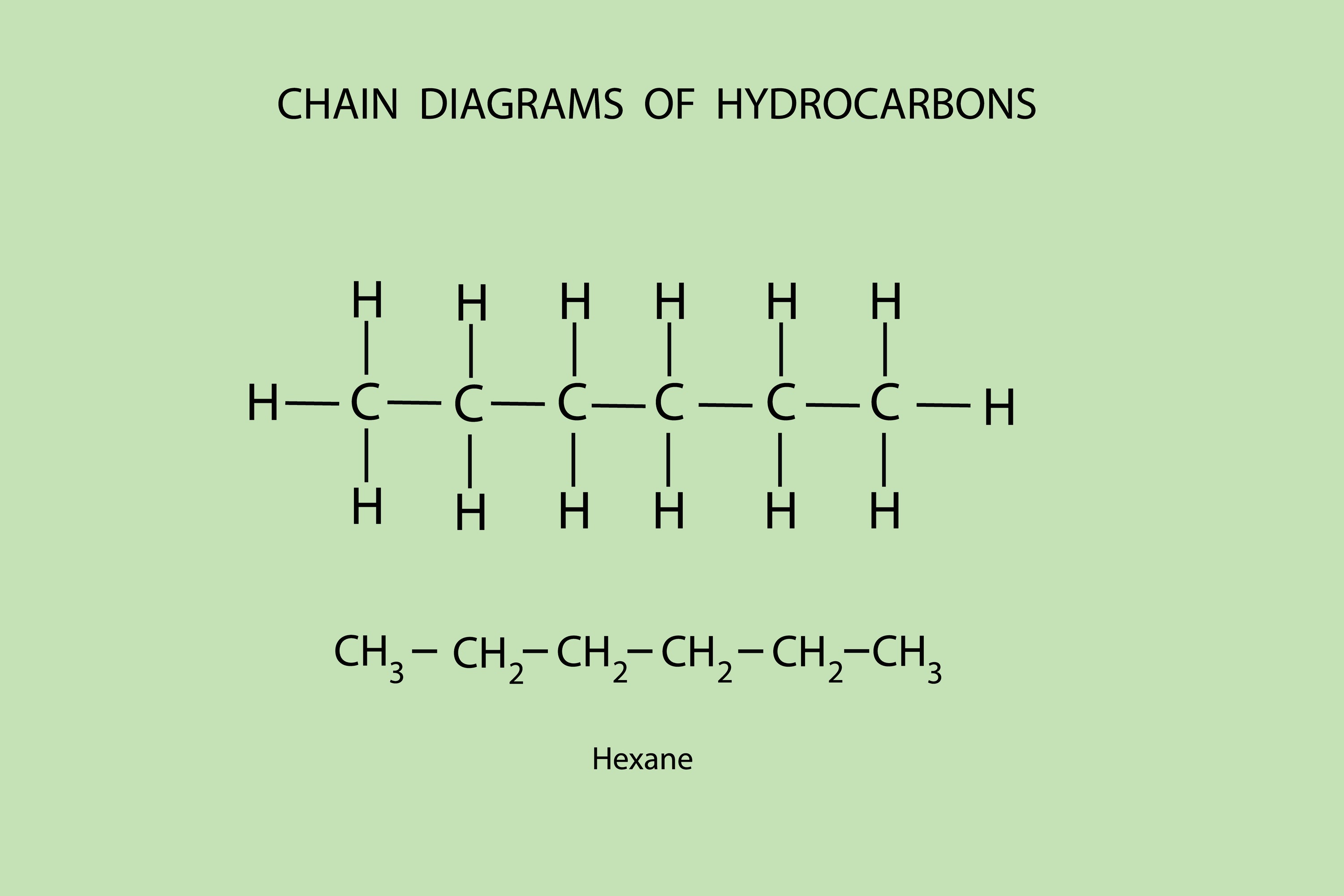
If you replace one terminal hydrogen with a hydroxyl group, how does the molecule’s solubility in water change?
Replacing a terminal hydrogen on (hexane) with a hydroxyl group creates 1-hexanol (C6H13OH). This increases its water solubility from effectively insoluble (approx 9.5 to 12 mg) to slightly soluble (approx 5.9 g/L or 5.9 g/kg) at room temperature