Calculus Therorems and Continuity
0.0(0)
Studied by 1 person View linked note
 Call Kai
 Learn
Learn Practice Test
 Spaced Repetition
 Match
Match Flashcards
 Knowt Play
Card Sorting
1/11

There's no tags or description
Looks like no tags are added yet.
Last updated 9:12 PM on 2/1/23
Name | Mastery | Learn | Test | Matching | Spaced | Call with Kai | Chat |
|---|
No analytics yet
Send a link to your students to track their progress
12 Terms
1
New cards
K
________ is any number between f (a) and f (b)
2
New cards
Jump Discontinuity
________: limits from either side are not equal.
3
New cards
Infinite Discontinuity
________: occurs at vertical asymptotes.
4
New cards
Removable Discontinuity
________: limits from either side agree, but are not equal to f (x), denominator goes to 0, but if factored, one factor can cancel.
5
New cards
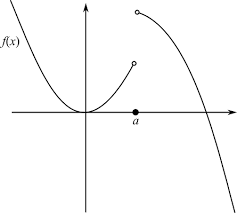
Jump Discontinuity
limits from either side are not equal
6
New cards
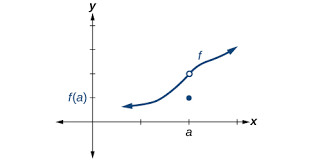
Removable Discontinuity
limits from either side agree but are not equal to f(x); denominator goes to 0, but if factored, one factor can cancel
7
New cards
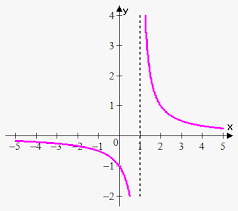
Infinite Discontinuity
occurs at vertical asymptotes
8
New cards
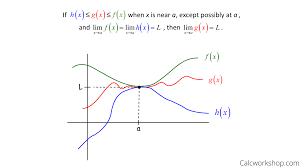
Squeeze Theorem
If g(x) ≤ f(x) ≤ h(x)
and
lim x→c g(x) = lim x→c h(x) = L
then
lim x→c f(x) = L
and
lim x→c g(x) = lim x→c h(x) = L
then
lim x→c f(x) = L
9
New cards
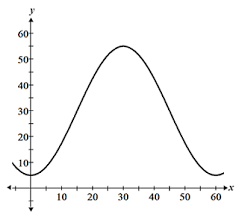
Continuity
A function is continous at a point (c) if the limit at that point exists and is equal to the value of the function at that point
limx->c f(x) = f(c)
limx->c f(x) = f(c)
10
New cards
Intermediate Value Theorem
If x is on the closed interval [a,b] and
f(a) ≠ f(b) and
k is any number between f(a) and f(b)
then there exists some number (c) in [a,b] such that f(c) = k
f(a) ≠ f(b) and
k is any number between f(a) and f(b)
then there exists some number (c) in [a,b] such that f(c) = k
![If x is on the closed interval [a,b] and
f(a) ≠ f(b) and
k is any number between f(a) and f(b)
then there exists some number (c) in [a,b] such that f(c) = k](https://knowt-user-attachments.s3.amazonaws.com/d8dcfdf3e85f4672bf985c2d818339ff.jpeg)
11
New cards
Mean Value Theorem
if f is continuous on the closed interval \[a,b\] and differentiable on the open interval (a,b), then there exists at least one number, c, within (a,b) in which
f’(c) = f(b)-f(a)/b-a
f’(c) = f(b)-f(a)/b-a
![if f is continuous on the closed interval \[a,b\] and differentiable on the open interval (a,b), then there exists at least one number, c, within (a,b) in which
f’(c) = f(b)-f(a)/b-a](https://knowt-user-attachments.s3.amazonaws.com/de8a2f286f9a46ccb195edb97c1bc023.jpeg)
12
New cards
Extreme Value Theorem
if f is continuous on the closed interval \[a,b\], then f has both a global minimum and a global maximum
![if f is continuous on the closed interval \[a,b\], then f has both a global minimum and a global maximum](https://knowt-user-attachments.s3.amazonaws.com/43e54cafe3934a099f4486b06a731ecf.jpeg)