Calculus Therorems and Continuity
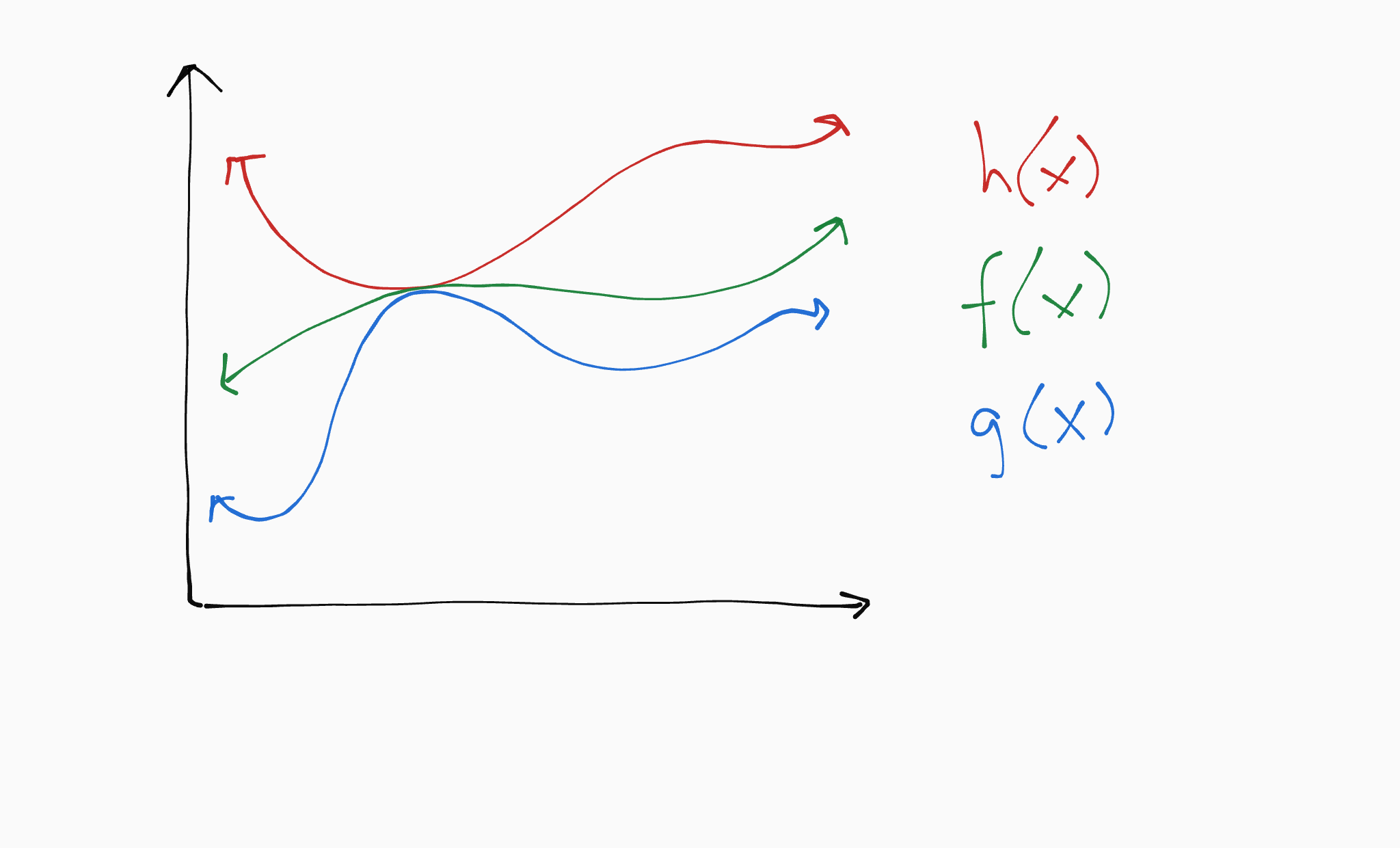
Squeeze Theorem
If g(x) ≤ f(x) ≤ h(x)
and
lim x→c g(x) = lim x→c h(x) = L
then
lim x→c f(x) = L
Continuity
A funciton is continuous at a point (c) ==if the limit at that point== exists and is ==equal to the value of the function at that point==
lim x→c f(x) = f(c)
- Jump Discontinuity: limits from either side are not equal
- Removable Discontinuity: limits from either side agree but are not equal to f(x); denominator goes to 0, but if factored, one factor can cancel
- Infinite Discontinuity: occurs at vertical asymptotes
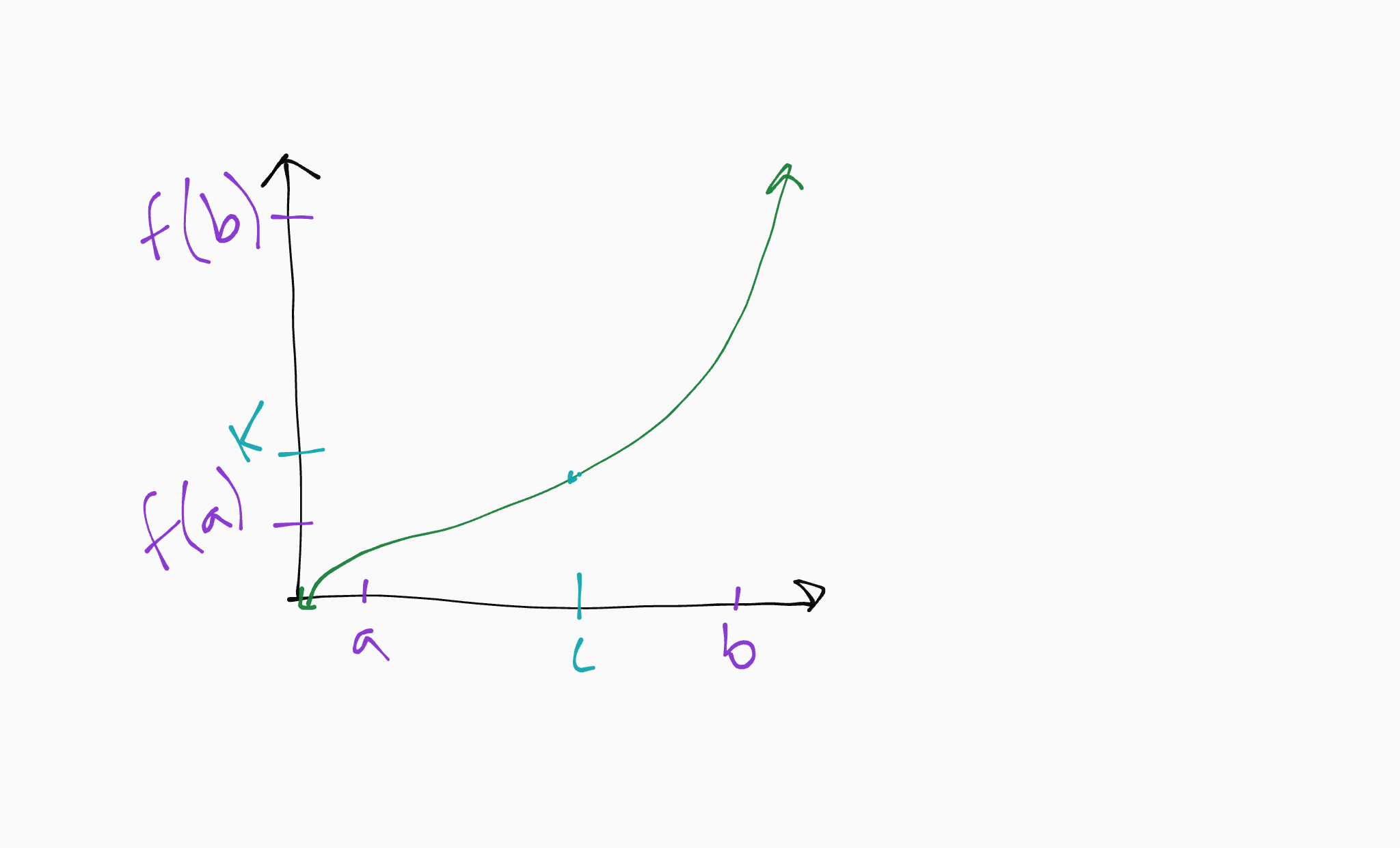
Intermediate Value Theorem
If x is on the closed interval [a,b] and
f(a) ≠ f(b) and
k is any number between f(a) and f(b)
then there exists some number (c) in [a,b] such that f(c) = k
Mean Value Theorem
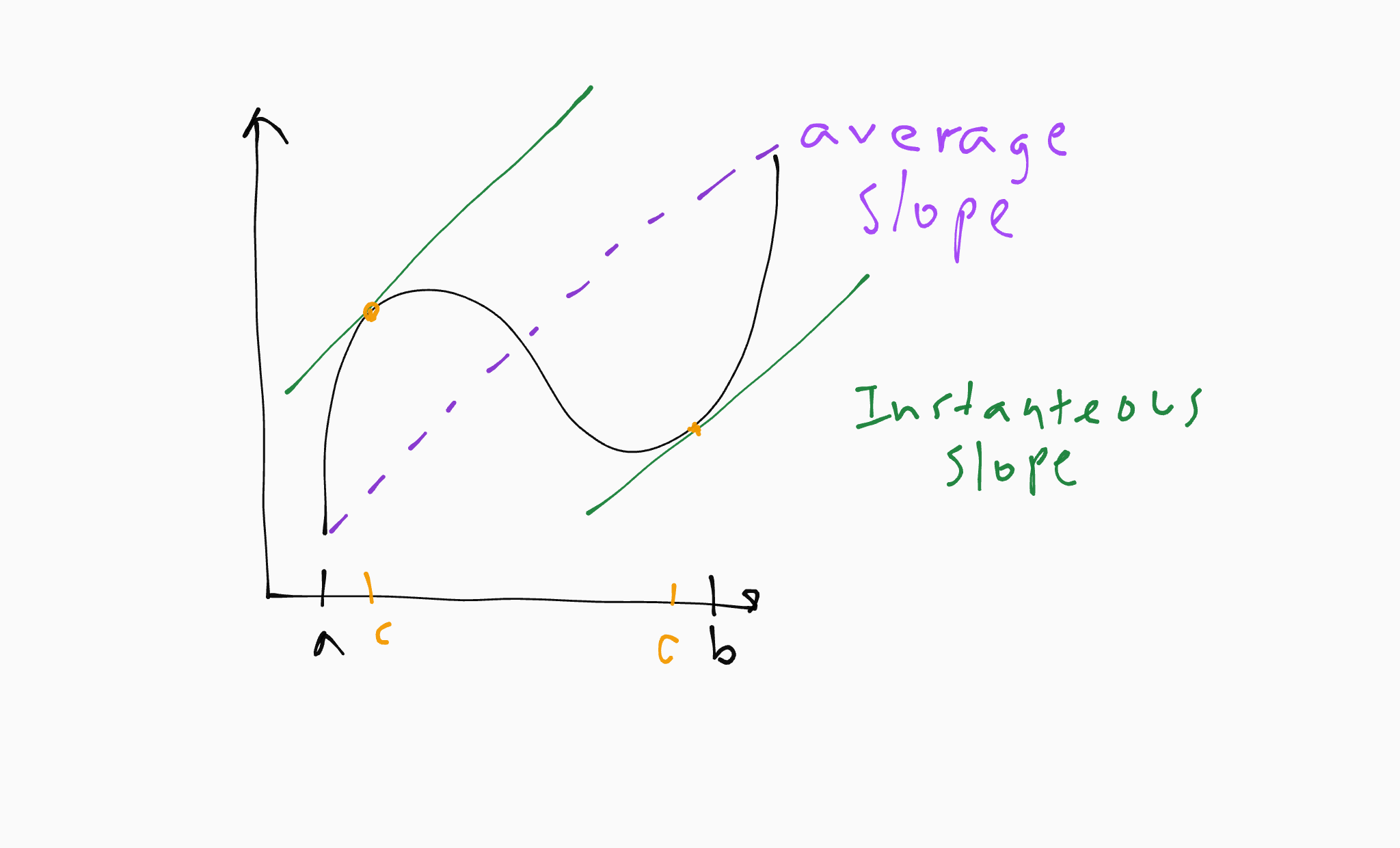
if f is continous on the closed interval [a,b] and differentiable on the open interval (a,b), then there exists at least on number, c, within a and b in which the tangent line (derivative) = the secant line (average slope)
f’(c) = (f(b) - f(a)) / (b-a)
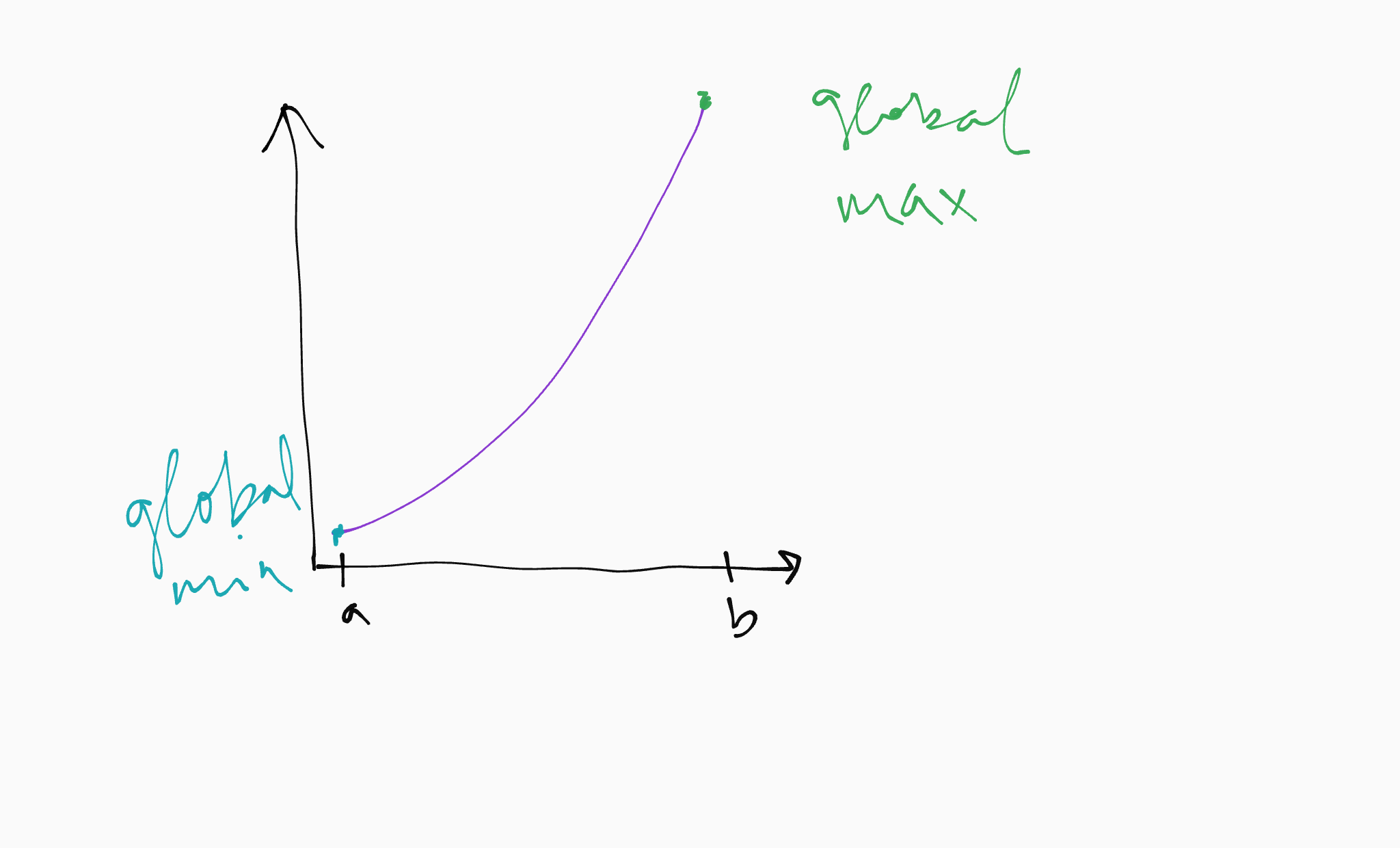
Extreme Value Thereom
if f is continous on the closed interval [a,b], then f has both a global minimum and a global maximum