Lab 2 MICROBIO
 Call Kai
 Learn
Learn Practice Test
 Spaced Repetition
 Match
Match Flashcards
 Knowt Play
1/46

There's no tags or description
Looks like no tags are added yet.
Name | Mastery | Learn | Test | Matching | Spaced | Call with Kai | Chat |
|---|
No analytics yet
Send a link to your students to track their progress
47 Terms
What is a culture plate? (Mixed vs Pure)
A culture plate is a plate on which microbes are growing
Mixed culture- more than one species of microbe
A culture containing only a single species or strain of microorganism. Clinical specimens (like urine or swabs) usually produce mixed cultures, so lab techs use isolation techniques (like streak plates) to separate individual colonies and grow a pure culture for testing.
How does consistency affect media culture?
Mediums can differ and be solid, liquid or semi solid.
What is general purpose media?
A simple, non-selective media that supports the growth of a wide variety of common microbes (chemoheterotrophs).
Key traits: Provides basic nutrients; can be enriched with special growth factors for "picky" (fastidious) microbes.
Examples: Nutrient Broth (peptone, meat extract, NaCl) and Nutrient Agar (Nutrient Broth + 2% agar).
What is SELECTIVE special medium?
Contains inhibitory agents (salts, dyes, antibiotics) that stop unwanted organisms from growing while letting the target organism multiply.
I.e a certain pH level that favors a fungi and inhibits the growth of others.
Ex: If a patient has an infection you can add an antibiotic that will kill gram negative bacteria- therefore the medium will select for gram positive bacteria.
What is differential medium?
Contains visual indicators (such as pH dyes or intact red blood cells) that reveal differences in bacterial metabolism without inhibiting growth.
Ex: Blood agar has hemoglobin that some bacteria can break down. If the hemoglobin is broken down - changes in color - and tells us the bacteria growing is able to break it down.
Helps us differentiate and identify bacteria.
Ex 2: Urea Agar [Differential Only]:
Differentiates: Microbes that produce the urease enzyme from those that do not (identifies urease-positive vs. negative).
How can lab growth medium be selective and differential?
Combines both strategies into a single plate: it stops certain bacteria from growing at all, and changes color based on the biochemical activity of the ones that do grow.
What is blood agar? What type?
Blood agar is differential
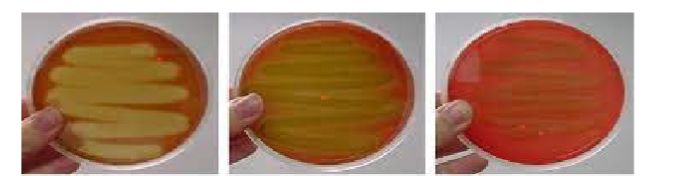
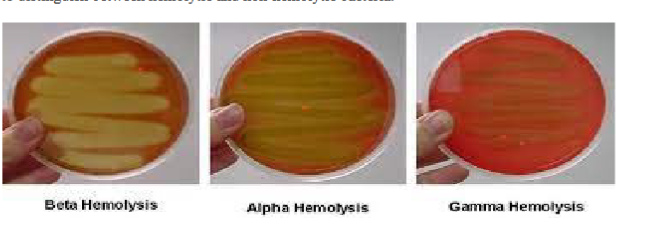
Blood Agar (TSA + 5% sheep red blood cells) is an enriched and differential medium. It provides rich nutrients for fastidious microbes and differentiates bacteria based on the production of hemolysins; enzymes that lyse red blood cells (RBCs) and break down hemoglobin:
Beta Hemolysis: Complete lysis of red blood cells and digestion of hemoglobin. Appears as a clear, transparent halo around the bacterial growth.
Alpha Hemolysis: Partial breakdown of red blood cells and oxidation of hemoglobin. Produces a greenish-brown discoloration surrounding the colonies.
Gamma Hemolysis: No hemolysis. The bacteria grow normally, producing no change in color or clarity in the surrounding red agar.
What are some more examples of selective media?
Some examples of selective media are MacConkey, Eosin Methylene Blue (EMB) and Urea Agar medium select for gram-negative bacteria, LJ medium for M. tuberculosis, Mannitol Salt Agar (MSA) for gram positive Staphylococc
What is Löwenstein–Jensen medium?
Enriched and selective.
LJ medium is specialized for cultivating acid-fast bacteria, specifically Mycobacterium tuberculosis:
Selective Agents: Malachite green, penicillin, and nalidixic acid inhibit both Gram-positive and Gram-negative bacteria, preventing faster-growing microbes from overgrowing the slow-growing Mycobacterium.
Nutritional Enhancer: Glycerol is incorporated to stimulate the growth of M. tuberculosis.
What are some examples of selective + differential medium?
Mannitol Salt Agar (MSA) [Selective & Differential]:
Selects for: Staphylococcus species (uses high salt to inhibit others).
Differentiates: Mannitol fermenters turn the agar yellow (S. aureus), while non-fermenters stay pink (S. epidermidis).
MacConkey Agar [Selective & Differential]:
Selects for: Gram-negative enteric bacteria (inhibits Gram-positives).
Differentiates: Lactose fermenters turn colonies/agar pink/red, while non-fermenters stay colorless.
What is aerobic media and anaerobic media?
Aerobic Media: Contains oxygen; used for obligate aerobes that need O2 as a terminal electron acceptor to make ATP through cellular respiration.
Anaerobic Media: Removes or chemically depletes oxygen (e.g., Thioglycolate broth); required for obligate anaerobes (like Clostridium) that cannot survive exposure to O2
What is semi-solid medium, and what is its primary use?
Medium containing a low agar concentration (~0.5% agar) that allows bacteria to swim, primarily used in motility test medium to determine if an organism has flagella.
What is an enriched medium, and what types of bacteria require it?
A basal medium supplemented with rich additives (blood, serum, or egg) to grow fastidious organisms (microbes with strict, complex nutritional demands).
Examples: Blood Agar and Chocolate Agar.
What is transport medium, and what is its main function?
A non-nutrient, protective medium that keeps delicate microbes alive and prevents overgrowth or cell death while moving a clinical specimen to the lab.
Examples: Stuart's medium, Cary-Blair medium, and Buffered glycerol saline (used for enteric pathogens like Salmonella and Shigella).
Created because people realized when taking a patient’s sample one of the bacteria would grow and affect the results
What is a microbial colony and what is a Colony Forming Unit (CFU)?
Colony: A visible mass of microbial cells that grew from a single ancestor on solid agar.
CFU: A single cell or a small cluster/chain of cells capable of multiplying into one distinct colony.

In colony morphology, what does form (shape) refer to, and what are common examples?
The basic bird's-eye view outline of the entire colony.
Examples: Circular, irregular, rhizoid (root-like branches), filamentous (thread-like), and spindle.


In colony morphology, what is elevation, and how is it viewed?
The cross-sectional height profile of the colony seen by holding the Petri dish at eye level.
Common shapes: Flat, raised, convex (dome), pulvinate (high dome), and umbonate (raised with a protruding center button).


In colony morphology, what does the margin describe, and what are key types
The magnified appearance of the colony's outer edge.
Common types: Entire (smooth, even), undulate (wavy), lobate (deep lobes), curled (stepped layers), and rhizoid/filamentous (branched).

What terms describe a colony's surface texture, opacity and pigmentation?
Surface/Texture: Smooth, rough, shiny/glistening, dull, dry, moist, mucoid (slimy), or rugose (wrinkled).
Opacity: Transparent (see-through), translucent (frosty glass), opaque (blocks light completely), or iridescent (changes color in light).
Pigmentation: The color produced by the bacterial colony.
Nonpigmented: Neutral colors like white, cream, tan, or off-white.
Pigmented: Distinct colors produced by specific pigments (e.g., yellow, red, purple, golden).
What do aseptic, inoculation, and contamination mean in microbiology?
Aseptic: Transferring bacteria sterilely from stock to new media without introducing contaminants.
Inoculation: Introducing microbes into a culture medium.
Contamination: Accidental introduction of unwanted microbes into the medium.
Which tools are used to inoculate broths, slants, and plates versus an agar deep?
Inoculating Loop: Used for Nutrient Broth (NB) tubes, Nutrient Agar (NA) slants, and NA Petri plates.
Inoculating Needle: Used to stab and inoculate an Agar Deep.
What is the streak plate method, what is its primary purpose, and how does it work?
Purpose: A rapid, qualitative dilution method used to isolate individual bacterial colonies and obtain a pure culture from a mixed specimen (clinical or environmental).
How it works: A loopful of culture is systematically spread across the agar surface in zones (e.g., T-streak or four-quadrant streak).
Mechanism: Dilutes cell density across sections. The loop is sterilized between quadrants/sectors so fewer cells are deposited each time, resulting in well-separated, isolated colonies (single clones).
Key Condition: The agar plate surface must be dry (no condensation drops).
Why are aseptic procedures critical in the lab and healthcare?
Microbiology Lab: Prevents contamination of pure cultures and protects laboratory personnel from infectious pathogens.
Healthcare Industry: Prevents the spread of nosocomial infections (HAIs) and protects vulnerable patients during invasive procedures.
What are two common inoculation instruments used in a microbiology lab? How do you choose between using an inoculating loop versus a needle?
The inoculating loop and the inoculating needle.
Loop: Used for transferring liquids, streaking broad agar surfaces (Petri plates), and spreading across agar slants.
Needle: Used for stabbing into solid or semi-solid deeps (agar deeps) and picking very tiny, isolated individual colonies without touching neighboring ones
What is nutrient broth?
A liquid, non-selective growth medium containing dissolved nutrients (peptone, beef extract, NaCl, water) used to cultivate high concentrations of non-fastidious bacteria.
What is an agar slant?
A test tube filled with solid agar medium allowed to cool and solidify at an angle, providing a small, sloped surface area for bacterial growth and short- to medium-term stock storage.
Agar slant gives more surface area to grow more bacteria - stores more bacteira in a smaller area comapred to growhth plates
These tubes do not show you if a culture is mixed or pure you need a plate for that
How do you assess the success of your bacterial transfers after incubation?
Broth: Check for turbidity (cloudiness), pellicle formation on top, or sediment at the bottom.
Slants & Plates: Check for visible bacterial growth along the streak line and verify there is no unexpected or off-target contamination.
In a quadrant streak plate, where do you expect the most growth and the least growth?
Most growth: Quadrant 1 (heavy, confluent growth where the sample is first applied).
Least growth: Quadrant 4 (diluted out to sparse, individual isolated colonies).
Which is most likely to produce a mixed culture: a urine/stool sample or a subculture from an E. coli slant?
A urine or stool sample, because clinical specimens contain complex normal flora alongside potential pathogens, whereas an E. coli stock slant is already an established pure culture.
What happens if culture plates or tubes are left open to the air for an extended period?
Airborne fungal spores and dust-borne bacteria will settle into the media, leading to airborne contamination and moisture loss that dries out the agar.
What is the difference between a Genus and a Species name in bacterial naming (binomial nomenclature)?
Genus (e.g., Staphylococcus): The broad group name sharing major general characteristics—like a family surname or group of siblings. Always capitalized.
Species (e.g., epidermidis in Staphylococcus epidermidis): The specific individual organism within that genus. Always lowercase.
Analogy & Example:
Staphylococcus = Genus (common skin bacteria).
Staphylococcus epidermidis = Specific species (small, white, circular, convex, shiny colonies; the most common normal flora on human skin).
Within a single species, individual variants are referred to as strains.
What is turbidity in microbiology?
The cloudiness or haziness of a liquid broth culture caused by large numbers of suspended bacterial cells scattering light; it serves as a visual indicator of microbial growth
Why didn't our swab/culture test show all the microbes living at that site?
Most microbes (over 99%) cannot grow on standard lab agar plates. They require special foods, specific temperatures, or an environment without oxygen that a regular lab test doesn't provide.
What factors cause different environments to have different kinds of microbes?
Differences in nutrients (food), moisture, temperature, pH (acid levels), oxygen levels, and competition from other living things.
What is normal vs transient flora?
Norma: The harmless microbes that permanently live on or inside a healthy body. First line of defense against transient flora.
Transient: Microbes you pick up temporarily from touching surfaces or people, which can usually be washed away with soap and water.
What is incubation?
Keeping microbes in a warm, controlled environment so they can grow and multiply.
What is contamination?
The accidental introduction of unwanted germs or dirt into a clean or sterile area.
What are commensal organisms?
Microbes that benefit from living on you without helping or harming you.
What are mutualistic organisms?
Microbes that live with you where both you and the microbe help each other (a win-win relationship).
What is an opportunistic pathogen?
A harmless microbe that only causes an infection when your immune system is weak or when it gets into the wrong part of the body (like a cut).
What is a nosocomial infection?
An infection a patient catches while staying at a hospital or healthcare facility (that they didn't have when they arrived).
What are the 4 main ingredients commonly used in culture media, and what do they provide?
Beef Extract: Boiled beef broth (powder/paste) providing amino acids, vitamins, and minerals.
Peptone: Digested protein broken down by enzymes into peptides and amino acids.
Yeast Extract: Soluble yeast nutrients providing amino acids, vitamins, nucleic acids, and growth factors.
Agar: An algae carbohydrate used only to solidify media (solidifies at 40–45°C, melts at 100°C; not eaten by most microbes). Produces no nutrifonal benefit
Why could have more microbe after washing?
Washing hands created a film with oil and soap that became loose and was able to transfer onto the plate, more loose CFU’s.

the first thing i noticed was that
1: Obligate aerobes need oxygen because they cannot ferment or respire anaerobically. They gather at the top of the tube where the oxygen concentration is highest. They form a pellicle at the surface of broth
2: Obligate anaerobes are poisoned by oxygen, so they gather at the bottom of the tube where the oxygen concentration is lowest.
3: Facultative anaerobes can grow with or without oxygen because they can metabolize energy aerobically or anaerobically. They gather mostly at the top because aerobic respiration generates more ATP than either fermentation or anaerobic respiration.


i’m just gonna go to the store now so you
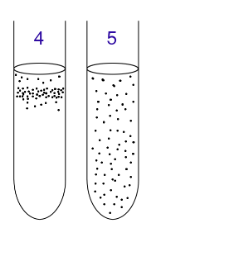
4: Microaerophiles need oxygen because they cannot ferment or respire anaerobically. However, they are poisoned by high concentrations of oxygen. They gather in the upper part of the test tube but not the very top.
5: Aerotolerant organisms do not require oxygen as they metabolize energy anaerobically. Unlike obligate anaerobes however, they are not poisoned by oxygen. They can be found evenly spread throughout the test tube

hey there i just wanted to say thank
Micrococcus
What it is: Gram-positive cocci; harmless skin bacterium.
Colony: Distinct bright yellow, circular, convex, and opaque.
Serratia:
What it is: Gram-negative rod-shaped bacterium.
Colony: Distinct salmon-pink to red, circular, convex, and shiny.
Bacillus:
What it is: Gram-positive, spore-forming rod from soil; top airborne lab contaminant alongside mold.
Colony: Large, off-white, flat, irregular edges, and dull/rough (matte, not shiny).
Escherichia coli (E. coli):
What it is: Gram-negative rod; most common normal flora in the human gut.
Colony: Small/medium, off-white to grayish, circular, smooth, and translucent (lets light pass through).


hhhhhhhhhhhh where hehe
Staphylococcus epidermidis:*
What it is: Gram-positive cocci; most common normal flora on human skin.
Colony: Small, white, circular, raised/convex, shiny, and opaque
Mold / Fungi:
What it is: Multicellular eukaryotic spore-former; common environmental contaminant.
Colony: Large, spreading, fuzzy/velvety/hairy, often green, gray, or cottony white with branched edges.
