Nonregenerative Anemia and Polycythemia
 Call Kai
 Learn
Learn Practice Test
 Spaced Repetition
 Match
Match Flashcards
 Knowt Play
1/67

There's no tags or description
Looks like no tags are added yet.
Name | Mastery | Learn | Test | Matching | Spaced | Call with Kai | Chat |
|---|
No analytics yet
Send a link to your students to track their progress
68 Terms
Regenerative anemia
An anemia in which there is an increase in production of red blood cells in the bone marrow, with subsequent release into the peripheral blood
Causes of regenerative anemia
-hemorrhage (internal or external, acute or chronic)
-hemolysis (IMHA or oxidative damage)
For regenerative anemia, will RBC morphology be normal or abnormal?
abnormal
Nonregenerative anemia
An anemia in which there is not adequate production of red blood cells in the bone marrow
Causes of nonregenerative anemia
-chronic disease
-chronic kidney disease
-primary bone marrow disease
For nonregenerative anemia, will RBC morphology be normal or abnormal?
often normal
Does regenerative or nonregenerative anemia have a more gradual onset?
nonregenerative anemia
Nonregenerative anemia will have a ________ reticulocyte count
normal
Two most common causes of nonregenerative anemia:
1.) chronic disease (ACD)
2.) chronic kidney disease (CKD)
Chronic disease and chronic kidney disease will cause suppression of what process?
erythropoiesis
Two other cell types that are variable with chronic disease and chronic kidney disease:
1.) WBC
2.) platelets
Anemia of chronic disease (ACD)
common cause of nonregenerative anemia; associated with chronic infection, inflammatory disease, or neoplasia
chronic disease (ACD) occurs after _______ week or more of disease
one
Two main pathogenesis pathways that cause anemia chronic disease (ACD)
1.) inflammatory cytokines
2.) increased hepcidin production
Why will inflammatory cytokines cause anemia chronic disease (ACD)?
they will suppress erythropoietin production and therefore decrease the bone marrow's ability to produce RBC
erythropoietin
A hormone produced and released by the kidney that stimulates the production of red blood cells by the bone marrow
hepcidin
a hormone produced by the liver that prevents iron release from macrophages
Pathogenesis of hepcidin and chronic disease (ACD)
-increased production of hepcidin by the liver
-hepcidin targets and destroys channels on macrophages that prevent iron from leaving the cell
-iron can't get to RBC precursors in the bone marrow and and RBCs won't develop
What is sequestered iron (aka trapped iron) called?
hemosiderin
Anemia due to increased hepcidin is often called ___________ iron deficiency. Why?
functional; the animal is not truly iron deficient, but rather iron is being sequestered in the body and not available for RBC production
What type of anemia is characteristic for chronic disease (ACD)?
mild to moderate normocytic, normochromic anemia
However, chronic disease (ACD) has the potential to become what type of anemia?
microcytic, hypochromic (if it has been going on a long time)
RBC morphology of chronic disease (ACD)
normal
______ may develop anemia chronic disease (ACD) more rapidly and more severely than in _____
cats than in dogs
CBC for chronic disease (ACD):
hematocrit:
reticulocytes:
RBC morphology:
hematocrit: mildly to moderately decreased
reticulocytes: normal
RBC morphology: normal
There is often an _______ leukogram associated with chronic disease (ACD)
inflammatory
inflammatory leukogram
-neutrophilia (increased neutrophils)
-monocytosis (increased monocytes)
-left shift (more bands or blast neutrophils)
Chronic kidney disease
the progressive loss of renal function over months or years
Pathogenesis of chronic kidney disease
causes decreased erythropoietin, which is required for RBC production
What type of anemia is characteristic of chronic kidney disease?
Normocytic, normochromic, anemia
What other blood values are common with chronic kidney disease?
-azotemia
-hyperphosphatemia
-hypo/hypercalcemia
-decreased urine specific gravity
Cause of nonregenerative anemia that is less common:
primary bone marrow disease
primary bone marrow disease
disorders where the bone marrow fails to produce healthy blood cells
Examples of things that can cause primary bone marrow disease (6)
1.) neoplasia
2.) drugs
3.) chemicals
4.) hormones
5.) plants
6.) infection
Diseases that cause primary bone disease often involve multiple _______ _______
cell lines
What is meant by multiple cell lines are affected?
since multiple different cell lines originate in the bone (such as RBCs, WBCs, and platelets) it is common to see other cell types other than RBCs affected with primary bone marrow disease
Two cell types that often decrease with primary bone marrow disease:
1.) platelets (thrombocytopenia)
2.) WBC (leukopenia)
deficiency of all types of blood cells
pancytopenia
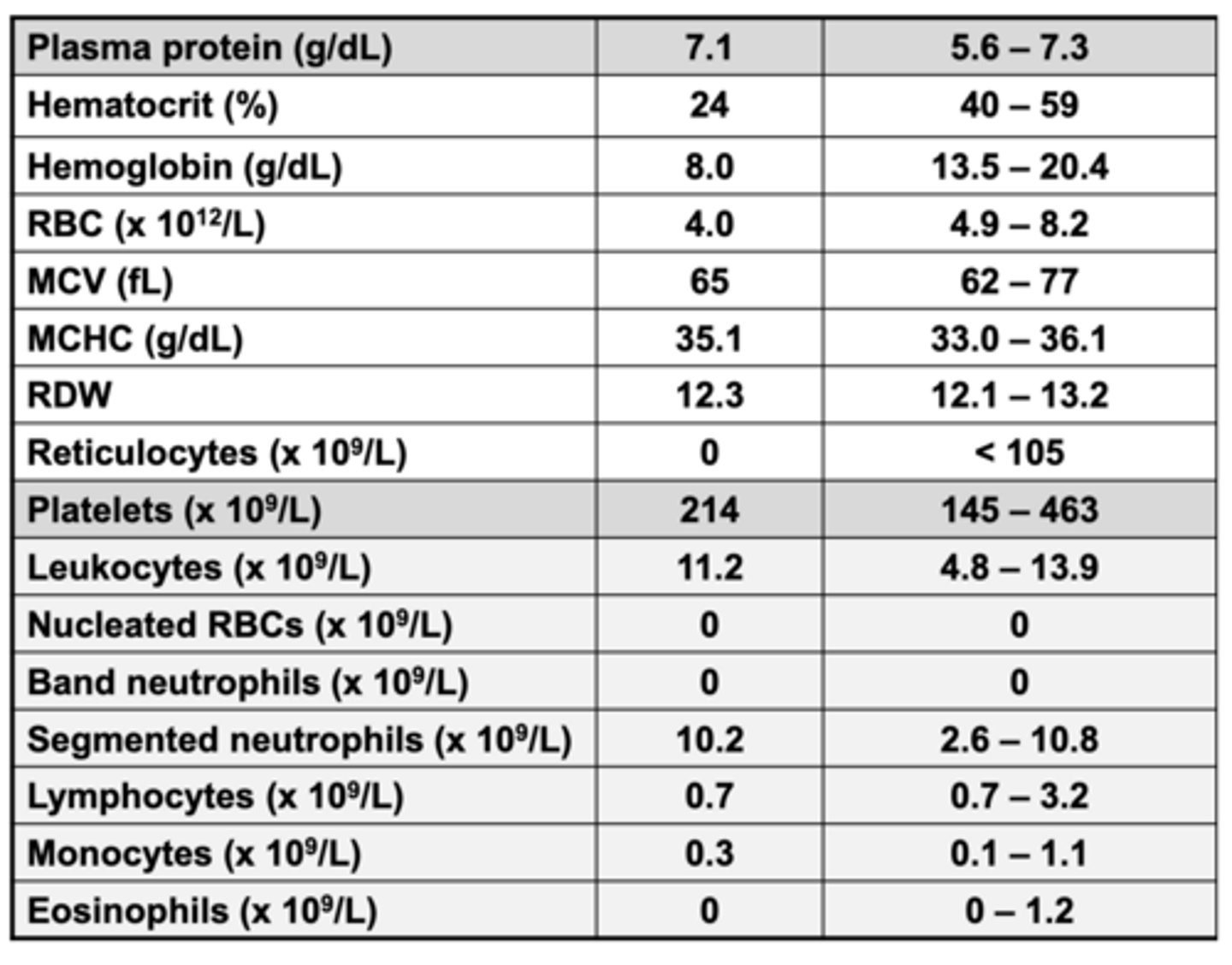
5 year old mixed breed dog presented for anorexia, polyuria, polydipsia. They have increased BUN and urine specific gravity.
What is the cause of their anemia?
Chronic kidney disease
-low hematocrit and reticulocytes are normal, so nonregenerative anemia
-normal leukogram (therefore NOT chronic disease)
-azotemia
-decreased urine specific gravity
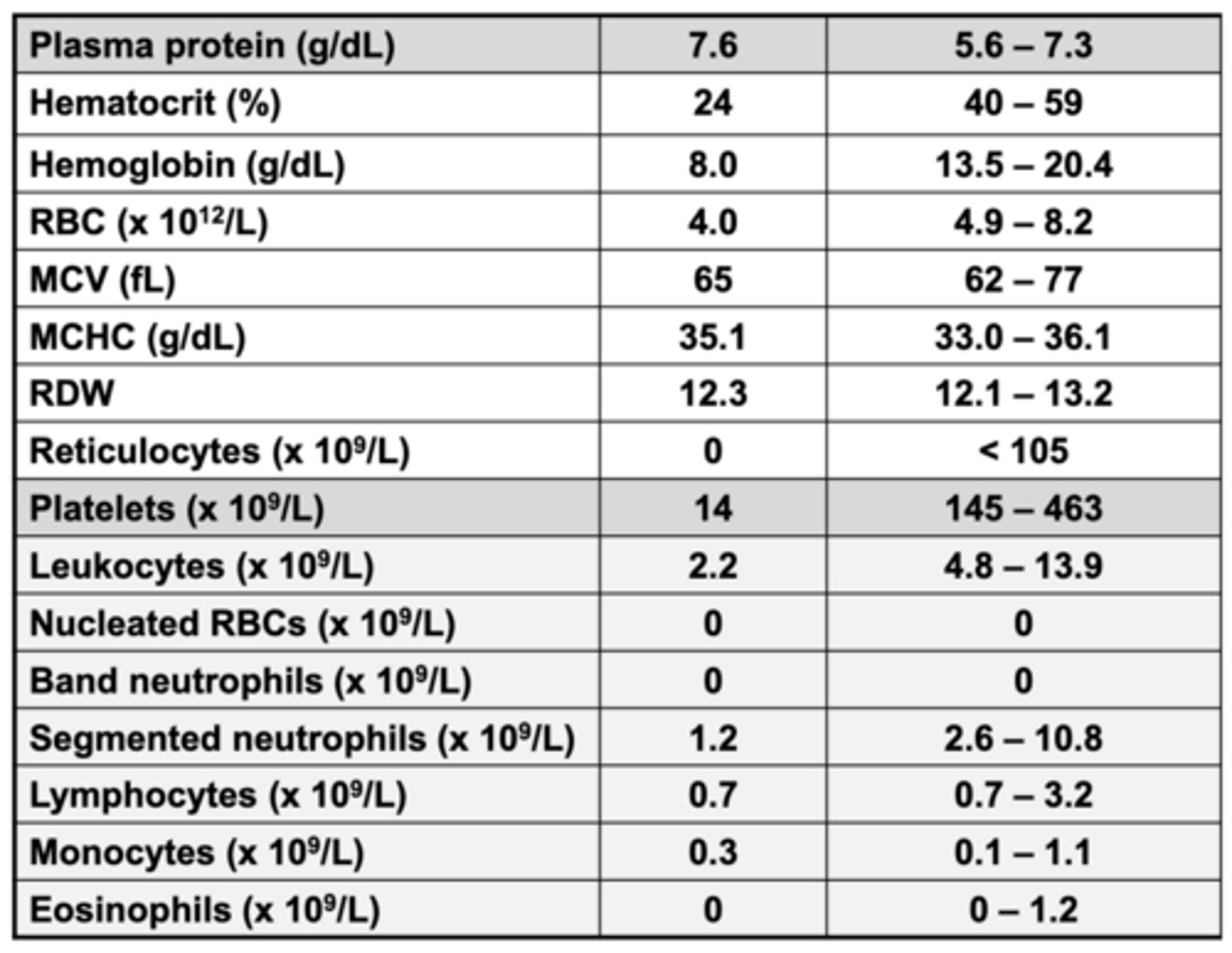
5 year old mixed breed dog presented for pale mucous membranes and weight loss.
What is the cause of their anemia?
Primary bone marrow disease
-low hematocrit and reticulocytes are normal, so nonregenerative anemia
-thrombocytopenia (low platelets)
-leukopenia (low leukocytes)
*other cell lines affected
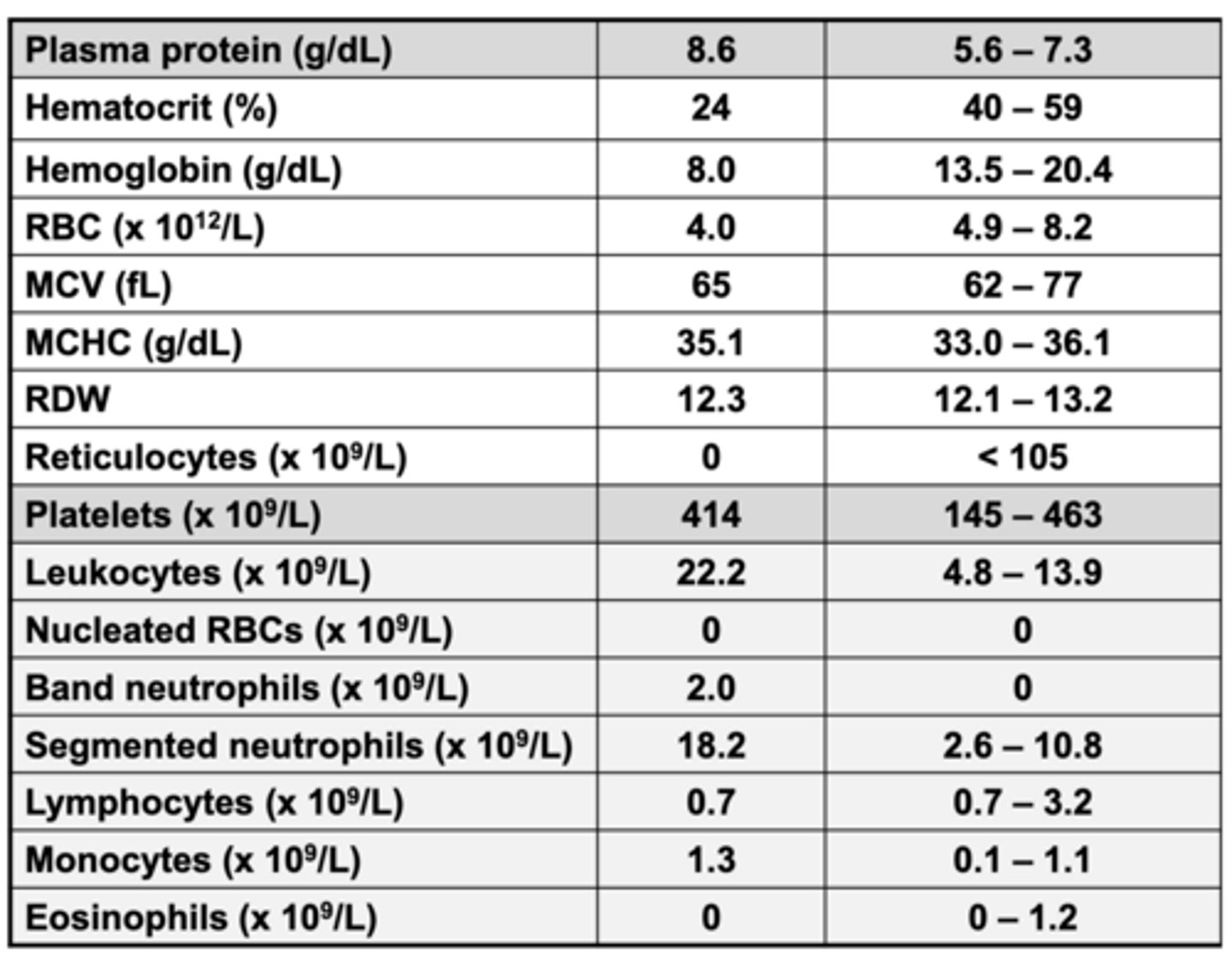
5 year old mixed breed dog presented for anorexia, lethargy, fever that has developed over last couple of weeks.
What is the cause of their anemia?
Anemia of chronic disease
-low hematocrit and reticulocytes are normal, so nonregenerative anemia
-chronic onset (developed over last couple of weeks)
-inflammatory leukogram (band neutrophils, segmented neutrophils, high leukocytes)
Erythrocytosis (Polycythemia )
an abnormal increase in the number of red blood cells in the blood
Three blood work values associated with erythrocytosis
1.) increased HCT
2.) increase Hgb
3.) increased RBC
Which breed will have a higher PCV than others when healthy?
greyhounds
Two types of Erythrocytosis
1.) relative
2.) absolute
Is relative or absolute erythrocytosis more common?
relative
relative erythrocytosis
Normal RBC mass, but there are increased numbers of RBCs per unit volume of blood (increased PCV)
For relative erythrocytosis, PVC is _________, but usually less than ____%
increased; 60%
Two causes of relative erythrocytosis
1.) dehydration
2.) splenic contraction
Relative relative erythrocytosis from dehydration
most common cause of relative erythrocytosis; most often due to vomiting, diarrhea, sweating, and diuresis (all cause external water loss but no loss of RBCs)
Other less common causes of erythrocytosis from dehydration
-fluid shifts (shock)
-H2O deprivation
Laboratory findings in relative erythrocytosis from dehydration
-increased PCV (HCT)
-increased total protein (TP)
-increased BUN
-increased creatinine
-increase urine specific gravity
Relative erythrocytosis from splenic contraction
Excitement causes epinephrine release, which causes splenic contraction and a transient mild increase in PCV with a normal TP
Relative erythrocytosis from splenic contraction is common in two species:
1.) cats
2.) horses
Absolute erythrocytosis
increased RBC mass due to increased erythropoiesis in the bone marrow
For absolute erythrocytosis, ________ volume is normal but there is in increase in _______ volume due to increased numbers of RBCs
plasma; blood
Clinical findings with absolute erythrocytosis
-erythema of skin and mucous membranes
-engorged conjuctival and retinal vessels
There are two types of absolute erythrocytosis:
1.) primary
2.) secondary
Is primary or secondary absolute erythrocytosis more common?
secondary absolute erythrocytosis
There are two causes of secondary absolute erythrocytosis
1.) appropriate
2.) inappropriate
appropriate secondary absolute erythrocytosis
pO2 is decreased; caused by hypoxia; red blood cell production is triggered in an attempt to deliver more oxygen through the body
Causes of appropriate secondary absolute erythrocytosis
-heart disease
-pulmonary disease
-high altitude
-methemoglobinemia
methemoglobinemia
When the heme portion of hemoglobin has oxidant damage (Fe3+) which results in the loss of the RBC's oxygen carrying capacity
Inappropriate secondary absolute erythrocytosis
pO2 is normal
Causes of secondary absolute erythrocytosis
-renal cysts or carcinoma
-erythropoietin secreting masses
Primary erythrocytosis
uncommon cause of erythrocytosis; uncontrolled production of mature RBCs, independent of erythropoietin production
Primary erythrocytosis is aka...
polycythemia vera
For primary erythrocytosis, PCV is greater than ___%
70%
*abnormally high!