module 6: types of exposure techniques
 Call Kai
 Learn
Learn Practice Test
 Spaced Repetition
 Match
Match Flashcards
 Knowt Play
1/15

There's no tags or description
Looks like no tags are added yet.
Name | Mastery | Learn | Test | Matching | Spaced | Call with Kai | Chat |
|---|
No analytics yet
Send a link to your students to track their progress
16 Terms

What does a periapical (PA) X-ray show?
The entire tooth from crown to root apex plus the surrounding bone and tissues.
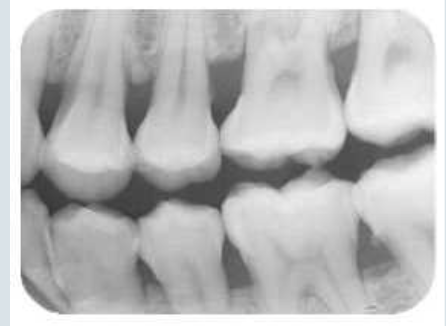
what does a bitewing show?
It mainly shows the crowns and supporting bone.
What are interproximal areas?
the areas between adjacent teeth.
What is calculus?
Hardened dental plaque on the teeth.
What is an occlusal exposure?
An intraoral X-ray that shows teeth and surrounding structures of the maxilla or mandible.
Why are occlusal X-rays useful for children?
They can substitute for anterior periapical X-rays when the child's mouth is small or the child is difficult to manage.
What is a panoramic exposure?
An extraoral X-ray that produces one image of the entire dentition and surrounding structures.
Is a panoramic X-ray intraoral or extraoral?
extraoral
what does extraoral mean?
The image receptor is positioned outside the mouth.
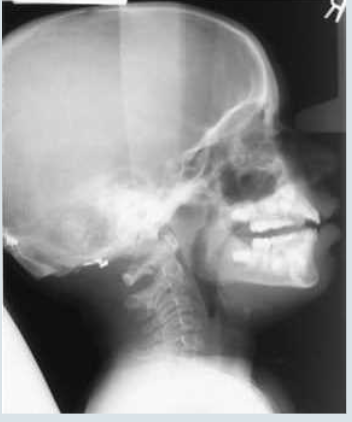
What is a cephalometric exposure?
An extraoral X-ray used to evaluate and measure the head, face, jaws, and teeth.
Is a cephalometric X-ray intraoral or extraoral?
extraoral
What dental specialty commonly uses cephalometric X-rays?
orthodontics
the paralleling technique
placing image recepetors that is used with periapical and bitewing intraoral radiographs
proper placement of the paralleling technique is hard to achieve on
children, adults with shallow palates
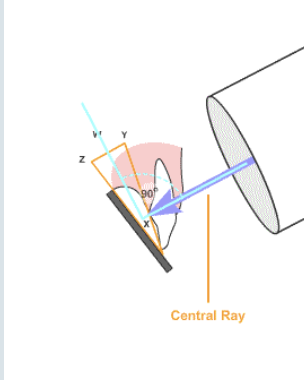
the bisecting angle technique is only used for?
periapical intraoral exposures when the paralleling technique is not possible
the bisecting angle technique should ONLY be used after attempting to use
the paralleling technique