Biological Molecules - Carbohydrates
 Call Kai
 Learn
Learn Practice Test
 Spaced Repetition
 Match
Match Flashcards
 Knowt Play
1/45

Earn XP
Description and Tags
This is the year one content from university, all about carbohydrates; this will include things in lectures but also any additional information thats helped with my understanding! ALSO will include some chemistry definitions, this will also be included in other topics.
Name | Mastery | Learn | Test | Matching | Spaced | Call with Kai | Chat |
|---|
No analytics yet
Send a link to your students to track their progress
46 Terms
What are biological molecules?
Important organic compounds produced by living organisms to support life processes
organic - meaning that they contain carbon bonded with other elements such as hydrogen, oxygen, nitrogen, phosphorus and sulfur
Define stereoisomers
General: Isomers that share the same composition (made up of the exact same number and types of atoms) but differ in the spatial arrangement of their atoms
Atoms bonded together in the same order but they have a different 3D organisation of atoms around one of the asymmetric carbons
EXAMPLE - galactose is a C - 4 epimer of glucose as it contains a hydroxyl group on the left side of the fourth carbon
Define enantiomers
When a pair of molecules are mirror images of eachother so cannot be superimposed (two objects cannot be placed directly on top of eachother so that all of their parts match up completely)
Diastereromers
Stereoisomers that are not enantiomers
What are the purpose of carbohydrates?
Provide quick energy and structural support
What are some of the key terms describing the length of biological molecules?
monosaccharides - are the simplest form of carbohydrate that you can get as they cannot be broken down any further (they can be metabolised thought)
disaccharides - when two monosaccharides come together
polysaccharides - are what you get when you add multiple monosaccharides together, forming a long chain
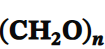
Whats the ratio of monosaccharides and general carbohydrates and why?
Monosaccharides have the formula of 1 carbon to 2 hydrogens to 2 oxygens
There are slight differences between the ratio of monosaccharides and carbohydrates overall because the formation of a polysaccharide results in the loss of some water and oxygen atoms through dehydration synthesis reactions (without the loss of carbon atoms), so it slightly shifts the ratio
What are other names for glucose?
Aldose, aldohexose, poly hydroxyl aldehyde (this last one because glucose is an aldehyde that contains many hydroxyl groups)
What are other names for fructose?
Ketose and ketohexose
What are the differences in carbonyl carbons in glucose and fructose?
In glucose, the carbonyl carbon is at the end of the chain whereas in fructose the carbonyl carbon is internal
Define electronegativity
The ability of an atom to attract electrons
Define Isomers
Molecules that have the same molecular formula but differ with respect to the arrangement of atoms in 3D space
Define chiral carbon
One that is attached to four different groups of atom
How does glucose transform from its straight chain form to its cyclic form?
The lone pairs on the nucleophilic oxygen attack the partially positive carbonyl group which breaks the pi bond, giving it an OH group. New C - O bond forms connecting carbon’s oxygen to carbon one, forming a six membered ring
How can you use the formula of isomers to determine how many isomers there are of a monosaccharide
The general form of isomers is 2n, where the n is used to subsitute in the number of chiral carbons. For example, if there are four chiral carbons present then it would look like this 2,4; this means that there are 16 isomers if the four chiral carbons.
When glucose is in the form of a ring, each of these isomers can then have two possible orientations, so glucose actually has 32 isomers
Why is carbon six not in the ring when the glucose is in its cyclic structure (as a glycopyranose specifically)?
Since the oxygen on carbon five attacked carbon one, six is not in the ring, therefore the oxygen takes its position.
What are the two different structural forms of glucose?
L and D glucose
Levorotory glucose
Dextrorotatory glucose
These are used to describe how a chemical compound rotates the plane of polarised light with dextrorotatory meaning a substance rotates plane polarised light to the right and levorotatory meaning a substance that rotates plane polarised light to the left.
What is optical activity?
Ability of certain chiral molecules to rotate light - use a device called a polarimeter to measure this rotation
What are epimers? Provide examples of epimers of glucose
Molecules that differ in structure around one carbon only, e.g., galactose is a C-4 epimer of glucose
Allose
Altrose
Mannose
Idose
Galactose
Talose
Gulose
What are some important properties of glucose?
When oxidised (a substance has combined with oxygen, lost hydrogen or lost electrons during a chemical reaction), it yields carboxylic acids
When reduced it forms alcohol
Undergoes ester fermentation
Readily dissolves in water
Cannot undergo hydrolysis
Sweet in taste
Reducing sugar that gives positive benedicts test
What does it mean by the term families?
Groups of enzymes that have similar amino acid sequences, likely evolved from a common ancestor and usually perform similar chemical reactions
What are carbohydrate active enzymes? Give examples
Specialised proteins that build, break down, or modify complex sugars and carbohydrates in living organisms
glycosyl hydrolase
glycosytransferase
polysaccharide lyases
carbohydrate esterases
auxiliary activity
Briefly explain the role of each of these carbohydrate active enzymes
glycosyl hydrolase: hydrolyses glycosidic bonds, breaking down carbohydrates into simpler sugars. It can also rearrange glycosidic bonds in a process called translglycosylation
glycosyl transferase: forms glycosidic bonds by transferring sugar from an activated donor like UDP or CMP, to either another sugar, lipid or protein. (responsible for synthesising glycans).
polysaccharide lyases: breaks glycosidic bonds without using water, rather the elimination reaction and it creates a double bond (saturation).
carbohydrate esterases: breaks ester bonds of carbohydrates
auxilary activity: assists other carbohydrate active enzymes as they are redox enzymes and they help to degrade very resistant polysaccharides such as cellulose and lignin
Glucose exists ‘free form’ in plants and humans. What does it mean by free form and where do they exist in particular?
free form suggests that the glucose exists on its own and unbonded to any other sugar molecules
PLANTS - dates, figs and grapes
HUMANS - blood, cerebrospinal fluid and other tissue fluids; also stored in cells in the form of the large storage molecule glycogen
Provide some examples of monosaccharides
glucose, galactose, fructose, mannose, xylose, iduronic acid, gluconic acid, N - acetylglucosamine and N - acetylgalatosamine
How can you tell that alpha and beta glucose are both present and also that beta is more abundant?
Alpha glucose 112.2 degrees and beta glucose is 18.7 degrees. When they are both dissolved in water, they have it at 52.7 degrees, so them having it at this same value shows that both alpha and beta are present. The number 52.7 is closer to 18.7, so this shows that beta glucose is more abundant than alpha glucose!
What is a chair conformation?
A three dimensional structure that a six carbon molecule adopts to reduce strain and increase stability
What is dietary fibre?
Is a nutrient known as carbohydrate and ‘fibre’ includes the parts of plant food that your body’s enzymes cannot digest or absorb in the small intestine.
This makes it different from nutrients such as fats, proteins and other carbohydrates including starches and sugars. So as the body breaks down these nutrients and absorbs them, fibre remains intact as it passes through to the large intestine.
Expand on the two types of dietary fibre
Soluble - fibre that dissolves in water, creates a gel - like substance and swells. This adds bulk to the stool and promotes regular bowel movement
alleviates constipation by softening the stool and making it easier to pass
acts as a prebiotic
monitors blood glucose levels by slowing down digestion
lowers cholestrol by trapping it and lowering its absorption into the bloodstream; lowers LDL “bad” cholestrol, so improves cardiovascular health
Insoluble - fibre that does not dissolve or absorb in water so passes through the digestive system in its original form. This adds bulk to the stool and acts as a natural cleanser for the digestive system
helps to prevent digestive issues by promoting healthy bowel movements; prevents risk of bowel disease and cancers
helps with weight loss as they are lower in calories and keep you fuller for longer
What are some foods that are rich in soluble fibre?
Beans, peas, lentils, oatmeal, nuts and seeds, strawberries, blueberries, apples and pears
What are some foods that are rich in insoluble fibre?
Whole grains, barely, nuts and seeds, cucumbers, zucchini, green beans, dark leafy vegetables, raisins and grapes
What are probiotics?
Microorganisms, either bacteria or yeast, that have a benefical impact on the host (good bacteria)
antimicrobial (substance that kills microorganisms or stops their growth), so probiotics help to fight harmful microbes
reduce leaky gut
Modulate immune systems using the TLR4 (toll like receptor 4) receptor
aid motility (the ability of an organism, cell, or fluid to move independently using metabolic energy)
reduce gastrointestinal symptoms
prevent and treat dysbiosis (an unhealthy imbalance of microorganisms such as bacteria, fungi or yeast living in or on the body; most commonly in the digestive tract)
What are prebiotics?
Specific types of fibre that feed gut bactera - helps to foster the function of the bacteria (food for bacteria)
increase beneficial bacteria
moderate immune system
produce fuel for intestinal cells and this fuel is known as short chain fatty acids (gut bacteria ferment them and they release SCFA)
enhances mineral absorption, such as calcium
help maintain barrier of the gut - which prevents infection
What are synbiotics?
Mixture of live microorganisms and specific substrates that are selectively used by host microorganisms to confer a health benefit
unite probiotics and prebiotics
How does dietary fibre link to ketogenic diet and some of its risks?
The ketogenic diet is a low carbohydrate and high fat diet, thus you are getting less monosaccharides, disaccharides and polysaccharides (dietary fibre is a polysaccharide so you are not getting enough of the soluble and insoluble fibre)!! Also, because it is a high fat diet you raising the amount of LDL “bad” cholestrol which can increase risk of heart disease
When undergoing the ketogenic diet what are the three main states your body goes into?
Glycogenolysis - pathway that breaks down stored glycogen in the liver and muscles
gluconeogenesis - pathway that makes new glucose from non - carbohydrate sources
glycolysis - pathway that breaks down glucose to release energy
What is substitution in organic chemistry?
A fundamental chemical process where one atom or functional group in a molecule is replaced by a different atom or group.
This occurs in
nucleophilic substituion
electrophilic substitution
free radical substitution
ligand substitution
The carbon is replaced by another group causing a backside attack. where the molecule inverts inside out (this is a key aspect of the retaining mechanism that glycosyl hydrolases carry out)
What are some examples of glycoside hydrolases?
Maltase, sucrase, lactase
Why is maltase also called an alpha glucosidase?
Also what are glucosidases?
Because its catalytic amino acids in its active site only recognise alpha glucose monomers
specific types of glycoside hydrolases that hydrolyse glycosidic bonds involving glucose residues
Its important to note that glucosidases are types glycoside hydrolases but not all glycoside hydrolases include glucosidases; make this clear because some glycoside hydrolases are enzymes that work on glycosidic bonds that connect sugars to proteins or lipids, not just sugar - to - sugar
What does the retaining or inverting mechanism depend on?
The catalytic amino acids in the enzymes active site (it does not depend on the substrate it is acting on) // the amino acids most commonly include glutamine (Glu) or asparagine (Asp)
How do you test for reducing and non - reducing sugars?
Reducing: you take an equal amount of sample and benedicts reagent, put it in a hot water bath that is gently boiling. If present, a coloured precipiate will form of either blue, green, yellow, orange or brick red - with the colour being a direct correlation of the concentration of glucose present
Non - reducing: you get another sample and add dilute hydrochloric acid and sodium hydrogen carbonate, then place it in a hot water bath that has been brought to a gentle boil.
Explain the process of the retaining mechanism using glycoside hydrolase.
the glycosidic oxygen gets protonated by the acid in order to make the leaving group easier to leave
simultaneously, the enzyme nucleophile acts on the anomeric carbon so the enzyme residue attacks it instead of the water which results in the formation of a covalent glycosyl - enzyme intermediate
the nucleophilic substitution replaces the glycosidic oxygen attacked to the anomeric carbon with a covalent bond to the enzyme nucleophile, this causes the inversion
the reason why this happens is because the nucleophile does not have space to attack the anomeric carbon as the leaving group is there so it does it from behind which creates a backside attack, causing the flip
the catalytic residue now acts as a base, deprotonating the water to generate a stronger nucleophile. The activated water attacks the anomeric carbon, displacing the enzyme nucleophile, which causes the inversion again restoring the original configuration
two successive inversions result in retention of the orginal anomeric configuration
Why is glucose not reactive enough to easily form a glycosidic bond? Why does it have to be activated by getting attached to a high energy molecule?
For a glycosidic bond to form, the - OH group needs to be replaced by an - O - linkage to another sugar. But the - OH is a poor leaving group. It does not just readily leave glucose so it must be put into a higher energy activated form first
Why is the leaving group’s depature more energetically favourable when it is neutral and not negatively charged?
When the leaving group is negatively charged, it has a high electron density so when it leaves it’ll take that negative charge with it so the reaction will be energetically costly. Protonating the leaving group gives it a H+ making it neutral and this is more stable.
high electron density - a specific region in an atom or molecule has a large concentration or high probability of finding negative charge i.e., electrons
How does the retaining mechanism, using glycosyl hydrolase work in terms of maltase?
maltase enzyme contains glu and asp that have carboxylate groups that act as acids, bases and nucleophiles. The maltase acts on the maltose + water —> glucose + glucose, catalysing this reaction by acting on the glycosidic bonds
the glu acts as an acid, protonating the glycosidic oxygen and the enzyme nucleophile acts on the anomeric carbon from behind
protonation converts the leaving group into an alcohol (ROH) rather than an alkoxide (RO -) making the depature energetically favourable because the leaving group is neutral rather than negatively charged
the retaining mechanism therefore involves two sequential nucleophilic substitutions; the first forms a covalent glycosyl - enzyme intermediate with inversion of configuration and the second hydrolyses this intermediate with a second inversion, resulting in overall retention of the alpha configuration
Explain the inverting mechanism with glycosyl hydrolase
There is no glycosyl intermediate as the catalytic residues work at the same time.
the residue at the bottom (acid) protonates the glycosidic oxygen and this converts the leaving group into a better leaving group, allowing it to depart as a neutral alcogol instead of an unstable alkoxide
simultaneously, residue at the top acts as a base and deprotonates the water molecule which makes it a stronger nucleophile
activated water attacks anomeric carbon from the opposite side (backside attack)
as the water forms to bond to the anomeric carbon, the protonated leaving group departs