Medical Language: Word Parts, Body Planes, Diseases, and Specialties
 Studied by 0 people
 Call Kai
 Learn
Learn Practice Test
 Spaced Repetition
 Match
Match Flashcards
 Knowt Play
1/182

There's no tags or description
Looks like no tags are added yet.
Name | Mastery | Learn | Test | Matching | Spaced |
|---|
No study sessions yet.
183 Terms
Medical language
The language of the healthcare profession, and medical words are the tools of the trade.
Etymology
The study of word origins.
Combining form
A type of medical word part that is nearly identical, similar, or differs.
Suffix
A type of medical word part that indicates an adjective, process/action, disease, procedure, or specialist.
Prefix
A type of medical word part that indicates location/direction, amount/number/speed, or degree/quality.
Anatomical position
A standard position of the body used as a reference in anatomy.
Body planes
Imaginary lines that divide the body into sections.
Etiology
The cause or origin of a disease or disorder.
Symptomatology
The study of symptoms associated with diseases.
Syndrome
A group of symptoms that consistently occur together.
Exacerbation
A worsening of a disease or its symptoms.
Remission
A decrease in the severity or symptoms of a disease.
Relapse/Recurrence
The return of a disease after a period of improvement.
Sequela
A condition that is the consequence of a previous disease or injury.
Sign
An objective indication of a disease that can be observed or measured.
Symptom
A subjective experience reported by the patient indicating a disease.
Healthcare professionals
Individuals who provide health care services and are categorized into 15 categories.
Pluralization rule for English nouns ending in -y
Change to -ies
Pluralization rule for Greek nouns ending in -is
Change to -ides
Pluralization rule for Greek nouns ending in -nx
Change to -nges
Pluralization rule for Latin nouns ending in -a
Change to -ae
Pluralization rule for Latin nouns ending in -us
Change to -i
Medical word parts
The puzzle pieces that fit together to build a medical word.
abdomin/o-
abdomen
arteri/o-
artery
intestin/o-
intestine
muscul/o-
muscle
thyroid/o-
thyroid gland
tonsill/o-
tonsil
ven/o-
vein
arthr/o-
joint
cardi/o-
heart
derm/o-
skin
gastr/o-
stomach
mamm/o-
breast
nas/o-
nose
cost/o-
rib
cyan/o-
blue
enter/o-
intestine
hepat/o-
liver
lapar/o-
abdomen
leuk/o-
blood
-ac, -al, -ar, -ary, -ic, -ine, -ive, -ous
pertaining to
-ation
being, having, or process
-ion
action or condition
-ia
condition; state; thing
-ism
disease from a specific cause.
-itis
infection of; inflammation of
-megaly
enlargement
-oma
mass; tumor
-osis
abnormal condition
-pathy
disease
-ectomy
surgical removal
-gram
picture; record
-graphy
process of recording
-metry
process of measuring
-scope
instrument used to examine
-scopy
process of using an instrument to examine
-tomy
process of cutting or making an incision
-iatry
medical treatment
-ics
knowledge; practice
-ist
person who specializes in; thing that specializes in.
-logy
study of
epi-
above; upon
inter-
between
intra-
within
peri-
around
post-
after; behind
pre-
before; in front of
sub-
below or under; less than
trans-
across; through
bi-
two
brady-
slow
hemi-
one half
hyper-
above; more than normal
hypo-
below; deficient
poly-
many; much
quadri-
four
tachy-
fast
tri-
three
an-
not; without
anti-
against
dys-
abnormal; difficult; painful
re-
again and again; backward; unable to
coronal plane
divides the body into anterior (front) and posterior (back) sections.
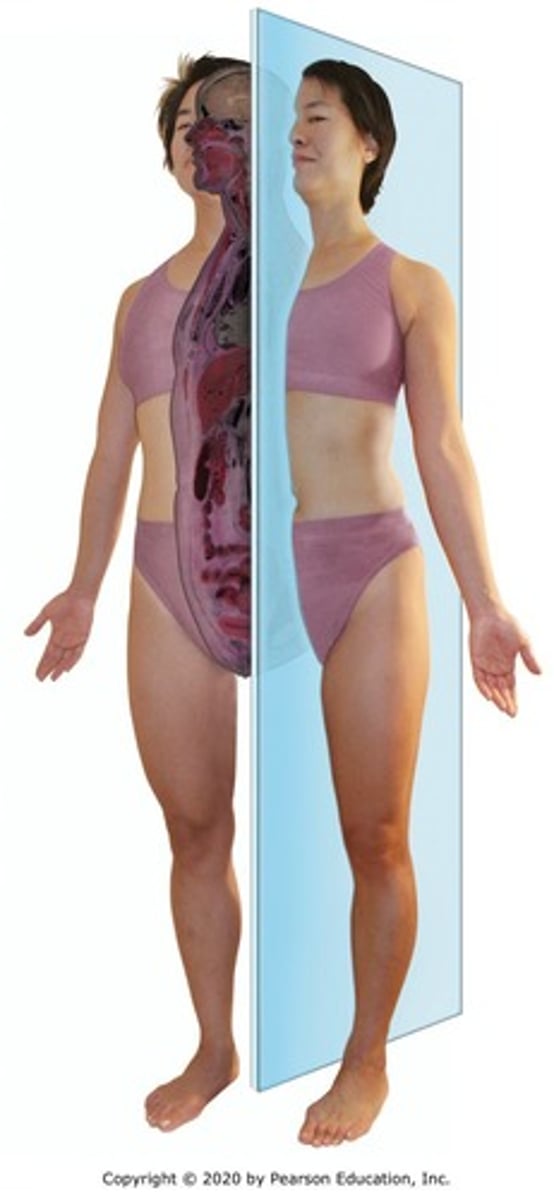
sagittal plane
divides the body into left and right sections.
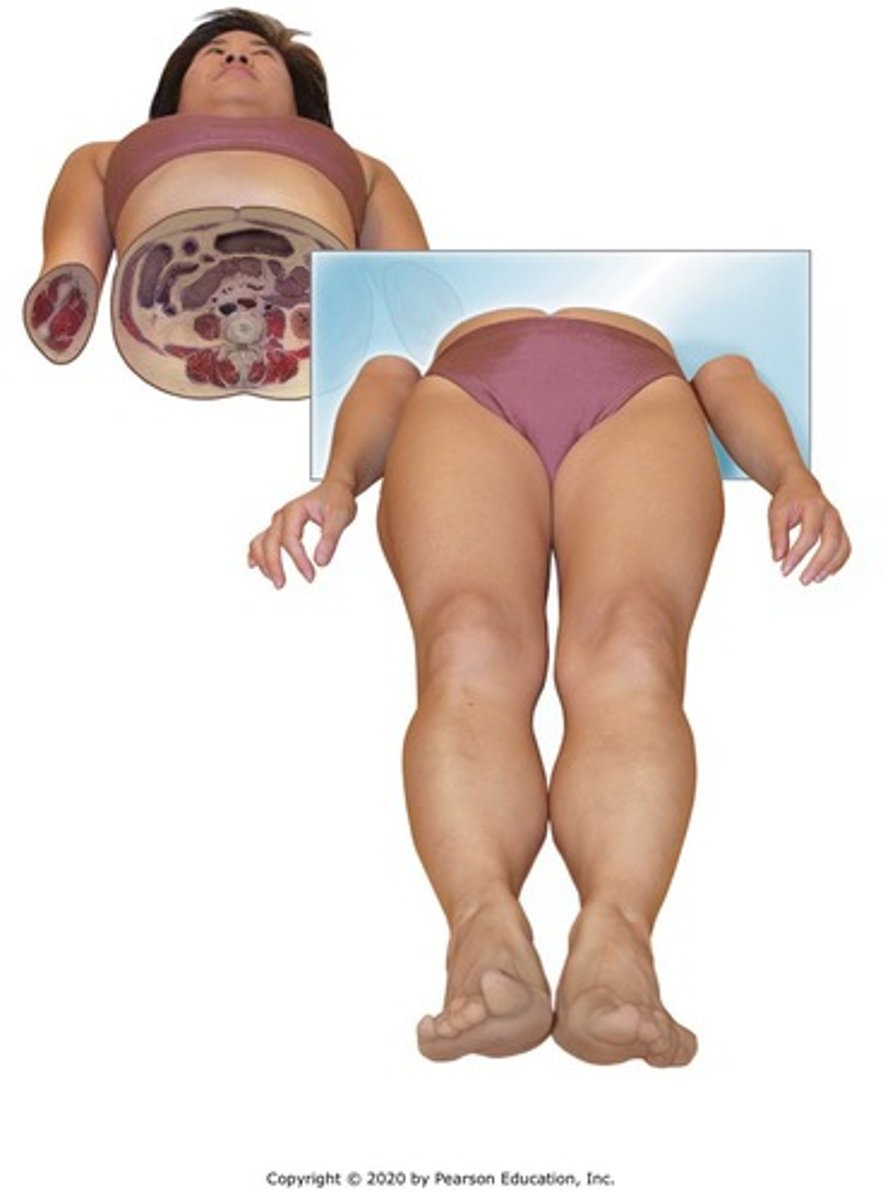
transverse plane
divides the body into superior (upper) and inferior (lower) sections.
medial
moving toward the midline of the body.
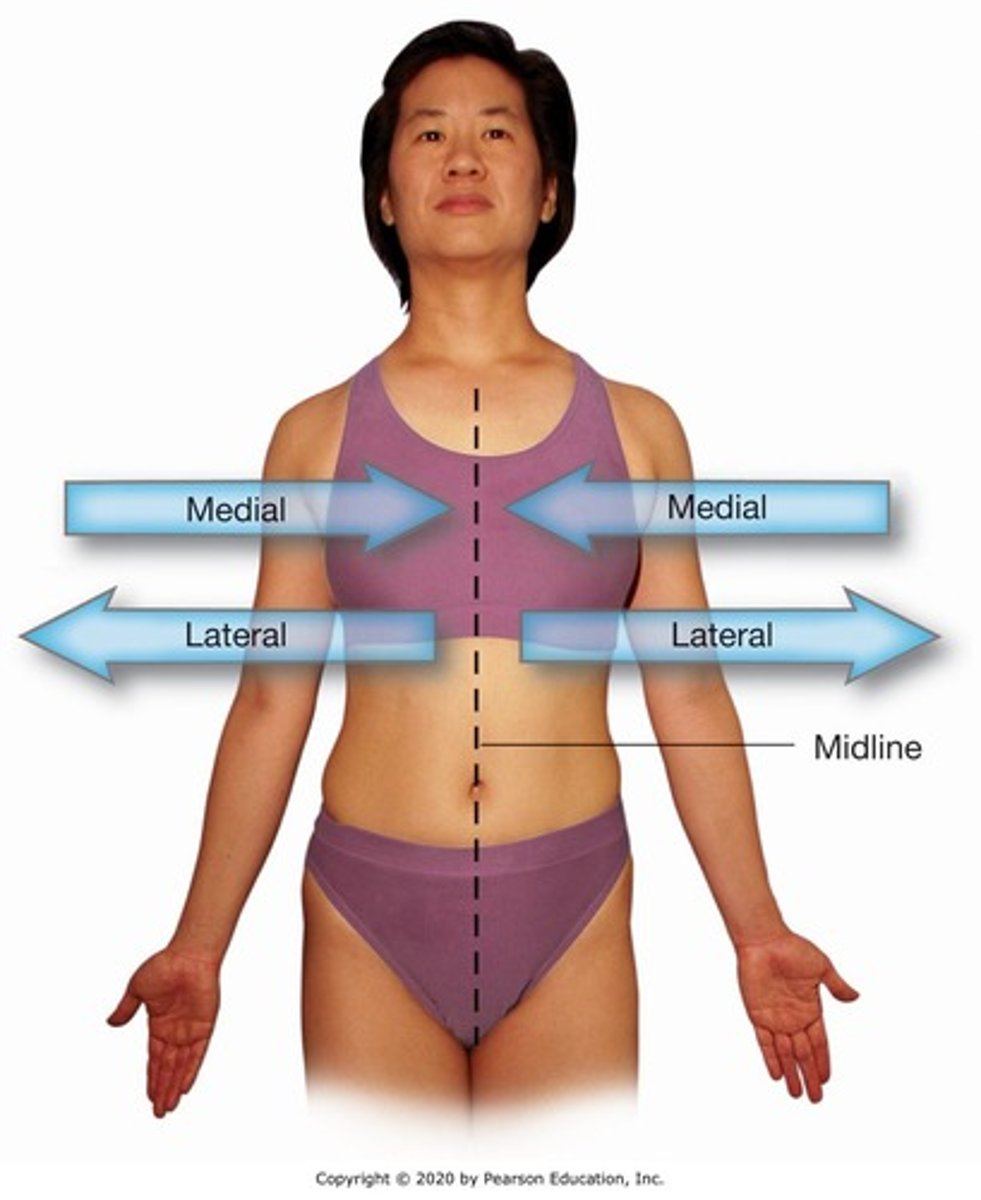
lateral
moving away from the midline of the body.
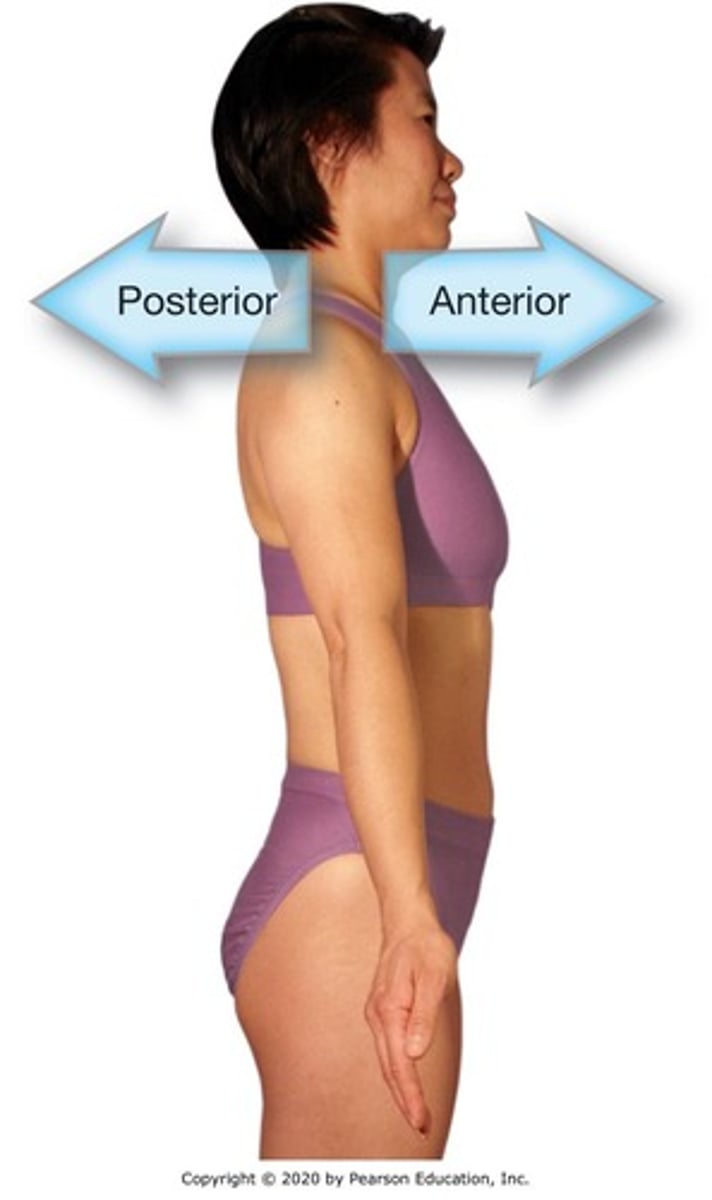
anterior
moving toward the front of the body.
posterior
moving toward the back of the body.
cephalad
moving toward the head.
caudad
moving toward the tailbone.
Proximal
Moving away from the fingers or toes toward the trunk.
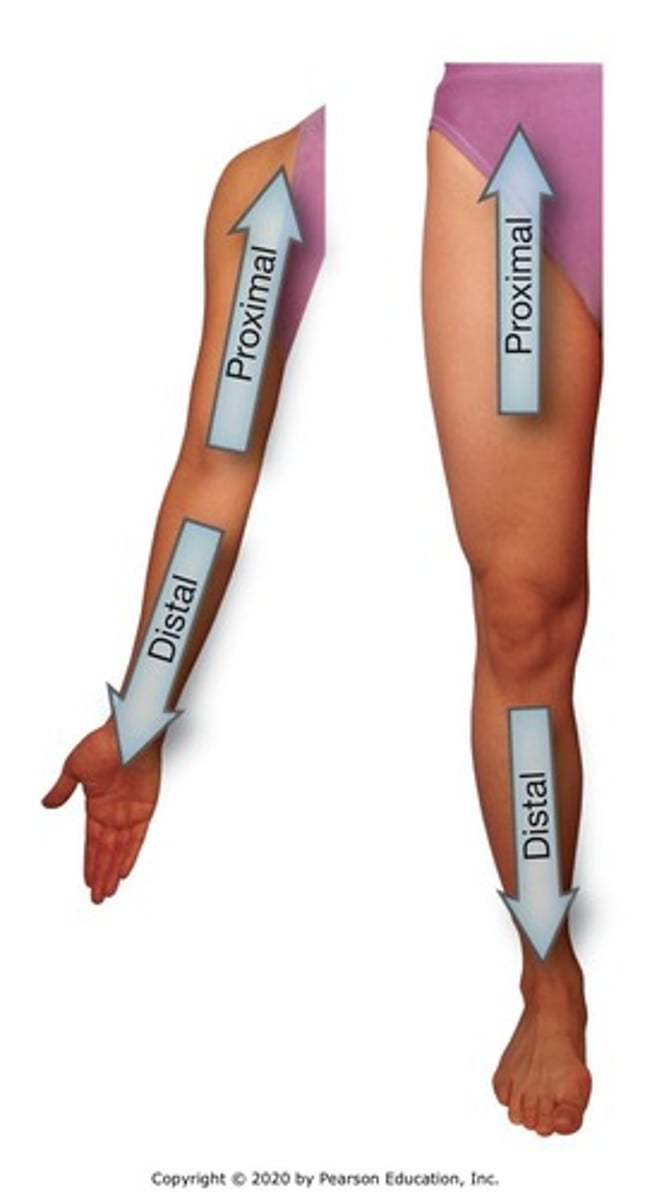
Distal
Moving away from the trunk of the body toward the fingers or toes.
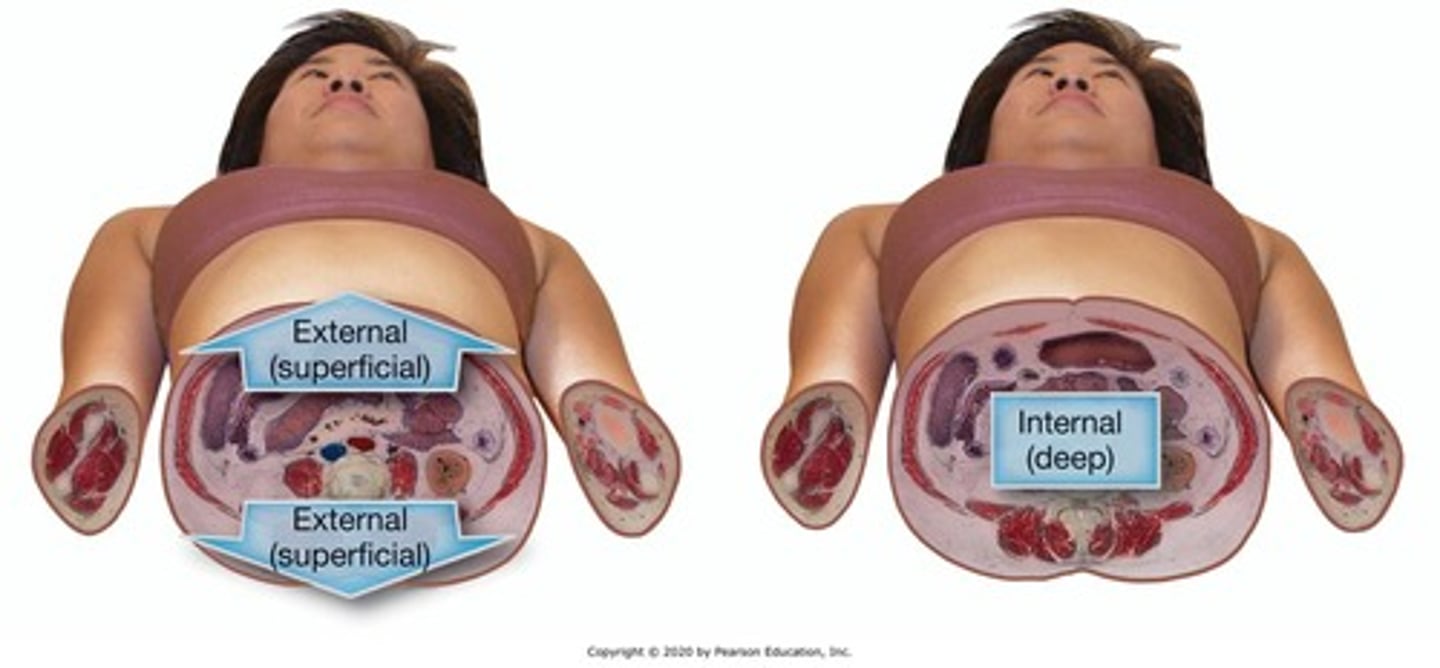
Internal
Refers to the inside of the body or an organ.
External
Refers to an outer part of the body or an organ.
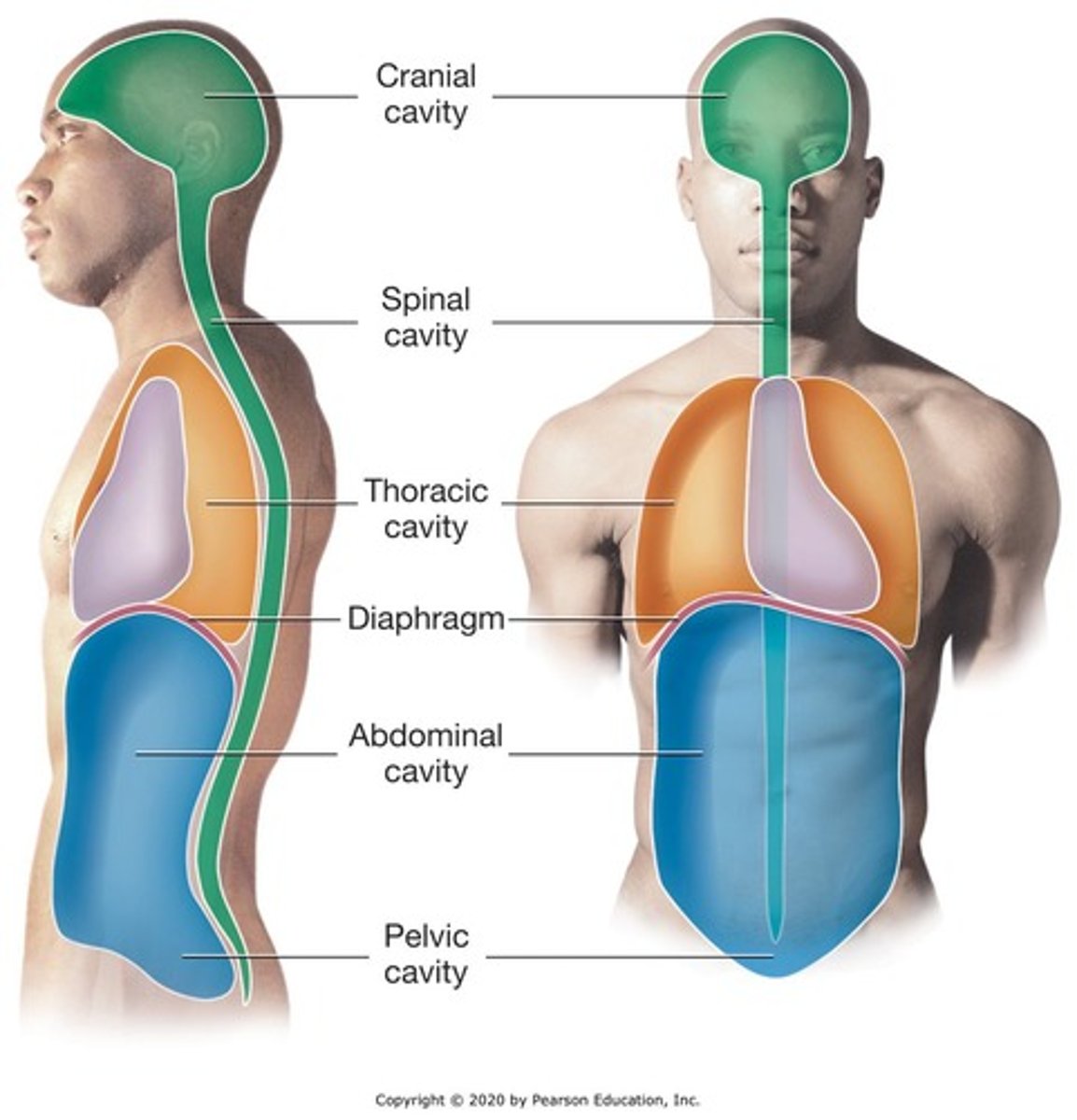
Body Cavity
A hollow space surrounded by bones or muscles that support and protect the structures inside.
Cranial, thoracic, abdominal, pelvic, lumbar, spinal Cavities
five main cavities of the human body.
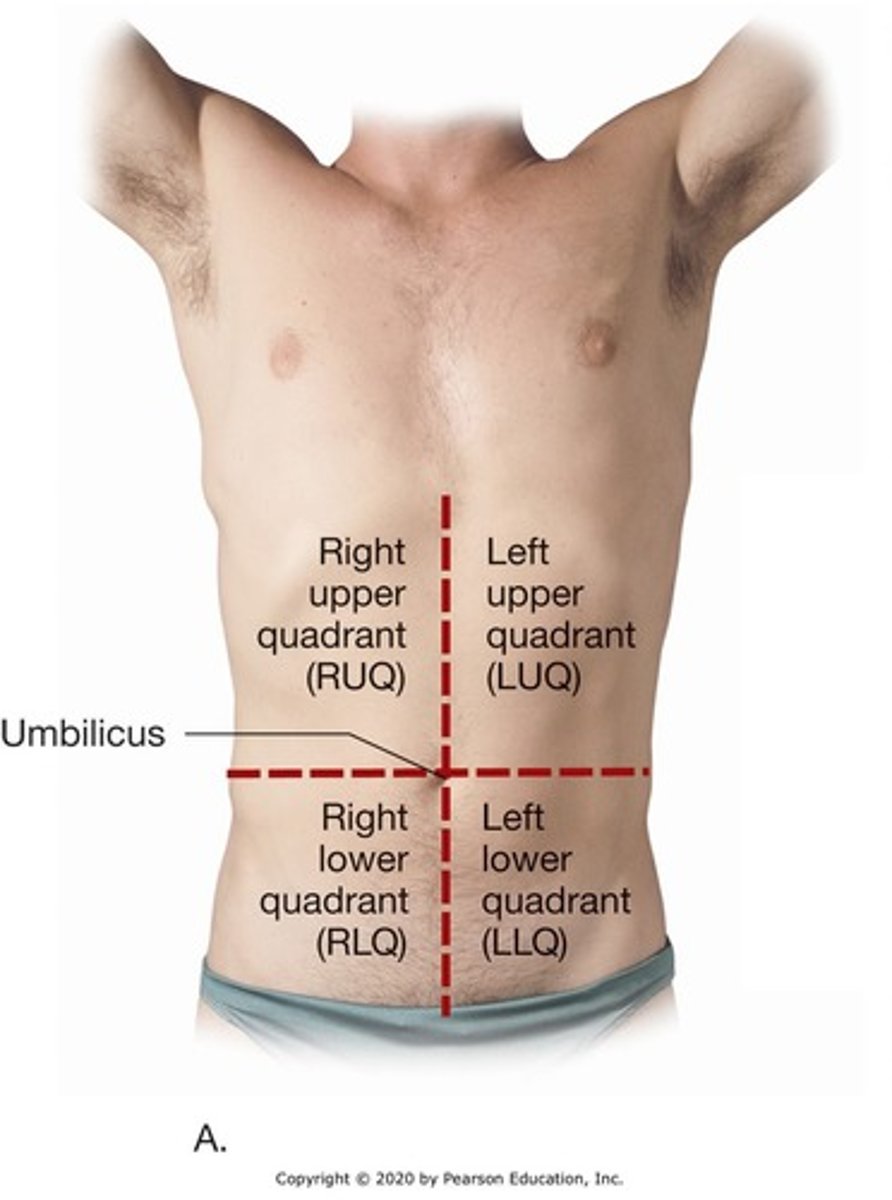
Right Upper (RUQ), left upper (LUQ), right lower (RLQ), left lower (LLQ) Quadrants
four quadrants of the abdominopelvic cavity.