Wading Birds Quiz
 Call Kai
 Learn
Learn Practice Test
 Spaced Repetition
 Match
Match Flashcards
 Knowt Play
1/17

There's no tags or description
Looks like no tags are added yet.
Name | Mastery | Learn | Test | Matching | Spaced | Call with Kai | Chat |
|---|
No analytics yet
Send a link to your students to track their progress
18 Terms
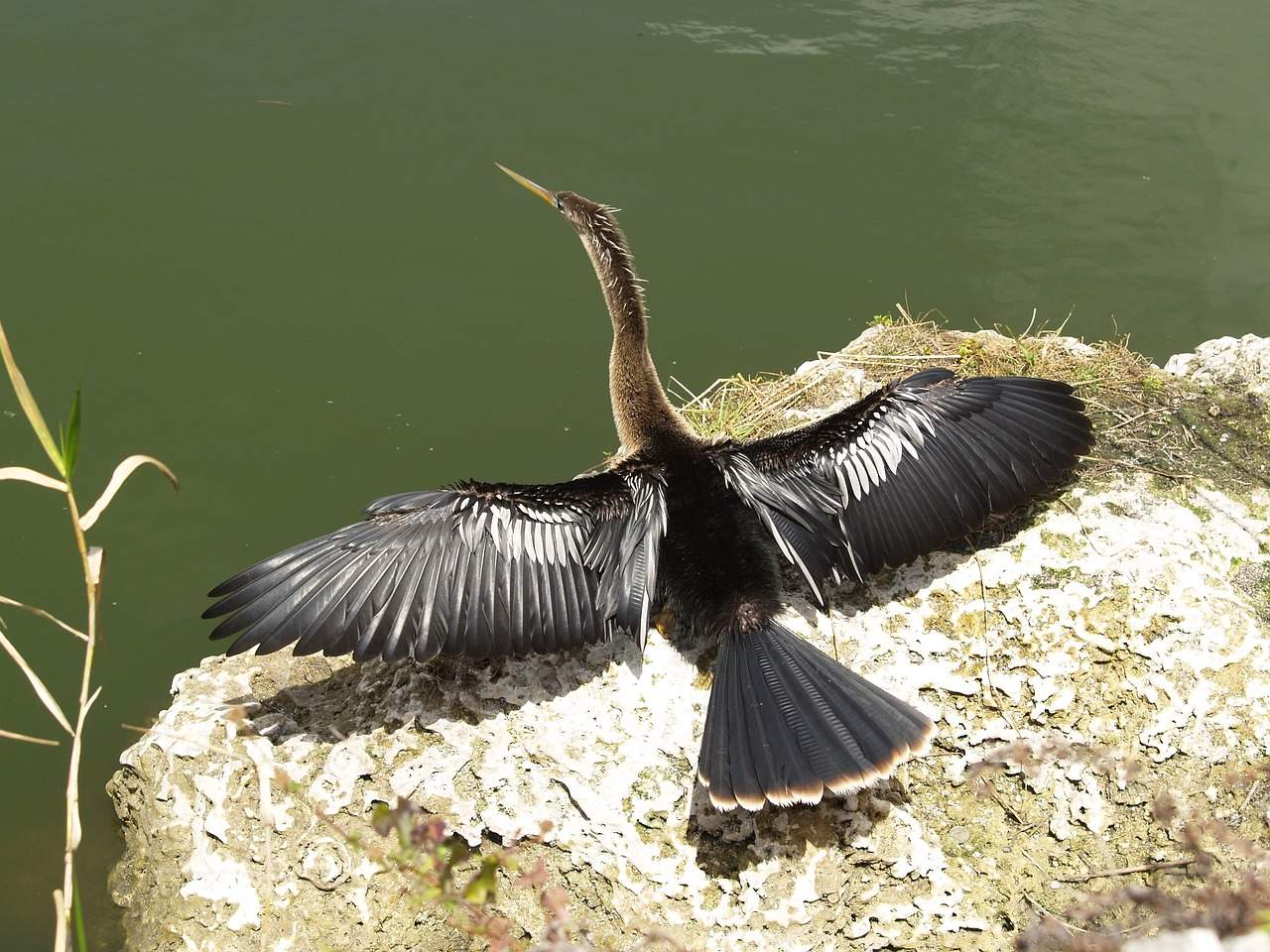
Anhingas
The _______ is a dark-bodied waterbird that you will find year-round in lakes, ponds, streams, and sitting atop features (natural or man-made) near water to dry itself. They can also be found in lagoons and brackish water but do not prefer extensive open water. An unusual feature is their lack of waterproof feathers. Their dense bodies and wet feathers allow them to become a sly and submerged predator in the water to stalk fish. They are also referred to as a “snakebird” or “darter because of their snake-like head and neck and how they stab fish with their dagger-like bill. Often, they appear to be a Lochness with only their head above water. You have probably seen this bird with its outstretched silvery feathers. After every dip the Anhinga will strike a regal pose with its head held high to dry its feathers. Once dry it will take to thermals. This is an iconic and easily visible activity of the species, often mistaken for a mating display.
Identifying Features
Long S-Shaped Neck
Long Tail
Dagger-like bill
Males
Black and silver streaked wings on the back
Female/immature
Pale Head, neck, breast, and wings
Dark belly
Black-crowned night heron
As their name implies, these stocky wading birds are active at night and dusk. Black-crowned night herons are social birds and breed in colonies of nests over water. However, they forage on their own. they live in fresh, salt, and brackish wetlands and are the most widespread heron in the world. They can look like almost 2 different birds. It will tuck its neck into its body creating a hunched-back look. They take flight with their neck retracted as well. While reaching maturity, you may see a mixed black and yellow bill.
Adult, Identifying features:
long white head plumes, gray wings, pale gray belly
Nicely defined black crown and back
All-black bills
Bright red eyes
Thick legs and neck

Common moorhen
The ______ _______ is a medium sized bird that swims like a duck but walks like a rail with its long slender toes. It lives in marshes and ponds expanding from Canada to Chile.
Adult, Identifying features:
Brilliant red shield over a yellow bill
White “racing” stripe over the side
White outer tail feathers
Charcoal gray body

Double-crested cormorant
The ______-_______ _________ has a prehistoric look to it with its serpentine matte-black body. Found in Fresh and salt water across North America they attract the most attention standing on docks, marinas, rocky islands, and channel markers when you visit the coast. As a relative of the Frigate bird, they tend to be part of your boating experience in Florida.
Adult, Identifying features:
Only have a double-crest during breeding season
Orange-yellow skin around base of bill and chin
Long, kinked necks
Thin strongly-hooked bills.

Great blue heron
The _____ ____ _____ is a large wading bird that can strike like lightning. You will often see one standing motionless as it scans for prey. You can see here they have specialized chest feathers that continuously grow. They use these feathers as a “washcloth” to remove oil and slime from other feathers as they preen. Herons use slow, deep wingbeats to take flight. You will typically seem them with a tucked-in neck and their long legs trailing out behind while flying.
Identifying features:
Largest North American Heron
Blue-gray color pattern all over
Wide black stripe over the eye
Black crown
Long orangish-yellow bill
Head plumes

Great egret
The _____ _____ is also a heron, hunting in the classic fashion by standing very still while hunting fish with a deadly jab of their bill. You may have noticed they are the symbol for the National Audubon Society. They become more decorative during breeding season. Their facial patch turns neon green and long plumes grow from their beak. Called aigrettes, these plumes nearly drove them to extinction and were used to adorn ladies’ hats in the late nineteenth century. In flight their legs extend far beyond their short tail, and they will usually tuck their neck back.
Identifying features:
An entirely white body
Yellowish-orange bills
Black legs

Green heron
The _____ _____ is a stocky bird with a hunched over appearance. They wait patiently to snatch their prey and sometimes use a lure such as a twig, insects, or even breadcrumbs. It is one of the world’s few tool-using bird species. At a distance this species appears much darker. Like other herons, they can also stretch out its long neck which can provide a snake-like stab when hunting. they look ungainly in flight, partially uncrooking their neck and looking front-heavy.
Identifying features:
Slender yellow legs
Velvet-green back and crown
Rich chestnut body
Dark cap that raises into a short crest
Dark gray wings

Laughing gull
You’ll run across the ________ ____ in large numbers at beaches, docks, and parking lots where they wait for handouts and provide a beach atmosphere with their raucous calls. They are year-round visitors along the Southeast and Gulf Coast. They are known for their laugh-like cry and happy appearance. Nonbreeding adults have some black smudging around the eye, but are otherwise very similar being white and medium gray while missing a black cap.
Identifying features:
Stout, fairly long bills
Medium gray wings and back
White chest and underneath
White arcs around the eyes
Crisp black hood
Reddish bill
Reddish to black legs.

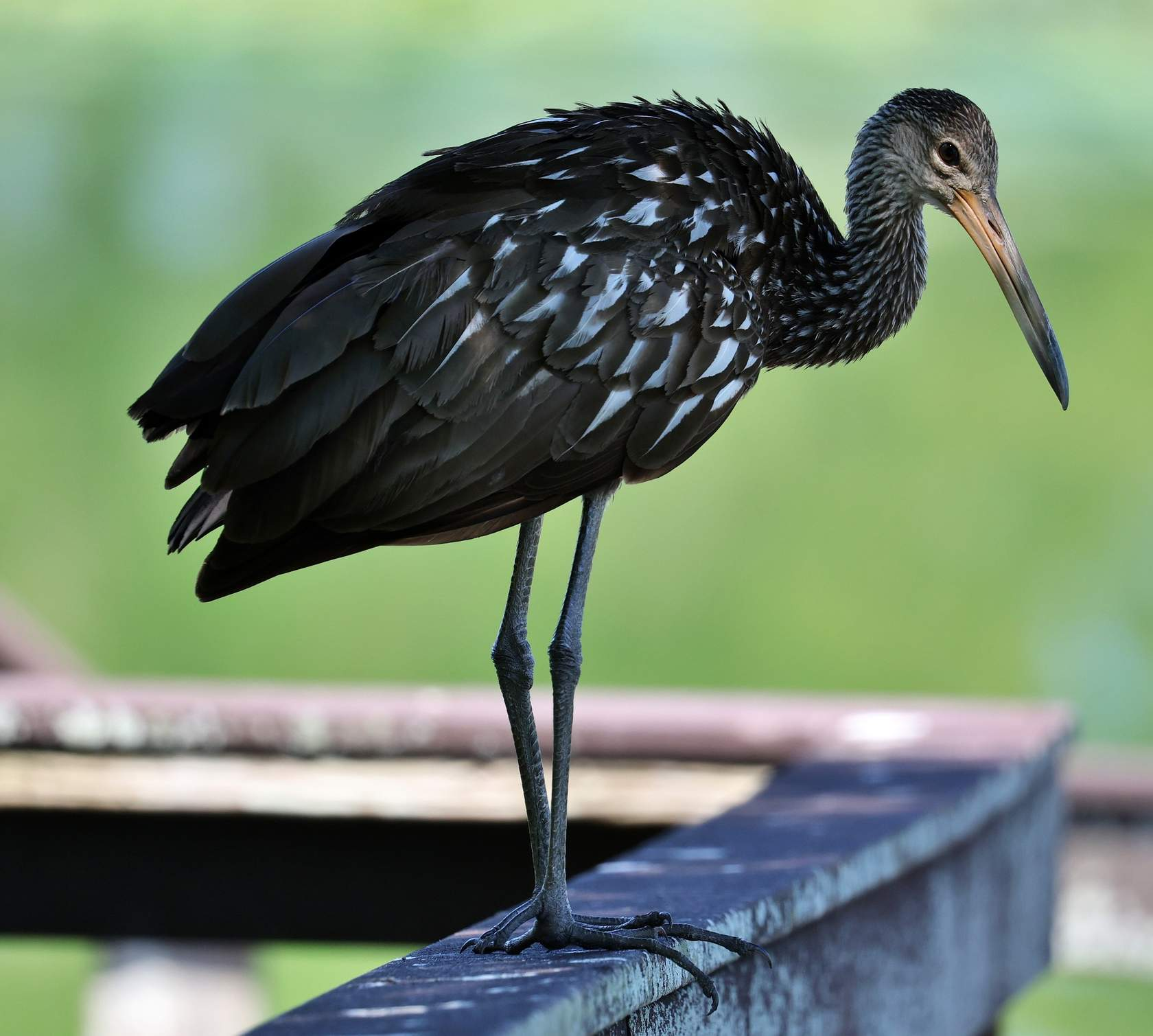
Limpkin
The _______ stands out as an unusual bird and reaches the northern limits of its breeding range in Florida. You have likely heard its evocative screaming cry while visiting a wetland. They feed almost exclusively on apple snails by using their long bills for extraction. Their bills have a gap just before the tip that acts as specialist tweezers. They opportunistically eat other prey such as frogs, lizards, crustaceans, worms, and insects. They resemble a heron or ibis but is closely related to rails and cranes. Their unique form makes them easy to identify.
Identifying features:
Tall and long-legged
Long neck
Long and heavy yellowish bill
Brown overall with white spotting on back and sides
Unique morphology
Mallard
________ frequent urban ponds and lakes as well as wilder wetlands and estuaries throughout North American and Eurasia. Being the most common duck, almost all domesticated ducks from Mallards. They are mostly monogamous and you will usually find the mottled females swimming alongside the ornate male. Impressive speculum, a patch used to identify many ducks.
Male Identifying features:
Dark, iridescent-green head with a white collar
Pale underneath
Bright yellow bill with orange legs and feet
Brown breast and black rear
Blue “speculum” patch in their wing
White tail with curled black feathers
Female Identifying features:
Brown mottled body with dark spotting
Orange and brown bills
Orange legs and feet
Blue “speculum” patch in the wing

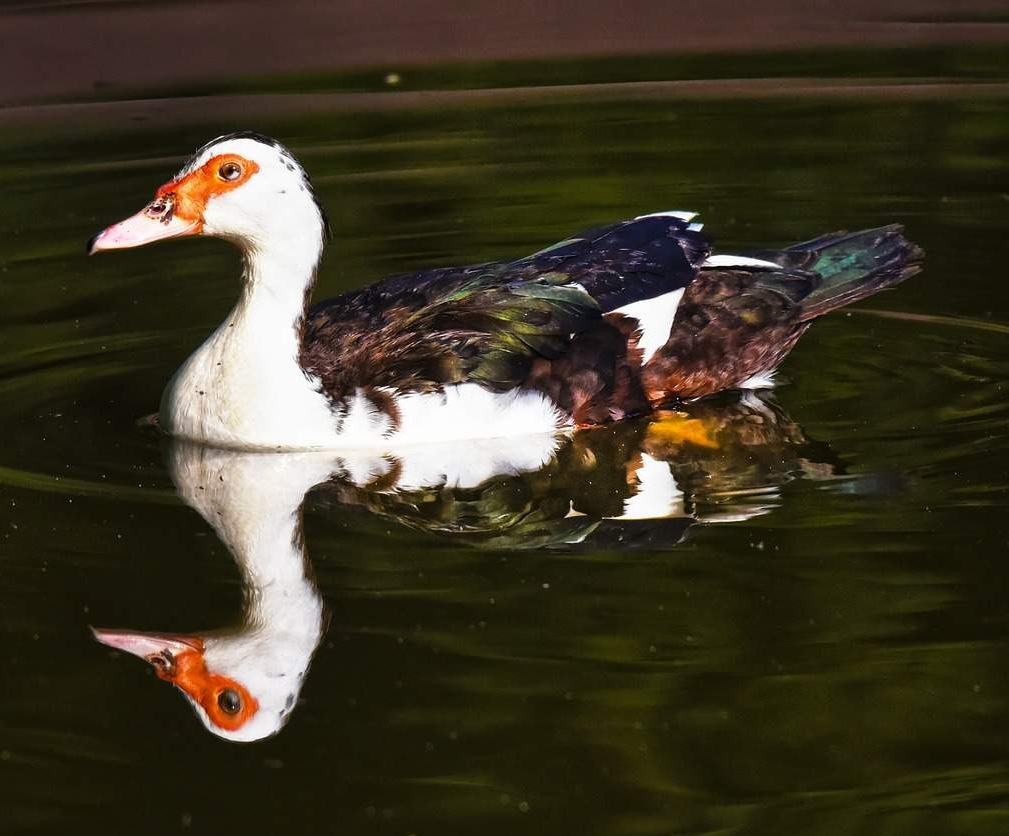
Muscovy duck
The _______ ____ is slightly larger than a Mallard. Males are the largest duck in North America, with females being half their size. Unlike other ducks, they do not quack but rather hisses. It is native to South American, Central America, Mexico, and portions of Texas. It has been introduced worldwide, including Florida, where it is often considered an invasive species.
Identifying features:
Variable white patches on the wings
Mostly black bodies with greenish gloss
Red facial skin with odd warty growths (called caruncles)
Strong claws to assist with perching in trees
Pied-billed grebe
Rarely seen in flight and often hidden by vegetation, ____-______ ______ inhabit sluggish rivers, freshwater marshes, lakes, and estuaries to feed on aquatic invertebrates. There are trade-offs for their aquatic prowess. They are inefficient fliers, typically stay in the water, and walk awkwardly on land.
Identifying features:
Blocky head
Short, thick bill
Almost no tail
Vertical black stripe on the bill
Small size, smaller than a crow

Sandhill crane
The ________ _____ is an elegant and attention-grabbing wading bird. It is a powerful-looking bird with its striking size, dagger-like bill, and large claws. It breeds in open prairies, wetlands, and fields across North America. They can be seen year-round in Florida especially in the winter. They are usually paired and are monogamous for life, living up to ~36 years old. The oldest fossil is 2.5 million years old and discovered in Florida.
Identifying features:
Long slender neck and long legs
Tall, heavy-bodied
Drooping near feathers called a “bustle”
Gray overall with some tan body feathers
Bright red crown
Pale cheek

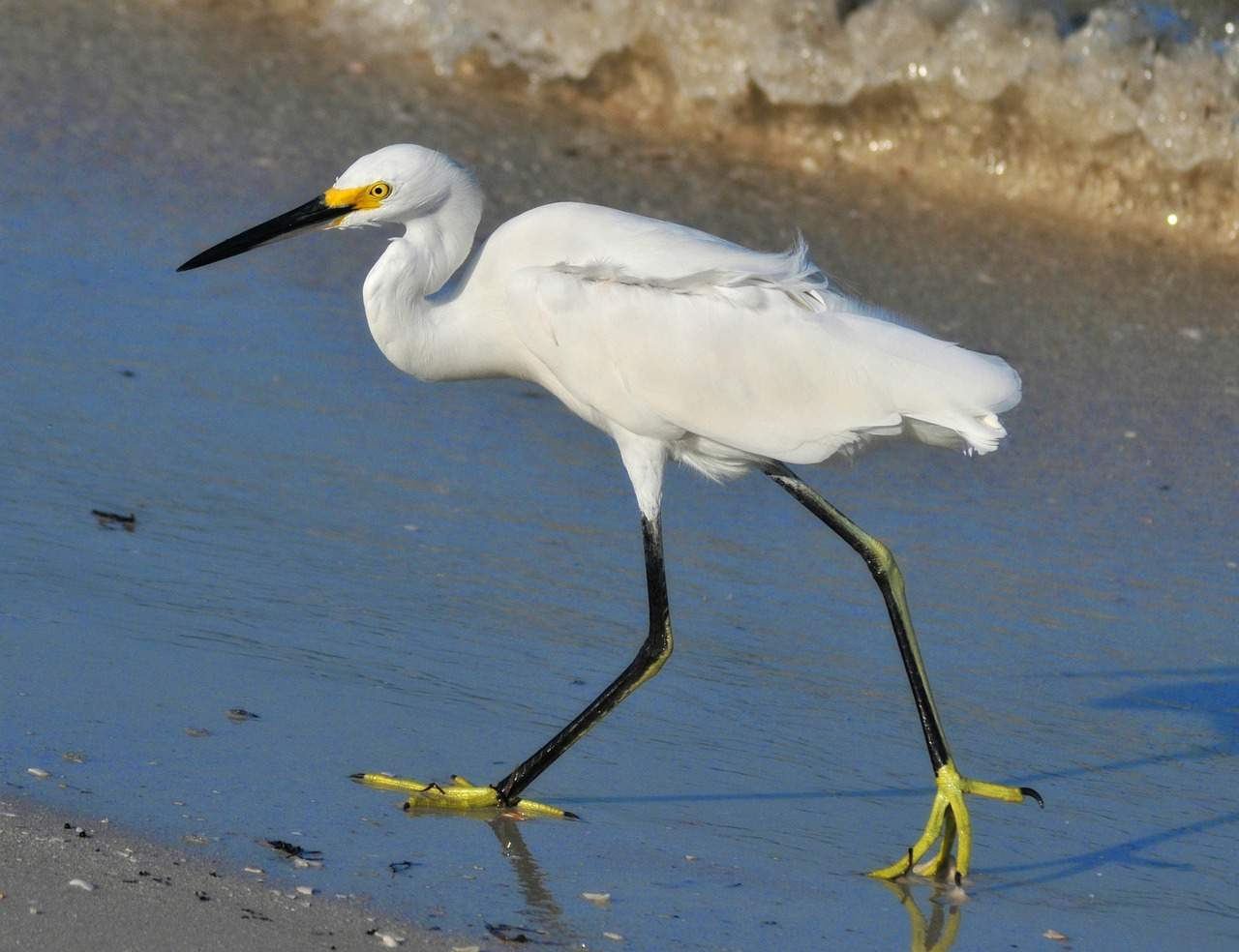
Snowy egret
_____ ______ are smaller than Great egrets and are medium sized herons. They were endangered much like the Great egret for their curvy plumes.
Identifying features:
All white body
Black bill
Yellow skin at base of bill
Black legs
Yellow feet
Filmy, curvy plumes during breeding season
Tricolored heron
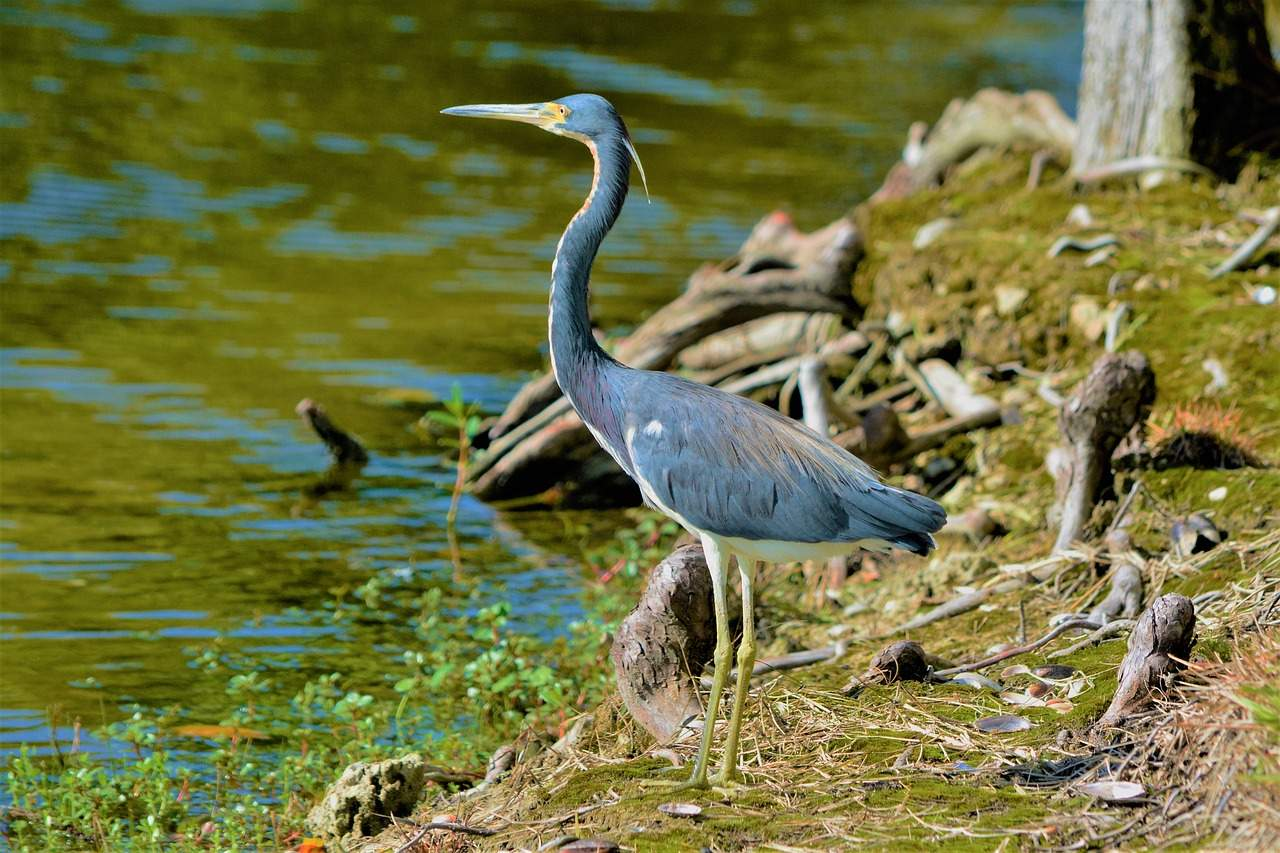
The __________ _____ is a fairly small heron and inhabits coastal estuaries. They hunt by wading through coastal waters to catch small fish but are not as slow and methodical as the Great blue heron.
Identifying features:
Mixture of blue-gray, lavender, and white
White belly unlike other dark herons
Yellowish legs
Bright yellow patch around the bill
Breeding __________ _____ differs with:
Pink legs
Bright blue patch of skin around bill
Small white plumes extending from back of head
Flourishes extending off back
White ibis
You may have seen these birds comb through your lawn looking for insects, worms, and even lizards. Often, they remove past species not good for your lawn. This is because they take advantage of flooded fields and shallow wetlands. They travel in groups and are native to the coastal southeast. It is common to see a mottled brown and white immature tag along in their groups. Juvenile/immature will range from mostly brown to mottled white as they mature into full white.
Identifying features:
Football-shaped all-white body
Long, curved bill
Red legs, bill, and patch around the eyes
Black wing tips (seen mostly in flight)

Wood stork
The ____ _____ is a bald-headed wading bird just over 3 feet tall. You will find them in wetlands and wildlife preserves along the coast of Florida, Georgia, and South Carolina.
Identifying features:
Massive size
Long legs, long heavy curved bill
White overall with black tail and flight feathers
Head is bare and scaly, has wooden appearance
Tucked in neck at rest, extended in flight

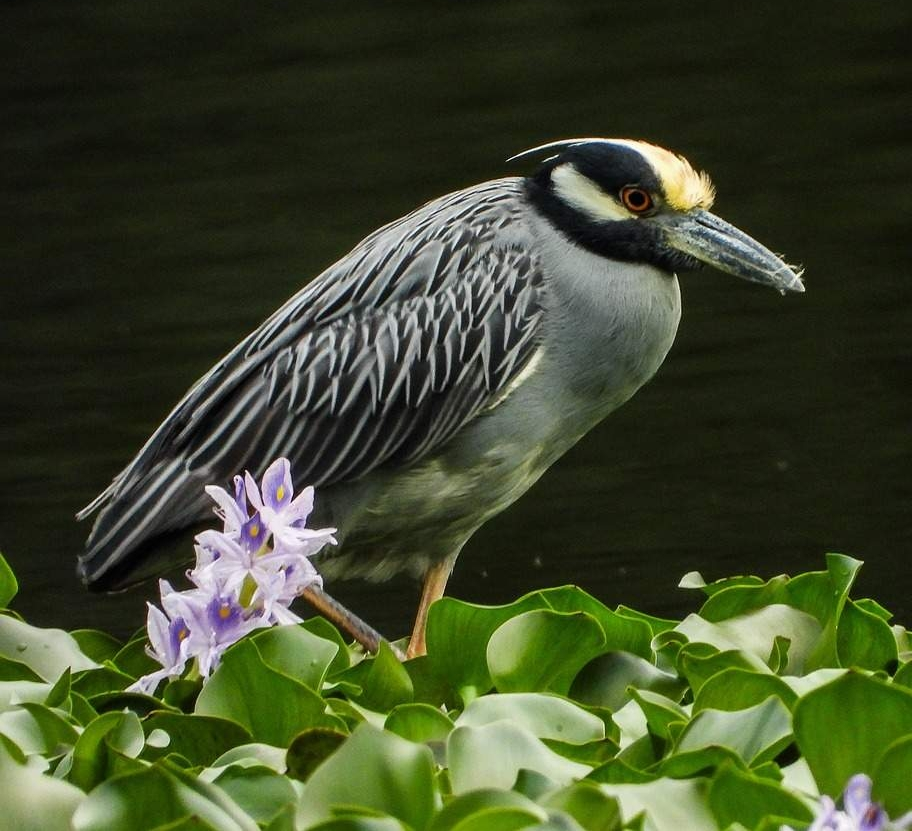
Yellow-crowned night heron
It forages during the day or night and specializes in stalking crustaceans in shallow wetlands and wet fields shaking them apart or swallowing them whole. this heron is more of a coastal bird. Like the Sandhill crane, its oldest fossil record is about 2.5 million years old. While Black-crowned night herons and Green herons have a similar form to this heron, you can clearly see the stark differences in their crowns.
Identifying features:
Blocky head and thick neck
Boldy marked black head with white cheek patch
Yellow crown and head plumes (can be hard to see the color)
Gray underparts
Bright orange-yellow legs