PQs | Quizlet -KM
 Call Kai
 Learn
Learn Practice Test
 Spaced Repetition
 Match
Match Flashcards
 Knowt Play
1/222

There's no tags or description
Looks like no tags are added yet.
Name | Mastery | Learn | Test | Matching | Spaced | Call with Kai | Chat |
|---|
No analytics yet
Send a link to your students to track their progress
223 Terms
An infectious disease of horses subject to compulsory control in Poland is:
a. African horse sickness
b. Equine infectious anemia
c. Glanders
d. all answers are correct
d. all answers are correct
Notes:
- AHS: notifiable + compulsory control
- EIA: compulsory testing + control
- Glanders: compulsory control + reportable
Clinical signs attributed for Borrelia infection in most horses
a. Neurological disorders including cranial nerves dysfunctions (drooping eyelids, lips etc)
b. Fever, stiffness, lameness in more then one limb
c. Head oedema, swelling of the limbs
d. Petechiae, circulatory disorders and dyspnoea
b. Fever, stiffness, lameness in more then one limb
Notes:
- Tick-borne disease (Borrelia burgdorferi → Lymes disease)
- Most common signs = fever + stiffness + shifting leg lameness
- Neurological signs can occur but uncommon
- Diagnose: ELISA/IFA screening → Western blot confirmation
- Treatment: IV tetracycline or PO doxycycline
- No approved Lyme vaccine for horses
- Occurs in Poland (tick-borne disease)
The typical clinical symptoms of strangles are:
a. fever, cough, purulent discharge from the nose,
b. "Pink eye" and purulent discharge from the nose and conjunctival sacs,
c. fever, enlargement and suppuration of lymph nodes around the head and purulent (white-yellow) discharge from the nose
d. fever, enlargement of superficial lymph nodes, and serous discharge from the nose
c. fever, enlargement and suppuration of lymph nodes around the head and purulent (white-yellow) discharge from the nose
Notes:
- Streptococcus equi subsp. equi
- Fever + purulent nasal discharge
- Submandibular/retropharyngeal LN abscessation
- Highly contagious
- Carrier state → guttural pouch
Which most typical post mortem changes can be observed in equine leptospirosis:
a. Splenomegaly, hepatomegaly, renal interstitial edema
b. Hepatomegaly, vessel thrombocytosis, myonecrosis
c. Lymphadenopathy, glomerulonephritis, splenomegaly
d. Renal interstitial edema, hemorrhages, glomerulonephritis
d. Renal interstitial edema, hemorrhages, glomerulonephritis
Notes:
- Lepto → kidney, eye, abortion
The mainstay of Equine Infectious Anemia control is:
a. vaccinations
b. antibiotic therapy
c. isolation and culling of infected animals
d. all the aforementioned
c. isolation and culling of infected animals
Notes:
- EIAV → lentivirus
- No effective vaccine or treatment
- Lifelong carriers
- Control: test (AGID/Coggins or ELISA) + isolate/cull
- Spread mainly by horse flies + deer flies
Clinical signs of strangles are
a. fever. cough, serous nasal discharge
b. ecchymosis, swellings, fever
c. fever, serous nasal discharge, conjunctivitis, cough
d. fever, purulent nasal discharge, abscessation of the lymph nodes of the head
d. fever, purulent nasal discharge, abscessation of the lymph nodes of the head
The time from wound inoculation by C. tetani to the development of the first clinical signs can range:
a. From 1-7 days
b. From 3-6 months
c. From 1-60 days
d. From months to years
c. From 1-60 days
Notes:
- Typical incubation: 1–3 weeks
- Can range from 1 day to ~2 months
- Shorter incubation → worse prognosis
- Enters through wounds, castration, parturition, umbilical infections
- Causes: rigidity, lockjaw (trismus), prolapsed 3rd eyelid
Clinical manifestations described as slow-motion eating and "pipe smoking" are characteristic for:
a. WNF
b. EEE
c. BD - Borna disease
d. Rabies
c. BD - Borna disease
Notes:
- Borna disease → viral encephalitis
- Behavioral + neurological abnormalities
- "Pipe smoking": repetitive chewing/lip movements
- Slow-motion eating is characteristic
- Ataxia, depression, cranial nerve deficits may occur
- Rare, but classic exam clue = pipe smoking
Equilis Tetanus vaccination?
Vaccination Protocol:
- Foal from vaccinated mare: 6 → 7 → 9–12 months
- Foal from unvaccinated mare: 3 → 4 → 6 months
- Booster: every 2 years
Key point:
- Vaccinated mare = start later (maternal Abs)
- Unvaccinated mare = start earlier
- Pregnant mares should be vaccinated 4–6 weeks before foaling (colostral protection)
Characteristic change in the morphology of peripheral blood, which could be detected in all stages of Equine infectious anemia and will be present in early stages, is:
a. Hypoalbuminemia
b. Hypergammaglobulinemia
c. Thrombocytopenia
d. Increase of total protein
c. Thrombocytopenia
Notes:
- Earliest + most consistent hematologic change
- Immune-mediated platelet destruction
- Causes: petechiae + bleeding tendency
- EIAV → lentivirus, lifelong infection
- Diagnosis: Coggins (AGID) or ELISA
Peripheral blood smear showed morulae within monocytes, which are characteristic for:
a. Anaplasma phagocytophilum infection
b. Neorickettsia risticii infection
c. WNF
d. Borna disease
a. Anaplasma phagocytophilum infection
Notes:
- Tick-borne disease
- Morulae → intracellular bacterial clusters
- Found in granulocytes/neutrophils on blood smear
- Causes: fever, limb edema, ataxia, icterus
- Diagnosis: blood smear + PCR
Madariaga virus is a type of?
a. WEE
b. VEE
c. JE
d. EEE
d. EEE
Notes:
- Madariaga virus → South American lineage of EEE virus
- Mosquito-borne alphavirus 🦟
- Causes: severe encephalitis in horses
- High mortality
- Zoonotic
Clinical manifestation of Botulism in horses correlates with:
a. Action of bacteria in CNS
b. Action of neurotoxin in CNS
c. Action of spores in CNS
d. Action of bacteria, spores and neurotoxins in CNS
b. Action of neurotoxin in CNS
Notes:
- Disease caused by botulinum neurotoxin
- Toxin blocks acetylcholine release at neuromuscular junctions
- Causes: flaccid paralysis
- Clinical signs: weakness, dysphagia, tongue weakness, limp tail
- Death usually due to respiratory paralysis 🫁
Equine Protozoal Myeloencephalitis (EPM) occurs:
a. worldwide
b. only in North America
c. only in Africa
d. only in Europe
b. only in North America
Notes:
- Caused mainly by Sarcocystis neurona
- Definitive host = opossum
- Neurological disease: ataxia, weakness, muscle atrophy
- Sporadic cases reported elsewhere, but exam answer = North America
- Diagnosis: CSF serology/PCR
Is there a registered horse vaccine against fungal infections?
a. Sometimes
b. Only in endemic regions
c. No
d. Yes
c. No
Notes:
- Lecture says no so...
Which statement is true for vaccination of horses against Equine Viral Arteritis?
a. vaccines are available in some European countries and USA
b. vaccines are not used due to serious side effects
c. many commercial vaccines are available worldwide
d. effective vaccines are not available
a. vaccines are available in some European countries and USA
Notes:
- Effective vaccine available
- Used mainly in breeding horses/stallions
- Prevents infection + virus shedding
- Important because persistently infected stallions can spread EVA venereally
- Vaccination status should be documented before breeding
Which statement is true for vaccination of horses against herpesvirus infection in horses?
a) Effective inactivated vaccine is available in some countries
b) Vaccines are not used due to serious side effects
c) Many commercial vaccines are available worldwide
d) Effective vaccines are not available
c) Many commercial vaccines are available worldwide
Commercial vaccines used against tetanus are:
a. Anatoxin
b. Antitoxin
a. Anatoxin
Notes:
- Anatoxin (toxoid) = vaccine → stimulates active immunity
- Antitoxin = treatment/emergency prophylaxis → passive immunity
- Vaccines contain inactivated tetanus toxin (tetanospasmin toxoid)
- Antitoxin used after injury in unvaccinated horses
From where - if CEM is suspected in mares - will be collected samples for laboratory tests?
a. Clitoral fossa and distal urethra
b. Clitoral fossa and fossa glandis
c. Urethral sinuses and clitoral sinuses
d. Clitoral fossa and clitoral sinuses
d. Clitoral fossa and clitoral sinuses
Notes:
- CEM = Taylorella equigenitalis
- Stallion: urethral fossa, urethra, prepuce, fossa glandis
Pulmonary, cardiac, and mixed forms are distinguished in:
a. EHV infections
b. EIA infections
c. African horse sickness
d. Strangles
c. African horse sickness
Notes:
- Pulmonary form (thin head): severe respiratory signs, pulmonary edema, mortality up to 90%
- Cardiac form (thick head): edema of head/supraorbital fossa
- Mixed form: pulmonary + cardiac signs
- Vector: Culicoides midges 🦟
- High mortality, notifiable disease
EIA virus is mainly shed through:
a. Saliva
b. Semen
c. Urine
d. Blood
d. blood
What is the nature of nasal discharge in the pulmonary form of AHS:
a. Muco-purulent and yellowish
b. Froth and serous
c. Serous and bloody
d. Froth and brownish
b. froth and serous
Notes:
- Pulmonary form = "thin head"
- Severe pulmonary edema
- Frothy serous nasal discharge
- Severe dyspnea
- Mortality up to 90%
- Death often within 4–5 days
Diagnosis of Rhodococcus equi infection in foals is based on
A. clinical signs and thorax USG
B. clinical signs only
C. clinical signs and detection of R. equi in nasal swab
D. detection of R. equi in nasal swab and increase of hematological parameters
A. clinical signs and thorax USG
Notes:
- Foals: 1–6 months old
- Typical disease = pyogranulomatous pneumonia
- USG detects lung abscesses/consolidation
- R. equi can be present in environment + upper airways → nasal swab alone is not diagnostic
- PCR/culture should ideally come from lower respiratory tract samples (BAL/tracheal aspirate)
Frequent complications of pleuropneumonia is:
a. Laminitis
b. Osteomyelitis
c. Diarrhea
d. Purulent inflammation of the eyeball
a. Laminitis
Notes:
- Due to endotoxemia
Changes described as "comet tails" visible in USG during chest examination are typical for:
a. Pleuropneumonia
b. Rhodococcus
c. Glanders
d. Influenza
b. Rhodococcus
In the case of pleuropneumonia, effusion is present, the therapeutic + diagnostic management includes:
a. Application of diuretics + collection of nasal swabs
b. Antimicrobial therapy + collection of nasal swabs
c. Thoracocentesis + application of steroids
d. Thoracocentesis + fluid examination
d. Thoracocentesis + fluid examination
The vaccine against tetanus contains
A. inactivated toxin of Clostridium tetani
B. M protein
C. c-reactive protein
D. inactivated strains of Clostridium tetani
A. inactivated toxin of Clostridium tetani
Strangles affect horses:
A. naive at any age
B. immunocompromised
C. secondary to the viral infections
D. 3 weeks - 12 weeks old
A. naive at any age
Recommended "core vaccines" in horses in Europe are:
A. tetanus, rabies, eventually WNV plus rhinopneumonitis and influenza
B. tetanus, rabies, WNV, VEE
C. botulism, rhinopneumonitis, influenza
D. EVA, EIA, AHS
A. tetanus, rabies, eventually WNV plus rhinopneumonitis and influenza
In WNV cycle horses are:
A. the only hosts
B. amplifying hosts
C. accidental hosts
D. the horses are not susceptible to this disease
C. accidental hosts
Notes:
- Birds = reservoir/amplifying hosts
- Mosquitoes = vector
- Horses + humans = accidental (dead-end) hosts
- Viremia in horses is too low to infect mosquitoes
- No horse-to-horse transmission
Typical signs of equine Influenza:
a. Cough, fever, nasal discharge
b. Oedema, pink eye, weakness
c. Dark urine, anemia
d. All answers are correct
a. Cough, fever, nasal discharge
Notes:
- Highly contagious respiratory disease
- Fever often first sign
- Dry, harsh cough
- Serous → mucopurulent nasal discharge
- Enlarged submandibular LNs may occur
- Spread by aerosols/respiratory secretions
Head restraint in horses during transport results:
a. Lower respiratory tract infection and development of rhodococcosis
b. Lower respiratory tract infection and development of glanders
c. Lower respiratory tract infection and development of pleuropneumonia
d. Lower respiratory tract infection and development of bastard strangles
c. Lower respiratory tract infection and development of pleuropneumonia
Notes:
- "Shipping fever" = pleuropneumonia
- Head tied high → impaired mucociliary clearance
- Inability to lower head + drain respiratory secretions
- Bacteria aspirated into lower airways
- Long-distance transport = major risk factor
What kind of symptoms correlate with tetanus in horses
a. A extended position head and neck, evaluation of the failhead and flaccid paralysis of anus
b. Diarrhea, increased tonus of masticatory muscles and neck stiffness
c. Prolapsed nictitans, muscle spasm, extensor rigidity, evaluation of the tailhead and paralysis of the anus
d. Prolapse of the tongue and nictitans, hyperthermia and muscle spasm
c. Prolapsed nictitans, muscle spasm, extensor rigidity, evaluation of the trailhead and paralysis of the anus
Burkholderia mallei infection occurs:
a. Worldwide with similar occurrence
b. Only in North America
c. Only in Europe
d. Mostly in Middle East
d. Mostly in Middle East
Notes:
- Causes Glanders
- Super rare in most of Europe + North America
- Still occurs in → Middle East, Asia, parts of Africa + South America
- Zoonotic
- Notifiable disease
Which of the statements is true for vaccination of horses against Equine Infectious Anemia:
a. Effective vaccines are available in some European countries and USA
b. Vaccines are not used due to serious side effects
c. Many commercial vaccines are available worldwide
d. Effective vaccines are not available
d. Effective vaccines are not available
Gross lesions which may be observed in fetuses aborted due to EHV-1 infection
a. Multiple petechiae, jaundice, multiple hepatic necrosis, yellow fluid in the body cavities
b. Tissues autolysis, abscesses in liver
c. Placentitis, necrotic lesions and mucous exudate on fetus
d. All answers are correct
a. Multiple petechiae, jaundice, multiple hepatic necrosis, yellow fluid in the body cavities
Notes:
- Abortion usually in late gestation (7–11 months)
- Fetus often fresh/minimally autolyzed
- Virus present in placenta
- Abortion storm = classic EHV-1 feature
Typical gross lesions in fetuses aborted due to EHV-1 infection:
- Petechiae
- Icterus (yellowing)
- Yellow fluid in body cavities
- Hepatic necrotic lesions
- Fetus usually fresh/minimally autolyzed
- Abortion typically in late gestation (7-11 months)
Placenta after leptospirosis miscarriage:
a. It is not changed at any time during pregnancy
b. It's just bloodshot
c. It is covered with bruising and bloodshot, and is chronically infected it is covered with white bloom
d. Normal size, sometimes swollen and bloodshot, and in the course of chronic infection has a brown color, covered with mucus
d. Normal size, sometimes swollen and bloodshot, and in the course of chronic infection has a brown color, covered with mucus
To ensure potentially the best therapeutic outcomes in the treatment of tetanus, the combination of following drugs should be applied:
a. Antimicrobials like penicillin and serum
b. Drugs that allows sedation and myorelaxation
c. Antimicrobials like penicillin, serum and drugs that allows sedation and myorelaxation
d. Serum and drugs that allows sedation and myorelaxation
c. Antimicrobials like penicillin, serum and drugs that allows sedation and myorelaxation
The main source of infection with Salmonella in horses is/are:
a. Consumption of contaminated water or feed
b. Inhalation of dust contaminated via bacteria
c. Transmission via mosquitos and ticks
d. Trans-placental transmission
a. Consumption of contaminated water or feed
In the case of rabies, the main place/places where wounds have been found is/are:
a. Wounds on nostrils, lips and legs
b. Wounds on the back and rump
c. Wounds on chest and stomach
d. Wounds on the tail
a. Wounds on nostrils, lips and legs
Vaccines against Herpesvirus infection in horses contain:
a. RAC-H antigens
b. EHV-1 + EHV-4 antigens
c. attenuated EHV-1, EHV-2, + EHV-4 strains
d. Inactivated EHV-1, EHV-3 + EHV-4 strains
b. EHV-1 + EHV-4 antigens
Mortality in AHS
a. is less than 10% due to worldwide vaccination programs
b. varies between 30-60% in horses
c. is the biggest in African zebras
d. is over 50%, even up to 95% in horses
d. is over 50%, even up to 95% in horses
EIAV inhabits which cells?
Macrophages + monocytes
The mainstays of rhodococcus treatment is:
A. antibiotic therapy with rifampicin and macrolides
B. antibiotic therapy according to antibiogram
C. only supportive care
D. antiviral drugs
A. antibiotic therapy with rifampicin and macrolides
Which drug usually treat rhodococcosis?
a. Combination of penicillins
b. Combination of macrolides
c. Combination of nitrofurans
d. Combination of aminoglycosides
b. Combination of macrolides
At which stage of the pregnancy abortion due to equine herpes virus type 1 occurs most often:
a. late pregnancy, usually 3rd trimester
b. 3-10 months
c. for the whole pregnancy
d. any time, up to four weeks after pregnant mares infection
a. late pregnancy, usually 3rd trimester
Notes:
- Most abortions occur at 7–11 months gestation
- Often causes abortion storms
- Fetus usually fresh/minimally autolyzed
- EHV-1 can also cause stillbirth or weak foals
- Virus present in placenta
Which of the abortive diseases may be prevented by vaccination of mares?
a. EHV only
b. PHF only
c. EHV, arteritis, PHF
d. Arteritis only
c. EHV, arteritis, PHF (potomac horse fever)
Which of the abortive diseases may be prevented by vaccination of mares?
a. EHV-2
b. EHV-5
c. EHV-1
d. EHV-4
c. EHV-1
Notes:
- EHV-4: mainly causes respiratory disease
- EHV-2 + EHV-5: not abortion vaccine targets
Most common CEM clinical manifestations in mares and stallions are:
a. Vaginal discharge in mares and the absence of clinical symptoms in stallions
b. The absence of clinical symptoms in mares and muco-purulent discharge from foreskin (praeputium)
c. Respiratory symptoms and discharges from vagina and foreskin (praeputium) in mares and stallions
d. Abortions in mares and respiratory symptoms in stallions
a. Vaginal discharge in mares and the absence of clinical symptoms in stallions
Notes:
- Taylorella equigenitalis
- Mares: mucopurulent vaginal discharge, endometritis/cervicitis, temporary infertility
- Stallion: usually asymptomatic carriers
- No respiratory signs
VEE, WEE, EEE belong to:
A. flaviviridae
B. togaviridae
C. rhadoviridae
D. arteriviridae
B. togaviridae
The most reasonable diagnostic test for EIA is:
a. virus isolation,
b. AGID or ELISA
c. Western-blot (Coggins test)
d. PCR
b. AGID or ELISA
The method recommended by the OIE for testing horses for glanders prior to transport is:
a. Bacteriology
b. PCR
c. Complement fixation test
d. ELISA
c. Complement fixation test
Tetanolysin:
a. has an unknown function
b. is disseminated via neurons
c. leads to unopposed muscle contraction
d. is produced by Clostridium botulinum
a. has an unknown function
Notes:
- Produced by Clostridium tetani
- Function not fully understood
- Causes tissue damage + ↓ redox potential
- May help create favorable anaerobic conditions for bacterial growth
- Tetanospasmin causes muscle rigidity + spasms
In the EU, obligatory testing for Burkholderia mallei involves:
a. Malleinisation
b. Real-Time PCR only
c. Culture of the bacteria
d. Serological examination by CFT only
d. Serological examination by CFT only
How many types of shedding virus with semen are there in the remaining stallions infected with arteritis?
a. 3 types - short term, medium term, and long term
b. 4 types - multi-day, short-term, medium-term, and long-term
c. 1 type - all stallions sow the virus with the seed for the rest of their lives
d. 2 types -short-term and long-term
d. 2 types -short-term and long-term
By what means can mares become infected with arteritis virus?
a. Only by droplets from another infected mare
b. Only by covering, both naturally and by artificial means insemination
c. Only by natural mating with the seed of an infected stallion
d. By natural covering, artificial insemination, and droplets from other infected mares
d. By natural covering, artificial insemination, and droplets from other infected mares
Notes:
- Persistently infected stallions is main reservoir
S. neurona:
a. Causes Borna Disease
b. Causes EPM
c. is transmitted by rats
d. causes a non-progressive disease
b. Causes EPM
Notes:
- Sarcocystis neurona
- Causes Equine Protozoal Myeloencephalitis (EPM)
Routes of transmission of Equine Viral Arteritis:
a. mosquitos
b. airborne and mating
c. blood products
d. all answers are correct
b. airborne and mating
At which stage of the pregnancy is abortion due to Equine Viral Arteritis likely to occur?
a. third trimester
b. early pregnancy, usually 1st trimester
c. for the whole pregnancy
d. any time, up to four weeks after pregnant mare's infection
d. any time, up to four weeks after pregnant mare's infection
Notes:
- EVA abortion can occur at any stage of gestation
- Usually follows mare infection by days to weeks
- Often occurs within ~4 weeks of infection
- Unlike EHV-1, abortion is not restricted to late pregnancy
- EVA can also cause fever, edema, conjunctivitis
Causative agent of Contagious Equine Metritis (CEM)
a. Taylorella asinigenitalis
b. Taylorella equigenitalis
c. Burkholderia mallei
d. Trypanosoma equiperdum
b. Taylorella equigenitalis
Vaccination against tetanus in foals coming from non-vaccinated (during pregnancy) mares may be started at:
a. As early as 3 months of age
b. As early as 1 month of age
c. As early as 6 months of age
d. As early as 8-9 months of age
a. As early as 3 months of age
AHS:
a. Is contagious but not infectious
b. Is infectious but not contagious
c. Is transmitted by ticks only
d. Is an endemic disease in USA
b. Is infectious but not contagious
Notes:
- Culicoides midges
AHS is:
a. contagious disease of horses
b. disease occurrence only in europe
c. Disease of all species
d. Non-contagious disease of horses
d. Non-contagious disease of horses
Rhodococcus equi infection in foals is caused by:
a. Rhodococcus equi - VapA
b. Rhodococcus equi - VapB
c. Rhodococcus equi - VapC
d. Rhodococcus equi - „plazmidless"
a. Rhodococcus equi - VapA
Notes:
- VapA → Foals (🐴 pathogen)
- VapB → 🐷 / occasionally humans
- VapC → Rarely tested, not the classic foal strain
- Plasmidless → Non-virulent
Equine viral respiratory tract infectious diseases, known as "equine respiratory diagnostic panel" include:
a. EIV, EVA, EHV-1, EHV-4
b. WNV. EIV, EVA, EHV-1
c. EIA, EIV. EVA. EHV-1
d. EIA, WNE, WEE, EHV-4
a. EIV, EVA, EHV-1, EHV-4
Susceptible to African Horse Sickness are:
a. equidae and humans
b. equidae and dogs
c. only horses
d. equidae and ruminants
b. equidae and dogs
Notes:
- Also affects donkeys, mules + zebras
Susceptible to Equine Viral Arteritis are:
a. Only Equidae
b. Equidae and dogs
c. Equidae and felids
d. Equidae and humans
a. Only Equidae
Intermittent bleeding from one nostril and the swelling of the punch area suggest targeting laboratory testing
a. On rhodococciosis
b. Viral infection
c. Fungal infection
d. Strangles
c. fungal infection
Notes:
- Think guttural pouch mycosis
Susceptible to infection of Burkholderia mallei are:
a. Equidae and lions
b. Equidae and humans
c. Equidae and laboratory animals
d. All answers are correct
d. all answers are correct
Notes:
- Also 🐶 + 🐱
Diarrhea caused by rotavirus infection occurs:
a. In foals in first weeks of life
b. In all horses regardless of their ages
c. In foals at weaning
d. In foals during mare's estrus
a. In foals in first weeks of life
Diarrhea caused by Clostridium difficile infection occurs mainly:
a) In foals during the first week of life
b) In all horses, regardless of their age
c) In foals at weaning
d) In horses
b) In all horses, regardless of their age
Vaccination should be performed in the prevention of abortions due to EHV-1 and EHV-4 infection:
a. Only foal mares of high breeding value
b. Mare element
c. All horses in the stud
d. Mares who miscarried in previous seasons
c. all horses in the stud
A first-line treatment for horses with ricketta disease is/are
a. Tetracyclines (oxytetracyclines)
b. Macrolides
c. Penicillin
d. Amino-glycosides
a. Tetracyclines (oxytetracyclines)
The mainstays of African Horse Sickness control is
a. Vaccination
b. Movement restrictions
c. Reduction of exposure to biting insects
d. All the aforementioned
d. all the aforementioned
Notes:
- Vaccination in endemic areas
- Movement restrictions/quarantine
- Vector control (Culicoides midges)
- Stable horses at dawn/dusk
- Insect screens + repellents
- Notifiable disease
Which symptoms are typical for pleuropneumonia in horses?
a. Noisy, deep coughing and the absence of problems with gait
b. Subcutaneous edemas
c. Silent coughing and facial paralysis
d. Silent coughing, reluctance to move, stiff gait
d. Silent coughing, reluctance to move, stiff gait
Neurological disorders in EIA derive from:
a. Vasculitis in CNS
b. Hypoglycemia
c. Brain infection
d. Ag-Ab complexes in spinal cord
a. Vasculitis in CNS
Notes:
- EIA = immune-mediated disease
- Vasculitis caused by immune complex deposition
- CNS signs result from vascular damage, not direct viral brain infection
- Can cause ataxia + neurological abnormalities
The causative agent of strangles is:
a. Streptococcus equi subsp. equi
b. Streptococcus equi subsp. zooepidemicus
c. Streptococcus equisimilis
d. Streptococcus pyogenes
a. Streptococcus equi subsp. equi
Rhodococcosis occurs mostly at the age of:
a. 1-3 weeks
b. 3 weeks - 3 years
c. 3 weeks - 12 weeks
d. Any age
c. 3 weeks - 12 weeks
Equine infectious diseases, which are called "equine encephalitis":
a. West Nile Fever, Japanese Encephalitis, Potomac Fever
b. Western equine encephalitis, Eastern equine encephalitis, Venezuelan equine encephalitis
c. Born disease, tick-borne encephalitis, West Nile Fever
d. All answers are correct
b. Western equine encephalitis, Eastern equine encephalitis, Venezuelan equine encephalitis
Notes:
- 3 E's: WEE, EEE, VEE
Japanese Encephalitis may affect:
a. Only horses
b. Horses, dogs, cats and humans
c. Horses, donkeys, pigs and humans
d. Horses and donkeys
c. Horses, donkeys, pigs and humans
Notes:
- Flavivirus
- Mosquito-borne 🦟
- 🐷 = major amplifying host
- 🐴 + humans = dead-end hosts
- Causes neurological disease
- Important disease in Asia
Which of the mentioned occur in clostridial infections most frequently?
a. Tetanus and botulism
b. Diarrhea and colic
c. Neurological symptoms
d. Skin lesions
b. diarrhea and colic
- But also c I'm not sure..
Clinical signs of tetanus:
a. Rigidity of muscles, profuse sweating, dysphagia
b. Tachycardia and hyperthermia
c. Recumbency
d. All answers are correct
d. all answers are correct
Most common CEM clinical manifestations in mares are:
a. Profuse, serous vaginal discharge and the absence of estrus
b. Abortion in mares and respiratory symptoms in stallions
c. Profuse, bloody vaginal discharge and the early return to estrus
d. Profuse, mucopurulent vaginal discharge and early return to estrus
d. Profuse, mucopurulent vaginal discharge and early return to estrus
Notes:
- Stallions: usually asymptomatic carriers
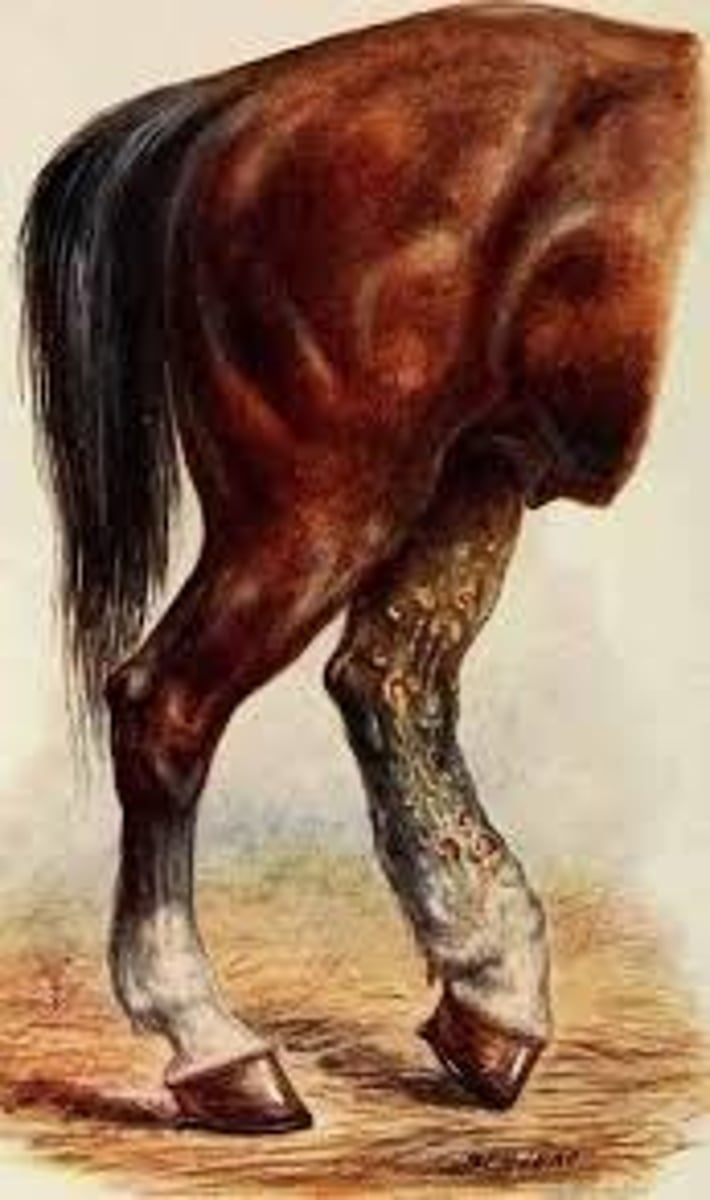
What is farcy:
a. Cutaneous form of pythiasis
b. Cutaneous mycetoma
c. Cutaneous form of phaeohyphomycosis
d. Glanders cutaneous form
d. Glanders cutaneous form
Notes:
- 3 forms: Nasal, Pulmonary or cutaneous (farcy) glanders
- Farcy = nodules along lymphatic vessels
- Nodules ulcerate + discharge pus ("farcy buds")
- Enlarged lymphatics form "farcy pipes"
Pale, icteric mucosal membranes with petechiae + red colored urine can be observed in the course of:
a. Piroplasmosis and ehrlichiosis
b. Leptospirosis and piroplasmosis
c. Equine infectious anemia
d. All the aforementioned
d. all the aforementioned
Can the Polish horse racing club impose an obligation to vaccinate horses on racing tracks?
a. yes
b. no
a. yes
Notes:
- Influenza most important
- Must be vaccinated to enter races
Has African horse sickness ever been found outside of Africa?
a. yes
b. no
a. yes
What diagnostic samples should be collected from fetuses aborted due to viral infection (at least 5)
Samples:
1. Whole fetus sent to lab
2. Placenta
3. Lung
4. Liver
5. Spleen
6. Thymus
7. Kidney
8. Fetal stomach contents
9. Heart blood/fetal blood
Tests performed on samples:
1. PCR
2. Virus isolation
3. Histopathology
4. Serology (mare)
What are the routes of transmission of Equine infectious anemia
1. Vectors → horse flies (Tabanus) + deer flies (Chrysops)
2. Iatrogenic transmission → contaminated needles, syringes, surgical/dental instruments
3. Blood transfusions
4. Transplacental (mare → foal)
5. Colostrum/milk (less common)
Which of the vector-borne diseases in horses may cause abortions?
a. Anaplasmosis
b. Potomac Horse Fever
c. Teilorella equigenitalis infection
d. Arteritis
b. Potomac Horse Fever
Notes:
- PHF (Neorickettsia risticii) is vector-borne
- Can cause → fever, diarrhea, laminitis, abortions
About 80% of horses with Potomac Horse Fever show:
a. Diarrhea
b. Limb oedema
c. Neurological disorders
d. Nasal and ocular discharge
a. diarrhea
In the case of rabies, the main place/places where wounds have been found is/are:
a) Wounds on nostrils, lips and legs
b) Wounds on the back and rump
c) Wounds on chest and stomach
d) Wounds on the tail
a) Wounds on nostrils, lips and legs
At which stage of the pregnancy is abortion due to EIA likely to occur?
a. Third trimester.
b. Early pregnancy usually first trimester
c. For whole pregnancy
d. Any time, up to 4 weeks after pregnant mares infection
c. For whole pregnancy
Notes:
- EHV-1 → late pregnancy (3rd trimester)
- EVA → any stage, often within 4 weeks of infection
- EIA → throughout pregnancy
Diseases subject to registration in Poland are:
a. arteritis, herd blight
b. herd blight, rhodococcosis
c. equine viral encephalomyelitis, scrapes
d. infectious uterine inflammation in mares and spleen
c. equine viral encephalomyelitis, scrapies (strangles??)
What diseases are OIE listed
1. African Horse Sickness (AHS)
2. Contagious Equine Metritis (CEM)
3. Dourine (Trypanosoma)
4. Equine Encephalomyelitis (EEE, WNE, VEE)
5. Equine Infectious Anemia (EIA)
6. Equine Influenza (EIV)
7. Equine Piroplasmosis
8. Equine Herpesvirus Infection (EHV)
9. Equine Viral Arteritis (EVA)
10. Glanders
What diseases are reported in Poland 🇵🇱
1. AHS
2. Vesicular stomatitis
3. Rabies
4. Anthrax
5. Glanders
Memorise:
- A Vaping Rabbit Ate Grass
Vaccination efficacy against equine type 1 + type 4 herpes viruses:
a. is limited by the antigenic variability of EHV (antigenic shift and jump)
b. it is limited by the weak immunogenicity of EHV
c. it is high and protects against all forms of the disease
d. it is limited due to the presence of different strains of EHV
b. it is limited by the weak immunogenicity of EHV
Notes:
- ↓ shedding + viremia
- Doesn't fully prevent neuro disease
- Immunity is relatively weak/short-lived
Equine infectious anemia virus is:
a. Lentivirus
b. Metavirus
c. Flavivirus
d. Orthomyxovirus
a. Lentivirus
Horse herd contagion is caused by:
a. Trypanosoma cruzi
b. Trypanosoma equiperdum
c. Trypanosoma equi
d. Sarcocystis of the neuron
b. Trypanosoma equiperdum
Notes:
- Dourine (horse herd contagion)
- Only trypanosome spread mainly by venereal transmission
- Natural mating = transmission