KNES 365: Chapter 9
 Call Kai
 Learn
Learn Practice Test
 Spaced Repetition
 Match
Match Flashcards
 Knowt Play
1/33

There's no tags or description
Looks like no tags are added yet.
Name | Mastery | Learn | Test | Matching | Spaced | Call with Kai | Chat |
|---|
No analytics yet
Send a link to your students to track their progress
34 Terms
What's the difference between sign and symptom?
sign: see
symptom: feel
Prefix: Arthro-
joint
Prefix: Myo-
muscle
Suffix: -scopy
examine
What does FOOSH stand for?
fall on out-stretched hand
List some muscle/tendon injuries.
strain
spasm
tendinitis
trigger point
List some bone injuries.
fracture
Osgood-Schlatter
List some ligament/joint injuries.
sprain
arthritis
bursitis
dislocation
List some nerve injuries.
paresthesia
concussion
How does trauma/mechanical injuries happen?
force → body = disturbance in function/structure

Load
external force applied to tissue

Stiffness
tissue’s ability to resist load
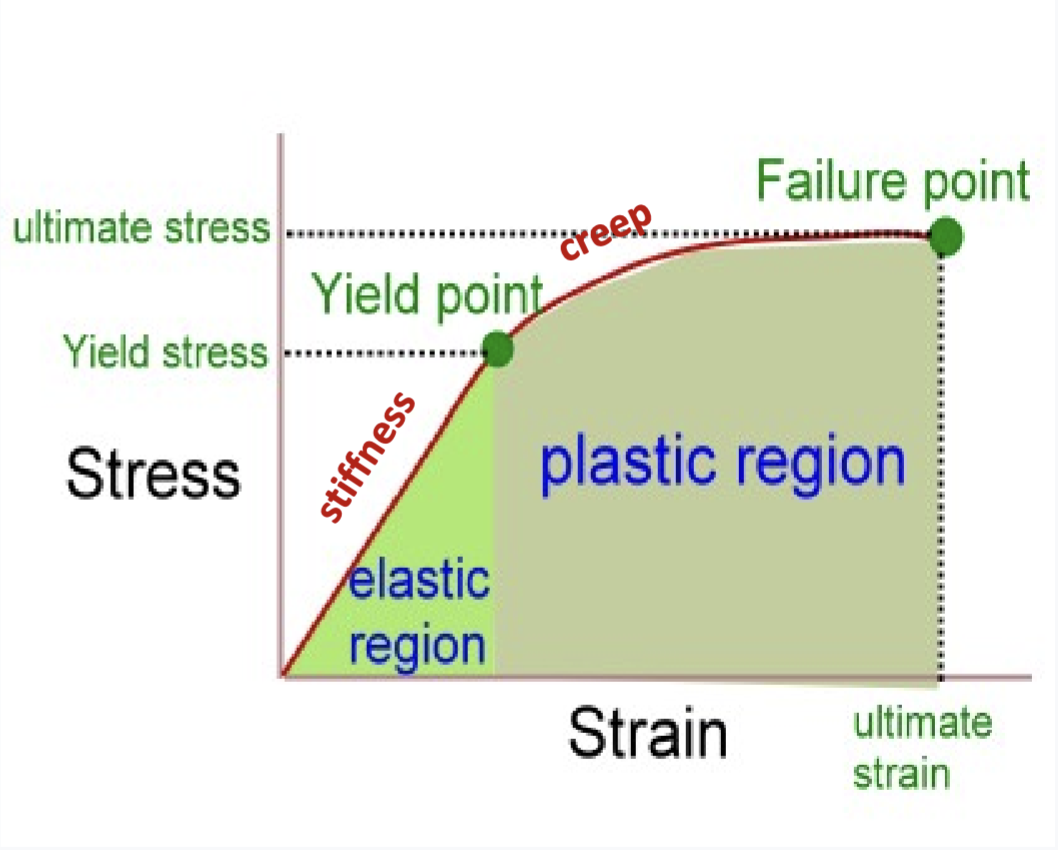
Stress
internal resistance of tissue to external load

Strain
extent of tissue deformation

Elasticity
tissue’s ability to return to normal after load is removed

Yield Point
the point past elastic recovery

Plastic
a lasting, permanent change in tissue

Creep
ongoing deformation under sustained load

Failure Point
tissue integrity is compromised
What is mechanical failure? What are the 2 types?
mechanical failure: injury to tissue, occurring in either pattern:
ductile: gradual failure w/ visible deformation before tissue fully gives way; more warning signs
brittle: sudden failure w/ little to no warning of deformation beforehand

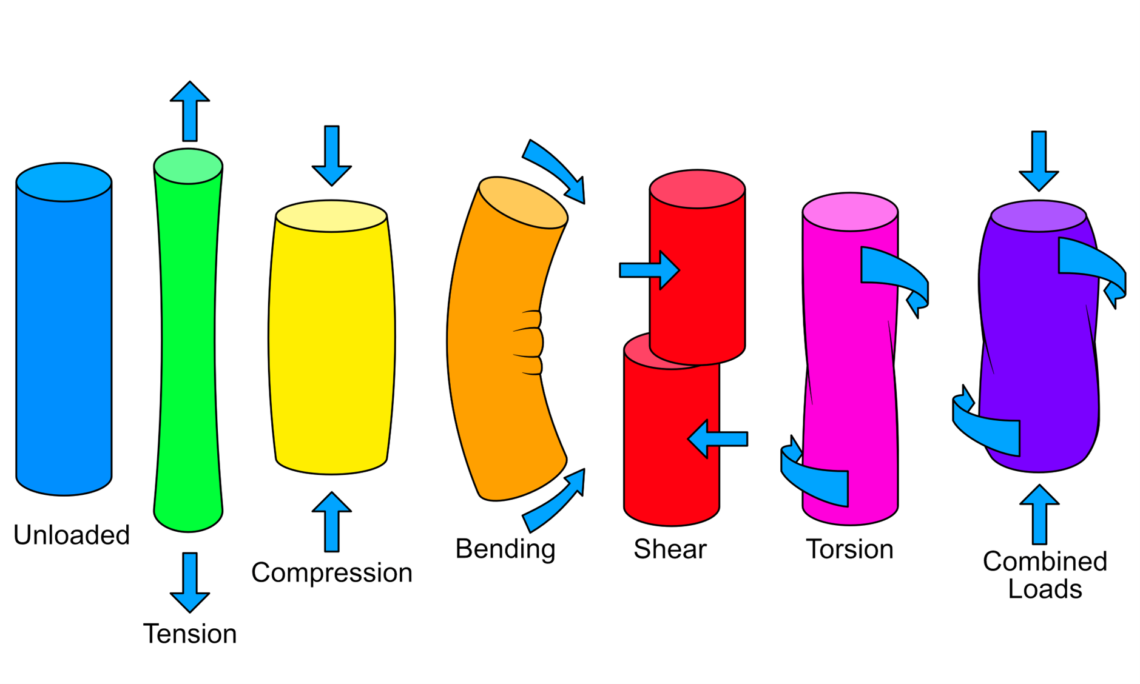
Types of Tissue Loading
What’s the difference between a traumatic and overuse injury?
Why might the terms for “acute” and “chronic” not be the best descriptors of injury?
Bone (fracture): Trauma or Overuse? Loading Type(s)?
usually traumatic
compression
Ligament (sprain): Trauma or Overuse? Loading Type(s)?
usually traumatic
tension, shearing
Tendon (tendinopathy): Trauma or Overuse? Loading Type(s)?
usually overuse
tension, compression, bending
Muscle (strain): Trauma or Overuse? Loading Type(s)?
usually traumatic
tension, compression, bending
Cartilage: Trauma or Overuse? Loading Type(s)?
usually traumatic
shearing
Types of Muscle Strains
Grade 1: some muscle fibers stretched or torn; some tenderness
Grade 2: more muscle fibers torn; painful contraction
Grade 3: complete rupture; functional impairment
Muscle: Cramps
form of involuntary contraction
overload, fatigue, or restriction driven by neuromuscular control, not just hydration
Muscle: Guarding
form of involuntary contraction
“splinting:” a protective response to pain after injury
Muscle: Spasm
form of involuntary contraction
increased tension & shortening
clonic (contract-relax) or tonic (lengthy contraction)
Muscle Soreness: Acute-Onset
occurs with fatigue
felt during & immediately after activity
Muscle Soreness: Delayed-Onset (DOMS)
begins ~12 hours after activity
peaks around 24–48 hours
inked to eccentric/isometric work & tears