6.10 Notre Dame Cathedral + 6.12 Stained Glass at Chartres
 Call Kai
 Learn
Learn Practice Test
 Spaced Repetition
 Match
Match Flashcards
 Knowt Play
1/5

There's no tags or description
Looks like no tags are added yet.
Name | Mastery | Learn | Test | Matching | Spaced | Call with Kai | Chat |
|---|
No analytics yet
Send a link to your students to track their progress
6 Terms
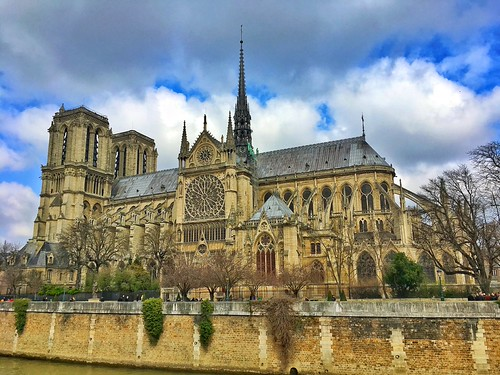
Notre Dame Cathedral, Paris, ca. 1180-1200
Notre Dame became that cathedral and the first to make use of the flying buttresses--those graceful, arched ribs that project out from the exterior of the church, as you can see on the exterior (image above; and in many ways the "next gen" of the English Romanesque quadrant arch).

Inside the cathedral, sexpartite vaults cover the nave and give strength enough to allow the three-part elevation.
-Even though this is a drawing of another cathedral at Amiens, it illustrates the typical ingredients of a Gothic cathedral
-flying buttresses and how its pointed arches and Gothic rib vaults allowed architects to continue to dissolve the walls and insert windows for heavenly light!
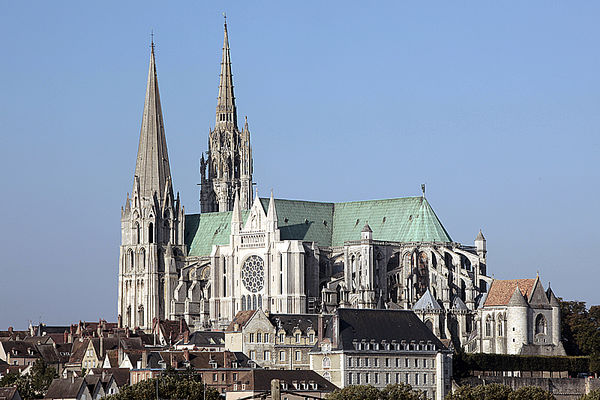
Chartres Cathedal, France
its more than 150 13th-century stained glass windows, making it the world's largest surviving collection, all thanks to the strength of those architectural innovations that allowed medieval engineers to dissolve those walls and fill them with beautiful, colorful stained glass to fill the santuary with a heavenly, colorful glow that the famous Abbot Suger called lux nova.
But beyond what that ring of light did for Hagia Sophia, Gothic-era stained glass also could tell the entire Christian story to the illiterate as well as pay homage to the rising star of medieval reverance: the Virgin Mary.

Rose window and lancets, north transcept, Chartres Cathedral, ca. 1220. 43' in diameter.
The original stained glass windows talk about Old and New Testaments themes like the story of Creation, the Fall of Mankind, the story of Noah and the Flood, as well as Christ and of course, Judgment Day.
Rose Windows
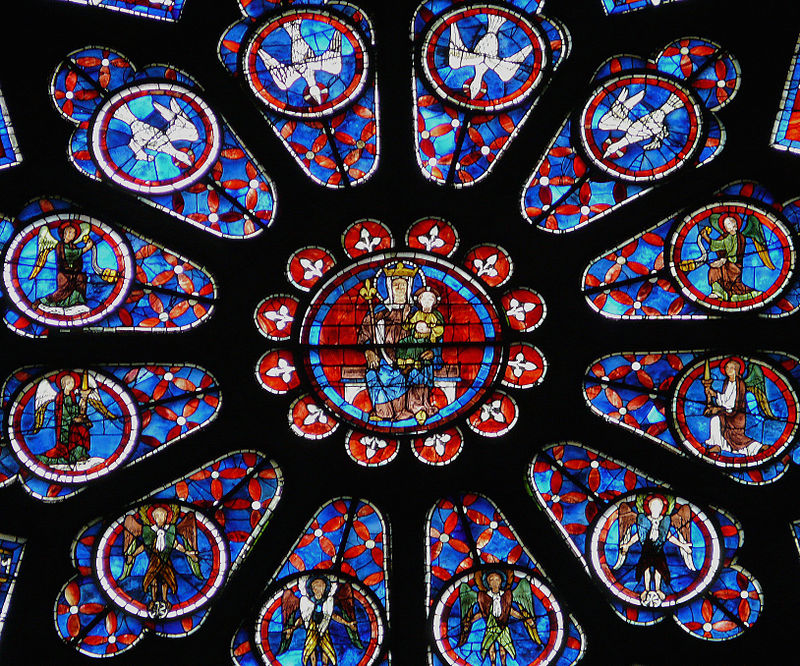
the star of Chartres' large rose window is the Virgin Mary. A rose window is the immense circular shaped windows you find in Gothic-era churches, and much like a flower in full bloom, it radiates out from a central focus.
The one at Chatres is an incredible 43' in diameter. Along with the peaked rectangular windows below called lancets, this rose window was a gift from the Queen Blanche of Castile, mother of French King, Louis IX (. There are eight windows below the rose featuring the royal motifs of yellow castles on red ground (the arms of Castile) and yellow fleurs-di-lis, the lily flowers with three petals that is France’s royal emblem (image #2 below).
The Madonna is the rose window's central focus not only because of the relic, but how it was viewed that the Old Testament prophesies were realized through the Virgin Mary with the arrival of the savior for mankind's sins and subsequent redemption, Jesus.
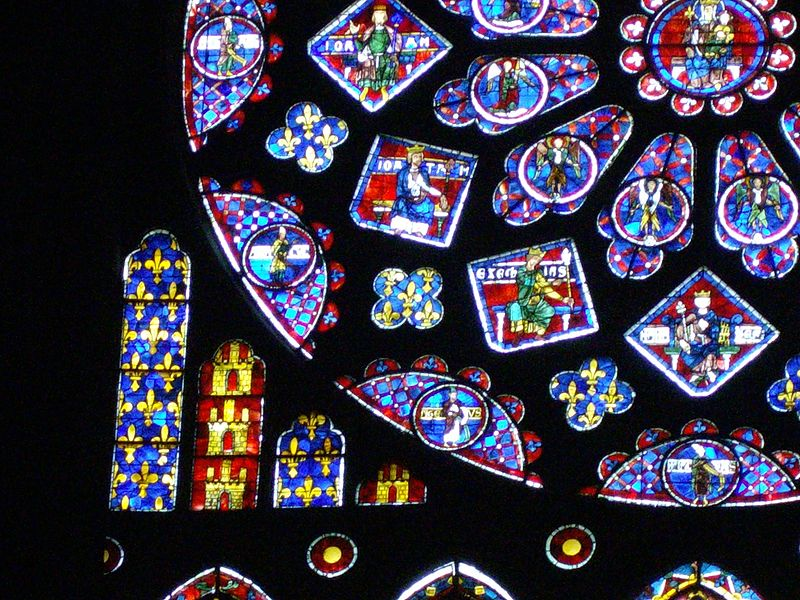

Around her are four doves representing the Holy Spirit and eight angels. Twelve square panels depict images of Old Testament kings, the ancestors of Christ. Saint Anne (Mary's mother) and baby Virgin are found in the lancets below along with four Old Testament figures. Now nearly 800 years later, Chartres still endures--but it was almost destroyed!