EDEXCEL A-LEVEL PURE MATHS (3): EQUATIONS & INEQUALITIES
 Call Kai
 Learn
Learn Practice Test
 Spaced Repetition
 Match
Match Flashcards
 Knowt Play
1/21

There's no tags or description
Looks like no tags are added yet.
Name | Mastery | Learn | Test | Matching | Spaced | Call with Kai | Chat |
|---|
No analytics yet
Send a link to your students to track their progress
22 Terms
What are linear simultaneous equations?
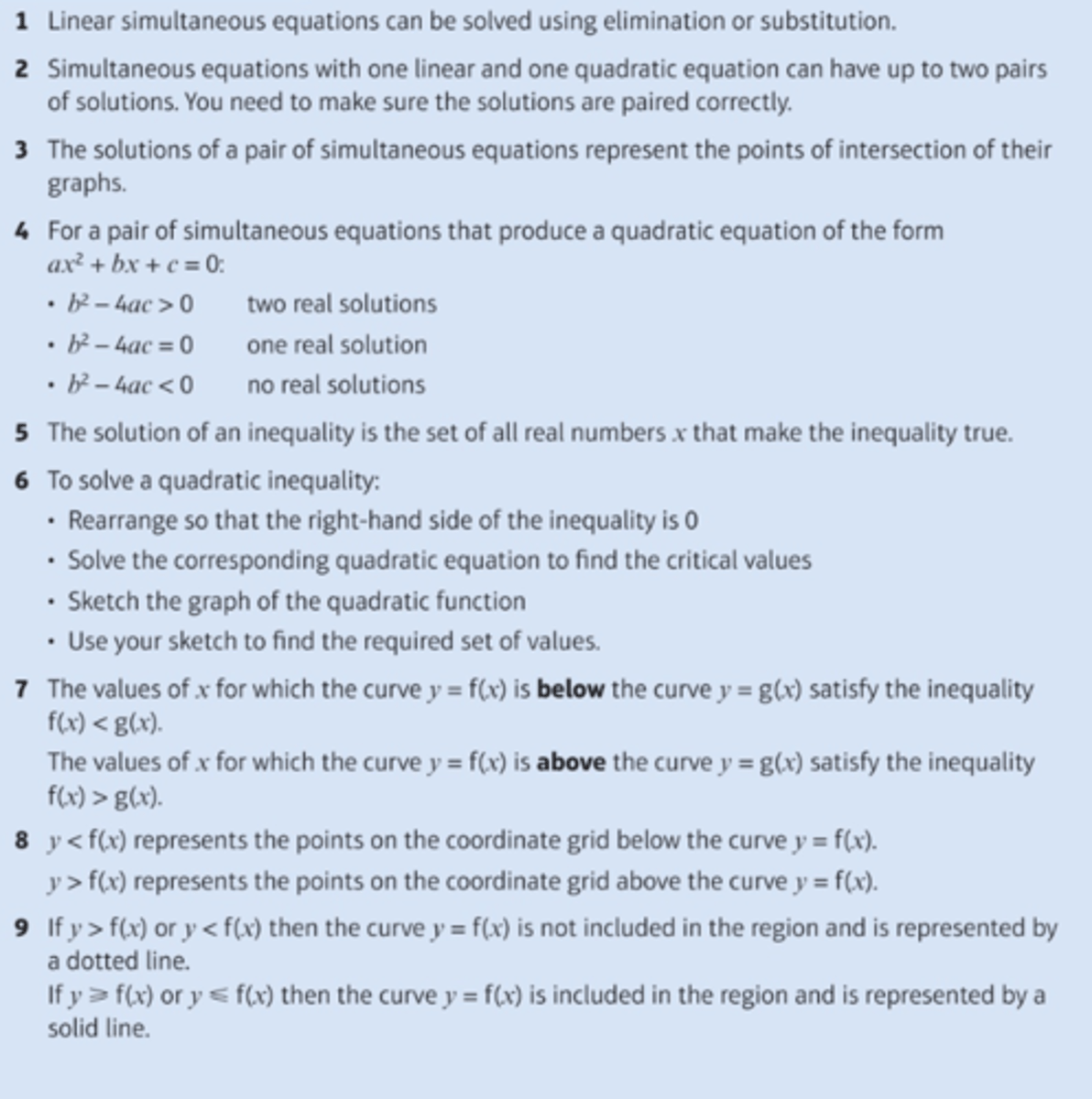
- Linear simultaneous equations in two unkowns have one set of values that will make a pair of equations true at the same time.
- They can be solved using elimination or substitution.

What are some examples of linear simultaneous equations being solved?
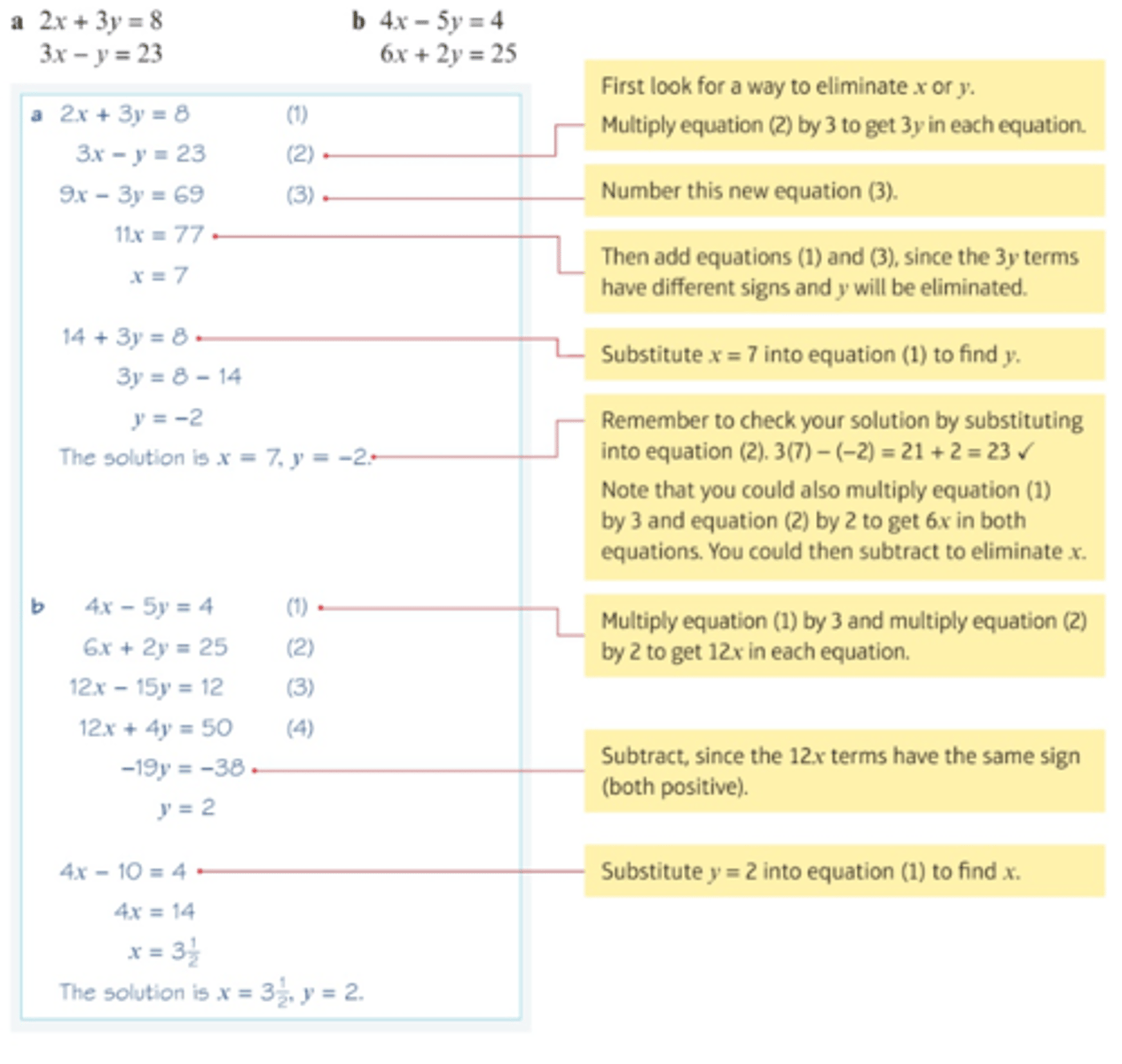
What are some more examples of linear simultaneous equations being solved?
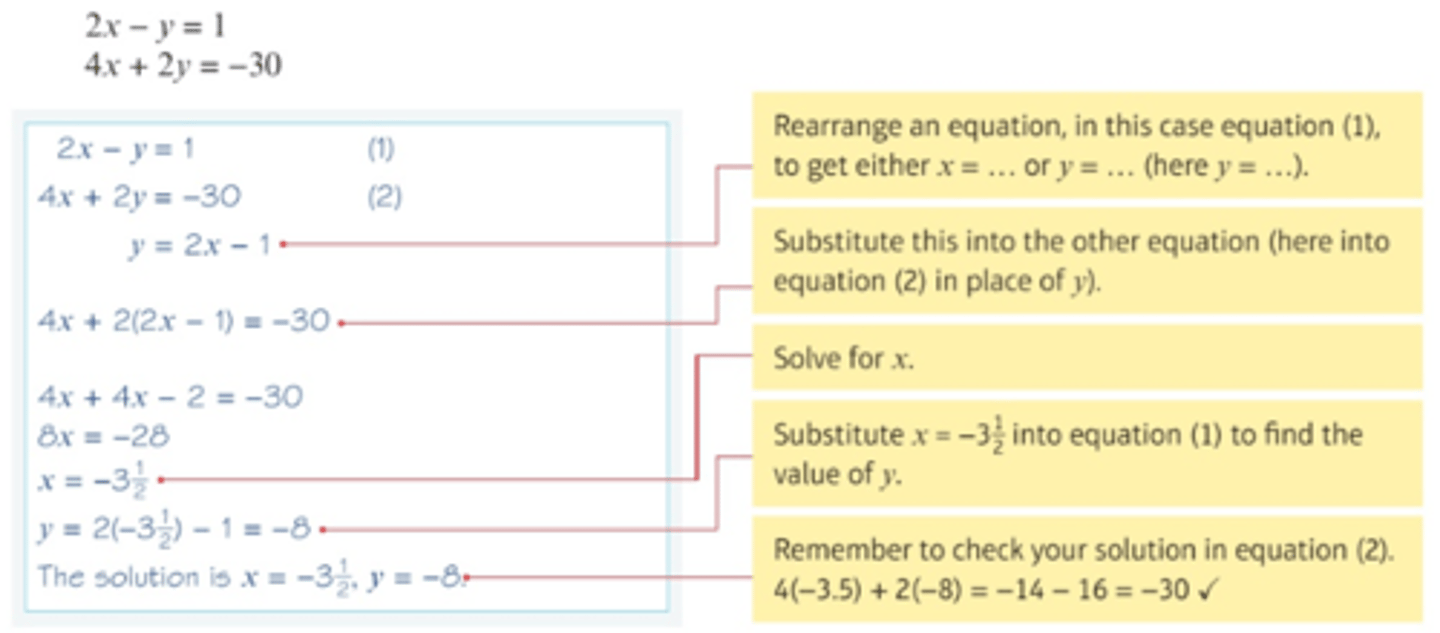
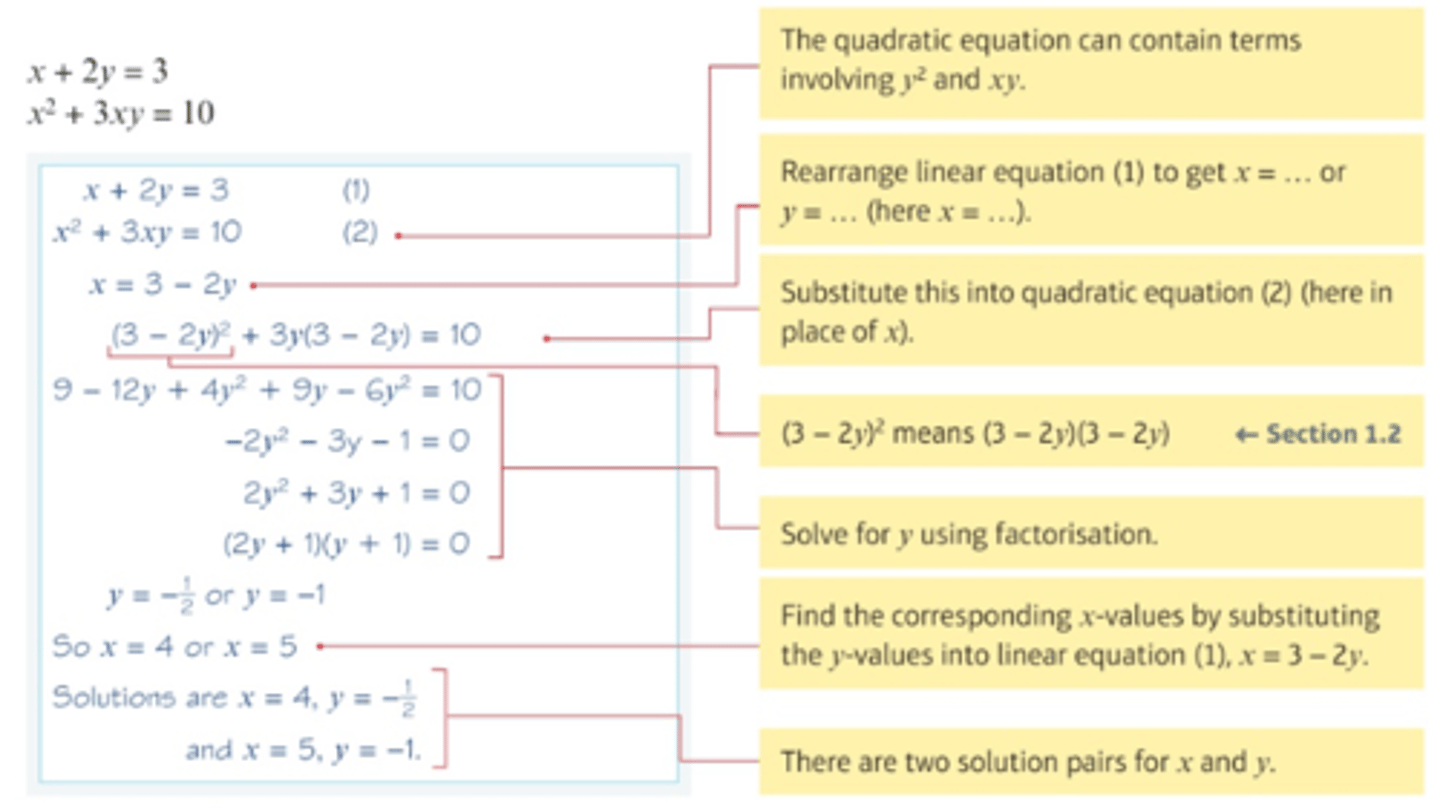
How do you solve quadratic simultaneous equations?
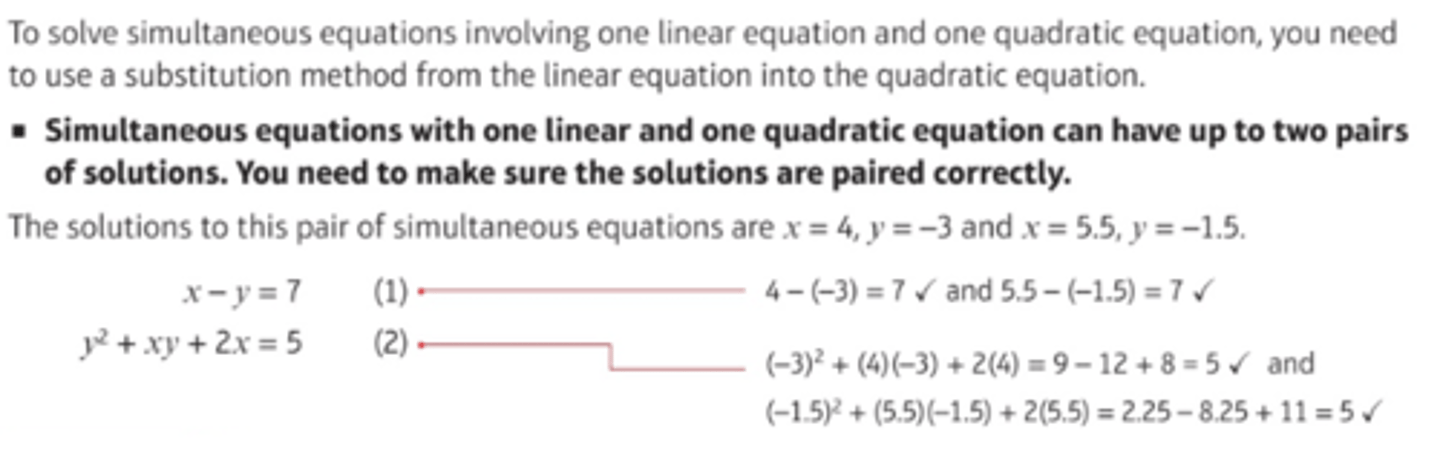
What are some examples of quadratic simultaneous equations being solved?
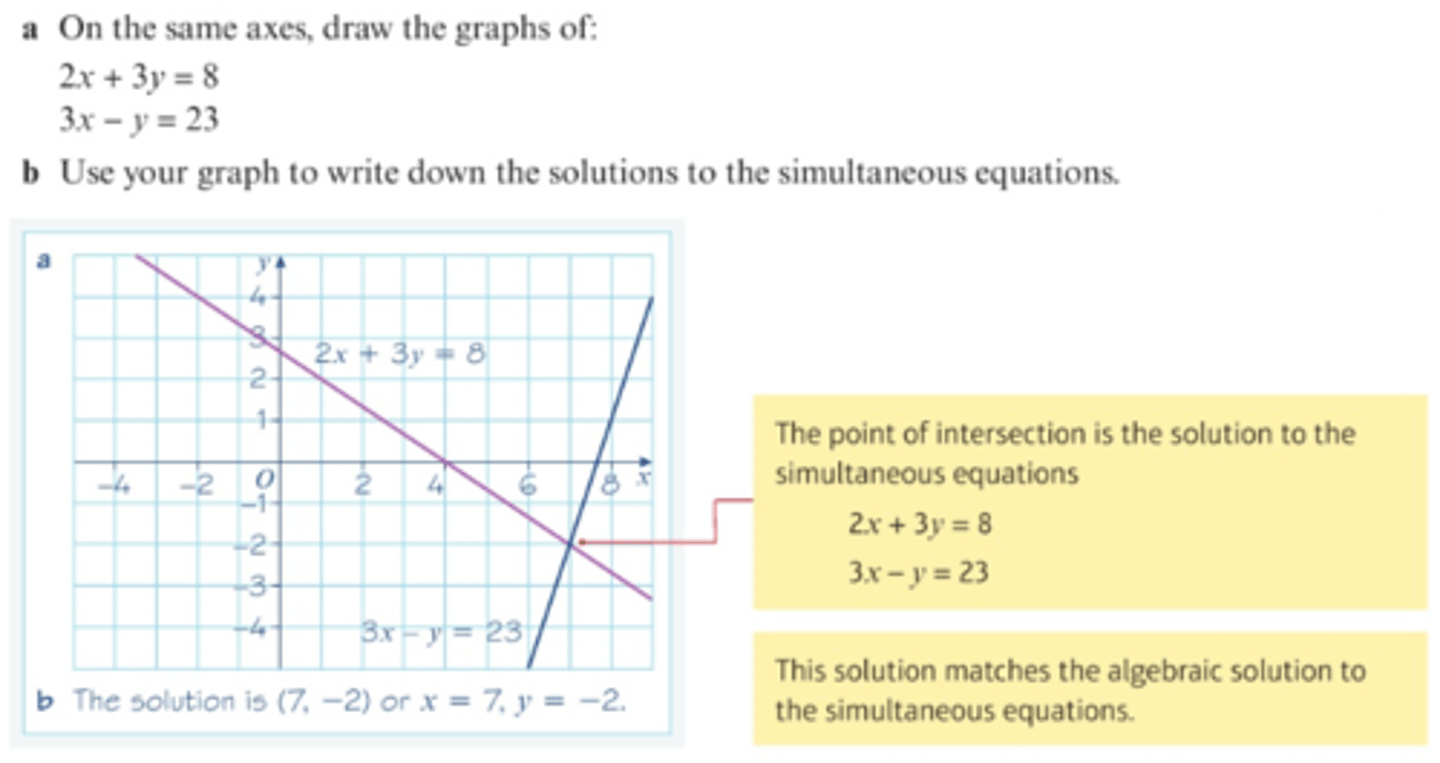
How can simultaneous equations be represented on graphs?
- You can represent the solutions of simultaneous equations graphically.
- As every point on a line/curve satisfies the equation of that line/curve, the points of two lines/curves satisfy both equations simultaneously.
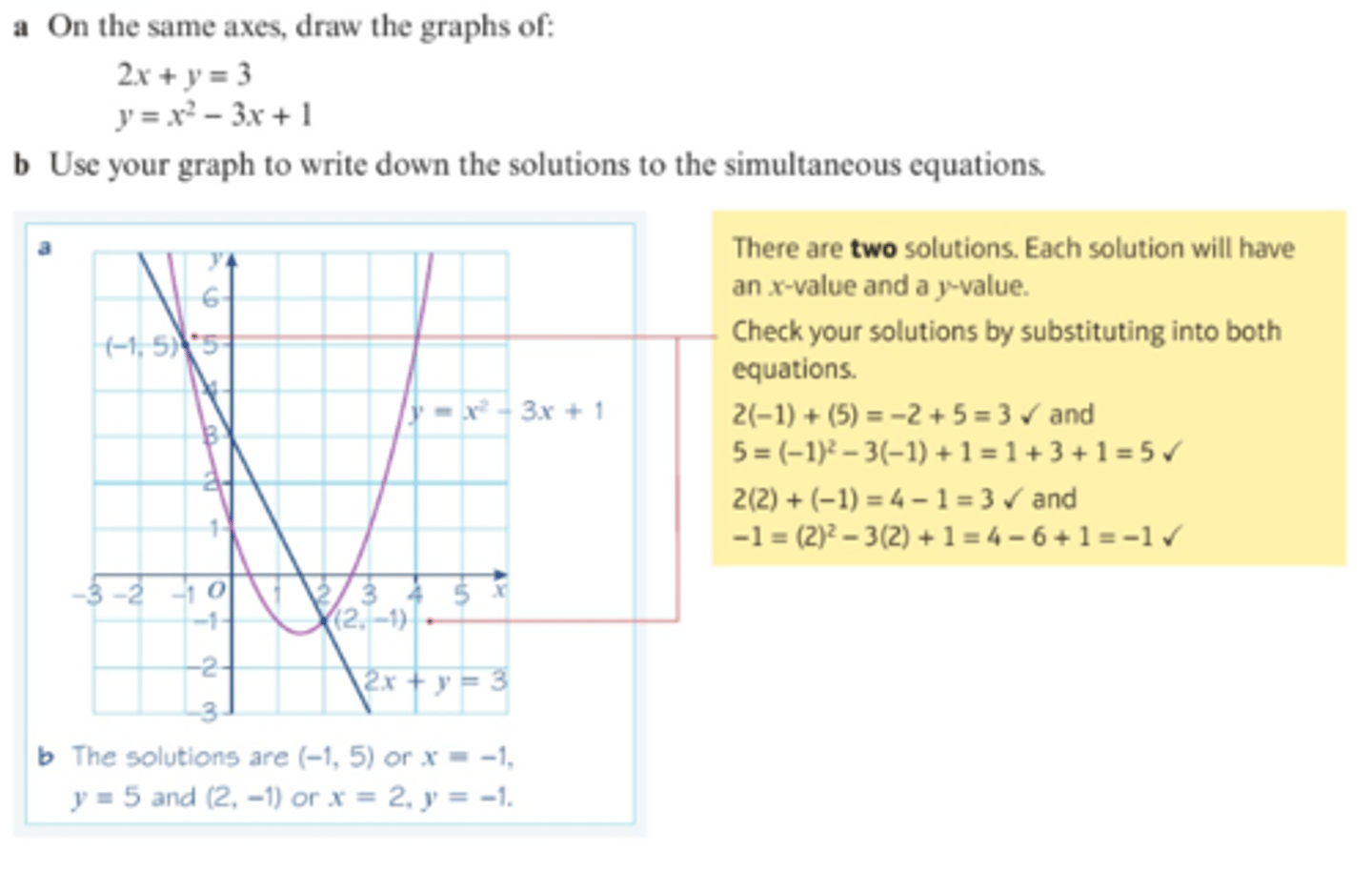
- The solutions to a pair of simultaneous equations represent the points of intersection of their graphs.
What are some examples of problems involving two graphical linear simultaneous equations?
What are some examples of problems involving graphical linear and quadratic simultaneous equations?
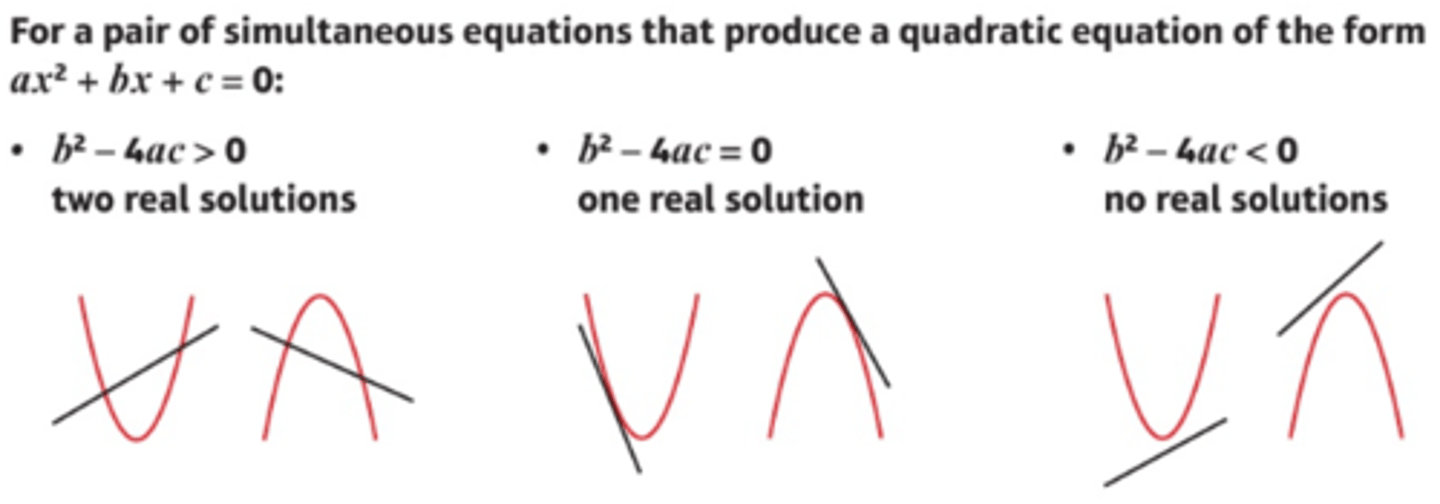
How might the graph of a linear equation intersect on the graph of a quadratic equation?
- The graph of a linear equation on the graph of a quadratic equation can: intersect twice, once or not at all.
- After substituting, you can use the discriminant of the resulting quadratic equation to determine the number of points of intersection.
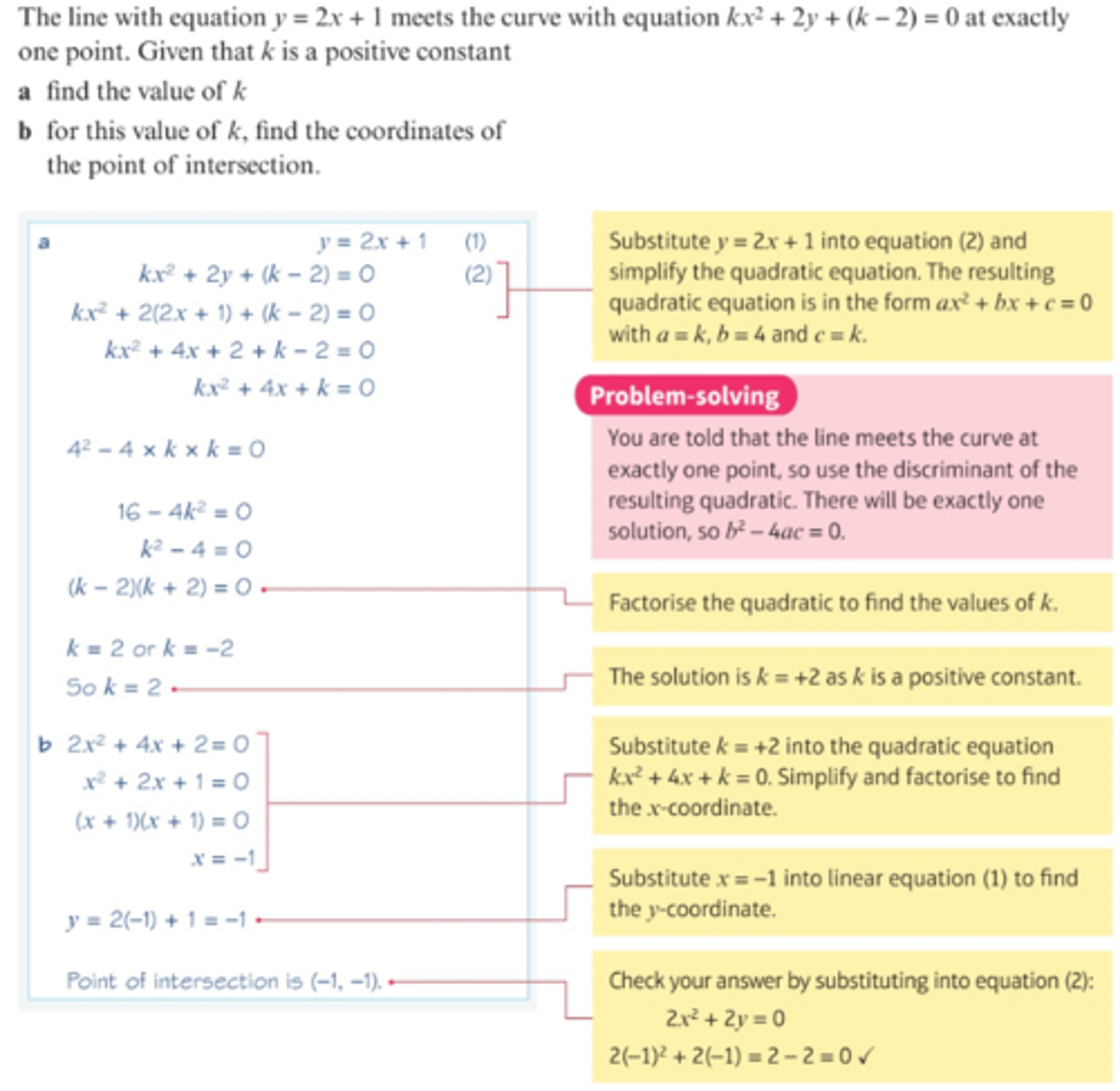
What are some examples of using the discriminant to find points of intersections given a pair of simultaneous equations?
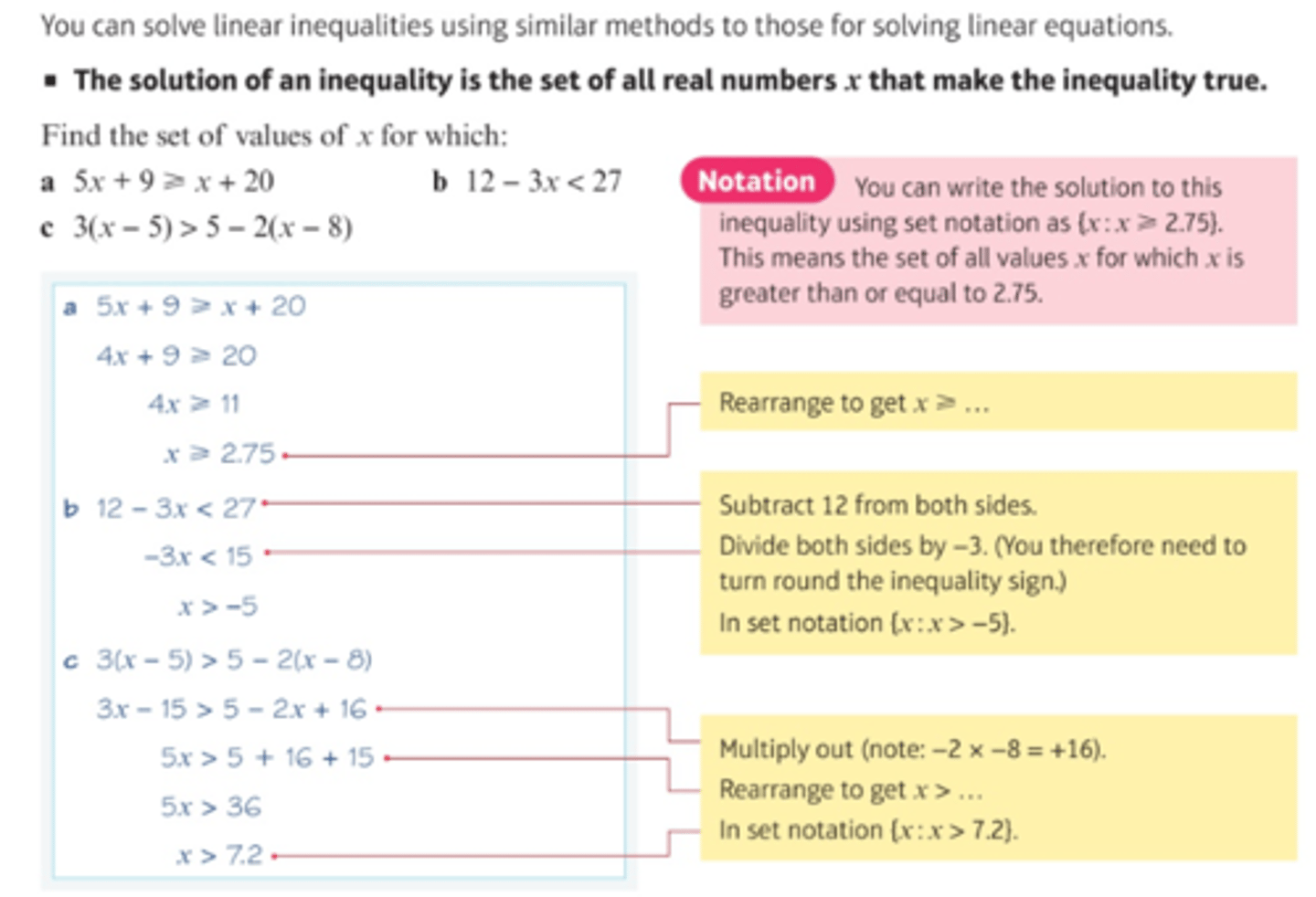
How do you solve linear inequalities and what are some examples of linear inequalities being solved?
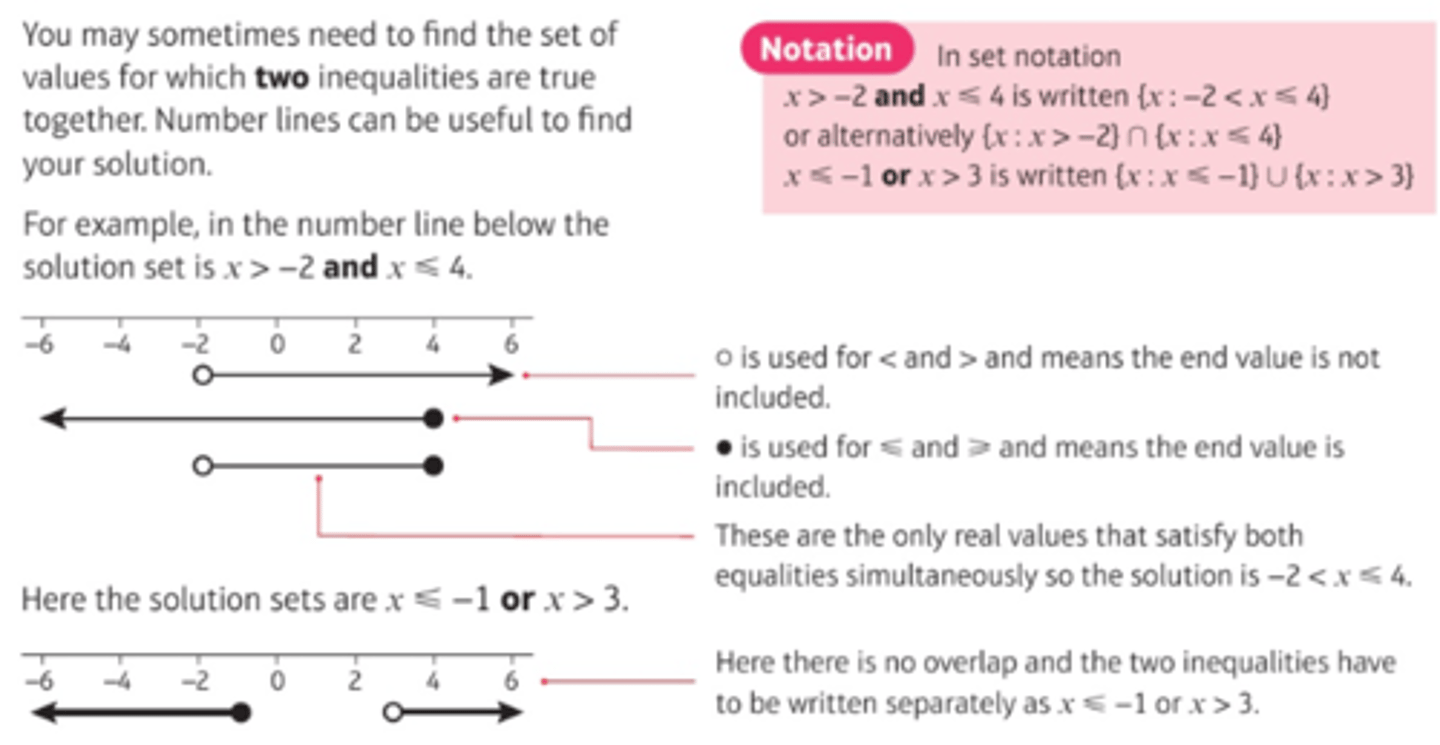
How can number lines be used to find the solution to a linear inequality?
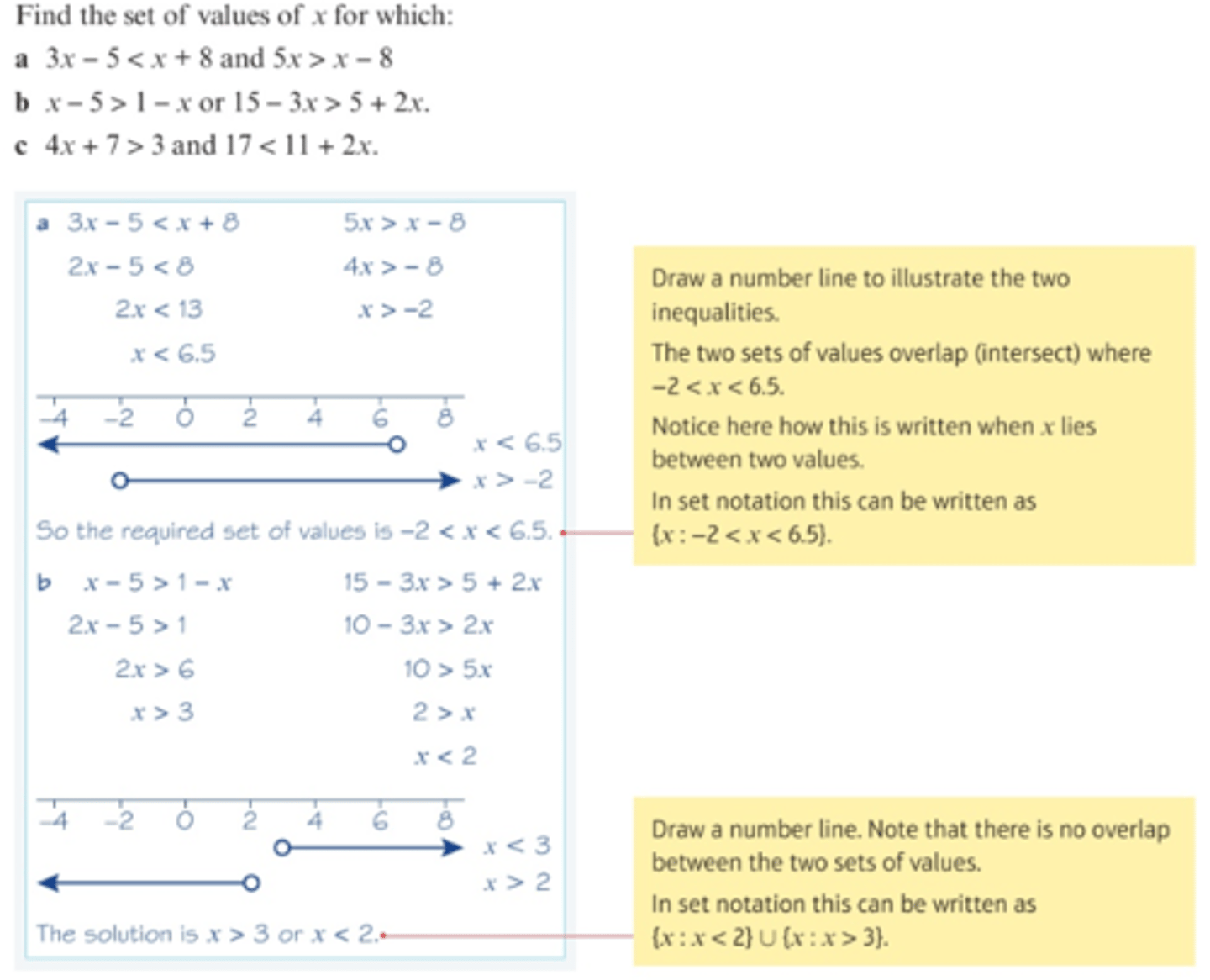
What are some examples of using a number line to find the solution to a linear inequality?
How do you solve quadratic inequalities?
To solve a quadratic inequality:
1) Rearrange so that the RHS of the inequality is 0.
2) Solve the corresponding quadratic equation to find the critical values.
3) Sketch the graph of the quadratic function.
4) Use your sketch to find the required set of values.
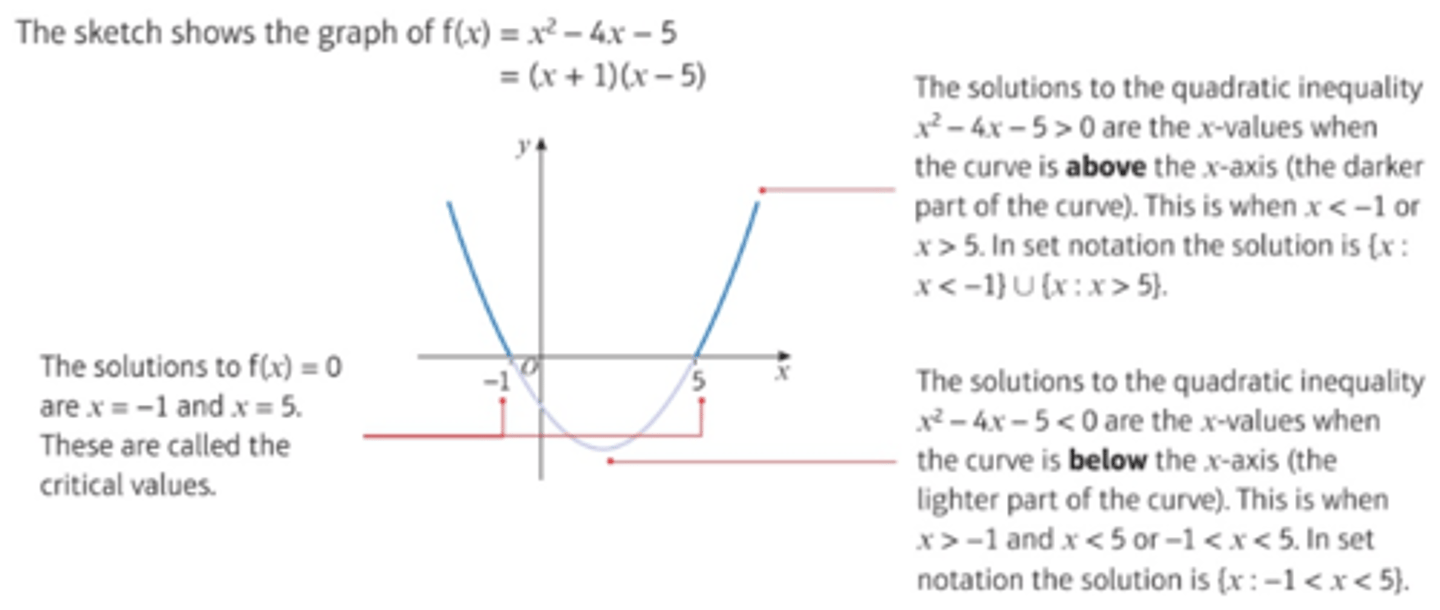
What are some examples of solving quadratic inequalities?
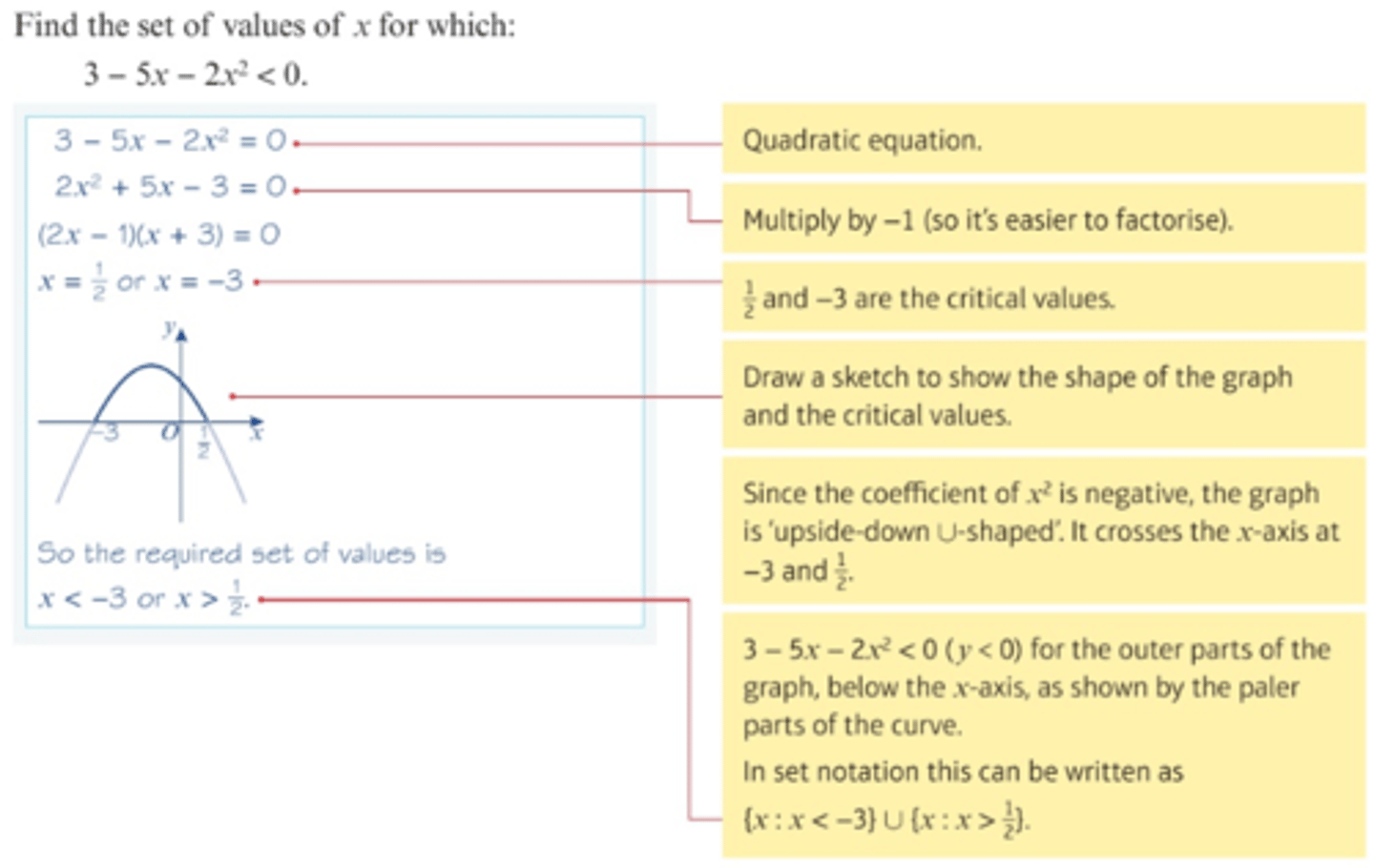
What are some more examples of solving quadratic inequalities?
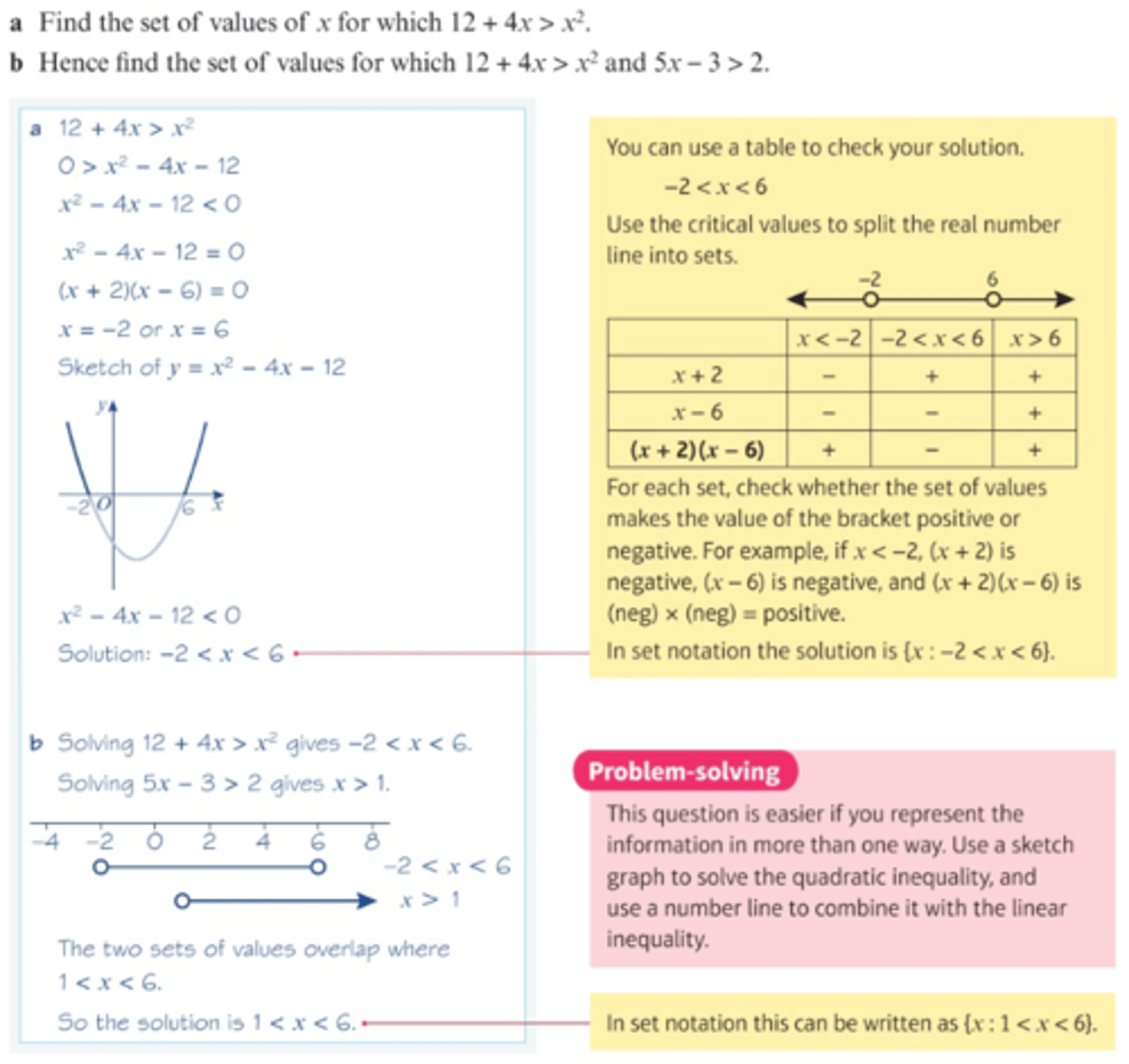
What are some examples of solving quadratic inequalities where x ≠ 0?
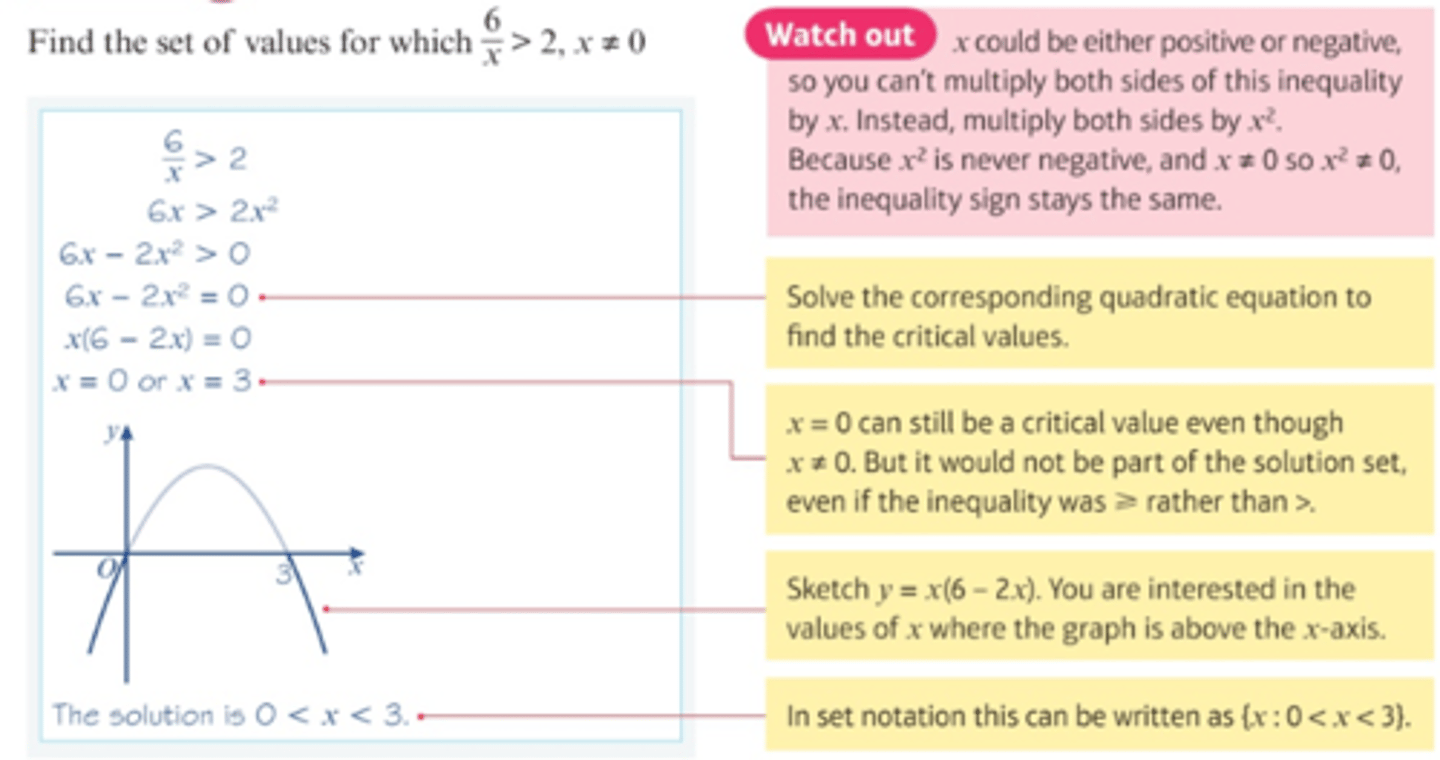
How can you graphically interpret solutions to inequalities?
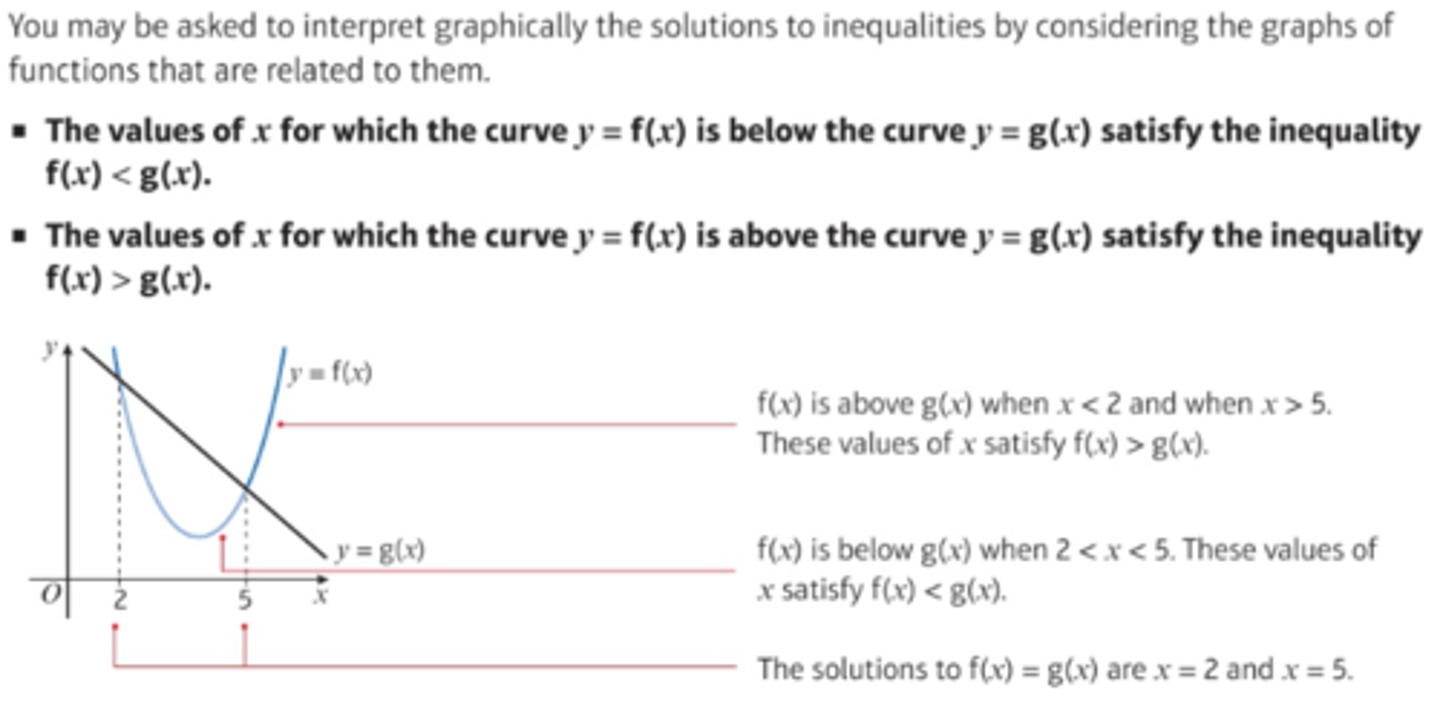
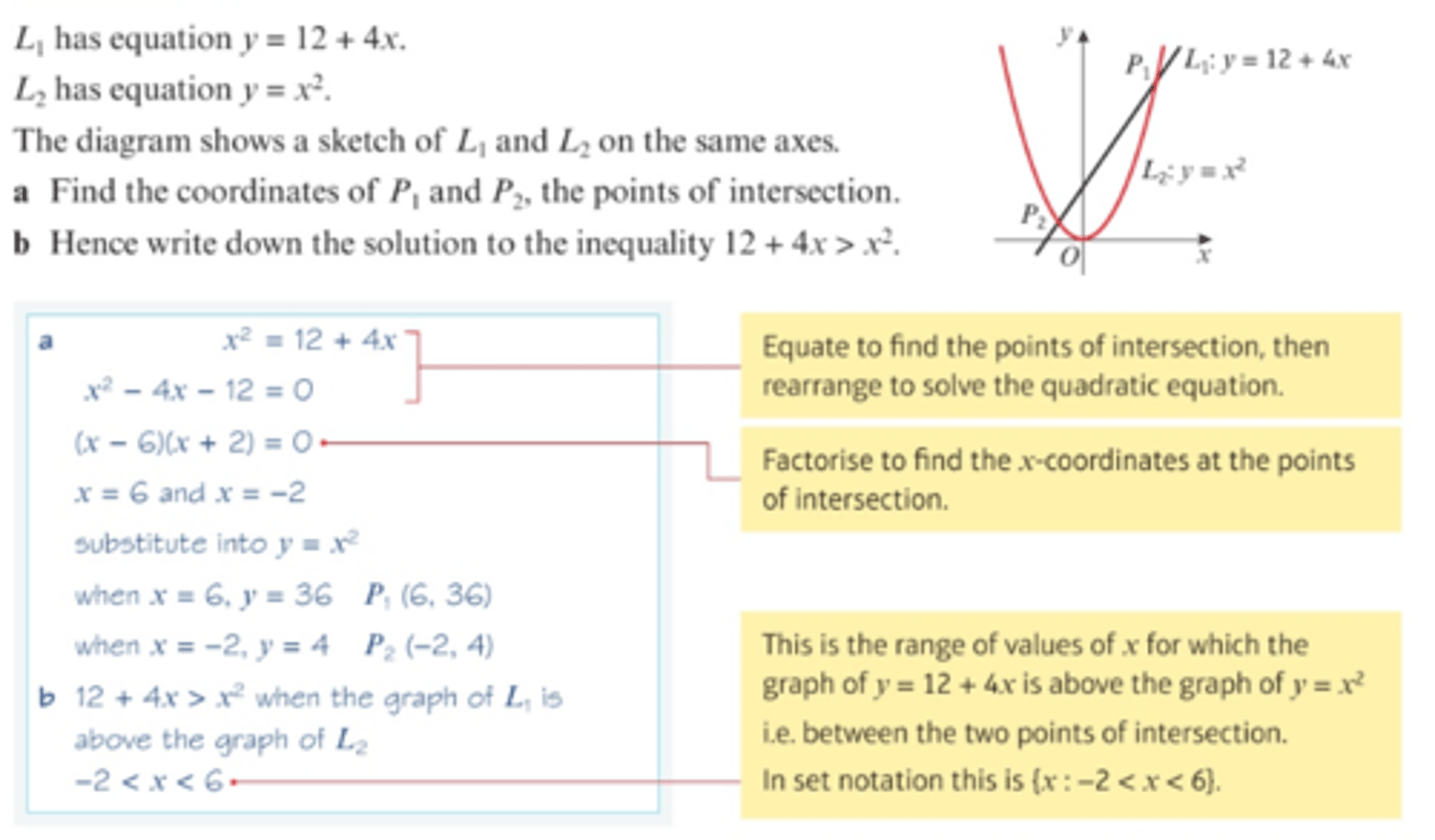
What is an example of graphically interpreting solutions to inequalities?
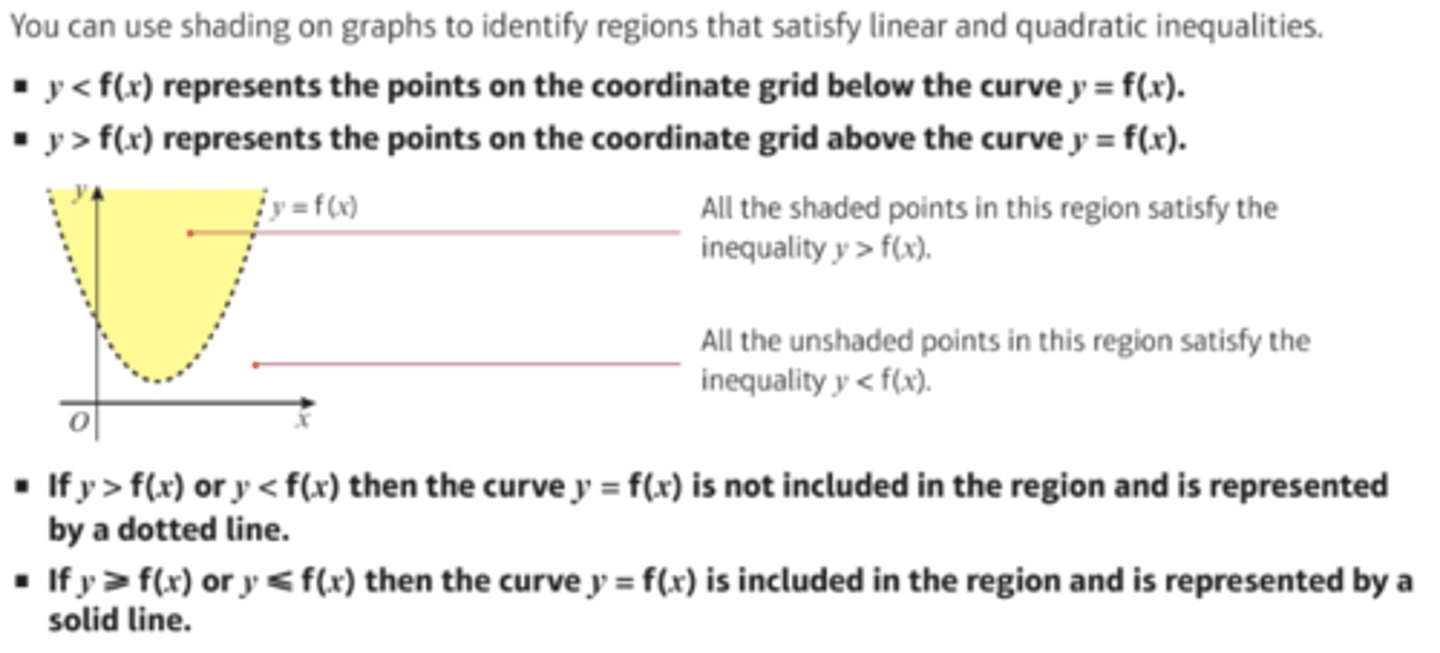
What do shading, dotted and non-dotted lines represent with graphical inequalities?
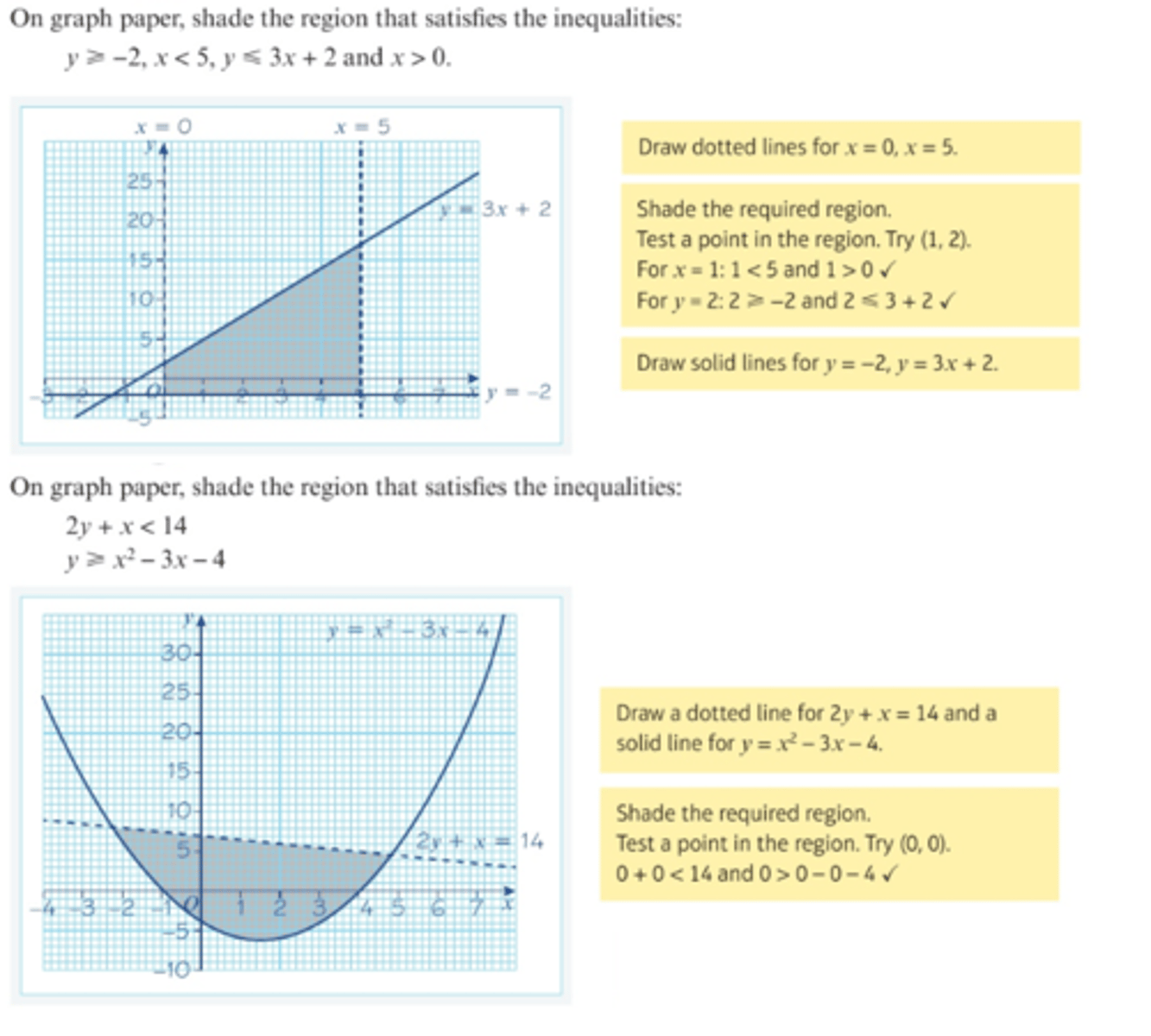
What are some examples of using shaded regions, dotted and non-dotted lines with graphical inequalities?
EDEXCEL A-LEVEL PURE MATHS CHAPTER THREE: EQUATIONS & INEQUALITIES
(MAKE SURE YOU KNOW THE FOLLOWING)