Day 5: Nerves and Motor Lecture
 Call Kai
 Learn
Learn Practice Test
 Spaced Repetition
 Match
Match Flashcards
 Knowt Play
1/93

There's no tags or description
Looks like no tags are added yet.
Name | Mastery | Learn | Test | Matching | Spaced | Call with Kai | Chat |
|---|
No analytics yet
Send a link to your students to track their progress
94 Terms
Central Nervous System
Brain and Spinal Cord
Peripheral Nervous System
Everything not the Brain and Spinal Cord
Afferent neurons
carry sensory signals toward the central nervous system (brain and spinal cord) .
Efferent neurons
carry motor signals away from the central nervous system out to your muscles and glands
Somatic
the parts of the nervous system responsible for voluntary body movements and processing conscious sensory information. It connects the brain and spinal cord to the skeletal muscles, skin, and sensory organs
Visceral
the network of neurons that control and monitor the body's internal organs (viscera) and glands. Also known as the autonomic nervous system, this involuntary network regulates essential survival functions like heart rate, digestion, and respiration.
Add afferent or efferent, somatic or visceral slides
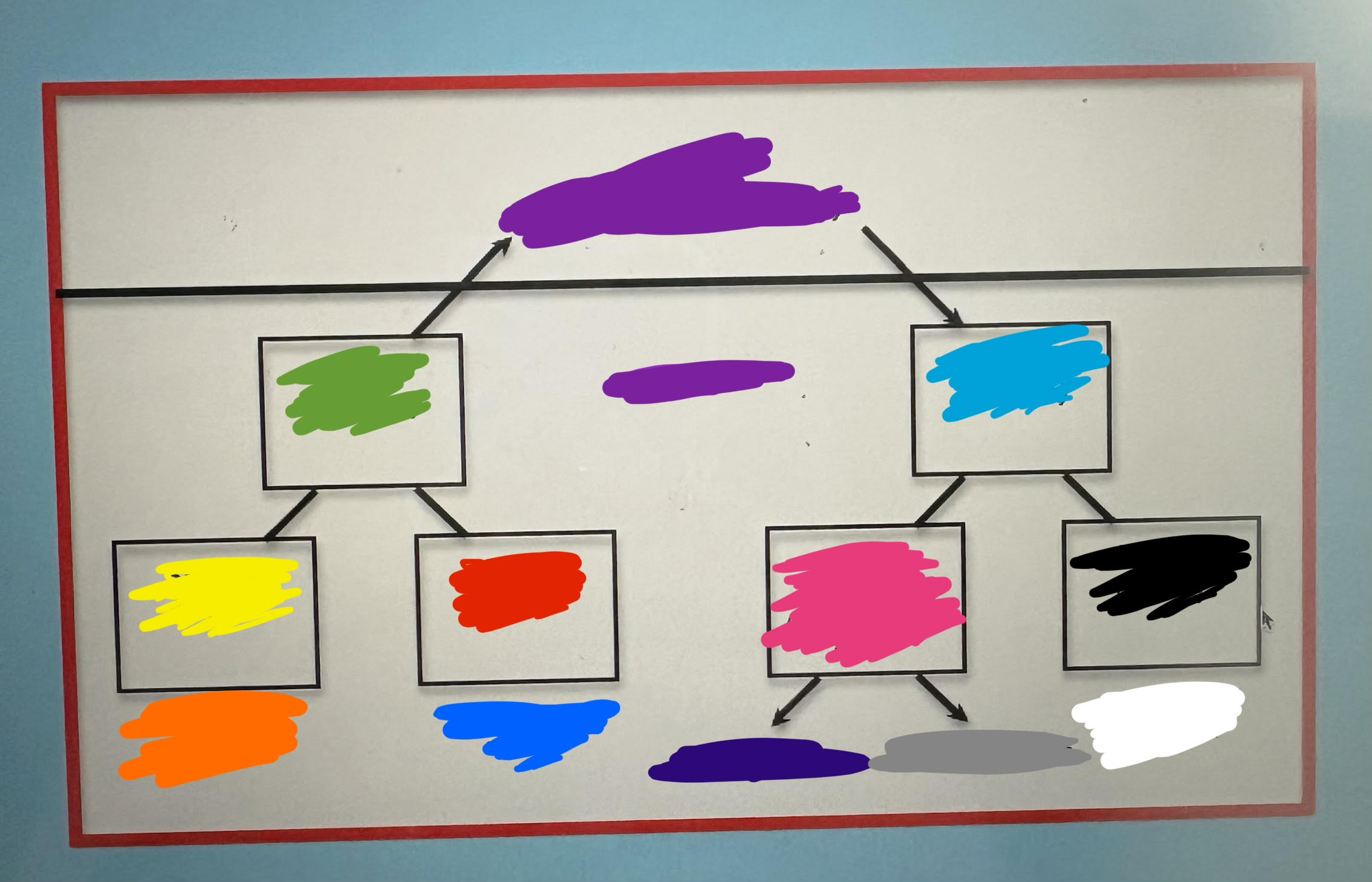
What’s upper purple?
CNS (Brain and Spinal Cord)
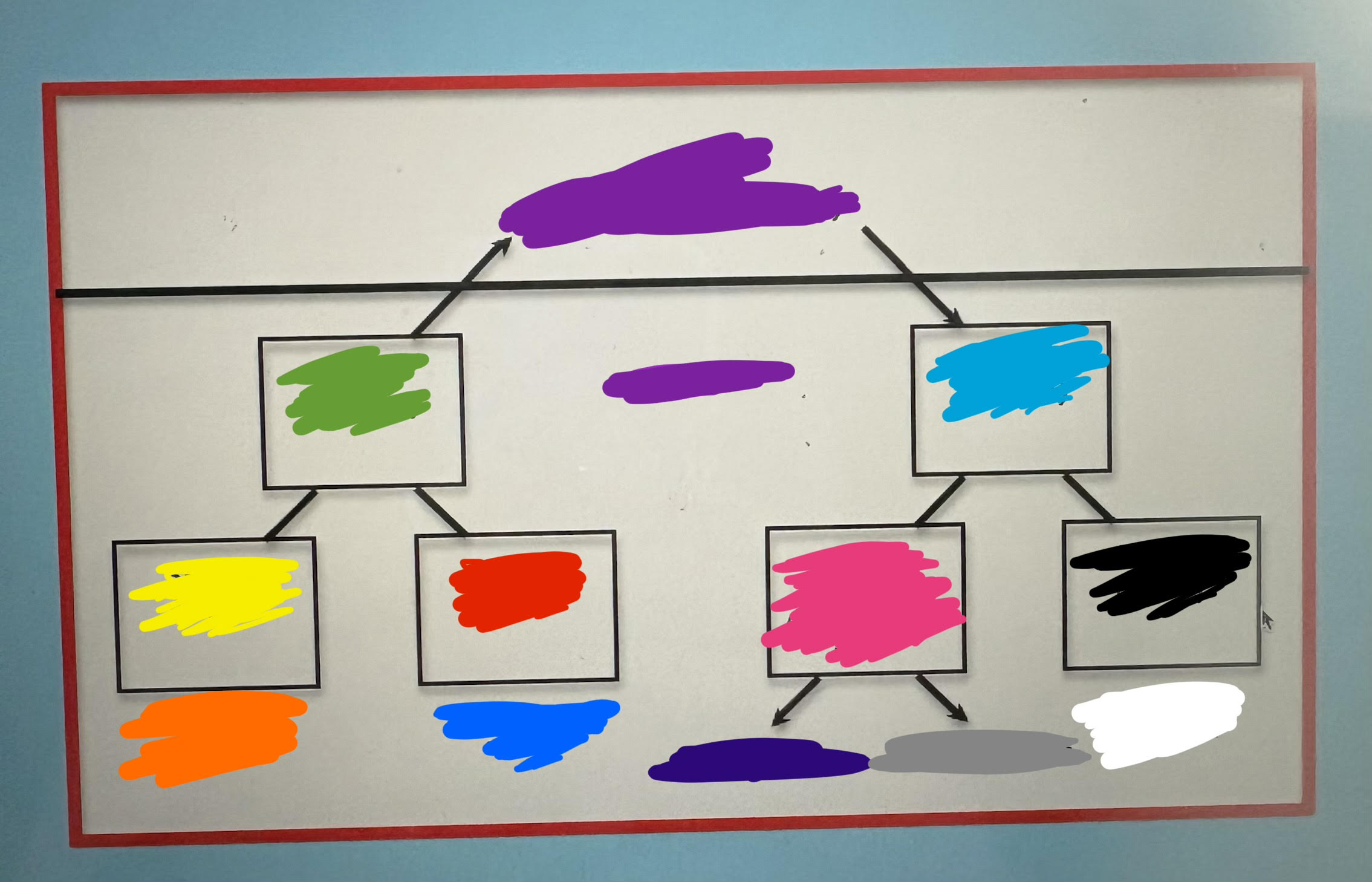
What’s lower purple?
PNS (Peripheral Nervous System)
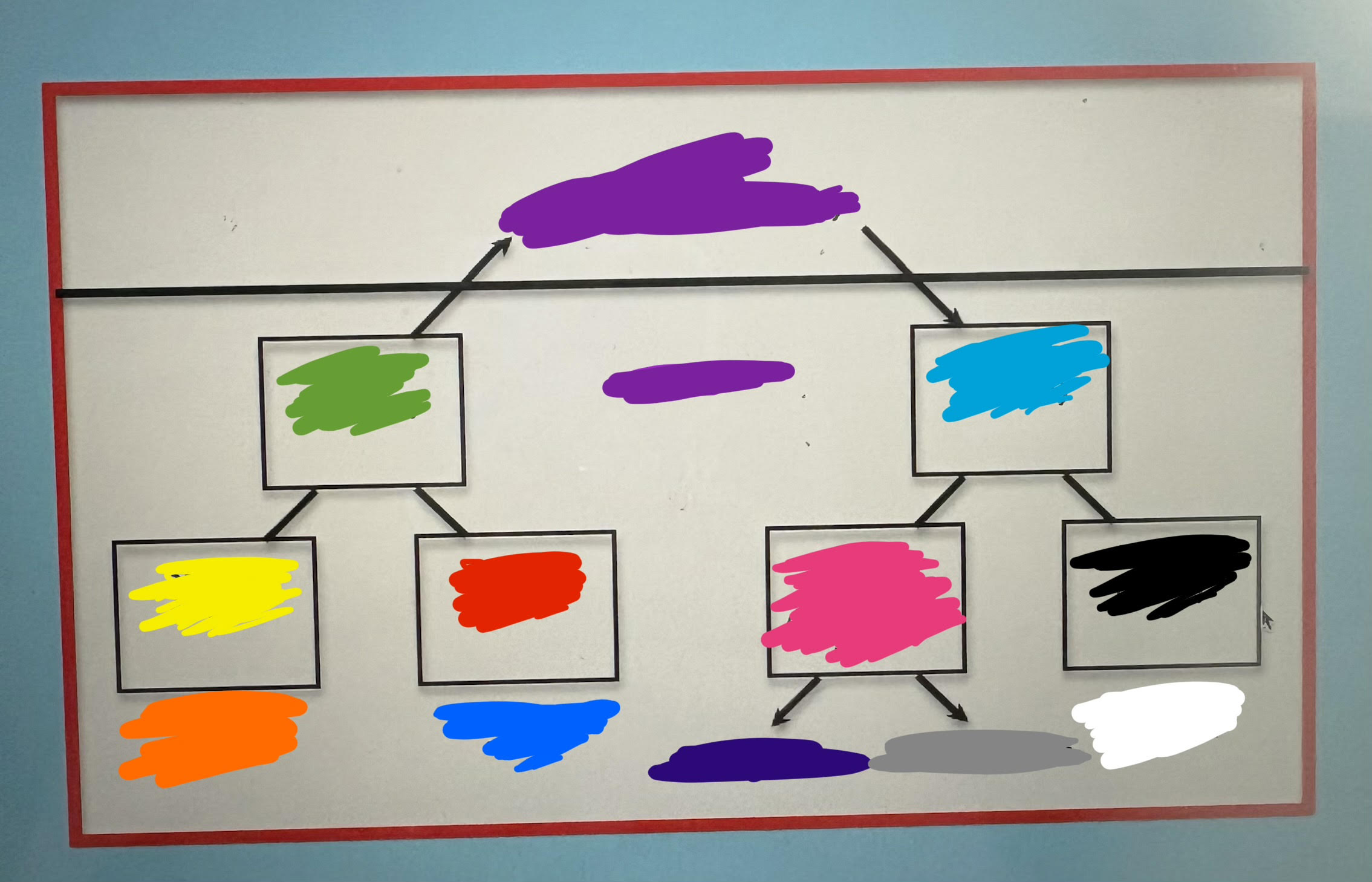
What’s green?
Sensory (afferent)
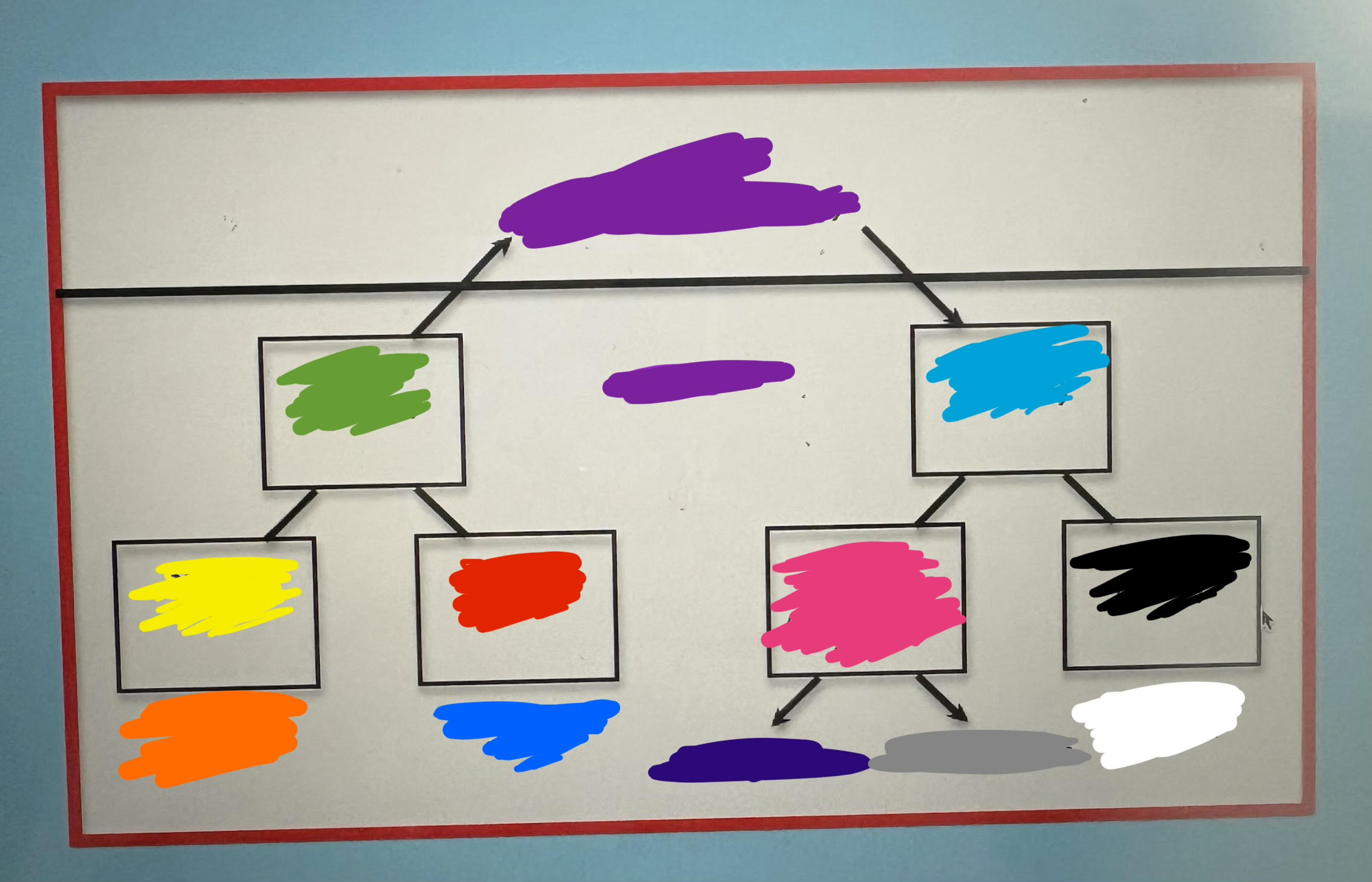
What’s yellow?
Somatic afferent
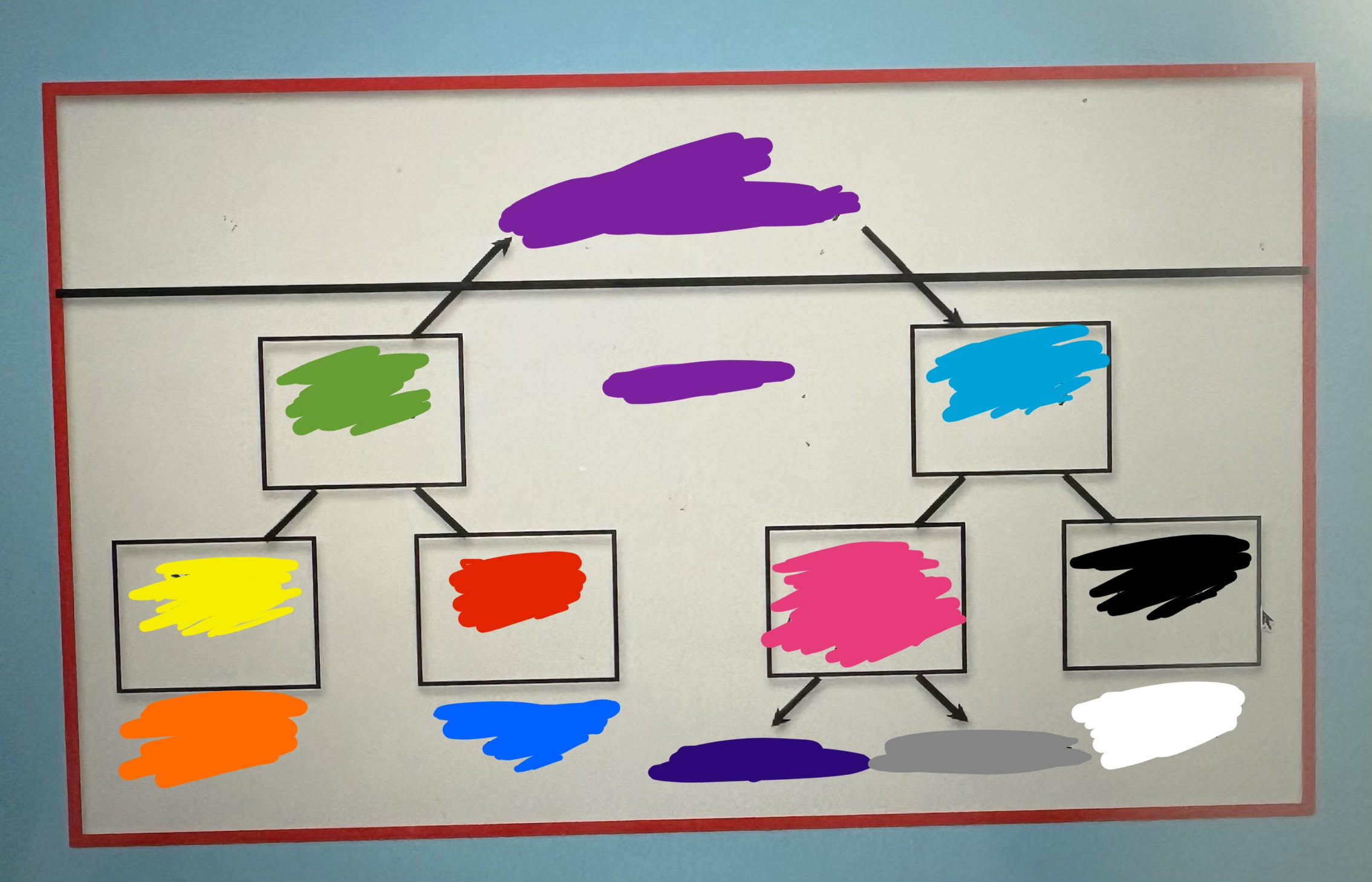
What’s red?
Visceral afferent
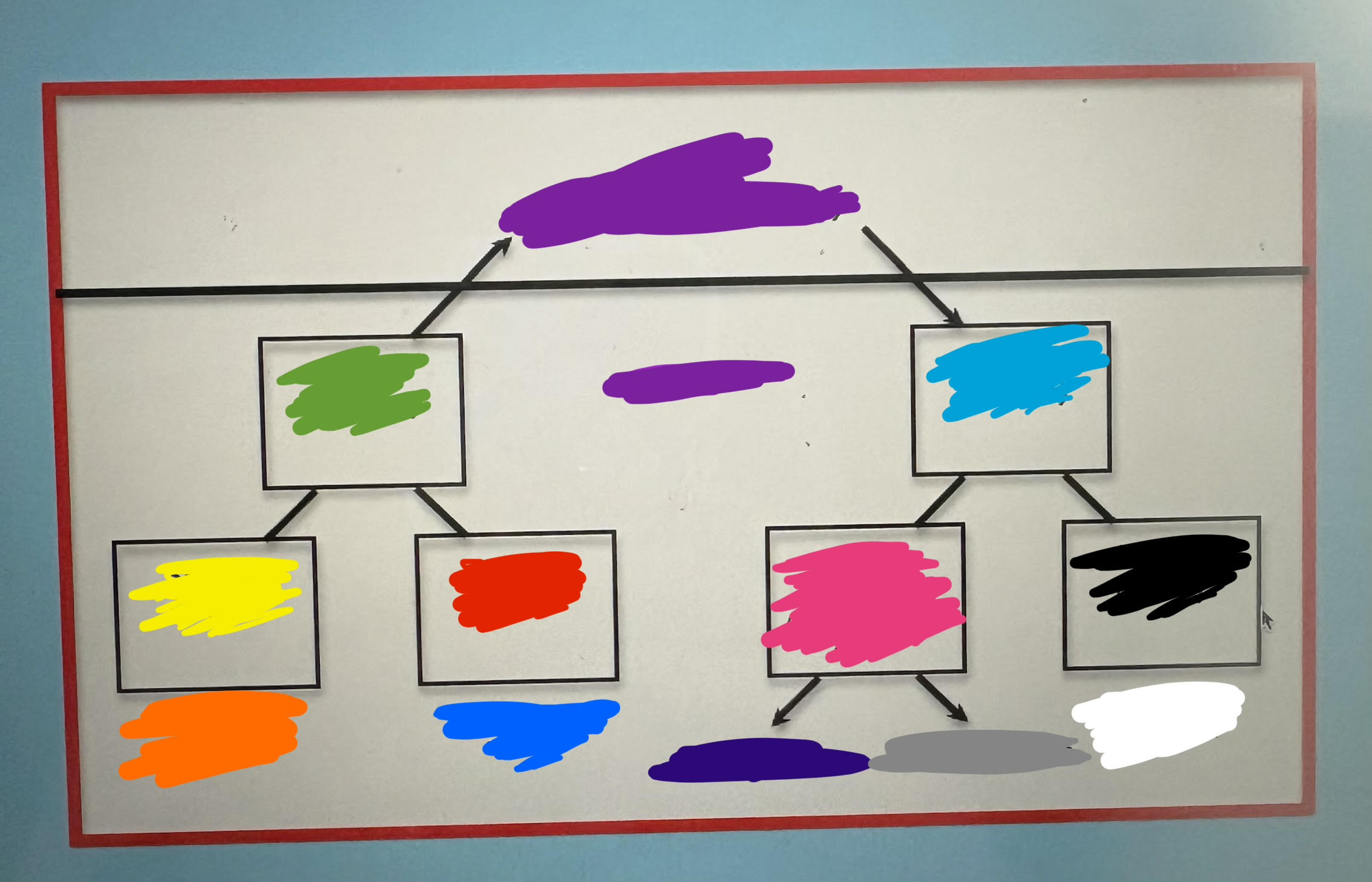
What’s orange?
From skeletal muscle, etc.
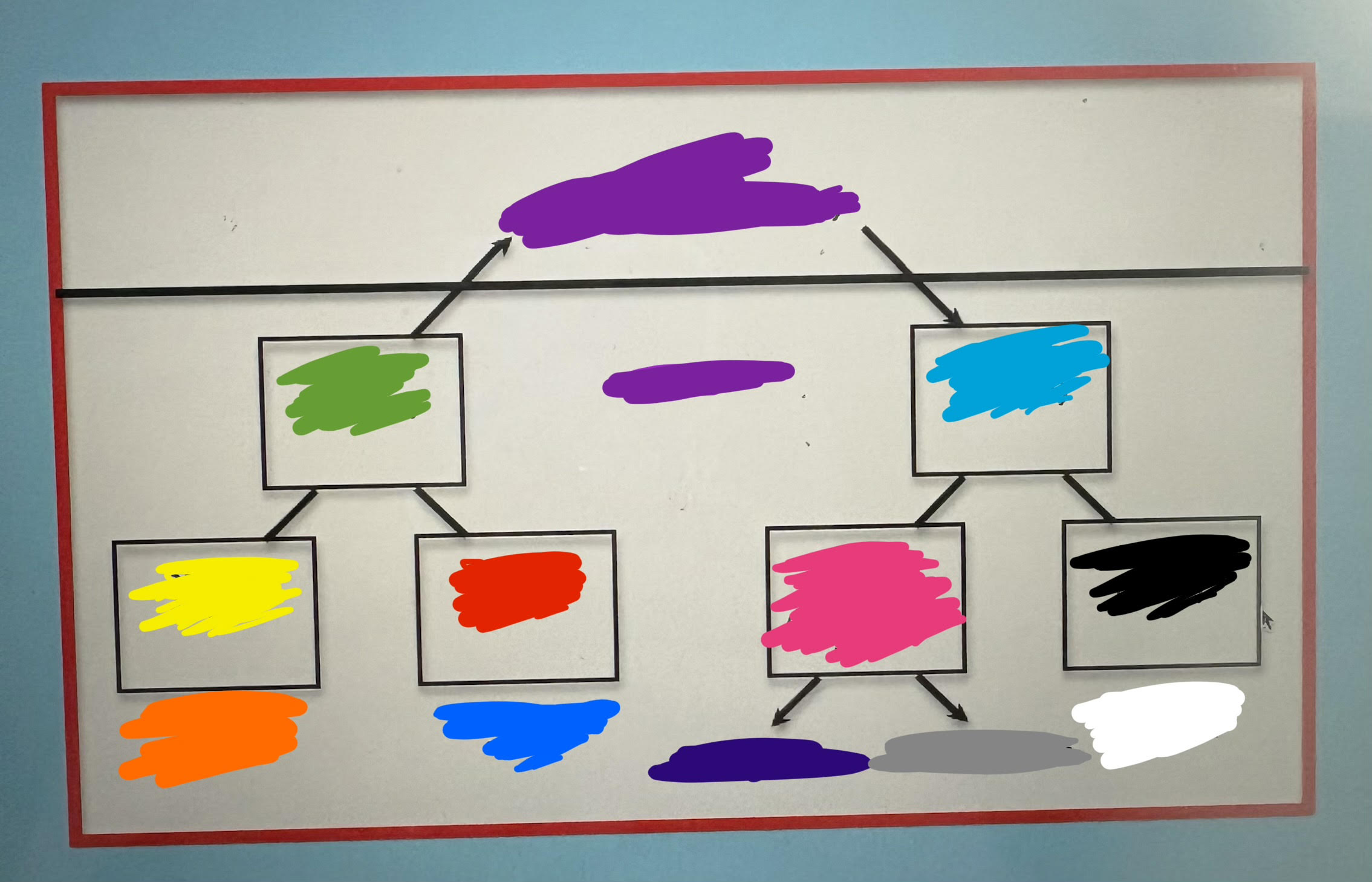
What’s dark blue?
From internal organs
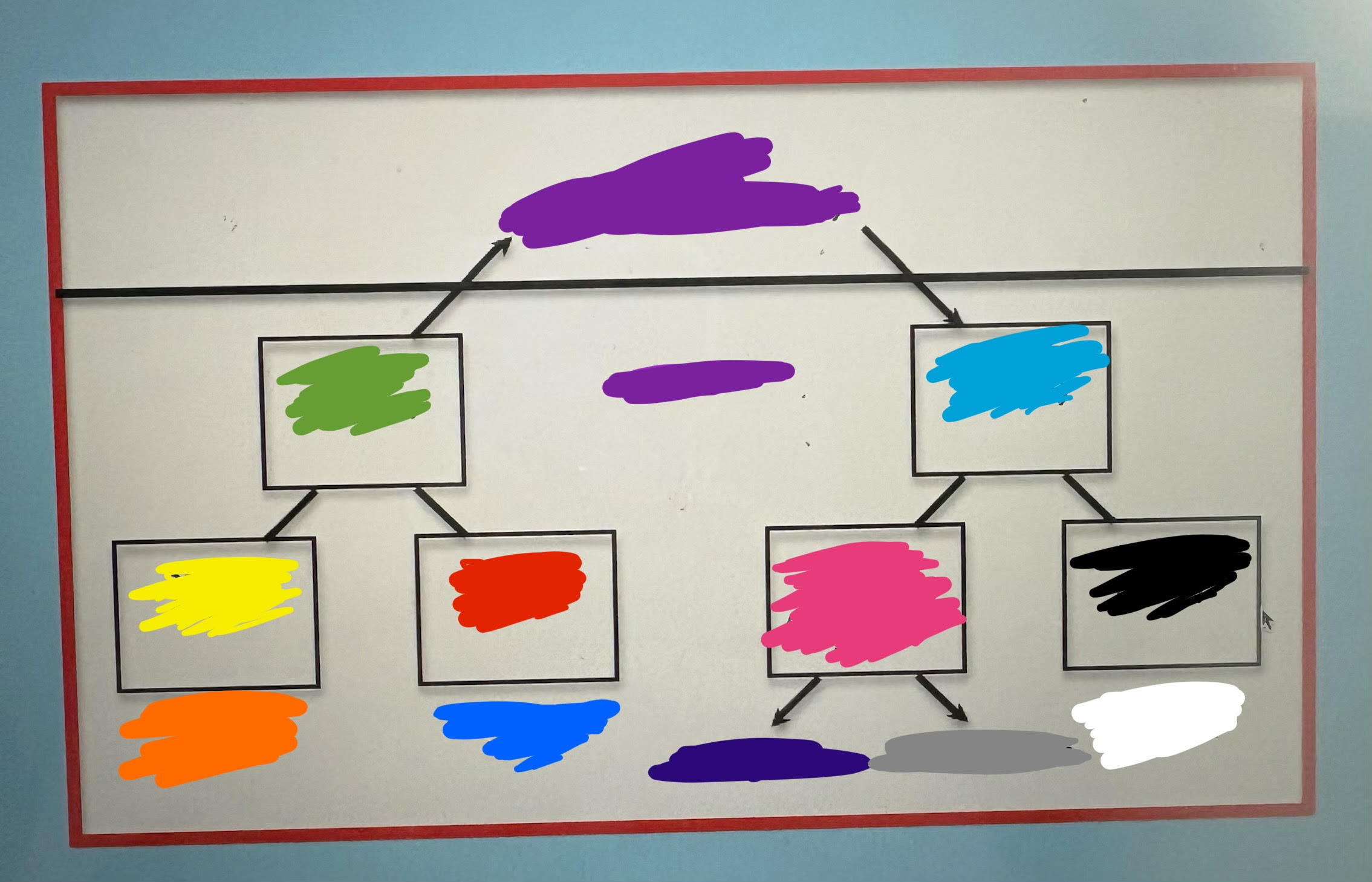
What’s light blue?
Motor (efferent)
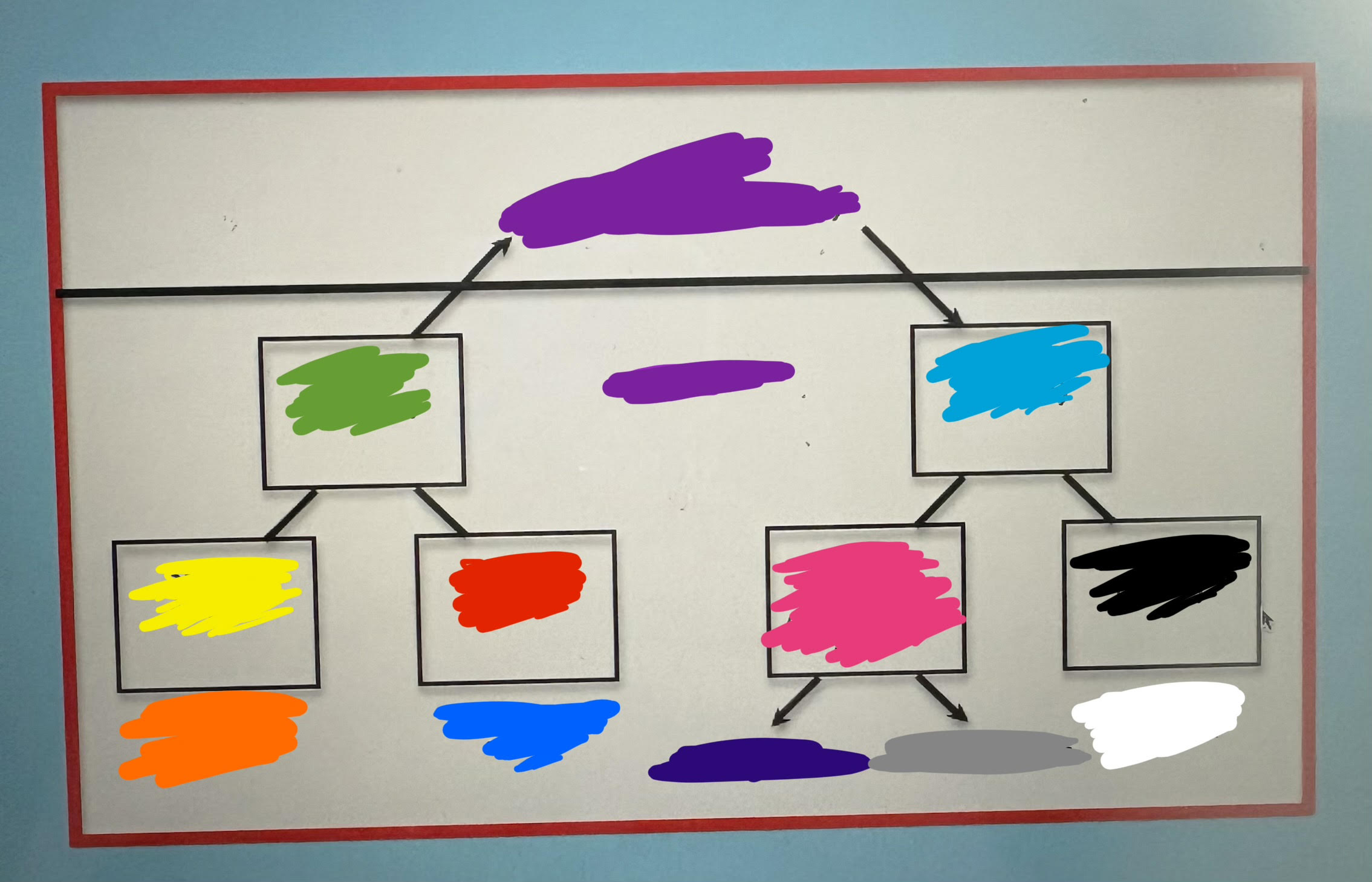
What’s pink?
Visceral efferent (Automatic Nervous System)
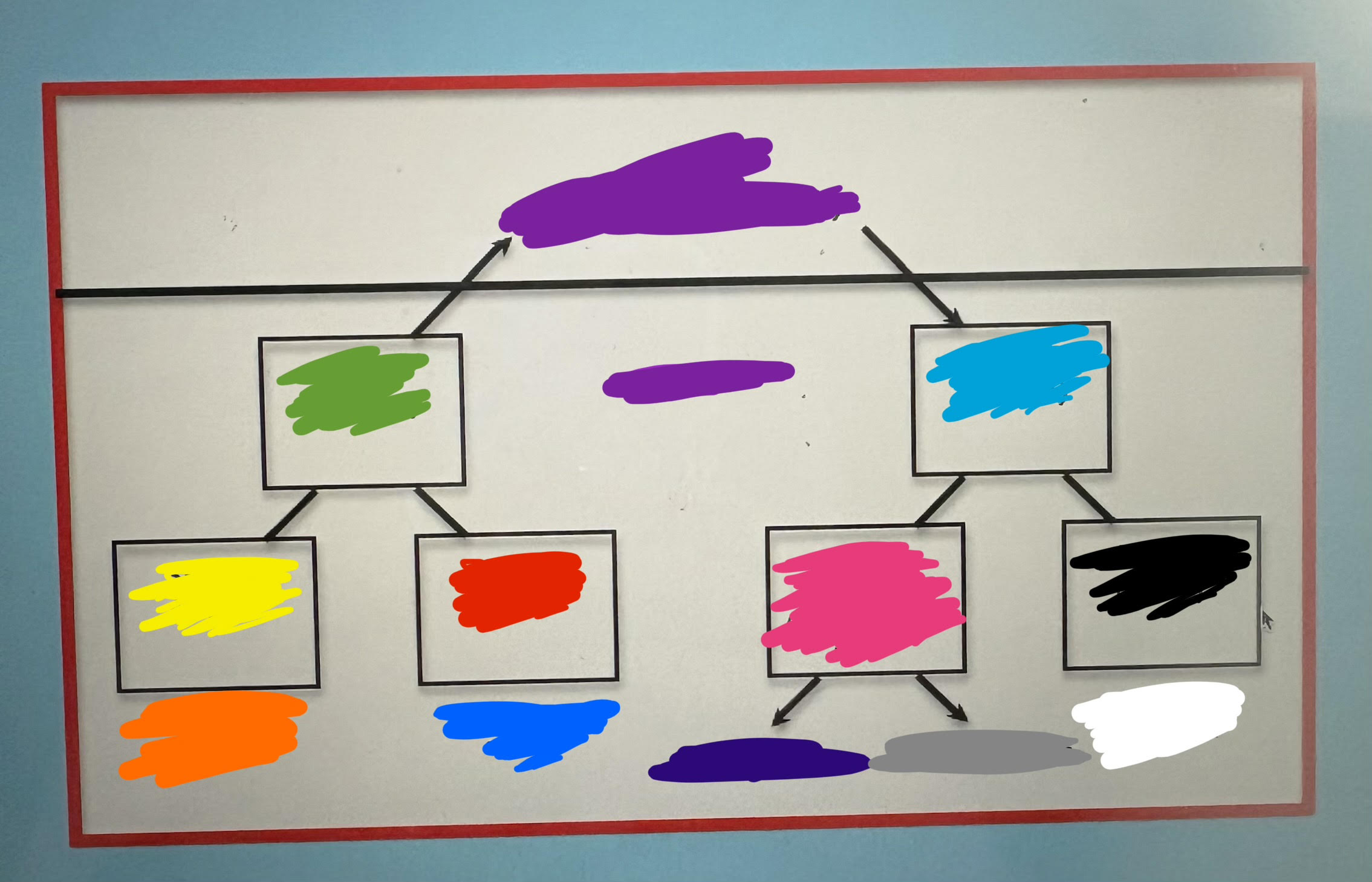
What’s black?
Somatic efferent
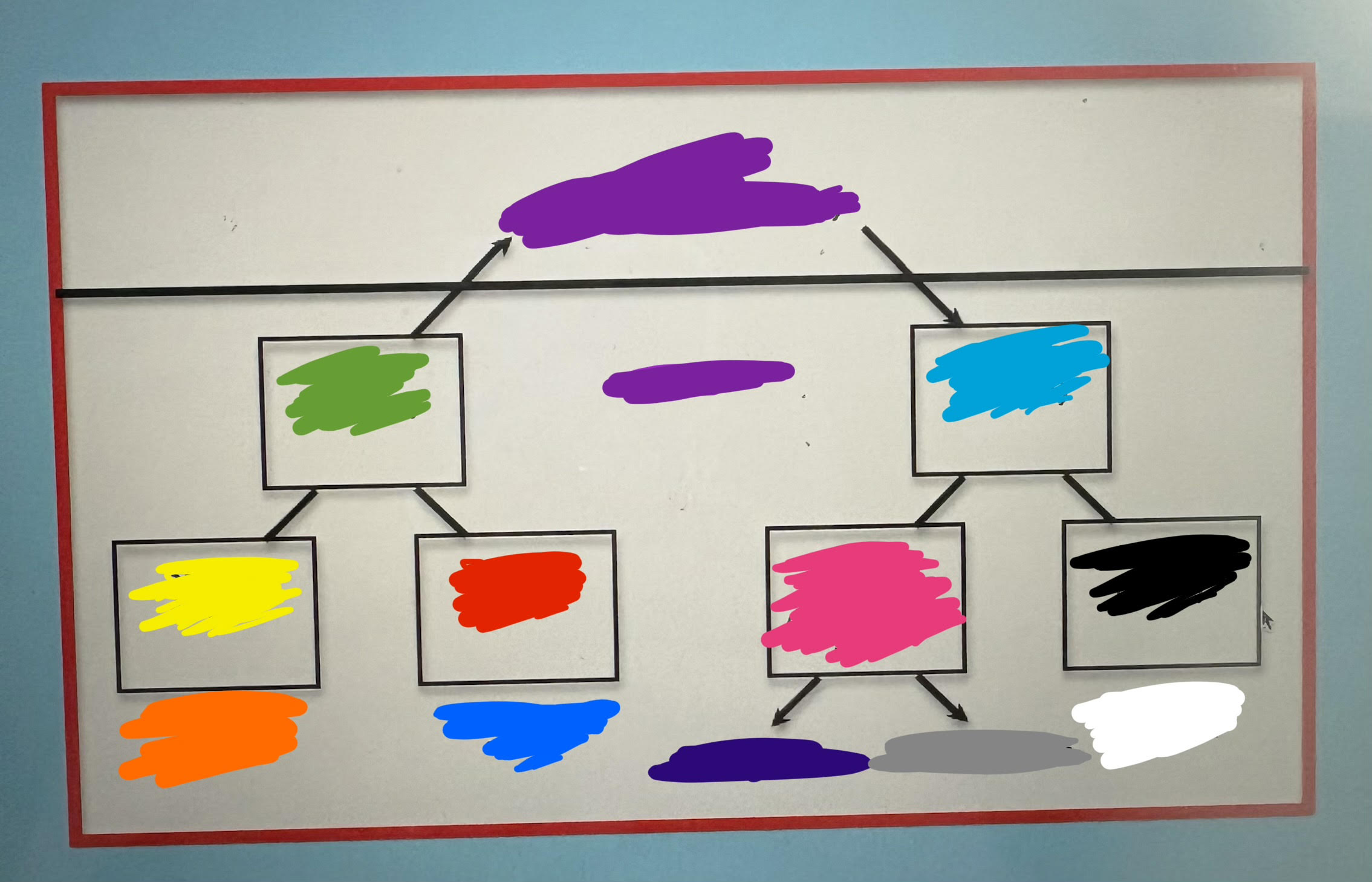
What’s navy?
Sympathetic
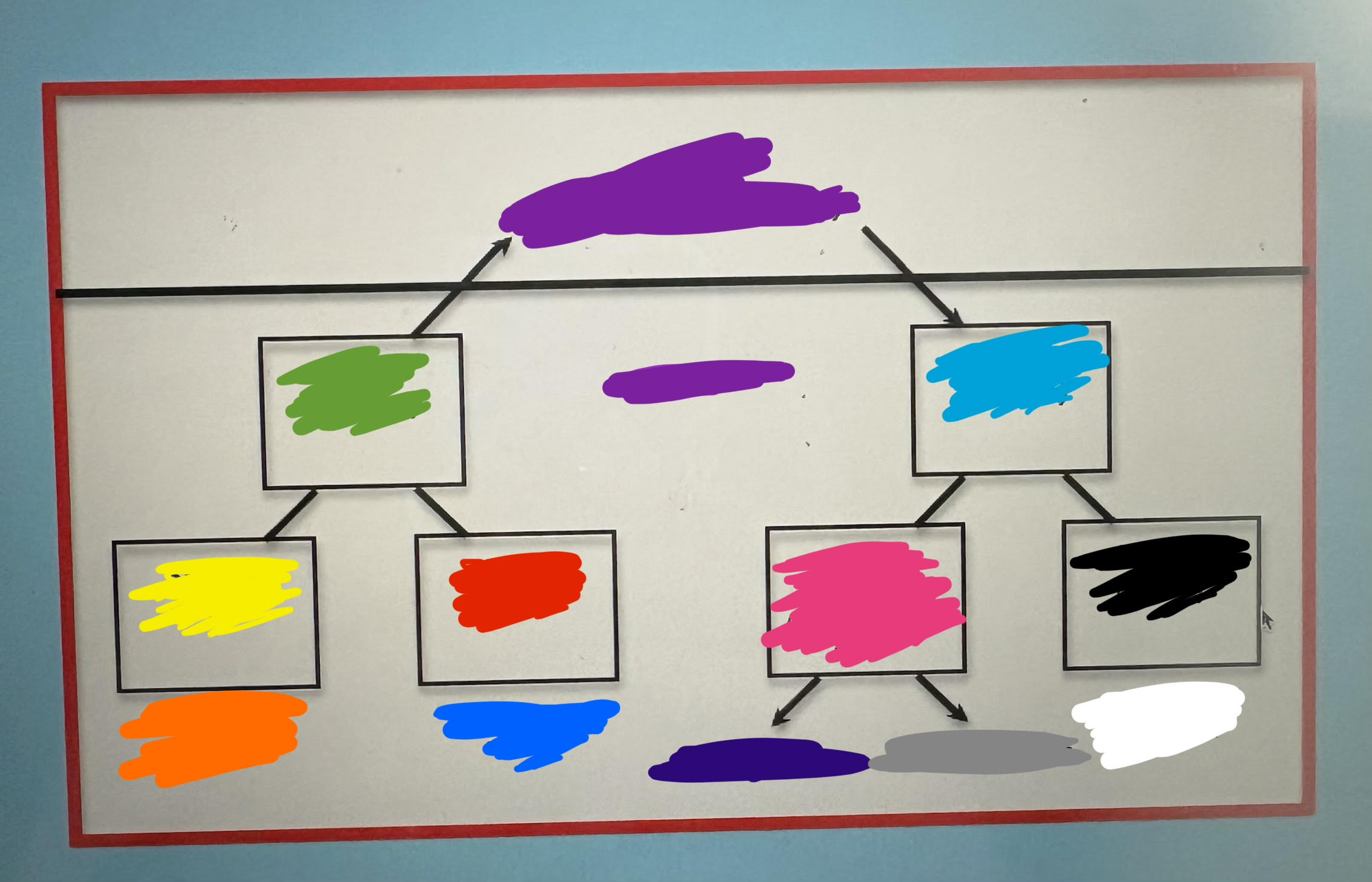
What’s grey?
Parasympathetic
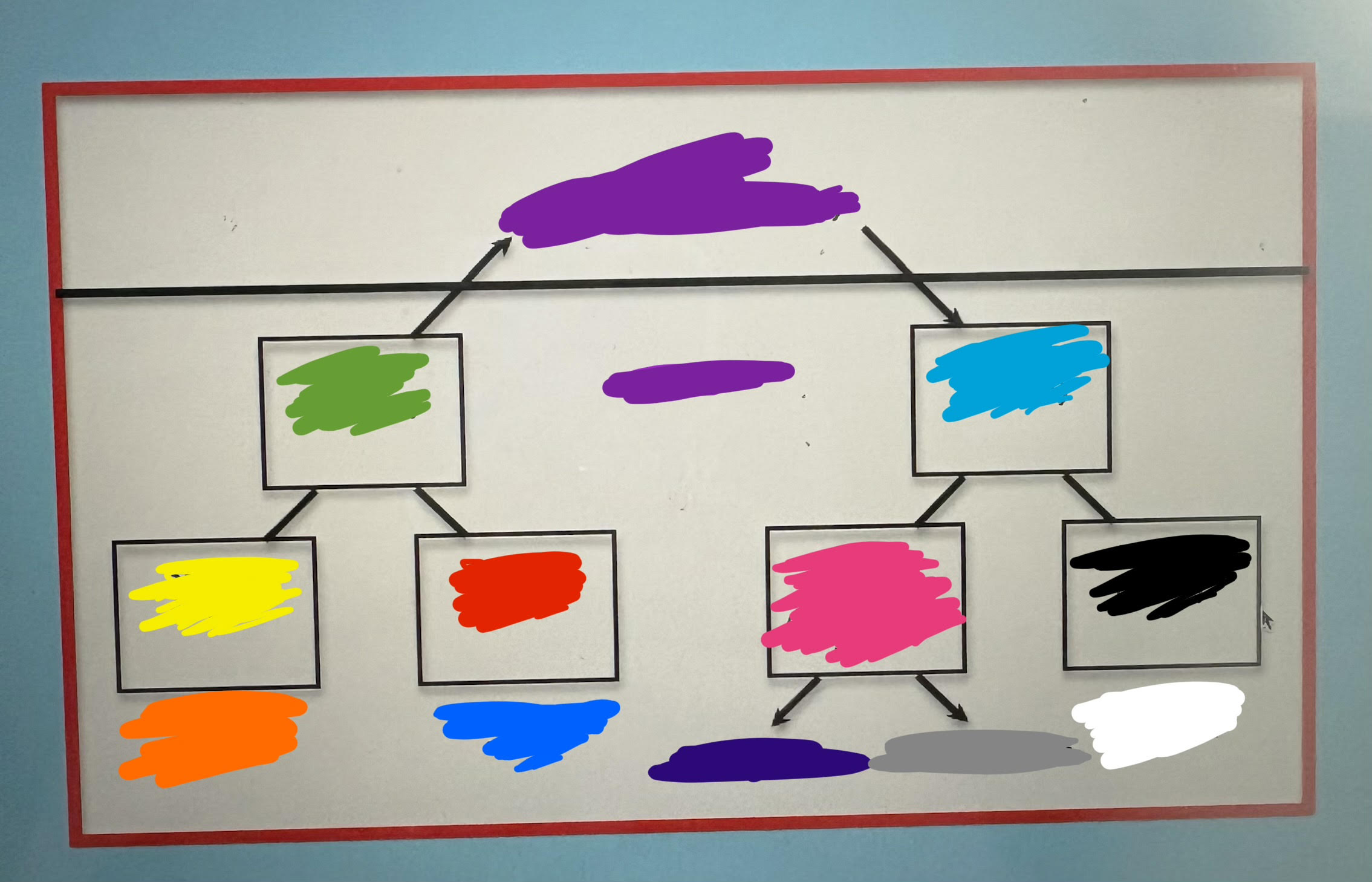
What’s white?
To skeletal muscle, etc.
Pupil dilation (sympathetic or parasympathetic?)
Sympathetic
Salivation
Parasympathetic
Bronchiolar Dilation
Sympathetic
Inhibition of Peristalsis
Sympathetic
Increased heart rate
Sympathetic
Relaxation of Anal Sphincter
Parasympathetic
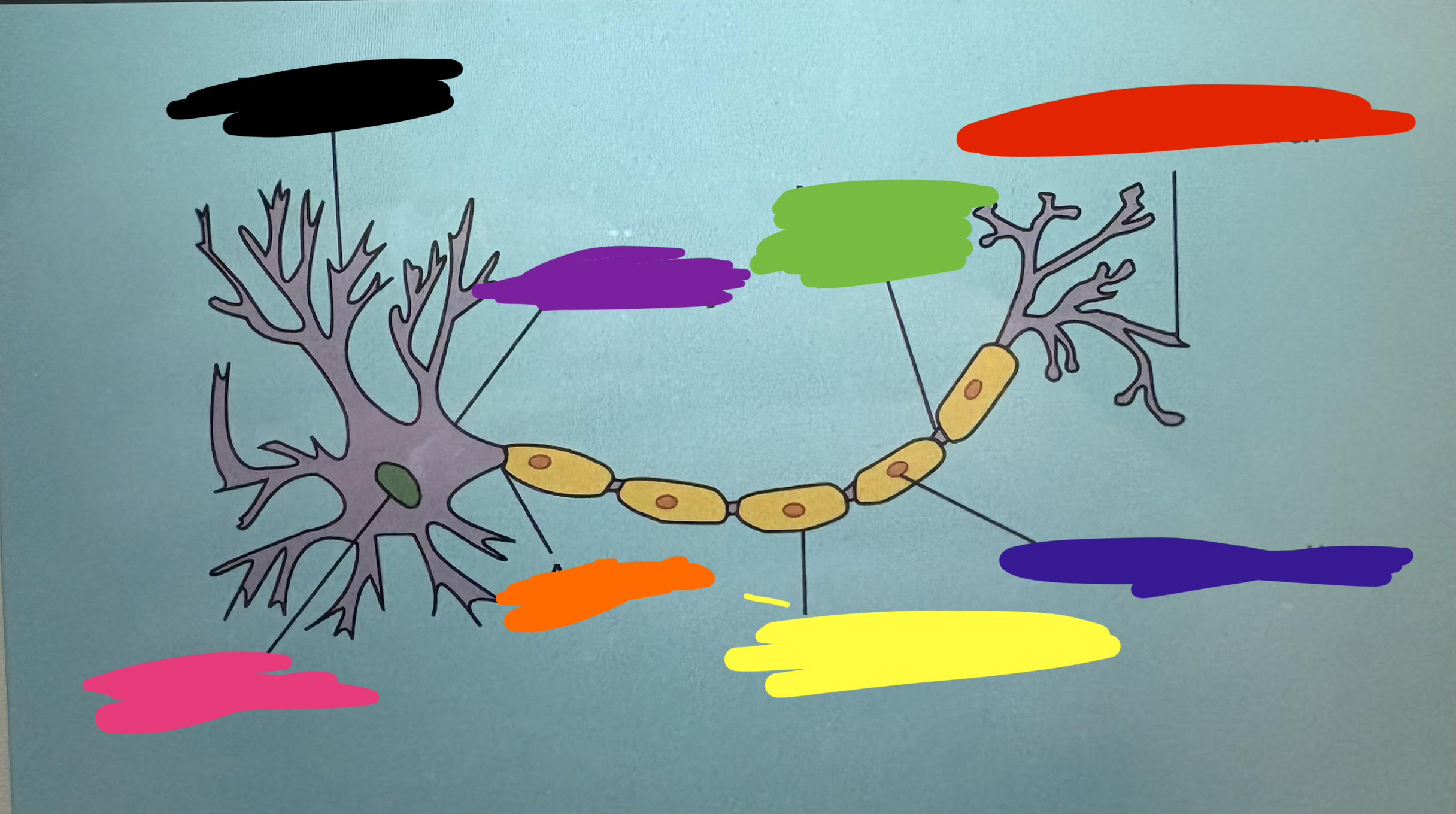
What’s this a picture of?
Somatic neuron
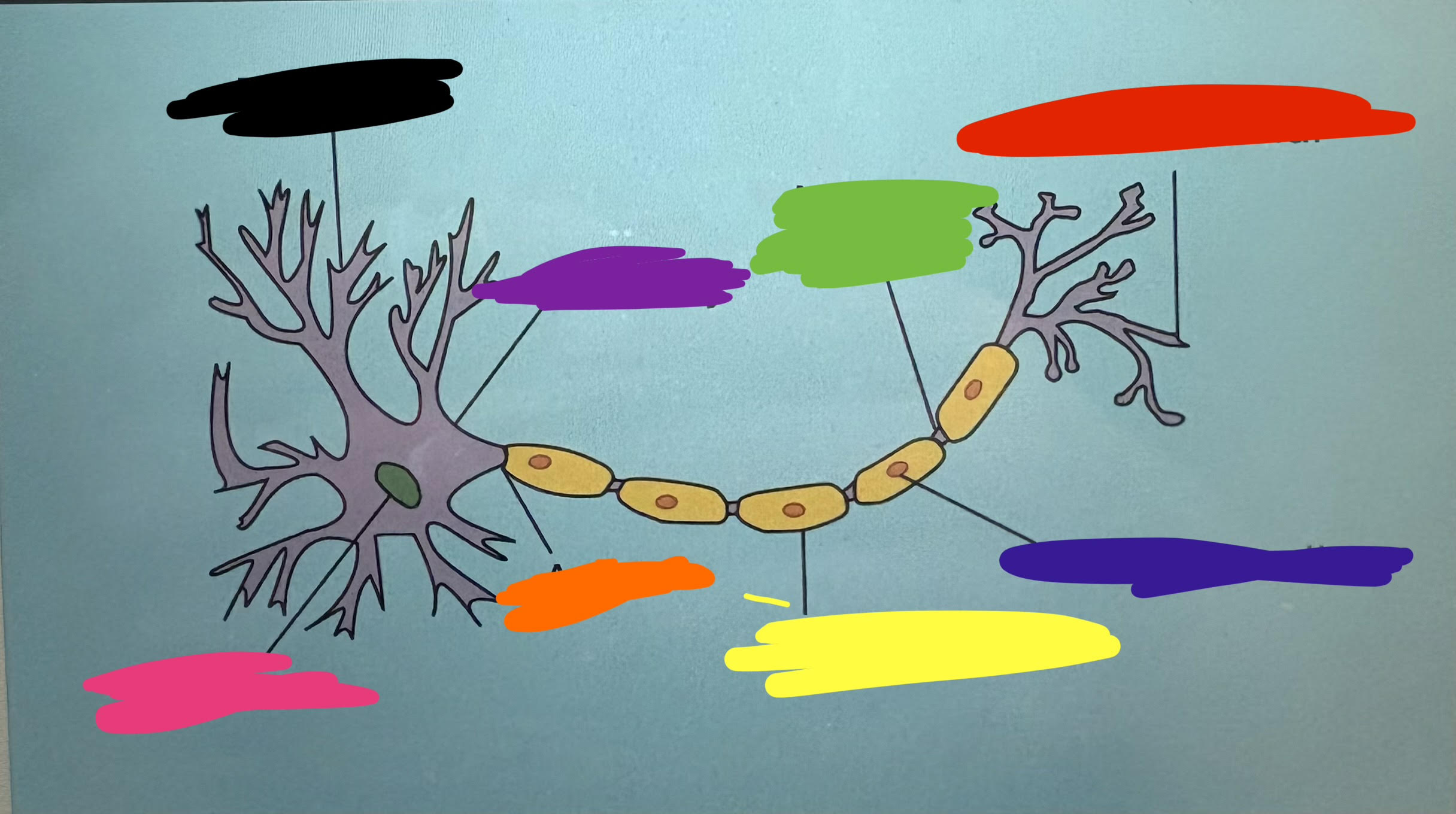
What’s black?
Dendrite
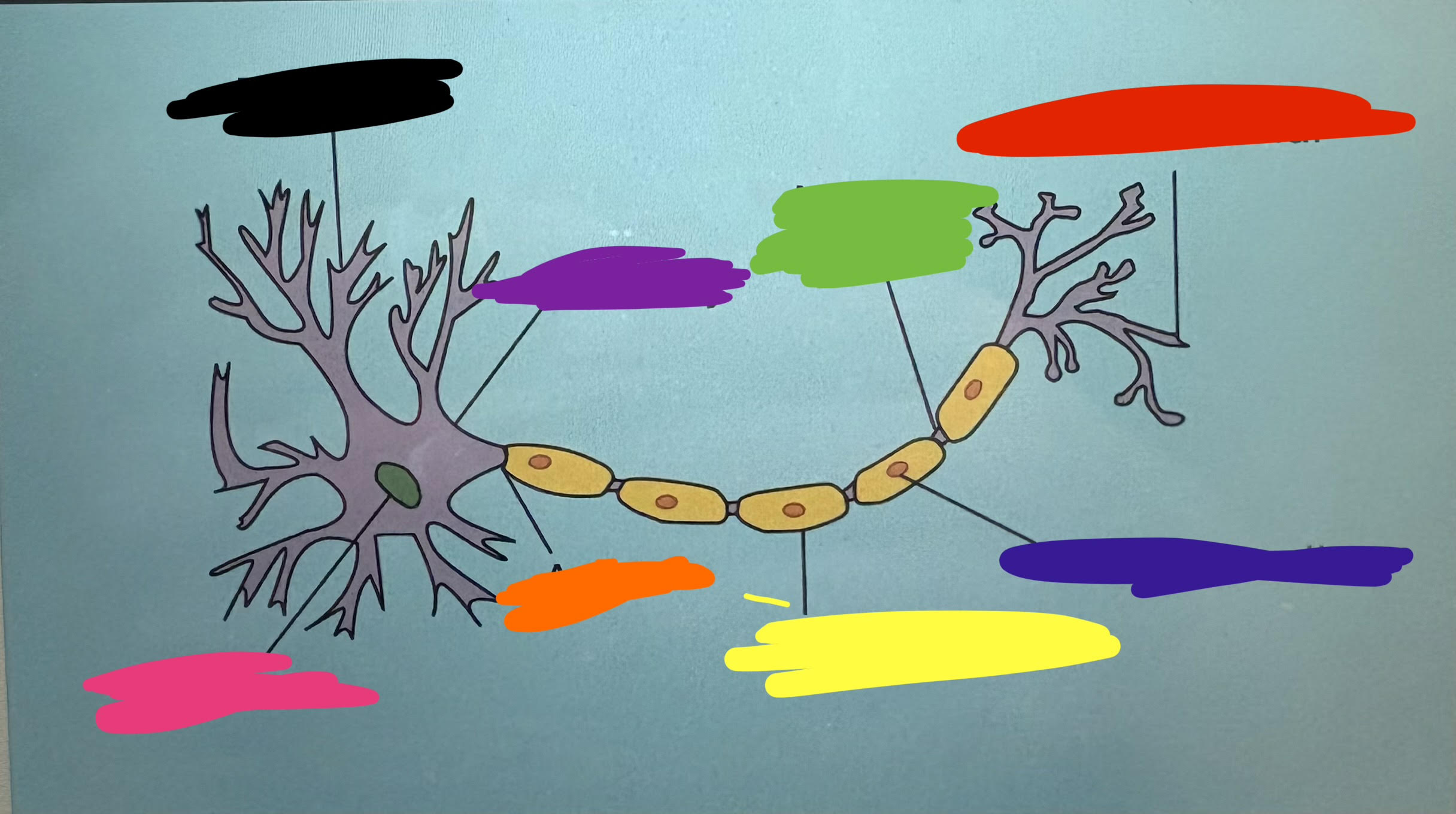
What’s pink?
Nucleus
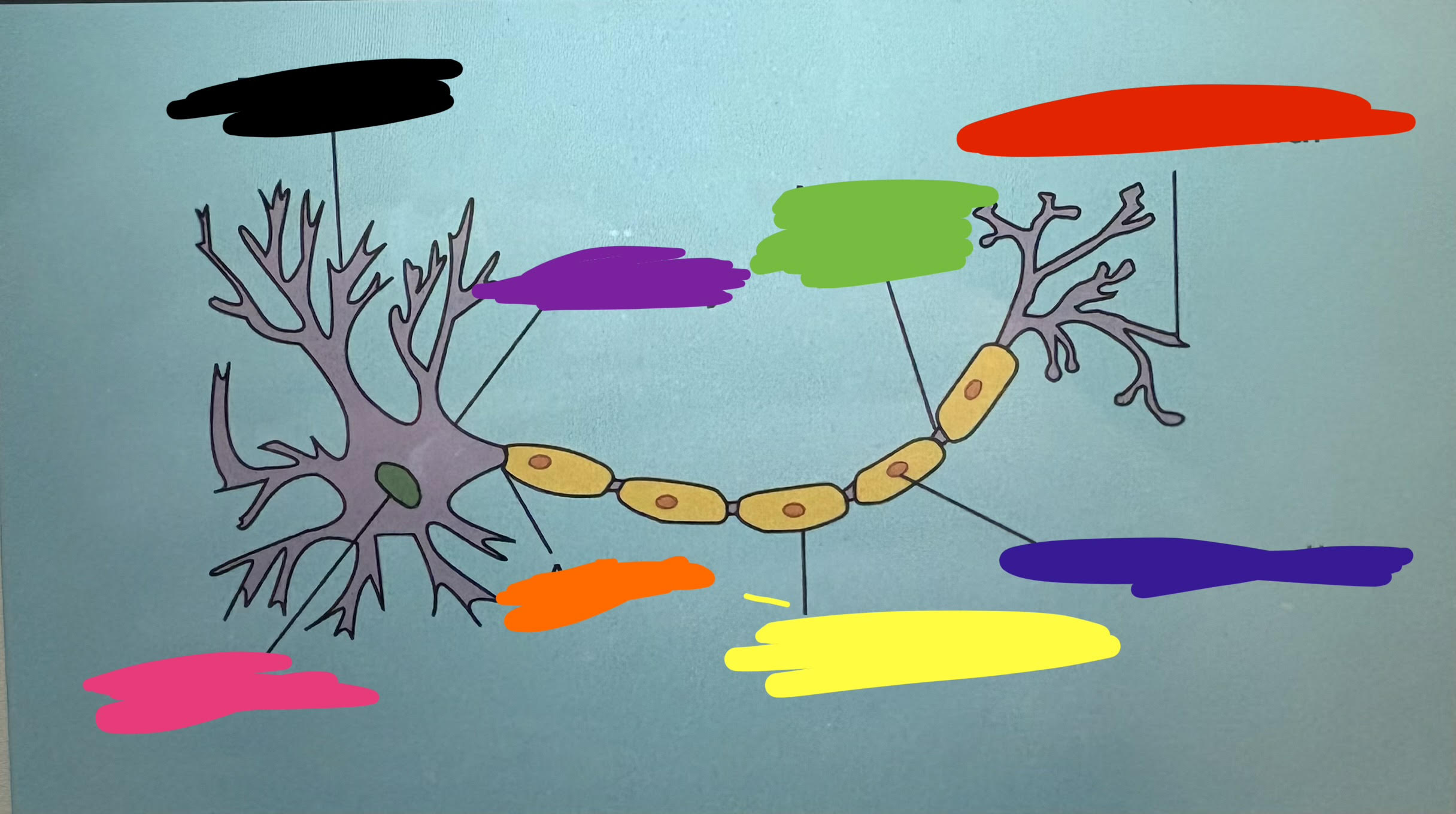
What’s purple?
Cell body
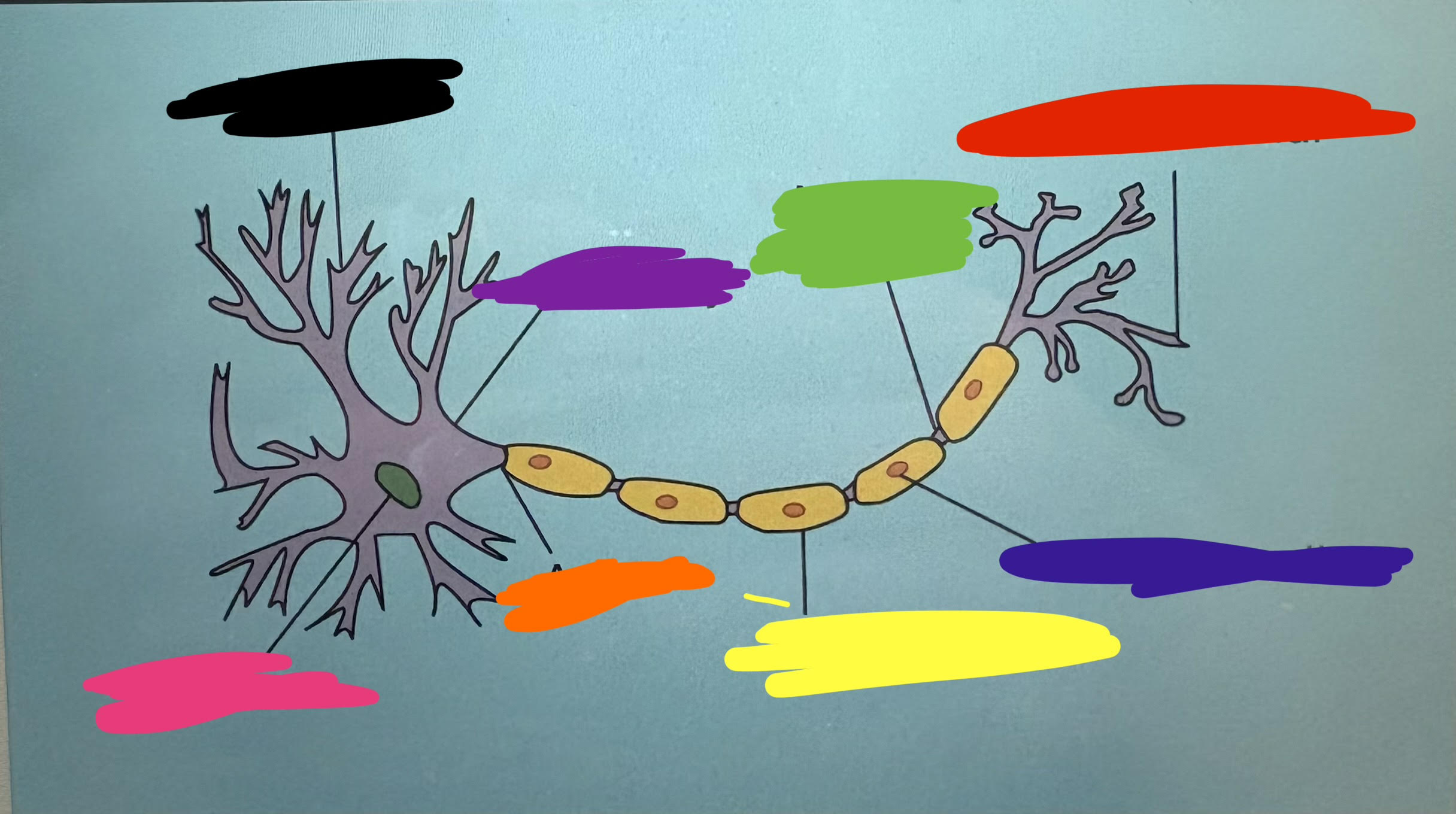
What’s orange?
Axon
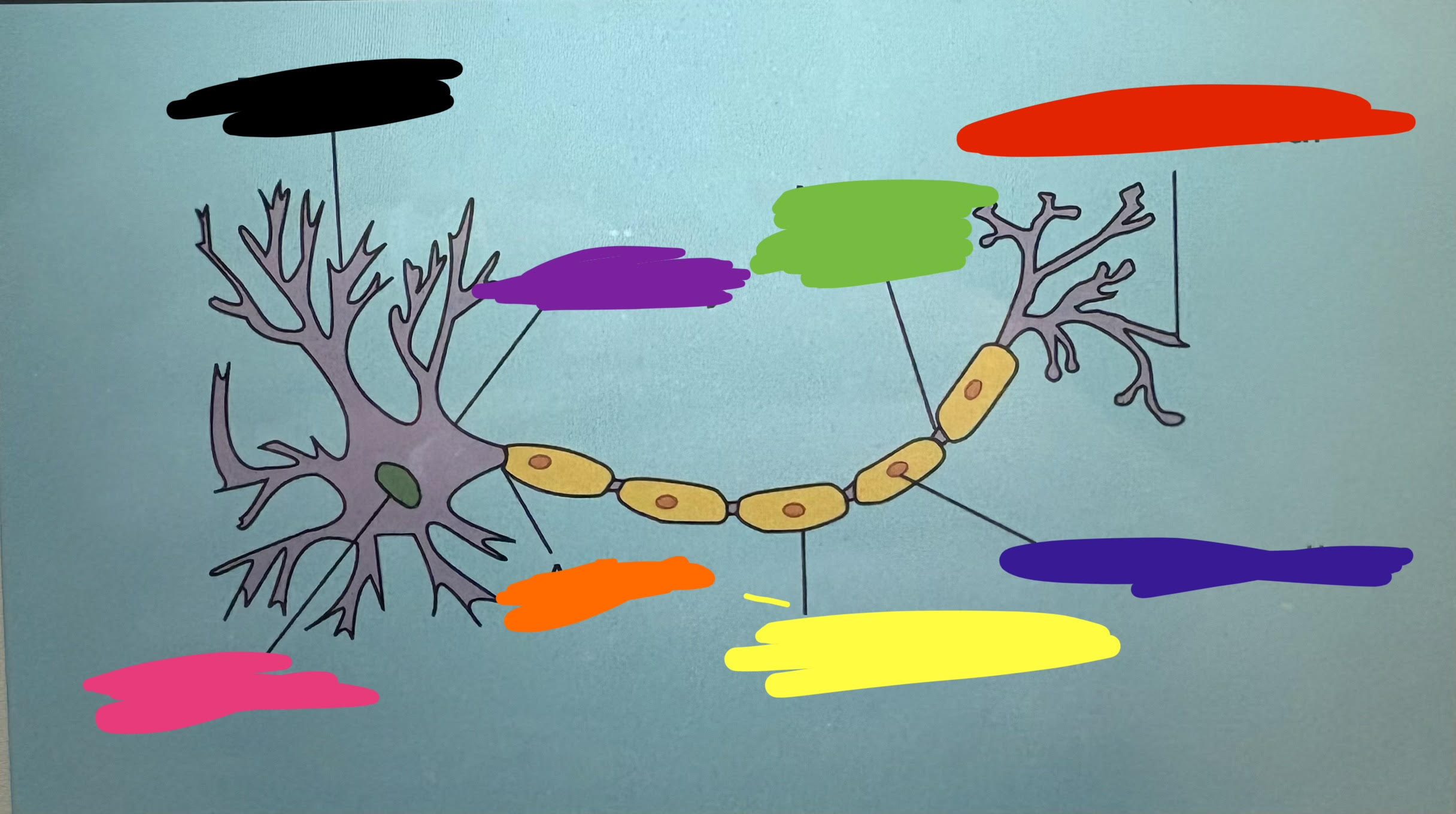
What’s green?
Node of Ranvier
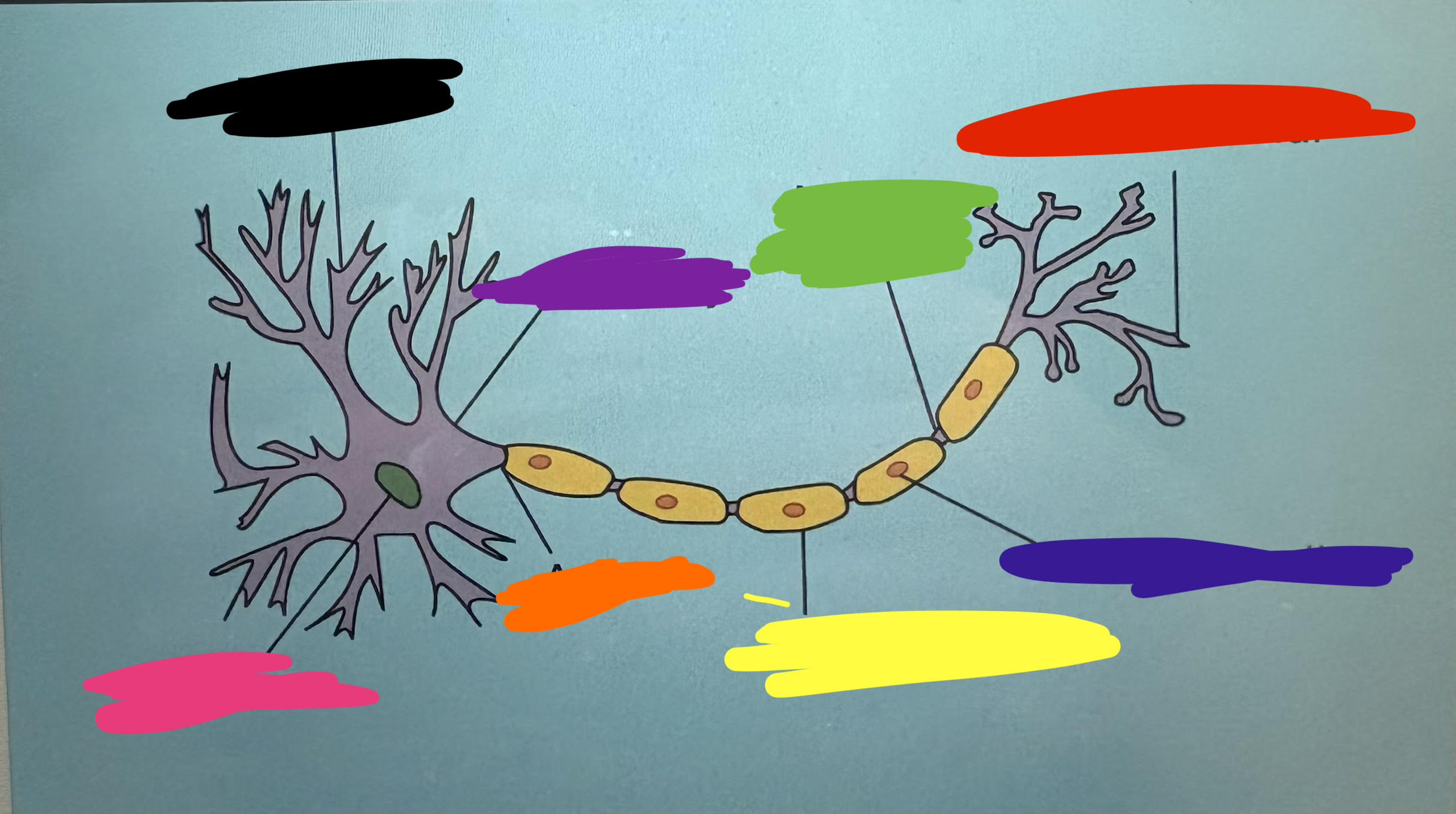
What’s yellow?
Mylein sheath
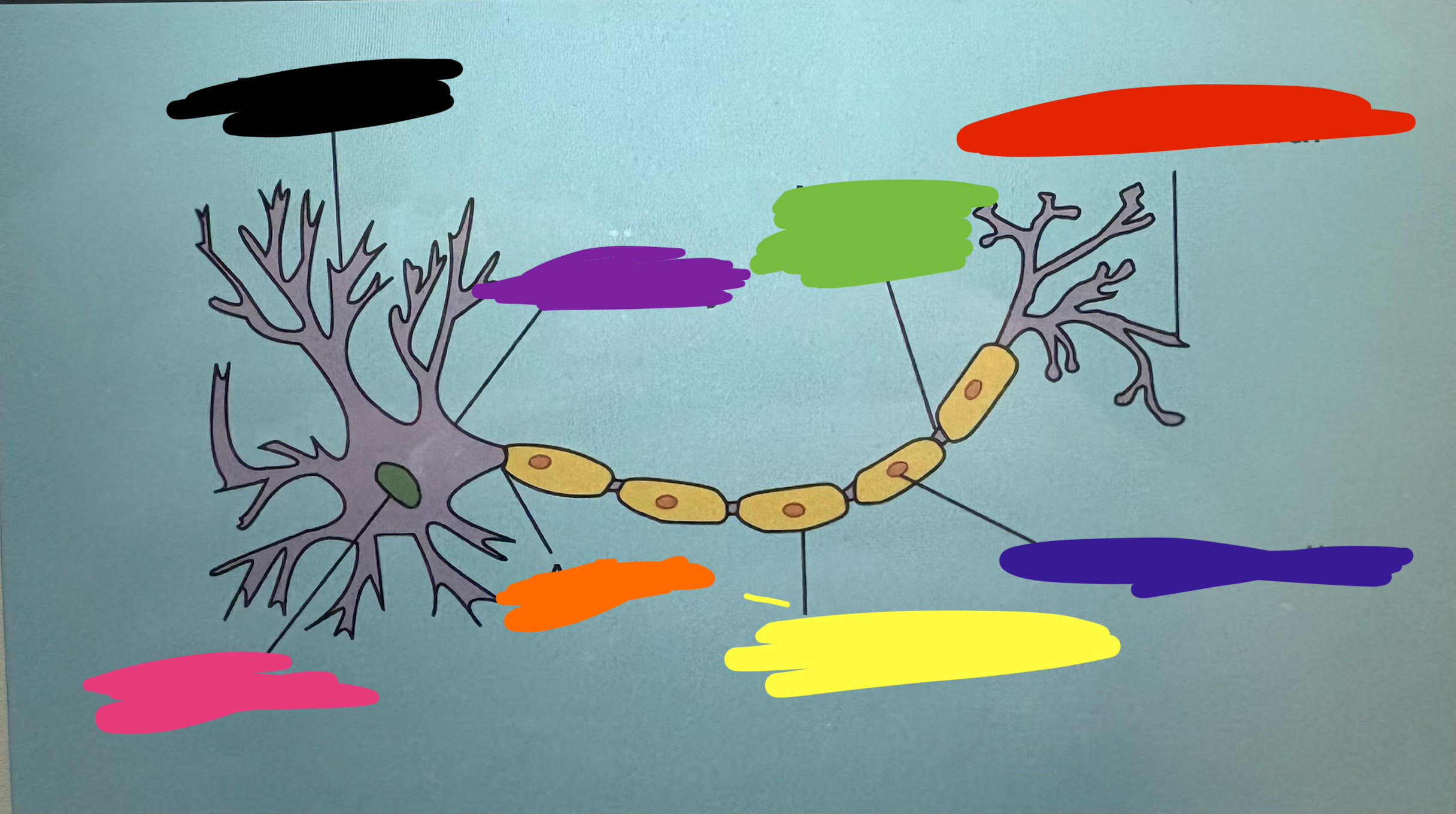
What’s navy?
Schwann cell
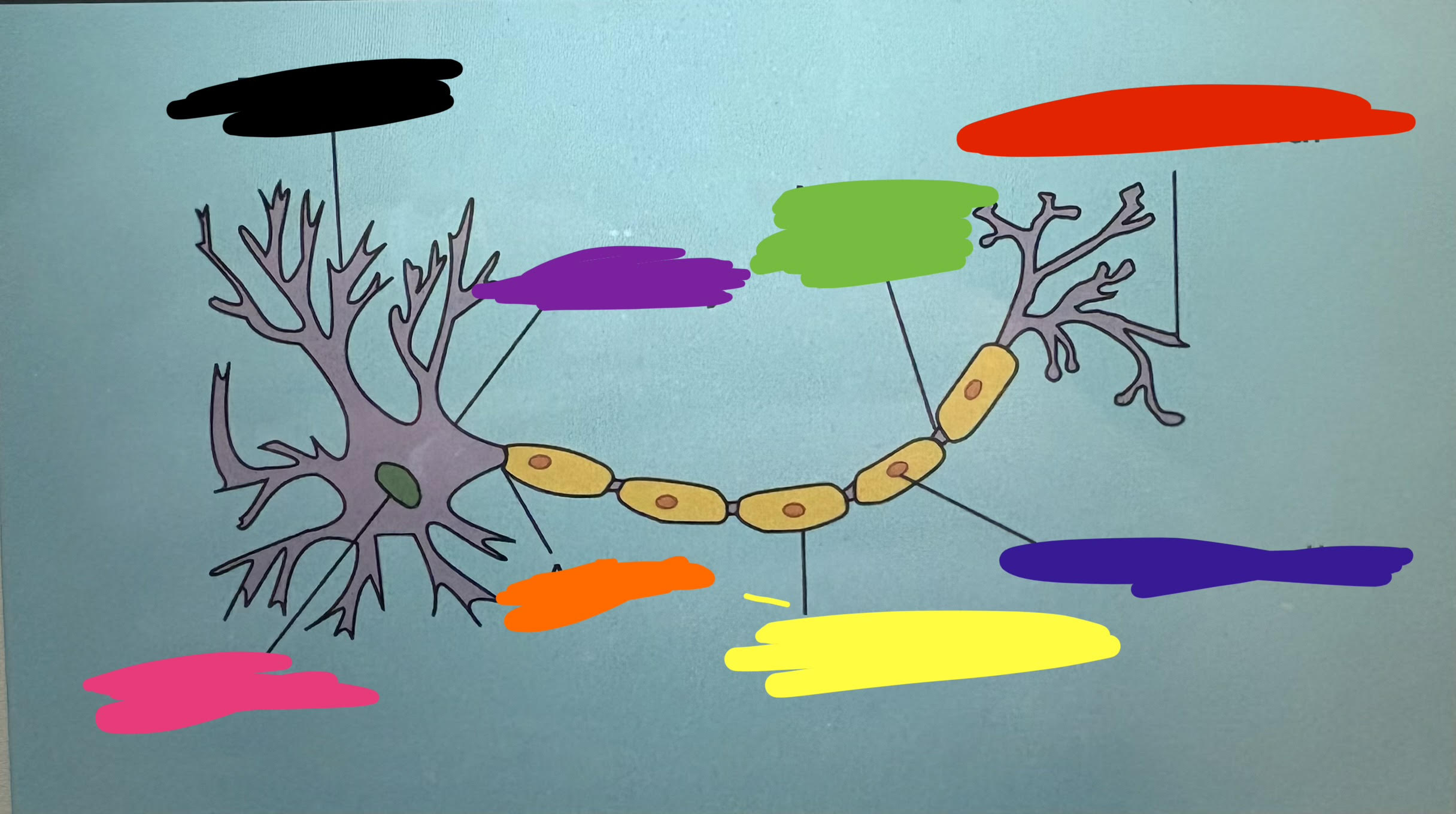
What’s red?
Axon terminal
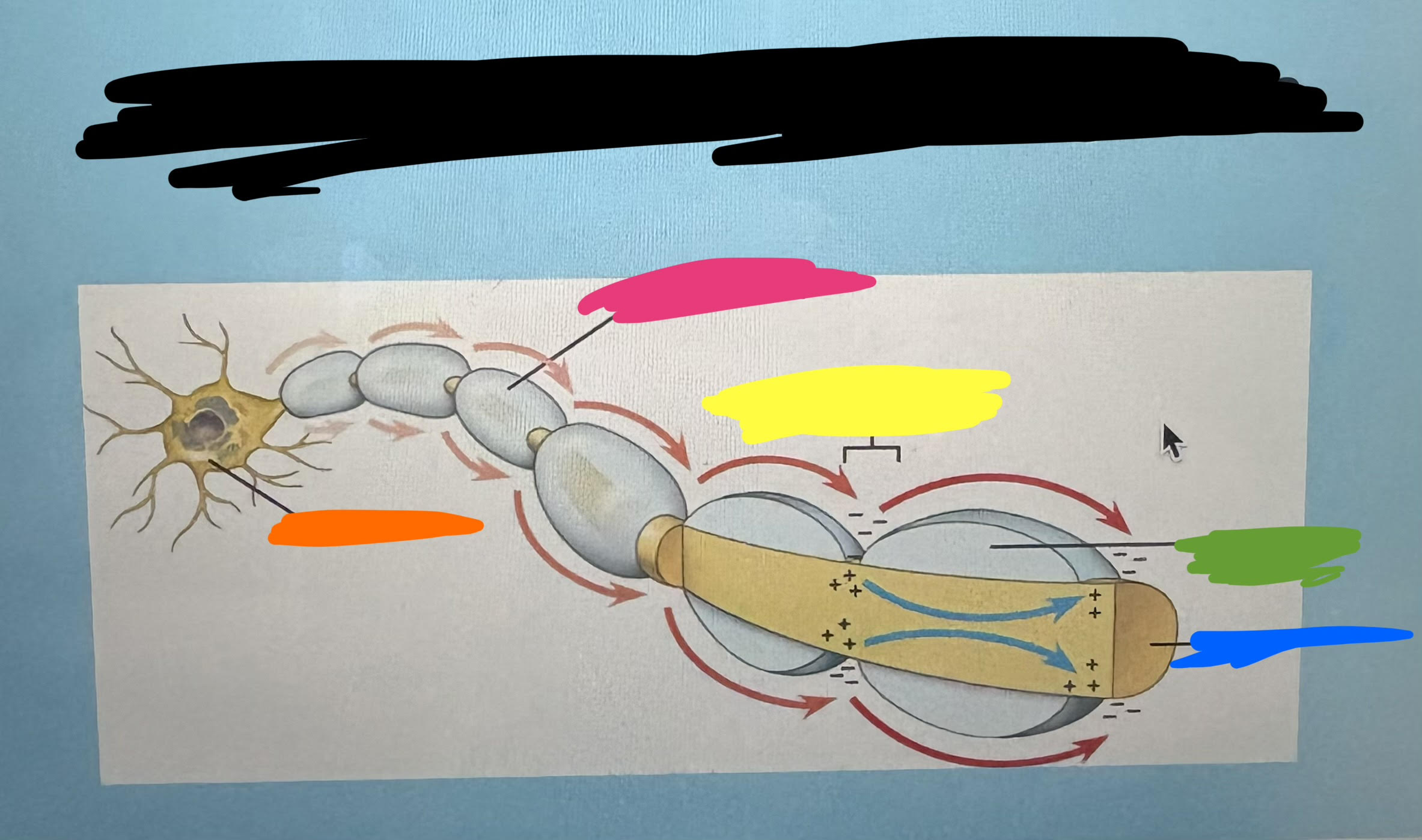
What’s black?
Action Potential Propagation
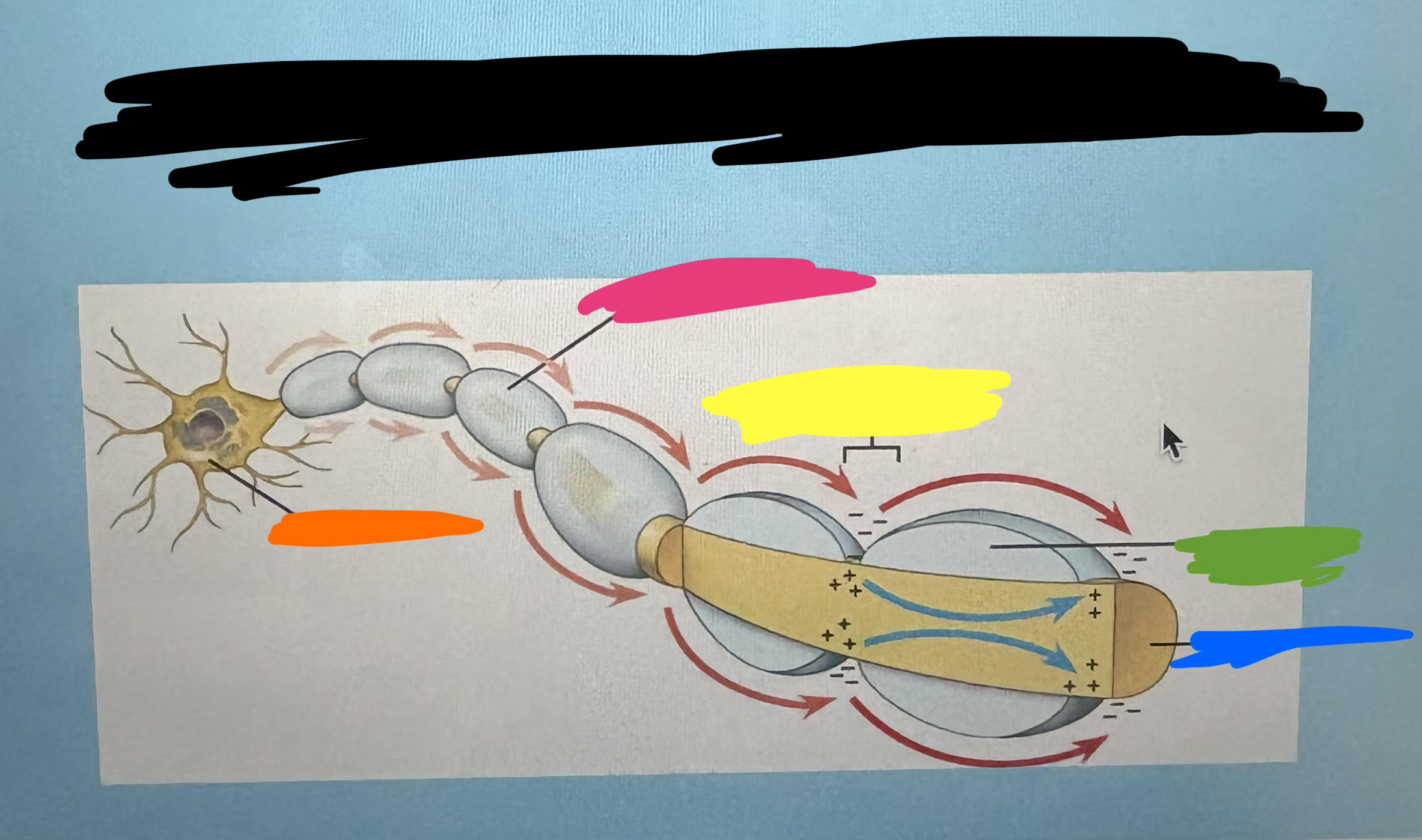
What’s orange?
The cell body
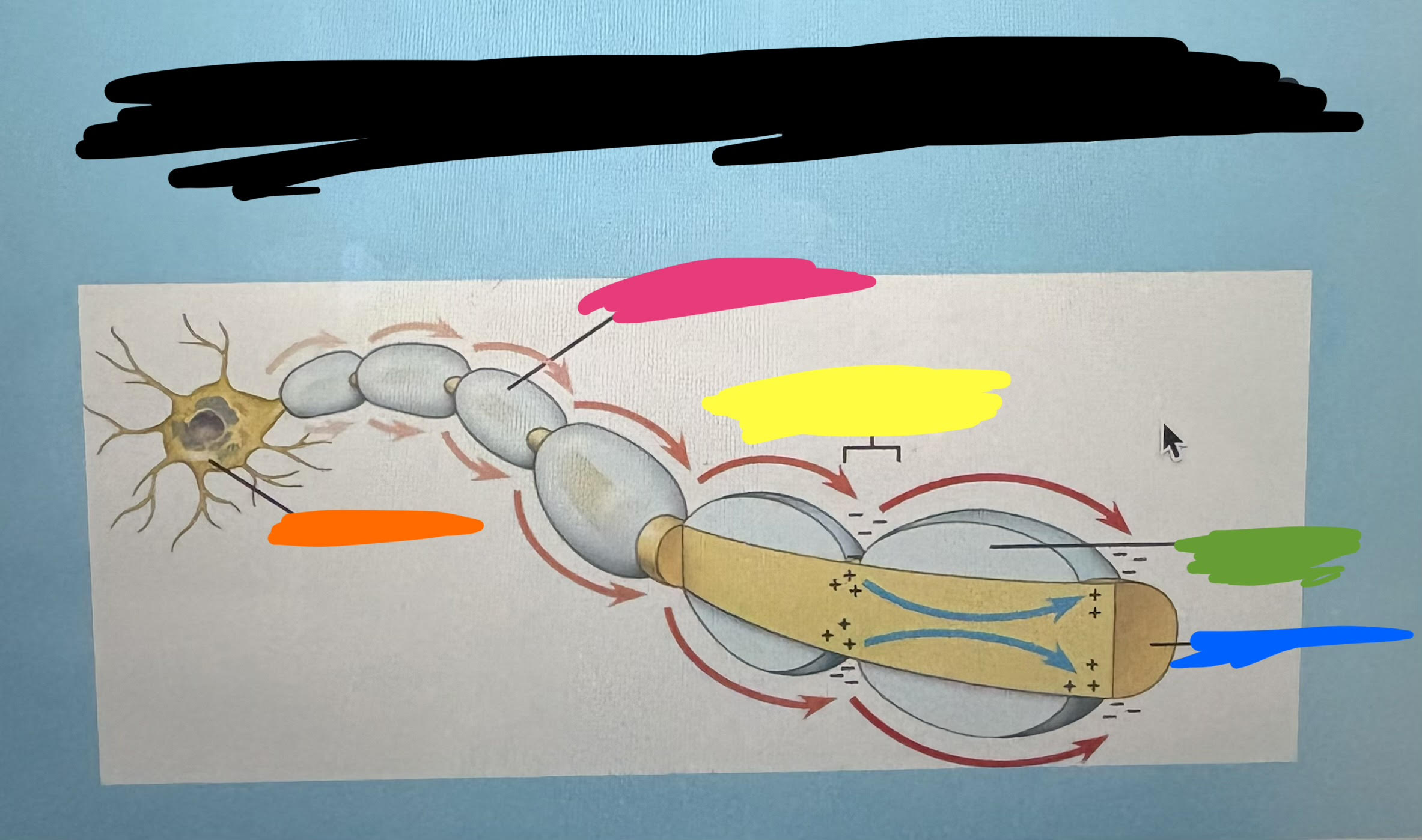
What’s pink?
Schwann cell
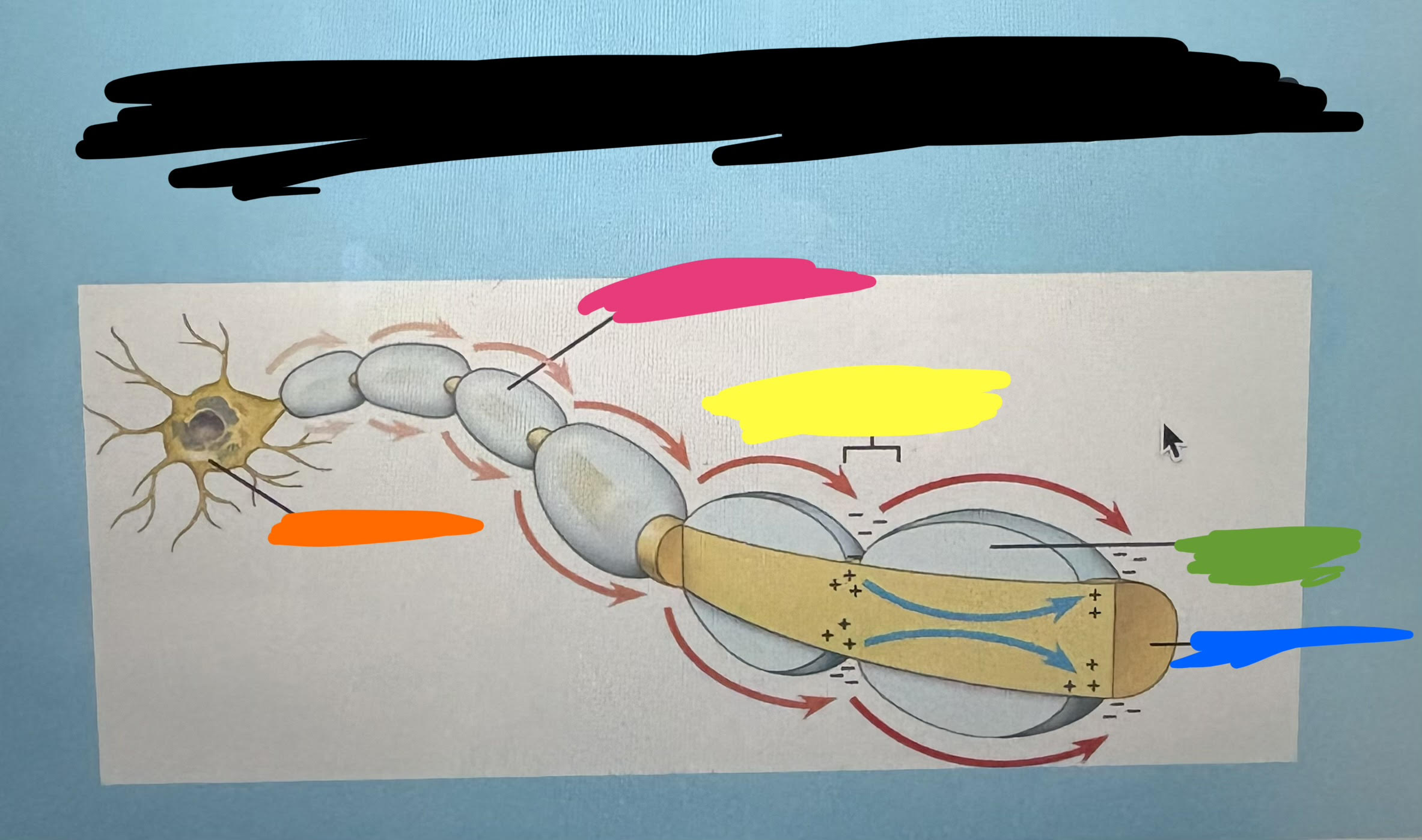
What’s yellow?
Depolarized region (node of Ranvier)
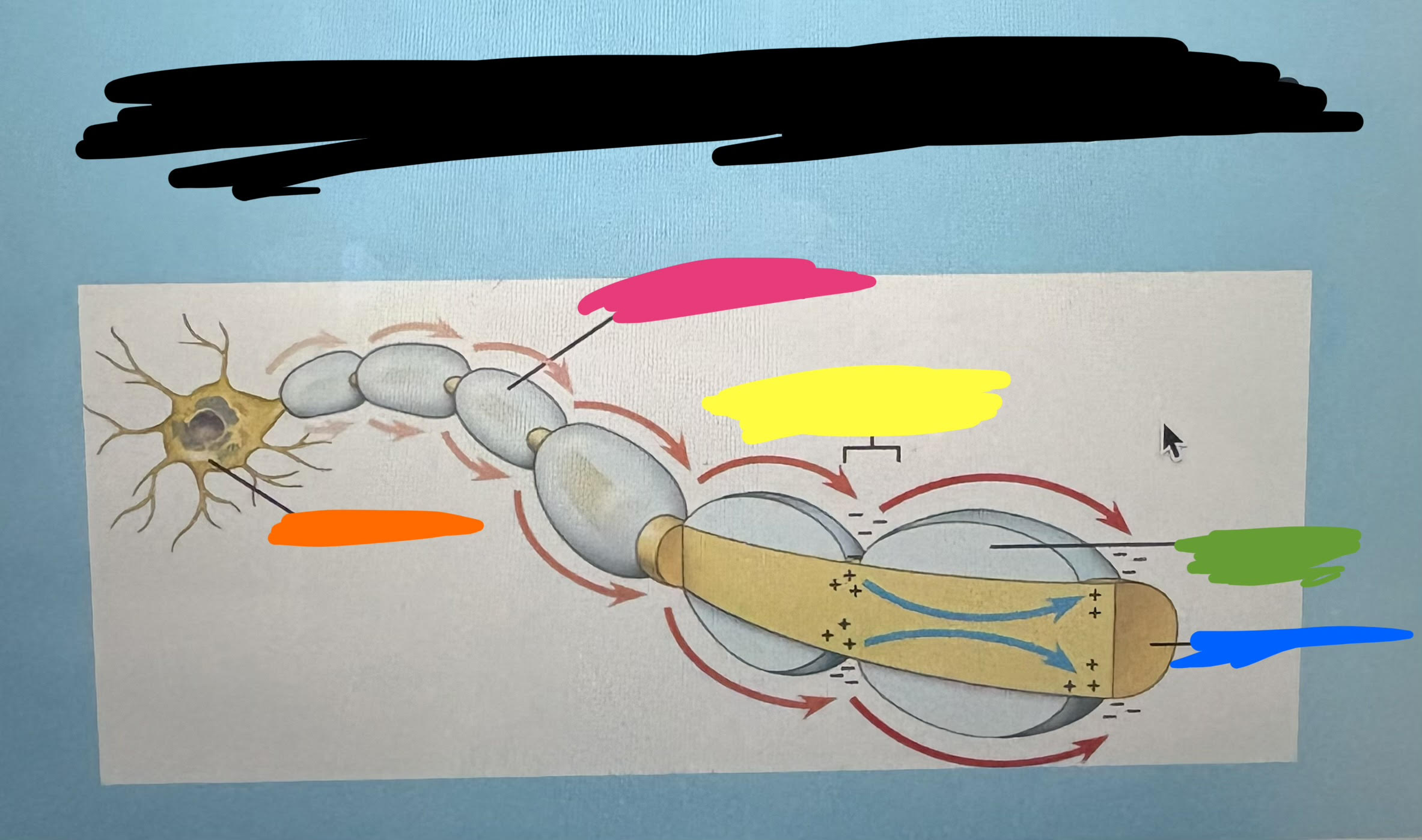
What’s green?
Myelin sheath
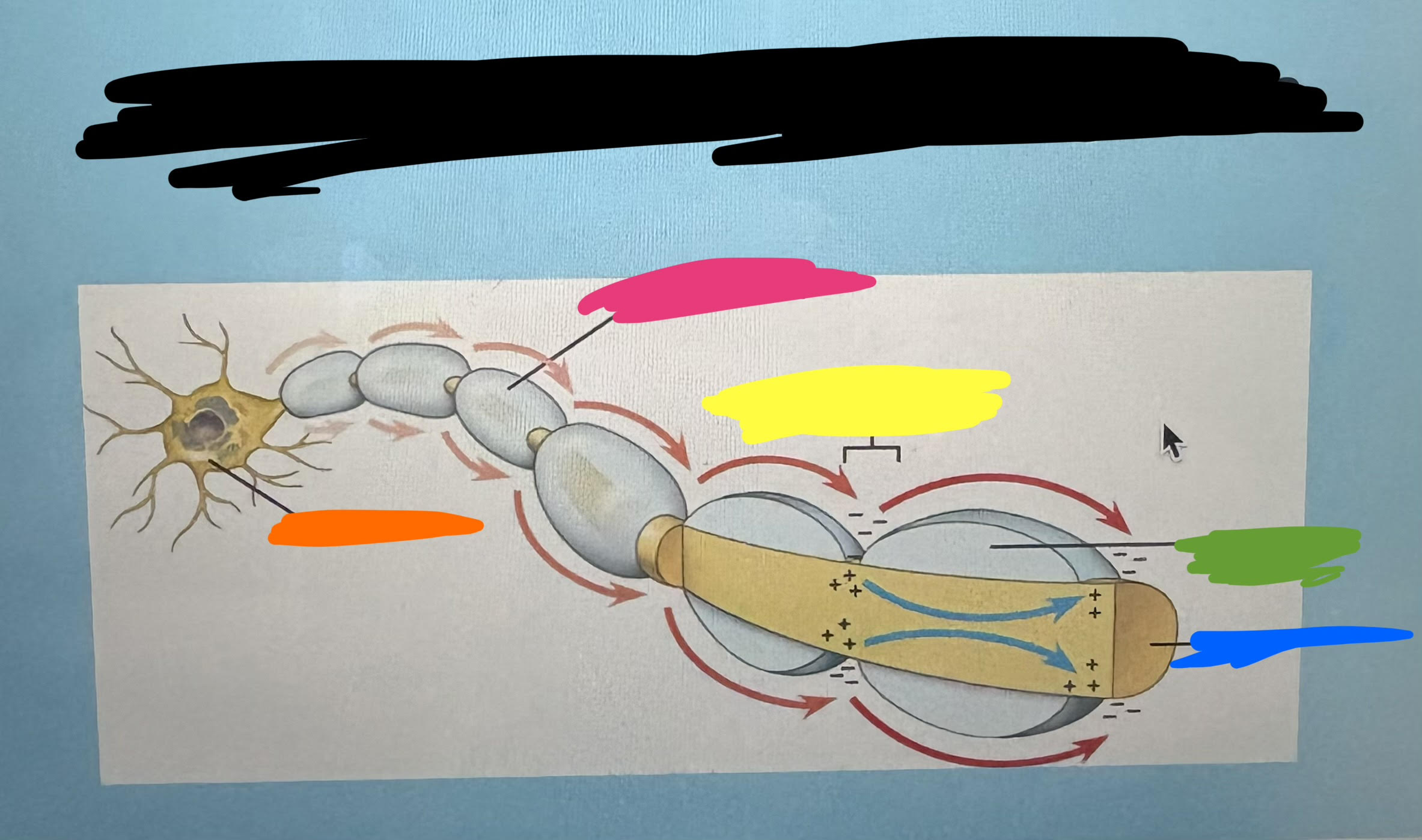
What’s blue?
Axon
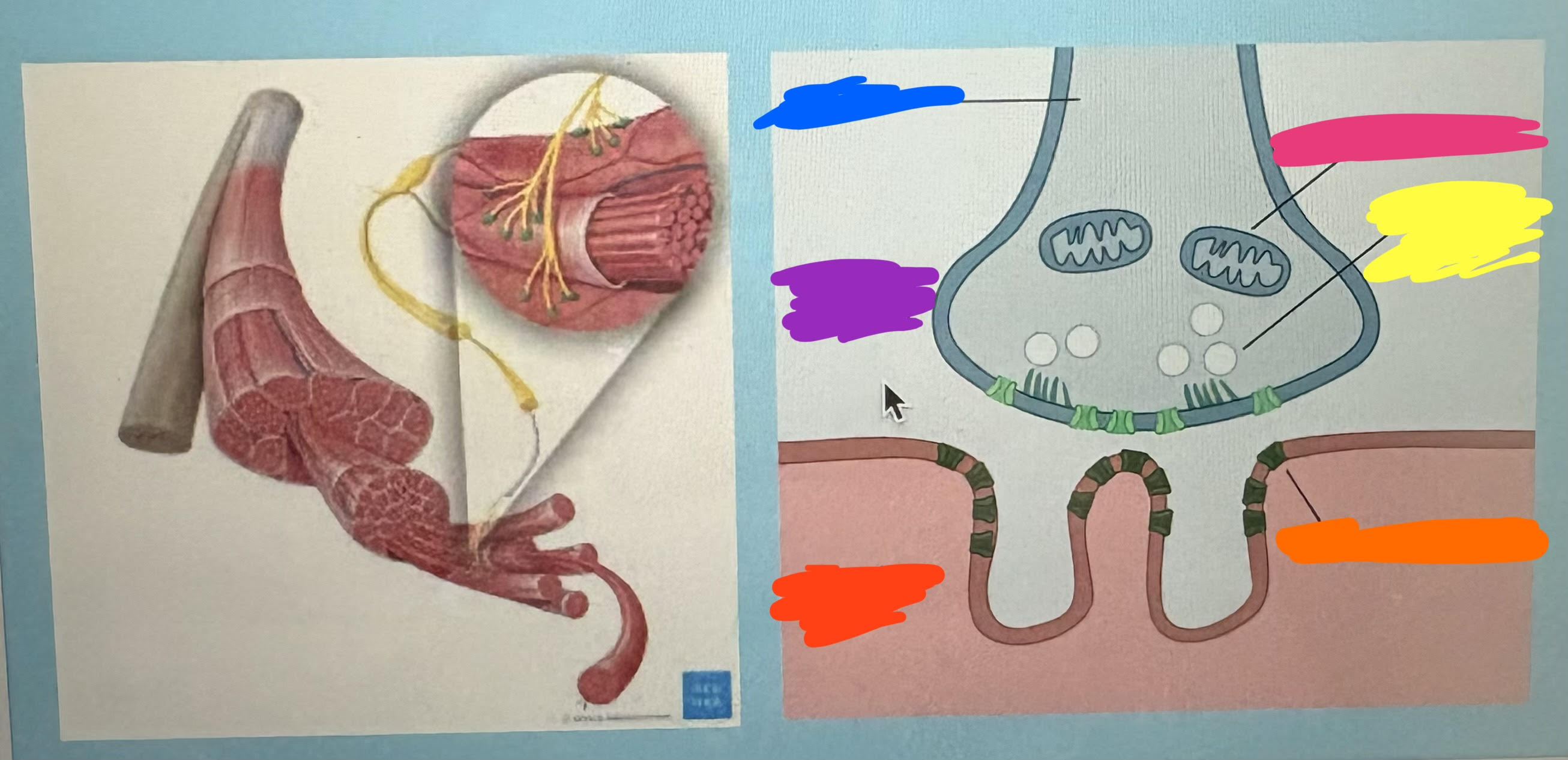
What’s blue?
Axon
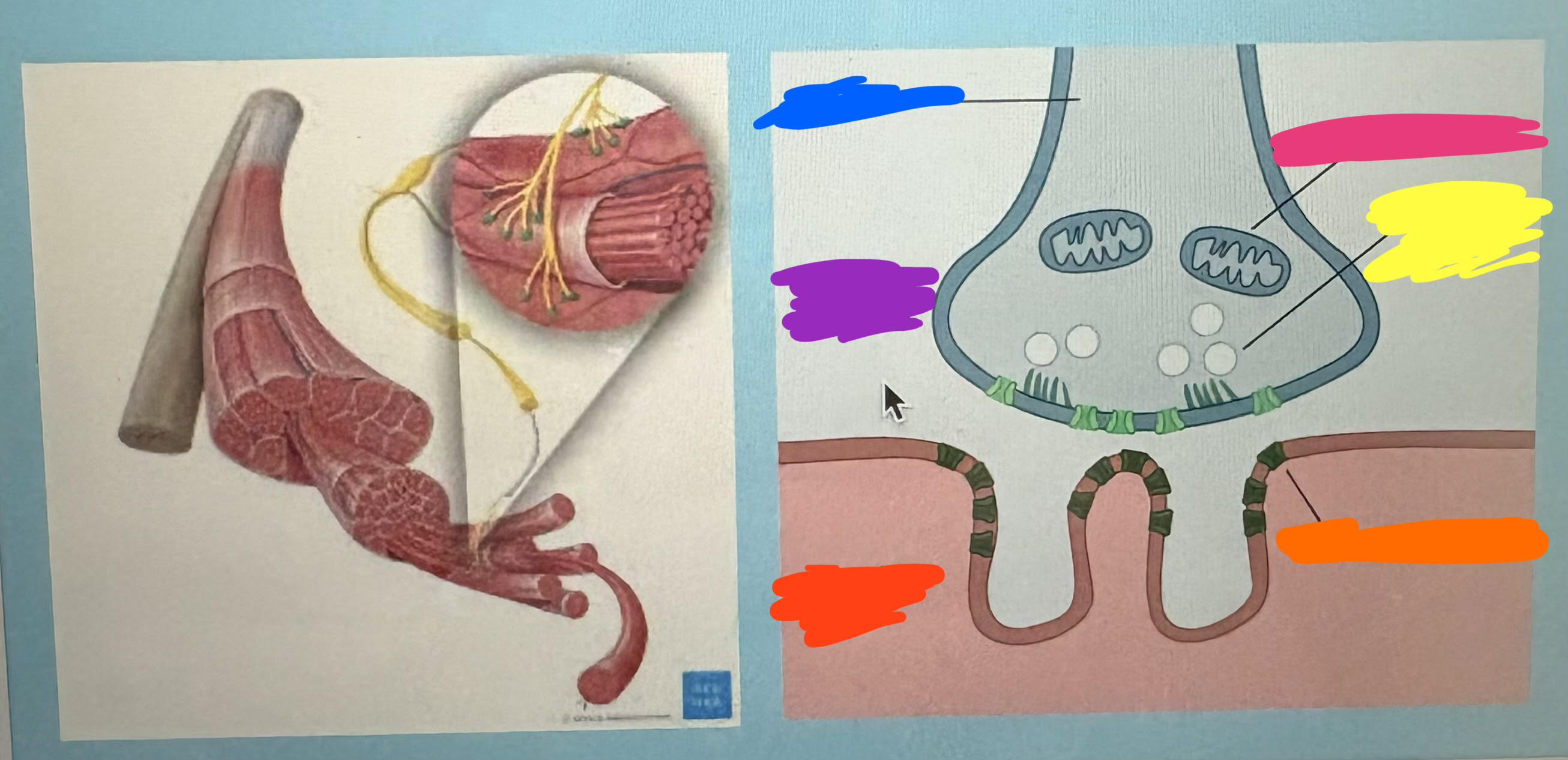
What’s this?
Neuromuscular junction
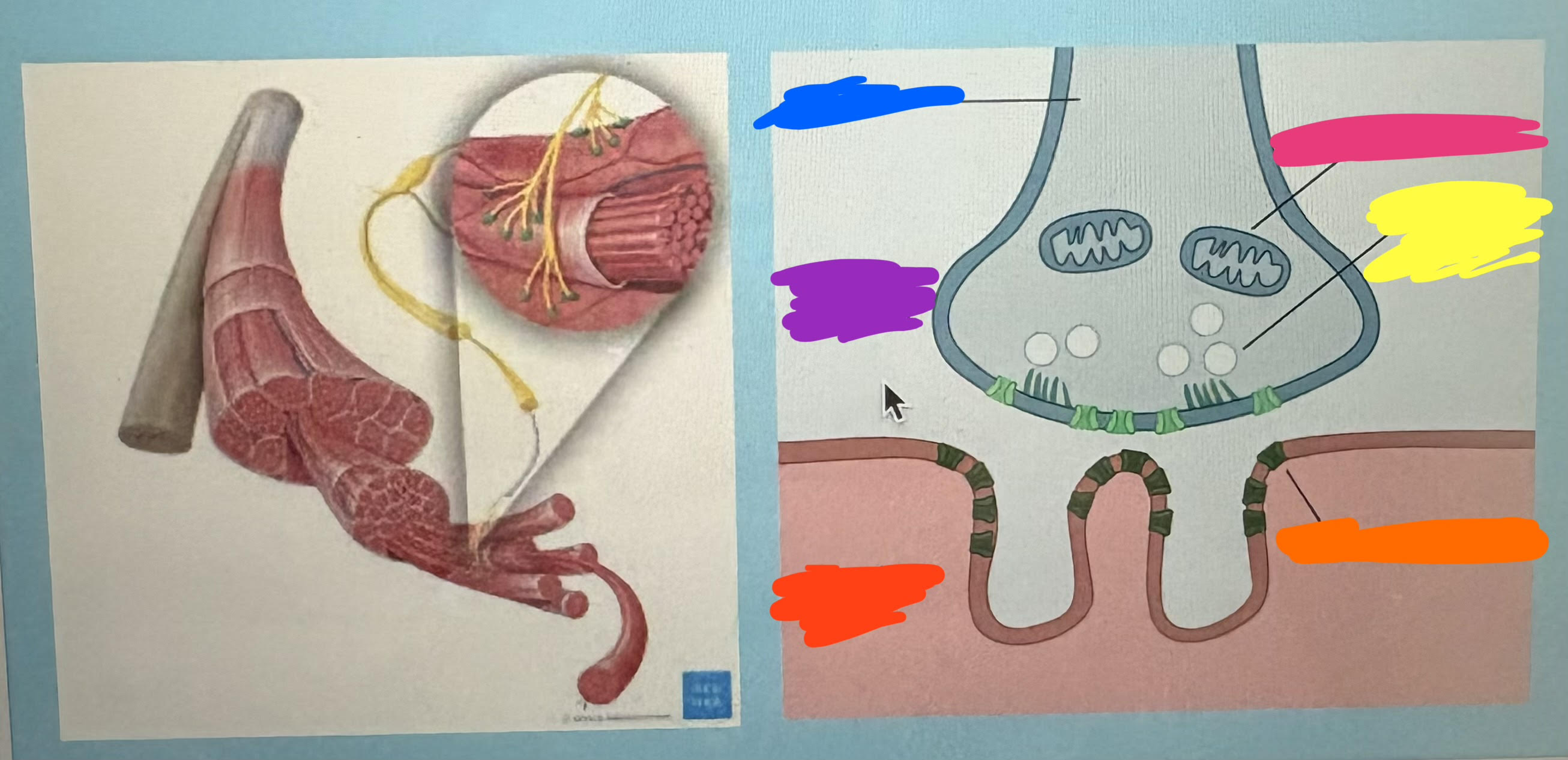
What’s purple?
Nerve terminal
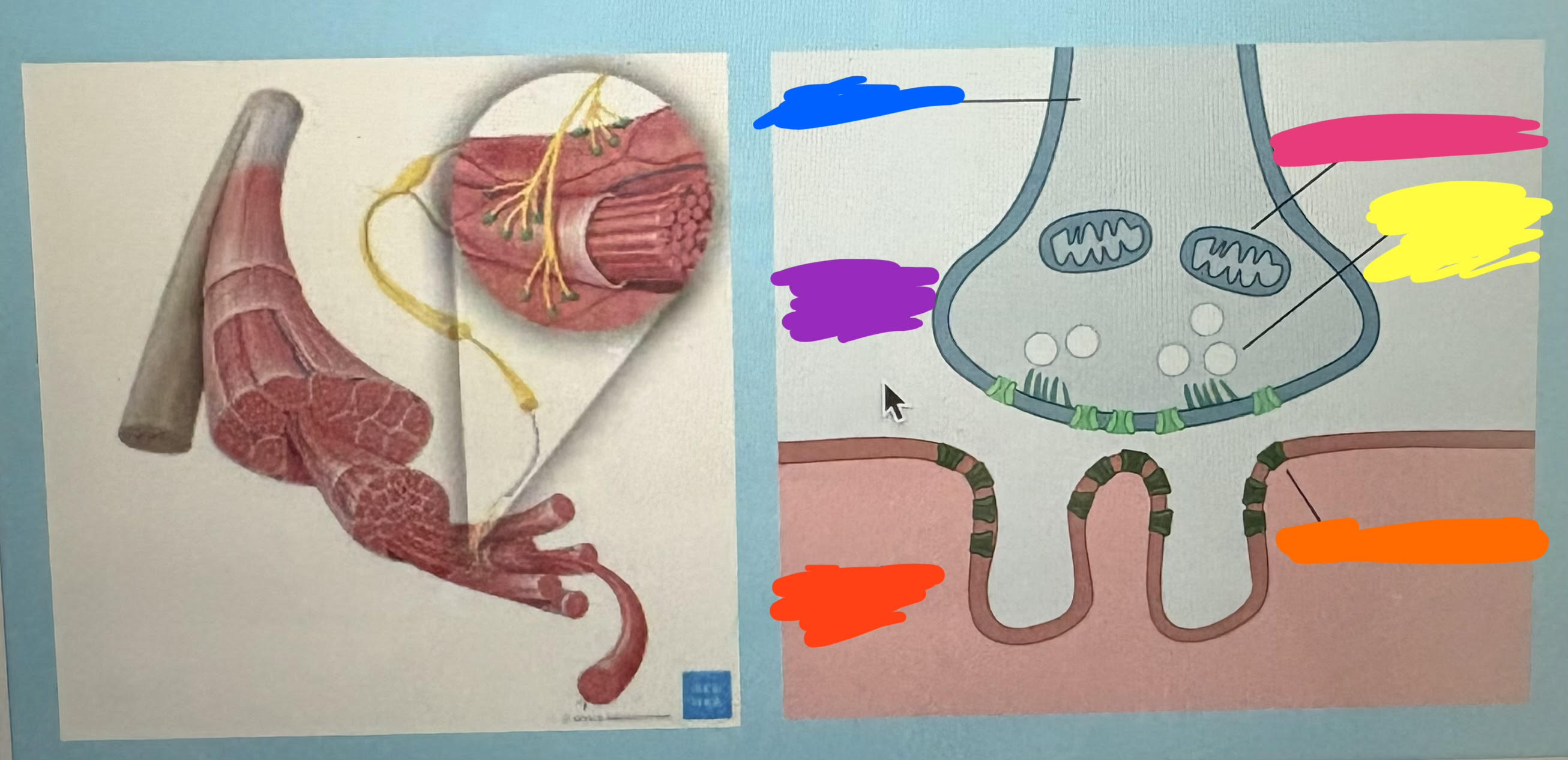
What’s red?
Muscle fiber
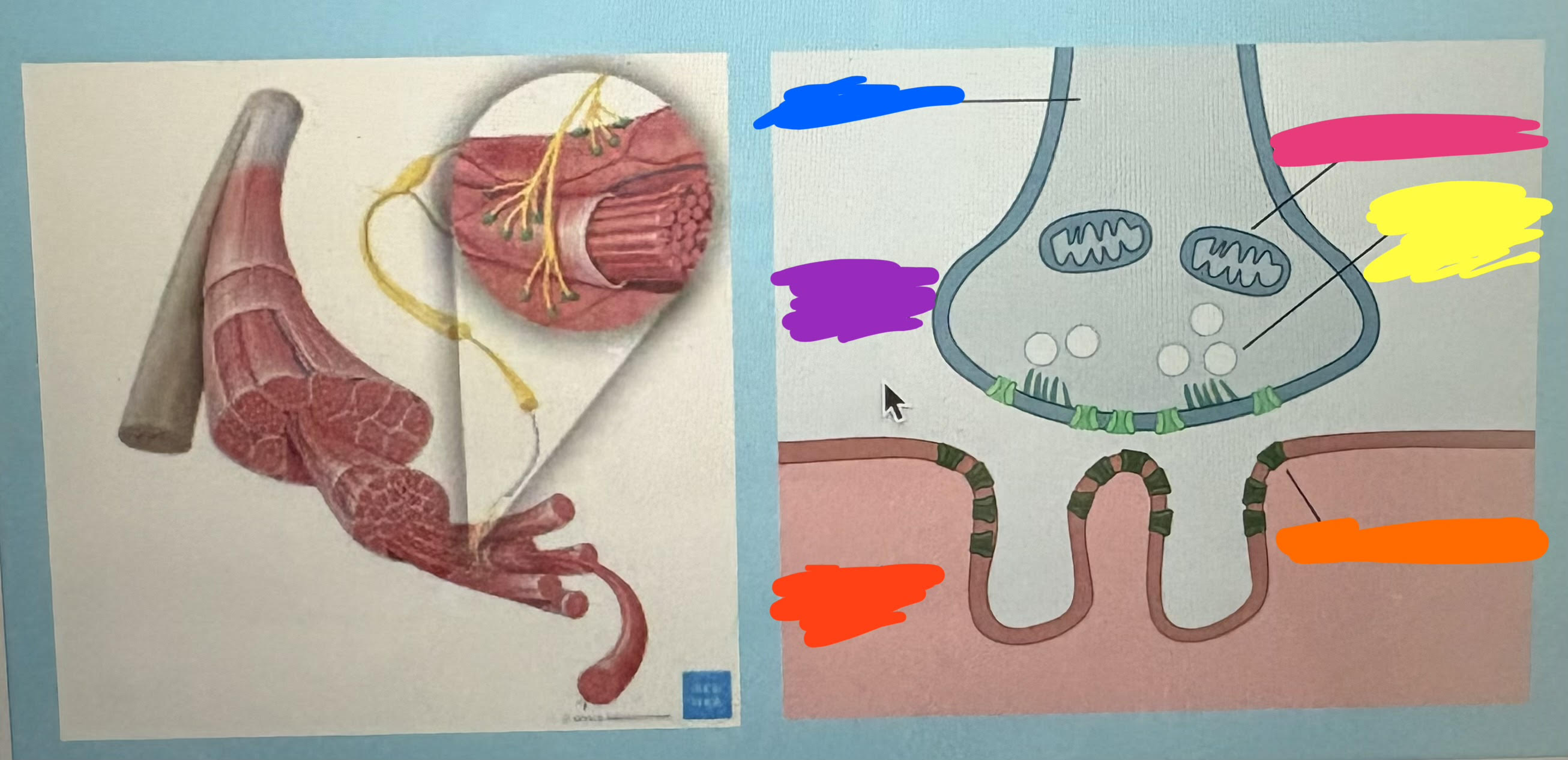
What’s pink?
Mitochondrian
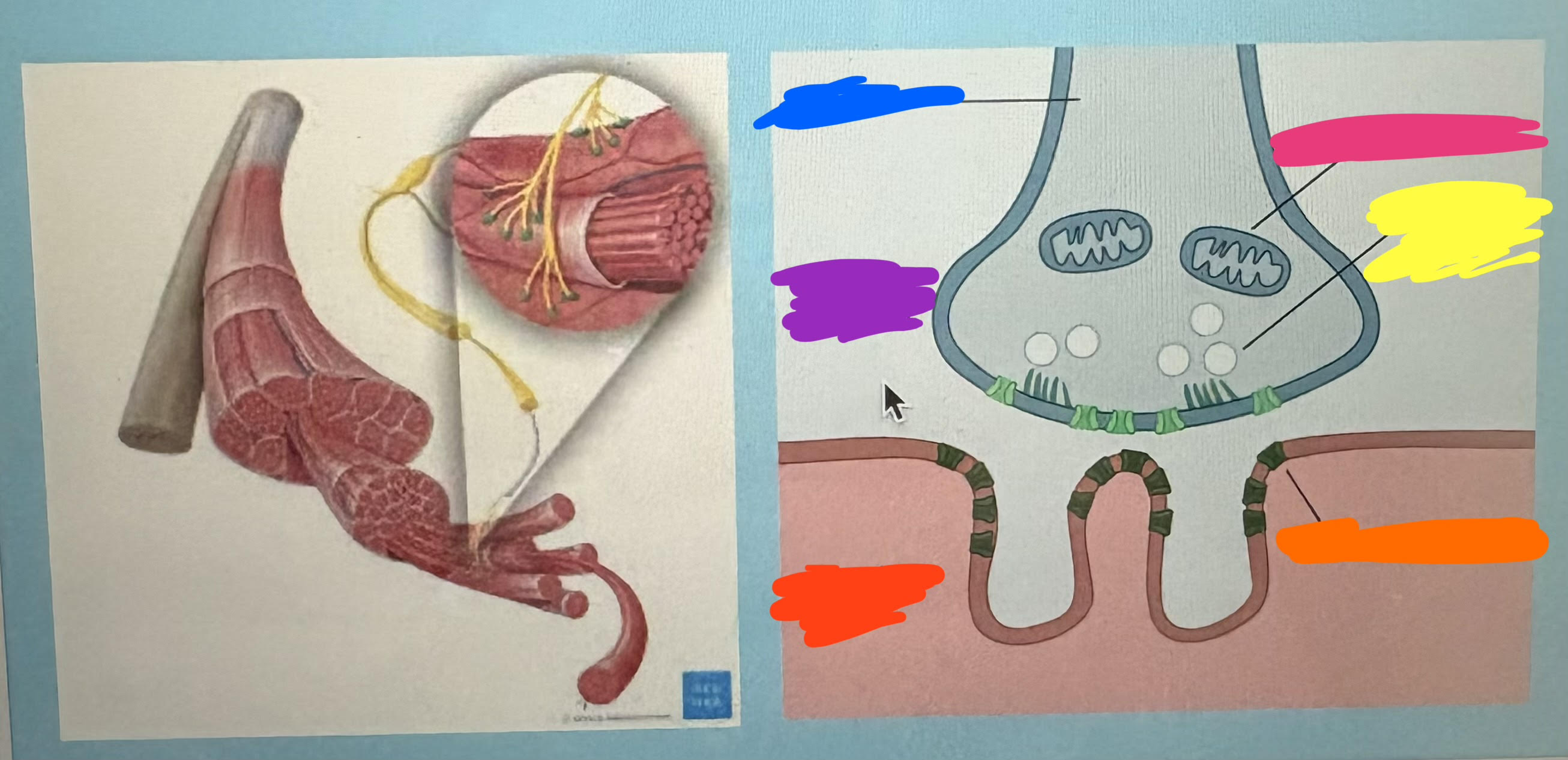
What’s yellow?
Synaptic vesicle
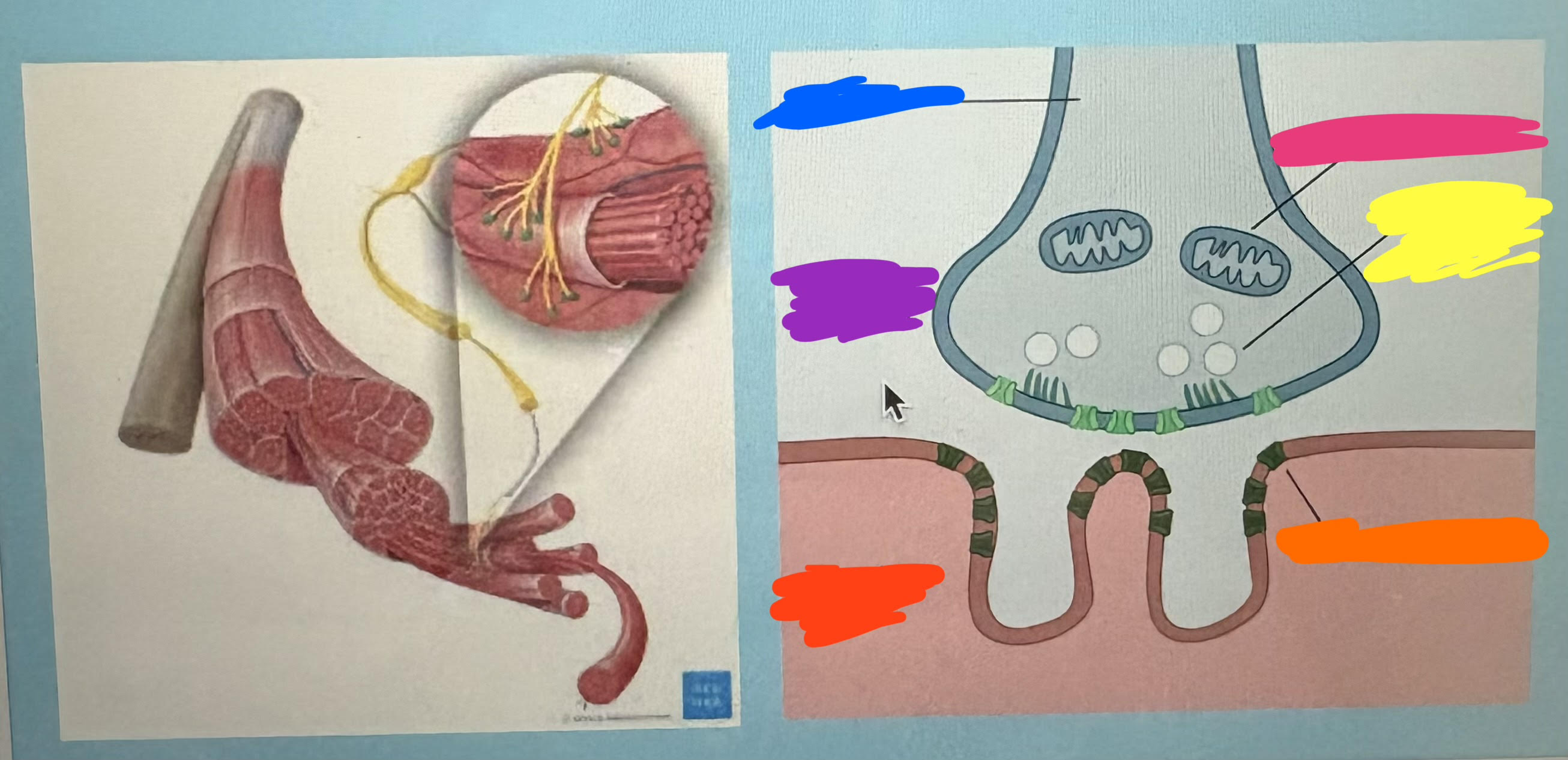
What’s orange?
ACh receptors
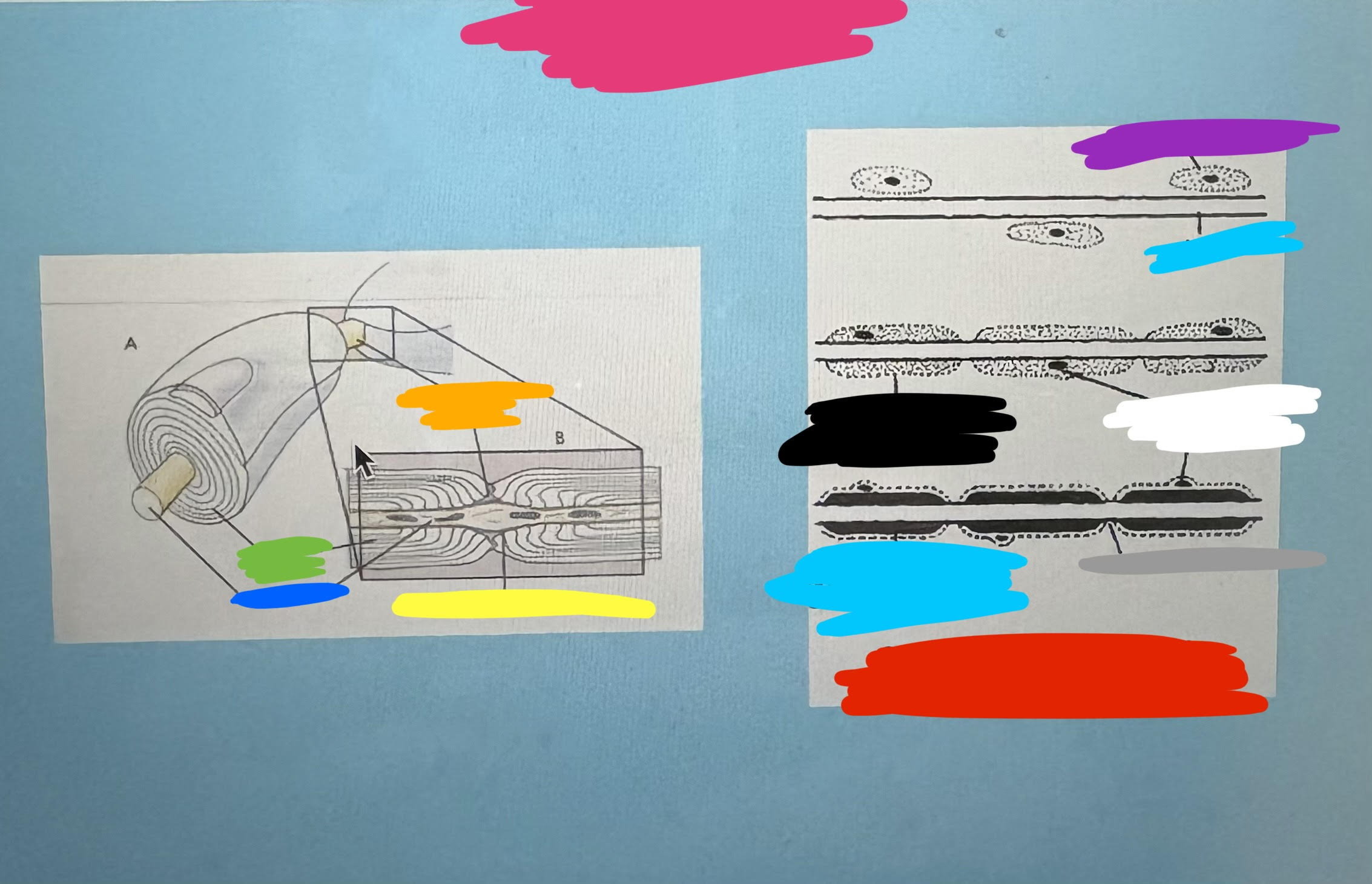
What’s pink?
Mylein
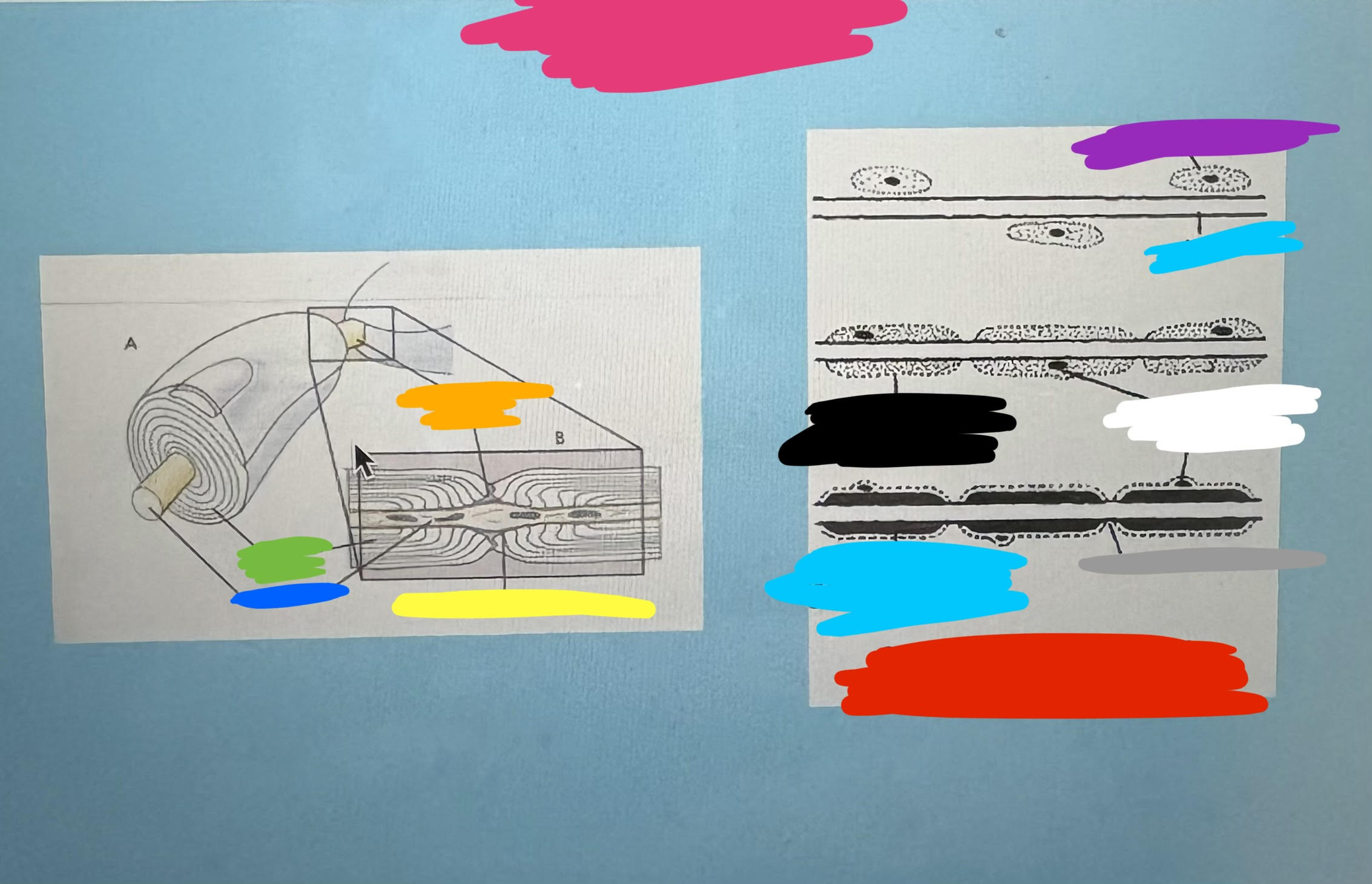
What’s orange?
Node of Ranvier
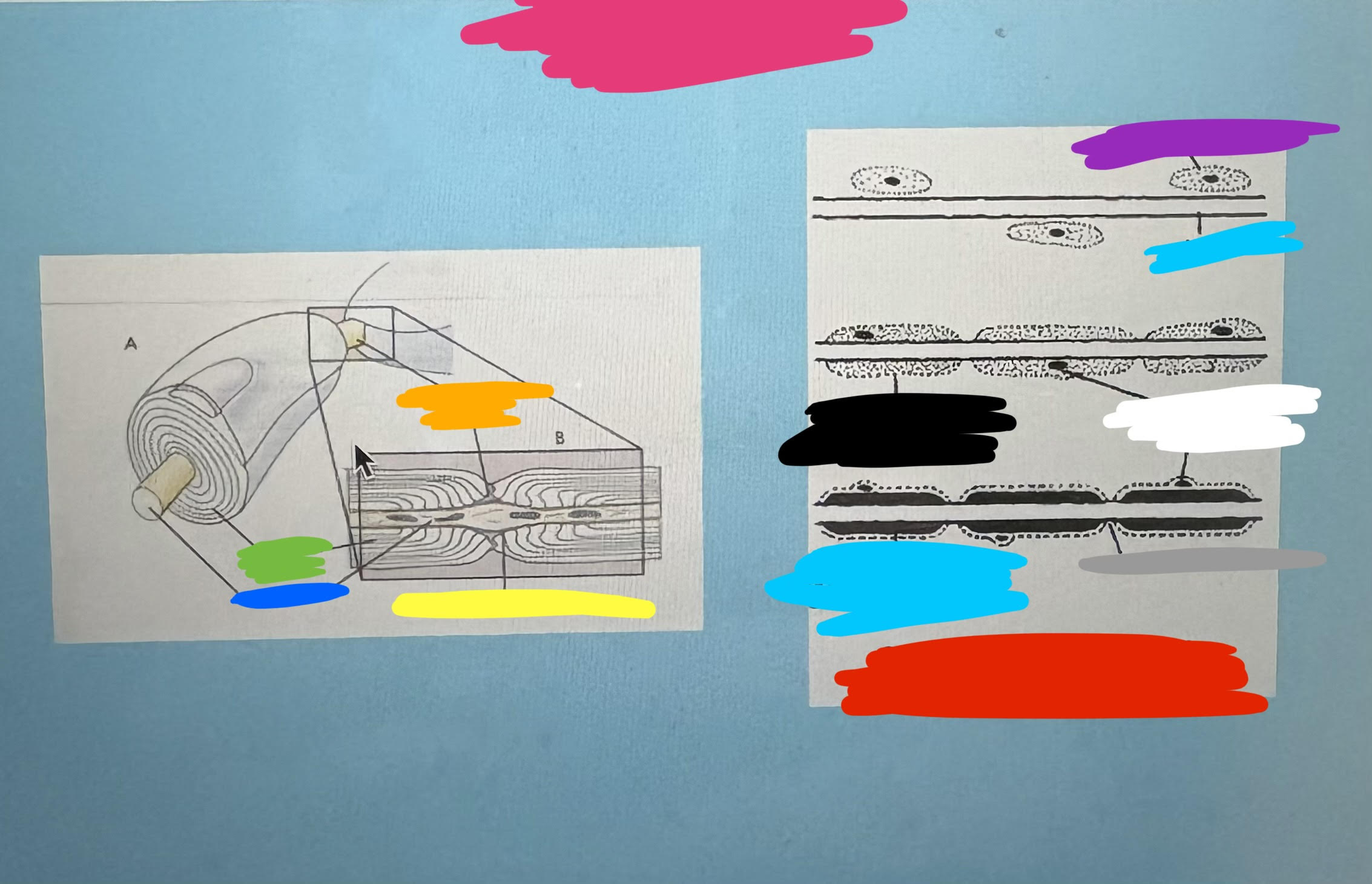
What’s green?
Mylein sheath
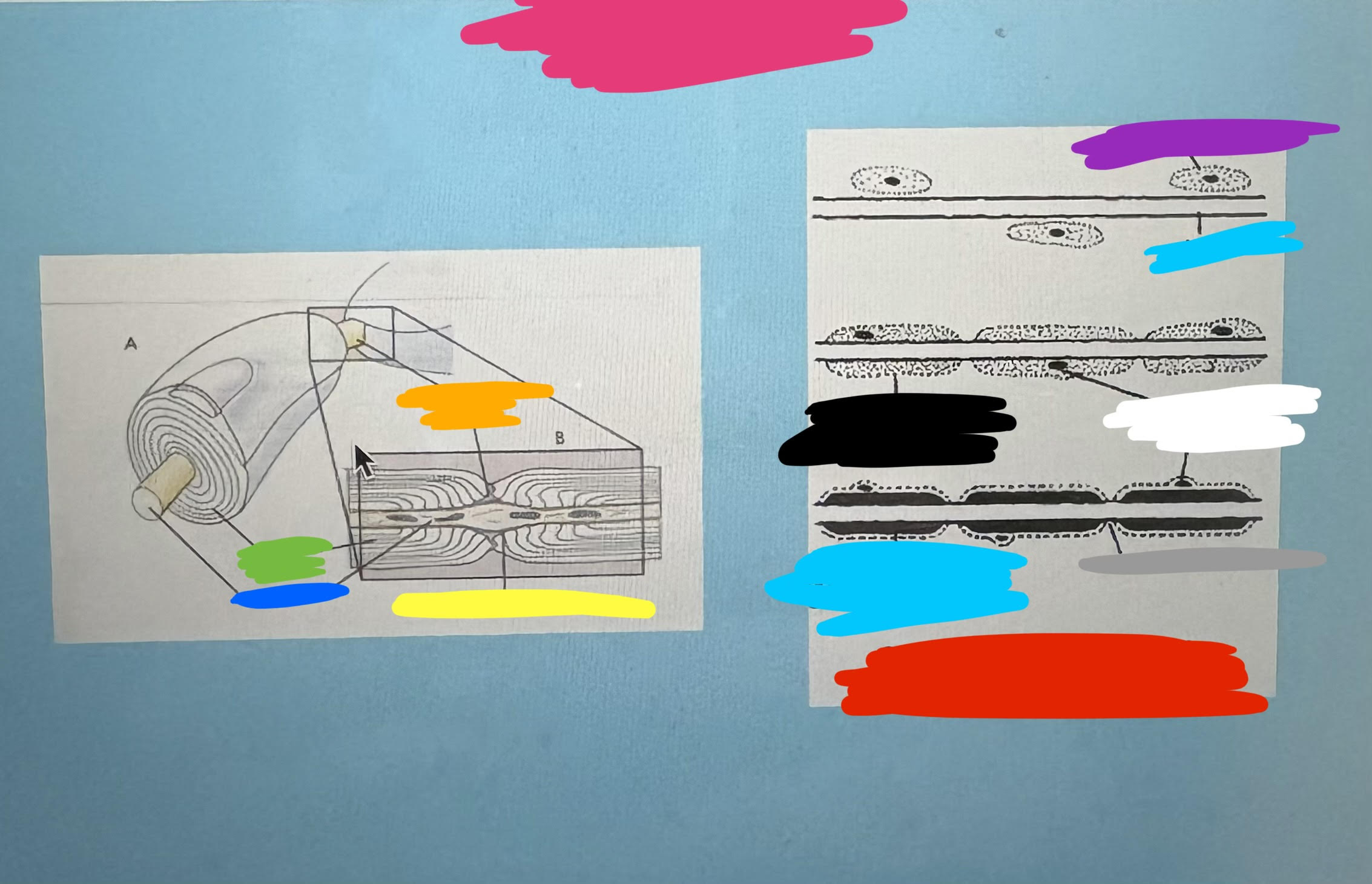
What’s orange?
Node of Ranvier
What’s yellow?
Axon plasma membrane
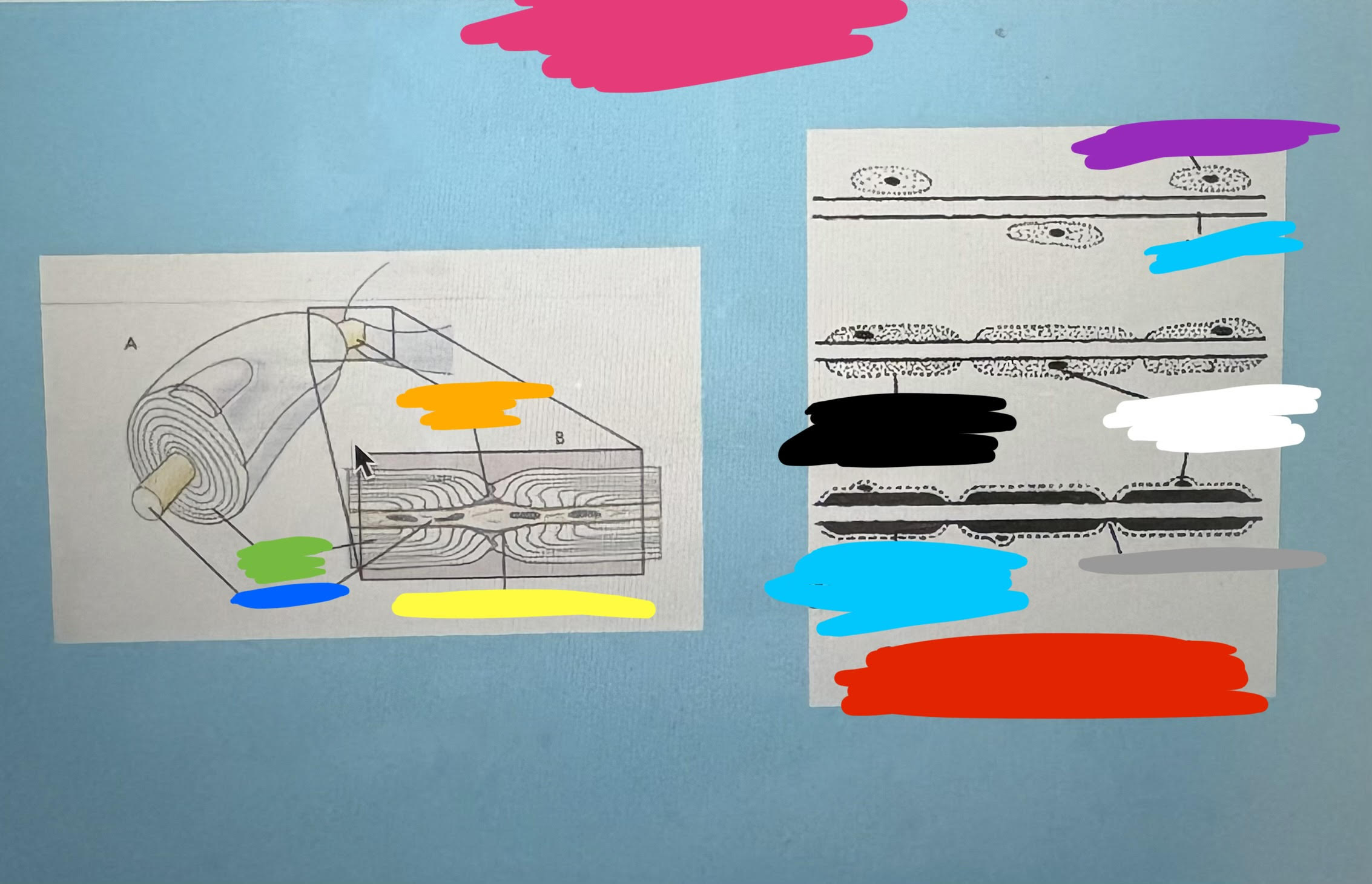
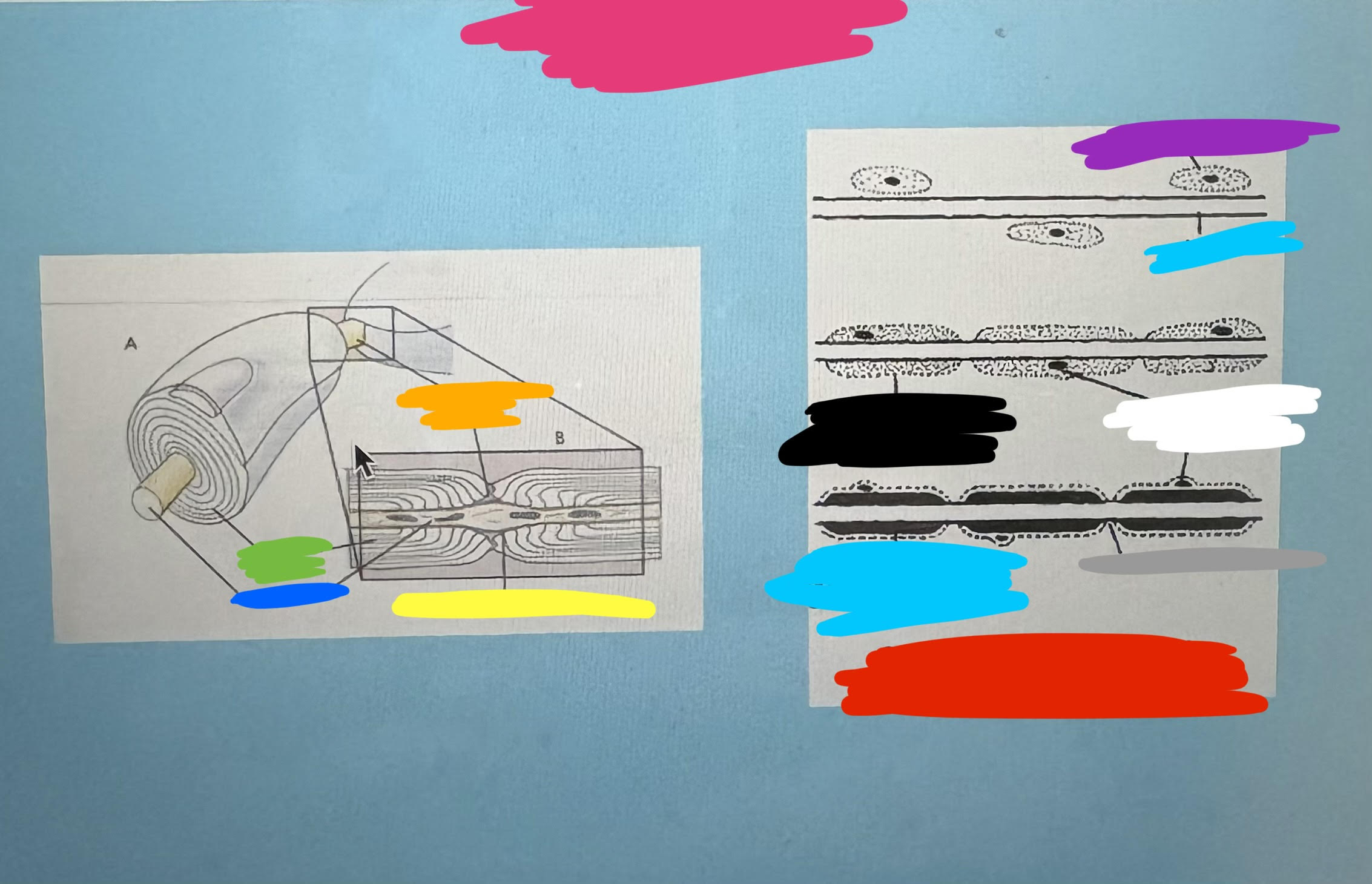
What’s purple?
Schwann cell
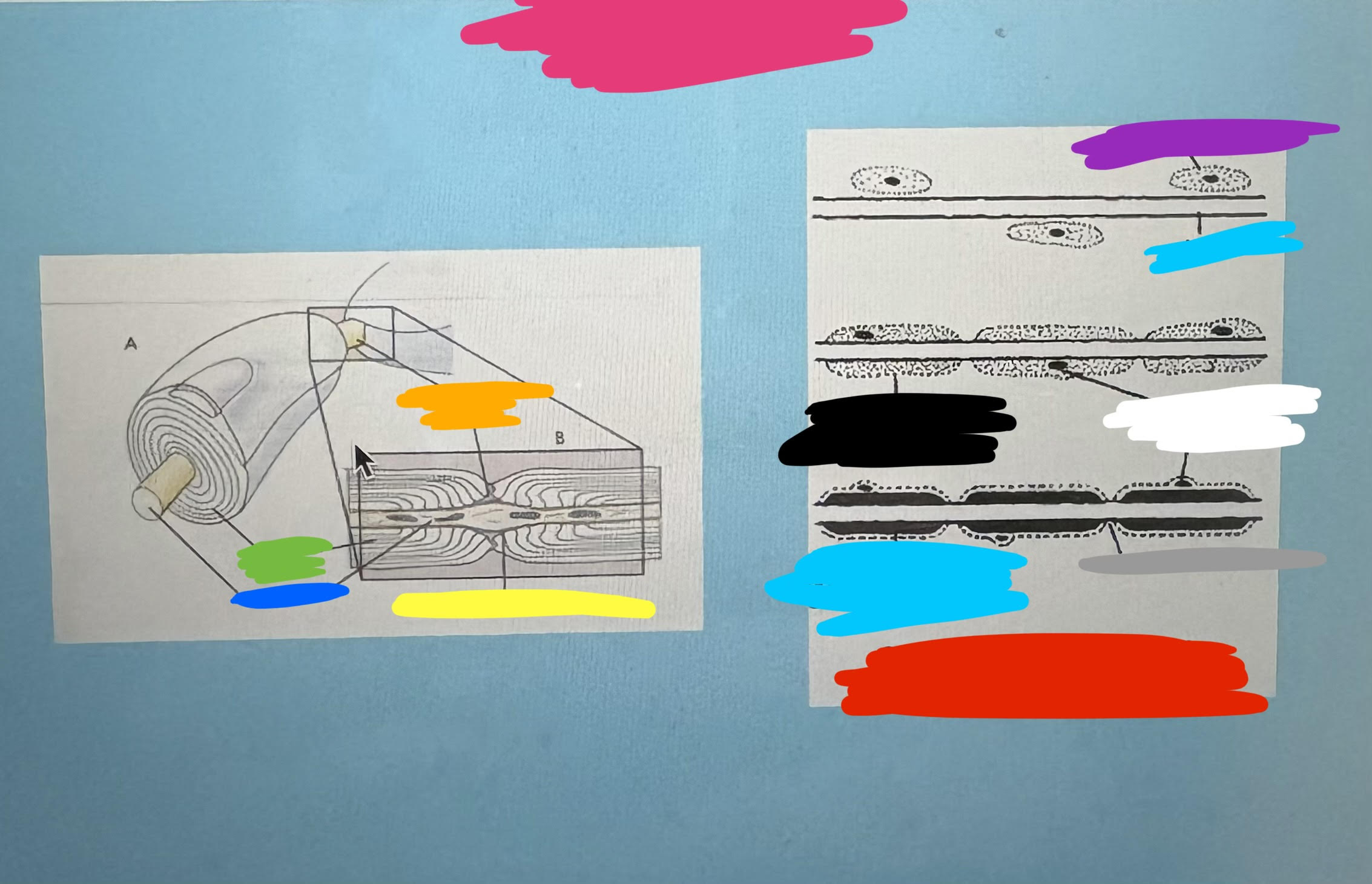
What’s upper light blue?
Axon
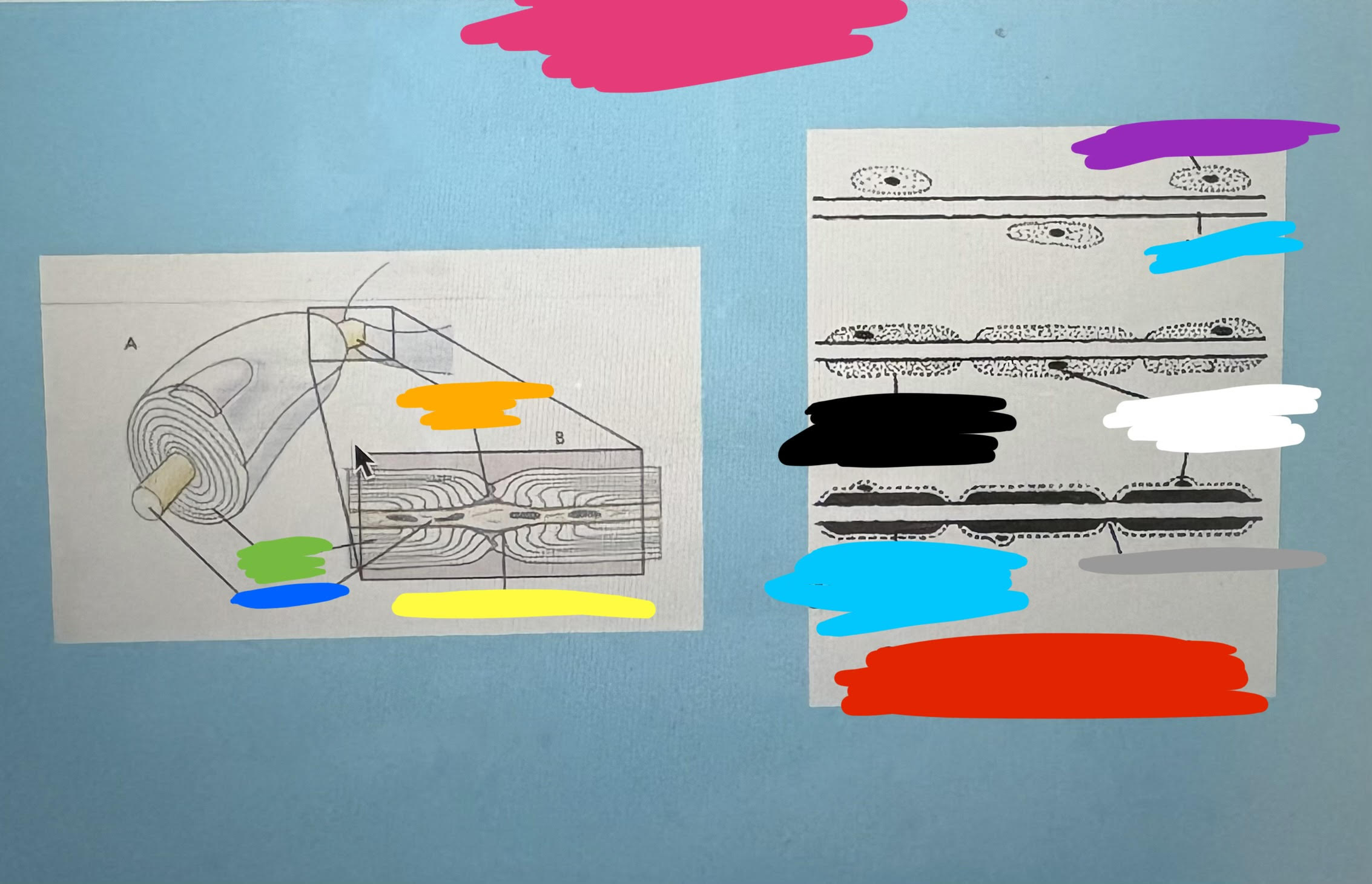
What’s black?
Schwann cell surrounding part axon
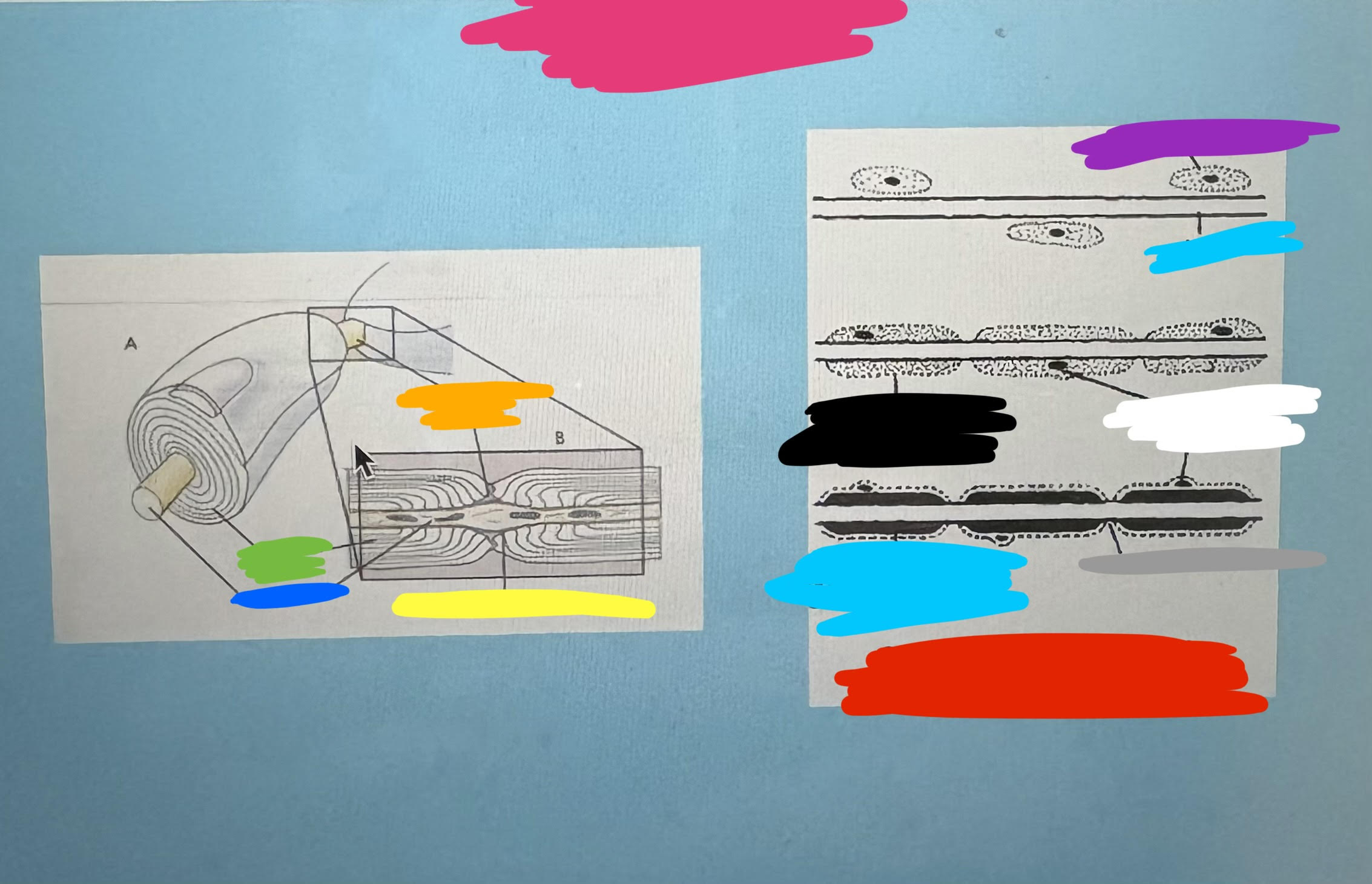
What’s white?
Schwann cell nucleus
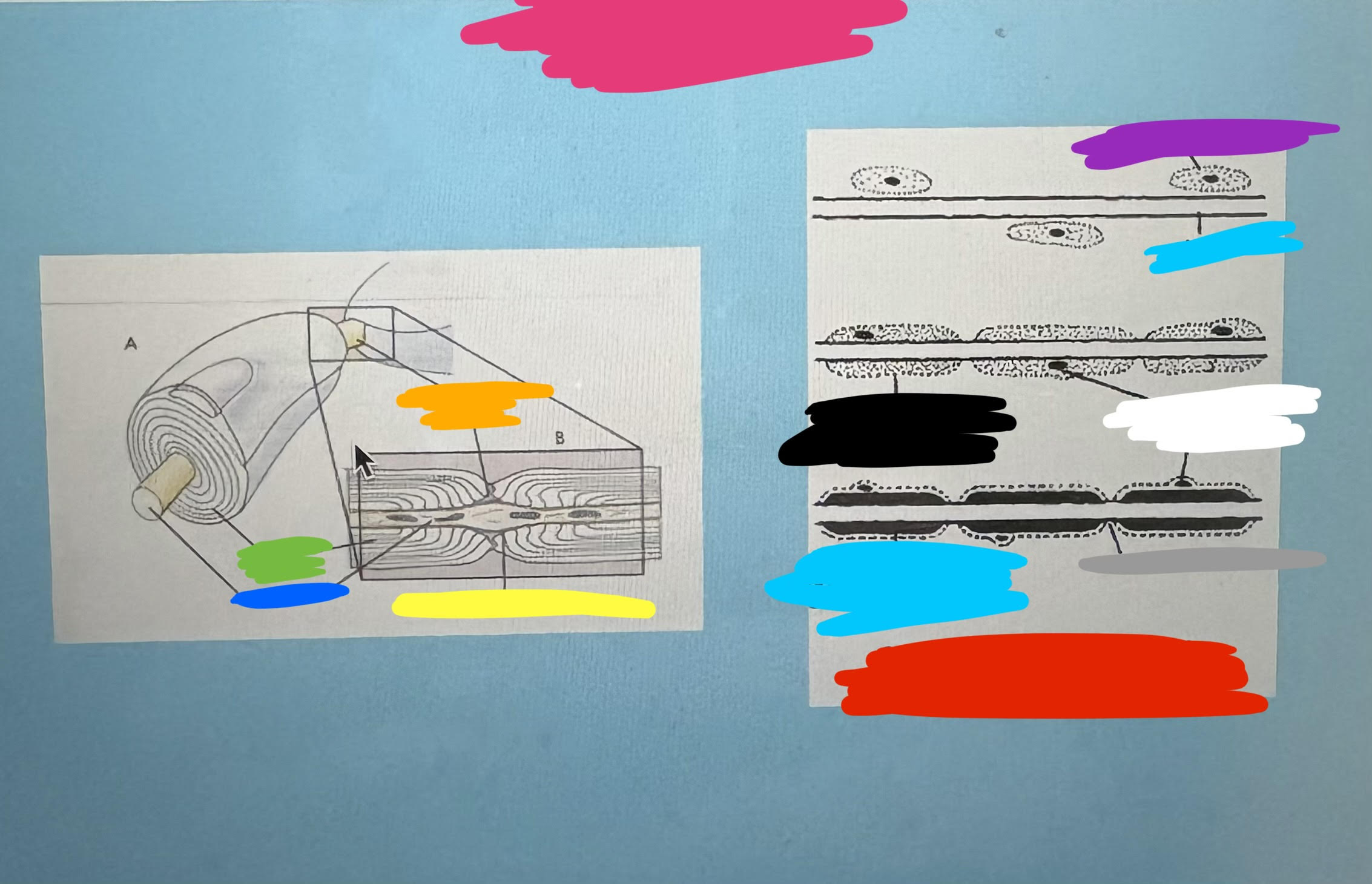
What’s lower light blue?
Segment of mylein sheath formed by one schwann cell
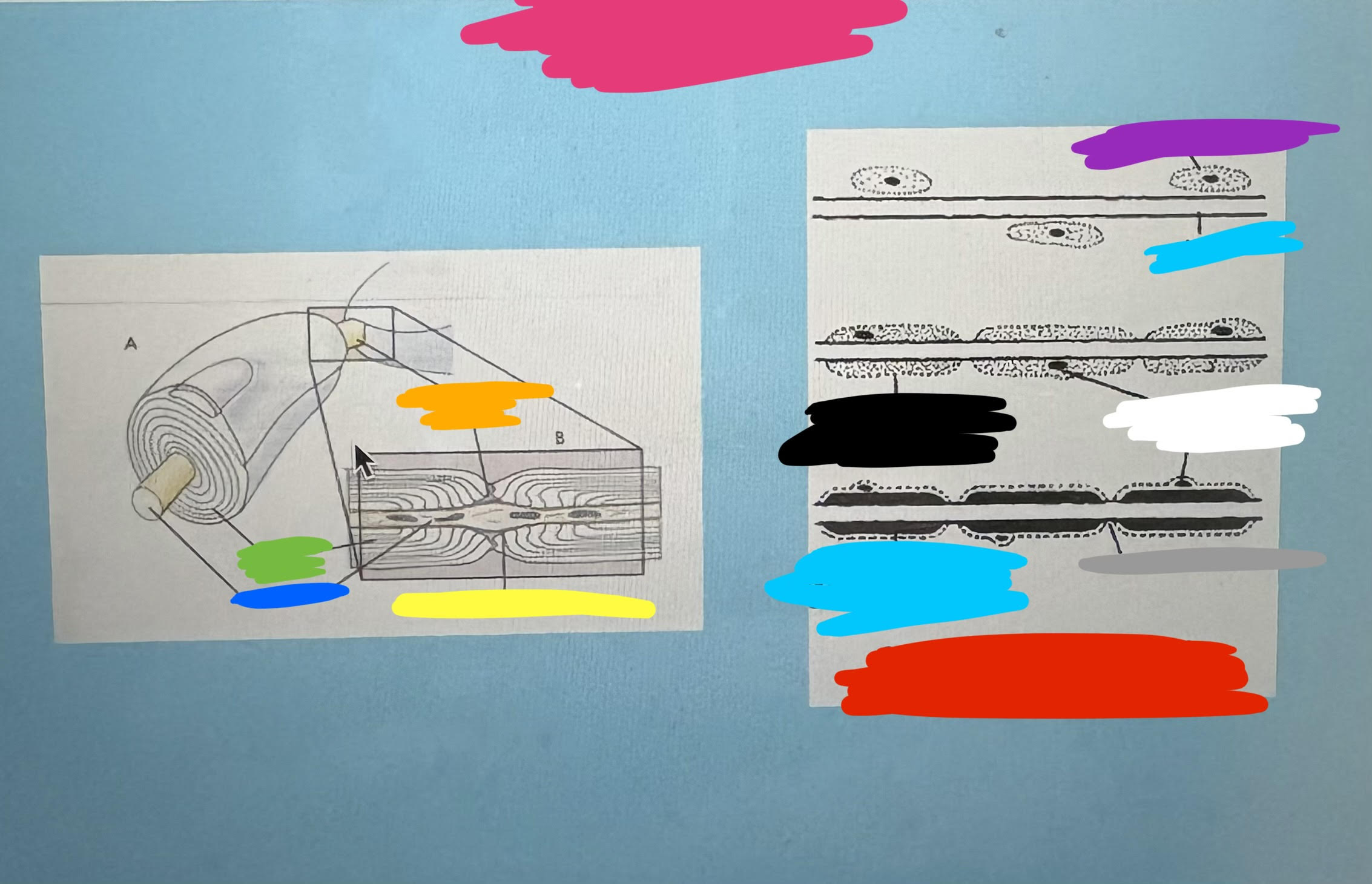
What’s grey?
Node of Ranvier
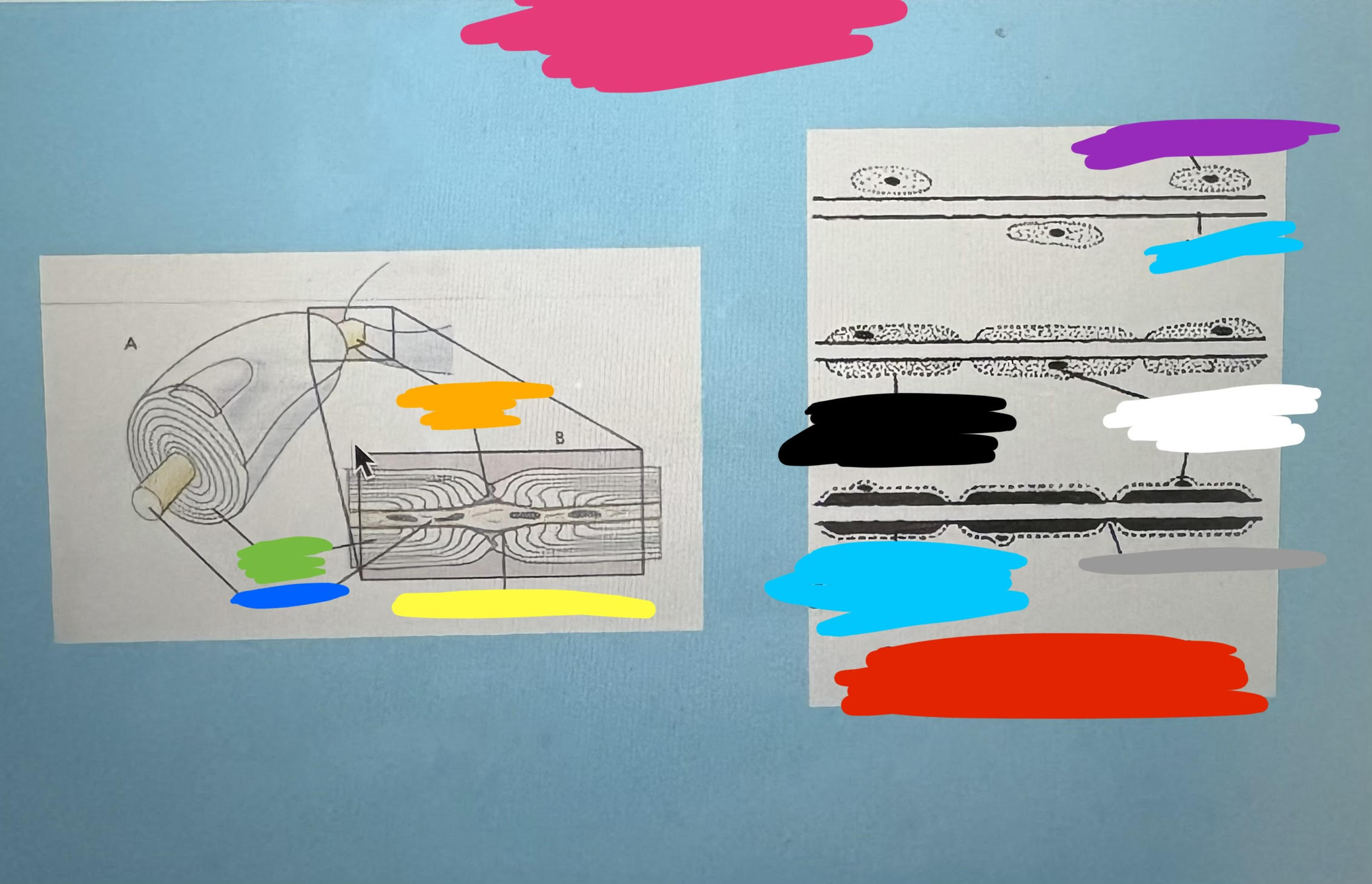
What’s red?
Stages in the formation of the myelin sheath by a Schwann cell
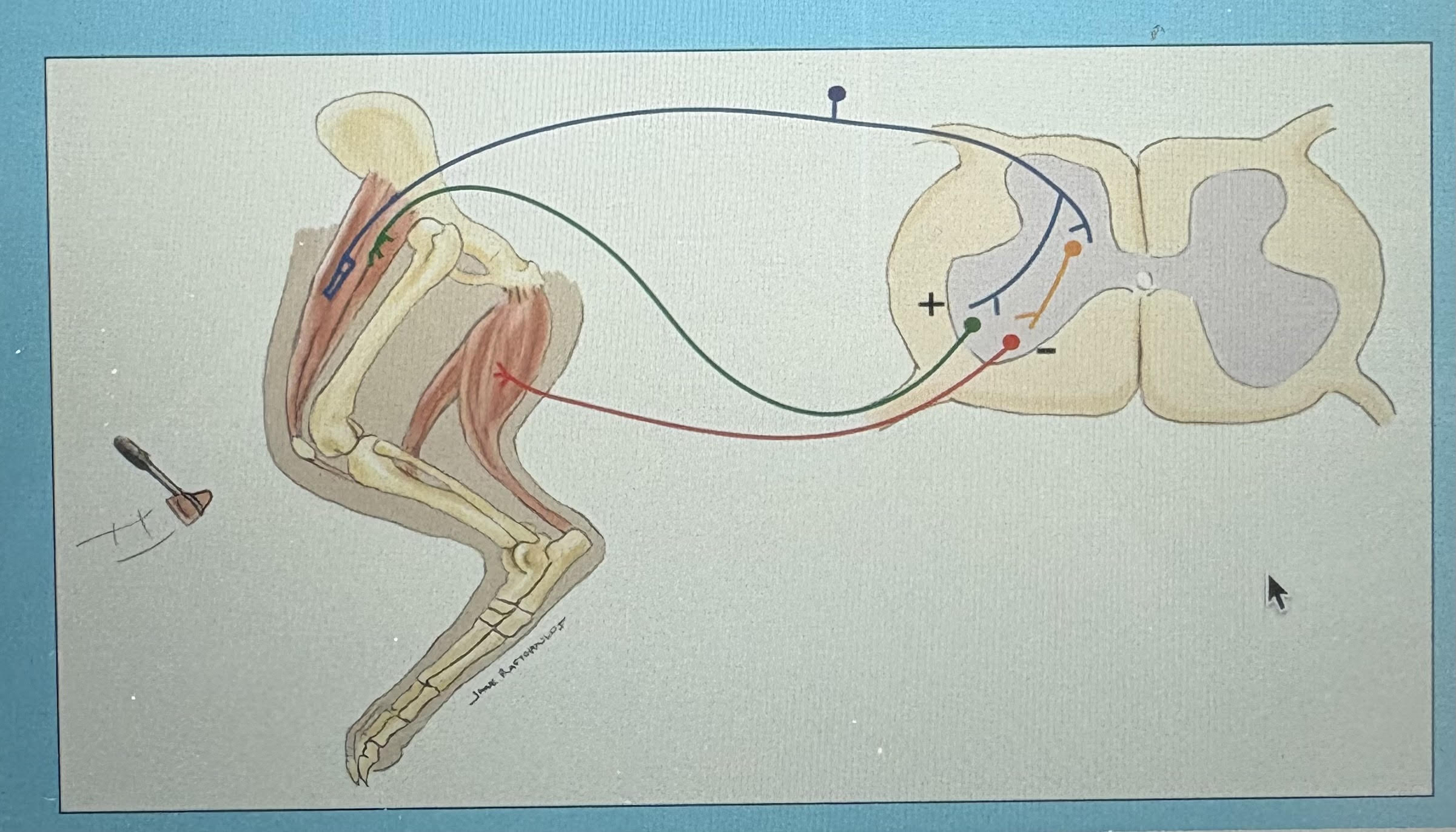
What’s this?
The Patellar Reflex
The Patellar Reflex
is a knee-jerk response elicited by tapping the patellar tendon, which stretches the quadriceps muscle and activates spinal reflex pathways.
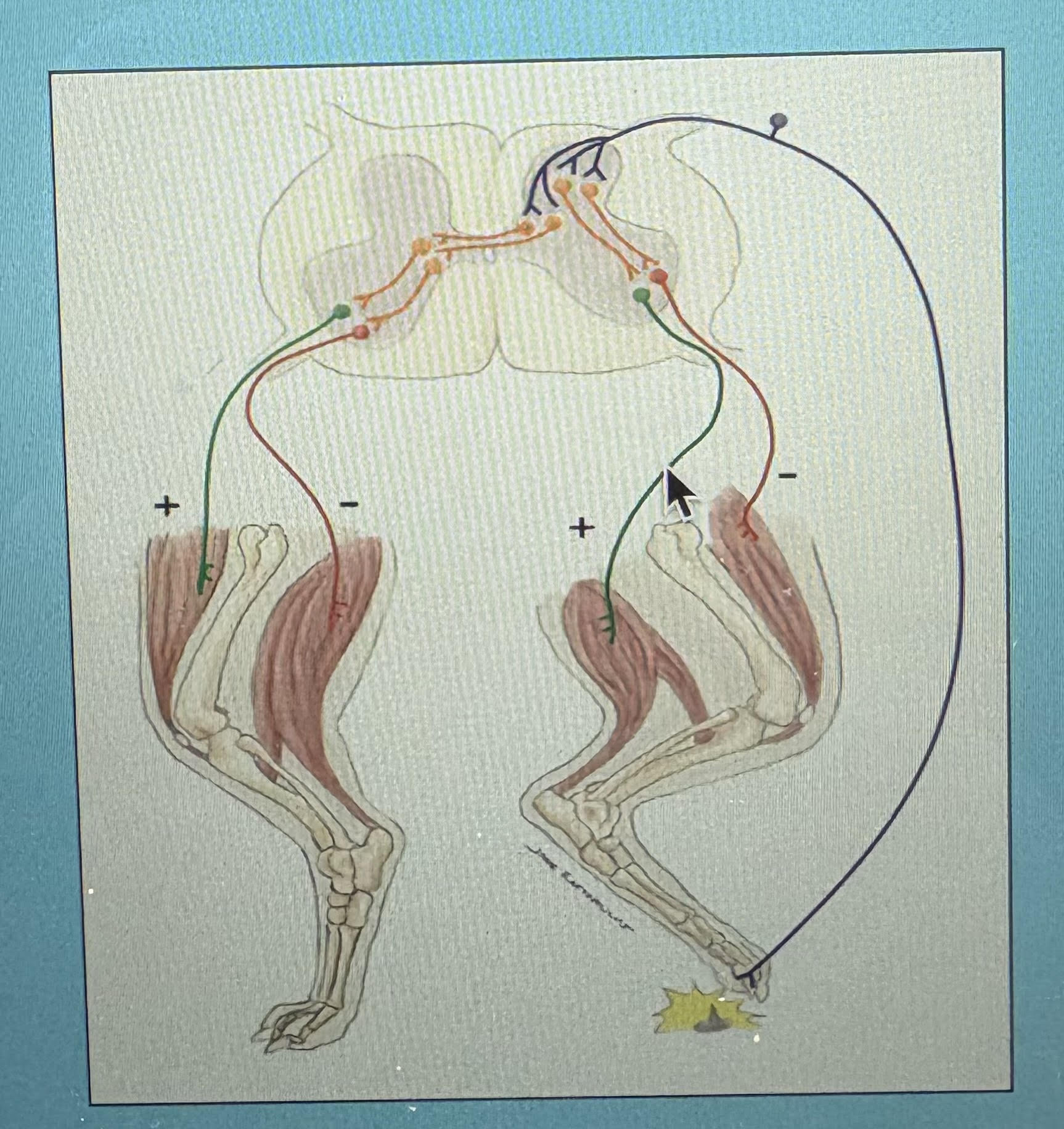
What’s this?
The Withdrawl Reflex
The Withdrawl Reflex
is a protective spinal reflex that causes an automatic withdrawal of a body part from a harmful stimulus, typically involving flexion of the affected limb.
Myasthenia Gravis Case Study
“Galvin”
5 y.o. MN Labrador Retriever
Progressive pelvic limb weakness
Regurgitation
No neurologic abnormalities found upon examination
Weakness develops rapidly with exercise
Idiopathic Trigeminal Neuritis Case Study
Otis
6 y.o. MN English Springer Spaniel
Ptyalism
Noted atrophy in muscles of mastication and “dropped” jaw upon cranial nerve exam
Ptyalism
excessive salivation, often seen in various medical conditions.
Atrophy
a decrease in size or wasting away of body tissue or organ, often due to disuse or disease.
Polyradiculoneuritis (Coonhound Paralysis) Case Study
Rusty
7 y.o. MN Redbone Coonhound
Bitten by raccoon on pelvic limb during a hunt
Tetraplegia
Myasthenia Gravis
a chronic autoimmune neuromuscular disorder that causes weakness in the skeletal muscles, often leading to respiratory difficulties and fluctuating muscle strength.
Idiopathic Trigeminal Neuritis
a neurological condition characterized by inflammation of the trigeminal nerve, leading to sudden onset of facial muscle weakness and potential pain.
Polyradiculoneuritis (Coonhound Paralysis)
a condition affecting the nerves that leads to progressive weakness and paralysis, particularly in hounds, typically triggered by environmental factors such as raccoon bites.
Add images of case studies as flashcards of what study they are
yes
Case based problem based learning
Actual cases from the CUHA
Case narratives problem based learning
Written to elicit questions and promote discussion
The “Problem” drives the discussion in problem based learning
HBC dog with trouble breathing; racehorse with poor performance and harsh breathing sounds
Learning in the context of a problem that needs solving does what?
stores knowledge in memory patterns that facilitate later recall for solving problems
A benefit of PBL (Problem-Based Learning) is that learning in context of a clinical case adds _____ that promotes ____—____ knowledge retention.
relevance, long-term
A benefit of PBL is the ability to bring in previous experiences promotes _______ _______.
knowledge retention
A benefit of PBL is asking questions about the case, forming learning issues, and resolving these learning issues promotes ____ _____ _____ ______ and problem ______ ______.
long term knowledge retention, solving skills
A benefit of PBL is working in ______ promotes learning and develops _______ and professional skills.
groups, communication
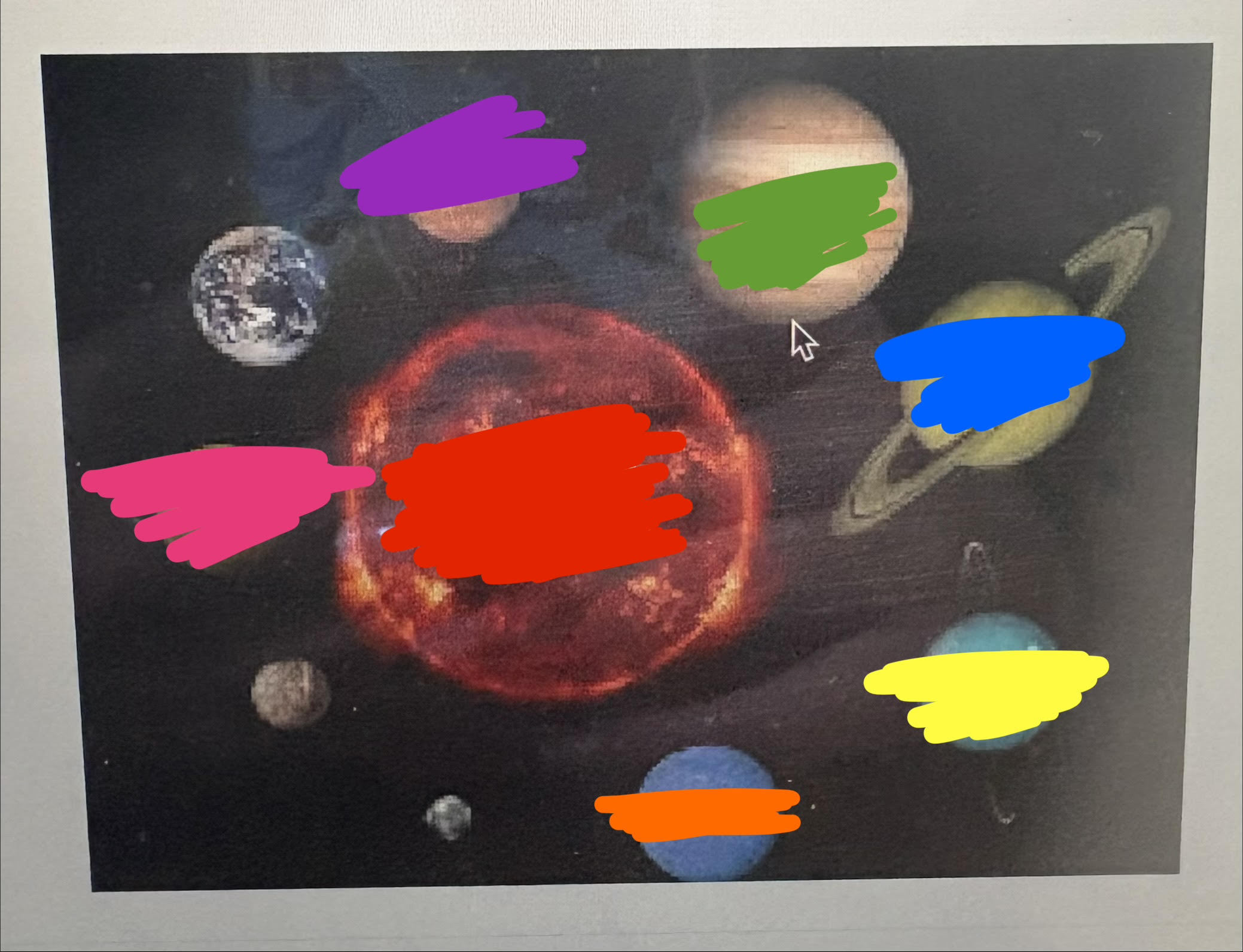
What’s pink?
Comparative lab
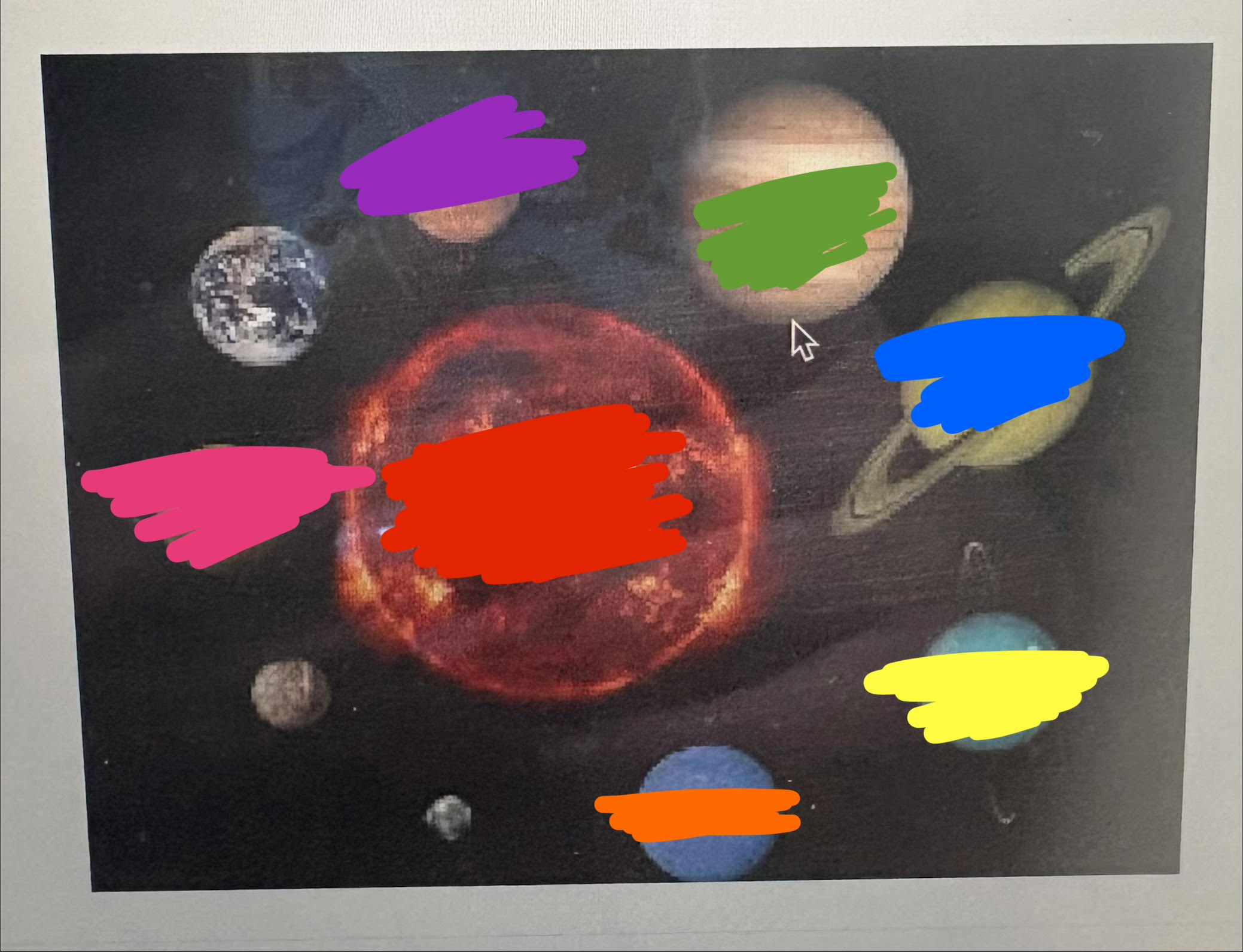
What’s red?
Tutorial sessions
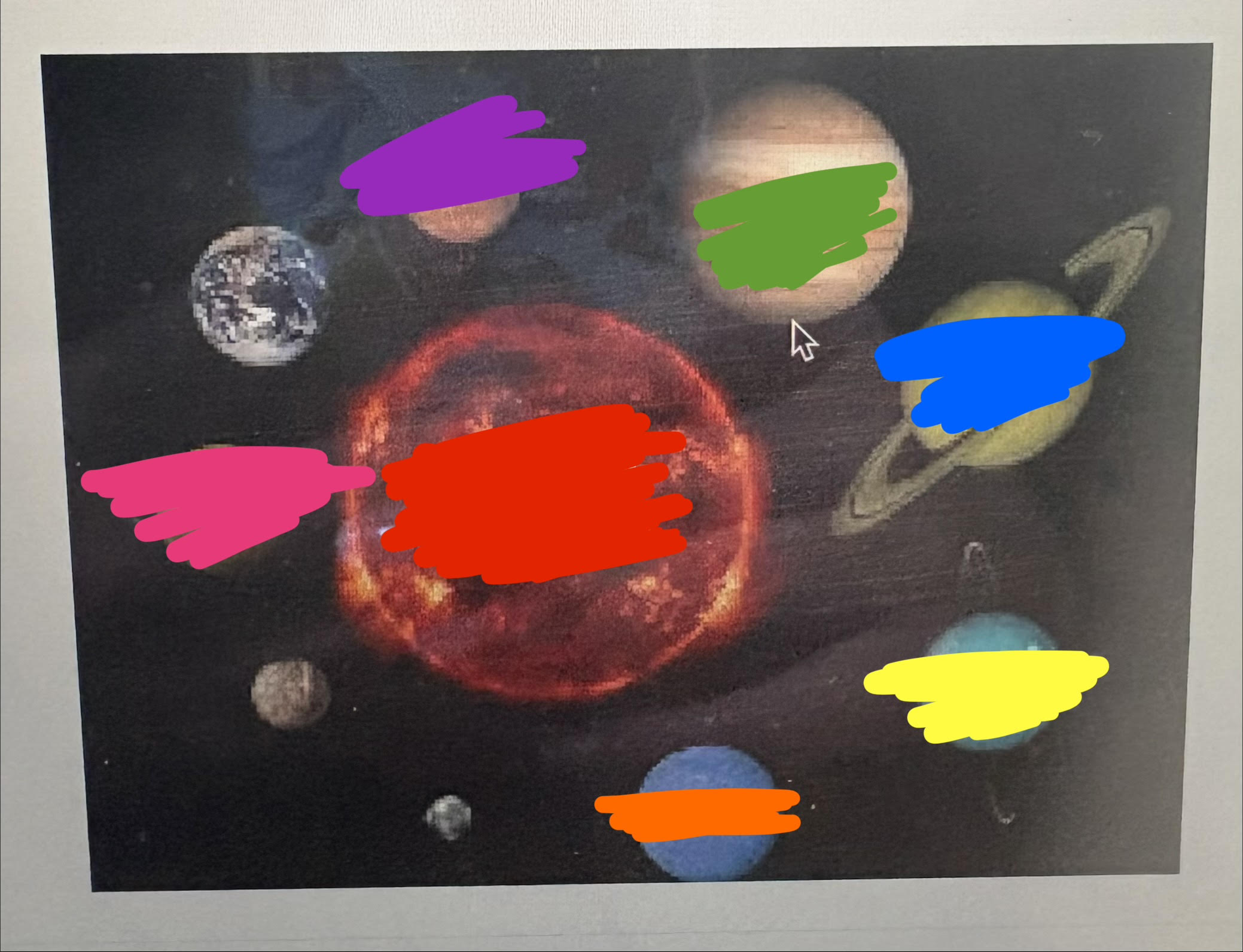
What’s purple?
Block 7A
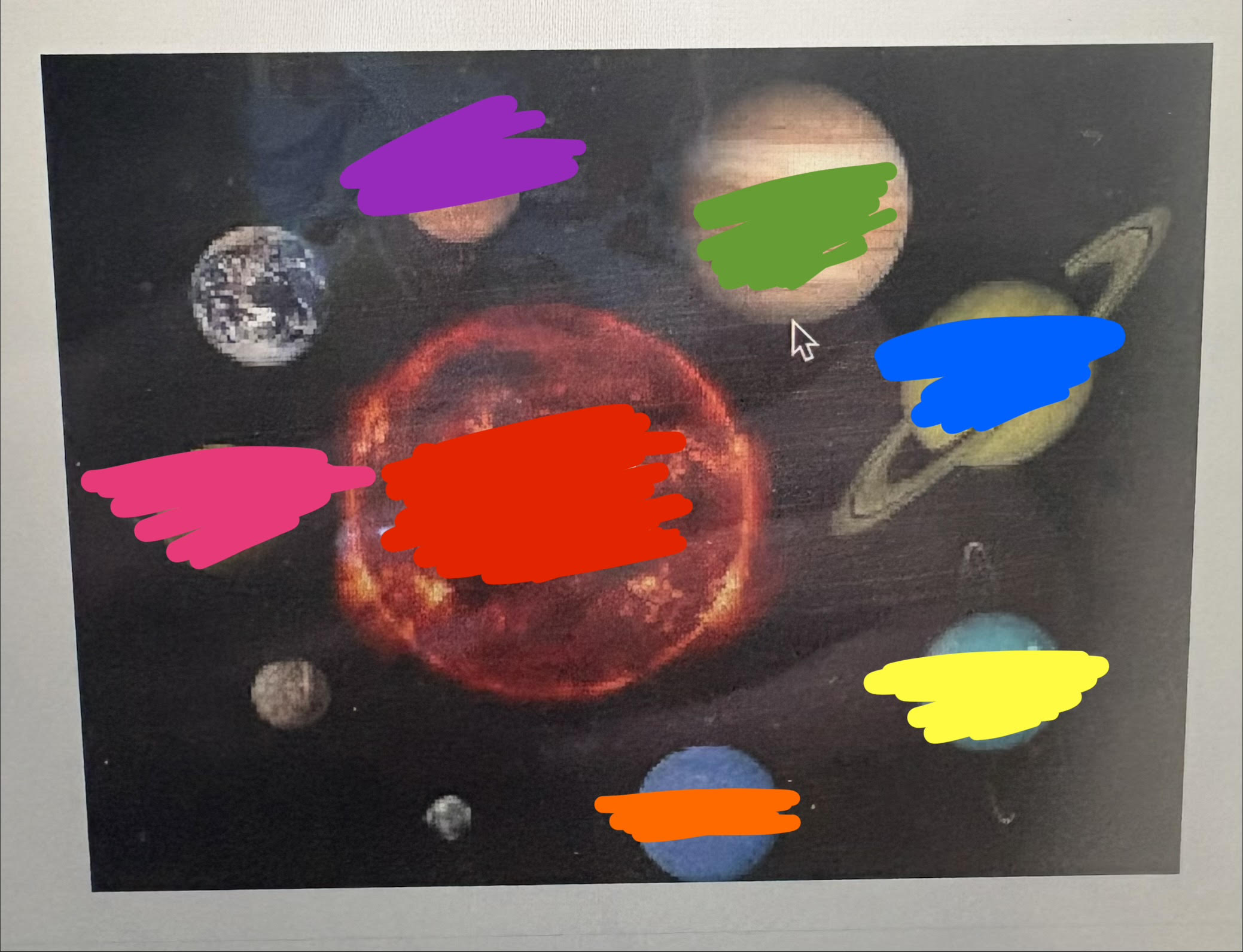
What’s green?
Gross lab
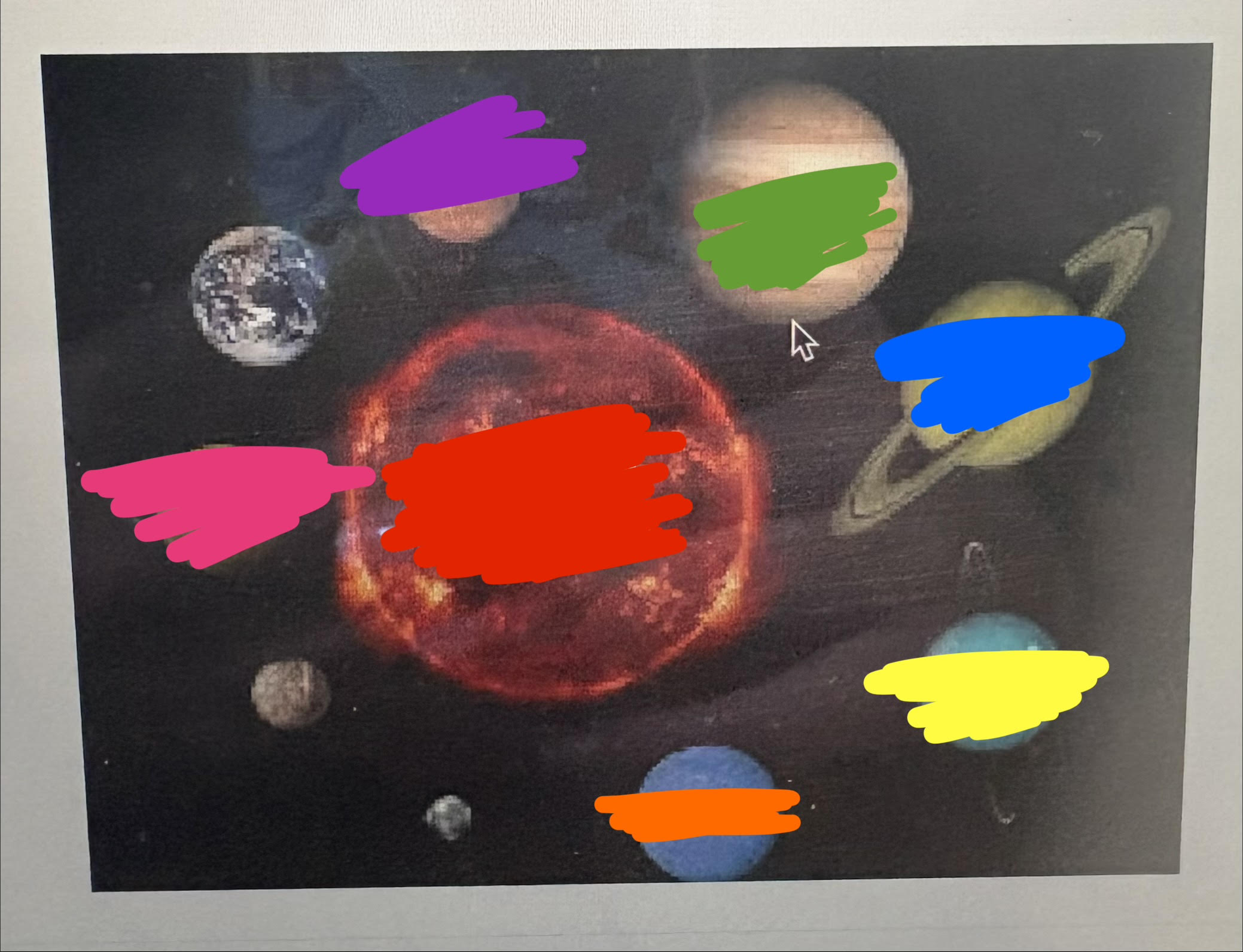
What’s blue?
Hitsology lab
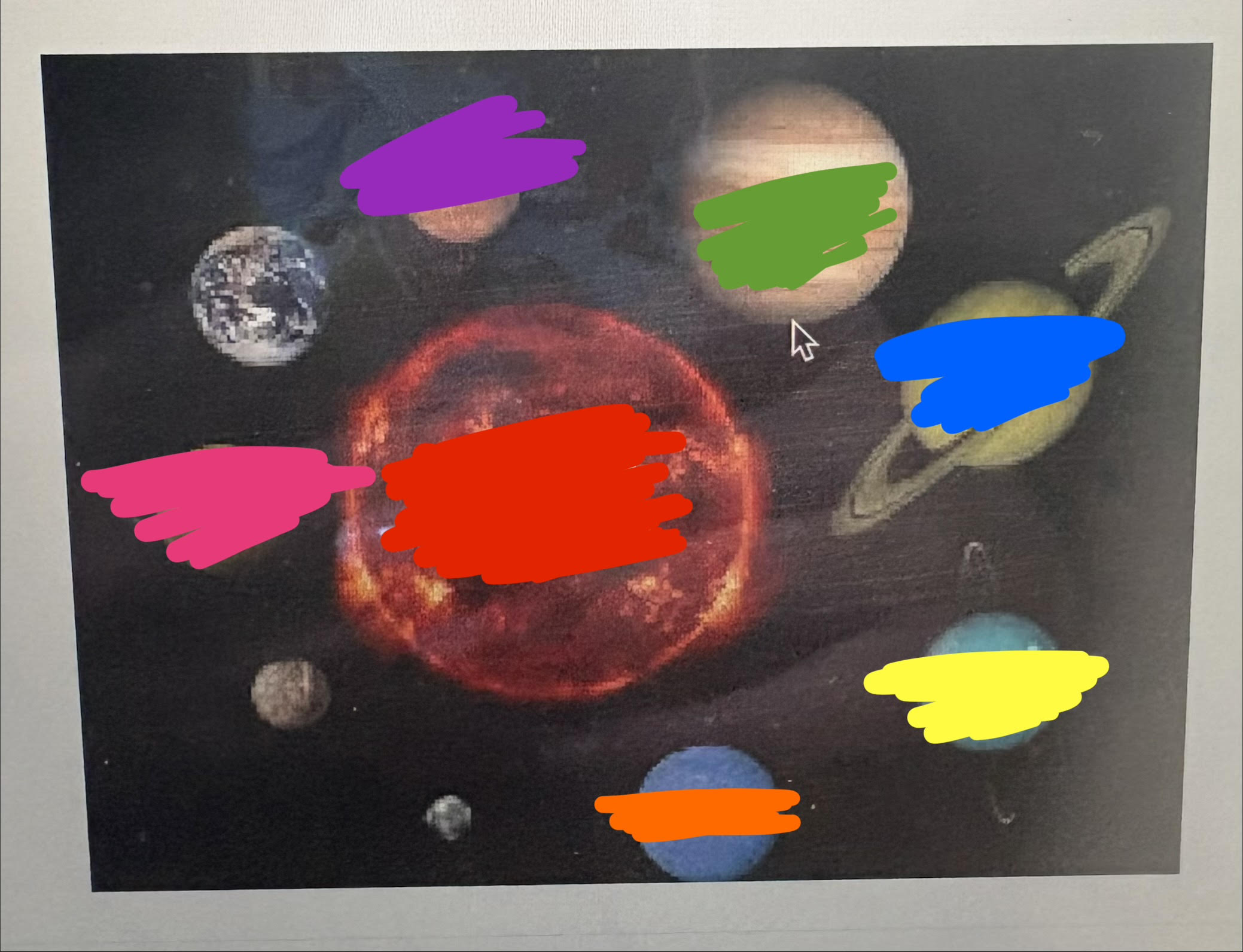
What’s yellow?
Imaging lab
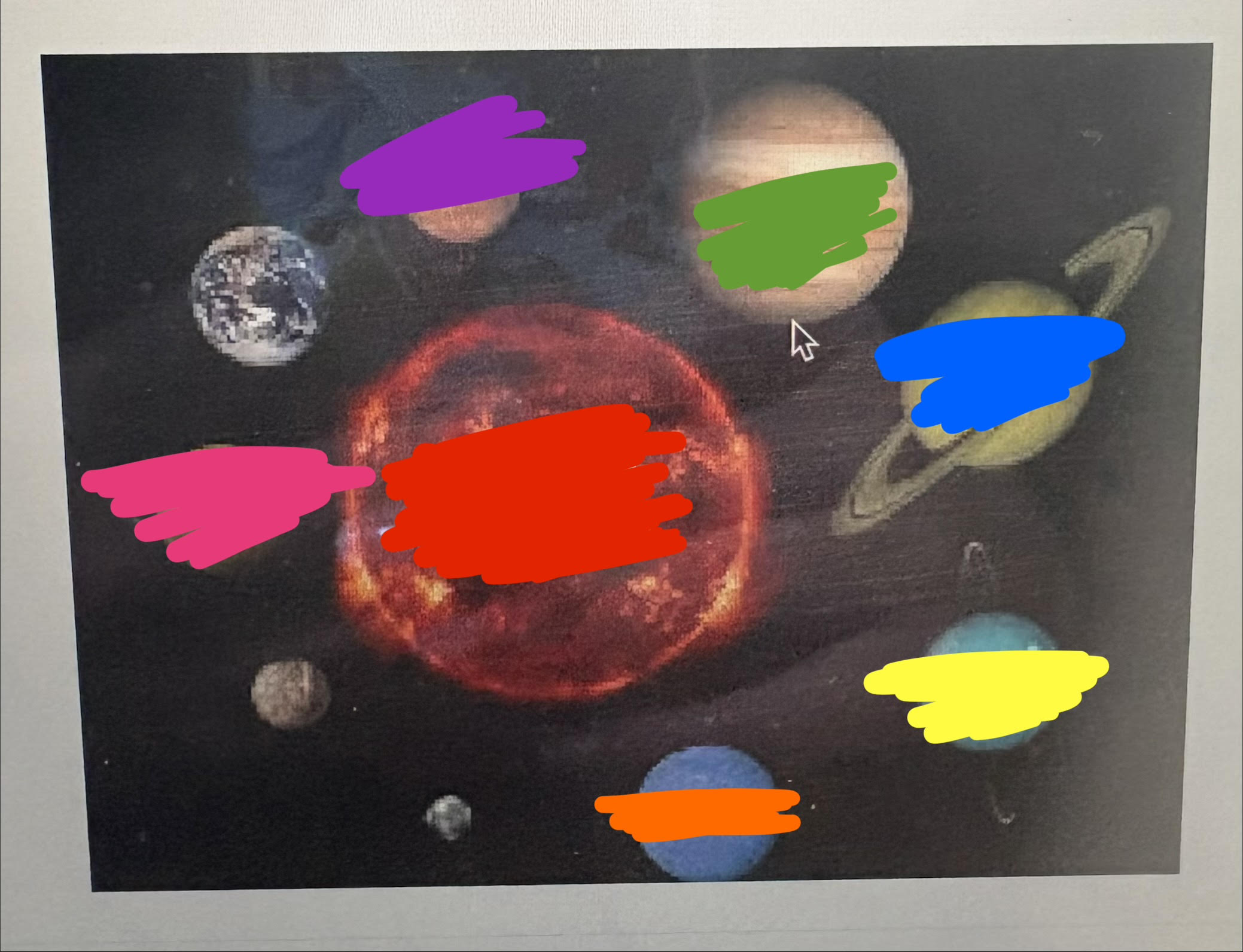
What’s orange
Lectures
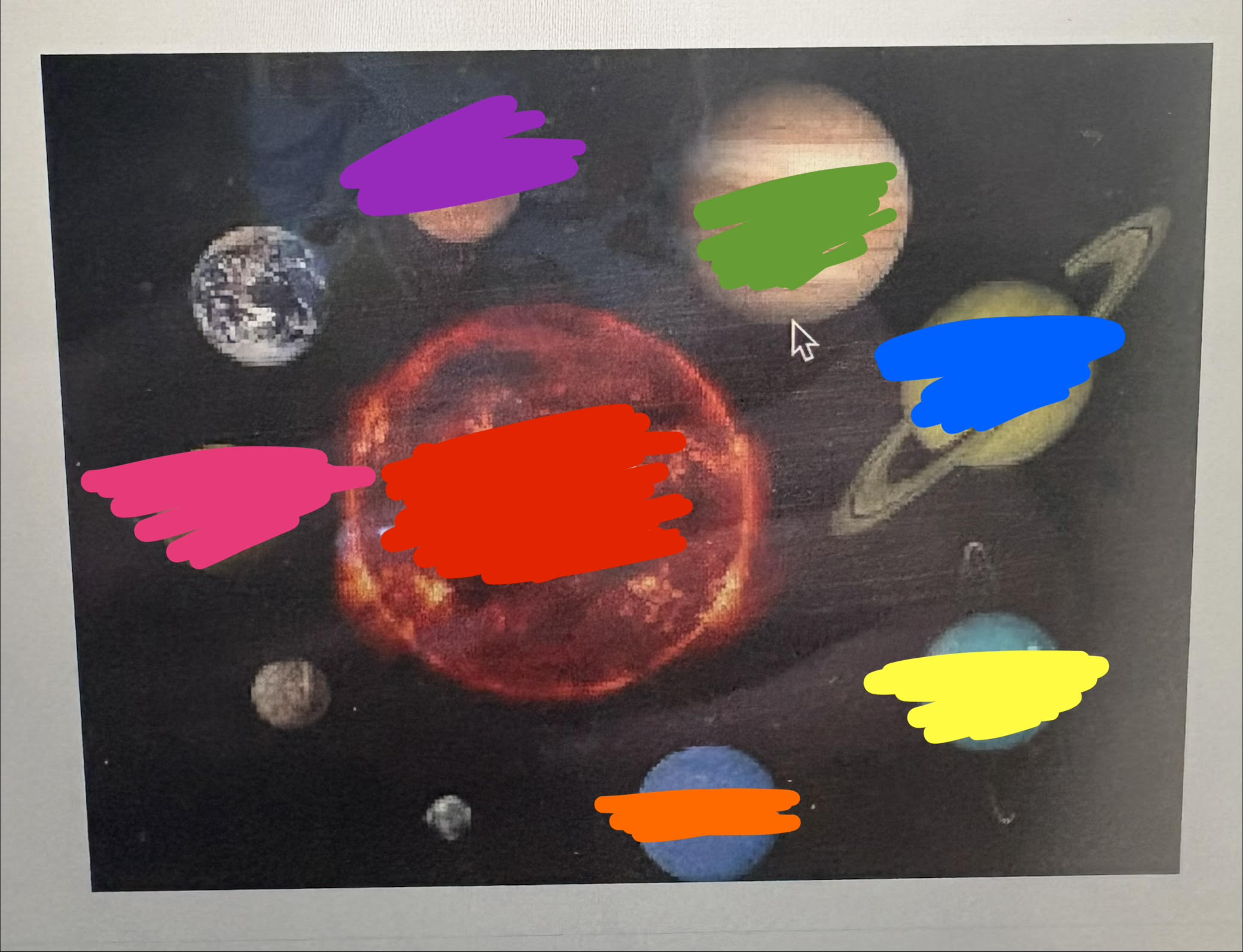
What does this represent?
PBL in Block I
Block I: Tutor groups and Cases
Student driven
Tutors facilitate discussion
Add scenario flashcard
Yes
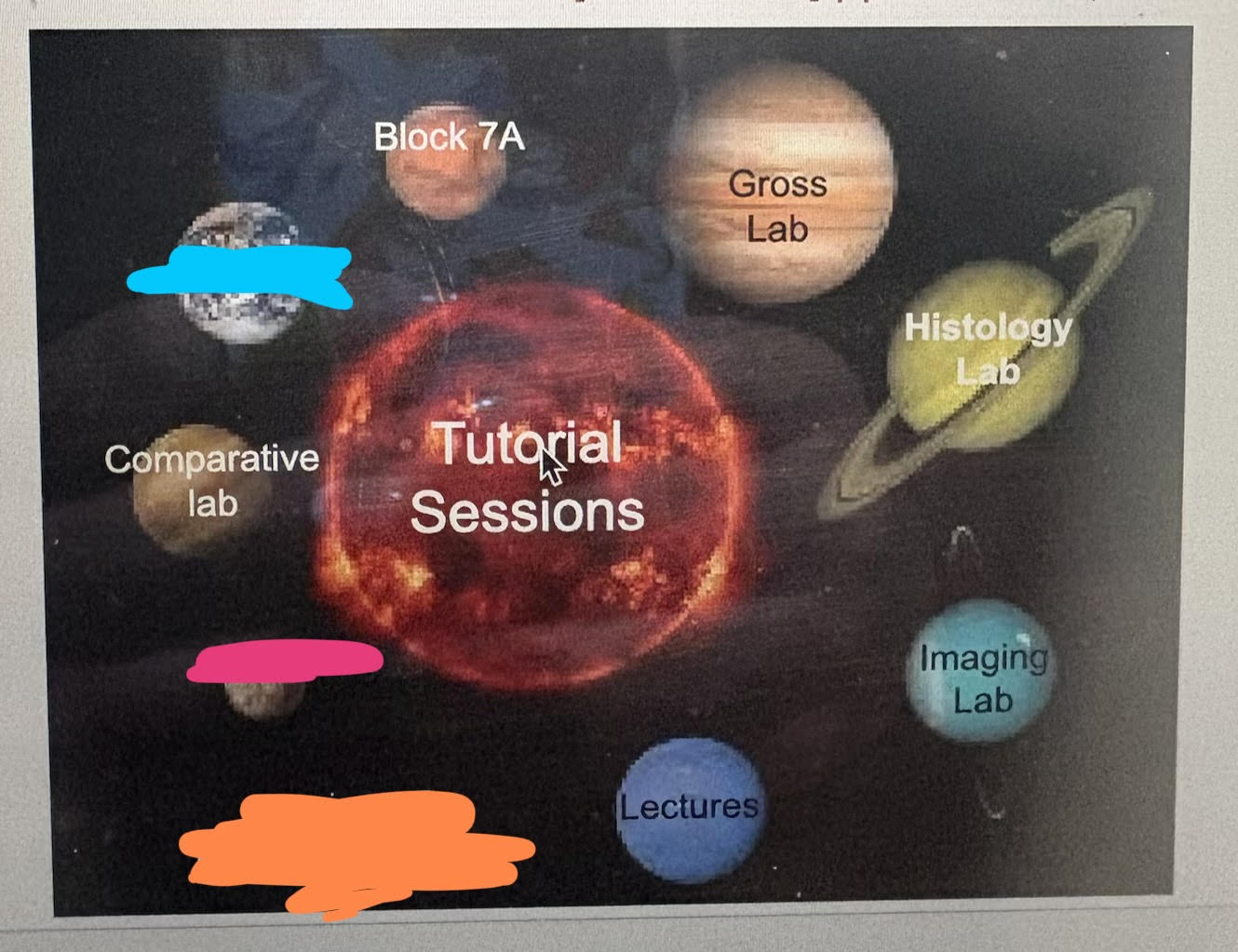
What’s light blue?
Library
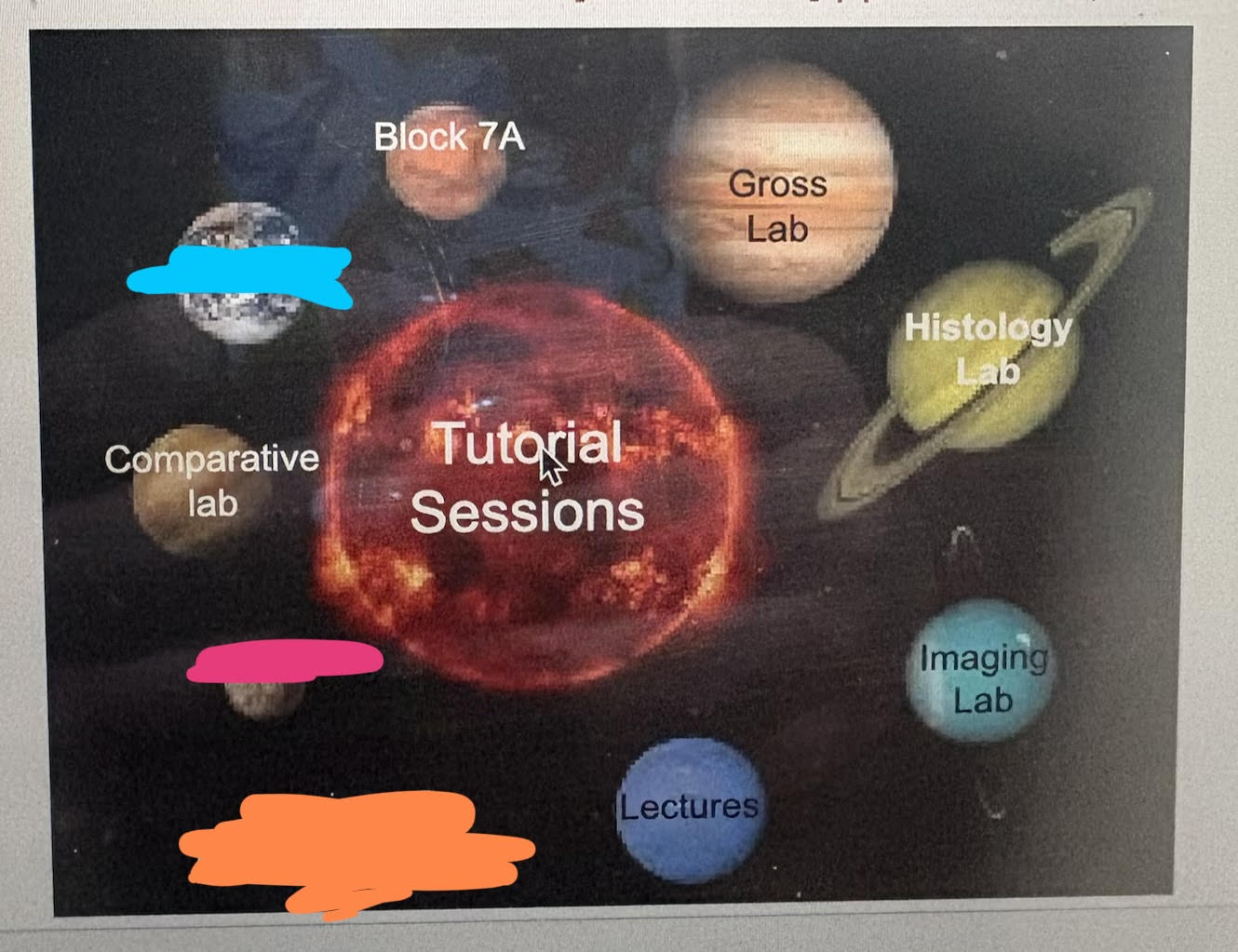
What’s pink? - edit
MRC (Medical Research Counsel)
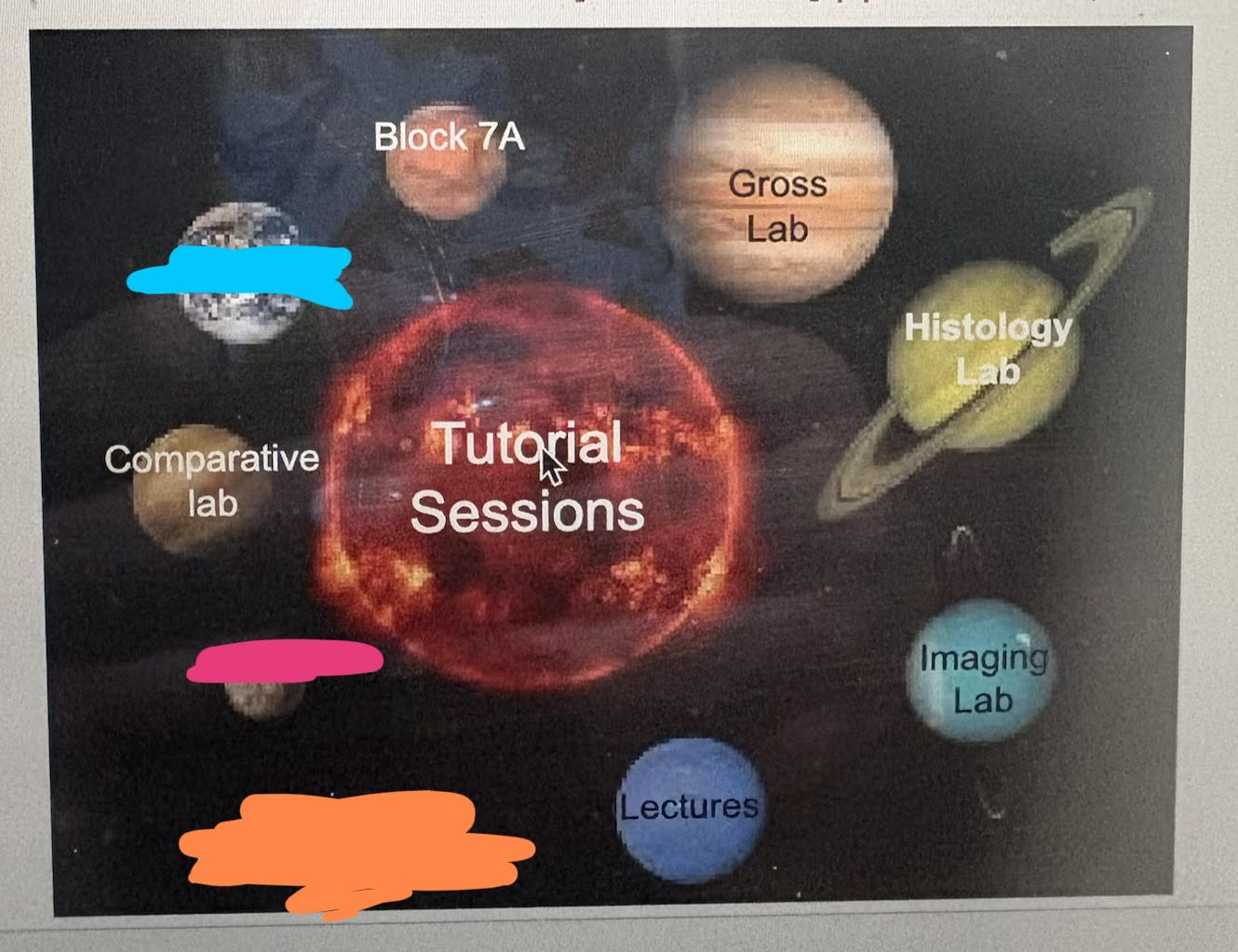
What’s orange?
Previous experience/experts