Unit 1.3 - Other Anti-Inflam Drugs
 Call Kai
 Learn
Learn Practice Test
 Spaced Repetition
 Match
Match Flashcards
 Knowt Play
1/13

There's no tags or description
Looks like no tags are added yet.
Name | Mastery | Learn | Test | Matching | Spaced | Call with Kai | Chat |
|---|
No analytics yet
Send a link to your students to track their progress
14 Terms
Frunevetmab injection - MOA
Monoclonal Antibody (mAb) Therapy
Targets/blocks Nerve Growth Factor (NGF)
NGF activates pain signals by ↑ the release of additional pain & inflammatory mediators
Frunevetmab Inj - Use & Forms
Use
osteoarthritis pain in cats only
Forms
Solensia
Frunevetmab Inj - side effects
v+ and pain at injection site
minimal liver and kidney involvement
Dimethyl sulfoxide (DMSO)
is NOT an anti-prostaglandin or anti-COX drug
anti-inflammatory mechanisms not totally understood
inactivates or traps destructive free radicals (superoxide and hydroxyl radicals) and thereby decreases tissue destruction
Used as injectable and topically applied drug in horses; also in some otic preps — many extra label uses
Penetrates skin - can dissolve and carry drugs or toxins into body if applied topically (clean skin before)
Chondroprotective agents
“chondro” = cartilage
some are regulated drugs, other are less regulated nutraceuticals
Includes:
Polysuflated glycosaminoglycans (PSGAGs)
Hyaluronic acid or hyaluronate sodium
Glucosamine and chondroitin sulfate
Polysulfated glycosaminoglycans PSGAGs (Adequan®)
Mimic the large and complex molecules of normal joint cartilage
benefit is largely due to PSGAGs
stimulating new chondrocyte generation
new cartilage matrix by the new chondroyctes (cartilage cells)
inhibition of enzymes in the joint fluid that would degrade cartilage
Hyaluronic acid (HA) & Hyaluronate sodium
chondro-protective agent that is an essential component of the normal synovial (joint) fluid
increases the viscosity of the joint fluid
HA acts as a lubricant in the joint
also scavenges free radical in the joint (like DMSO)
some products are injected directly into the joint, others are systemically administered
Glucosamine & Chondroitin Sulfate
Chondro-protective agent that is orally administered
OTC products sold as a nutraceutical
nutraceuticals are used like drugs but are actually food supplements
are regulated by FDA for safety as food supplements
can be variable in the amount of active ingredients
Glucosamine & Chondroitin Sulfate: MOA
These drugs are precursors for PGAGs
stims chondrocyte repair of cartilage
stims production of hyaluronic acid
inhibits destructive enzymes found in injured joints or cartilage
Glucosamine & Chondroitin Sulfate: Use
slowing onset/progression of osteoarthritis (OA)
Ibuprofen & Naproxen
because there is a high incidence of GI effects (gastric bleeding, ulcers, death) and there are safer approved NSAIDs » don’t use these in dogs
only use approved veterinary NSAIDs in large animal/equine
Acetaminophen
is NOT an NSAID like other drugs
analgesia is via inhibition of a COX-1 enzyme found only in the CNS (not in peripheral tissue)
is also an antipyretic (anti-fever) » probably same mechanism
because it doesn’t block peripheral COX 1, it does NOT cause stomach upset, GI ulcers or platelet bleeding
limited use in vet med
problem is TOXICITY IN CATS
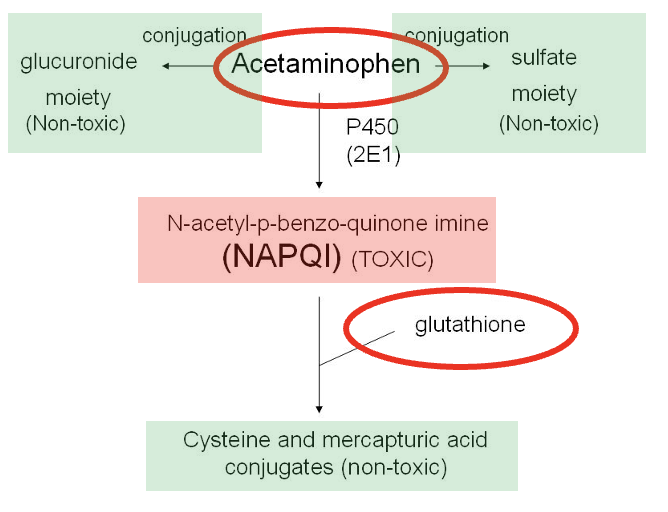
Acetaminophen toxicity
due to metabolism of drug to 2 non-toxic metabolites and one toxic metabolite
toxic metabolite (NAPQI) occurs in all species but is usually quickly metabolized to a non-toxic metabolite by conjugation with glutathione
cats do not metabolize very well by conjugation with glutathione » toxic metabolite created cannot be readily broken down to the non-toxic metabolite and accumulates
toxic metabolite is very reactive with RBCs and liver cells » results in methemoglobinemia
dogs are more resistant but can overwhelm normal metabolism resulting in liver signs such as jaundice
Treatment: acetylcysteine (Mucomyst) - provides sulfhydryl group for converting toxic metabolite to non-toxic metabolite
which anti-inflammaotry is extremely toxic/deadly to cats?
acetaminophen