LU 12 Common Disorders of Female Reproductive System
 Call Kai
 Learn
Learn Practice Test
 Spaced Repetition
 Match
Match Flashcards
 Knowt Play
1/25

There's no tags or description
Looks like no tags are added yet.
Name | Mastery | Learn | Test | Matching | Spaced | Call with Kai | Chat |
|---|
No analytics yet
Send a link to your students to track their progress
26 Terms
What are the common vaginal infections ?
candidiasis
trichomoniasis
What is candidiasis (vaginal thrush) and its sign and symptoms ?
caused by yeast, Candida albicans that lead to changes to vaginal acidity
s/s : extreme itching, soreness and redness in vaginal area, white clumpy vaginal discharge, painful intercourse
What are the management and treatment for candidiasis ?
treatment : antifungal vaginal creams, oral treatment
wipe genitalia from front to back and keep dry
avoid tight fitting trousers/ underwear
wear cotton underwear for better air circulation
What is trichomoniasis and its symptoms ?
caused by protozoan parasite, Trichomonas vaginalis
symptoms in women : thin, yellow green vaginal discharge with unpleasant fishy smell, painful urination
symptoms in men : thin whitish discharge, painful urination
What are the treatment and management for trichomoniasis ?
treatment : antibiotic (oral metronidazole)
using condom during sexual intercourse during first 4-6th weeks after treatment
What are the nursing advice to prevent vaginal infections ?
always wipe from front to back after going to the toilet
wear cotton underwear
wash underwear in hot water and double rinse
change sanitary pads regulary
avoid scented sanitary pads
avoid tight fitting clothes
What is pelvic inflammatory disease (PID) and its risk factors ?
an inflammatory condition of the pelvic cavity
risk factors : i) early age of first intercourse ii) multiple sex partners iii) sex with a partner with an STD iv) history of STD
What are the causes of PID ?
STD (chlamydia and gonorrhoea)
acute or chronic infection of reproductive tract
intrauterine device : higher risk of PID
Explain the pathophysiology of PID
results from the ascending spread of microorganisms from the vagina and cervix to the upper genital tract
What are the clinical manifestation / s/s of PID ?
lower abdominal pain (1st indication)
pelvic pain and tenderness during examination
purulent vaginal discharge
dysuria
fever, chill, nausea, vomiting
What are the complications of PID ?
short term : peritonitis, pelvic abscess, sepsis
long term : infertility, high risk of ectopic pregnancy
What are the medical and nursing management for PID ?
medical : broad spectrum antibiotics (cefoxitin)
nursing management : i) adequate rest, fluid and nourishing diet ii) note amount and characteristics of vaginal discharge iii) health education regarding safe sex
What are the risk factors for cervical cancer ?
smoking
weakened immune system
early age of first sexual intercourse
long term use of contraceptive pills
What are the sign and symptoms of cervical cancer ?
bleeding that occurs between regular menstrual periods
bleeding after sexual intercourse
bleeding after going through menopause
increased vaginal discharge
foul smelling discharge
What are the general advice prior to sample collection HPV test / cytology ?
avoid taking cervical cancer screening during normal menstruation
avoid sexual intercourse 48 hours prior to procedure
do not insert any form of medication or tampons into the vagina 48 hours prior to the procedure
What are the stages of cancer cervix ?
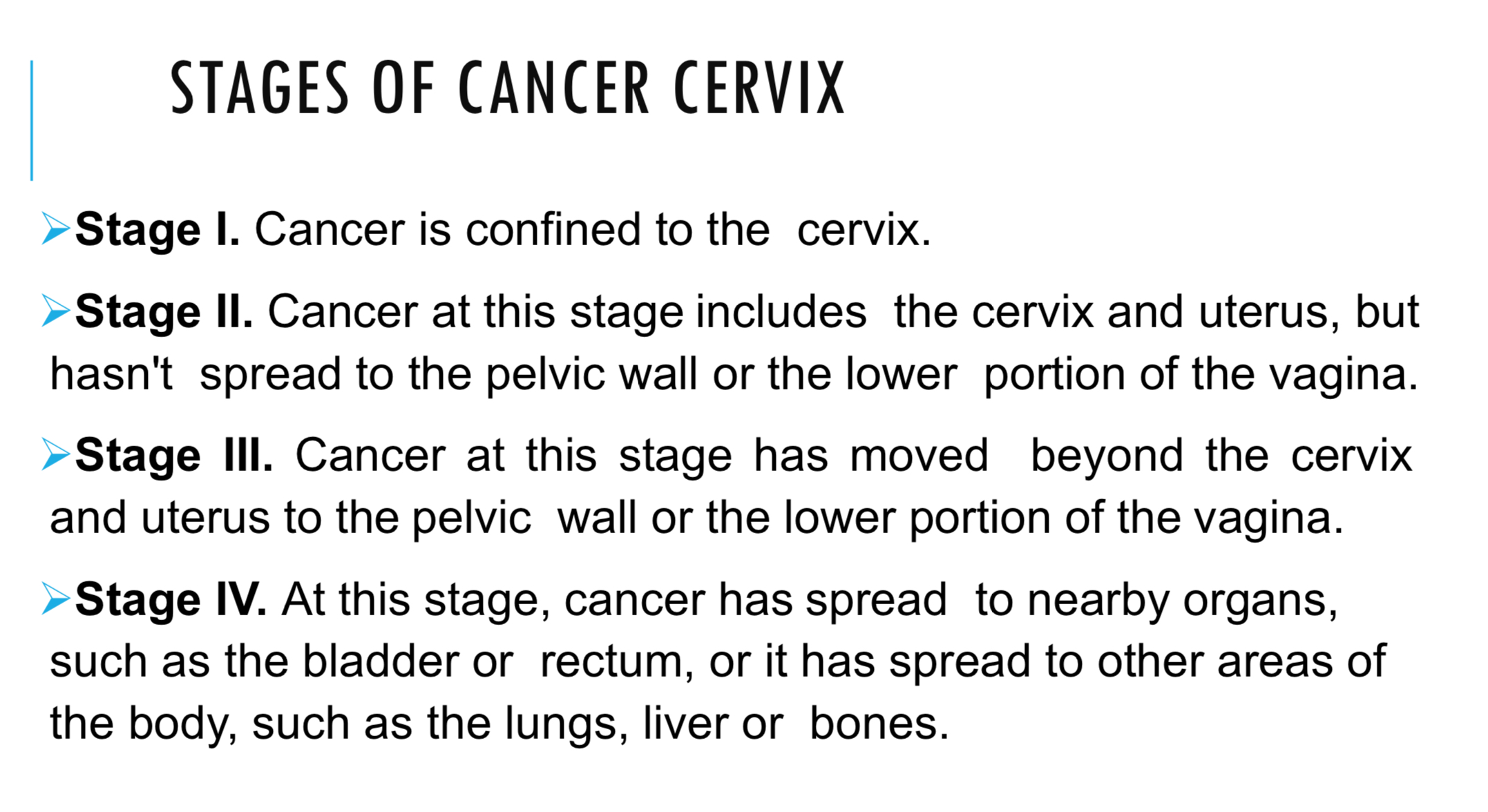
What are the treatment & management for cervix cancer ?
surgical management : hysterectomy
chemotherapy
radiotherapy
What are the nursing management for cervix cancer ?
HPV vaccination
safe sex practices
cervical cancer screening
avoid multiple sexual partners
delay first sexual intercourse
no smoking
What are the tumour in ovarian cancer ?
epithelial tumours (85-90%)
germ cell tumours (15-20%)
sex cord stromal tumours (5-10%)
What are the sign and symptoms of ovarian cancer ?
pain
abdominal swelling
compressive symptoms such as indigestion, legs edema
endocrine effects such as postmenopausal bleeding
What are the stages in FIGO staging ?
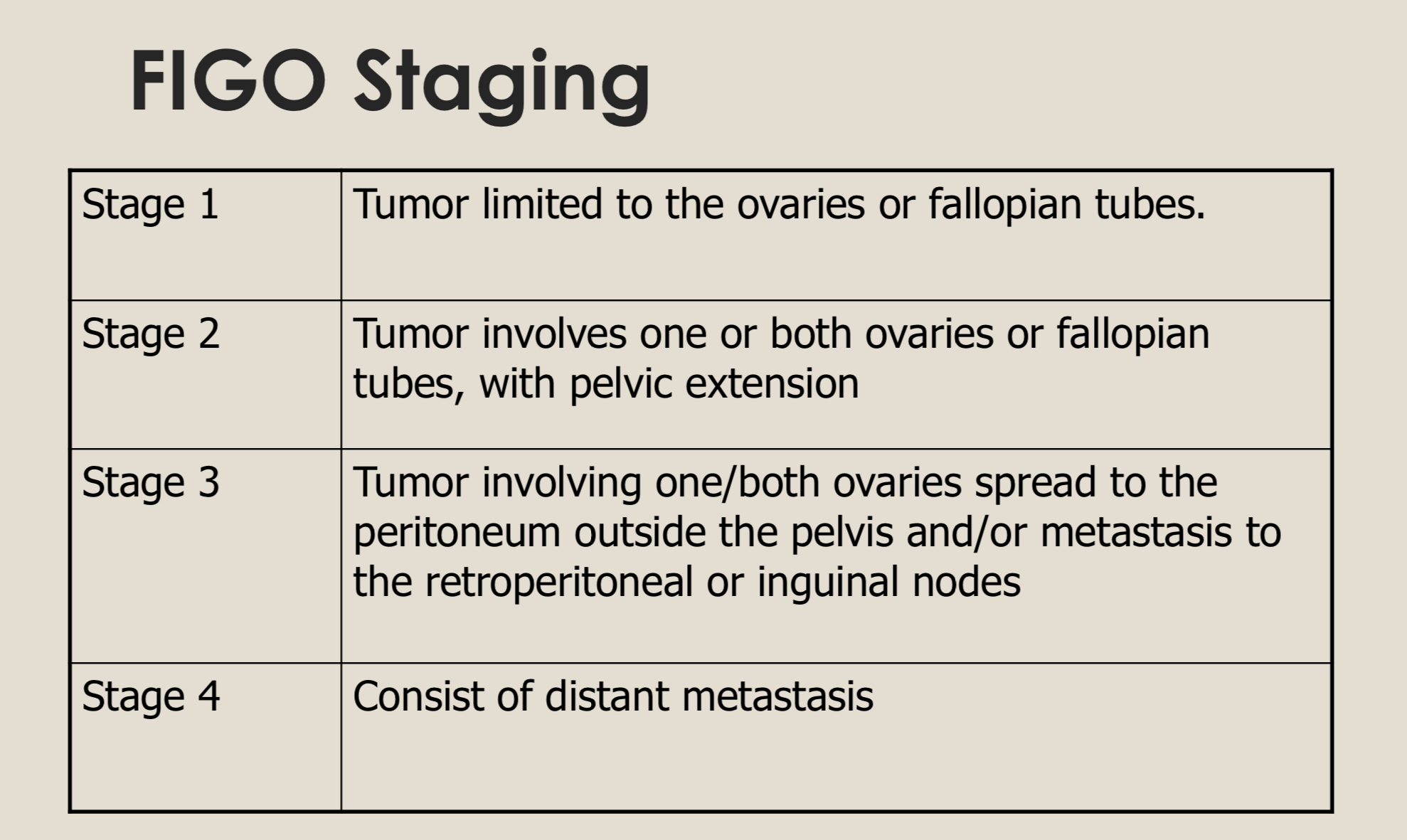
What are the treatment for ovarian cancer ?
surgery (primary and conservative surgery)
chemotherapy for stage 2-4
radiotherapy
palliative care (inform patient for pain relief)
What is endometrial carcinoma and its risk factors ?
most common disease affecting uterus
risk factors : obesity, nulliparity, menarche early age, late menopause, diabetes
What are the clinical presentation for endometrial cancer in
post menopausal women
premenopausal women
post menopausal women : post menopausal bleeding, blood stained vaginal discharge, pelvic pain
premenopausal women : inter menstrual bleeding, heavy and prolonged menses, pelvic pain
What are the management for endometrial cancer ?
total abdominal hysterectomy and bilateral salpingoo-ophorectomy (TAHBSO)
radiotherapy
What are the nursing role in women’s health ?
health promotion
illness prevention
provide support and counseling
encourage women to achieve healthy practices such as personal hygiene, diet and exercises