Option A: Freshwater Case Study
 Studied by 2 people
 Call Kai
 Learn
Learn Practice Test
 Spaced Repetition
 Match
Match Flashcards
 Knowt Play
1/13

There's no tags or description
Looks like no tags are added yet.
Name | Mastery | Learn | Test | Matching | Spaced | Call with Kai |
|---|
No study sessions yet.
14 Terms
Mitigation: Jakarta
Background
Capital of Indonesia, crossed by 13 rivers flowing into the Java Sea
Flood types:
River flooding
Flash floods
Tidal backflow
Tropical climate → high rainfall year-round
El Niño / La Niña increase rainfall intensity
2013 floods caused ~7.5 trillion rupiah in economic losses
60% of Indonesia’s money circulation concentrated in Jakarta
Human factors increasing flood risk
Rapid urbanisation and population growth
Concrete surfaces reduce infiltration
Waste blocks canals and rivers
Groundwater over-abstraction for high-rise buildings
Land subsidence of 15–25 cm per year
Poor land-use planning and flood-risk awareness
Positive mitigation measures Hard engineering
East & West Flood Canals divert peak river flows to Jakarta Bay
Embankments and levees strengthened
Dredging rivers to remove sediment and increase capacity
Pumps used to remove floodwater
Proposed Giant Sea Wall (Great Garuda) to protect against coastal flooding
Planning and preparedness
Flood risk maps combining hazard, vulnerability, and capacity
Flood scenario planning for emergency response
Infrastructure vulnerability assessments
Community & technology-based measures
Early warning systems
Community flood preparedness programmes
PetaJakarta: real-time flood mapping using social media (Twitter)
Use of WhatsApp and Facebook for rapid flood warnings
Social media allows upstream residents to warn downstream areas
Nature-based / soft approaches
Investment in green infrastructure
Restoring some permeable surfaces to increase infiltration
Negative impacts / limitations
Land subsidence continues, reducing effectiveness of defences
Dykes and dams displace communities
High costs and maintenance
Canals still clog with waste
Unequal protection: informal settlements remain vulnerable
Exam-ready summary sentence
Jakarta relies heavily on hard engineering and technological solutions to reduce flood risk, but land subsidence, poor maintenance, and rapid urbanisation limit long-term effectiveness.
Three Gorges Dam – Flood Mitigation Case Study
Background
Located on the Yangtze River, China
Yangtze is one of the most polluted rivers in the world
Shoreline heavily industrialised → chemical and waste pollution
Frequent flooding historically (e.g. 1998 Yangtze floods)
Dam symbolises national pride and technological power
Built to support China’s:
Flood control
Energy demand
Economic development
ULTRA CONDENSED POINTS
Yangtze River flood control
Prevented 1998-style floods
World’s largest hydroelectric dam
Low-carbon energy
Reduced coal use
Sediment trapping
Algal blooms and pollution
Landslides and seismic risk
1.5 million displaced
Strong national pride, high social cost
—> The Three Gorges Dam has successfully reduced flood risk and carbon emissions in China, but its environmental degradation and large-scale social displacement highlight the long-term costs of hard engineering flood mitigation.
National governments (Stakeholders - pressures on the nile)
Egypt – downstream stakeholder
Role
Highly dependent on the Nile for ~90% of freshwater
Prioritises water quantity and security
Controls flow through the Aswan High Dam
Actions
Stores water in Lake Nasser to manage drought
Uses large-scale irrigation to support agriculture
Strong diplomatic opposition to upstream dams (e.g. GERD)
Impacts
Reduced sediment downstream → lower soil fertility
Intensive irrigation contributes to salinisation and water pollution
Political tension with upstream countries
Exam link
Egypt prioritises national water security, even at the cost of environmental degradation and regional cooperation.
Ethiopia – upstream stakeholder
Role
Source of most Nile water via the Blue Nile
Historically received little benefit from Nile flows
Actions
Built the Grand Ethiopian Renaissance Dam (GERD) to:
Generate hydroelectric power
Support economic development
Impacts
Improved energy access and economic growth
Increased political tension with Egypt
Concerns over reduced downstream water during droughts
Exam link
Ethiopia views the Nile as a development resource, highlighting how upstream stakeholders prioritise economic growth over downstream water security.
Sudan – midstream stakeholder
Role
Both beneficiary and vulnerable stakeholder
Actions
Supports GERD for:
Reduced flood risk
More stable river flow
Expresses concerns over dam safety and coordination
Impacts
Improved irrigation potential
Reduced flooding
Political balancing role between Egypt and Ethiopia
Farmers and agricultural producers (local stakeholders)
Example: Nile Delta farmers (Egypt)
Role
Largest users of Nile water
Depend on irrigation for crop production
Actions
Use fertilisers and pesticides to increase yields
Over-irrigate fields due to unreliable water supply
Impacts
Water quality degradation:
Nutrient runoff → eutrophication
Soil salinisation:
Reduced long-term fertility
Increased pressure on already scarce water resources
Exam link
Farmers play a dual role as both essential food producers and contributors to water quality decline.
Local communities (social stakeholders)
Example: Rural communities in Egypt and Sudan
Role
Depend on the Nile for:
Drinking water
Fishing
Small-scale farming
Impacts
Suffer from:
Poor water quality
Health risks from polluted canals
Limited influence over national water decisions
Exam link
Local communities are often the most affected by water scarcity and pollution, yet have the least political power.
International and regional organisations
African Union
Role
Facilitates negotiations over Nile water use
Actions
Mediates talks between Ethiopia, Sudan, and Egypt
Encourages cooperative water management
Limitations
Lacks enforcement power
Agreements often non-binding
Environmental NGOs and scientists (National and professionalism stakeholders)
Role
Raise awareness of:
Pollution
Salinisation
Ecosystem degradation
Actions
Advocate for:
Sustainable irrigation
Reduced fertiliser use
Integrated river basin management
Limitations
Limited influence over state-led mega-projects
Often excluded from political negotiations
One-sentence synthesis (top-band)
Pressure on the Nile reflects competing stakeholder priorities, as governments pursue water security and development, farmers prioritise food production, and local communities bear the environmental and social costs of declining water quantity and quality.
Sudd Wetland - Conservation and sustainable management (high resilience option)
What this future looks like
Protection of the wetland under international conservation frameworks
Recognition of the Sudd as a natural flood-control and water-storage system
Investment in:
Community-based conservation
Sustainable fishing and grazing
Ecotourism
Benefits
Maintains biodiversity and habitats
Preserves water quality by filtering pollutants
Supports local communities and traditional livelihoods
Enhances resilience to climate change
Maintains steady flow of the White Nile, supporting downstream countries
Stakeholders supporting this future
Local communities
Environmental NGOs
Conservation scientists
Downstream Nile countries (benefit from flow regulation)
Sudd Wetland -Large-scale drainage and water diversion (high-risk option)
Example proposal: Jonglei Canal (revival possibility)
Canal designed to drain water from the Sudd
Intended to:
Increase Nile flow downstream
Reduce evaporation losses
Expand irrigation in Sudan and Egypt
Potential benefits
Increased water availability downstream
Agricultural expansion
Economic development for Nile basin states
Environmental and social risks
Loss of wetland ecosystem
Reduced biodiversity
Disruption of fish stocks and grazing land
Increased conflict over land and water
Loss of natural flood buffering
Reduced resilience to drought and climate variability
Stakeholders pushing this future
National governments seeking water security
Agricultural and irrigation planners
Key tension (exam gold)
The future of the Sudd Wetlands depends on whether development priorities outweigh the long-term environmental and social value of wetland conservation.
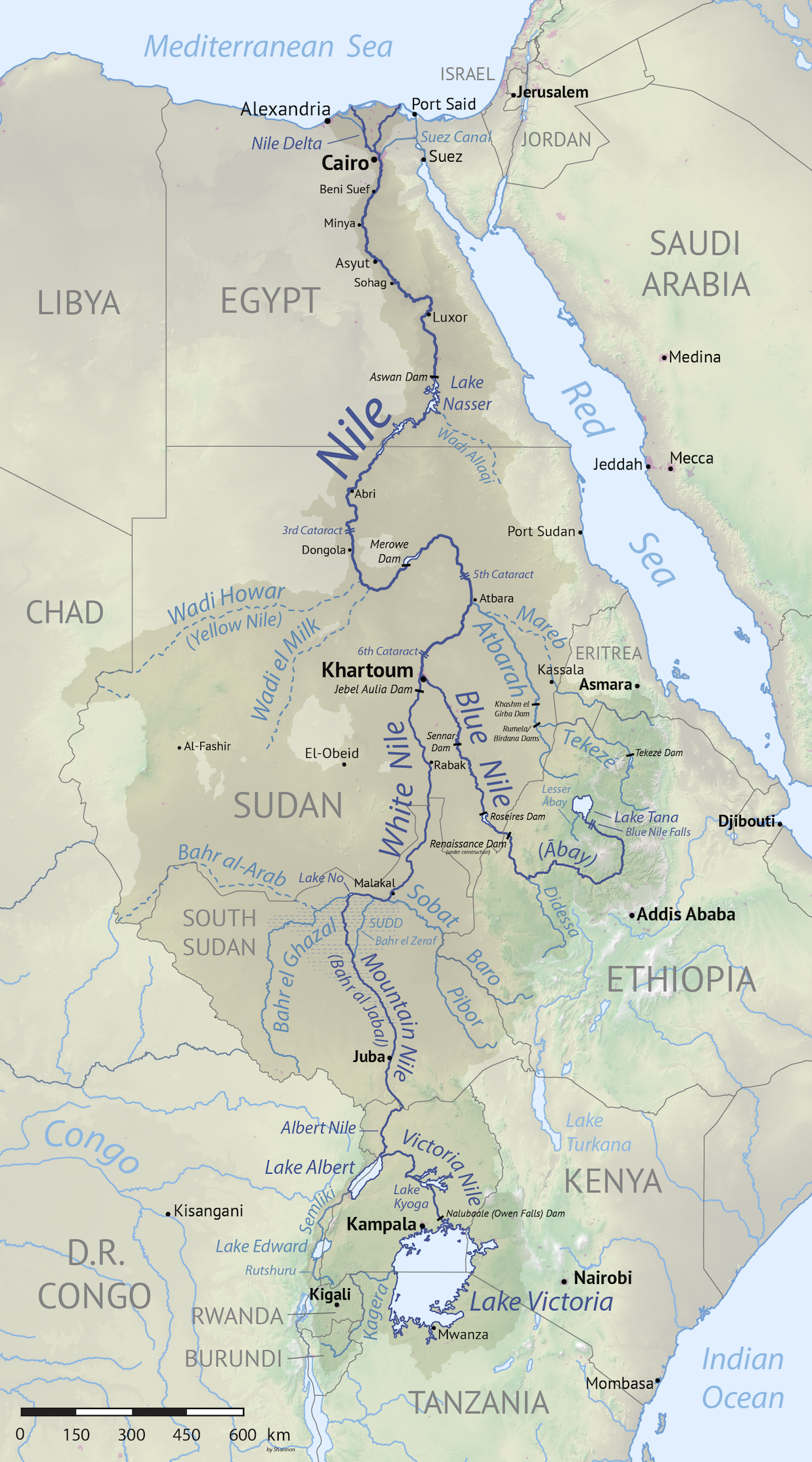
Sharing the Nile River – Transboundary Water Conflict & Cooperation
Key stakeholders and their roles Ethiopia (upstream stakeholder)
Interests
Economic development
Hydroelectric power generation
Energy security
Actions
Built the GERD on the Blue Nile
Argues the dam does not permanently reduce water flow
Supports gradual filling and sovereign control
Role in resolution
Participates in negotiations
Willing to share data, but resists binding limits on dam operation
Egypt (downstream stakeholder)
Interests
Water security (≈90% of freshwater from Nile)
Protection of agriculture and population
Actions
Strong diplomatic opposition to GERD
Calls for legally binding agreements on:
Reservoir filling
Drought management
Role in resolution
Pushes for international mediation
Frames the issue as an existential threat
Sudan (midstream stakeholder)
Interests
Flood control
Stable river flow
Dam safety
Actions
Initially supportive of GERD due to reduced flooding
Expresses concerns about coordination and safety
Role in resolution
Acts as a mediator between Ethiopia and Egypt
Supports cooperative data-sharing
African Union
Role
Facilitates negotiations between Nile Basin states
Promotes “African-led solutions”
Limitations
Agreements are non-binding
No enforcement power
Nile Basin Initiative
Role
Encourages cooperative management of the Nile
Supports shared data and sustainable development
Limitation
Lacks authority to resolve political disputes
Attempts at resolution
Tripartite negotiations (Ethiopia–Sudan–Egypt)
Data-sharing agreements (partial)
Mediation by:
African Union
International observers
Proposal of coordinated dam operation during droughts
Contemporary Dam Expansion in the Mekong River Basin
Transboundary river flowing through China, Laos, Cambodia, Vietnam, Thailand, Myanmar
China has built 11 large dams on the Upper Mekong (Lancang River)
Laos pursuing “Battery of Southeast Asia” strategy
Key dam: Xayaburi Dam
Dams built to generate hydroelectric power and export electricity
Downstream impacts:
Reduced sediment → delta erosion in Vietnam
Disrupted fish migration → loss of fisheries
Increased salinisation in the Mekong Delta
Stakeholder conflict:
China and Laos prioritise energy and development
Cambodia and Vietnam prioritise food security and livelihoods
Mekong River Commission promotes cooperation but has no enforcement power
Climate change increases uncertainty, intensifying conflict
One-sentence exam summary
Contemporary dam expansion in the Mekong Basin, led by China and Laos, has boosted hydropower generation but caused environmental degradation and transboundary conflict due to weak regional governance.
Murray–Darling Basin – Integrated Drainage Basin Management (IDBM) Plan
Covers Australia’s largest river basin, supplying ~40% of national agriculture
Problem: over-abstraction for irrigation → river drying, salinisation, algal blooms, ecosystem collapse
Plan: Murray–Darling Basin Plan (2012; ongoing implementation)
Core IDBM approach: manage the entire basin as one system, balancing environmental, economic, and social needs
Key IDBM measures
Sustainable Diversion Limits (SDLs): legal caps on water extraction
Environmental water allocations: water returned to rivers/wetlands
Water trading: reallocates water to higher-value uses during drought
Efficiency upgrades: drip irrigation, lined channels
Basin-wide governance: coordination across states
Stakeholders
Federal government: sets basin-wide limits and policy
State governments: implement rules locally
Farmers: major water users; affected by reduced allocations
Environmental groups: advocate for ecosystem recovery
Indigenous communities: cultural water rights and river health
Outcomes
Partial recovery of wetlands and river flows
Improved resilience to drought
Ongoing conflict with irrigators over reduced water availability
Limitations
Political resistance and uneven enforcement
Climate change increasing drought frequency
Trade-offs between food production and ecosystem protection
One-sentence exam summary
The Murray–Darling Basin Plan illustrates IDBM by coordinating water limits, environmental flows, and stakeholder governance across an entire basin, improving resilience but facing political and climatic challenges.