BIO 110 CH-1
 Call Kai
 Learn
Learn Practice Test
 Spaced Repetition
 Match
Match Flashcards
 Knowt Play
1/36

Earn XP
Description and Tags
Flashcards covering human biology introductory concepts, characteristics of life, biological organization levels, classification domains and kingdoms, the scientific method, controlled study variables, and emerging infectious diseases.
Name | Mastery | Learn | Test | Matching | Spaced | Call with Kai | Chat |
|---|
No analytics yet
Send a link to your students to track their progress
37 Terms
What is science defined as in human biology?
Science is the study of the natural world, which includes matter and energy.
Living organisms are made of matter and energy
What is biology, and what do its root words mean?
Biology is the study of living organisms and life's processes
Derived from 'Bio' meaning life and 'Logy' meaning study.
What six characteristics are shared by all living organisms?
Are composed of cells
Use materials and energy from the environment for their subsistence.
Maintain a relatively constant internal environment (homeostasis)
Respond to internal and external stimuli.
Grow and reproduce.
Are capable of evolving.
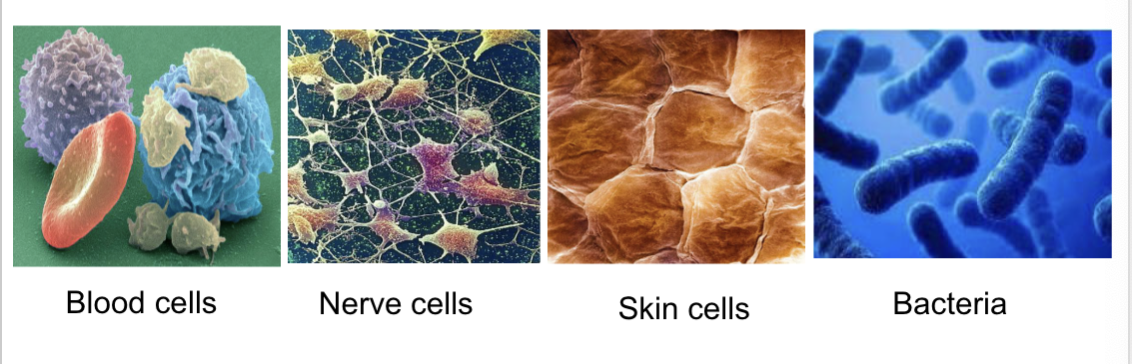
What is a cell? (1)
→ A cell is the smallest unit that exhibits all the characteristics of life.
→ Humans have variously shaped cells depending on their function.
→ An organism is either unicellular or multicellular
How do plants and algae obtain nutrients and energy for their subsistence? (2)
They get energy from the sun through photosynthesis to produce nutrients in the form of carbohydrates (sugars) and energy.

How do animals produce energy using nutrients? (2)
Animals use sugars provided by plants and other organisms to produce energy through cellular respiration

What is homeostasis? (3)
Homeostasis is the maintenance of a relatively constant internal environment
What are three examples of homeostatic processes in humans? (3)
Examples :
→ regulation of body temperature
→ regulation of blood pressure
→ regulation of blood glucose levels
What are some examples of living organisms responding to internal/ external stimuli? (4)
→ Removing hands from a hot stove
→ Houseplants turning their stem towards the sun
Explain what the principle growth and reproduction means in terms of living organisms? (5)
→ All living organisms have parents
→ Cells come only from pre-existing cells
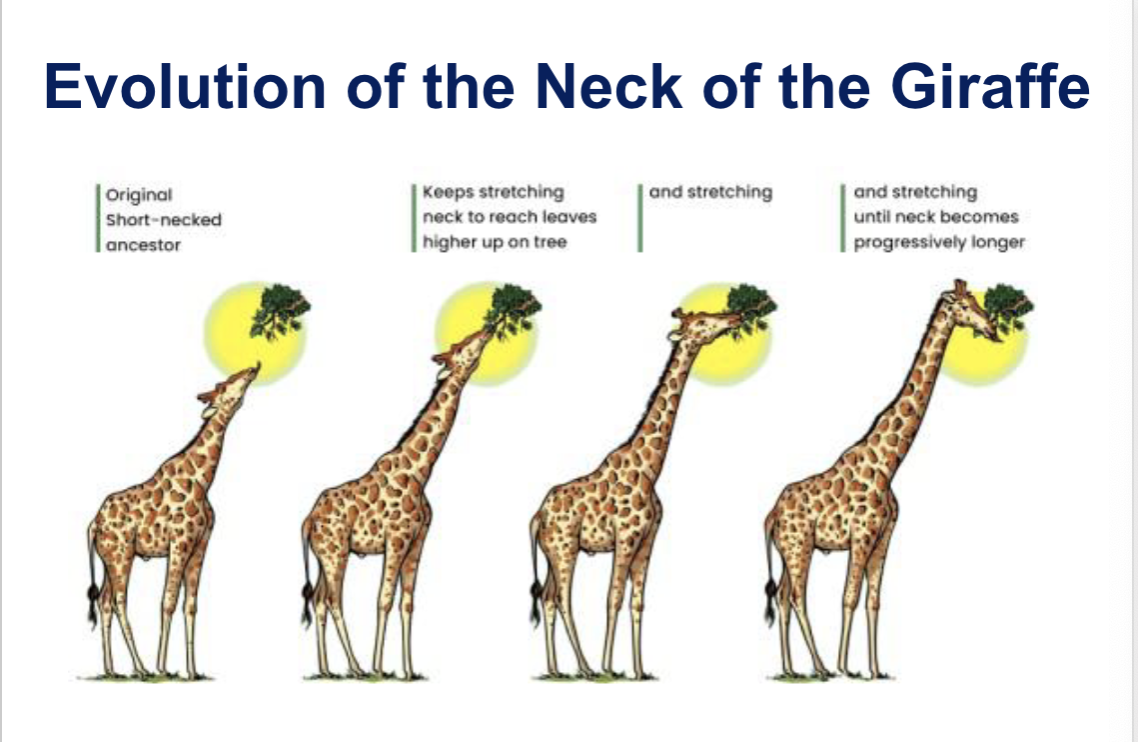
How is evolution defined in biological populations? (6)
Changes in the heritable characteristics of biological populations over successive generations.
At what level in the hierarchy of biological organization does life start?
Life starts at the cell level.

What is an atom in the biological hierarchy of organization?
An atom is the smallest unit of an element of matter.
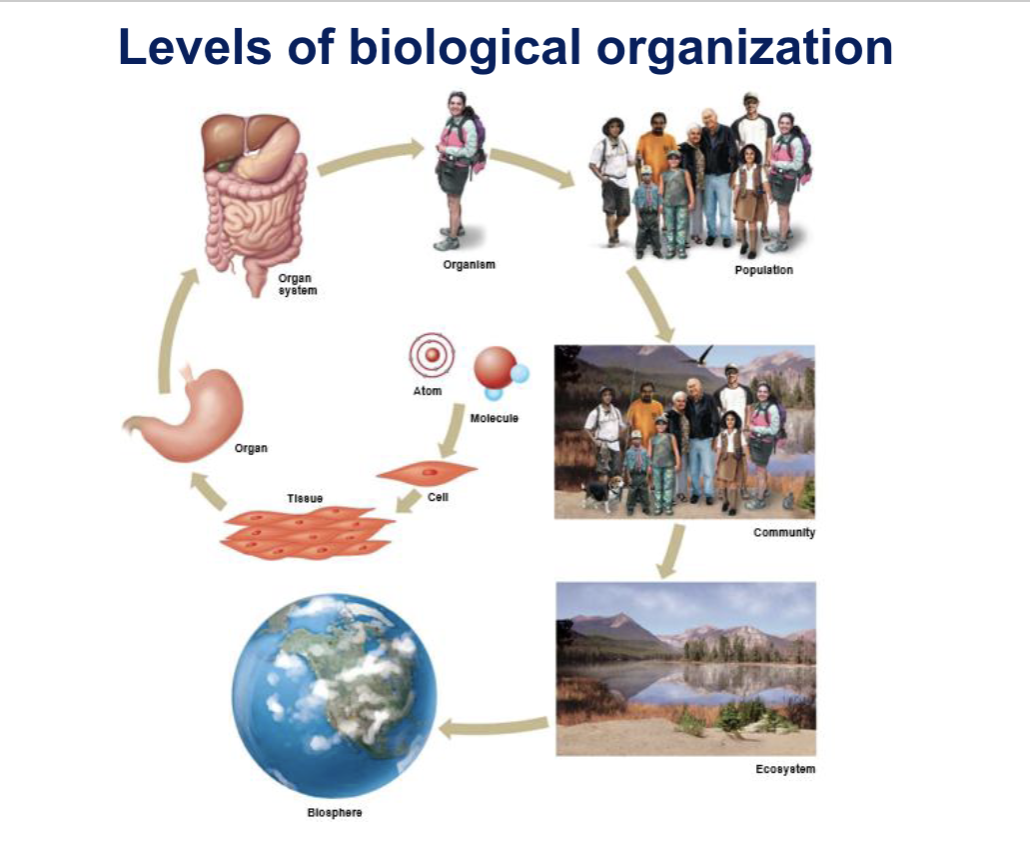
What is a molecule in the biological hierarchy of organization?
A molecule is more than one atom in a stable association.
What is a tissue?
Association of cells with the same general structure and function.
What is an organ?
Association of several tissue types that carry out a specific function.
What is an organ system?
Two or more organs that work together to carry out a general function, such as digestion or movement.
What is an organism?
An individual living being composed of several organs or organ systems.
What is a biological population?
A group of individuals of the same species living in the same area.
What is a biological community?
Several populations of different species who inhabit the same area and interact with each other.
What is an ecosystem?
All of the organisms in a given area plus all of the nonliving matter and energy.
(Biotic and Abiotic factors interacting wth one another)
What is the biosphere?
All ecosystems combined, representing the portion of Earth occupied by living organisms.
→ The global zone of air, land, and water occupied by living organisms
What are the three domains used to classify living things?
Domain Bacteria (Prokaryotes)
Domain Archaea (Prokaryotes)
Domain Eukarya (Eukaryotes)

What key cellular feature distinguishes prokaryotes from eukaryotes?
Prokaryotes do NOT have a nucleus (No Nucleus)
Eukaryotes have a nucleus (With Nucleus).
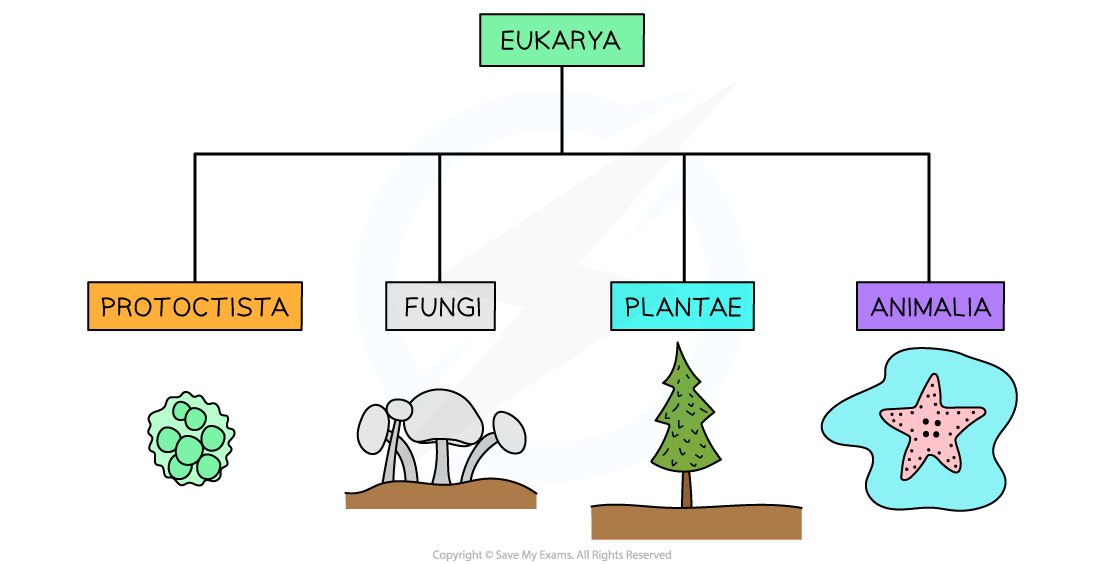
What four kingdoms are included in the Domain Eukarya?
Kingdom Animalia
Kingdom Protista
Kingdom Fungi
Kingdom Plantae
What is the difference between science and knowledge?
Science is the study of the natural world, while
knowledge is the information provided by science (what we know about the natural world).

What are the five steps of the scientific method?
Start with an Observation
Develop a Hypothesis
Perform Experiments
Collect and analyze Data
Develop a Conclusion
( OH ECAC)
What is a scientific hypothesis?
A hypothesis is a proposed explanation for a natural phenomenon based on observations or experimental studies.
Example of a hypothesis
.

What is a scientific theory?
A theory is the highest status a hypothesis can reach, which expresses high confidence but can still be refuted in the future.
In the scientific discovery of the cause of ulcers, what observation and hypothesis were formed?
Observation: Many patients had a particular bacterium near their ulcers.
Hypothesis: Helicobacter pylori is the cause of gastritis and ulcers.
What conclusion was reached after experimentally testing Helicobacter pylori in relation to ulcers?
Helicobacter pylori was determined to be the cause of most ulcers and can be cured by antibiotics.
What is an experimental variable in a controlled study?
An experimental variable is the variable that is purposely changed or manipulated, while all other variables remain constant.
How does a test group differ from a control group?
A test group is exposed to the experimental variable, while a control group is NOT exposed to the experimental variable and serves as a comparison baseline.

What is the definition of emerging infectious diseases?
Diseases that have newly appeared in a population OR have existed but are rapidly increasing in incidence or geographic range.
What four examples of emerging infectious diseases are listed in the lecture?
Bird flu
Swine flu (H1N1 Influenza Virus)
MERS-CoV
SARS-CoV

What is Severe Acute Respiratory Syndrome (SARS) and what caused it?
It is a coronavirus family member and is thought to have risen in China due to the consumption of Civets