Energy and Force(momentum)
 Call Kai
 Learn
Learn Practice Test
 Spaced Repetition
 Match
Match Flashcards
 Knowt Play
1/19

There's no tags or description
Looks like no tags are added yet.
Name | Mastery | Learn | Test | Matching | Spaced | Call with Kai | Chat |
|---|
No analytics yet
Send a link to your students to track their progress
20 Terms
When constant force applied to a body,
Whats the bodies KE?
KE = WD on body
WD for gas is
p x change in V
P =
Fv
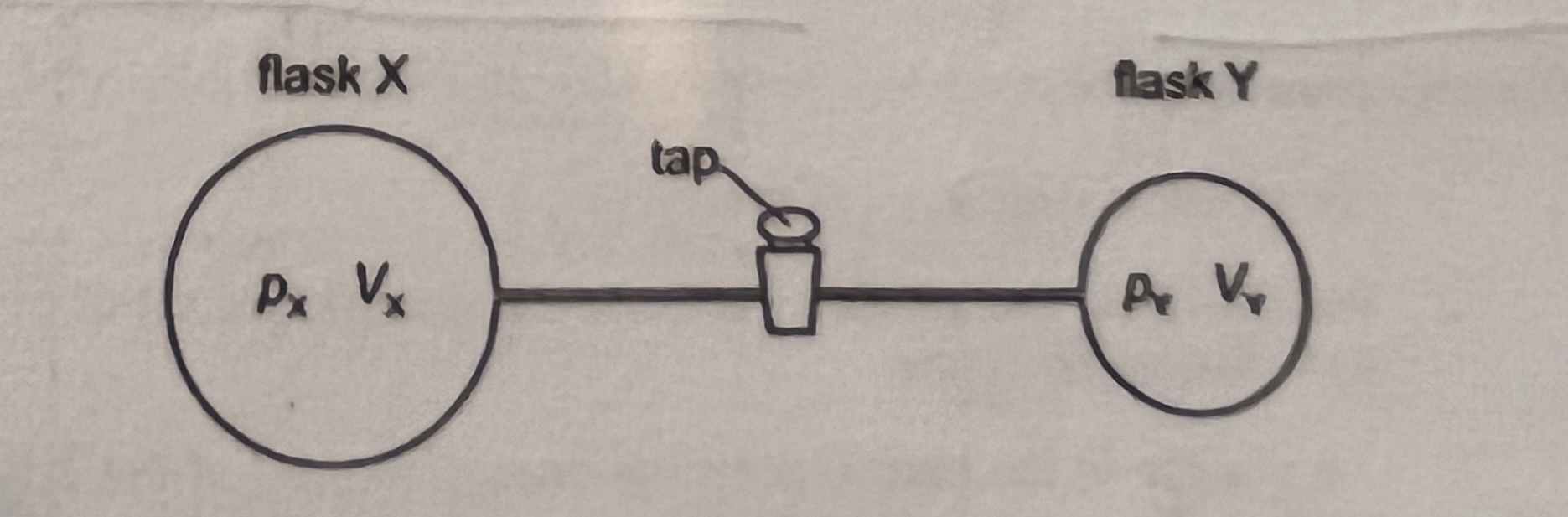
pV=?
pxvx + pyvy
How to find EPE (1/2kx²) with only x(extension) and mass?
EPE= (1/2)kx² , k = N/m , x is extension
mg=kx
EPE = (1/2)mgx
3 forces
line of focr
Why got force to middle during rotation
Rotating at constant speed → net force to change direction
Change in direction → acceleration to center of rotation
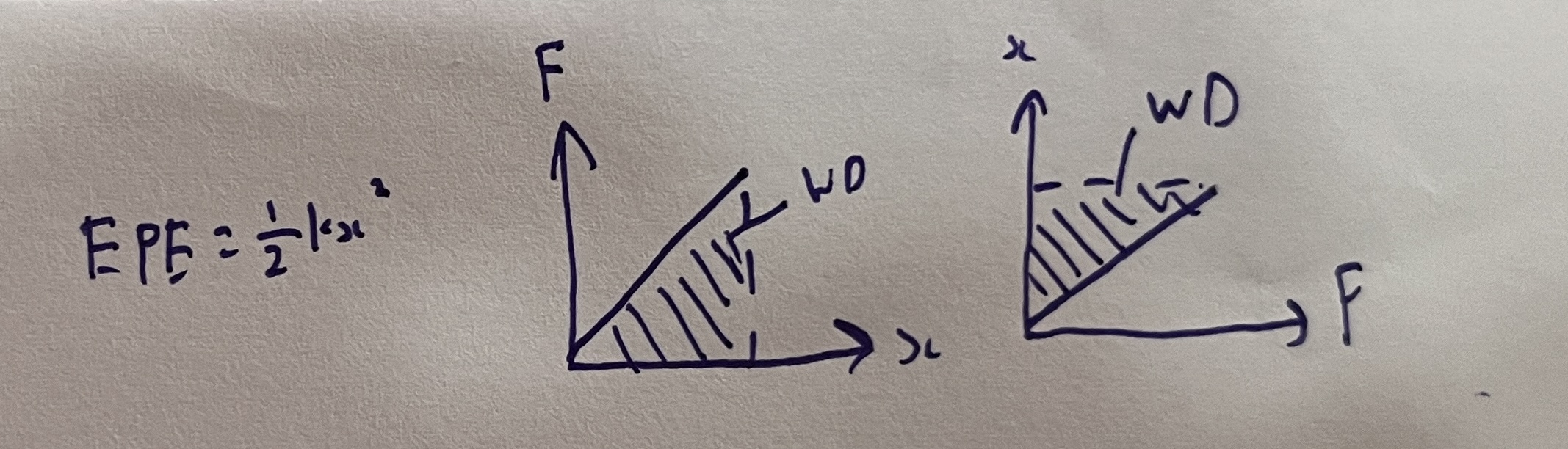
WD is area under F-x graph
N1L
Object will stay in its original state of motion(moving/stationary) if no external force acts on it
N2L → dp/dt = F
Large change in momentum in short span of time = greater force
N3L
Action-Reaction Pair
Equal Magnitude, Opposite Direction
Principle of conservation of momentum
Total momentum of a system of bodies is constant provided no external resultant force acts on the system
Impulse = Change in momentum
MUST TAKE CHANGE IN EACH SEPARATE COMPONENT
m(Vf - Vi)
total impulse, J =(Jx²+Jy²)^1/2
Equilibirum
No net resultant force in any direction
No net moment about any axis
Collision
Action-Reaction pair
1st Law of Thermodyanmics
change in U = Q + Won
Elastic Collision
Total KE remains the same before and after
NOT DURING
Both bodies do not stick tgt and have diff velocity
Derive KE
Initially Stationary,
WD = Fs, v² = u² + 2as
F = - du/dx
force is always trying to bring item to lower potential
Parabolic path
Constant horizontal velocity
Constant vertical acceleration