energy
 Call Kai
 Learn
Learn Practice Test
 Spaced Repetition
 Match
Match Flashcards
 Knowt Play
1/30

There's no tags or description
Looks like no tags are added yet.
Name | Mastery | Learn | Test | Matching | Spaced | Call with Kai | Chat |
|---|
No analytics yet
Send a link to your students to track their progress
31 Terms
how to cope with environmental variation
energy!
what forms does energy exist in
radiant energy - sunlight
chemical energy - stored in the bonds of food molecules
kinetic energy - associated with movement of molecules, proportional to temperature
autotrophs
assimilate energy from sunlight (photoautotroph) or inorganic compounds (chemoautotroph)
energy is converted into chemical energy stored in the bonds of organic molecules
bacteria, protists, plants
heterotrophs
obtain energy by consuming organic compounds from other organisms
this energy originated with organic compounds synthesized by autotrophs
includes herbivores, preators, parasites, detritivores
bacteria, protists, fungi, animals
autotrophy: chemosynthesis
obtain e- and energy from inorganic compound
synthesisze atp and nadph
fix co2 into carbohydrates
store for later use or biosynthesis
oxidation, to calvin cycle reduction electron gain
autotrophy: photosynthesis
obtain e- from H2O with energy from sun
oxidation e- loss light reaction
synthesis ATP and NADPH
fix CO2 into carbohydrate
calvin cycle reduction electron gain
store for later use or biosynthesis
why are plants green?
chlorophyll b gets red lights and chlorophyll a gets uv, blue, and purple
reflect green because thats what they dont absorb
photosynthesis constraints: light
rate of photosynthesis determines the supply of energy to a plant for growth and reproduction much adadptive pressure to maximize photosynthesis
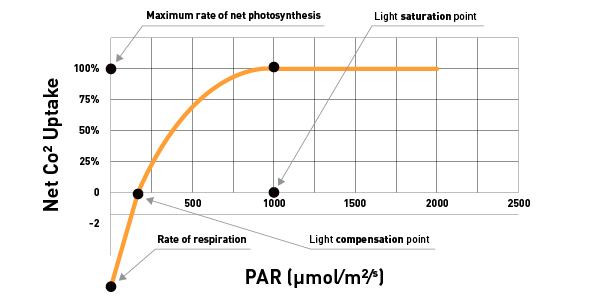
light response curves
light compestaion point: co2 uptake by Ps is balanced by co2 loss by respiration
saturation point: photosyntehsis no longer increases as light increases
acclimatization to different light levels
sun vs shade leaves
sun leaves will have more cholorphylls, thicker leaves, more stomata because they can maximize the co2 is the limiting factor not, less lobed
constraints on photosynthesis: water
tradeoff water conservation vs. energy gain and cooling
closing stomates also increase light damage to leaf
reduced and excited oxygen species peroxides radicals
constraints on photosynthesis: temperature
rate of chemical reactions increase
structural integrity of mebranes light reactions take place across membranes
acclimatization: changing properties of enzymes and membranes
constraints on photosynthesis: photorespiration
rubisco
carboxylase: fixes co2 in the calvin cycle
oxygenase: takes up oxygen and breaks down carbon compounds releases co2 net energy loss
balances depends on
ratio of o2 to co2
temperature more o2 bound when hotter
photorespiration can protect the plant at high light elvels but it is generally a bad thing
at high temps in dry places plants close stomates o2 build up
c4 photosynthesis
spatial separtion of CO2 fixation vs calvin cycle
pep carboxylase
greater affinity for co2 compared to rubisco, no oxygenase activity
higher water use efficiency
c4 plants can keep their stomates closed more because PEP carboxylase has such a high affinity for co2 can limit transpiration
cam photosynthesis
temporal separation of CO2 fixation vs calvin cycle
open stomates at night
take up co2 using pep carbocylase store the 4-carbon organic acid in vacuole
close stomates during the dau
4-carbon compound borken down co2 released in cell used in calvin cycle
heterotrophs
obtain carbon from organic sources
herbivores predators parasites detritivores
food sources differ in chemistry and availability- tradeoffs
detritus is easy to obtain but low in energy live organisms are difficult to obtain but high in energy
animal cells are more energy rich compared to plants harder to obtain
herbivores have to eat more than carnivores, carnivores expend more energy hunting
water balance
water is the medium in which all biochemical reactions necessary for life occur
water content of organisms must stay between 60-90% body mass
organisms must balance uptake and loss of water and solutes (salts)
hyoposmotic
environment less saline than an organism cells, what usally happens which allows for water to be pulled throuhgt roots then xylem as water potential decreases up the plant
isoosmotic soil and plant
same salinity, what they try to do at night so the plant can rehydrate and reah equilibrium
hyperosmotic soil
more saline in the soil so it has more water potential than the roots of the plant
it will suck the water out of the roots

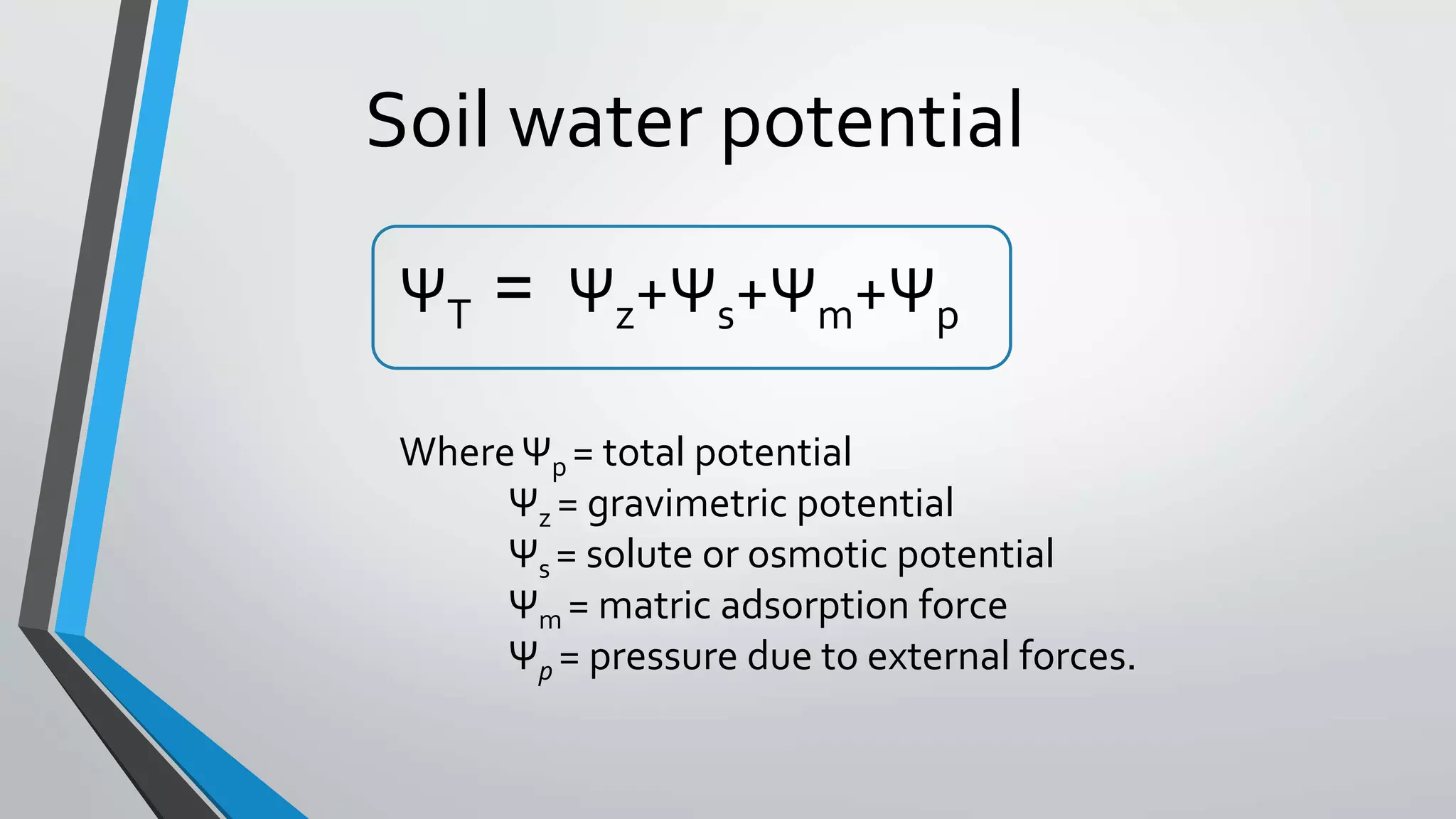
water potential
is the overall energy status of water in a system
water will move from a system of higher to lower water potential
psi o = osmotic potential energy associated with dissolved solutes negative value)
psi p = pressure potential (positive if pressure exerted)
psi m = matric potential energy associated with attractive forces of the surface of cells or soil (negative value)
psi v = humidity potential energy associated with humidity negative (drier is negative)
resistance to water potential
any force that impedes water movement
sin, waxy cuticle of insects, plants
pore space
soil portion of the total soil volume not occupied by solid , mineral, or organic particles filled wth water or air
matric potential
energy associated with atttractive forces on the surfaces of soil particles
sandy soils
store less water and doesn’t hold on to it
low matric potential\
gets oxygen
silt
in between sandy and clay size medium pore space and matric potential
fine soils
store lots of water but holds it tight
tiny pore space high matric potential
osmotic potential in soils
importnat for marine soils and where salinization occures
mircroorganisms and osmotic adjustment
they just have to adjust especially in transitional psaces like tide pools, banks, sandy shores, intertidal
they acclimitize in response and syntehsize organic solutes its important for enzyme function
saline soil is what?
it is hyperosmotic opposite of what we think because it sucks water out f plant roots, hypoosmotic means that roots would have high salinity than soil
day and night dehydration and rehydration in plants
during the day stomates are open and transpiration creates a gradient, negative means they are being pulled
at night the water potential is even in all parts of the plant and the soil, and stomates are closed
turgor pressure
hydrostatic outward force the cell membrane’s liquids push against the cell wall due to water gained from osmosis
for non woody plant species it is important for preventing wilting