5.1 types of hyperlipidaemia
 Studied by 0 people
 Call Kai
 Learn
Learn Practice Test
 Spaced Repetition
 Match
Match Flashcards
 Knowt Play
1/15

There's no tags or description
Looks like no tags are added yet.
Name | Mastery | Learn | Test | Matching | Spaced |
|---|
No study sessions yet.
16 Terms
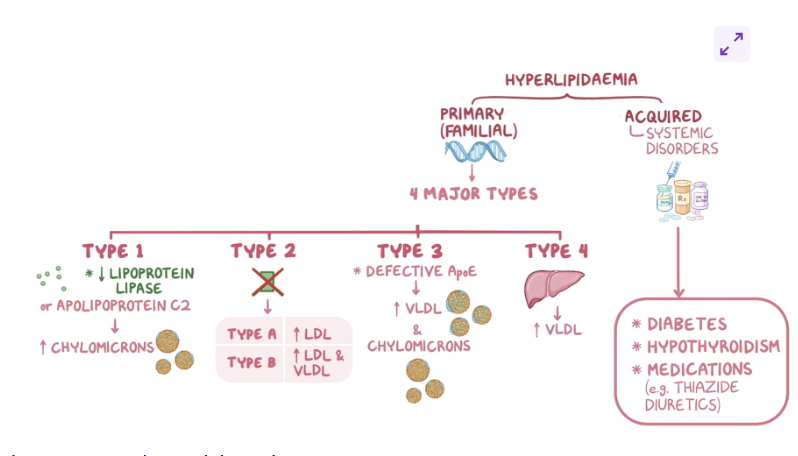
hyperlipidaemia is categorised into
primary (familial)
types 1: lipoprotein lipase deficiency
type 2: familial hypercholesterolemia
type 3: dysbetalipoproteinemia
type 4: familial hypertriglyceridemia
acquired (secondary)
primary hyperlipidaemia
genetic conditions passed through families leading to abnormal lipid levels
type 1 lipoprotein lipase deficiency cause
a deficiency in the enzymes lipoprotein lipase/ apolipoprotein C2 which are crucial for breaking down triglycerides from chylomicrons in the blood
type 1 lipoprotein lipase deficiency effect
increased chylomicrons in the blood stream → hyperlipidaemia
type 2 familial hypercholesterolemia: Type 2A
characterised by an increase in LDL caused by mutation in LDL receptor gene
type 2 familial hypercholesterolemia: Type 2B
involves elevated LDL and VLDL linked to defective regulation of lipoprotein production
type 2 familial hypercholesterolemia effect
both subtypes result in elevated cholesterol levels particularly in LDL AKA bad cholesterol
type 3 dysbetalipoproteinamia cause
defective ApoE (Apolipoprotein E) a protein involved in lipid metabolism playing a role in the clearance of chylomicron remnants and VLDL from the blood stream
type 3 dysbetalipoproteinamia effect
elevated triglyceride levels in the blood increasing the risk of atherosclerosis
type 4 familial hypertriglyceridemia cause
characterised by increased VLDL production in the liver
type 4 familial hypertriglyceridemia effect
elevated triglyceride levels in the blood which can increase risk of cardiovascular disease
acquired hyperlipidaemia
occurs due to systematic disorders or certain medication
acquired hyperlipidaemia causes
diabetes
hypothyroidism
medications
diabetes
insulin resistance in diabetes can increase production of VLDL and decrease HDL
hypothyroidism
low thyroid levels reduce lipid metabolism leading to elevated cholesterol levels and LDL
medications
thiazine diuretics can raised the lipid levels by altering fat metabolism