Blood & Hematopoiesis - Histo
 Call Kai
 Learn
Learn Practice Test
 Spaced Repetition
 Match
Match Flashcards
 Knowt Play
1/274

There's no tags or description
Looks like no tags are added yet.
Name | Mastery | Learn | Test | Matching | Spaced | Call with Kai | Chat |
|---|
No analytics yet
Send a link to your students to track their progress
275 Terms
What type of tissue is blood classified as?
Specialized connective tissue
What is the main division of blood components (2 types)?
Acellular component (55%) and Cellular component (45%)
What percentage of blood is acellular component (plasma)?
55%
What percentage of blood is cellular components?
45%
What's the main difference between plasma and serum?
Plasma has clotting elements, serum does not
What is plasma with clotting elements called?
Plasma
What is plasma without clotting elements called?
Serum
What percentage of the acellular component (plasma) is water?
90%
What percentage of acellular component is plasma proteins?
9%
What function do plasma proteins provide?
Colloid osmotic pressure
What percentage of the cellular component of blood is erythrocytes (red blood cells)?
44%
What percentage of the cellular component of blood is leukocytes (white blood cells) and platelets?
1%
What are the two cellular components of blood?
1. Red blood cells (erythrocytes)
2. White blood cells (leukocytes) and platelets
What is the diameter of an erythrocyte?
7.5 μm (micrometers)
Why is the erythrocyte diameter important?
It's used as a histological ruler
What is the shape of an erythrocyte?
Biconcave disk
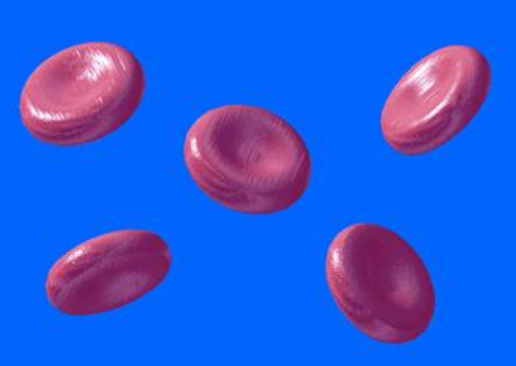
Do mature erythrocytes have a nucleus?
No
*Spit out nucleus as they develop (non-nucleated)
What is the life span of an erythrocyte?
120 days
How many erythrocytes are in one microliter (μl) of blood?
5 x 10⁶ per μl of blood
Which gender typically has more erythrocytes per unit volume?
Males
*Though there can be overlap between males and females
What is the main function of hemoglobin in erythrocytes?
O2 and CO2 binding and transport
Which blood type has no antigens in the ABO system?
Type O
What are the four possible blood types in the ABO system?
A, B, AB, and O
What are the two possible Rh factor types?
Rh+ (positive) and Rh- (negative)
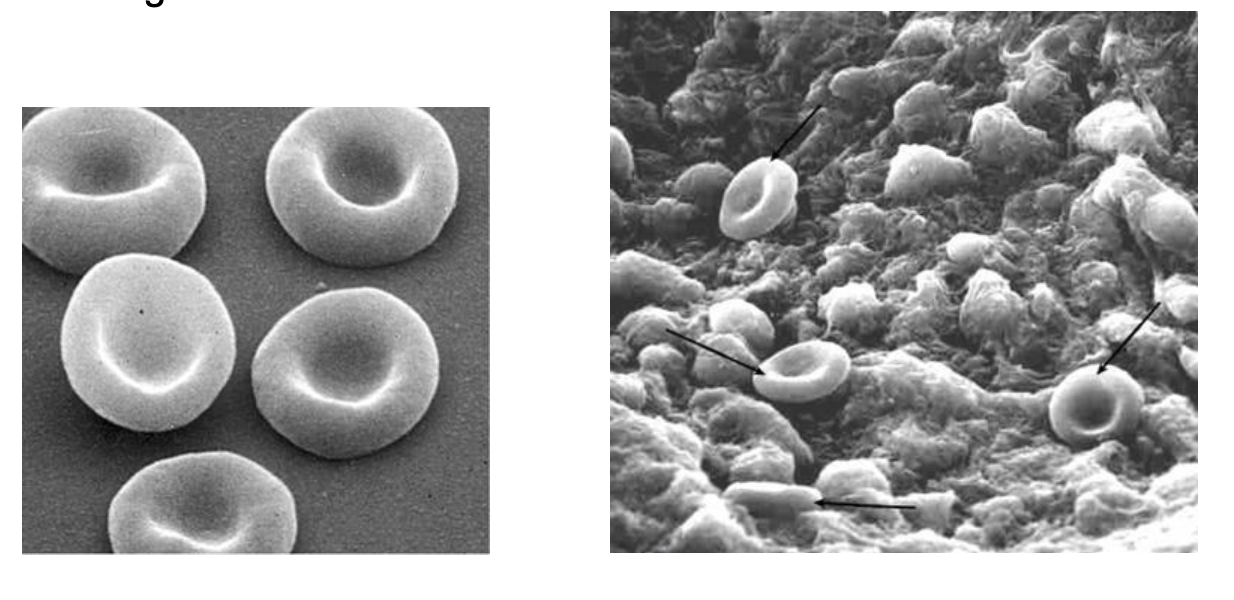
What do these scanning electron microscope (SEM) images show about erythrocyte shape?
The biconcave disk shape of red blood cells
What is erythrocyte membrane deformation?
The ability of red blood cells to bend and change shape to fit through capillaries due to their cytoskeletal organization
What is the approximate diameter of a capillary?
7 micrometers
What is rouleaux? (Note: Pronounced with French accent)
The stacking of erythrocytes (like a stack of coins)
What is anisocytosis?
Altered cell size in erythrocytes, which can be:
Macrocytosis (larger than normal)
Microcytosis (smaller than normal)
What is poikilocytosis?
Altered cell shape in erythrocytes
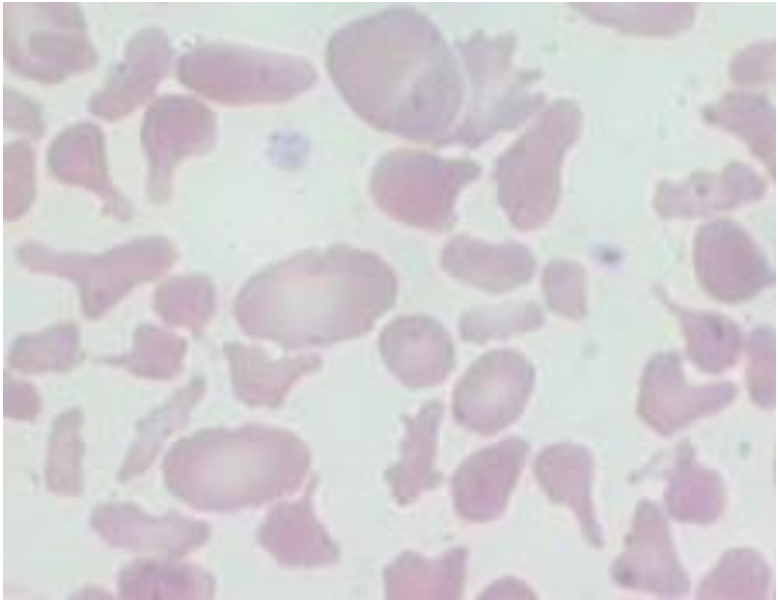
Name two types of poikilocytosis:
1. Sickling
2. Crenation
Why is membrane deformation important for erythrocytes?
To allow them to bend and pass through capillaries that are approximately the same diameter as the cell
What are the two main categories of white blood cells (leukocytes)?
1. Granulocytes
2. Agranulocytes
List the three types of granulocytes
1. Neutrophils
2. Eosinophils
3. Basophils
List the two types of agranulocytes
1. Lymphocytes
2. Monocytes
What is the normal range of leukocytes per microliter of blood?
6,500 - 10,000 leukocytes/μl
What is diapedesis?
The movement of cells through endothelial/epithelial layers
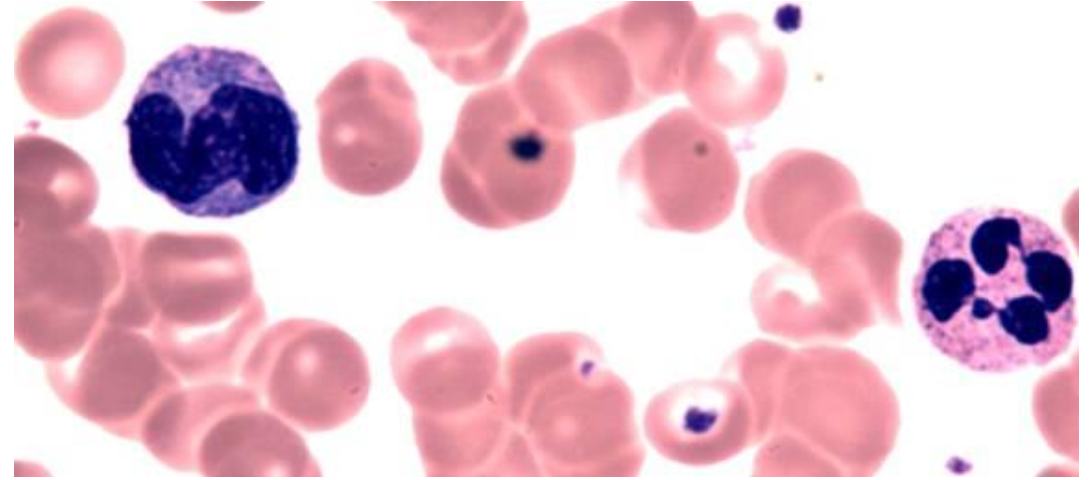
Looking at the image, which cells are leukocytes and how can you identify them?
The purple-stained cells with visible nuclei *They are larger and contain nuclei.
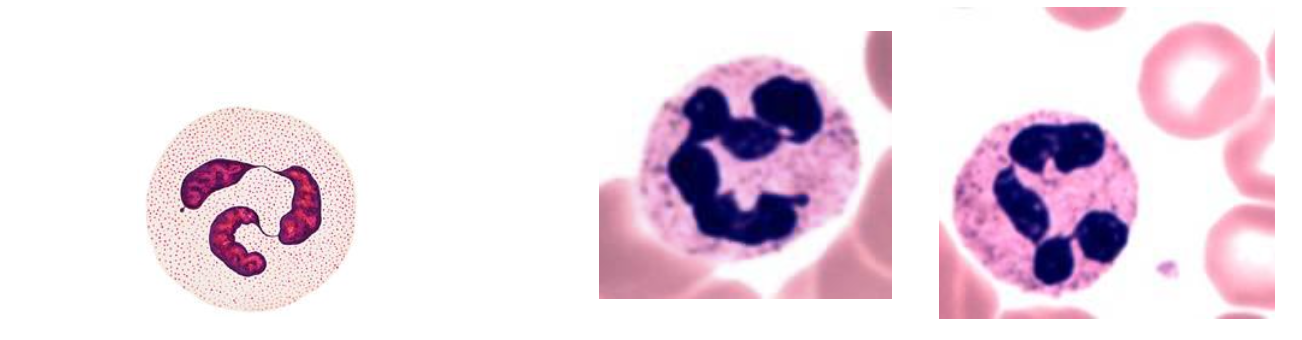
What's another name for neutrophils?
Polymorphonuclear leukocytes
What is the size range of neutrophils?
10-15 micrometers (μm)
What percentage of white blood cells are neutrophils?
60-70%
*Most numerous white blood cell!
What is the normal range of neutrophils per microliter of blood?
3,500-7,000/μl
What is the lifespan of neutrophils?
Short life - few days
What is a Barr body in neutrophils?
Inactivated X chromosome visible in female cells
*If you see it = female; if you don't see it = could be male or female
What are the three types of granules in neutrophils?
1. Specific
2. Non-specific (azurophilic)
3. Tertiary
What do specific granules contain?
Small enzyme-containing granules
What do non-specific (azurophilic) granules contain?
Large lysosomes (acid hydrolases, etc)
What do tertiary granules contain?
Glycoproteins and enzymes
What is the characteristic nuclear shape of neutrophils?
Multi-lobed nucleus
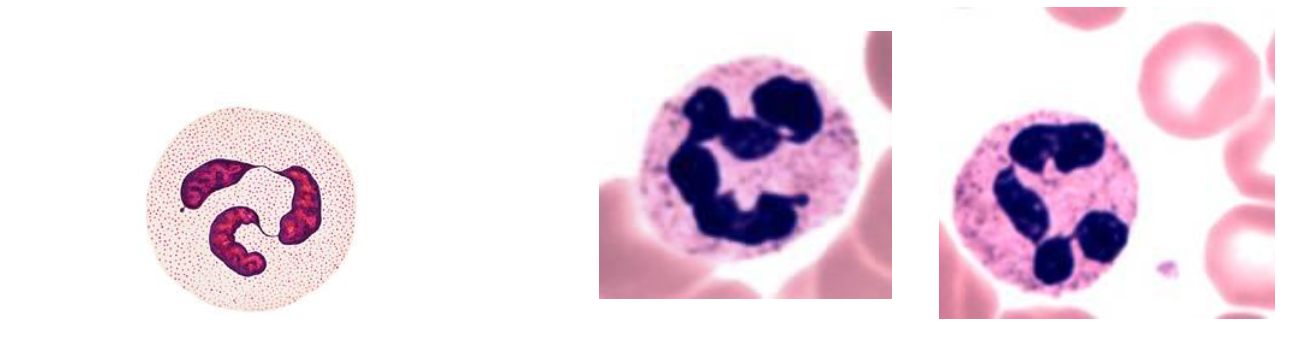
What is a Barr body in neutrophils?
Visible inactivated X chromosome
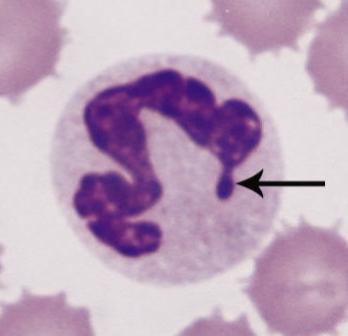
How are neutrophil granules described in appearance?
Pink/clear
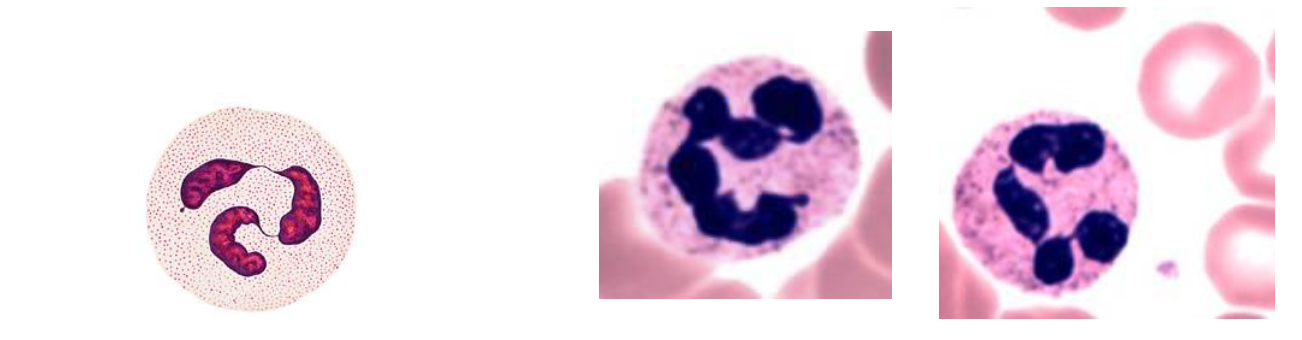
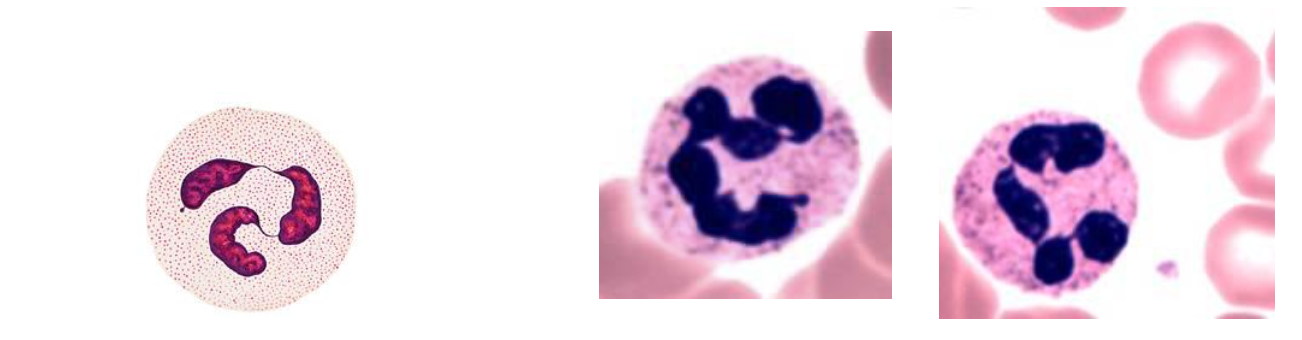
Looking at the microscope images, how can you identify a neutrophil?
Look for:
Multi-lobed nucleus (2-5 lobes)
Pink/clear granules in cytoplasm
What is the main function of neutrophils?
Act as "microphages" - phagocytose and destroy bacteria
*"Micro" means they are small eaters
What molecules help neutrophils attach to endothelial cells?
Selectin and integrin molecules
*This process is called margination
What is the first step in neutrophil function?
Attachment to endothelial cells
What is the second step in neutrophil function?
Pass through endothelium into connective tissue
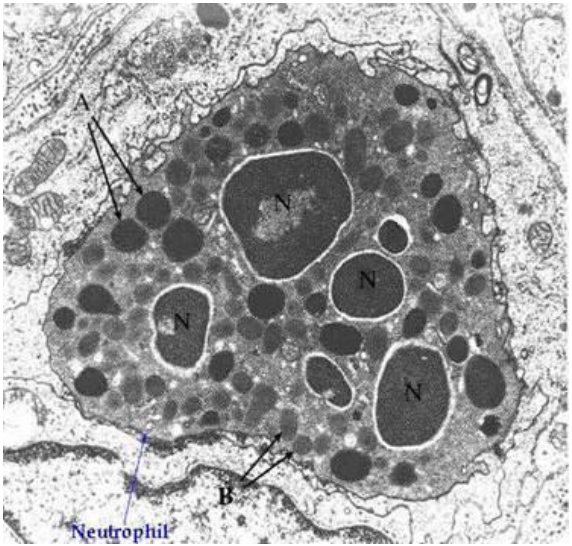
What happens immediately after bacteria are phagocytized?
The bacteria are killed by:
Enzymes
Free radicals (respiratory burst)
What inflammatory mediator do neutrophils release?
Leukotrienes, which begin inflammation
What happens to neutrophils after they fight infection?
They die and form pus
Why might neutrophil counts be underestimated in blood samples?
Due to adhesion to endothelial cells
What does "phagocytize" mean?
To engulf and internalize particles/organisms (like bacteria)
What is the respiratory burst?
Release of free radicals to kill bacteria after phagocytosis
What is the end result of bacterial phagocytosis by neutrophils?
1. Bacteria are destroyed
2. Neutrophil dies
3. Pus forms
What is the size range of eosinophils?
10-15 μm
What percentage of total leukocytes are eosinophils?
4% (2-6%)
What is the lifespan of an eosinophil?
Short life - few days
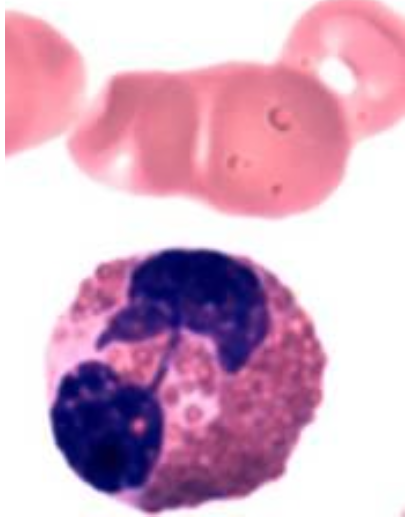
Identify the key morphological features of this eosinophil.
Bilobed nucleus
Large "red" tinted granules with dense core
What are the two types of granules found in eosinophils?
What is the concentration of eosinophils in blood?
150-400 per μl of blood
What is the nuclear shape of an eosinophil?
Bilobed nucleus
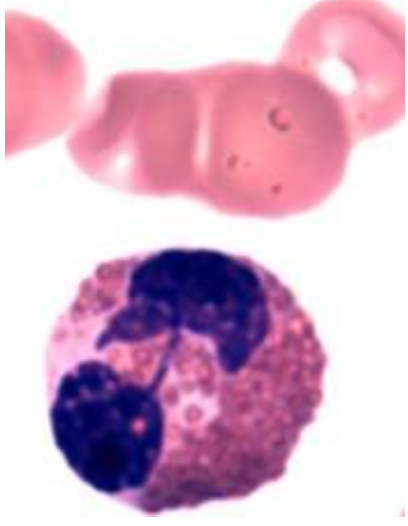
What is the characteristic appearance of eosinophil granules?
Large "red" tinted granules with dense core
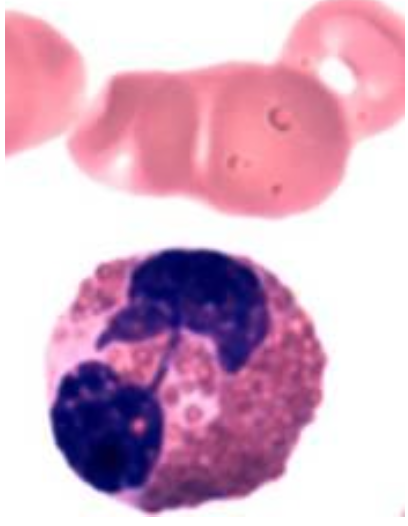
What are specific granules in eosinophils?
Large granules containing major basic protein and enzymes
What are non-specific (azurophilic) granules in eosinophils?
Lysosomes containing hydrolytic enzymes
What type of granules are primary in eosinophils?
Specific granules
Name the two types of granules found in eosinophils.
1. Specific granules
2. Non-specific (azurophilic) granules
What are the two main targets that eosinophils destroy?
1. Antibody-antigen complexes
2. Parasitic worms
How do eosinophils locate their targets?
They migrate to the site of reaction by responding to chemical signaling
What protein do eosinophils release to kill parasites?
Major basic protein
What process releases major basic protein from eosinophils? (kill parasites)
Degranulation
Besides killing parasites, what other method of destruction do eosinophils use?
They engulf and destroy antibody-antigen complexes
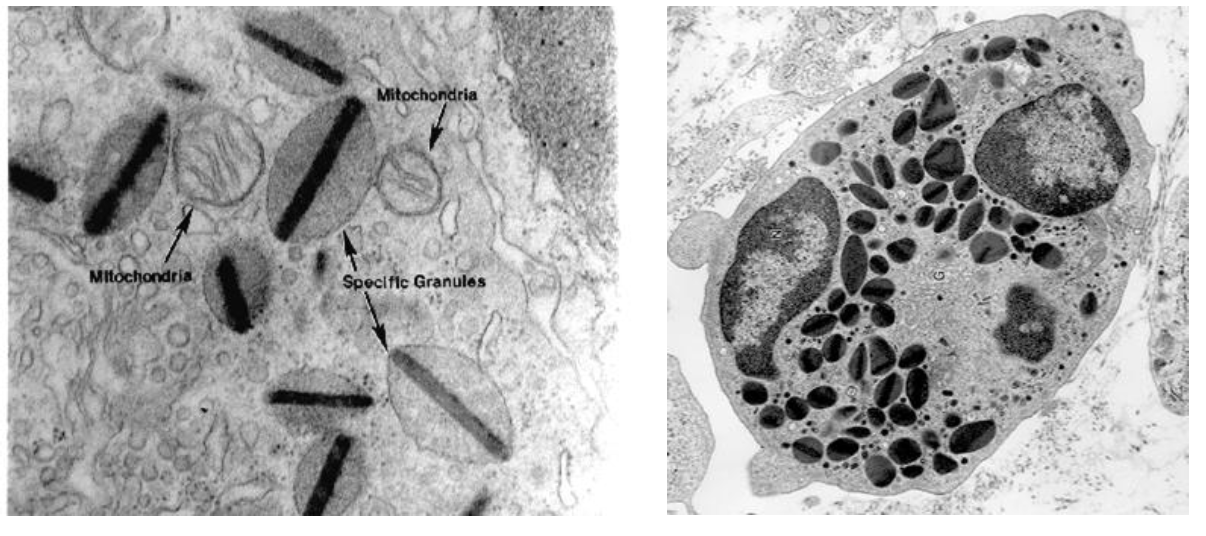
What structures are labeled in this electron micrograph of an eosinophil?
Mitochondria and specific granules
What is the size range of basophils?
8-12 μm
What percentage of leukocytes are basophils?
Less than 1%
What is the concentration of basophils in blood?
50-100 per μl of blood
What is the approximate lifespan of basophils?
Years (long life)
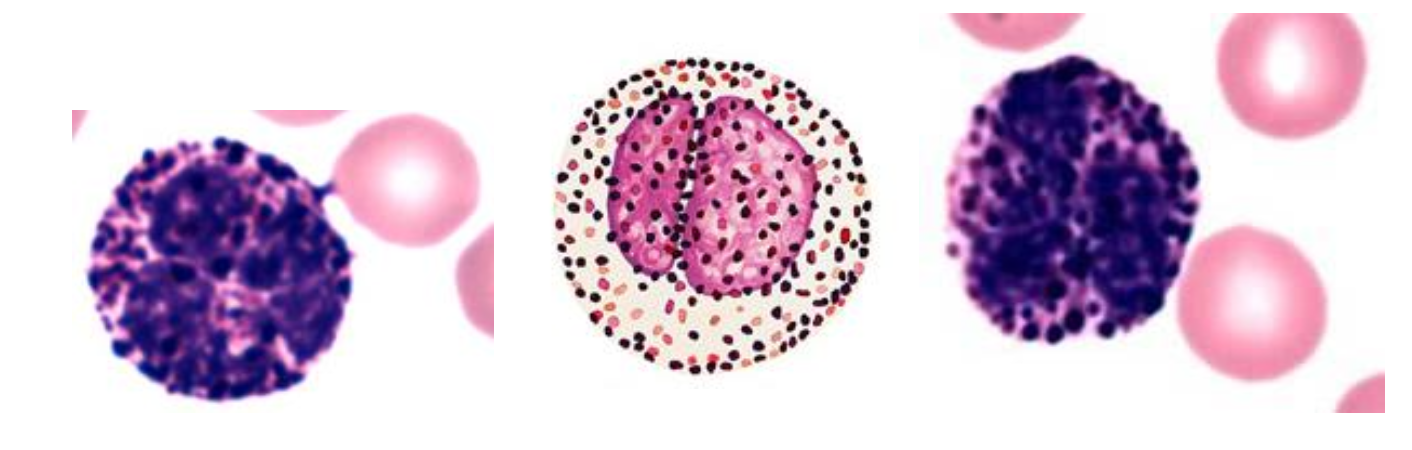
What is the characteristic appearance of basophil granules?
Large "blue" tinted granules
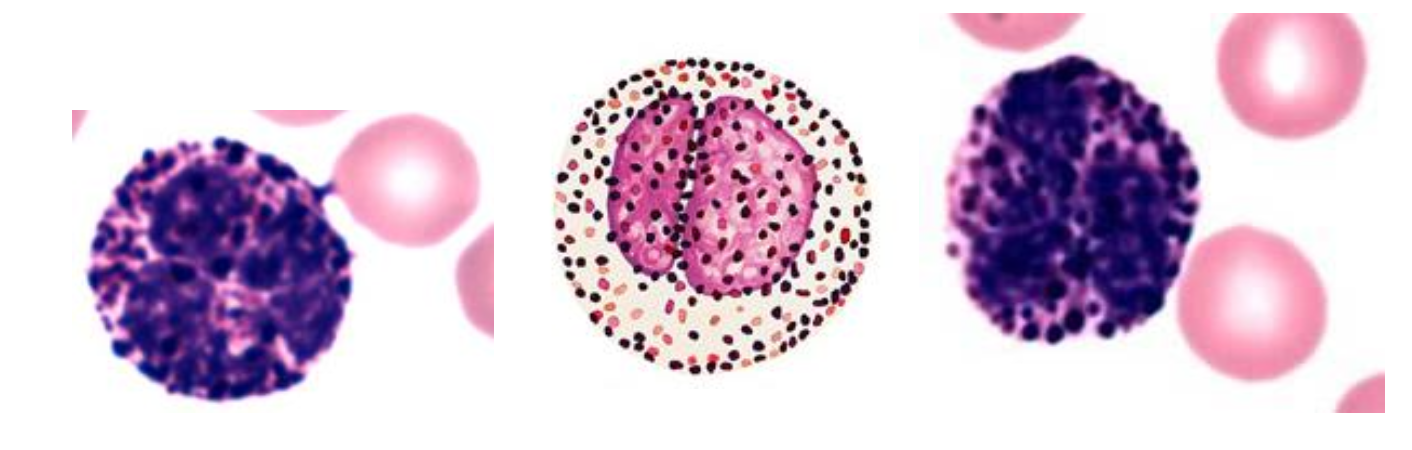
What shape is a basophil's nucleus?
S-shaped (usually obscured by granules)
Name two substances found in specific granules of basophils.
Heparin and histamine
What do non-specific (azurophilic) granules of basophils contain?
Lysosomes with hydrolytic enzymes
How are basophils similar to mast cells?
They have similar functions but different origins
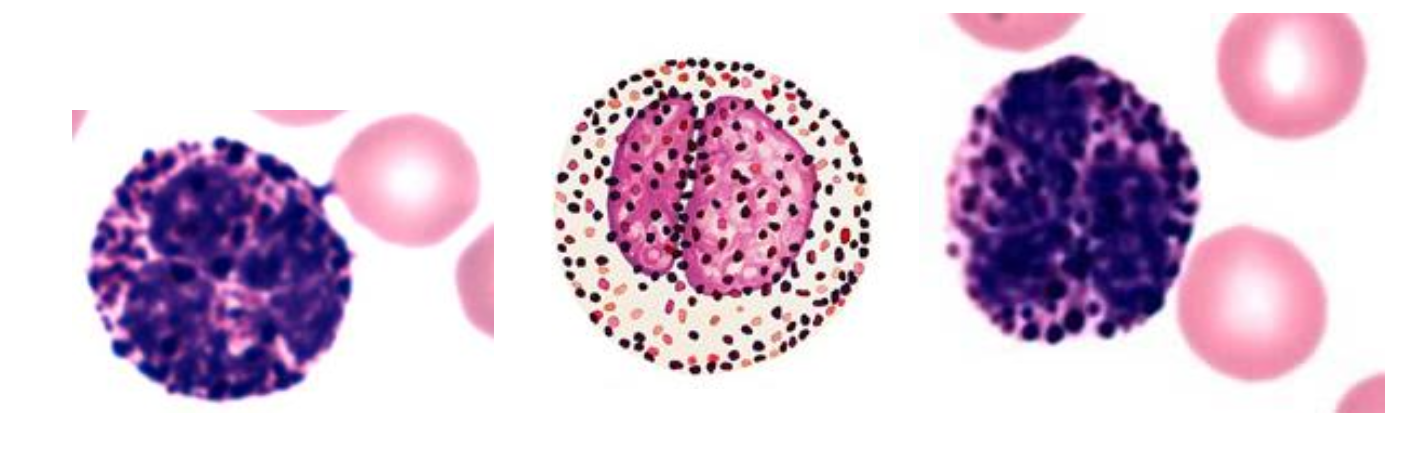
Why is the nucleus difficult to see in basophils?
It is obscured by the large blue-tinted granules
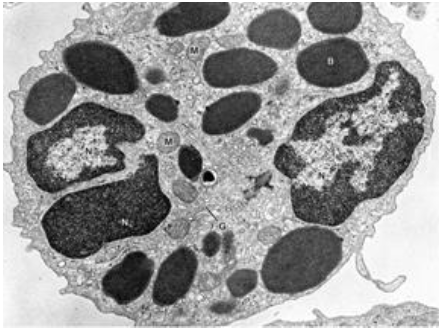
Name the two types of granules in basophils.
1. Specific granules (large)
2. Non-specific (azurophilic) granules
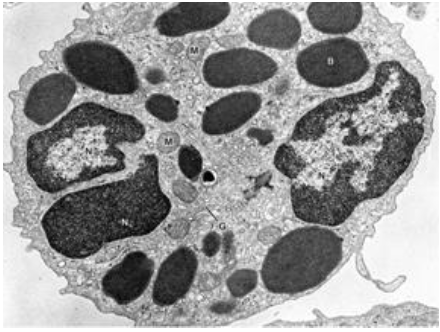
What are the two main functions of basophils?
1. Initiate inflammation
2. Mediate anaphylaxis
What triggers basophils to release their specific granules?
Binding of antigens to IgE
What are two effects of histamine release from basophils?
1. Vasodilation
2. Smooth muscle contraction
What is the function of heparin released by basophils?
Acts as an anticoagulant
What do basophils synthesize to activate leukocytes?
Leukotrienes
What is the sequence of events in basophil activation?
1. Antigen binds to IgE
2. Specific granules are released
What is the size range of monocytes?
12-25 μm
What percentage of leukocytes are monocytes?
3% (2-8%)