Language
 Call Kai
 Learn
Learn Practice Test
 Spaced Repetition
 Match
Match Flashcards
 Knowt Play
1/17

There's no tags or description
Looks like no tags are added yet.
Name | Mastery | Learn | Test | Matching | Spaced | Call with Kai | Chat |
|---|
No analytics yet
Send a link to your students to track their progress
18 Terms
Language
Uniquely human, socially shared and rule-based code used to communicate concrete and abstract meanings
· Uses sounds, symbols and gestures
· Allows ideas, thoughts and desires to be transmitted
· Each language has its own rules
· Begins in oral form, but occurs through writing, gesture, drawing, etc
Animal communication
· Communicate through sound, sight, touch and olfaction
· Bird calls/songs and bee dances communicate info but are restricted systems
· Dogs can associate sound sequences with commands/objects
Language components

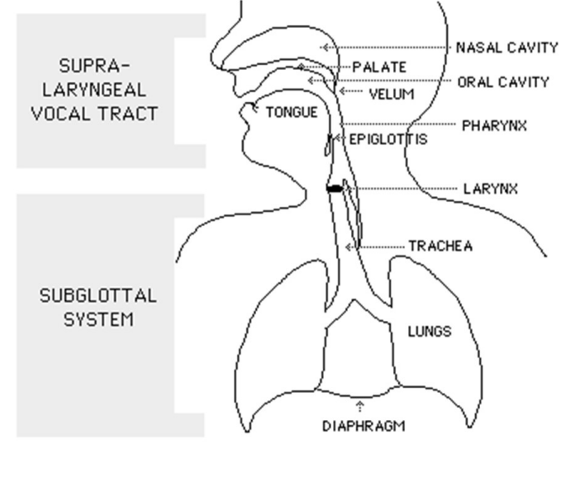
Producing sounds
1. Subpharyngeal system
2. Larynx
3. Subglottal system
Bloom and Lahey model
Language integrates:

Language vs speech
· Problems with speech production are not automatically a problem with language

Speech motor sequence
1. Respiration (lungs)
2. Phonation (larynx/vocal cords)
3. Articulation (lips, tongue, soft palate)
Production vs comprehension
· Producing language and understanding language are separate processes
· In child development, comprehension can be superior to production
- Early production errors may reflect simplification rather than poor understanding
Language development stages

Meaningful speech
Achieving a critical mass of words/phrases AND learning linguistic rules (grammar, morphology, phonology)
· Once rules are learned, children can combine words and generate language rather than only imitate
· Errors in imitation, production, meaning, tense and plurals are error-feedback loops that contribute to development
Brain changes during language development
· Connectivity and myelination of speech zones
· Changes in dendritic complexity, particularly in Broca's area
· Maturation of cortical language areas plus genetic and environmental influences
· Developmental milestones differ for multilingual children
Left hemisphere dominance
· Dominant for language in most people
· Language is NOT located in only two areas
Language regions
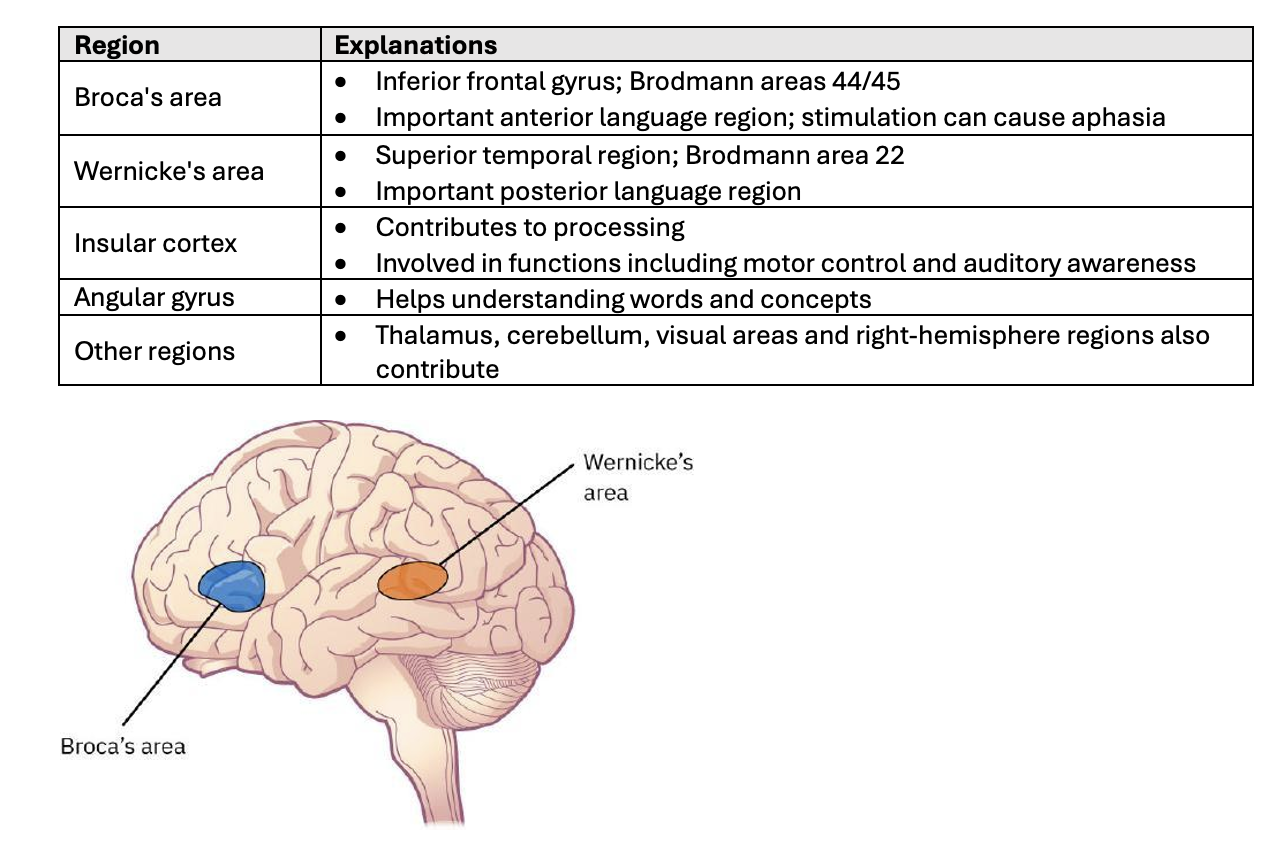
Modern view of language
· Language is a widely distributed network
· All lobe regions can all activate in response to words
· Broca's and Wernicke's areas are important specialised nodes
Brain stimulation evidence
· Stimulating parts of motor cortex can cause speech arrest
· Stimulating parts of Broca's area can disrupt language
Left vs right hemisphere

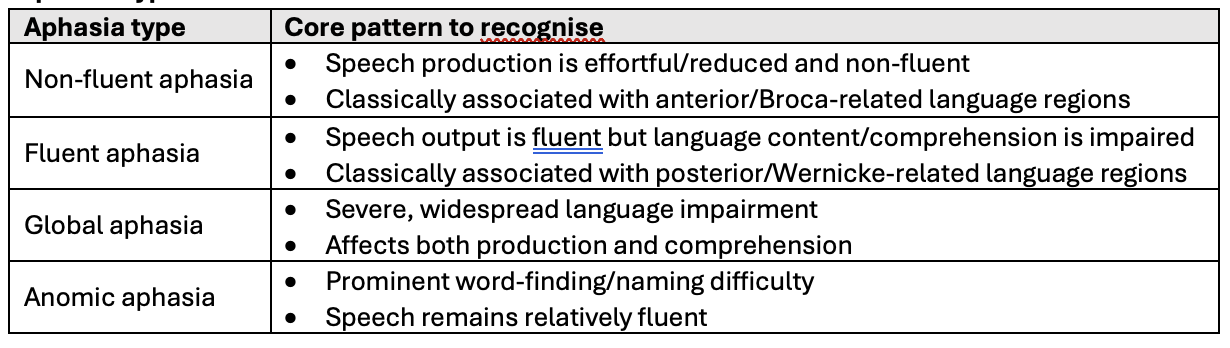
Aphasia
Acquired impairment/loss of language caused by brain damage
· Can affect production, comprehension or naming
Aphasia types