UGA A&P lab practical 1
 Call Kai
 Learn
Learn Practice Test
 Spaced Repetition
 Match
Match Flashcards
 Knowt Play
1/177

There's no tags or description
Looks like no tags are added yet.
Name | Mastery | Learn | Test | Matching | Spaced | Call with Kai | Chat |
|---|
No analytics yet
Send a link to your students to track their progress
178 Terms
superior
toward the head
inferior
away from the head
medial
toward the midline
lateral
away from the midline
superficial
near the surface
deep
away from the surface
anterior/ventral
front of the body
posterior/dorsal
back of body
proximal
Closer to the point of attachment
distal
Farther from the trunk of the body
ipsilateral
same side
contralateral
opposite side
frontal/coronal cut
separating anterior and posterior
transverse/horizontal cut
divides the body into superior and inferior portions
midsagittal cut
equal right and left sides
parasagittal cut
unequal right and left sides
oblique cut
diagonal cut
vertebral cavity

thoracic cavity

pleural cavity

pericardial cavity

abdominal cavity

interphase
period of the cell cycle between cell divisions
mitosis
part of eukaryotic cell division during which the cell nucleus divides
prophase
Chromosomes become visable, nuclear envelop dissolves, spindle forms
Metaphase
phase of mitosis in which the chromosomes line up across the center of the cell

anaphase
Phase of mitosis in which the chromosomes separate and move to opposite ends of the cell

Telophase
chromosomes begin decondensing and nuclear envelope begins to reform

cytokinesis
division of the cytoplasm
epithelial
A body tissue that covers the surfaces of the body, inside and out

nervous tissue
simple squamous
- single layer of flat cells allows for diffusion and absorption where little protection is needed
- found in blood vessel lining and air sacs of lungs

simple cuboidal
secretion and absorption; found in kidney tubules and ducts of many glands

simple columnar
- often ciliated, absorption, mucus secretion, and movement of particles in one direction
- found in digestive and upper respiratory tract

pseudostratified columnar
- appears to be layered but all cells are attached to basement membrane
- often ciliated to propel mucus;
- found in trachea and respiratory tract

stratified squamous
provide protection; most widespread epithelium of body; can. be keratinized (epidermis) or non-keratinized (lining of mouth, vagina and esophagus)

transitional epithelium
- stretches readily; cells change from cuboidal when nondistended and squamous when distended
- lines the ureters, urinary bladder, and urethra

dense regular
- tightly packed parallel fibers provide strength in one direction
- have more collagen fibers than loose to provide more resistance
- found in tendons, ligaments, and vertebrae

dense irregular
- mesh of random fibers provide strength in all directions
- found in reticular layer of dermis and some organs

areolar tissue
- type of loose connective tissue; random and web-like structure to provide cushioning and allow nutrients to diffuse
- contains ground substance, fibroblasts, and elastic and collagen fibers
- found in papillary layer of dermis and some organs

reticular
- mesh-like supportive framework for soft organs
- short, fine, highly branched collagenous fibers for network for other cells to attach
- found in liver, lymph organs, endocrine glands, and bone marrow
adipose
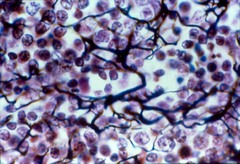
large, hollow fat cells push nuclei to periphery; little extracellular matrix

hyaline cartilage
- Most common type of cartilage; reduces friction at joints and keeps air passages open
- Short dispersed collagen fibers and lots of proteoglycans
- Found on the ends of long bones, bronchi, ribs, and nose

fibrocartilage
- thick bands of collagen fibers with chondrocytes dispersed
- compressible to absorb pressure
- found in intervertebral discs, pubic symphysis, discs of knee joint

elastic cartilage
- elastic fibers, collagen fibers, and proteoglycans produce a flexible framework
- more cells and lacunae than hyaline
- found in epiglottis and external ear

bone
Dense, hard connective tissue composing the skeleton

blood
- Connective tissue made of plasma, erythrocytes, leukocytes, and platelets
- allows for transportation of water, hormones, nutrients, and other materials

skeletal muscle tissue
provides voluntary movement and contraction; tissue contains striations and is stratified

cardiac muscle tissue
provides involuntary movement; tissue is striated and contains intercalated disks

smooth muscle tissue
provides involuntary movement to organs; contains no striations and spindle-shaped fibers

muscle fascicle
bundle of muscle fibers

muscle fiber
muscle cell

deep fascia
dense connective tissue on the surface of individual muscles

fusiform
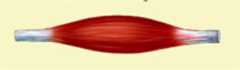
parallel skeletal muscle

convergent
widespread muscle fiber comes to singular point of attachment, typically a triangle
- ex: pectoralis major

unipennate
Fibers on one side of tendon
- ex: extensor digitorum

bipennate
fibers on both sides of tendon
ex: rectus femoris

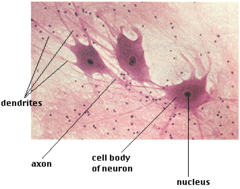
neuron cell body/ soma

dendrite
the bushy, branching extensions of a neuron that receive messages and conduct impulses toward the cell body
axon
the extension of a neuron, ending in branching terminal fibers, through which messages pass to other neurons or to muscles or glands
axon terminal
The endpoint of a neuron where neurotransmitters are stored
nerve
A bundle of nerve fibers (axons) in PNS
fascicle
bundle of muscle fibers
epineurium
surrounds the entire nerve
perineurium
coarse connective tissue that bundles nerve fibers into fascicles
endoneurium
delicate connective tissue around individual nerve fibers in nerve
epidermis
Outer layer of skin; 5 layers in thick skin and 4 in thin
dermis
The inner layer of the skin, containing hair follicles, sweat glands, nerve endings, and blood vessels
hypodermis
subcutaneous layer below the dermis; aerolar connective and adipose tissues provide fat storage, insulation, and cushioning
stratum basale
single layer of cuboidal stem cells that give rise to keratinocytes, tactile cells, and melanocytes; deepest layer of epidermis (most metabolically active)

stratum spinosum
- thicker layer of the epidermis that provides strength and flexibility to the skin
- keratinocytes synthesize keratin and glycolipids for waterproofing (metabolically active)

stratum granulosum
- a layer of the epidermis that marks the transition between the deeper, metabolically active strata and the dead cells of the more superficial strata
- 3-5 layers of keratinocytes with thickened membrane
stratum lucidum
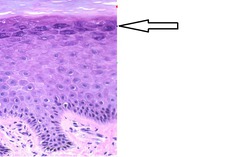
- a thin layer of the epidermis found only in the thick skin of the fingers, palms, and soles
- looks clear bc made of dead skin cells

stratum corneum
- superficial layer of epidermis
- layers of keratinized keratinocytes give a flaky appearance

papillary layer
- superficial layer of the dermis, made of loose, areolar connective tissue
- forms dermal papillae with stratum basale
- contains phagocytes, fibroblasts, and lots of capillaries

reticular layer
- deeper layer of the dermis that supplies the skin with oxygen and nutrients
- made of dense irregular connective tissue
- well vascularized and rich nerve supply
- elastin fibers provide movement and collagen fibers provide structure

hair shaft
The portion of hair that projects above the epidermis

piloerector muscle
a bundle of smooth muscle cells extending from dermal collagen fibers to the connective tissue root sheath of the follicle

sebaceous gland
oil gland

sweat pores
pores located on the surface of your skin that release sweat
merocrine sweat gland
most common; responds to elevated body temperature to aid in thermoregulation
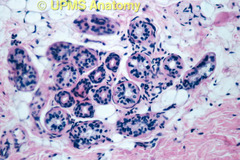
apocrine sweat gland
type of sweat gland that is associated with hair follicles in the armpits and genital regions

tactile corpuscles
touch receptors in the dermis
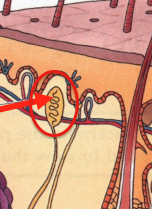
lamellar corpuscle
deep pressure receptors in the dermis

free edge
part of the nail plate that extends over the tip of the finger or toe
nail body
visible part of the nail
nail root
fastens the nail to the finger or toe by fitting into a groove in the skin

nail matrix
miotic basal cells responsible for nail growth

nail bed
skin underlying the nail plate

lunule
"little moon" an opaque white crescent at proximal end of nail
eponychium
cuticle

central canal
at the center of the osteon; contains blood vessels, nerves, and lymphatic vessels

concentric lamella
circular layers of calcified matrix
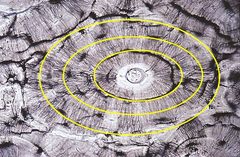
canaliculi
a small channel or duct; connect with other lacunae to communicate and transport nutrients

lacuna
space that houses an osteocyte; represented by darker dots; participate in communication

compact bone
Hard, dense bone tissue that is beneath the periosteum

spongy bone
composed of small needlelike pieces of bone and lots of open space
trabeculae
supporting bundles of bony fibers in cancellous (spongy) bone
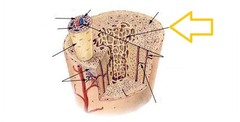
epiphysis
End of a long bone
