Hemodynamics, LINES, CO/CI and etc.
 Call Kai
 Learn
Learn Practice Test
 Spaced Repetition
 Match
Match Flashcards
 Knowt Play
1/39

Earn XP
Description and Tags
CVPS, LINES, CO/CI and etc.
Name | Mastery | Learn | Test | Matching | Spaced | Call with Kai | Chat |
|---|
No analytics yet
Send a link to your students to track their progress
40 Terms

phlebostatic axis
4th intercostal space, mid axillary line.
This is where we level to zero lines to ensure accurate numbers. This can be accomplished with the pt lying supine or HOB at 45. Lines should be zeroed every 4 hrs. this is level with the right atrium

CVP/RAP
central venous pressure or right atrial pressure. preload
what does CVP measure
estimates central venous blood/fluid volume
right heart function
how can CVP be affected?
decreased cardiac output, forced exhalation, HF, hypovolemia, PEEP, pleural effusion, PE, fluid status
what is PAP
pulmonary artery pressure

what does PAP measure?
left ventricular filling pressures.
Displayed like a BP normal sys: 15-25mmhg normal diastolic: 8-15 mmhg
how can PAP be affected?
decreased- hypovolemia
increased - hypervolemia, left ventricular failure
SVR
systemic vascular resistance and afterload
what does SVR measure?
measures the resistance in the circulatory system that is used to create blood pressure
how can SVR be affected?
vasoconstriction/vasodilation, plaque, afterload
what is cardiac index?
Cardiac output divided by body surface area. This gives us a more patient specific number
how can cardiac index be affected?
This can be affected by preload, after load, contractility, and the patient's body surface area.
what is cardiac output?
heart rate x stroke volume
how can cardiac output be affected?
This can be affected by after load, pre load, contractility. decreased HR or SV
What invasive lines can be used to measure hemodynamics?
arterial line
pulmonary artery catheter (swan Ganz)
right arterial pressure monitoring
central venous catheter
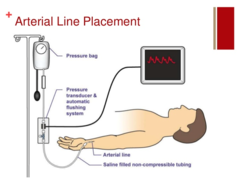
arterial line
Provide continuous BP readings and can be used for arterial blood samples.
pulmonary artery catheter purpose
Assess left ventricular function, assess pt's hemodynamic response to drugs and fluid
where are arterial lines placed?
In the radial (most common), brachial, or femoral artery
what is important to monitor with arterial lines?
circulation of the limb
can arterial lines be used for IV infusions?
no
how is pulmonary artery catheters placed?
threaded through the right side of the heart into a branch of the pulmonary artery
What is the nursing care for a patient with an invasive line?
Assist with line insertion, monitor respiratory and cardiac status, maintain line patency and integrity, obtain hemodynamic readings from catheter, prevent infection.
What hemodynamic changes may occur with dysrhythmias?
low SV, CO, BP
What is included in the assessment of the patient with dysrhythmias/signs of altered cardiac output?
changes in LOC, chest pain, hypotension, weak pulses, fatigue, SOB, crackles, dizzy, restlessness
what invasive lines can cause dysrhythmias?
PAC + PVC
these lines can tickle the heart and cause PA rupture or infarction
complications of invsasive monitoring
-thrombosis- flush the lines appropriately
-embolism- air entering system/clot dislodgment
-hemorrhage- loose connections/catheter dislodgment
-infection -cardiac tamponade
complications of CVP monitoring
infection, thrombosis, air embolism, pneumothorax, blood loss
Right preload
CVP (central venous pressure)
left preload
PAWP (pulmonary artery wedge pressure)
Preload
volume of blood in ventricles at end of diastole
what affects preload
breathing
atrial kick
amount of circulating volume
condition of vascular system
how is preload measured?
skin turgor
cap refill
CVP
afterload
The force or resistance against which the heart pumps.
what effects afterload?
condition of vascular system
-dilated vs constricted
-leaky
-drugs
how is afterload measured?
PVR and SVR
PVD
how do you prevent complications of an arterial line?
ensure all tubing connections are tightened. Loose connections can cause hemorrhage
what does the PR interval and QRS measure?
PR: 0.12-0.20
QRS: 0.06-0.12
left afterload
SVR
right after-load
PVR
What drugs decrease preload?
diuretics
nitro