Art history- Early roman empire
 Studied by 0 people
 Call Kai
 Learn
Learn Practice Test
 Spaced Repetition
 Match
Match Flashcards
 Knowt Play
1/18

There's no tags or description
Looks like no tags are added yet.
Name | Mastery | Learn | Test | Matching | Spaced |
|---|
No study sessions yet.
19 Terms
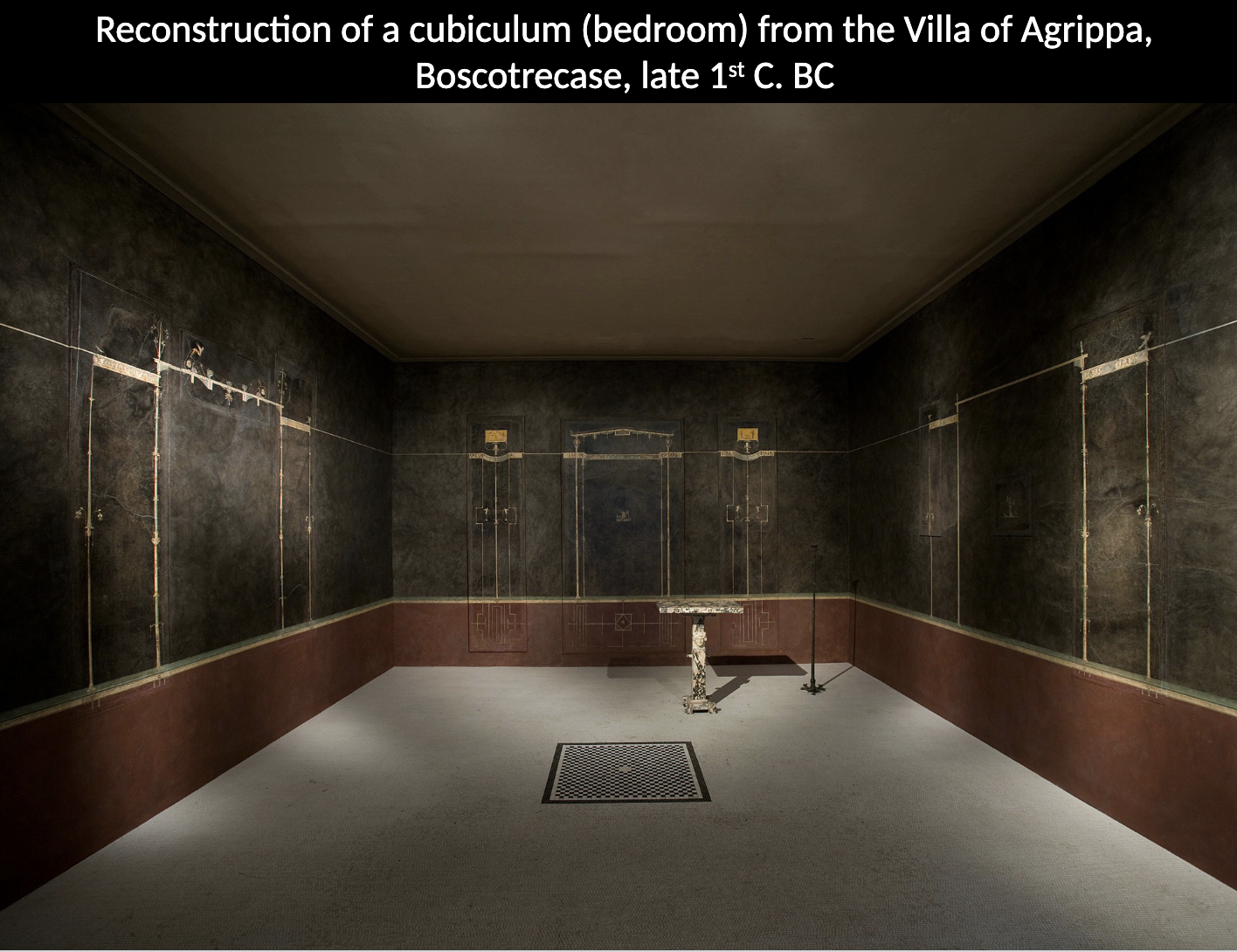
Villa of Marcus Agrippa, Boscotrecase
Who was the owner of the villa at Boscoreale? What style of Roman wall paintings are preserved in the villa? What are the characteristics of this style?
Owner—Belonged to imperial- Marcus Agrippa, son-in-law of augustus
Third style wall paintings
Flat backgrounds, thin and delicate architectural frames
Tiny central vignettes- landscapes myth scenes temples
strong influence of egyptian motifs- reflecting egptian influence after conquest of Egypt
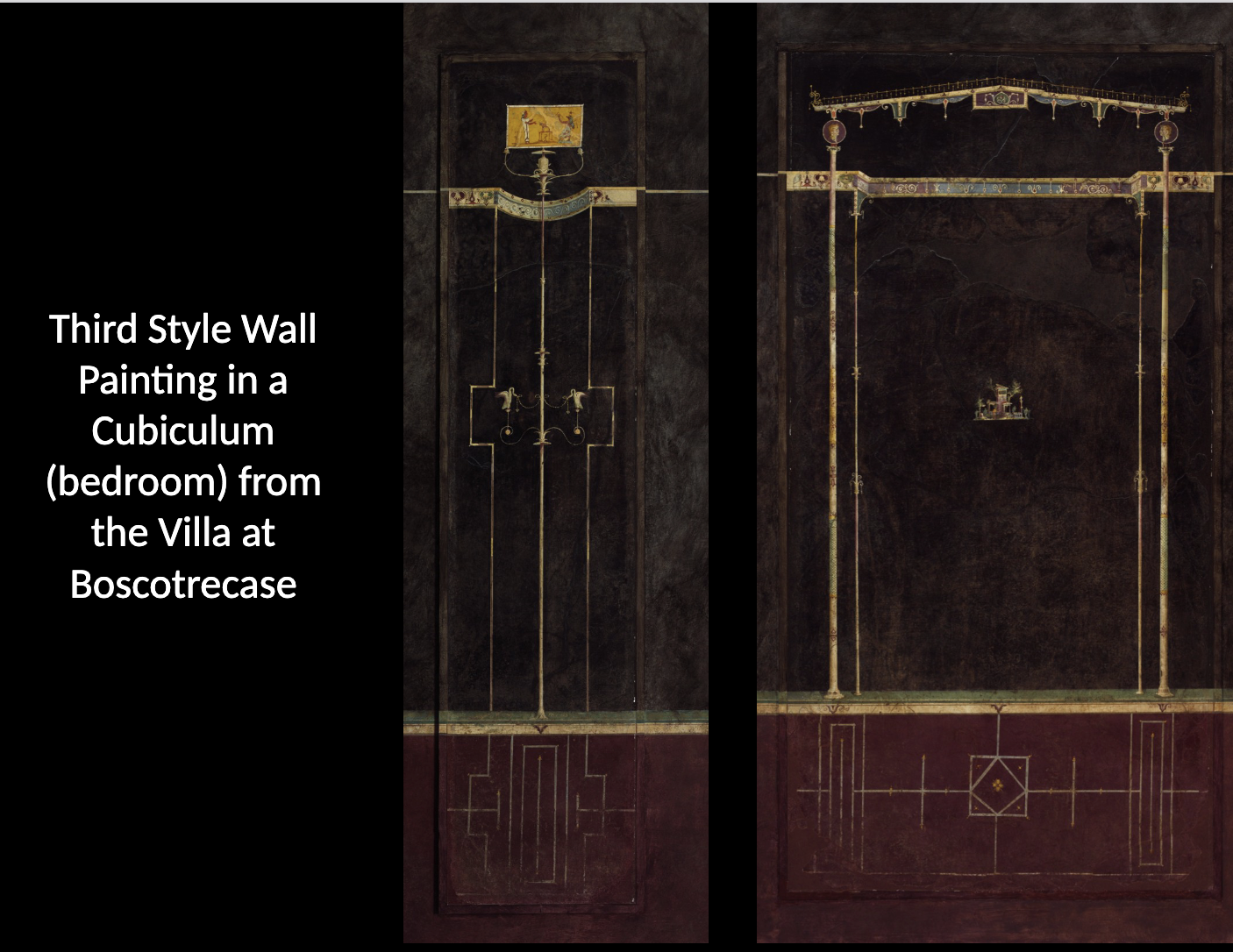
3rd style- Villa at Booscotrecase
Flat monochromatic background
tiny vignettes
Eyptian motifs→ Augustian Egyptomania
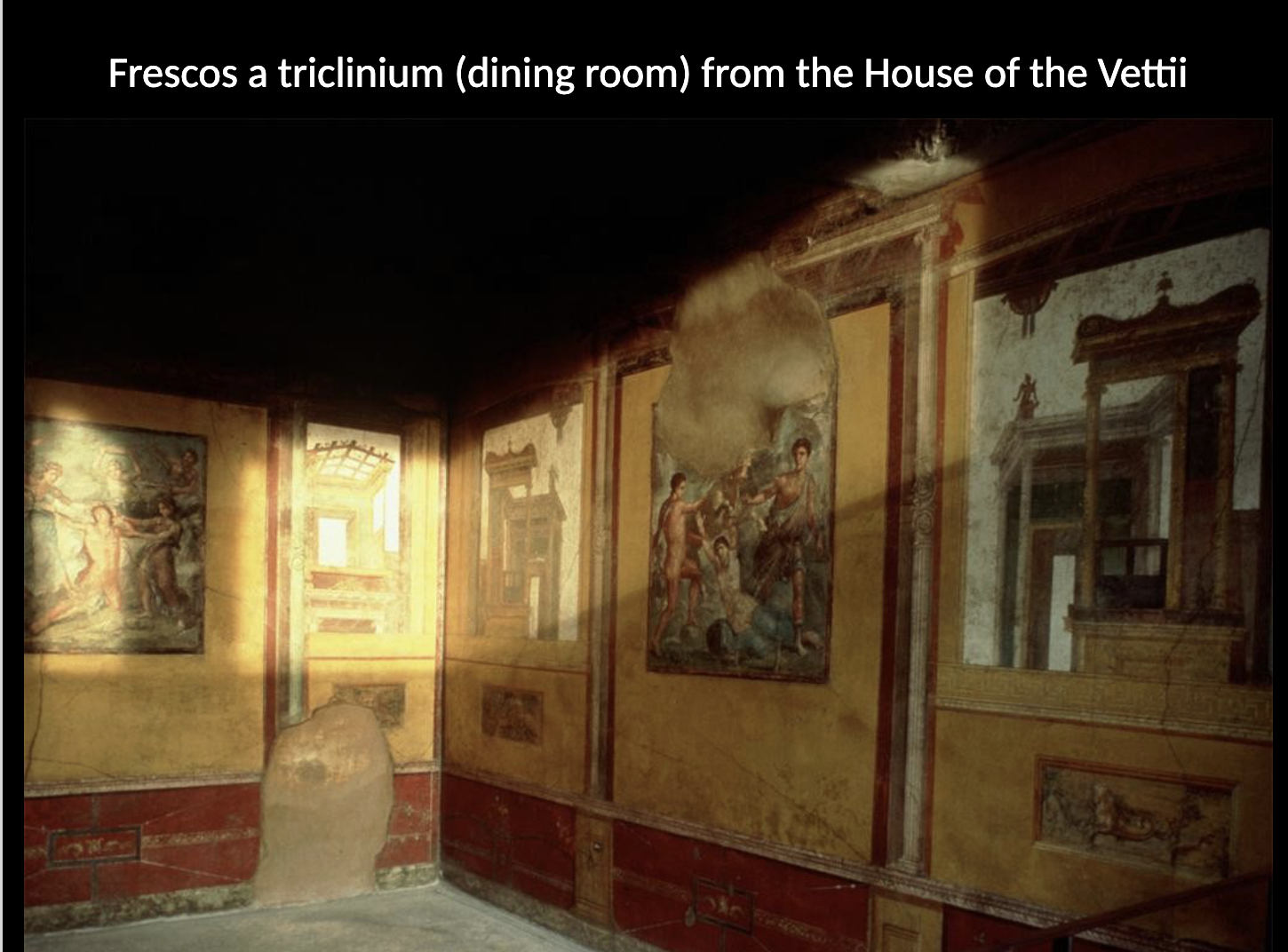
Villa of Marcus Agrippa: 4th style
Who were the Vetti? What are some of the notable features of their house in Pompeii? What is represented in the houses’ painted decoration?
Belonged to Aulus Vettius—former enslaved men who became wealthy
Their rise in status is reflected in the lavish decoration of their home
Notable features
Best-preserved elite house in Pompeii
4th style—Combo of all 3 styles, very detailed—framed paintings in the dining room and other rooms.
Central garden with sculptures and a fountain—the layout emphasizes wealth and elite social performance.
Important paintings
Entrance painting of Priapus: shows a fertility god with money bag- symbolizes prosperty and protection.
Other rooms- myth scenes, cupids
Overall: decoration communicated wealth, cultural literacy, divine favor and social power
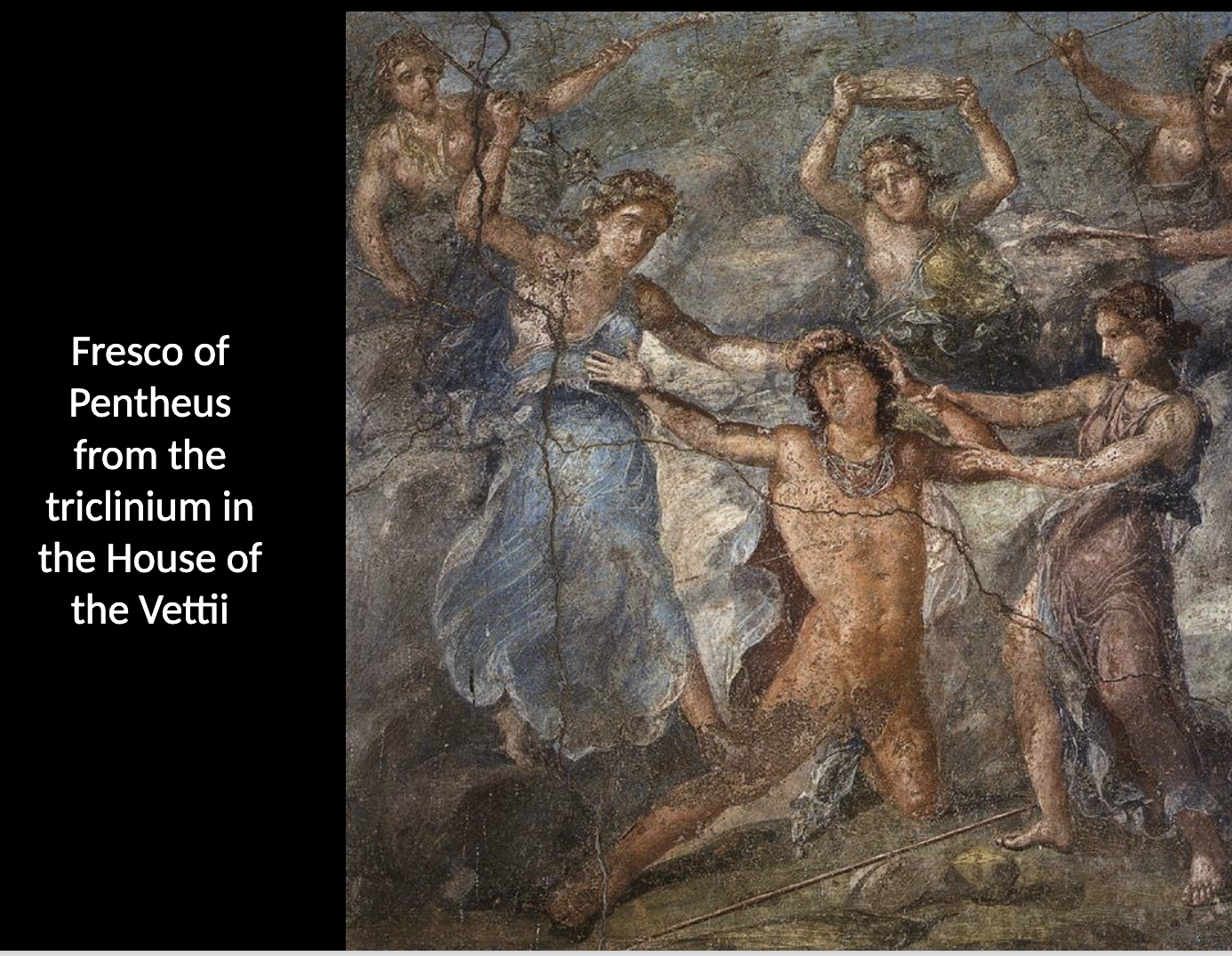
4th style: Fresco of Pentheus: Triclium Paiting—House of the Vettii
Owned by formerly enslaved wealthy brothers
Dramatic myth scenes
Death of Pentheus: a mythical scene showing Pentheus being torn apart for going against orders from the Greek god Dionysus—showing a myth about divine punishment.
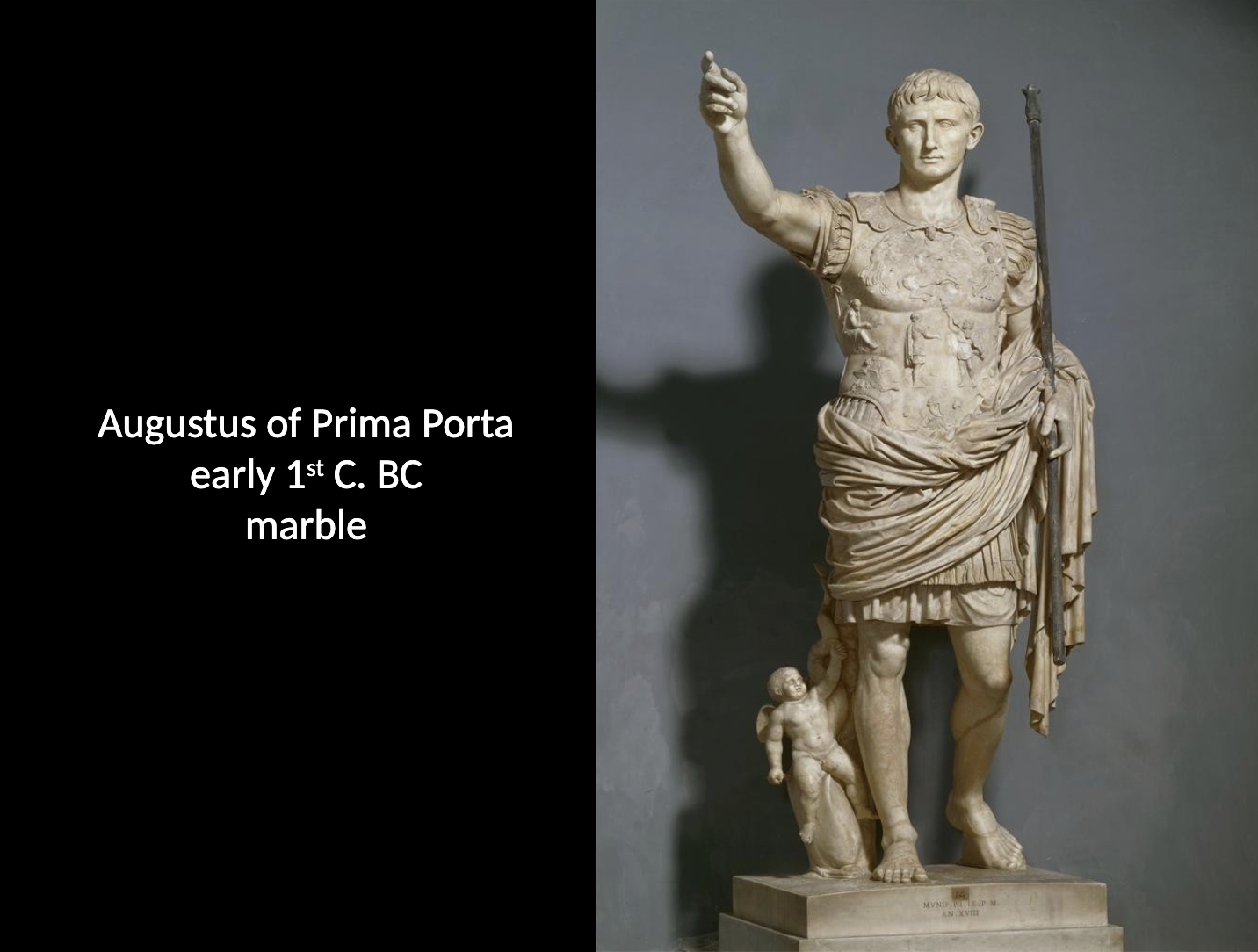
Augustus of Prima porta - Marble
How is Augustus represented in the statue Augustus of Prima Porta? How does Augustus’ portraiture compare to earlier veristic portraits?
Showing eternal youth—in contrast to republican verism
Idealized!
Marble statue: Cupid and dolphin on him—showing divine descent from Venus- sea and love- goddess of love, beauty, fertility, and victory.
Showing diplomatic victory and how gods are proud of what he did! (on his side)
How does it differ?
No wrinkles, no aging→ shirft to imperial propaganda
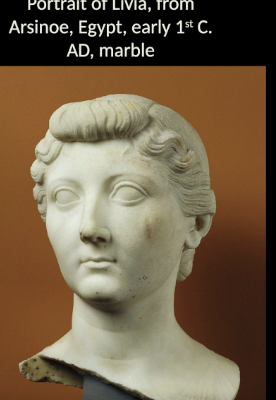
Portrait of Livia- Augustus’ wife
Youthful and idealized
Showing gender ideal of women: loyal wife and mother of rome
family unity
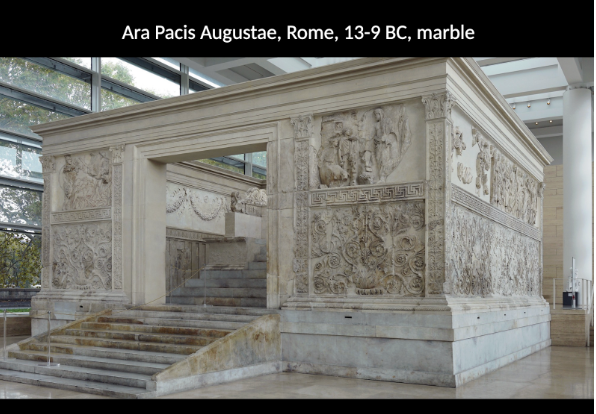
What is the Ara Pacis? What was its function? Who built it and when? Where was it located? What is represented in its relief sculpture?
It is an outdoor altar celebrating Augustan peace
located near the Tiber in Rome
Dedicated by the Senate
Reliefs:
West: Aeneas, Romulus/Remus
East: Roma and Mother Earth
North/South: Imperial family procession

West Frieze—Aeneas/Romulus & Remus
Aeneas
Represents Rome’s mythical origins.
Reinforces Augustus’ claim to divine ancestry
Panels
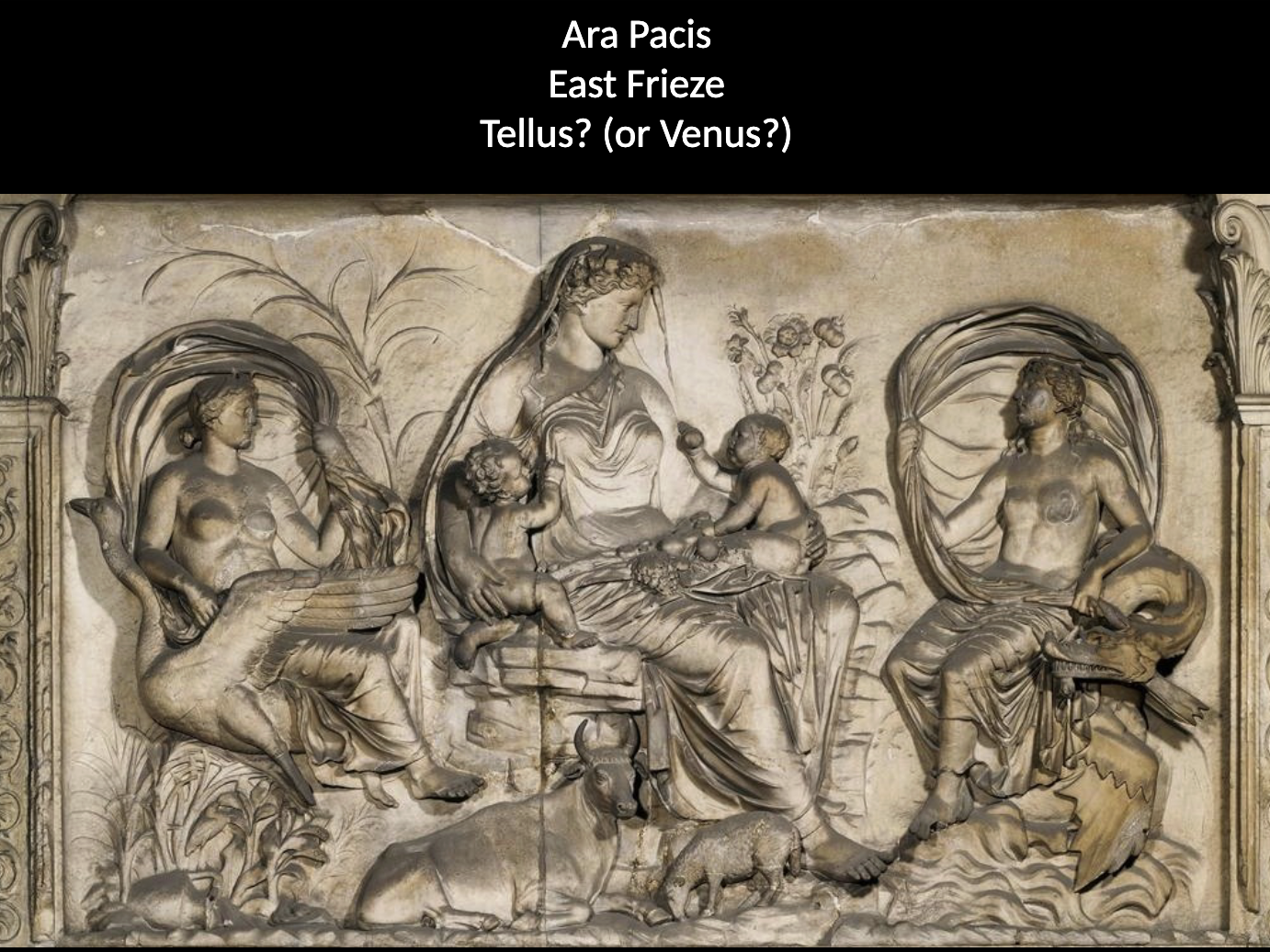
East Frieze—Roma & Mother Earth (Tellus/Venus)
Roma and Mother Earth
Symbolizes fertility, peace, and prosperity under Augustus
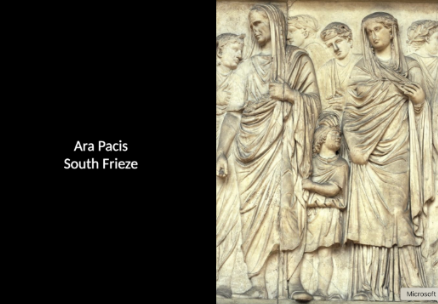
North and South Frieze
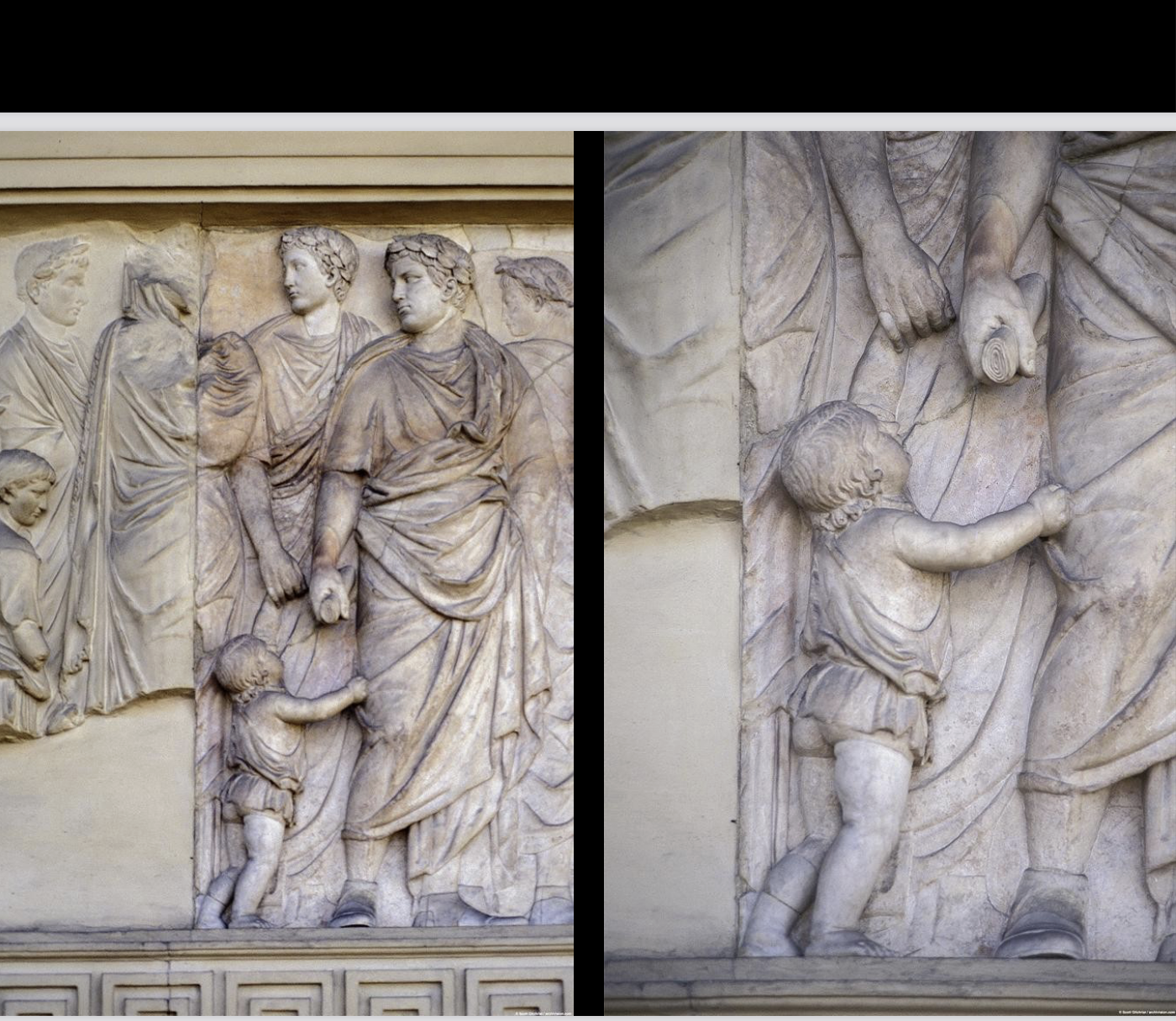
Which children on the north and south friezes were traditionally identified as Gaius and Lucius? What identities does Rose assign instead? What are his reasons?
These boys were Gaius and Lucius Caesar Augustus’ adopted children, showing the same view on adopted vs. birth children
Rose’s argument: these boys were foreign (barbarian) hostages, not from Rome.
Reasons: NON ROMAN LOOKING
Clothing is NON-ROMAN; not wearing a toga
Hairstyles do not match what Roman boys of elite status wore
Demonstrates the boys as having diplomatic importance, not familial. Demonstrates these bodies are of diplomatic importance, not familial.
How do the Ara Pacis and its friezes represent the political and cultural context of the early Roman Empire? Why include barbarian children?
It represents the Early Empire ideology
shows the imperial family participating in a religious practice
Shows how they conquered territories and took the children of rulers to brainwash and control as their own.
The control and rebellion of Augustus through expansion and control
Why barbarian children?
Shows the assimilation of Rome, reinforcing the message- Rome brings peace order and fertility to the world.
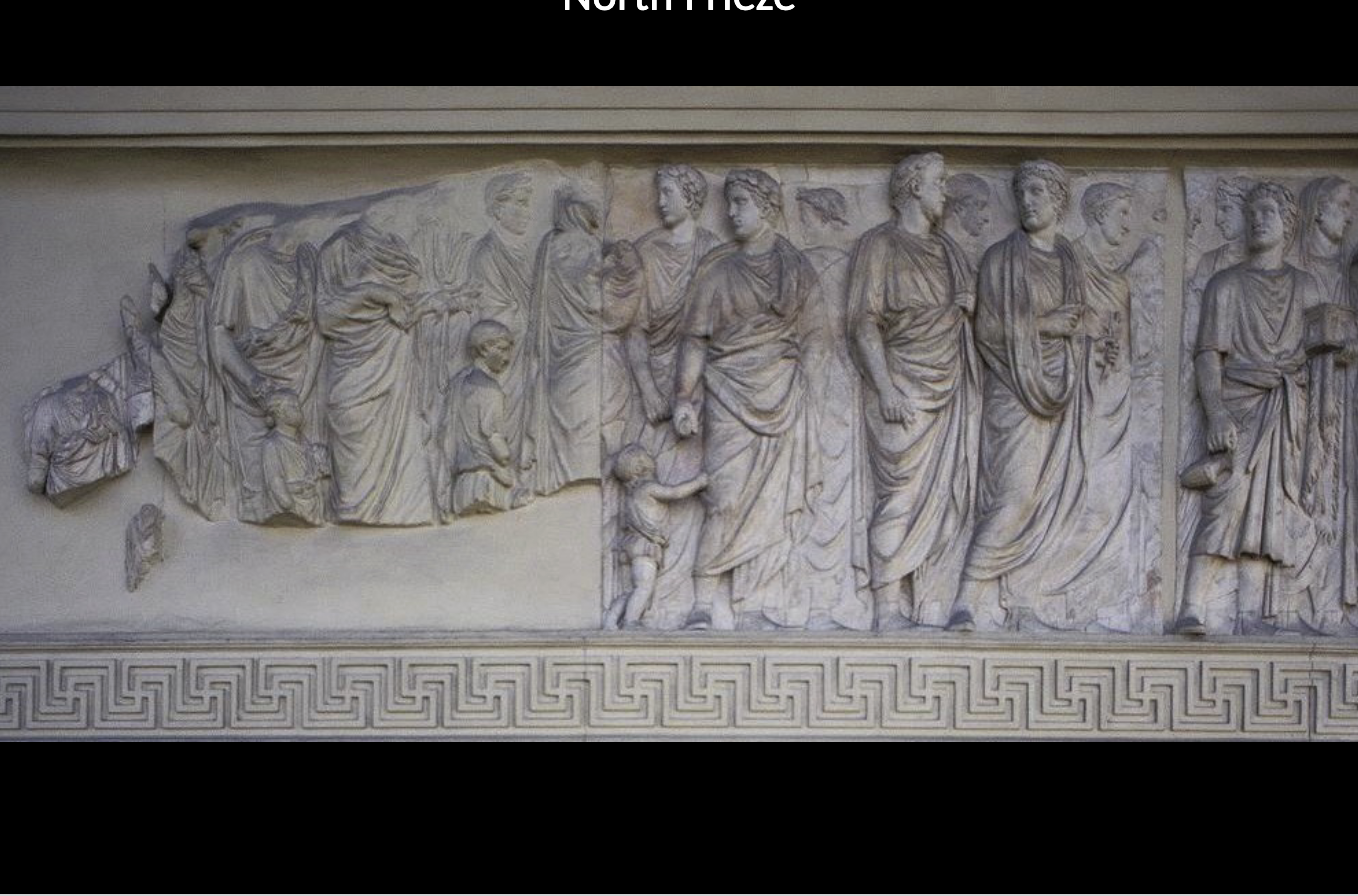
Which children does Rose identify as Gaius and Lucius? How does he explain their separation from their biological and adoptive fathers?
Rose: They appear but not traditionally
Separation: processions follow ritual and hierarchal order, not family grouping
Children positioned by not family
Separating them highlights their public identity as nonbiological family.
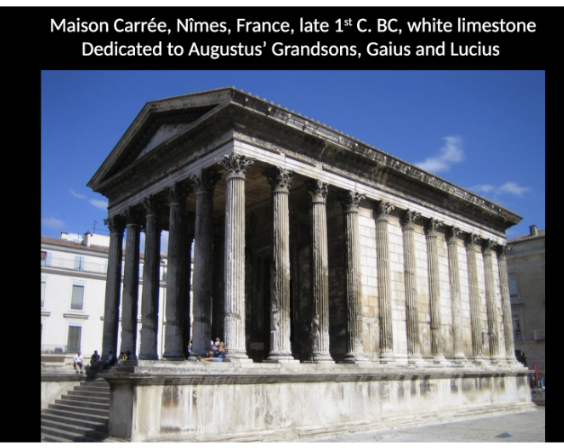
Maison Carree, Nimes, France- White Limestone
What was the function of the Maison Carrée? Where was it located? To whom was it dedicated? How does it compare to the Temple of Portunus?
Function: Civic Roman temple located in the forum with cult statues of Gaius and Lucis
Location: Nimes, Southern France - land out in provinces and rich had houses in poor areas
Who is this temple dedicated to? Augustus adopted sons Gaius and Lucius Caesar.
Includes a Corinthian monumental, ionic style
Deep porch, high podium, grand entrance
Comparison to the porch plan of the Temple of Portunus.
Shows how this family is divine and has legitimacy in their power- roman identity abroad
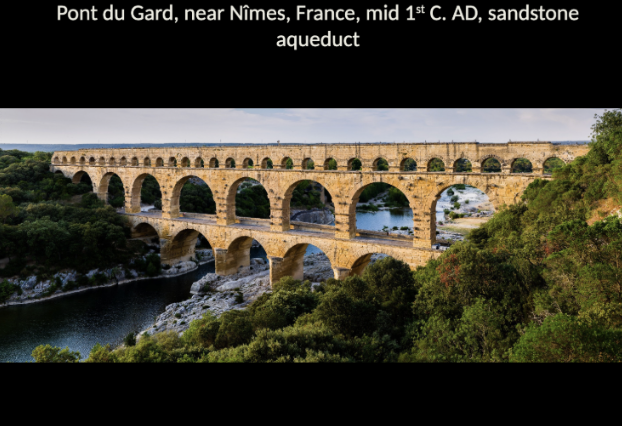
G. Pont du Gard, near Nimes, France—Sandstone Aqueduct
What was the function of the Pont du Gard? How was it built? Why build such structures in the provinces?
The function is to supply water to Nimes.
It was built with no mortar, massive stones, and layered arches with an upper water channel and a lower walking level. It can be easily repaired, uses less material and large archways for wind. Stability
Show engineering power, loyalty building, and urban improvement. .
Romans have great infasctrue
Why build in provinces?
Make life better in the city of Nimes—clean water and sanitation.
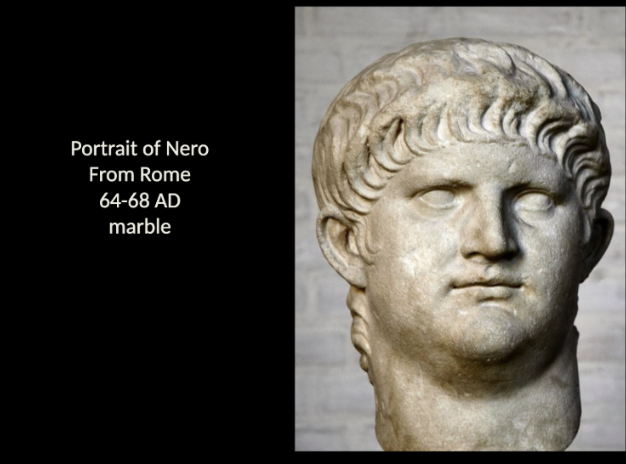
Portrait of Nero
Youthful but heavier face
Less idealized than Augustus
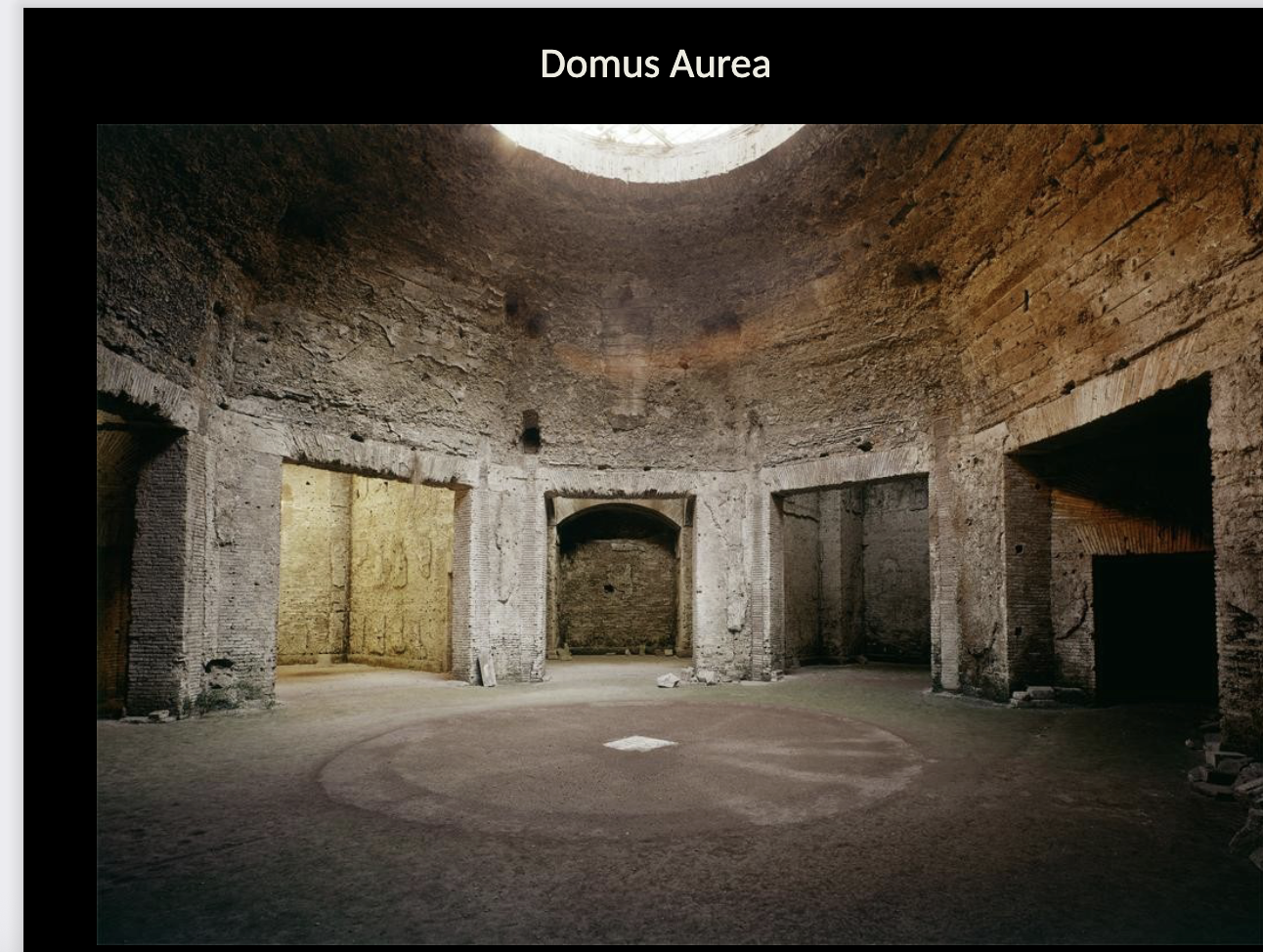
What was the Domus Aurea? Who built it and where? What were its significant features?
Nero’s palace built after Great Fire
Aeverus & Celer were the architects
Massive villa complex, aritifical lake
Lavish decoration→ public outrage
Significant features:
Octagonal room, concrete dome, gardens and luxurious frescoes.
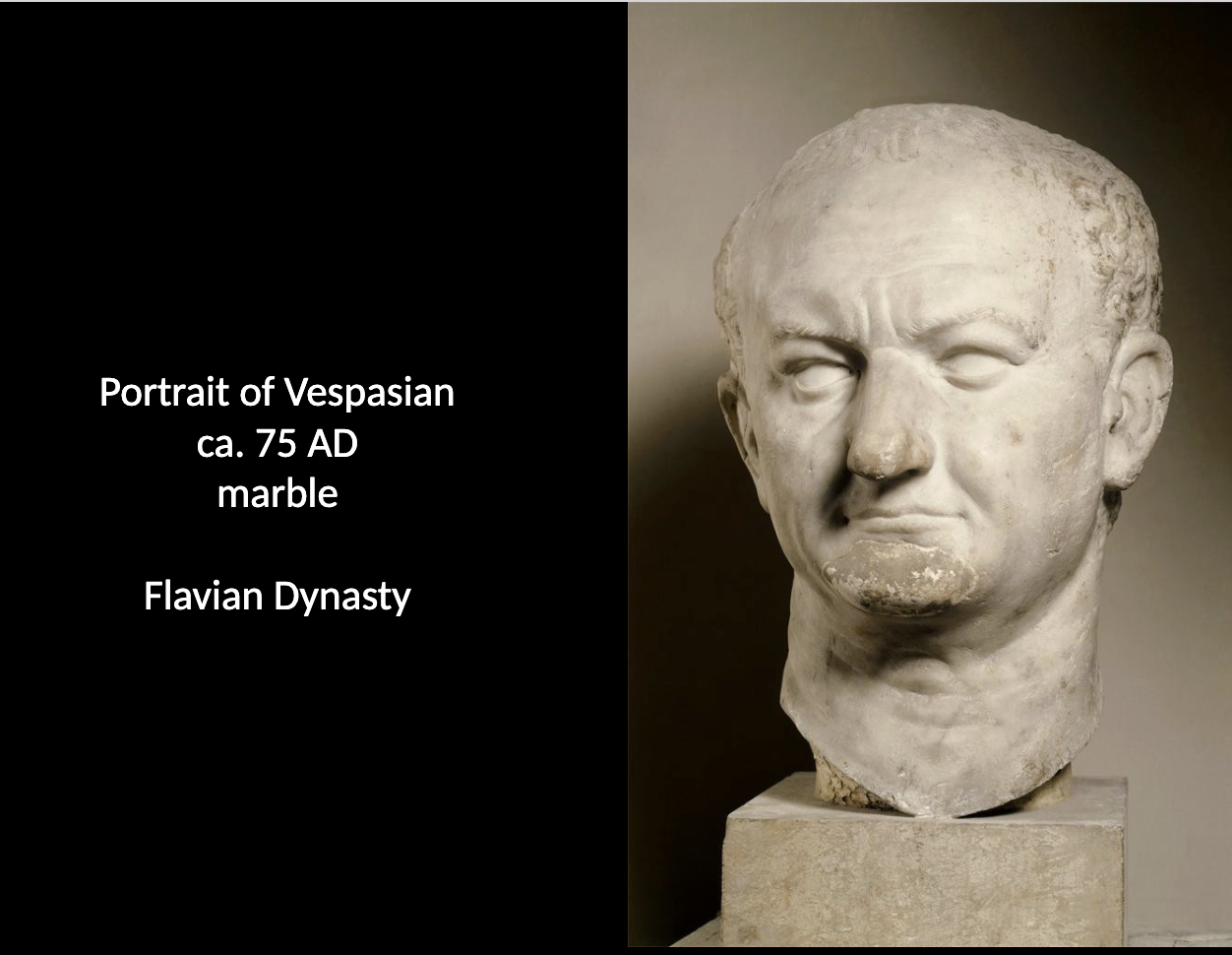
Portrait of Vespasian, from Rome—Marble
How is Vespasian portrayed? How does it compare to Julio-Claudian predecessors?
Return to Republican verism
older appeacne shows stability and modesty
Contrasts the Julio-Claudian idealization
Realistic, aged verism
contrasts with Julio-Claudian idealism
Shows stability in Rome after Nero
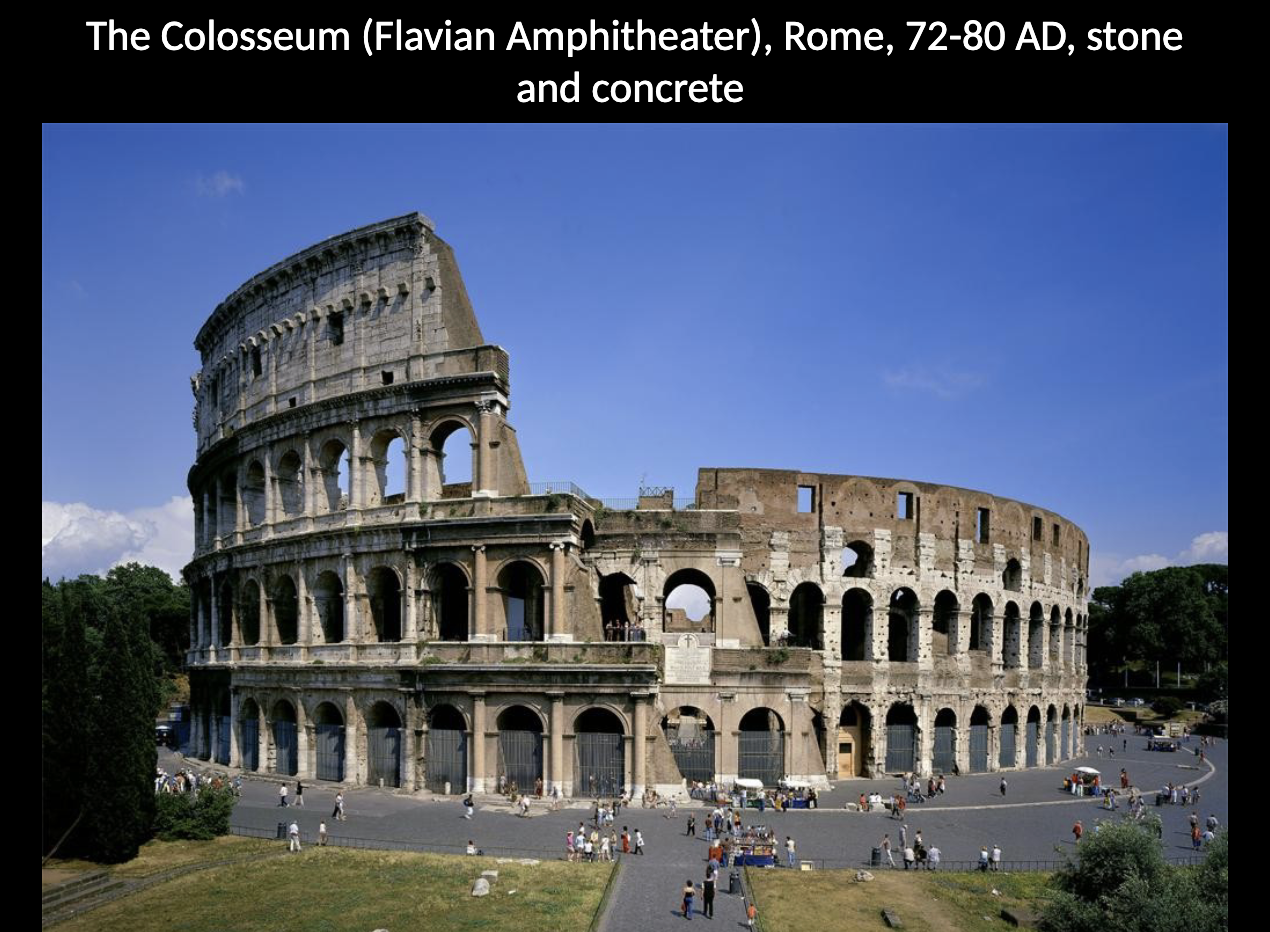
The Colosseum (Flavian Amphitheater)
Function, location, funding, and architectural features?
Function: Amphitheater for gladiatorial games and spectators
Location: Site of Nero’s lake, funded by Vespasian’s spoils of Jewish War
Feature: Concrete vaults, doric, ionic and corithian levels, velarium awning systems- built by enslaved labor
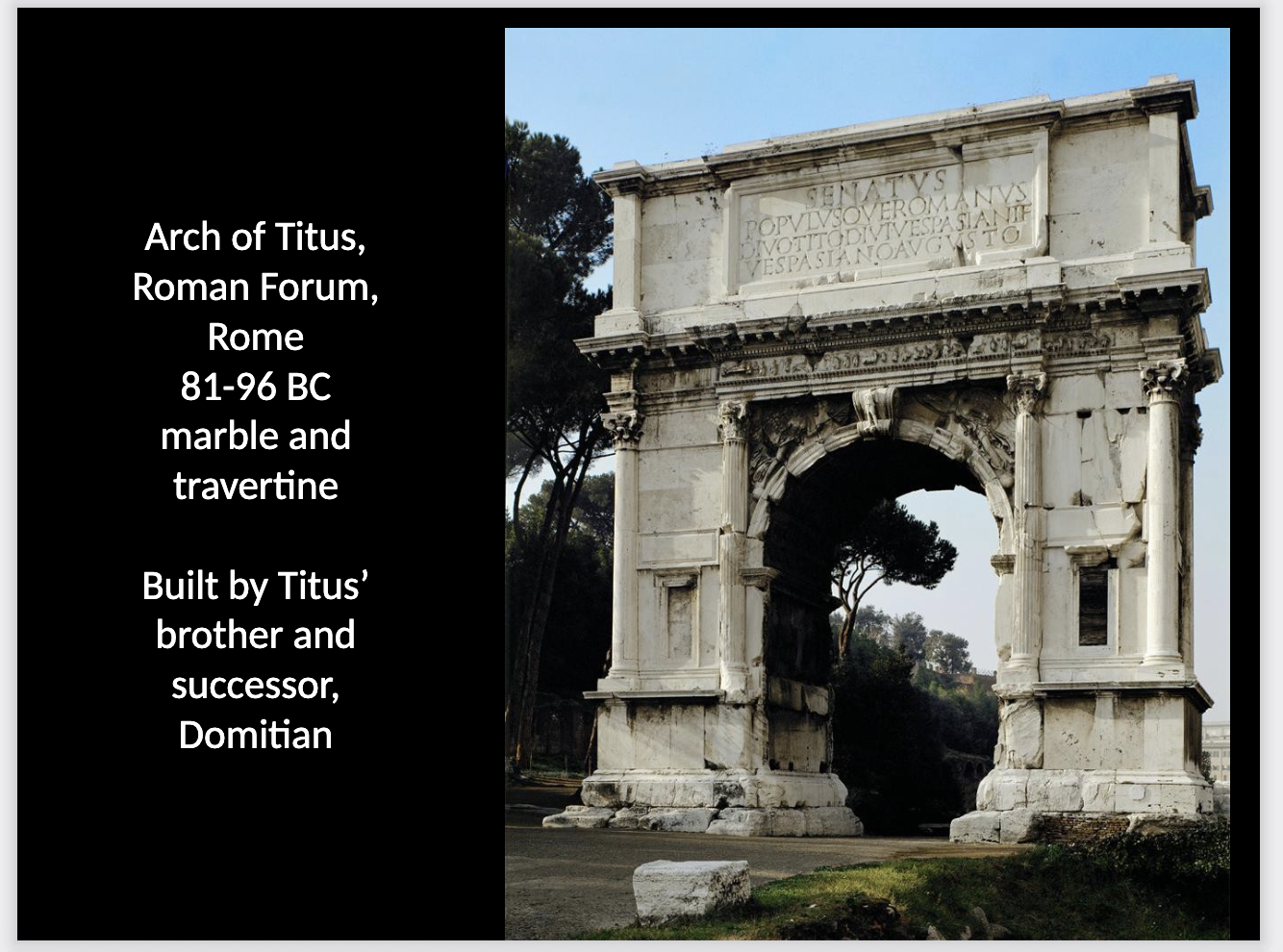
Arch of Titus, Rome, Marble and Travertine
What is commemorated? Location? Patron? Sculpture?
Celebrates victory in the Jewish War, located on Via Sacra
Built by Domitian
Relief:
Menorah being carries
Titus crowned by Victory