Solid State Matter
 Call Kai
 Learn
Learn Practice Test
 Spaced Repetition
 Match
Match Flashcards
 Knowt Play
1/39

There's no tags or description
Looks like no tags are added yet.
Name | Mastery | Learn | Test | Matching | Spaced | Call with Kai | Chat |
|---|
No analytics yet
Send a link to your students to track their progress
40 Terms
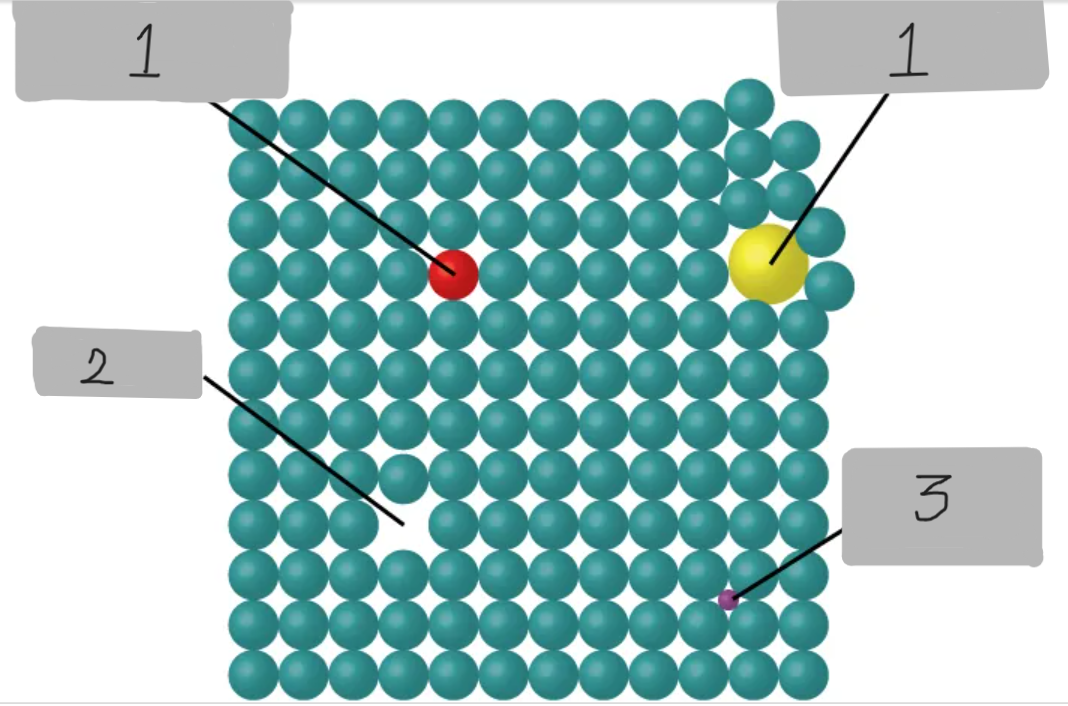
Impurity atoms
(1)
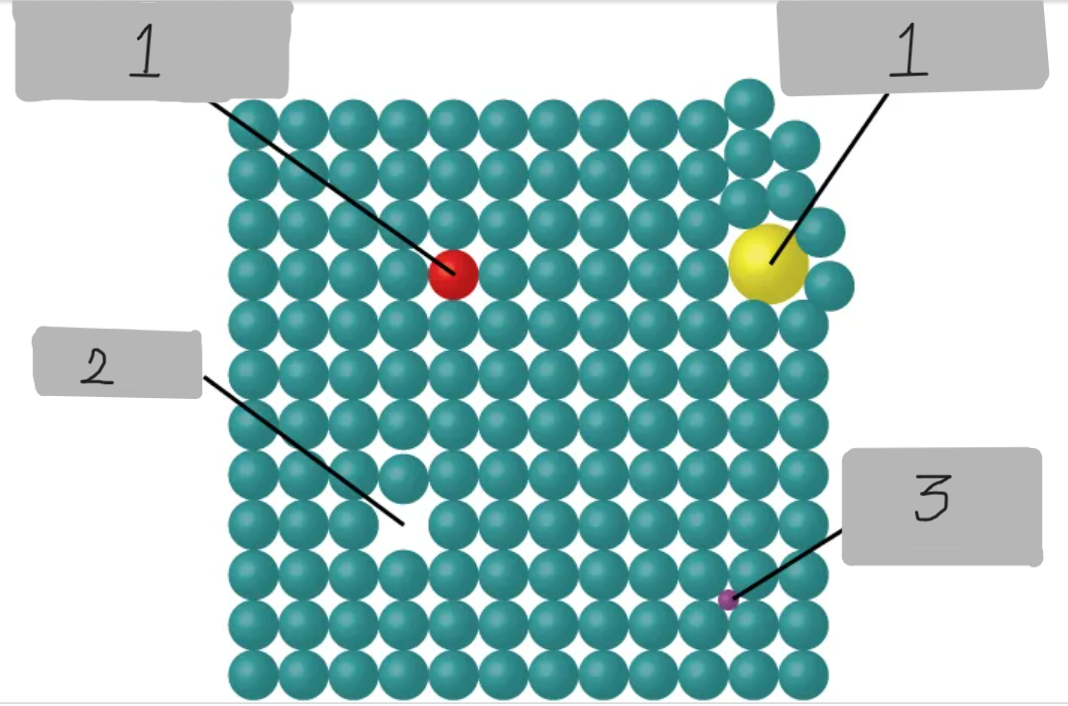
Vacancy
(2)
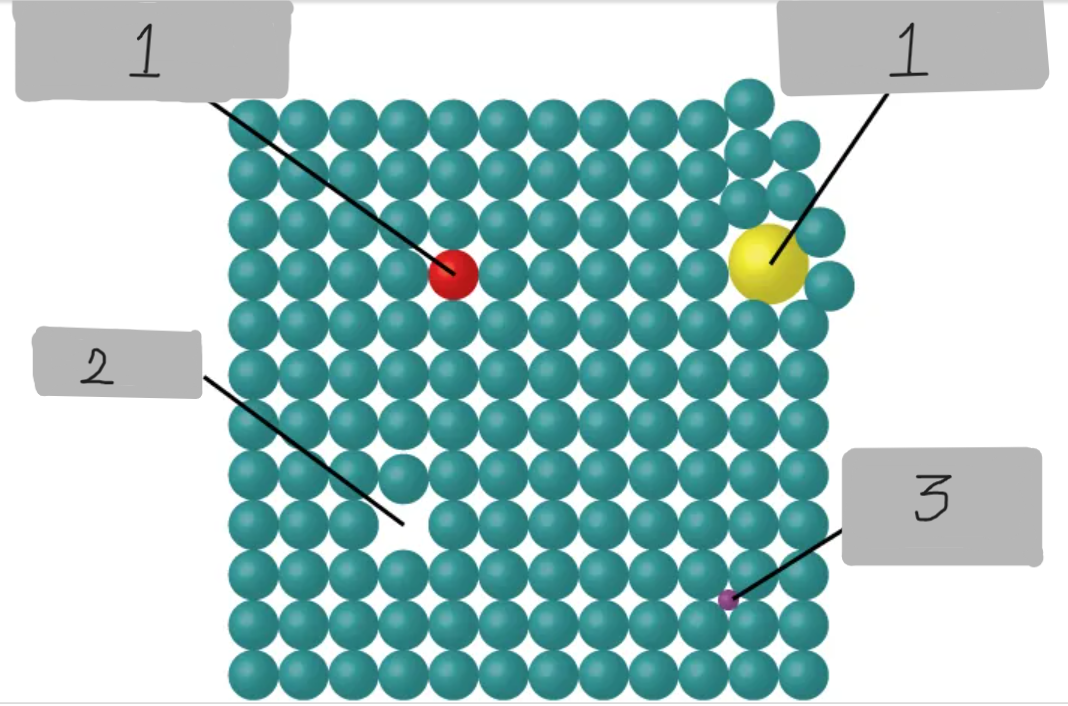
Interstitial impurity
(3)
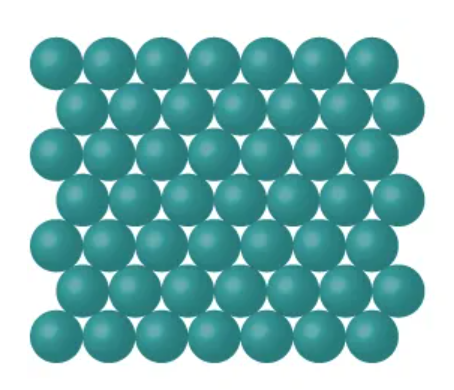
Crystalline Solid
A solid whose atoms, ions, or molecules are arranged in a regular, repeating pattern
Has a highly ordered internal structure
Usually has a sharp, well-defined melting point
Most metals and ionic compounds are crystalline
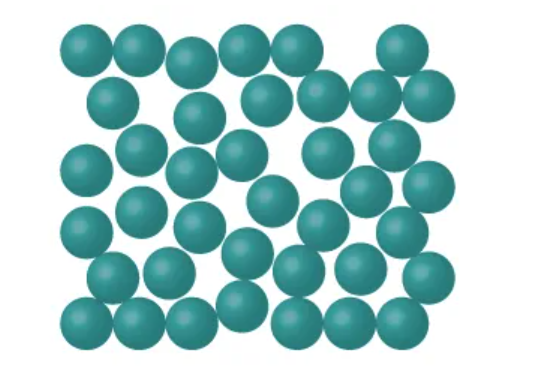
Amorphous Solid
A solid whose particles are arranged randomly
Has no long-range repeating pattern
Softens gradually instead of melting at one exact temperature
Particles are randomly arranged
Also called non-crystalline solids
Crystal Lattice
The repeating three-dimensional arrangement of particles in a crystalline solid
Gives crystals their regular shape and many of their physical properties
Long-Range Order
A repeating arrangement of particles that extends throughout the entire crystal
Found only in crystalline solids
Glass and Wax
Two examples of non-crystalline solids
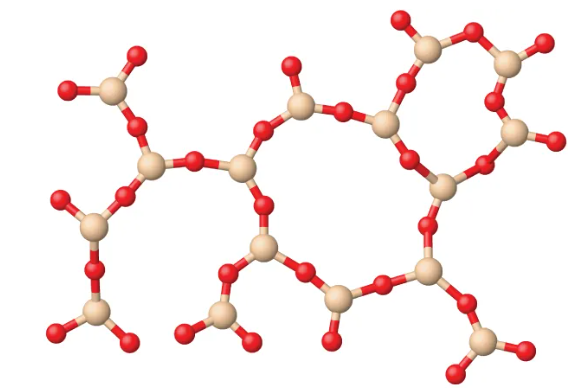
Fused Silica
An amorphous form of silicon dioxide
Produced by rapidly cooling molten silicon dioxide
Has no repeating crystal structure
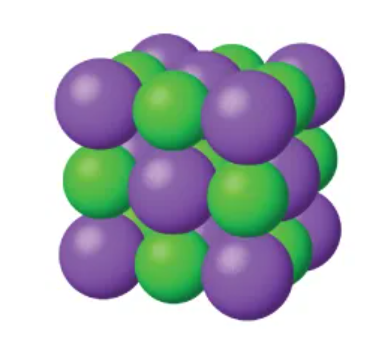
Ionic Solid
A solid made of positive and negative ions'
Held together by ionic (electrostatic) attractions
Usually hard and brittle
Has a high melting point
Conducts electricity only when molten or dissolved
Aluminum oxide (alumina)
Al₂O₃
Ionic solid (with some covalent character)
Is white, odorless crystalline solid
Extremely hard (Mohn hardness is ≈ 9, just second only to diamond)
Very high melting point (≈ 2050 °C)
Excellent electrical insulator
Good thermal conductor
Highly resistant to corrosion and chemical attack
Used to make high-strength ceramic tiles, spark plug insulators, laboratory crucibles, and wear-resistant machine parts
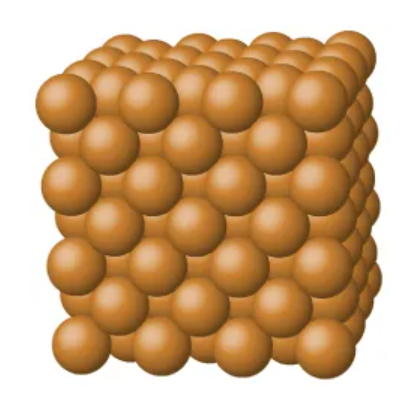
Metallic Solid
A solid made entirely of metal atoms
Held together by metallic bonding
Good conductor of electricity and heat
Usually shiny, malleable, and ductile
Examples: Cu, Fe, and Ti etc.
Covalent Network Solid
A solid made of atoms connected by a giant network of covalent bonds
Extremely hard
Has very high melting points
Usually does not conduct electricity
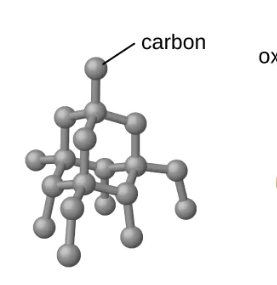
Diamond (covalent crystal)
A covalent network solid made entirely of carbon
Every carbon atom bonds to four neighboring carbon atoms
Extremely hard
Very high melting point
Poor electrical conductor
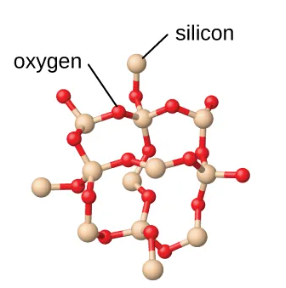
Silicon dioxide (covalent crystal)
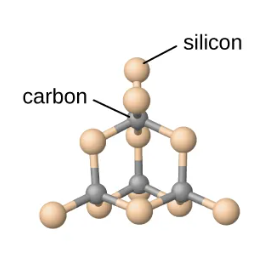
Silicon carbide (covalent crystal)
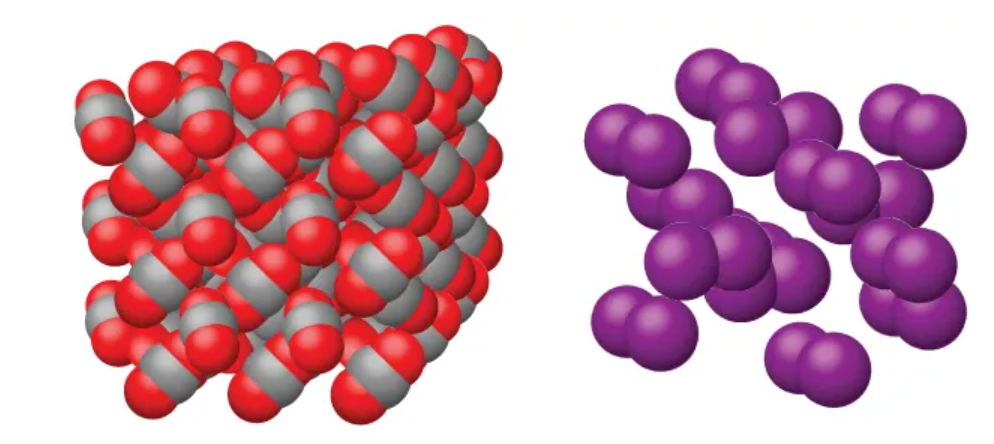
Molecular Solid
A solid made of neutral molecules
Molecules are held together by intermolecular forces
Usually has low melting points
Poor conductor of electricity
Examples: carbon dioxide, iodine, ice, and sucrose
Ionic Bond
Electrostatic attraction between positive and negative ions
Holds ionic solids together
Produces strong, rigid crystal structures
Metallic Bond
Attraction between positive metal ions and a sea of delocalized electrons
Responsible for metals' conductivity and malleability
Sea of Delocalized Electrons
Electrons that are free to move throughout a metal
Allow metals to conduct electricity and heat
Help hold metal atoms together
Covalent Bond
A chemical bond formed by sharing electrons
Responsible for the strong structures of covalent network solids.
Intermolecular Forces (IMFs)
Attractive forces between separate molecules
Much weaker than ionic or covalent bonds
Hold molecular solids together
Yes, it is true
Is it true that crystalline solids melt at one specific temperature and amorphous solids soften over a range of temperatures
Brittleness
The tendency of a material to break or shatter instead of bending. Common property of ionic solids.
Malleability
The ability of a material to be hammered into thin sheets without breaking. Characteristic property of metals.
Ductility
The ability of a material to be stretched into wires. Characteristic property of metals
Metallic Luster
The shiny appearance of metals caused by reflection of light from mobile electrons.
Electrical Conductivity
The ability of a material to allow electric current to flow
Metals conduct well
Ionic solids conduct only when molten or dissolved
Most molecular and covalent network solids do not have this property
Thermal Conductivity
The ability of a material to transfer heat
Metals are excellent at this
Allotrope
Different structural forms of the same element
Each of them has different physical properties
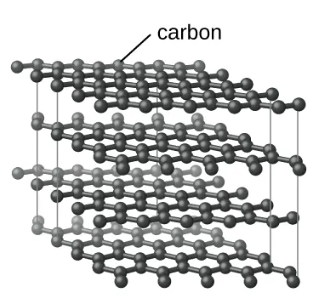
Graphite
A covalent network solid made of layers of carbon atoms
Each carbon atom bonds to three neighboring carbon atoms
Layers slide easily over one another
Soft
Good conductor of electricity
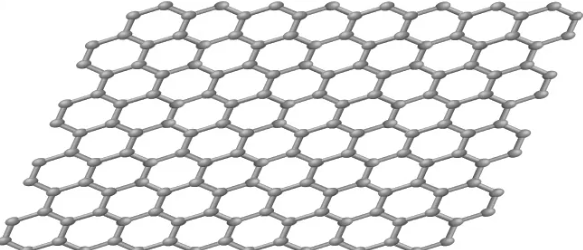
Graphene
A single layer of graphite that is one atom thick
Extremely strong and lightweight
Excellent conductor of electricity and heat
Used in advanced electronics, batteries, and composite materials
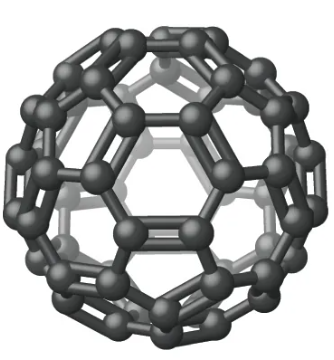
Buckminsterfullerene (Buckyball)
A hollow spherical molecule made entirely of carbon atoms
Built from graphene-like hexagons and pentagons
Used in nanotechnology and materials science
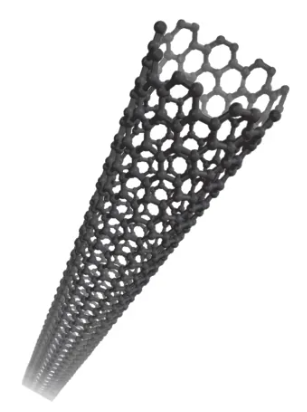
Carbon Nanotube
A cylindrical tube made by rolling a sheet of graphene
Extremely strong
Excellent electrical conductor
Used in electronics and advanced materials
Crystal Defect
An imperfection in the regular arrangement of particles in a crystal
Can change a material's electrical and mechanical properties
Vacancy Defect
A crystal defect where an atom or ion is missing from its normal position.
Leaves an empty space in the crystal lattice
Interstitial Site
A space between the normal positions of atoms in a crystal
Sometimes occupied by an extra atom or ion.
Impurity
A different atom or ion present within a crystal
Can distort the crystal structure and change its properties
Doping
The intentional addition of small amounts of impurities into a crystal.
Used to modify electrical properties.
Essential for manufacturing semiconductor devices and computer chips
Carbon Nanofoam
A lightweight, porous allotrope (ability to also absorb fluid)
of carbon known for its unique structure, ferromagnetic properties, and potential applications in energy storage and electronics.A sponge-like network of interconnected carbon atoms containing millions of tiny pores.
Mainly used for water purification and hydrogen storage research