Autonomic Nervous System
 Call Kai
 Learn
Learn Practice Test
 Spaced Repetition
 Match
Match Flashcards
 Knowt Play
1/40

Earn XP
Description and Tags
lecture: 2/5
Name | Mastery | Learn | Test | Matching | Spaced | Call with Kai | Chat |
|---|
No analytics yet
Send a link to your students to track their progress
41 Terms
I. Somatic vs. Autonomic Nervous Systems A. Effectors
What are the effectors of the somatic nervous system?
Skeletal muscle; the somatic nervous system is voluntary
What are the effectors of the autonomic nervous system?
What types of involuntary muscle are controlled by the autonomic nervous system?
Involuntary muscle and glands
Smooth muscle and cardiac muscle
What types of glands are controlled by the autonomic nervous system?
Exocrine and endocrine glands

B. Efferent Pathways Somatic
What type of nerve fibers are found in the somatic nervous system's efferent pathway?
Does the somatic nervous system's efferent pathway contain a ganglion?
Thick, myelinated nerve fibers
No, there is no ganglion

Autonomic
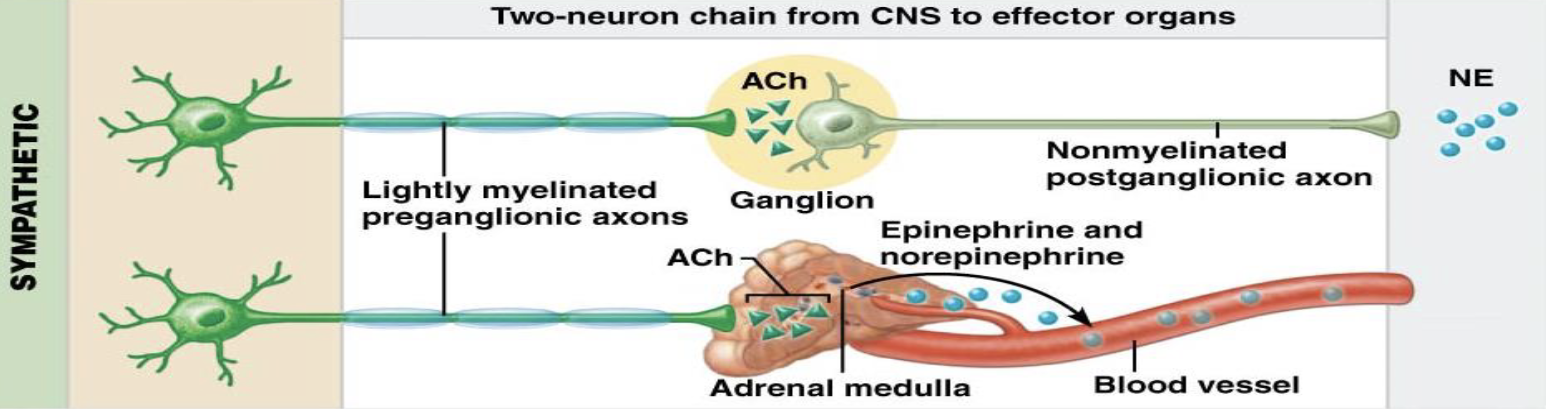
What are the two neurons involved in the autonomic nervous system's efferent pathway?
Where is the cell body of a preganglionic neuron located?
What are the characteristics of a preganglionic neuron's axon?
A preganglionic neuron and a postganglionic neuron.
In the CNS
It is thin and slightly myelinated
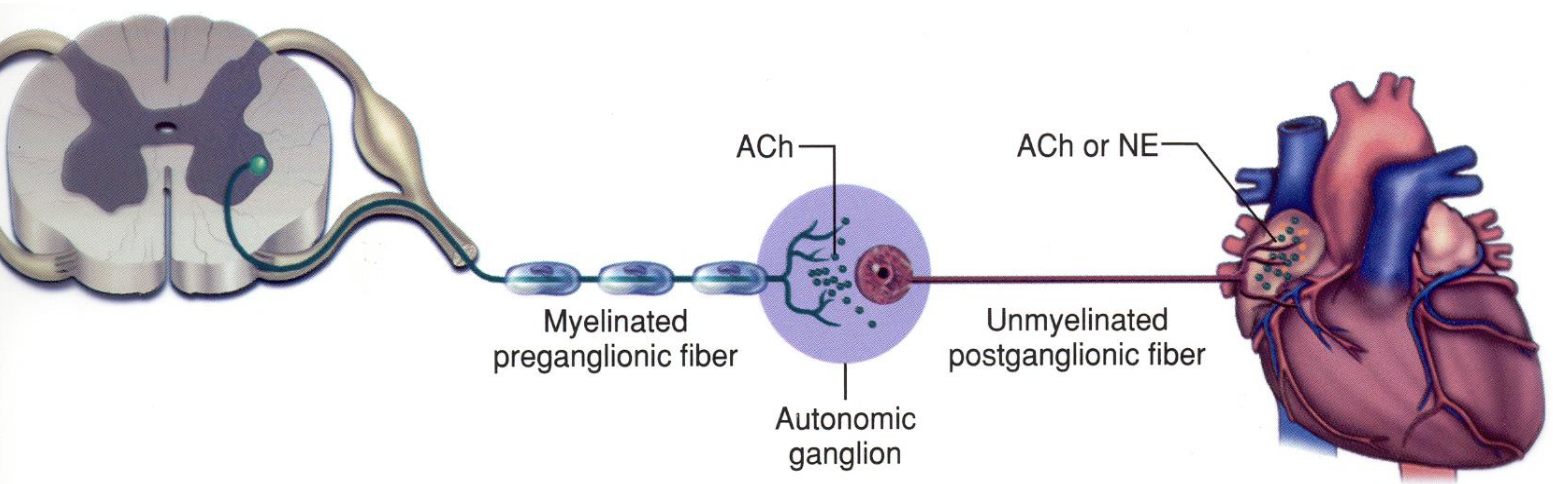
Where is the cell body of a postganglionic neuron located?
What are the characteristics of a postganglionic neuron's axon?
In a ganglion outside the CNS
it is unmyelinated
Where are autonomic ganglia located?
What three types of autonomic ganglia are listed in the lecture?
Outside the CNS
Chain ganglia, collateral ganglia, and terminal ganglia

C. Neurotransmitters
Somatic
What neurotransmitter does the somatic nervous system use?
What effect does acetylcholine have in the somatic nervous system?
Acetylcholine
Stimulatory effects

Autonomic
What neurotransmitter does the preganglionic autonomic neuron release?
What neurotransmitters can the postganglionic autonomic neuron release?
What effects can autonomic postganglionic neurotransmitters have?
Acetylcholine
Norepinephrine or acetylcholine
They can stimulate or inhibit

II. Sympathetic vs. Parasympathetic Divisions
A. Systemic Effects
Sympathetic Division
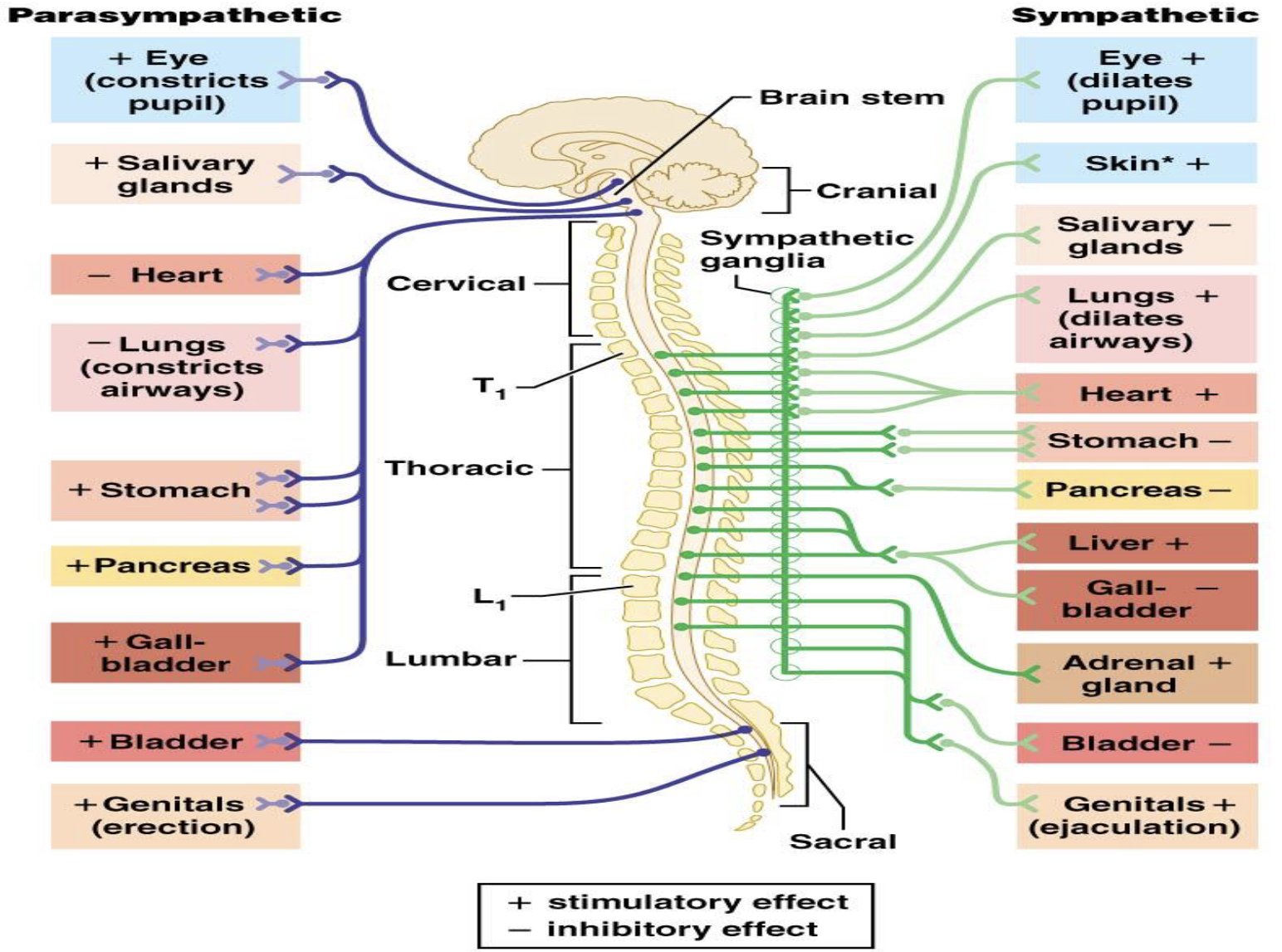
What does the sympathetic division prepare the body for?
What does the sympathetic division increase blood flow to?
Action — the fight-or-flight response
The heart and muscles

What happens to the bronchioles during sympathetic activation?
What happens to glucose secretion by the liver during sympathetic activation?
They dilate
It increases
Parasympathetic Division
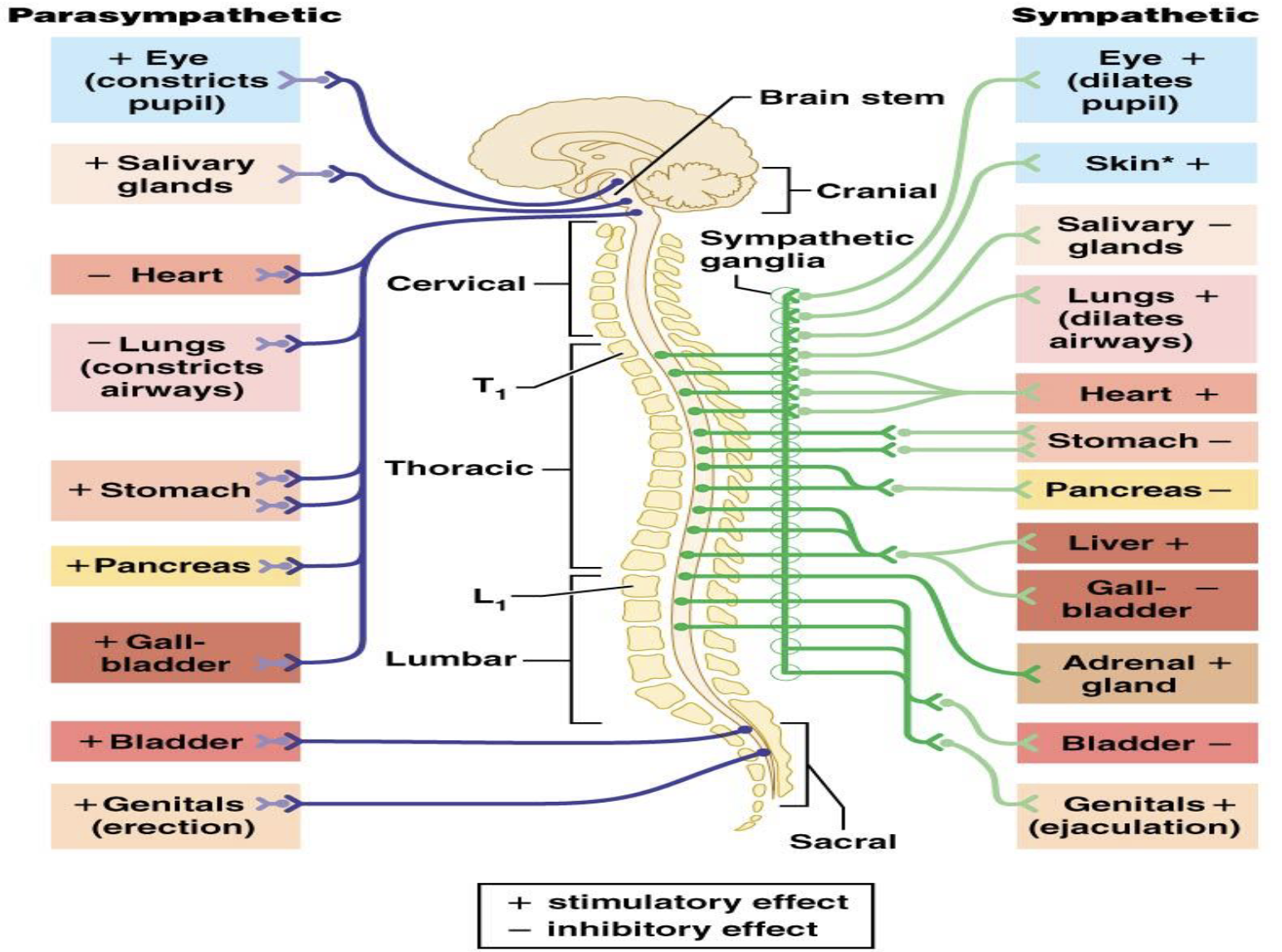
What does the parasympathetic division prepare the body for?
What happens to heart rate during parasympathetic activation?
What happens to respiratory rate during parasympathetic activation?
Conserving energy — the rest-and-digest response
It decreases
It decreases

What happens to blood pressure during parasympathetic activation?
What happens to pupil size during parasympathetic activation?
What happens to digestive tract activity during parasympathetic activation?
It decreases
It decreases
It increases
B. Anatomical Differences
Sympathetic Division
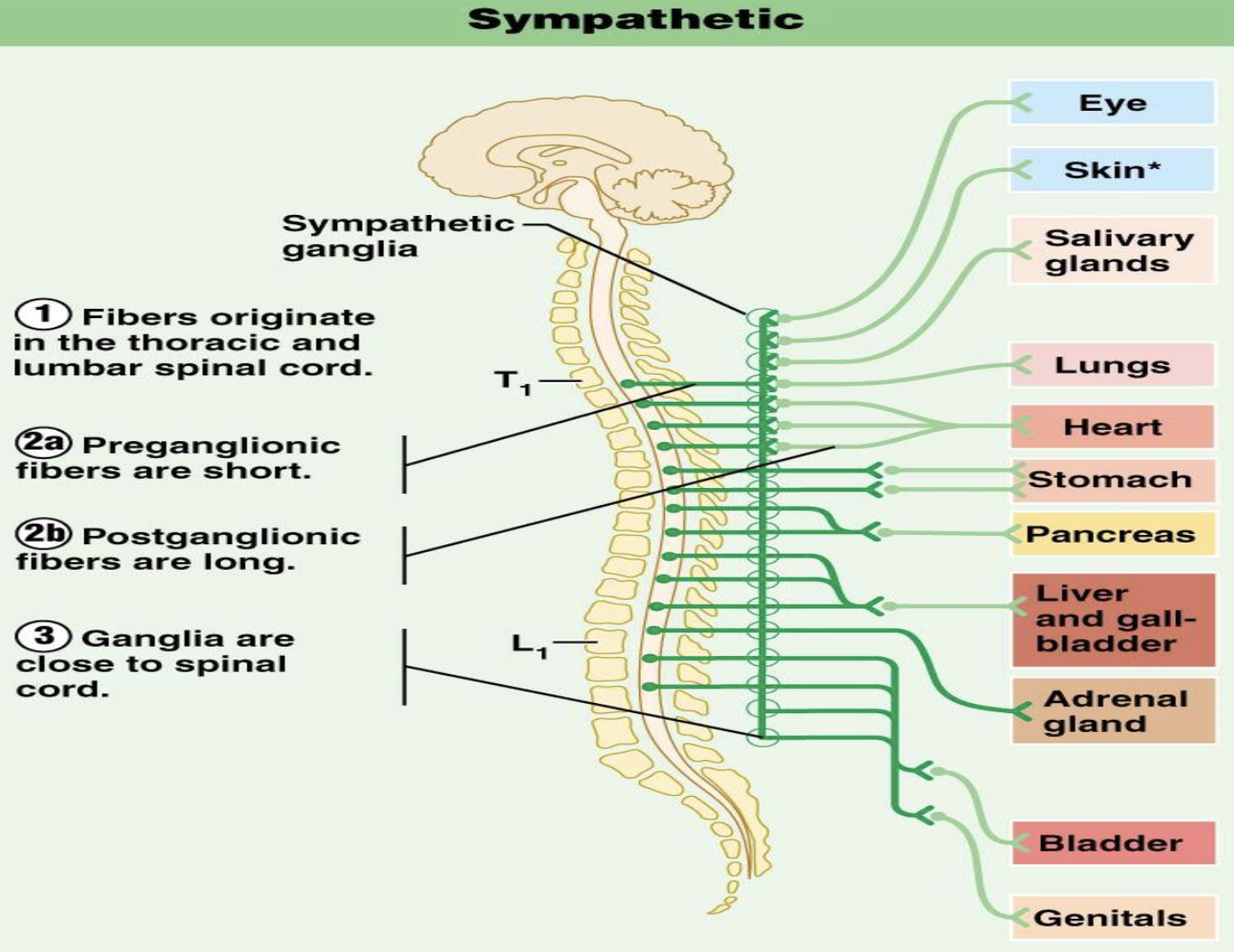
Where does the sympathetic division originate?
What is another name for the sympathetic division based on its origin?
The thoracic and lumbar regions, T1–L2, of the spinal cord
Thoracolumbar

How long are sympathetic preganglionic fibers compared with postganglionic fibers?
Where are sympathetic ganglia located?
Preganglionic fibers are short and postganglionic fibers are long
Close to the spinal cord, in chain ganglia
Parasympathetic Division
Where does the parasympathetic division originate?
What is another name for the parasympathetic division based on its origin?
In the brain and spinal cord
Craniosacral
How long are parasympathetic preganglionic fibers compared with postganglionic fibers?
Where are parasympathetic ganglia located?
Preganglionic fibers are long and postganglionic fibers are short
Close to the effector organs, in terminal ganglia

C. Neurotransmitter Differences
Sympathetic Division
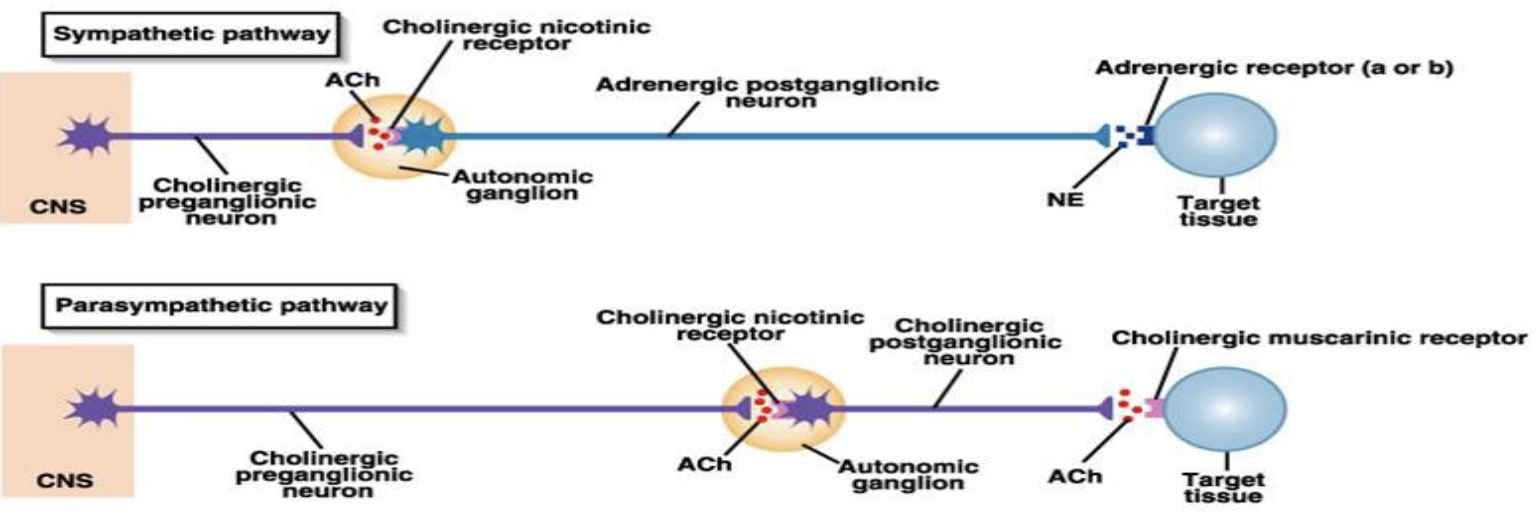
What does the sympathetic postganglionic neuron release?
What type of receptors respond to sympathetic norepinephrine?
Norepinephrine
Adrenergic receptors
What do alpha adrenergic receptors cause?
What do beta adrenergic receptors cause?
Vasoconstriction
Vasodilation
Parasympathetic Division
What does the parasympathetic postganglionic neuron release?
What receptors does acetylcholine act on in the parasympathetic ganglion?
Acetylcholine
Nicotinic cholinergic receptors

What receptors does acetylcholine act on at the target tissue?
What inactivates acetylcholine?
Why is the parasympathetic response short-lived compared to the sympathetic response?
Muscarinic cholinergic receptors
Cholinesterase
Acetylcholine is inactivated by cholinesterase
III. Sympathetic Division
A. Preganglionic Neurons
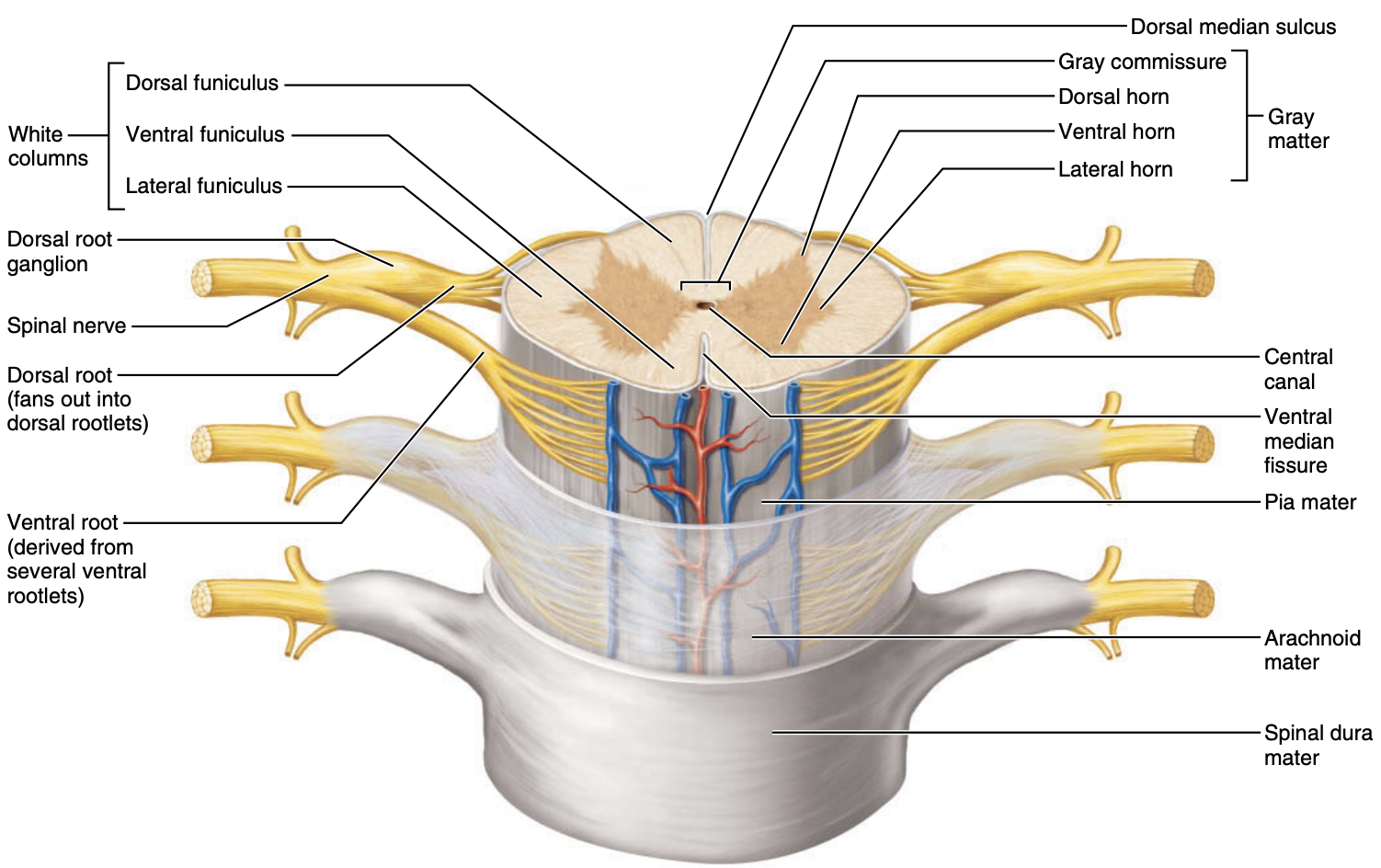
Where are sympathetic preganglionic neurons located?
What do the sympathetic preganglionic neurons produce in the spinal cord?
In spinal cord segments T1–L2
The lateral horns

How do sympathetic preganglionic neurons enter the chain ganglia?
What happens when sympathetic preganglionic neurons synapse in the chain ganglia?
Through the white ramus
They synapse with postganglionic neurons

What happens to some sympathetic preganglionic fibers after entering the chain ganglia?
Some pass through the chain ganglia and form splanchnic nerves

What do some sympathetic preganglionic fibers form after passing through the chain ganglia?
What two collateral ganglia are listed in the lecture?
Collateral ganglia
Celiac and mesenteric ganglia

B. Postganglionic Neurons
How do some sympathetic postganglionic neurons leave the chain ganglia?
Where do some sympathetic postganglionic neurons synapse?
They synapse in the chain ganglia and exit through grey rami
in the collateral ganglia
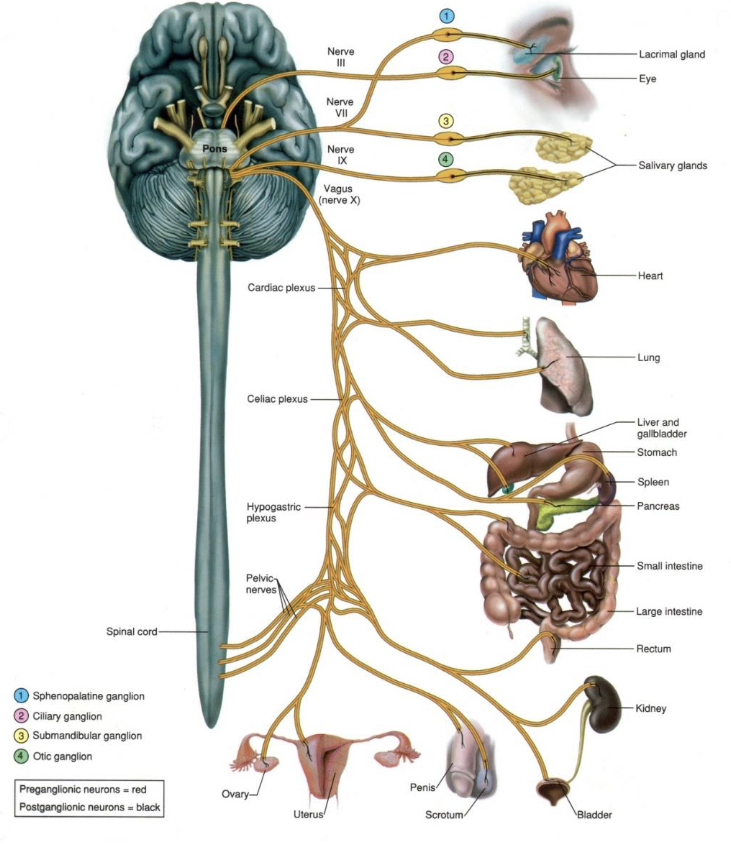
What two significant exceptions are mentioned regarding sympathetic targets?
What structures in the skin are innervated by the sympathetic system?
The skin and adrenal gland
Sweat glands and arrector pili muscles

What does the sympathetic system cause the adrenal gland to release?
Epinephrine and norepinephrine
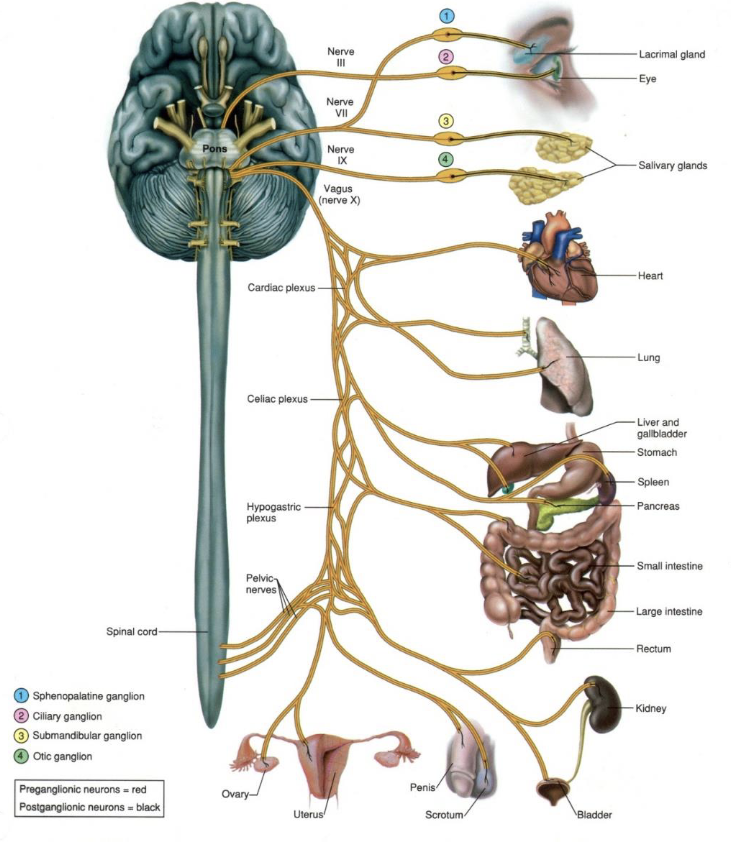
IV. Parasympathetic Division
A. Cranial Outflow
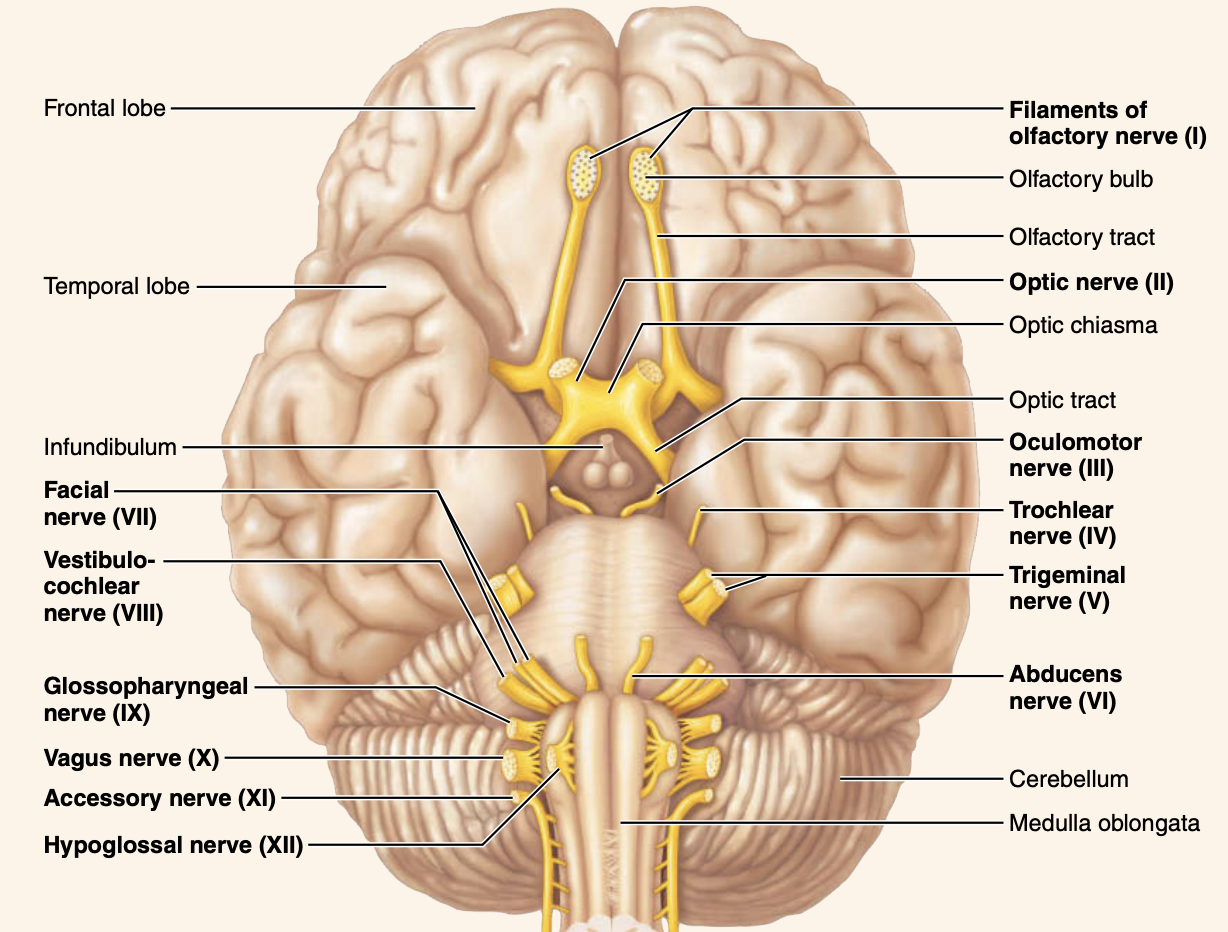
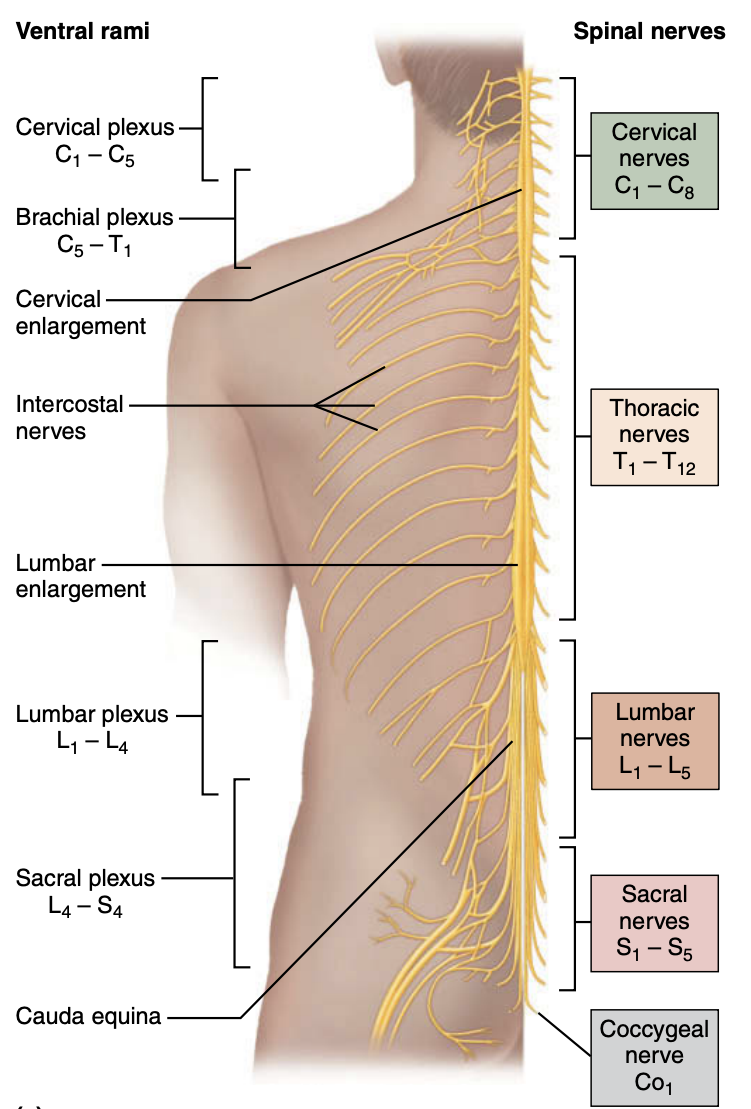
Which cranial nerves carry parasympathetic preganglionic fibers?
Which cranial nerve is associated with the cardiac plexus?
Oculomotor (III), facial (VII), glossopharyngeal (IX), and vagus (X)
Vagus nerve (X)

Which cranial nerve is associated with the pulmonary plexus?
Which cranial nerve is associated with the celiac plexus?.
Vagus nerve (X)
Vagus nerve (X)
B. Sacral Outflow
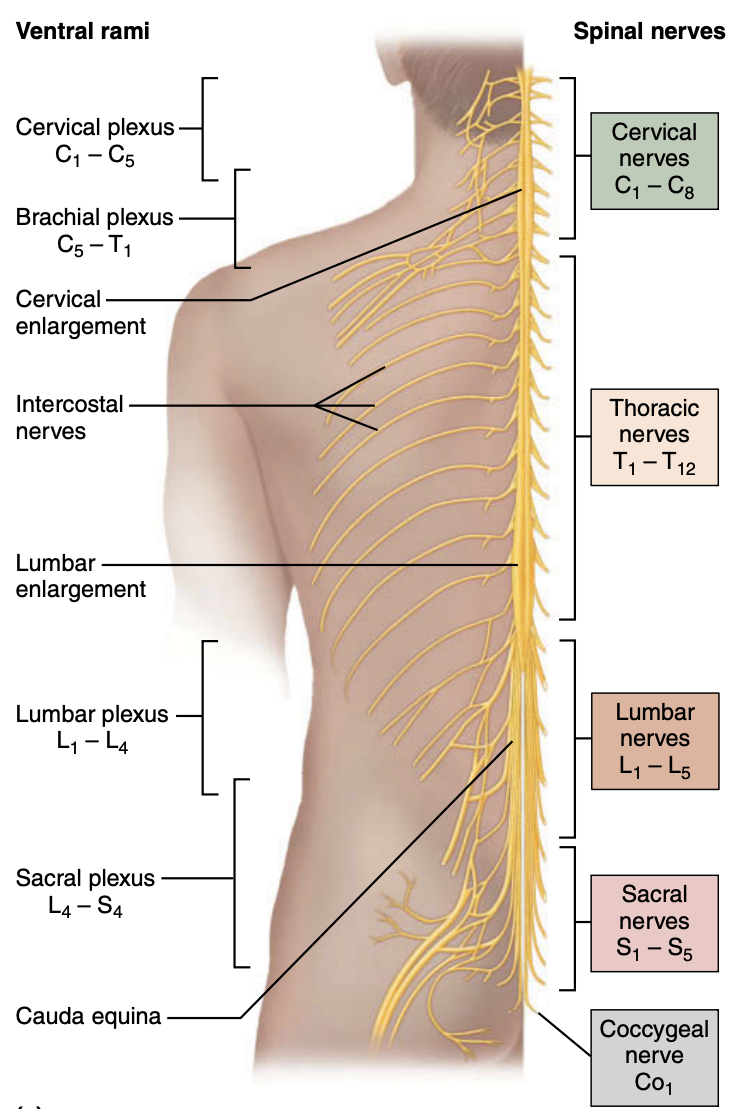
What spinal cord levels produce the parasympathetic sacral outflow?
What nerves carry the parasympathetic sacral outflow?
S2–S4
Pelvic splanchnic nerves
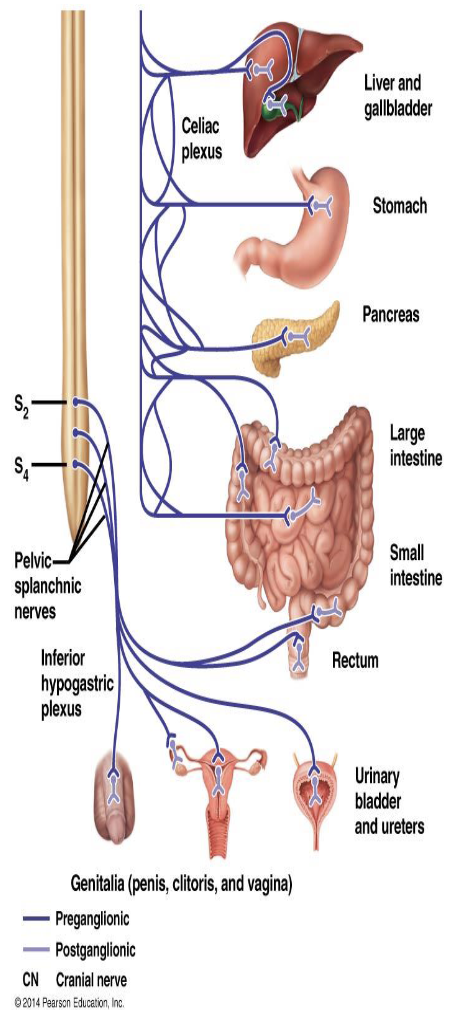
What plexus is associated with the parasympathetic sacral outflow?
What does the inferior hypogastric plexus innervate?
The inferior hypogastric plexus
The rectum, urinary bladder, and reproductive organs
Somatic
Effectors:
Pathway:
Fibers:
Neurotransmitter:
Effect:
Skeletal muscle
No ganglion
Thick, myelinated
Acetylcholine
Stimulatory
Autonomic
Effectors:
Pathway:
Fibers:
Neurotransmitter:
Effect:
Smooth muscle, cardiac muscle, glands
Preganglionic → ganglion → postganglionic
Preganglionic: thin/slightly myelinated;
Postganglionic: unmyelinated
Preganglionic: ACh;
Postganglionic: NE or ACh
Stimulatory or inhibitory

Sympathetic
Response
Origin
Name
Preganglionic fibers
Postganglionic fibers
Ganglia
Postganglionic NT
Receptors
Fight or flight
T1–L2
Thoracolumbar
Short
Long
Close to spinal cord
Norepinephrine
Adrenergic
Parasympathetic
Response
Origin
Name
Preganglionic fibers
Postganglionic fibers
Ganglia
Postganglionic NT
Receptors
Rest and digest
Brain + spinal cord
Craniosacral
Long
Short
Close to effector organs
Acetylcholine
Muscarinic at target tissue
Somatic vs. autonomic
Somatic → ?
Autonomic → ?
1 neuron
2 neurons (preganglionic + postganglionic)
Sympathetic
T?–L?
Short → ?
NE (norepinephrine) → ?
Alpha receptors → ?
Beta receptors → ?
T1–L2
Long
adrenergic
vasoconstriction
vasodilation
Parasympathetic
Craniosacral
Long → ?
ACh → ?
Short
muscarinic at target
Parasympathetic cranial nerves
III → ?
VII → ?
IX → ?
X → ?
Oculomotor nerve (3)
Facial nerve (7)
Glossopharyngeal nerve (9)
Vagus nerve (10)
Parasympathetic sacral
S?–S?
Pelvic splanchnic nerves
S2–S4