Kroll Portfolio Valuation Analyst
 Call Kai
 Learn
Learn Practice Test
 Spaced Repetition
 Match
Match Flashcards
 Knowt Play
1/7

There's no tags or description
Looks like no tags are added yet.
Name | Mastery | Learn | Test | Matching | Spaced | Call with Kai | Chat |
|---|
No analytics yet
Send a link to your students to track their progress
8 Terms
What are the main valuation methodologies?
Discounted Cash Flow, Leveraged Buyout, Trading Comparables, Precedent Transactions Analysis
When would you use a Discounted Cash Flow Analysis?
You would use a Discounted Cash Flow Analysis when evaluating the intrinsic value of an investment by estimating its future cash flows. Cash flows must be stable and predictable.
When would you use a Trading Comparables Analysis?
When you have a publicly traded company and have access to financial metrics (relative valuation). You would value the company based on the value of its peer group (similar companies). It is very similar to valuing your house based on the other houses in the neightborhood, but instead of comparing absolute values you compare multiples.
What is a drawback of the Trading Comparables Analysis?
1) Valuing a company based off of Trading Comparables is much harder than valuing a house. Finding truly comparable companies is difficult. There may be similar companies but they differ in size (small versus big company).
2) The Trading Comparables Analysis is based off the market’s view on the peer group. The valuation is not so useful when the market is wrong about those companies.
What financial metrics do you use for a Trading Comparables Analysis?
Enterprise Value (EV) / EBITDA, EV/Revenue, EV/EBIT
Price/Earnings Ratio (Share Price/EPS), Market Cap/Net Income, P/E to growth
What is the credit rating threshold of a junk bond?
A junk bond is a high-yield bond that is rated below investment grade. Anything rated BB+ (Standard and Poort) and Ba1(Moody’s) or lower is considered a junk bond.
These credit ratings are used to evaluate a creditor’s ability to pay back their debt, rated from best to worst.
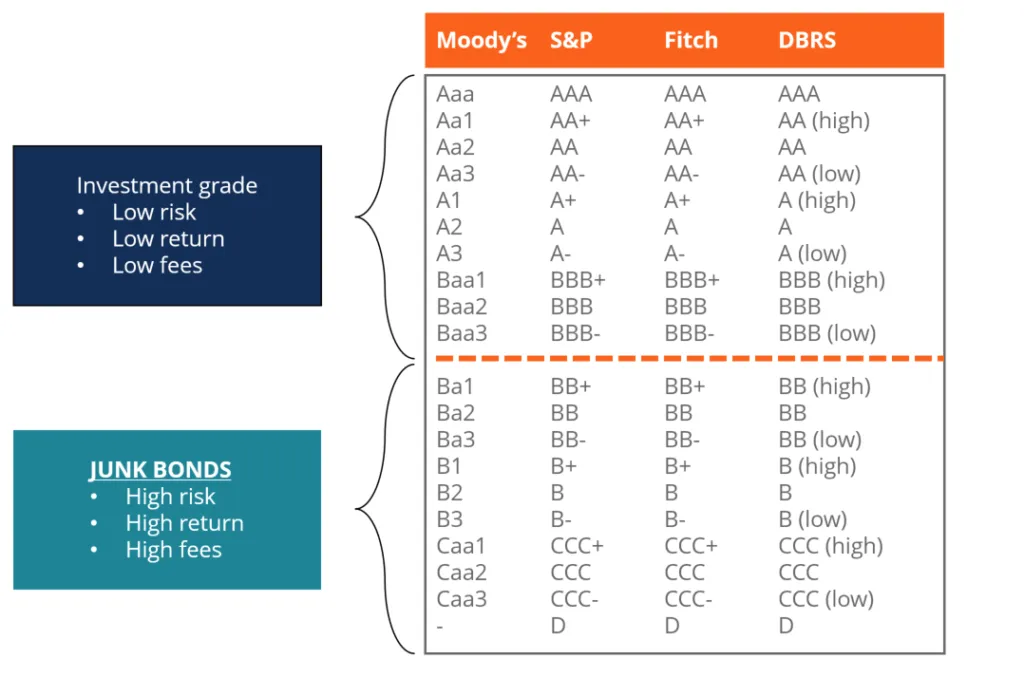
What are two features of a junk bond?
Higher risk and higher rate of return
What sparked your interest in the valuation industry?
What sparked my interest in the valuation industry was from my time in CalPERS where I saw the impact of fairness opinions in the deal process. Many times GPs would utilize third party valuation opinion services to value their PE assets so they could conduct a secondary transaction, AND this is what brings me to Kroll today, the ability to develop a fair assessment of an asset, specifically a wide variety of illiquid assets, while being responsible for your own assumptions. I want to be in an environment where I can get exposure to valuing many kinds of different assets and developing a sense of analytical accountability