CH 10: Micro Exam 3
 Call Kai
 Learn
Learn Practice Test
 Spaced Repetition
 Match
Match Flashcards
 Knowt Play
1/71

There's no tags or description
Looks like no tags are added yet.
Name | Mastery | Learn | Test | Matching | Spaced | Call with Kai | Chat |
|---|
No analytics yet
Send a link to your students to track their progress
72 Terms
metabolism two parts
catabolism and anabolism
steps of enzyme catalyzed reaction
substrate binds to enzyme active site
formation of transition state complex
activation energy lowered
product released
metabolism simple definition
total of all chemical reactions in the cell
catabolism 4 parts
fueling reactions
energy conserving reactions
provide reducing power
generate precursors
anabolism 2 parts
the synthesis of complex organic molecules
requires energy
does microbe metabolism cover all major nutritional cycles
yes, there are representatives in all five major nutritional cycles (C, N, P, S, H2O)
how many steps of the N cycle is done by microbes
4 are solely done by microbes
4 include microbes
calorie (cal)
energy needed to raise 1 gram of water 1°C
joules (J)
1 cal of heat is equivalent to 4.1840 J of work
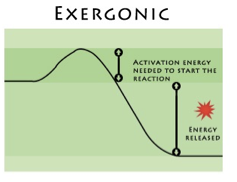
exergonic reactions
ΔG° is negative, faster, releases energy
reaction proceeds spontaneously
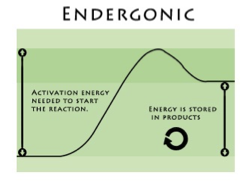
endergonic reactions
ΔG° is positive, slower, requires energy
reaction does not proceed spontaneously and will favor reactants
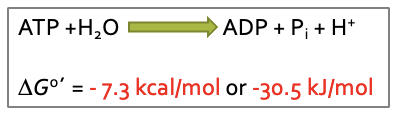
role of ATP in metabolism
endergonic reactions coupled w ATP breakdown (ATP → ADP + Pi) will favor products; or a coupling agent that links energy releasing reactions w/ energy requiring
composed of two high energy bonds
ATP, GTP, CTP, UTP
adenosine 5’-triphosphate (ATP): primary energy currency
guanosine 5’-triphosphate (GTP): energy for protein synthesis
cytidine 5’-triphosphate (CTP): RNA synthesis, lipid synthesis
uridine 5’-triphosphate (UTP): RNA synthesis, peptidoglycan synthesis
which triphosphate has a high phosphate transfer potential
ATP; it donates a phosphoryl group
low to high energy phosphate transfer potential
glycerol 1-phosphate
glucose 6-phosphate
ATP → ADP
ATP → AMP
1,3-biphosphoglycerate
phosphoenolpyruvate
substrate level phosphorylation (SLP)
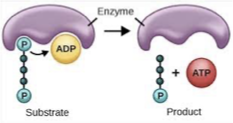
direct production of ATP by transferring a phosphate group from a high energy organic molecule to ADP (ADP + high energy substrate = ATP); also synthesis of high energy phosphate bonds through rxn of inorganic phosphate w/ an activated organic substrate
does not need O
does not need ETC
does not need proton gradient
redox
oxidizing reaction and reducing reaction
acceptor and donor are a conjugate redox pair
oxidized form + e- → reduced form
standard redox potential (E’°)
in volts (V)
more negative E° means a better e- donor
more positive E° means a better e- acceptor
two rules of redox pairs
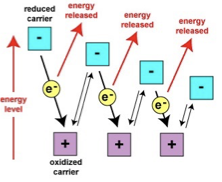
reduced member that is more negative donates e- to oxidized member that is more positive
the greater the difference (ΔE’°) the greater the energy available (ΔG°’)
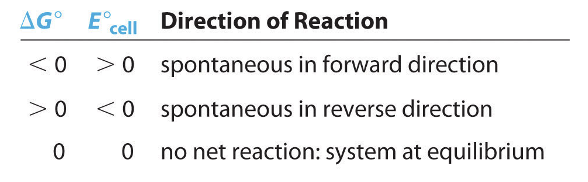
comparing two redox pairs
pick two pairs
NAD+ + 2H+ + 2e- → NADH + H+ (-0.32 V)
½ O2 + 2H+ + 2e- → H2O (+0.82 V)
rule #1: NADH donates to O2
picture**
rule #2: ΔE’° = (E’° of oxidized) - (E’° of reduced)

substance being oxidized
electron donor/ reducing agent/ reductant
substance being reduced
electron acceptor/ oxidizing agent/ oxidant
calculating ΔG°’
ΔG°’ = -n F ΔE’° = -(2 equiv of e-) (23 kcal/volt equiv) (ΔE’°)
most negative E’°
first e- carrier
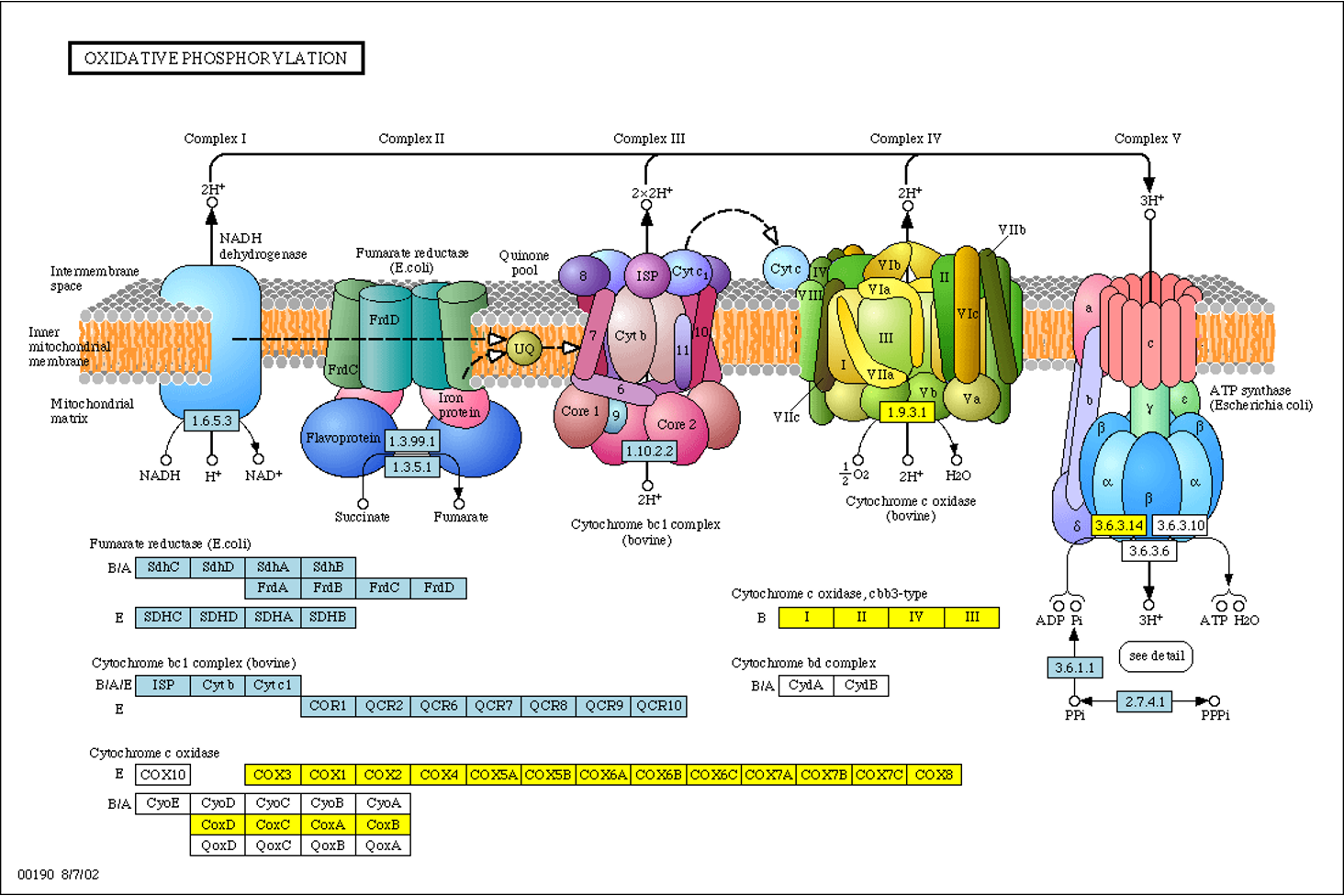
where is the ETC found
mitochondria or chloroplast in eukaryotes and cell membrane of prokaryotes
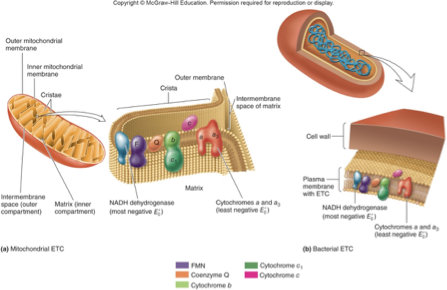
main e- carriers of ETC
NADH and NADPH
FAD and FMN
CoQ / Ubiquinone
Cytochromes
Nonheme iron-sulfur proteins
NADH and NADPH carrier
two e- and one proton
FAD and FMN carrier
two e- and two protons; flavoproteins
CoQ / Ubiquinone carrier
two e- and two protons; lipids
Cytochromes carrier
one e- at a time; iron is part of a heme group
Nonheme iron-sulfur protein carrier
one e- at a time; ferredoxin; iron is not part of a heme group
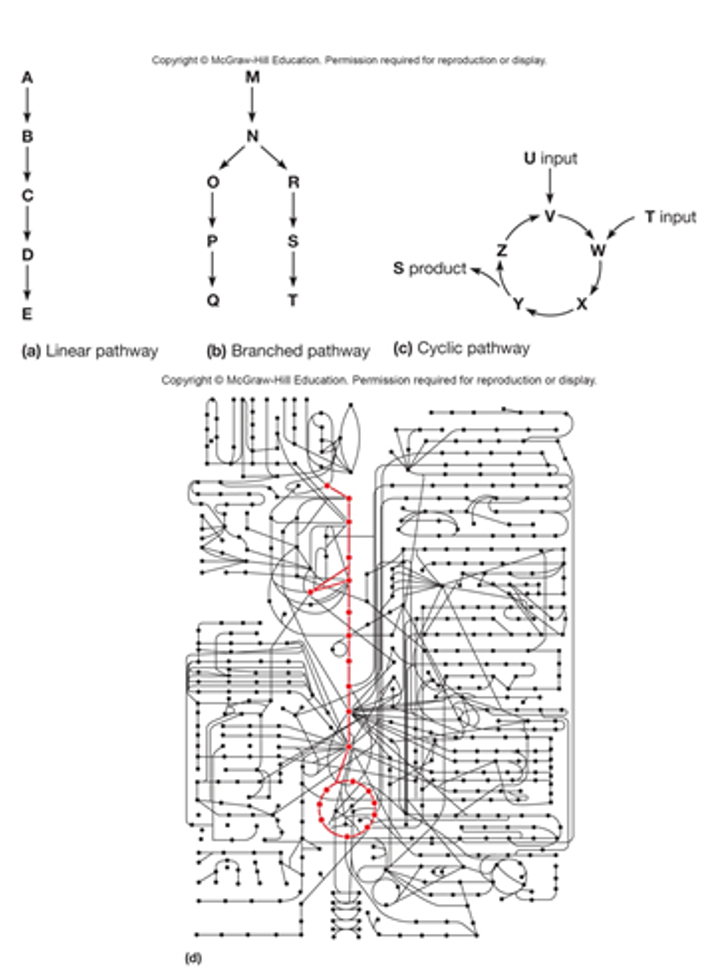
biochem pathways
pathways: linear, cyclic, branching
substrate, intermediate, end product
pathway overlap: complex network, dynamic pathways (monitor changes in metabolite levels)
enzyme overview
proteins that carry out reactions at physiological conditions and speed up rate without altering the equilibrium; catalysts
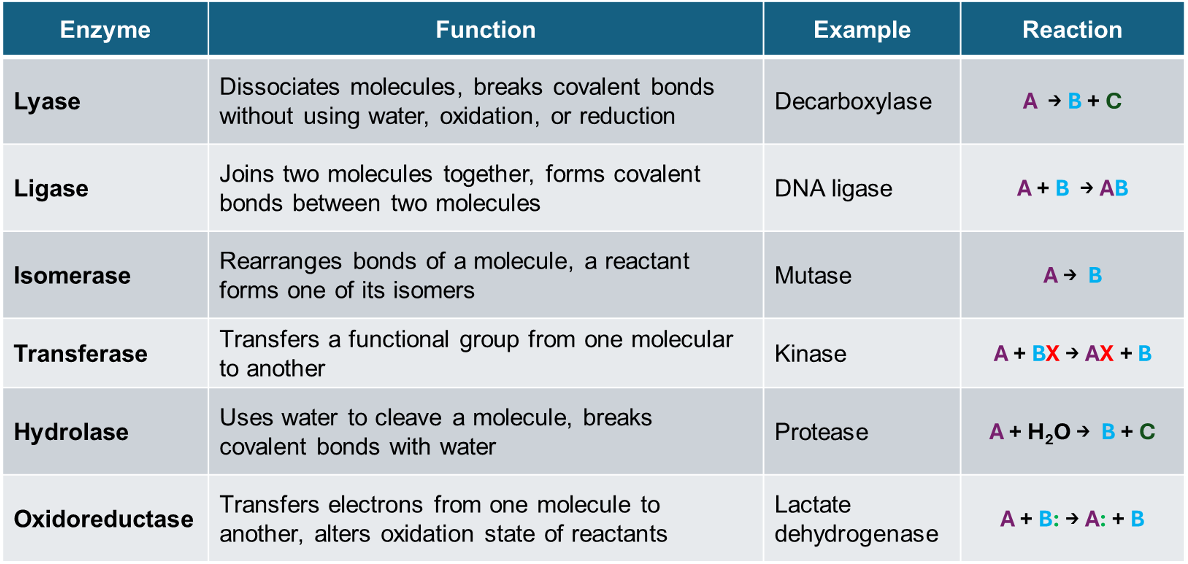
lyase
dissociates molecules, breaks covalent bonds w/o using water, oxidation, or reduction
A → B + C
ligase
joins two molecules together, forms covalent bonds between two molecules
A + B → AB
isomerase
rearranges bonds of a molecule, a reactant forms one of its isomers
A → B
transferase
transfers a functional group from one molecule to another
A + BX → AX + B
hydrolase
uses water to cleave a molecule, breaks covalent bonds with water
A + H2O → B + C
oxidoreductase
transfers electrons from one molecule to another, alters oxidation state of reactants
A + B: → A: + B
enzyme composition
one or more polypeptides
holoenzyme: one or more polypeptides (apoenzyme) and nonprotein components (cofactor- either prosthetic group (tight) or coenzyme (loose))
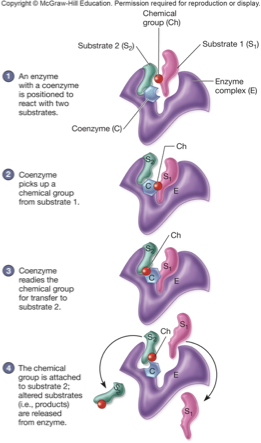
mechanism of enzyme reactions
transition state complex, activation energy (Ea), and enzyme speeding up reaction by lowering Ea
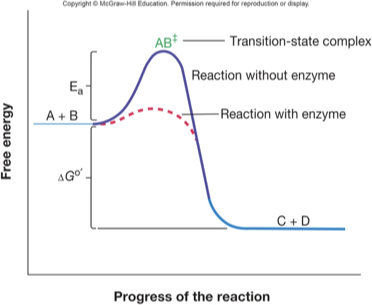
how do enzymes lower Ea
increasing concentrations of substances at active or catalytic site
orienting substrates properly
induced fit model for enzyme substrate interaction
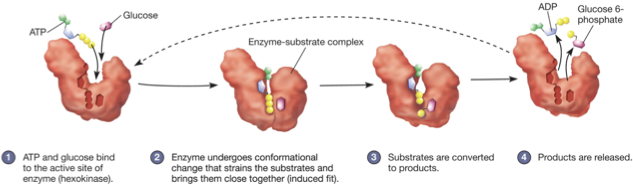
enzyme activity changes due to what
substrate concentration (Km)
pH
temperature
denaturation
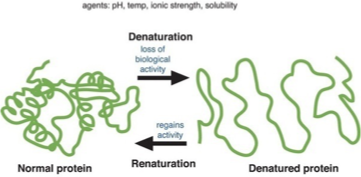
saturation
happens when reaction rate increases as the [substrate] increases
![<p>happens when reaction rate increases as the [substrate] increases</p>](https://assets.knowt.com/user-attachments/dac353d6-c851-4ba8-82b6-2f385db2ca11.png)
enzyme inhibition
competitive: blocks substrate binding
noncompetitive: substrate binds but is blocked by inhibitor at allosteric site
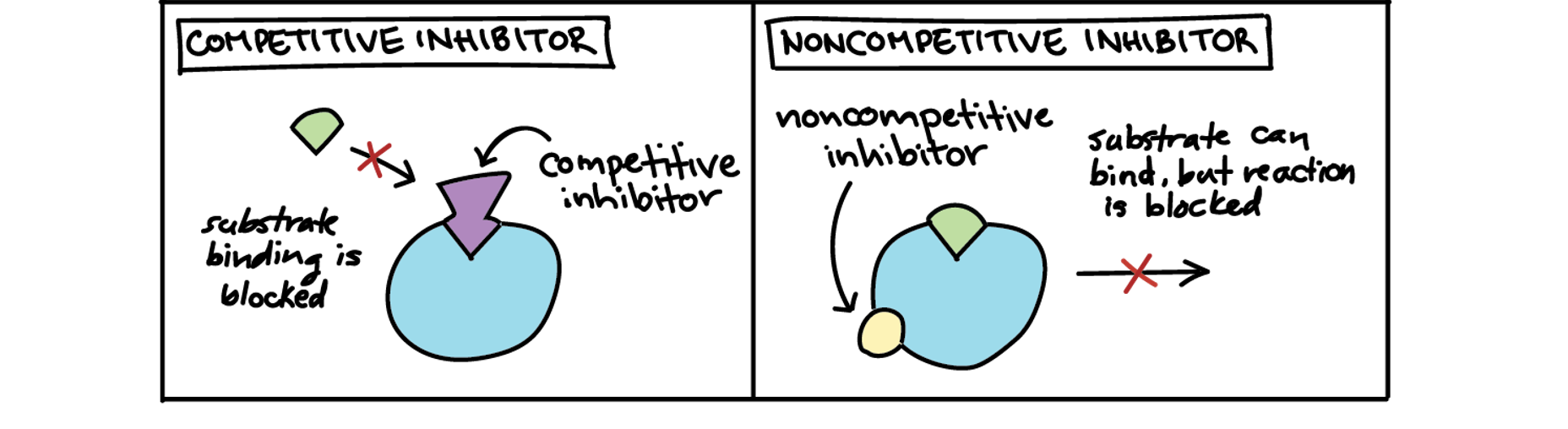
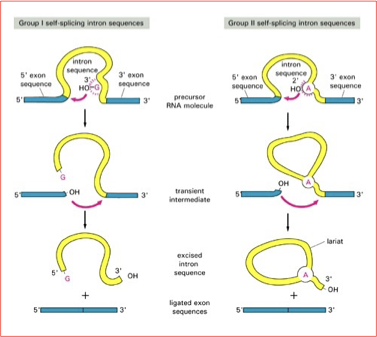
ribozymes
RNA
catalyze peptide bond formation
self-splicing
involved in self-replication
regulation of metabolism general
metabolism must be regulated to maintain homeostasis and prevent waste
conservation of energy and materials
maintenance of metabolic balance
3 major mechanisms for regulating metabolism
metabolic channeling
gene expression- transcription and translation
post-translation- irreversible and reversible
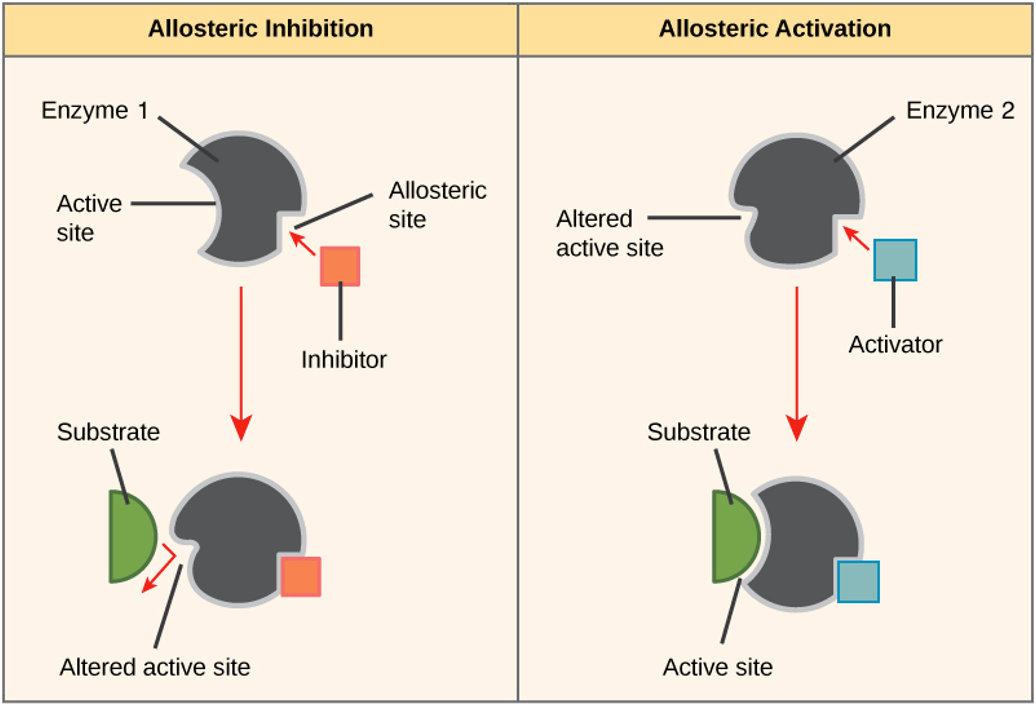
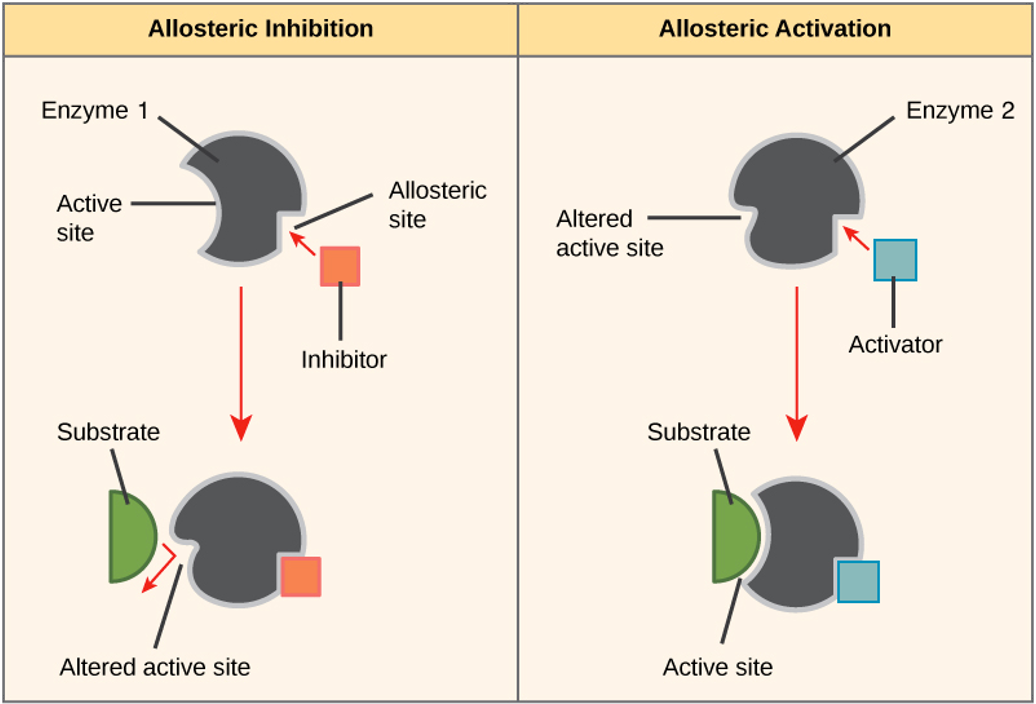
allosteric regulation
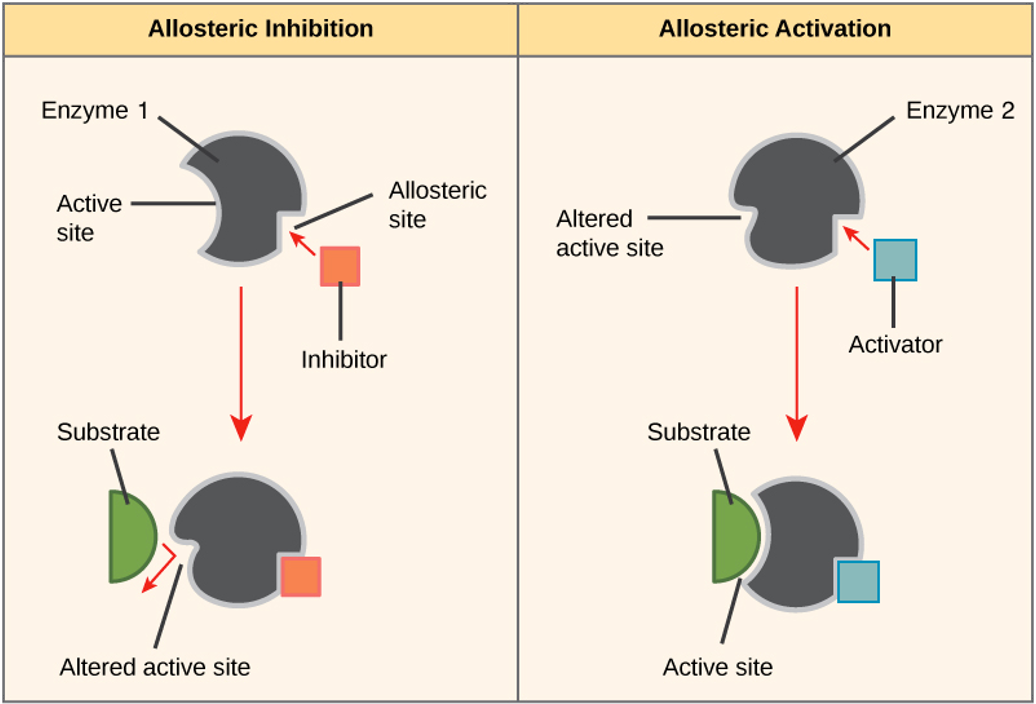
reversible process, uses allosteric effectors on regulatory sites (positive or negative), most are regulatory enzymes, use non covalent bonds, form of post translational regulation
allosteric inhibition
inhibitor binds to allosteric site on enzyme causing a conformational change to block substrate binding
allosteric activation
activator binds to allosteric site on enzyme changing an altered active site to allow substrate binding
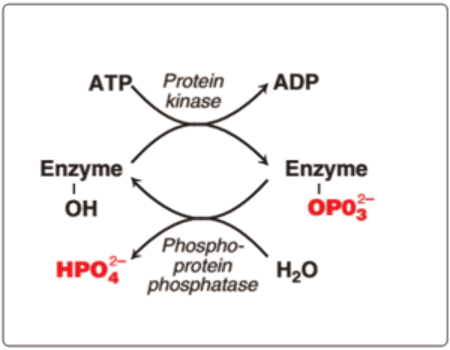
covalent modification of enzymes
reversible; addition or removal of a chemical group
phosphorylation (by kinase and phosphatase)
methylation
ubiquitination
glycosylation
adenylylation
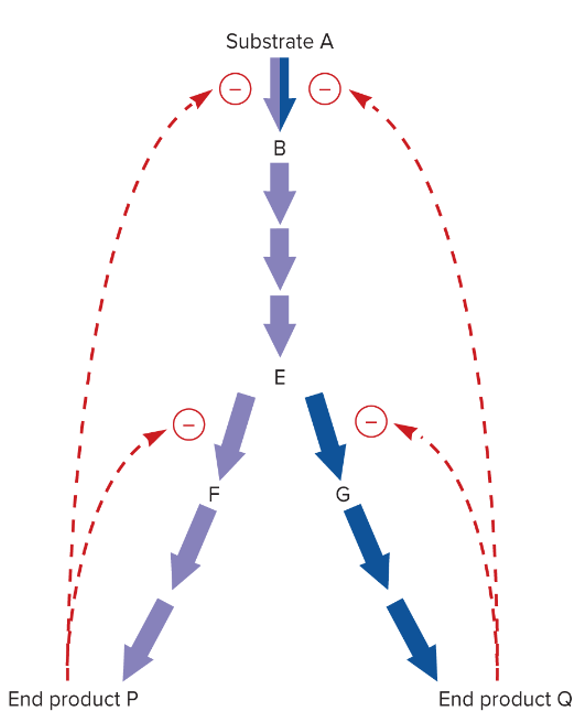
feedback / end-product inhibition
end-product: single end product inhibits first enzyme in biosynthetic pathway
feedback: multiple end products each inhibit different enzyme in branched pathway
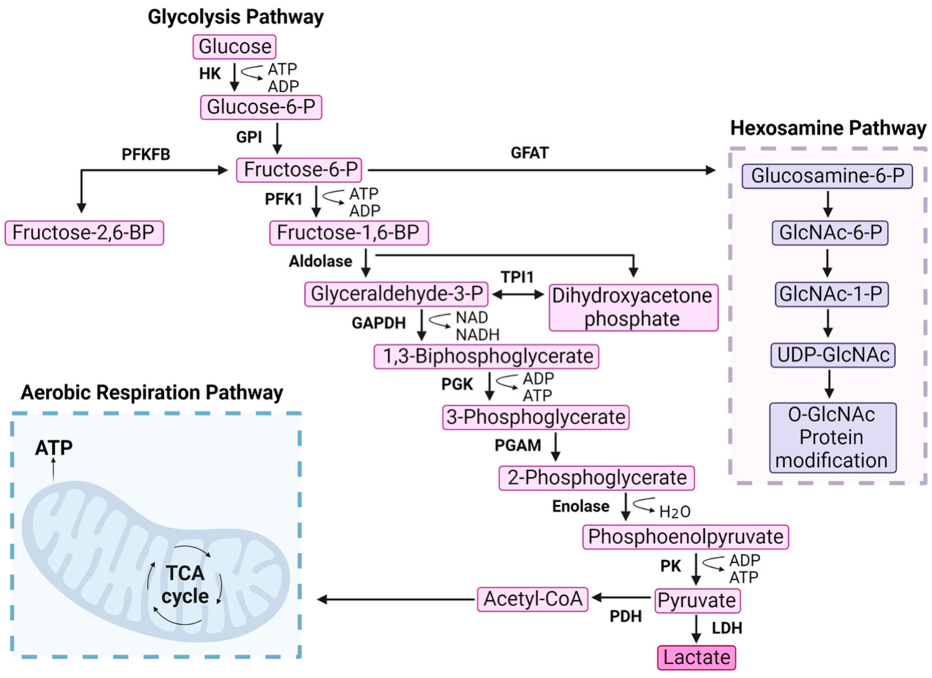
pacemaker enzyme
controls overall rate of pathway, not always first enzyme
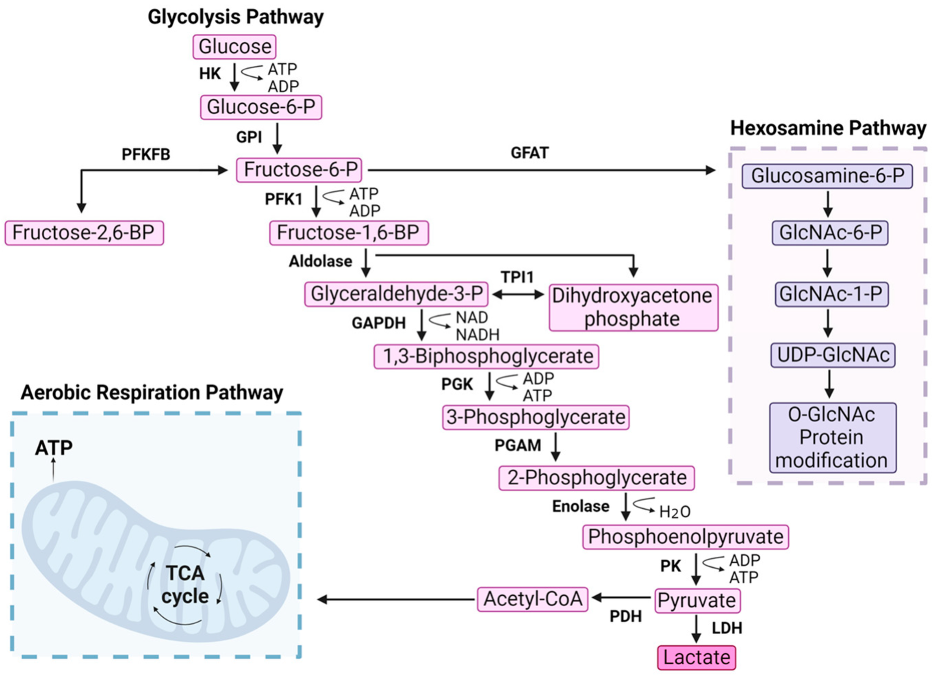
ex. phosphofructokinase (PFK1) irreversible step in glycolysis
isoenzymes
look different than pacemaker enzymes but do the same thing (controls overall rate of pathway)
ex. lactate dehydrogenase’s (LDH) 5 isoenzymes in different tissues