EMT Exam 10
 Call Kai
 Learn
Learn Practice Test
 Spaced Repetition
 Match
Match Flashcards
 Knowt Play
1/203

There's no tags or description
Looks like no tags are added yet.
Name | Mastery | Learn | Test | Matching | Spaced | Call with Kai | Chat |
|---|
No analytics yet
Send a link to your students to track their progress
204 Terms
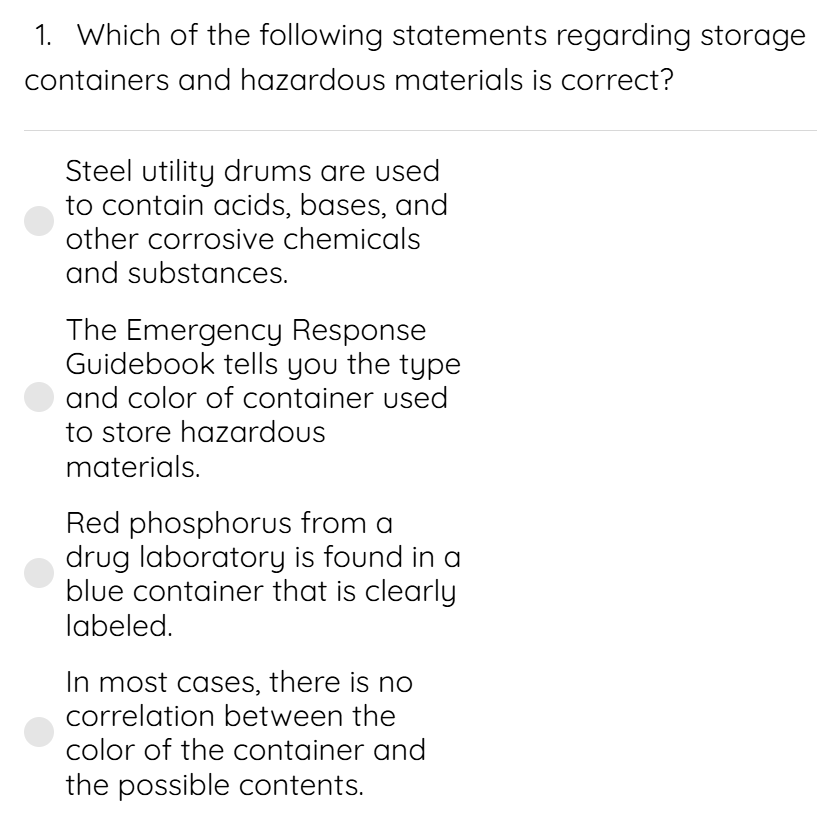
In most cases, there is no correlation between the color of the container and the possible contents.
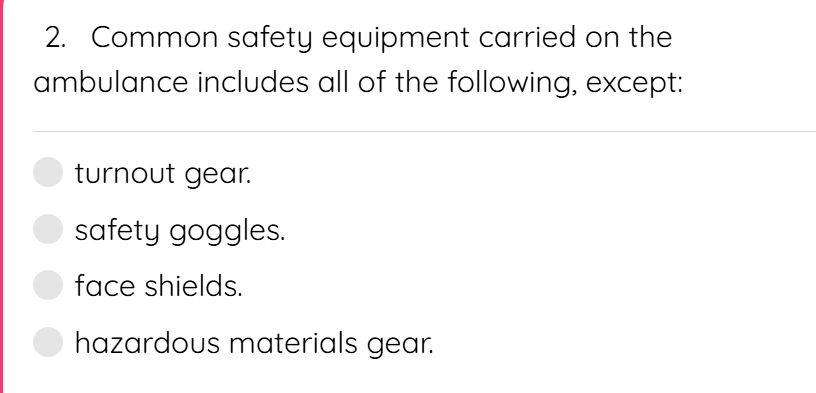
hazardous materials gear.
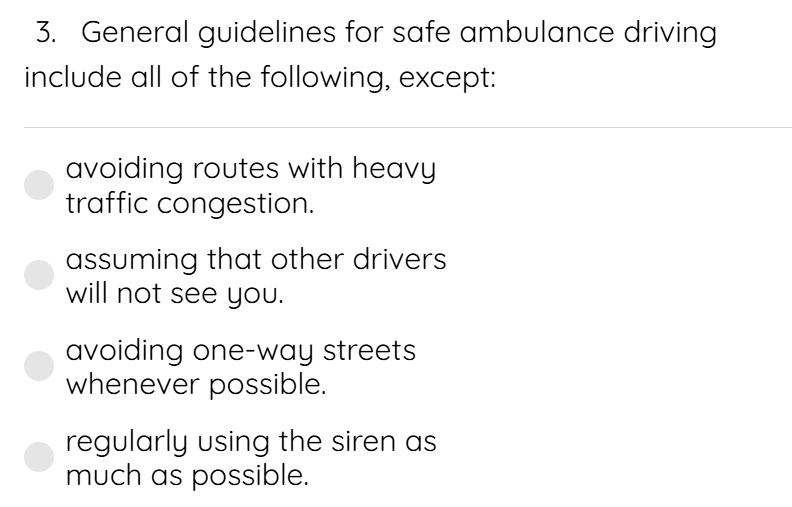
regularly using the siren as much as possible.
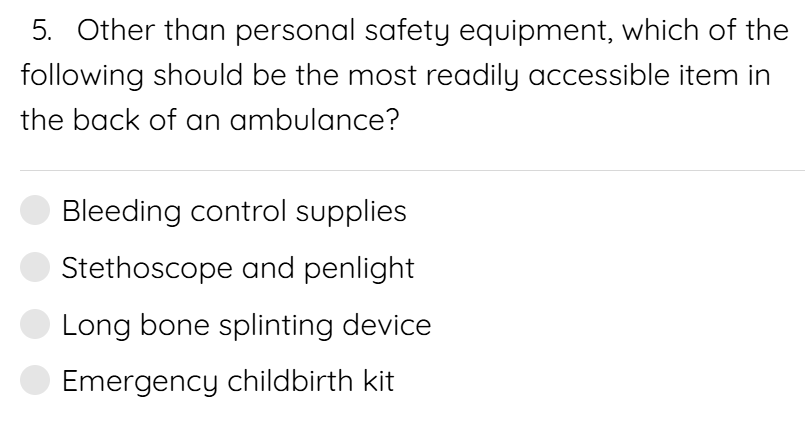
Bleeding control supplies
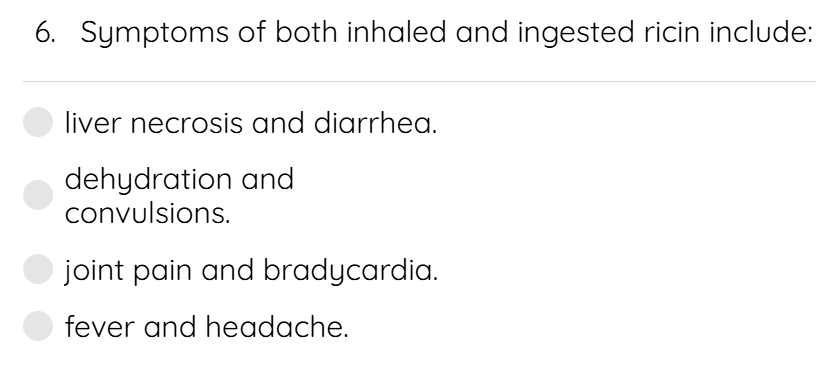
fever and headache.
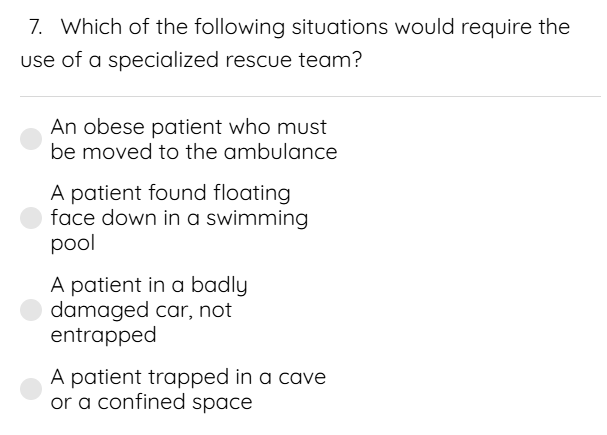
A patient trapped in a cave or a confined space
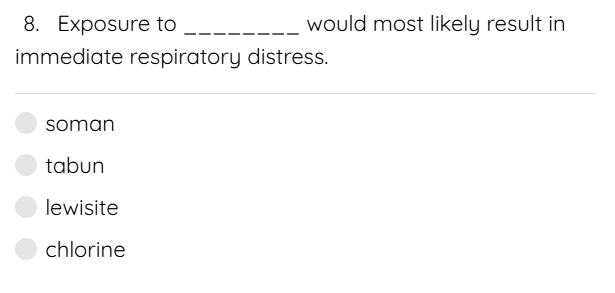
chlorine
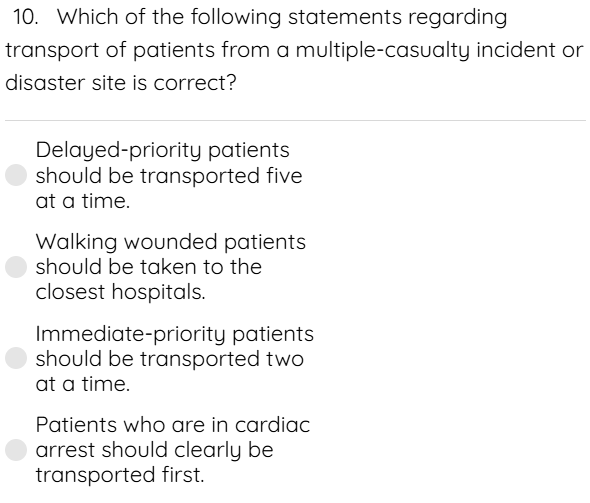
Immediate-priority patients should be transported two at a time.
turn your headlights off.
turn your emergency lights off and obey all traffic laws.
Extrication
Primary assessment
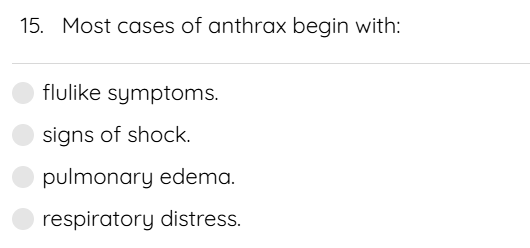
flulike symptoms.
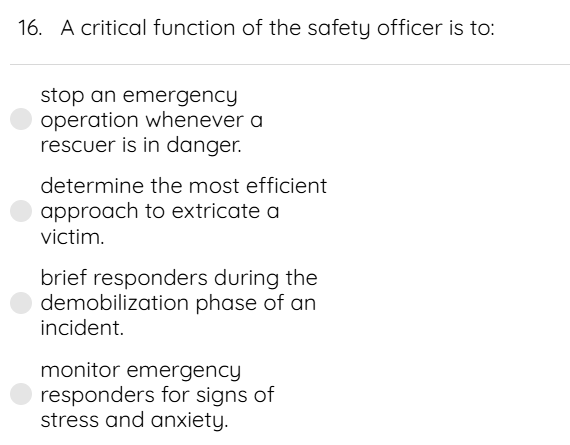
stop an emergency operation whenever a rescuer is in danger.
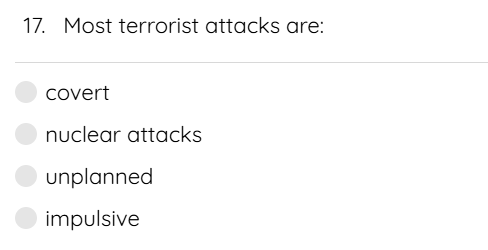
covert
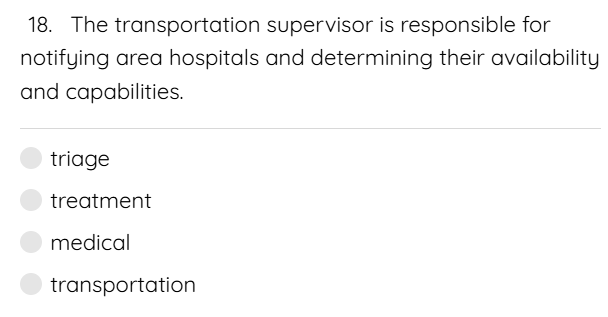
The __________ supervisor is responsible….
transportation
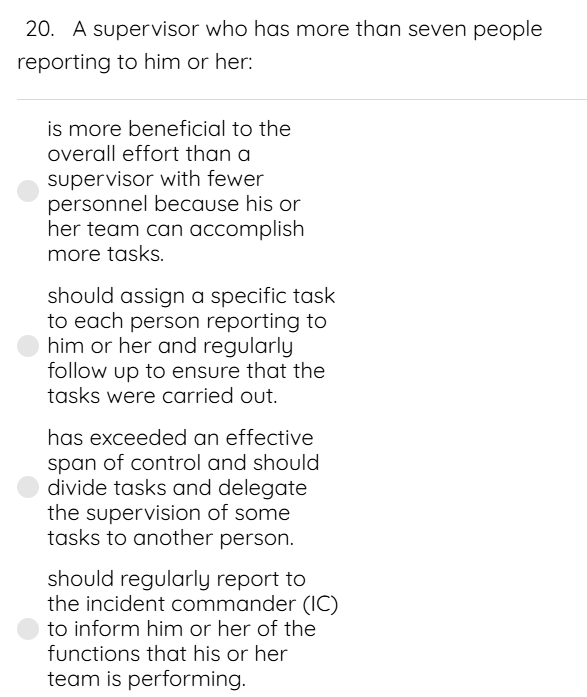
has exceeded an effective span of control and should divide tasks and delegate the supervision of some tasks to another person.
Access
Sight and sound
pose a threat to nations and cultures everywhere.
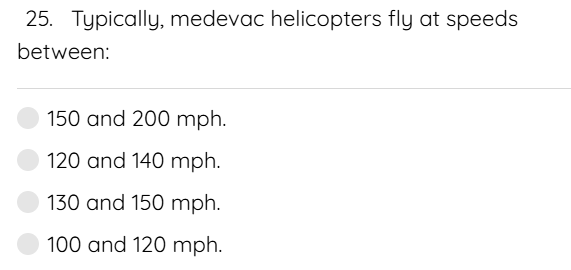
130 and 150 mph.
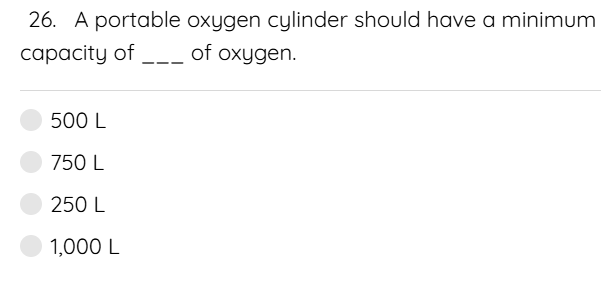
500 L
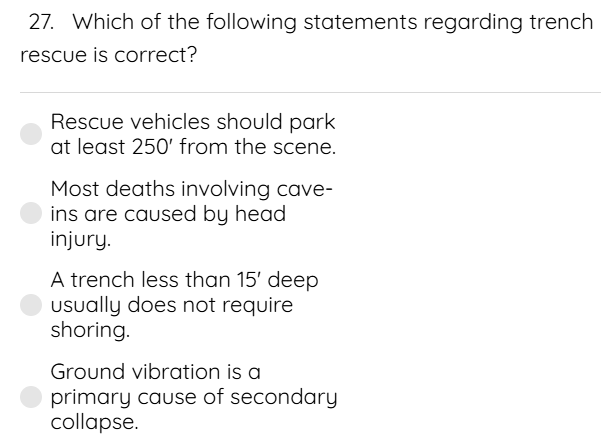
Ground vibration is a primary cause of secondary collapse.
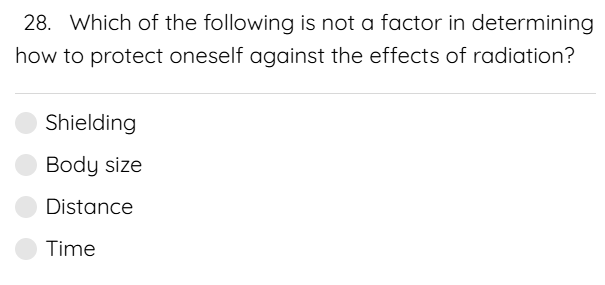
Body size
an EMT is exposed to a victim who has not yet been decontaminated.
a positive attitude about the ability to tolerate other drivers.
single-issue group.
signifies a request for other drivers to yield the right of way.
300
warn oncoming traffic and prevent another crash.
skin.
primary
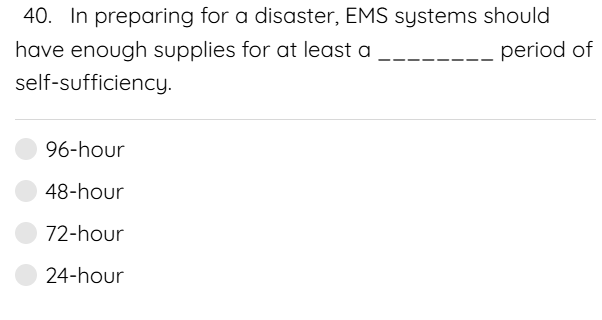
72-hour
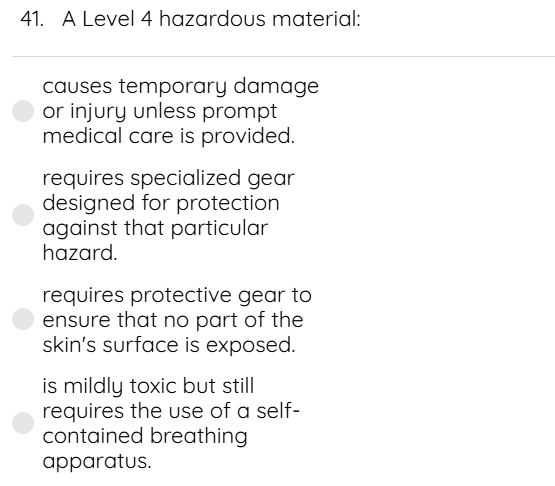
requires specialized gear designed for protection against that particular hazard.
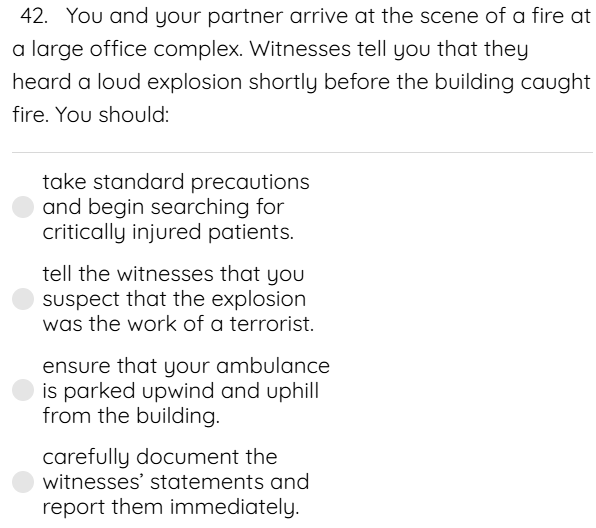
ensure that your ambulance is parked upwind and uphill from the building.
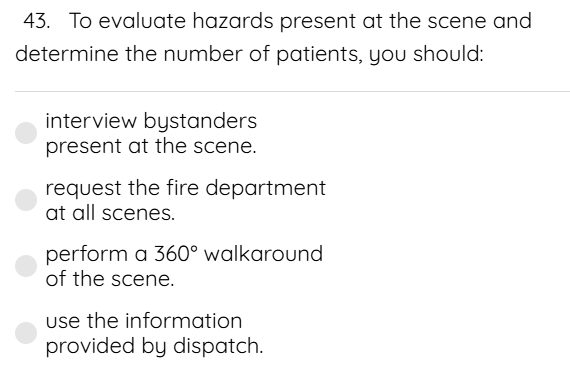
perform a 360° walkaround of the scene.
tag him as immediate (red), place him in the recovery position, and move to the next patient.
protect the cervical spine during the entire process.
killing pathogenic agents with a chemical made for that purpose.
any agent that acts as a carrier or transporter.
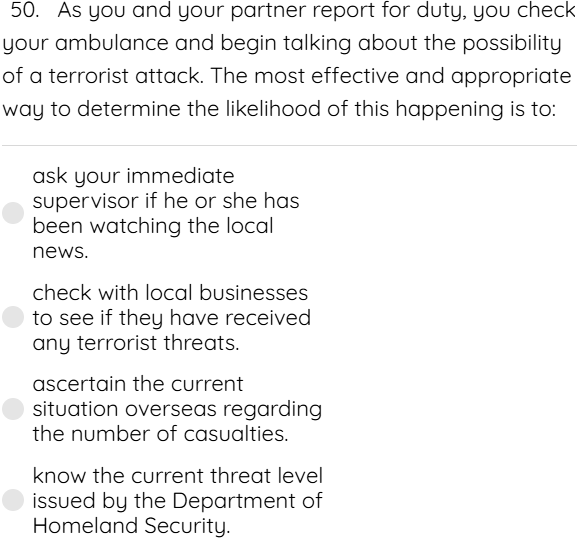
know the current threat level issued by the Department of Homeland Security.
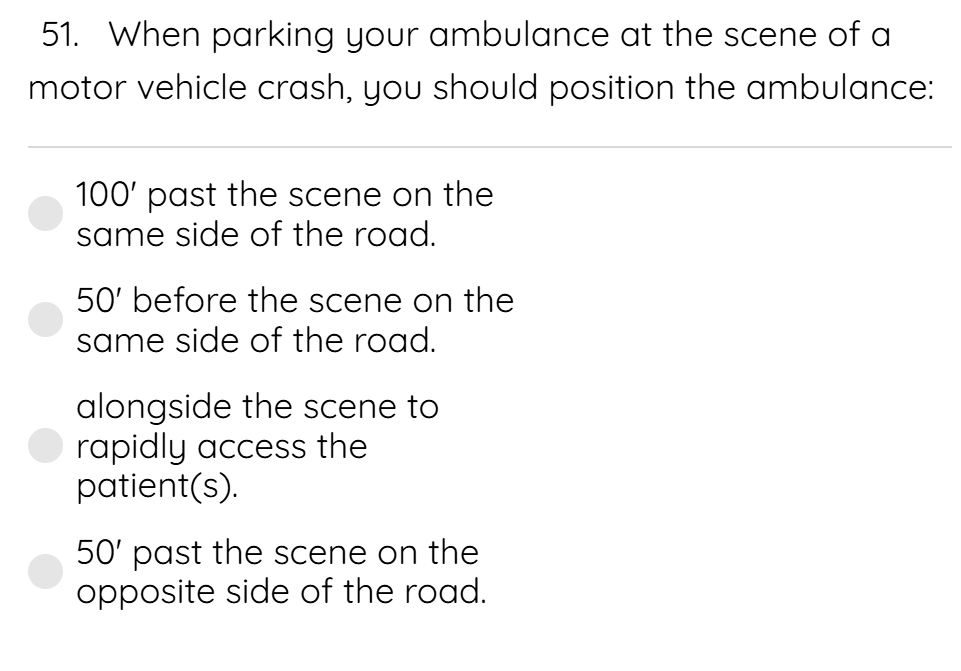
100' past the scene on the same side of the road.
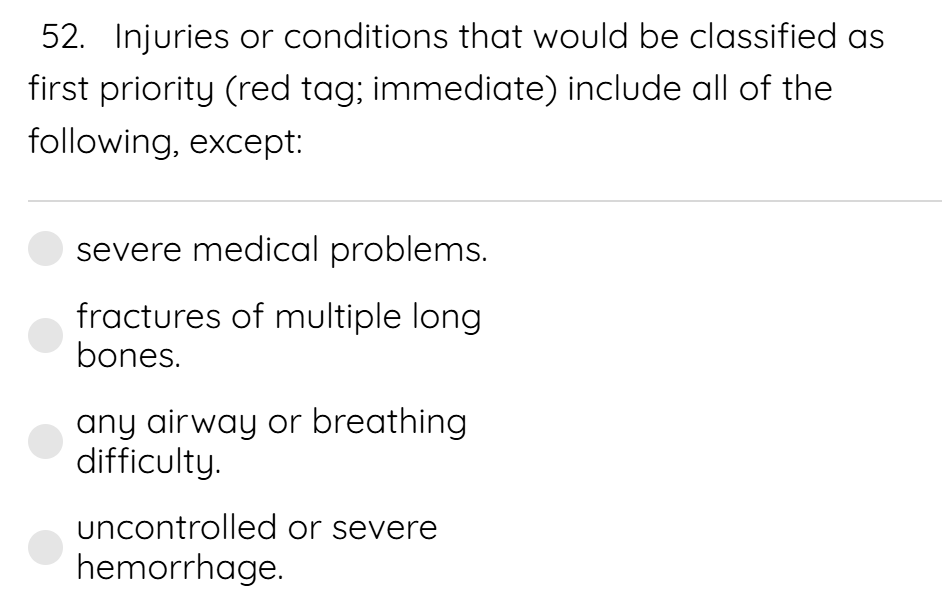
fractures of multiple long bones.
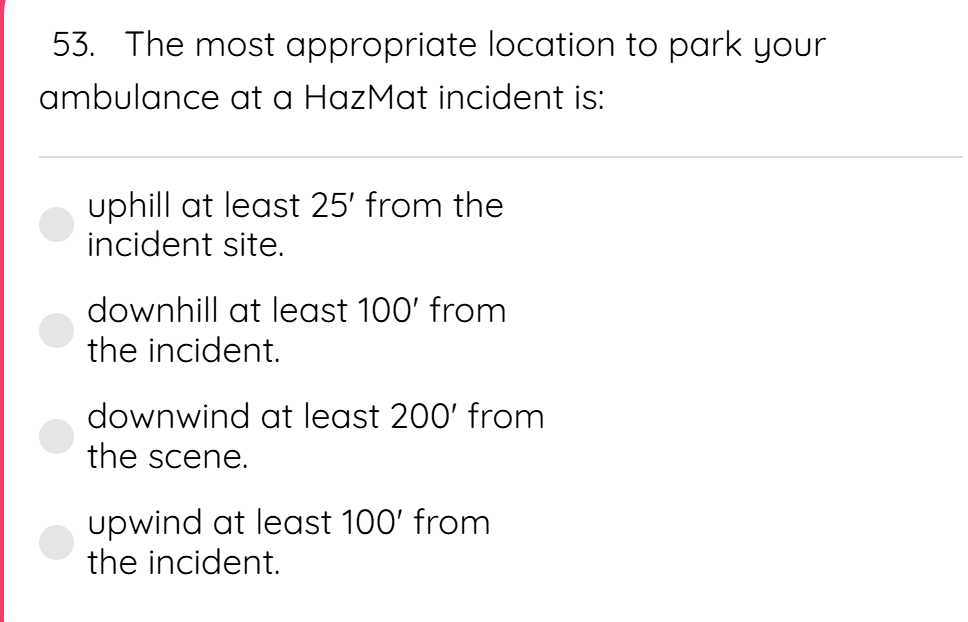
upwind at least 100' from the incident.
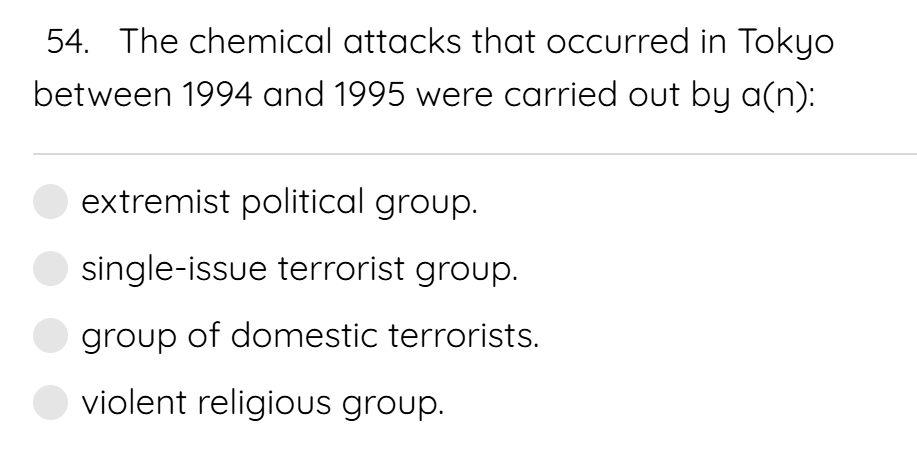
violent religious group.
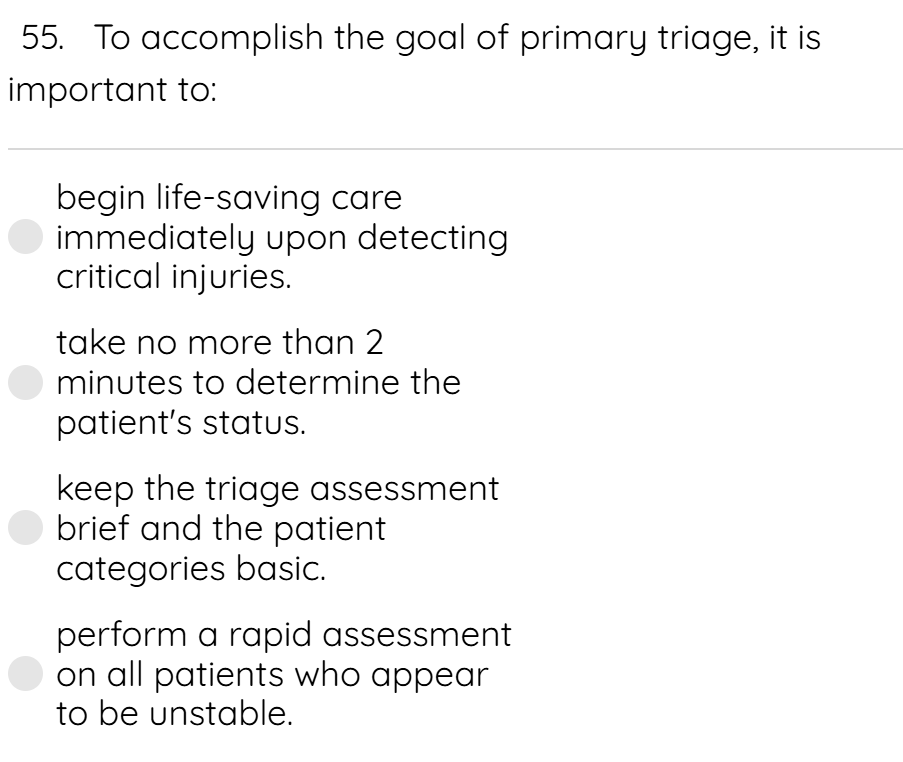
keep the triage assessment brief and the patient categories basic.
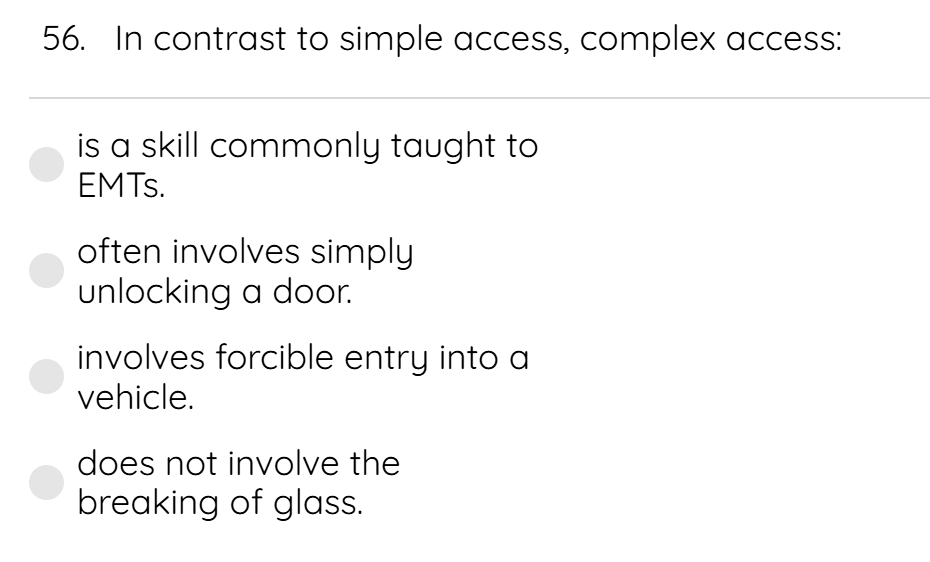
involves forcible entry into a vehicle.
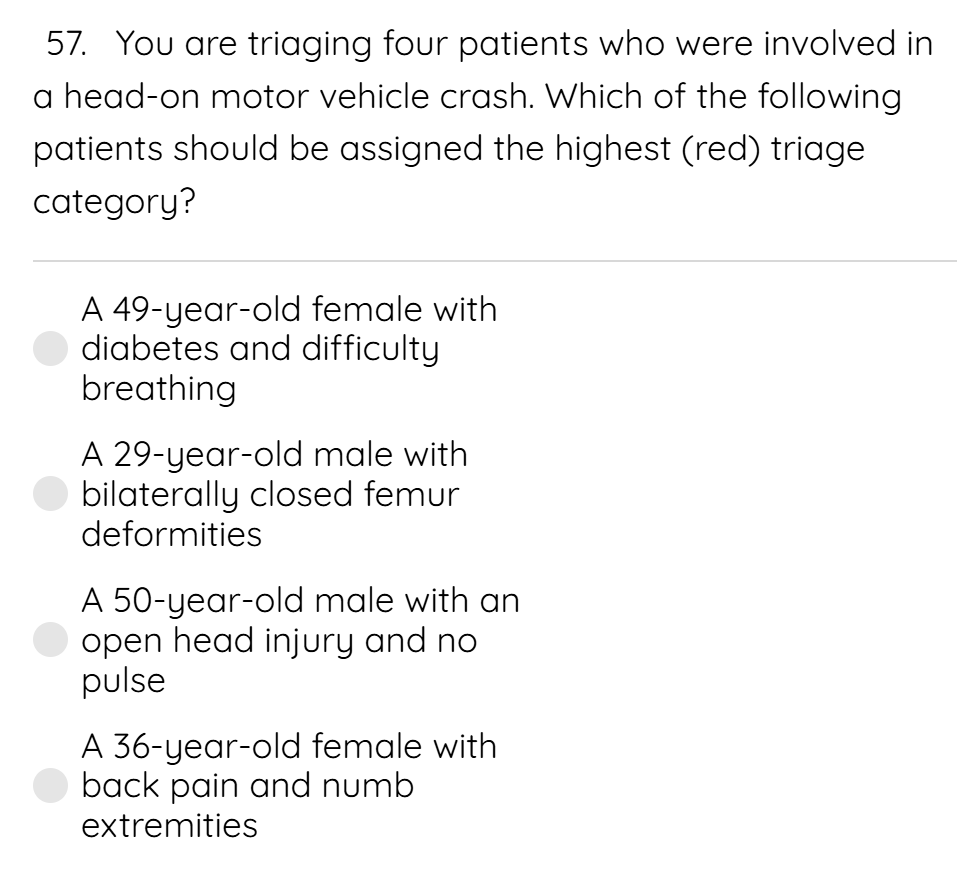
A 49-year-old female with diabetes and difficulty breathing
ask the incident commander where the ambulance should be staged.
position the ambulance upwind.
immobilize him with a vest-style device.
Water-reactive solids
Solid organs are relatively protected from shock wave injury but might be injured during the secondary or tertiary blast phase.
weaponization.
giving a verbal report to the triage clerk.
road flares.
skin blisters.
function as the incident commander until additional personnel arrive.
Decontamination
21 days.
Soman
The EMTs are unfamiliar with the location, but the police officer is familiar with the location.
establish command.
carefully exceed the posted speed limit.
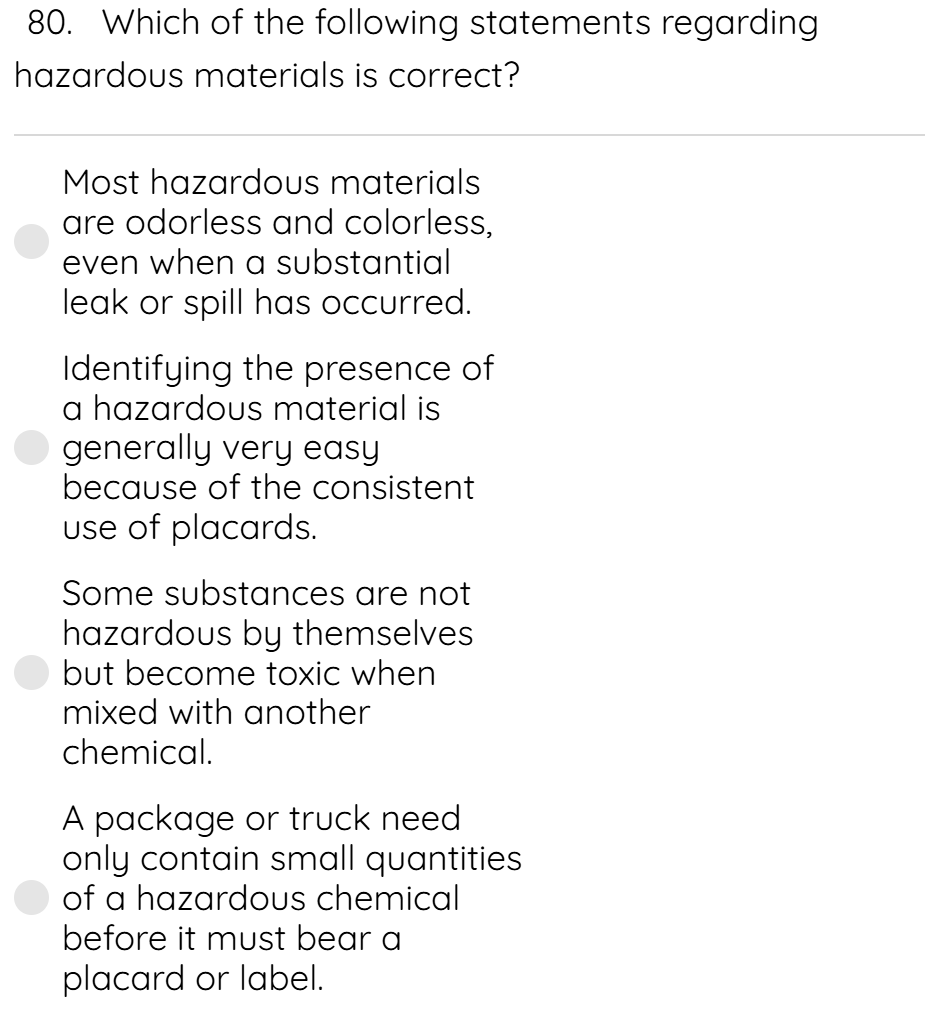
Some substances are not hazardous by themselves but become toxic when mixed with another chemical.
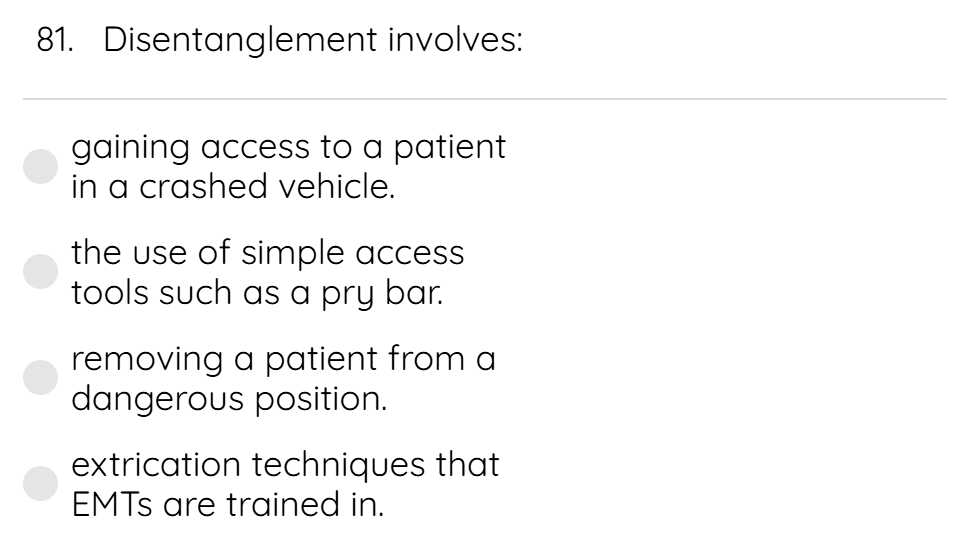
removing a patient from a dangerous position.
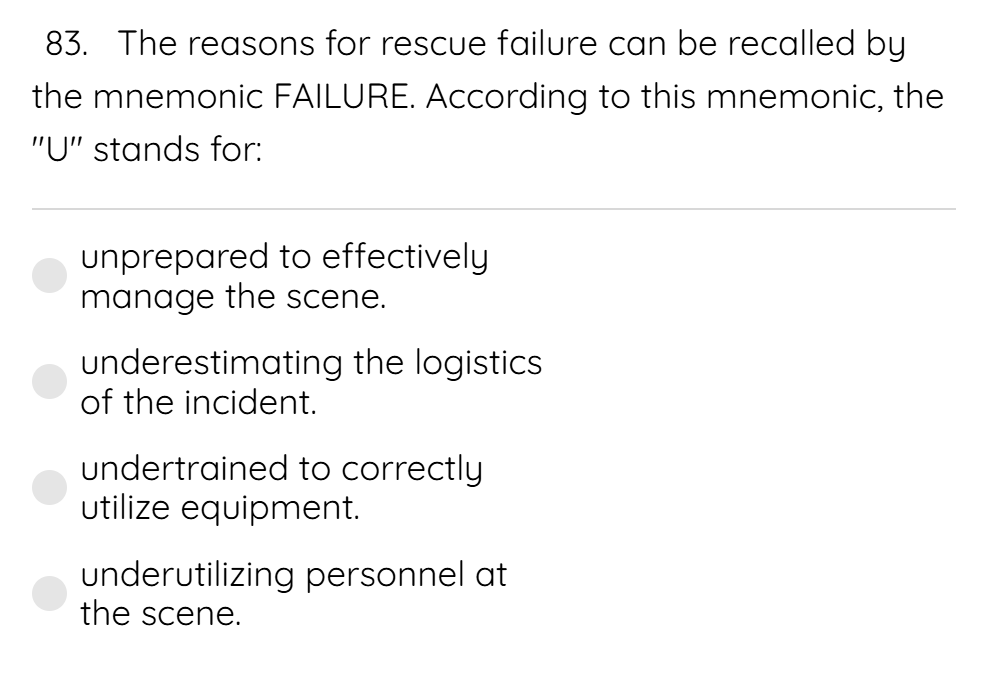
underestimating the logistics of the incident.
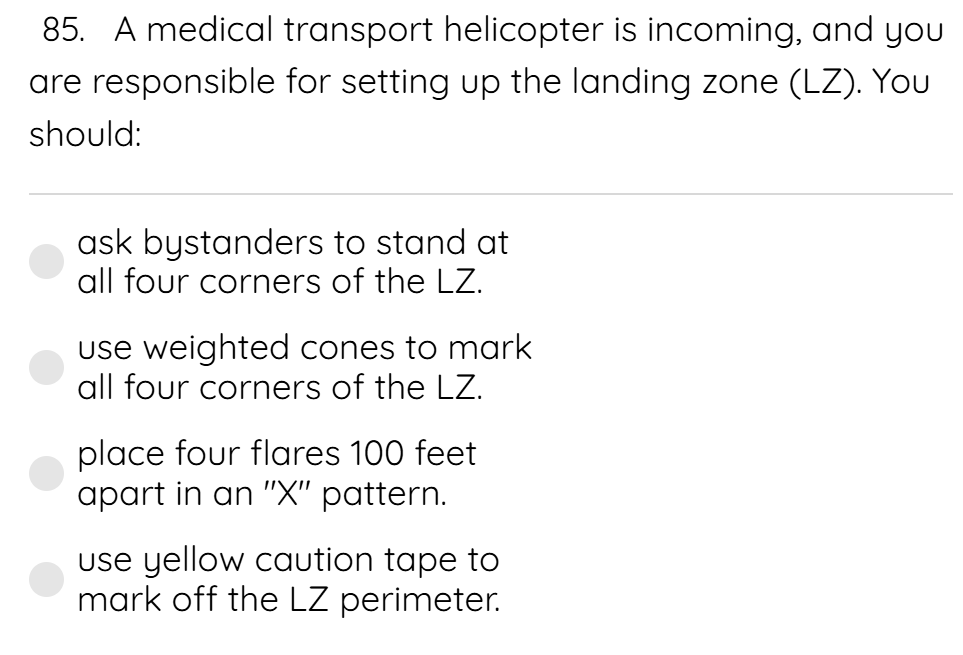
use weighted cones to mark all four corners of the LZ.
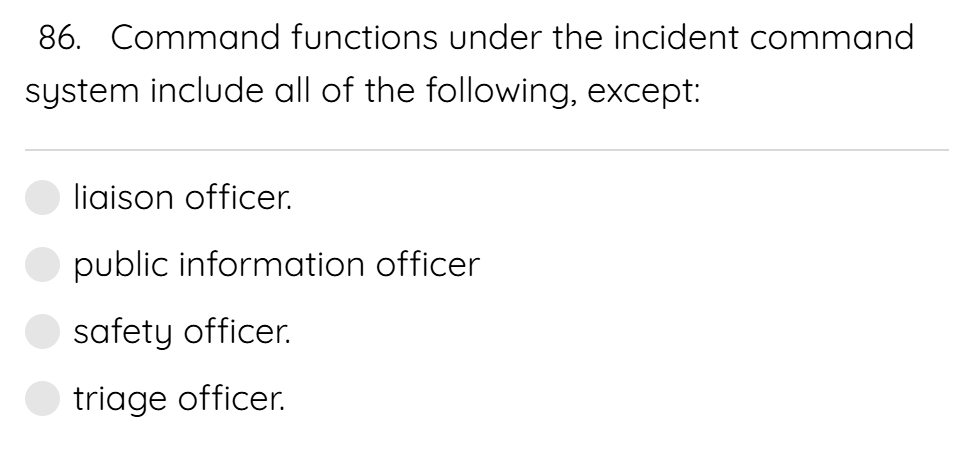
triage officer.
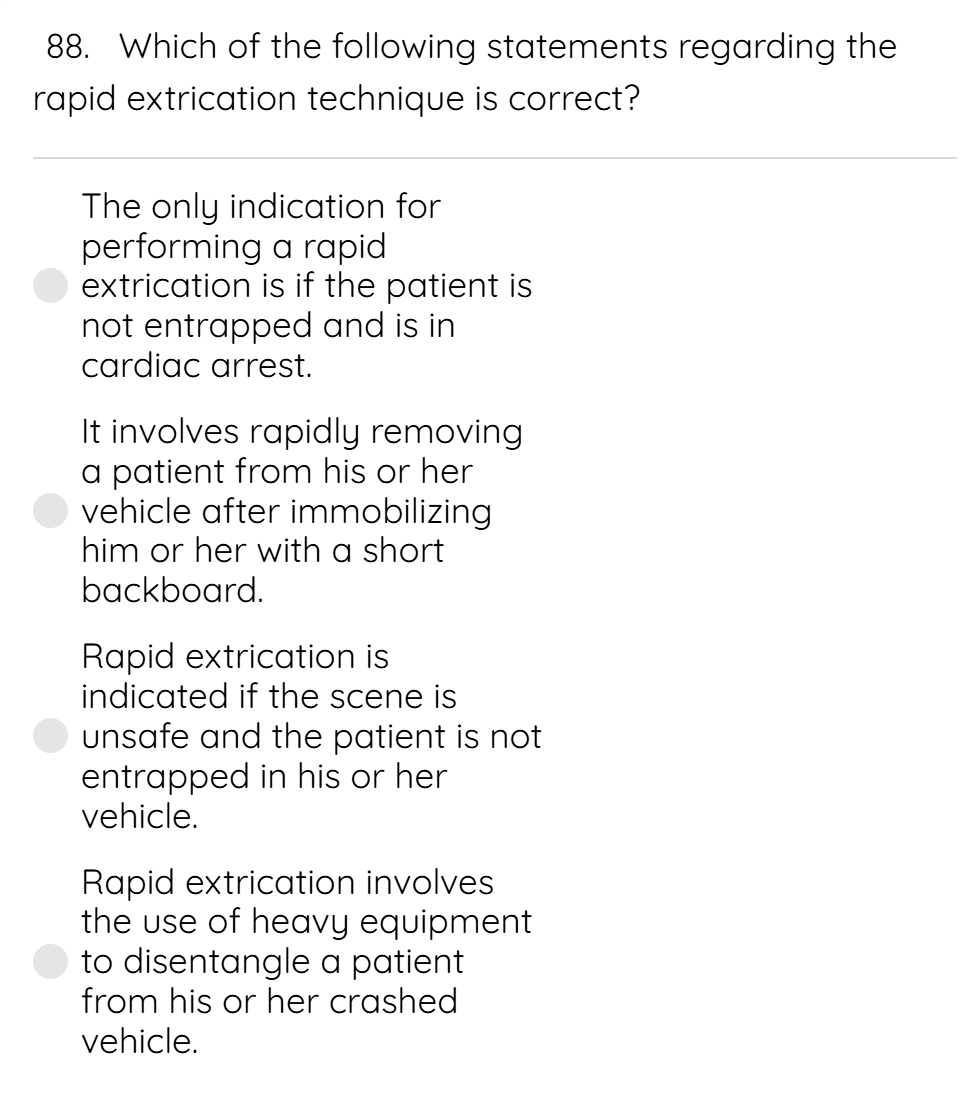
Rapid extrication is indicated if the scene is unsafe and the patient is not entrapped in his or her vehicle.
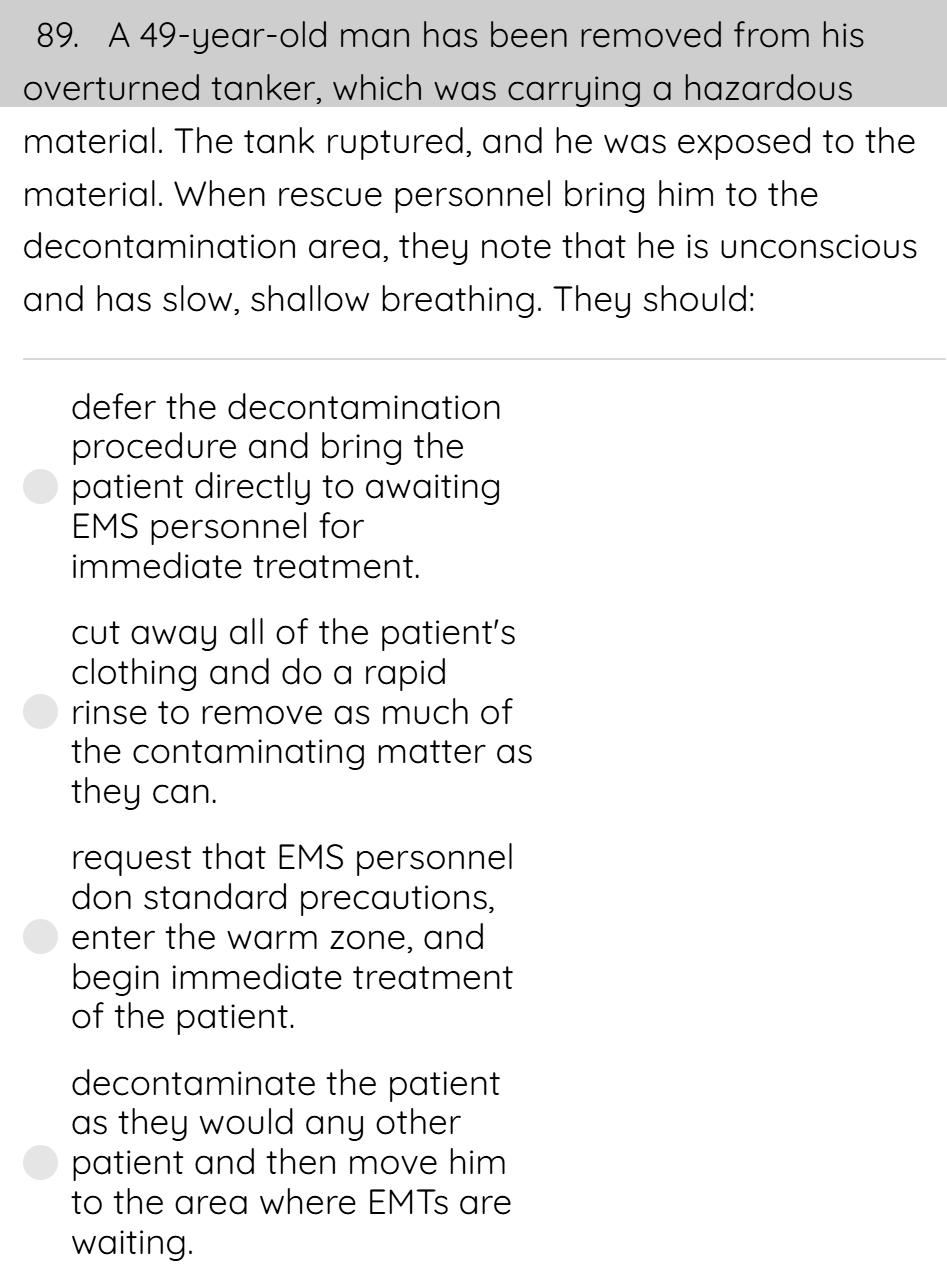
cut away all of the patient's clothing and do a rapid rinse to remove as much of the contaminating matter as they can.
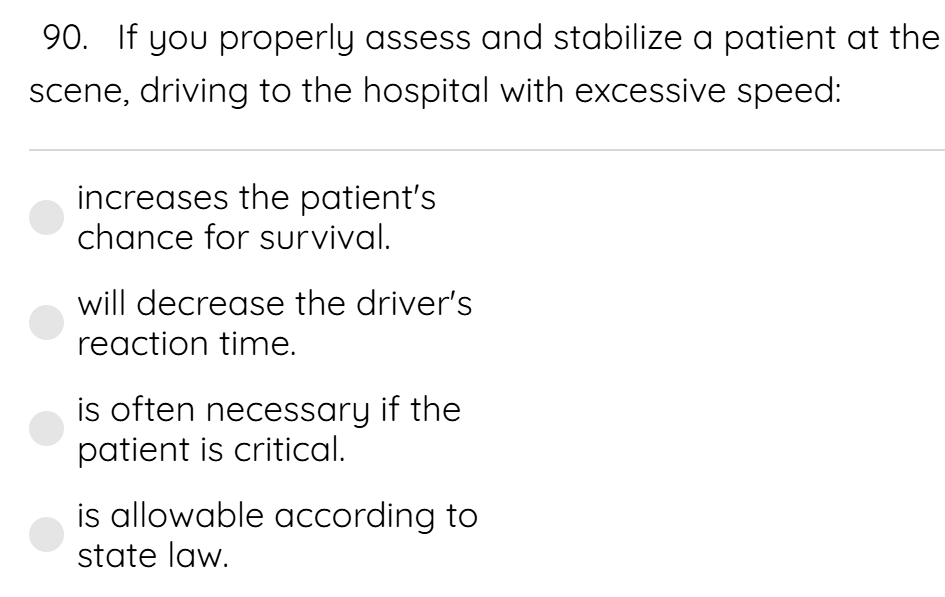
will decrease the driver's reaction time.
a potent bacterial neurotoxin.
Assess for bilateral radial pulses.
skin blistering.