Skin Analysis & Client Consultation + Facial Procedures + massage + Skin Care Products + Contraindications + Hair Removal
 Call Kai
 Learn
Learn Practice Test
 Spaced Repetition
 Match
Match Flashcards
 Knowt Play
1/174

Earn XP
Description and Tags
Chapter 5: Skin Analysis, Chapter 6: Skin Care Product, Chemistry, Ingredient, and Selection +Chapter 11: Hair Removal
Name | Mastery | Learn | Test | Matching | Spaced | Call with Kai | Chat |
|---|
No analytics yet
Send a link to your students to track their progress
175 Terms
Hypoallergenic
A term used to describe products formulated with ingredients that are less likely to cause an allergic reaction or irritation in sensitive individuals. (BLANK) products typically avoid common allergens such as certain fragrances, dyes, and harsh ingredients, but they are not guaranteed to be completely allergy-free. A person can still have a reaction to any ingredient depending on their individual sensitivity.
Galvanic Current
direct current (DC) used in esthetics to perform electrical treatments on the skin. It uses two electrodes: an active electrode and an inactive/indifferent electrode, creating a continuous flow of electricity. This machine uses polarity to either soften and emulsify sebum or calm and soothe the skin.
Client holds: Inactive electrode → completes the electrical circuit.
Esthetician holds: Active electrode → used directly on the client's skin.
Quinone Lotion
A skin-lightening preparation used to reduce hyperpigmentation by inhibiting melanin production. It is used to help lighten dark spots, freckles, and other areas of excess pigmentation. Because it can cause irritation, redness, dryness, or sensitivity, the skin should be monitored carefully. - do not perform aggressive exfoliation on this skin or waxing
Orange High-Frequency Electrode
Typically filled with neon gas, which produces an orange/red glow when activated. It is commonly associated with stimulating and warming effects and may be used on normal, dry, or mature skin to help increase circulation.
Violet High-Frequency Electrode
The violet high-frequency electrode is typically filled with argon gas, which produces a violet/blue-purple glow when activated. It has a stronger germicidal effect and is commonly associated with oily, congested, and blemished skin.
Lemon
A botanical ingredient known for its astringent, cleansing, and mildly antiseptic properties. It contains citric acid, an AHA that can provide mild exfoliating effects and help brighten the appearance of the skin. Lemon is generally more appropriate for oily or congested skin, but it can be irritating and increase photosensitivity, so caution is needed with sensitive skin.
Palm Oil
A vegetable oil derived from the fruit of the oil palm. In cosmetics, it is used primarily as an emollient and conditioning ingredient, helping soften and smooth the skin while contributing to the texture of creams, lotions, and other products.
Stearic Acid
A fatty acid commonly used in cosmetics as an emollient, thickener, and emulsifying agent. It helps soften and smooth the skin while also giving creams and lotions a thicker, more stable texture. It is found naturally in substances such as plant oils and animal fats.
Reflexology
A technique that applies pressure to specific points on the feet, hands, or ears that are believed to correspond to different organs and areas of the body. The goal is to promote relaxation, reduce stress, and support overall well-being.
Disincristation Solution
An alkaline solution used with the galvanic current during a facial to soften and emulsify sebum and loosen clogged pores. It helps make comedones and impurities easier to remove during extractions. It is generally used on oily or congested skin.
After-Shave
Products are used after shaving to soothe, cool, and protect the skin. They can help reduce irritation, redness, and the risk of infection from minor nicks or abrasions. Many contain antiseptic, astringent, or soothing ingredients, depending on the formula.
Peppermint
A botanical ingredient known for its cooling, refreshing, stimulating, and mildly antiseptic properties. Its cooling sensation comes primarily from menthol. In esthetics, it may be used in products to provide a refreshing or invigorating feeling and can be found in masks, cleansers, body products, and aromatherapy.
Use caution with sensitive, dry, or rosacea-prone skin because menthol and peppermint can cause stinging, irritation, or increased sensitivity.
Iontophoresis (Cataphoresis)
the process of using the positive pole (anode) of a galvanic current to soothe and calm the skin, decrease redness, and help close/constrict the pores after a facial treatment.
It is commonly performed after desincrustation and extractions to help return the skin to a more normal condition.
Desincrustation (Anaphoresis)
is the process of using the negative pole (cathode) of a galvanic current to soften and emulsify sebum, helping to loosen oil, dirt, and debris in the follicles. It is used during desincrustation to prepare oily or congested skin for extractions.
Water
What is the Universal solvent
Eucalyptus
A botanical ingredient known for its antiseptic, antimicrobial, and stimulating properties. In esthetics, it may be used in products designed to cleanse the skin, refresh the skin, and help control microorganisms. Its strong, cooling sensation can also make it feel invigorating. Because it can be irritating or sensitizing for some people, it should be used appropriately, especially on sensitive or compromised skin.
Rhinoplasty
What is plastic surgery of the nose?
From insertion to origin
What is the direction of the massage?
Chloroacetic acid
A strong chemical that can cause deep tissue destruction, potentially extending through the epidermis and into the dermis. Because of this depth and risk of scarring, it is not a routine superficial esthetic peel and would be outside the typical esthetician's scope of practice.
Chamomile
a botanical ingredient commonly used in esthetics for its soothing, calming, and anti-inflammatory properties. It can help reduce redness, irritation, and sensitivity, making it especially useful in products for sensitive or inflamed skin.
Contains compounds such as azulene and bisabolol, which contribute to its calming effects. It is commonly found in toners, masks, creams, and soothing treatments. However, people with allergies to plants in the Asteraceae/Compositae family (such as ragweed) may be more likely to react.
Ginger
A botanical ingredient known for its stimulating, warming, and anti-inflammatory properties. In esthetics, it may be used to help stimulate circulation and provide a warming or invigorating sensation. It can be found in products such as masks, body treatments, and stimulating creams.
Rose
A botanical ingredient commonly used in esthetics for its soothing, calming, hydrating, and mildly astringent properties. It can help reduce redness and irritation and is often found in toners, creams, masks, and facial mists. Rose is especially associated with dry, sensitive, or irritated skin.
Lavender
A botanical ingredient known for its calming, soothing, antiseptic, and mildly anti-inflammatory properties. In esthetics, it is commonly used to help calm irritated skin and promote relaxation. It can be found in facial products, masks, massage products, and aromatherapy.
Benefits: Soothes irritation, calms redness, provides a pleasant fragrance, and has antimicrobial properties.
Best for: Sensitive, irritated, and normal skin, depending on the formulation.
Isotretinoin (Accutane)
a prescription oral retinoid (vitamin A derivative) used to treat severe or treatment-resistant acne. It greatly reduces sebaceous gland activity and sebum production, helps prevent clogged follicles, and reduces inflammation.
Steroids (Contraindications)
Do not perform aggressive exfoliation, waxing, or irritating treatments over skin being treated with ______ unless cleared by the prescribing provider.
this medication can thin the epidermis/dermis, increase sensitivity, and impair the skin's normal protective function.
Honey
natural substance produced by bees from flower nectar. In esthetics, it is used as a humectant, meaning it attracts and helps retain moisture in the skin. It also has soothing and conditioning properties, making it useful in products designed for dry or dehydrated skin.
Beta Hydroxy Acid (BHA)
an oil-soluble exfoliating acid. The primary _____ used in skin care is salicylic acid, which can penetrate into oil-filled pores and help dissolve excess sebum and dead skin cells. This makes it particularly useful for oily and acne-prone skin, blackheads, and clogged pores.
salicylic; oil
The primary BHA used in skin care is __________ acid, which is __________-soluble and can penetrate into oily pores.
Tartaric acid
is an AHA naturally found in grapes and other fruits. It helps provide chemical exfoliation by loosening dead skin cells on the surface. It is also used in cosmetic formulations to help adjust pH.
Citric Acid
an AHA naturally found in citrus fruits such as lemons and oranges. It provides exfoliation and can help improve the appearance of dullness and uneven pigmentation. It is also commonly used in cosmetics to adjust product pH.
Latic Acid
an AHA derived from milk and is also naturally produced in the body. It exfoliates the skin while functioning as a humectant, helping attract moisture. It is often considered a gentler AHA and is useful for dry, dull, or dehydrated skin.
AHA; humectant
Lactic acid is an __________ derived from milk that also acts as a __________.
Glycolic acid
an AHA derived from sugar cane and has the smallest molecular size of the AHAs, allowing it to penetrate the skin more readily. It exfoliates by helping loosen the bonds between dead surface cells, improving texture, dullness, fine lines, and hyperpigmentation. Because it penetrates more readily, it can be more irritating than larger-molecule AHAs.
AHA; smallest
Glycolic acid is a type of __________ derived from sugar cane and has the __________ molecular size of this group
Glycoproteins
are molecules made of proteins with carbohydrate (sugar) chains attached. In skin care, they are used as conditioning and moisturizing ingredients and can help support the skin's surface hydration and overall appearance. these structures are involved naturally in the extracellular matrix (ECM), where they help with cell-to-cell communication and structural support.
Ceramides
Are lipids used in skin-care products to restore and strengthen the skin's protective barrier. They help fill the spaces between corneocytes, which reduces trans epidermal water loss (TEWL) and helps the skin retain moisture. They are especially useful in moisturizers, cleansers, and barrier-repair products for dry, sensitive, or compromised skin.
Vitamin E
a fat-soluble antioxidant that helps protect skin cells from free-radical and oxidative damage. In skin care, it also functions as an emollient and conditioning ingredient, helping soften and moisturize the skin. Vitamin __ is often combined with Vitamin C, because the two antioxidants can complement each other in protecting against oxidative stress.
B3; barrier; sebum
Niacinamide is a form of vitamin ______ that helps strengthen the skin ______, regulate ______ production, reduce inflammation, and improve the appearance of hyperpigmentation.
Niacinamide
a water-soluble form of vitamin B3 used in skin care to help strengthen the skin barrier, reduce inflammation, regulate sebum, and improve the appearance of hyperpigmentation. It supports the production of ceramides and other barrier lipids, helping reduce transepidermal water loss (TEWL). It is generally well tolerated and can benefit oily, acne-prone, sensitive, dry, and hyperpigmented skin. Common cosmetic concentrations are around 2–5%, with 5% being a common effective concentration.
Vitamin C
a powerful antioxidant used in skin care to help protect the skin from free-radical/oxidative damage. It helps support collagen synthesis, which can improve the appearance of fine lines and loss of firmness. It can also help brighten the skin and reduce the appearance of hyperpigmentation by interfering with melanin production.
L-ascorbic acid is the most researched form and is commonly used at 10–20% in professional/advanced skin-care products. State board: = antioxidant + collagen support + brightening/hyperpigmentation.
Surfactants
are ingredients that lower the surface tension between two substances, such as oil and water, allowing them to mix or spread more easily. In skin care, they are commonly used as cleansing agents to help loosen and remove oil, dirt, makeup, and debris from the skin. They can also function as emulsifiers, foaming agents, and wetting agents.
Antioxidant; collagen
Vitamin C is a powerful __________ that protects skin from free-radical damage, supports __________ synthesis, and helps brighten hyperpigmentation.
Collagen
a fibrous structural protein found in the dermis that provides the skin with strength, firmness, and support. It is produced primarily by fibroblasts. As we age and with environmental damage, the production decreases and breaks down, contributing to loss of firmness and wrinkles. Topical _______ mainly acts as a conditioning/hydrating ingredient because large_______ molecules generally do not penetrate deeply into the skin.
Fatty Alcohols
Long-chain alcohols derived from natural fats and oils. Unlike drying alcohols such as ethanol, _________ are generally emollient and conditioning ingredients. They can also act as thickeners, stabilizers, and emulsifiers in skin-care products. Examples include cetyl alcohol and stearyl alcohol.
Fatty Esters
are compounds formed when a fatty acid combines with an alcohol. They are commonly used in cosmetics as emollients, lubricants, and texture-enhancing ingredients, giving products a smooth, silky feel. Examples include isopropyl myristate and cetyl palmitate.
Lanolin
a natural wax-like substance obtained from sheep's wool. It acts as an emollient and occlusive, softening the skin while helping reduce water loss. It is commonly used in products for dry, rough, or chapped skin. Some individuals can be sensitive or allergic to ______.
Thickeners
a category of ingredients added to skin-care products to increase viscosity (thickness) and improve the product's texture, stability, and spreadability. They help creams, lotions, gels, and masks maintain the desired consistency and prevent ingredients from separating. Common thickeners include carbomer, xanthan gum, and fatty alcohols such as cetyl alcohol.
Unscented
products formulated to have no smell; because most ingredients in a formulation do have an odor, more ingredients have to be added to neutralize the smell
Beeswax
a natural wax produced by honeybees. In skin care products, it acts primarily as an occlusive, forming a protective layer that helps reduce moisture loss from the skin. It also provides thickening, texture, and structure to creams, balms, ointments, and cosmetics.
fragrance-free
this term indicates that no additional ingredients have been added to a product to specifically provide a fragrance; however, it may already contain ingredients that have a scent
Organic
term used to describe natural-sourced ingredients that are grown without the use of pesticides or chemicals
Natural/All Natural
terms often used in marketing for skin care products and ingredients derived from natural sources
adverse reaction
If the client contacts you regarding an _________ from a home care product that you’ve recommended, advise them to discontinue use of the product immediately. They may choose to use an over-the-counter hydrocortisone cream to help the symptoms subside.
Federal Food, Drug, and Cosmetic Act (FD&C Act)
The __________ regulates the safety, labeling, and marketing of cosmetics, drugs, foods, and medical devices in the United States.
Fair Packaging and Labeling Act (FPLA)
The __________ requires consumer products to have truthful and informative labels and helps prevent deceptive packaging.
Predisposition (patch) Test
a skin test performed before certain treatments or products to determine how a client’s skin may react. It is commonly associated with testing for sensitivity or allergic reactions, especially before chemical treatments.
A small amount of the product is applied to a designated area, and the skin is observed for redness, itching, swelling, burning, or irritation. If an adverse reaction occurs, the treatment or product should be avoided.
Isotretinoin (Contraindication)
Do not wax, exfoliate, or perform aggressive treatments during the of use this medication. The client should be off _________ for at least 6 months before waxing or other potentially damaging treatments because the skin may be extremely fragile.
Topical Retinoids (Contraindication)
Avoid waxing, exfoliation, and peeling treatments for at least 1 week because these products can make the skin thinner and more sensitive.
These substances
Intake Form
Clients should complete a confidential _________ that should be updated at each visit. The form discloses the client’s healthy history, all products and medications, medical conditions, any known allergies or sensitivities, along with their at-home skin care program, and skin care treatments the client has recently received that could adversely affect treatment. Information should also include important details about the client, including their name, age (optional), occupation, diet, and lifestyle habits.
Client Consultations
the process of communicating with the client, gathering health and lifestyle information, assessing the skin, identifying the client’s concerns and goals, and determining an appropriate and safe treatment plan.
The esthetician should review the client’s health history, medications, allergies, contraindications, current skincare routine, previous treatments, lifestyle factors, and desired results before performing a service.
The skin should then be analyzed for skin type, conditions, sensitivities, and any abnormalities that may require treatment modification or referral. All relevant information should be documented accurately and kept confidential.
T-zone
the central area of the face consisting of the forehead, nose, and chin. This area contains more sebaceous (oil) glands, so it often produces more sebum and may appear shinier or oilier than the rest of the face.
Skin Type
refers to the skin’s natural tendency to produce oil (sebum) and is primarily determined by genetics and sebaceous gland activity. The four basic _______ are normal, dry, oily, and combination. This may change throughout the course of life, while a skin condition can change due to factors such as weather, hormones, medications, and skincare products.
Pregnancy (Contraindications)
Avoid or obtain medical guidance for high-frequency, electrical treatments, aggressive chemical peels, certain essential oils, and topical retinoids. Strong exfoliation and treatments that cause significant heat or discomfort may also need to be modified.
This condition can make the skin more sensitive and reactive because of hormonal and physiological changes.
Blood Thinners (Contraindications)
Use caution or avoid waxing, extractions, microneedling, aggressive exfoliation, and procedures that may cause bleeding unless medically cleared.
These medications can increase bruising and bleeding and may make the skin slower to recover from injury.
Diabetes
A client with _______ has reduced sensation from neuropathy. During a treatment, the steamer or electrical device becomes too hot. The client may not feel the excessive heat and could be injured or burned.
*High blood sugar can damage blood vessels and nerves
Poor Elasticity
skin’s ability to stretch and return to its original shape. It is primarily supported by elastin fibers in the dermis, while collagen provides strength and structure. Elasticity naturally decreases with aging, UV exposure, oxidative stress, and decreased collagen/elastin production, leading to sagging and loss of firmness. ______ may be observed as skin that does not quickly bounce back after being gently pinched or lifted.
Urea
a naturally occurring component of the skin’s Natural Moisturizing Factor (NMF) that helps attract and retain water, making it an effective humectant. In higher concentrations, it also has keratolytic/exfoliating properties, helping soften and loosen excess keratin and rough, thickened skin.
It is commonly used for dry, rough, flaky skin and conditions such as keratosis pilaris.
Fitzpatrick Type 1
Characteristics: Very fair, pale/porcelain skin; often freckles; commonly associated with red or blond hair and blue/green/gray eyes.
UV response: Always burns, never tans.
Melanin response: Minimal tanning response; very high UV sensitivity.
Fitzpatrick Type 2
Characteristics: Fair/light skin; may have freckles; commonly associated with blond or light-brown hair and blue/green/hazel eyes.
UV response: Usually burns and tans minimally.
Melanin response: Limited ability to tan.
Fiztpatrick Type 3
Characteristics: Light to medium skin; may have golden or olive undertones; commonly associated with dark blond, light-brown, or brown hair and hazel/brown eyes.
UV response: Sometimes burns and tans gradually.
Melanin response: Moderate ability to tan.
Fitzpatrick Type 4
Characteristics: Medium/olive to light-brown skin; generally little or no freckling; commonly associated with brown or dark-brown hair and brown eyes.
UV response: Rarely burns and tans easily.
Melanin response: Good tanning ability.
Considered to be one of the most challenging skin types to treat well: Prone to hyperpigmentation
Has great elasticity and firmness and does not show signs of aging as quickly as Fitzpatrick skin types 1 and 2
Have thicker skin that is usually characterized by more oil production and needs more deep-cleansing treatments.
Fitzpatrick Type V
Characteristics: Brown to dark-brown skin; generally does not freckle easily; commonly associated with dark-brown or black hair and brown/dark eyes.
UV response: Very rarely burns and tans very easily/darkly.
Melanin response: High melanin production and strong tanning response.
Generally, have oilier and thicker skin (dermis)
Reactions may be more challenging to see on darker skin, but they may be just as intense as those on lighter skin
Are prone to a form of hyperkeratosis
May have abnormal hypertrophic scarring (keloids)
Sun protection still necessary for these skin types.
Fitzpatrick Type VI
Characteristics: Very dark brown to black skin; typically, little or no freckling; commonly associated with black/dark-brown hair and dark-brown eyes.
UV response: Almost never or never burns and deeply pigments.
Melanin response: Very high melanin production.
Generally, have oilier and thicker skin (dermis) but can have the same level of reactivity as lower Fitzpatrick skin types
Reactions may be more challenging to see on darker skin, but they may be just as intense as those on lighter skin
Are prone to a form of hyperkeratosis known as ichthyosis and dead skin–cell buildup, so those clients need more exfoliation and deep pore cleansing
May have abnormal hypertrophic scarring (keloids)
Sun protection still necessary for these skin types.
Cleansers
Products formulated to remove dirt, oil, makeup, dead skin cells, sweat, and environmental debris from the surface of the skin without disrupting the skin barrier. (BLANK) help prepare the skin for treatments by creating a clean surface and allowing other products to work more effectively. Different (BLANK) are selected based on skin type. (BLANK) is the first step in most skincare treatments and should remove impurities while maintaining the skin’s natural acid mantle.
Décolleté
Pertaining to a woman’s lower neck and chest
Quickly
The neck and décolleté are more susceptible to irritation and have fewer sebaceous glands than the face, so they tend to show aging more _____
Toners
Liquid skincare products applied after cleansing to help remove remaining impurities, balance the skin’s pH, hydrate, and prepare the skin for additional products.
Modern (BLANK) may contain ingredients that target specific concerns, such as hydration, oil control, calming inflammation, or mild exfoliation.
They can help restore the skin after cleansing and improve product absorption.
They are not used to “close pores”; they help refresh, balance, and prepare the skin.
Sunscreen
It does not matter who you are or what color you are, everyone needs ______
Dehydrated skin
Lack of water caused by the environment, medications, topical agents, aging, or dehydrating drinks such as caffeine and alcohol. It may appear dull, tight, flaky, or crepey, and fine lines can look more noticeable. Occurs with any skin type.
Enlarged Pores
Larger follicles due to excess oil and debris trapped in the follicles or expansion due to elasticity loss or trauma.
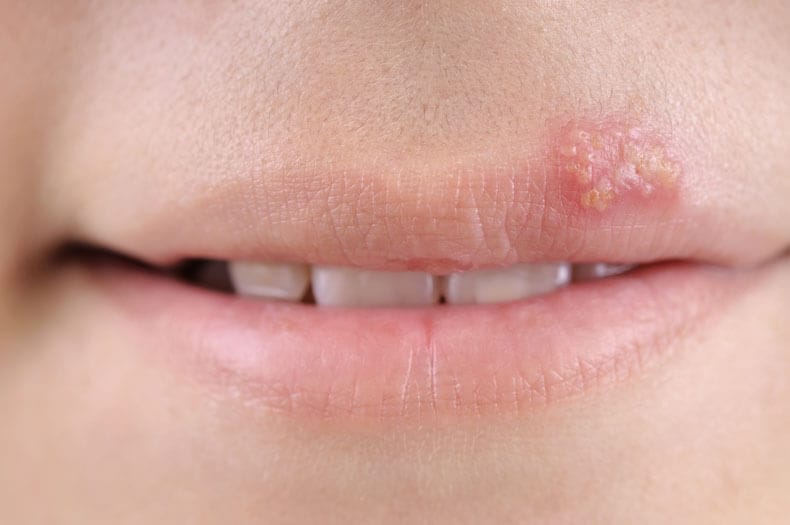
Herpes simplex I
A communicable virus that appears as a vesicle on the lip similar to a blister. Find more information in the chapter on diseases and disorders of the skin.
Serums
Lightweight skincare products with a high concentration of active ingredients designed to target specific skin concerns. Due to their smaller molecular size and concentrated formulas, (BLANK) can deliver ingredients deeper into the skin compared to heavier products. Common (BLANK) ingredients include vitamin C for antioxidant protection, hyaluronic acid for hydration, niacinamide for barrier support and oil control, and retinoids for cell turnover.
Masks
Skincare treatments applied to the skin for a specific period of time to provide targeted benefits such as hydration, exfoliation, soothing, detoxification, or oil absorption.
Different (BLANK) are chosen based on the client’s skin type and condition, including clay (BLANK) for oily/congested skin, cream (BLANK) for dry skin, gel (BLANK) for hydration, and enzyme (BLANK) for exfoliation. (BLANK) enhance professional treatments by delivering concentrated ingredients and improving the skin’s appearance.
are selected based on the client’s skin needs and are usually applied after cleansing/exfoliation and before finishing products.
Facial Steamers
an esthetic device that produces a fine mist of warm vapor used during facial treatments to soften the skin, loosen debris, and prepare the skin for extractions. it works by increasing surface hydration, softening sebum within follicles, and creating a more comfortable extraction process.
The nozzle is typically positioned about 18 inches away from the client’s face to provide gentle warmth without causing irritation, dehydration, or excessive heat exposure.
*It is commonly beneficial for normal, oily, and congested skin types, but should be used cautiously or avoided on clients with rosacea, sensitive skin, couperose (broken capillaries), severe inflammation, or certain vascular conditions.
Azelaic acid
A naturally occurring dicarboxylic acid derived from grains such as wheat, rye, and barley that is used in skincare to treat acne, inflammation, and hyperpigmentation.
It works by reducing the growth of acne-causing bacteria, calming inflammation, and inhibiting tyrosinase, an enzyme involved in melanin production, which helps improve dark spots and post-inflammatory hyperpigmentation (PIH).
Suitable for many skin types, including acne-prone, sensitive, rosacea-prone, and hyperpigmented skin because of its anti-inflammatory properties. It may cause mild dryness, tingling, or irritation, especially when first introduced.
*Multifunctional ingredient that treats acne, redness, and pigmentation by reducing inflammation and melanin production.
Carbomers
Synthetic polymers made from polyacrylic acid that are commonly used as thickeners and stabilizing agents in skincare products. They help create gel textures, increase viscosity, suspend ingredients evenly, and maintain product stability. (BLANK) are commonly found in gel moisturizers, serums, cleansers, and professional treatment products.
Polymers
Large molecules made of repeating smaller units that are used in skincare formulations to improve texture, stability, thickness, and film-forming properties. (BLANK) can help products spread smoothly, create a protective layer on the skin, and maintain product consistency. Many thickening agents and stabilizers are (BLANK) because of their ability to control product texture.
Stabilizers
Ingredients added to skincare products to maintain the quality, consistency, and effectiveness of a formulation over time.
They help prevent separation, changes in texture, color, odor, or breakdown of active ingredients caused by factors such as temperature, light, or time.
Help keep a product stable and maintain its intended performance.
Homogenous
The quality of a product having a uniform and consistent mixture, meaning all ingredients are evenly distributed throughout the formula. (BLANK) products have the same texture, appearance, and ingredient concentration throughout, which helps ensure consistent performance and effectiveness. A well-formulated skincare product should remain (BLANK) so active ingredients are evenly delivered to the skin.
Active ingredients
Ingredients that have a specific biological effect on the skin and are responsible for treating a particular skin concern. They are scientifically proven to produce a desired change, such as exfoliating, hydrating, reducing pigmentation, controlling acne, or protecting the skin. Examples include retinol, salicylic acid, glycolic acid, benzoyl peroxide, niacinamide, vitamin C, and sunscreen filters.
Inactive/Functional Ingredients
Ingredients that do not directly treat a skin condition but support the product’s formulation, stability, texture, absorption, and performance.
They help deliver the active ingredients to the skin and improve the product’s feel and shelf life.
Examples include water (aqua), emulsifiers, preservatives, thickeners, fragrances, and solvents.
Steroids
Medications taken by mouth that reduce inflammation and suppress the immune system. In the skin, oral (BLANK) can decrease redness, swelling, and irritation associated with inflammatory conditions, but long-term or high-dose use can cause significant skin changes.
They may lead to thinning of the skin (atrophy), increased bruising, slower wound healing, acne or steroid acne, increased facial hair growth (hirsutism), and increased susceptibility to infections due to immune suppression.
Oral (BLANK) can also cause delayed collagen production, contributing to decreased skin strength and elasticity. (BLANK) suppress inflammation but can make the skin thinner, more fragile, and slower to heal, which is important when considering esthetic treatments such as waxing, exfoliation, or aggressive procedures.
Epilepsy
a neurological disorder that causes recurring seizures due to abnormal electrical activity in the brain. Certain esthetic treatments may require caution or medical clearance because flashing lights, electrical stimulation, heat, or intense sensory stimulation may trigger seizures in some individuals. Treatments that may be contraindicated or require special precautions include:
High-frequency treatments
Microcurrent/facial electrical treatments
LED light therapy (especially flashing or pulsing light modes) – Certain light frequencies may trigger seizures in photosensitive (BLANK)
Pacemaker
a small electronic device implanted under the skin that helps regulate an abnormal heart rhythm by sending electrical impulses to the heart. Estheticians must use caution with treatments that involve electrical currents or electromagnetic energy because they may interfere with the (BLANK)’s function. Treatments that are commonly contraindicated or require medical clearance include:
High-frequency treatments
Microcurrent/facial electrical treatments – Electrical stimulation may affect the device’s operation.
Galvanic treatments/iontophoresis – Uses direct electrical current and may not be appropriate.
Wood’s Lamp
skin analysis device that uses UVA light (365 nm) to reveal skin conditions not visible under normal light. It helps identify skin type, dehydration, excess oil, pigmentation, and certain bacterial or fungal infections by causing the skin to fluoresce different colors
Effleurage
light, gliding massage movement performed with the palms or fingertips. It increases circulation, promotes relaxation, and spreads massage products evenly. It is used at the beginning and end of a facial massage and is suitable for most skin types
Petrissage
kneading and lifting massage movement that stimulates deeper circulation and facial muscles. It helps improve muscle tone and lymphatic drainage and is best for normal or mature skin. Avoid using it on inflamed acne or fragile capillaries.
Friction
deep circular massage movement that stimulates circulation and softens tight or fibrous tissue. It is used on areas of muscle tension but should be avoided on inflamed or sensitive skin. Pressure should always be controlled
Tapotement
Rhythmic tapping or percussion massage movement that stimulates nerves and increases circulation. It is best for normal or mature skin and should be avoided on sensitive, acneic, or rosacea-prone skin.
Vibration
rapid shaking or trembling massage movement that stimulates nerves and muscles while improving circulation. It can be either relaxing or stimulating depending on the speed used. Avoid vigorous (BLANK) on inflamed or irritated skin.