Blood Vessels & Circulation
 Call Kai
 Learn
Learn Practice Test
 Spaced Repetition
 Match
Match Flashcards
 Knowt Play
1/22

There's no tags or description
Looks like no tags are added yet.
Name | Mastery | Learn | Test | Matching | Spaced | Call with Kai | Chat |
|---|
No analytics yet
Send a link to your students to track their progress
23 Terms
Vessel Walls
Tunica intima: made up of simple squamous and areolar
Tunica media: made up of smooth muscle cells, change diameter of vessel through vasoconstriction/vasodilation
Tunica externa: areolar tissue
Capillary
Smallest blood vessels where gases, nutrients occur between blood & body tissue
Made of only single endothelial cell surrounded by thine basement membrane
Types of Capillaries
Continuous capillaries
Fenestrated capillaries
Sinusoids capillaries
Pulmonary vs Systemic Circulation
Pulmonary arteries have less elastic tissue, wider lumens, shorter arteries (blood pressure is lower)
Arteries Exiting The Heart
Right/left coronary arteries
Aortic arch
Brachiocephalic
Left common carotid
Left subclavian
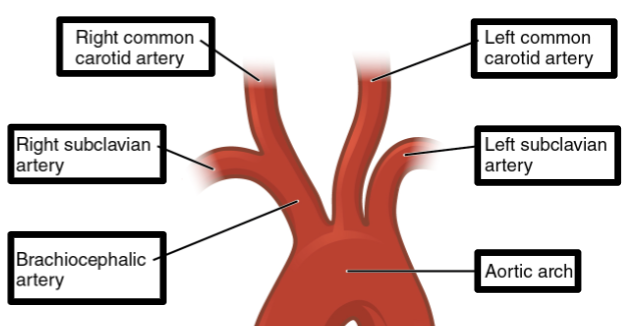
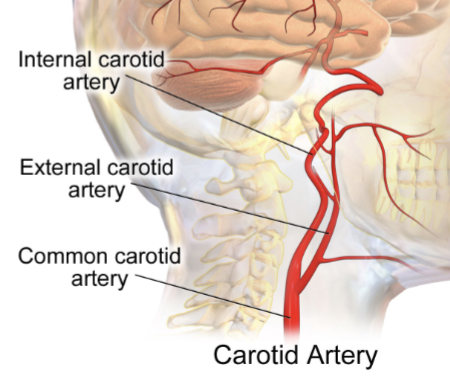
Arteries of Head & Neck
Supply to the head from
Common carotid arteries then branched into
Internal carotid: supply the brain & orbits
External carotid: supply neck and superficial head
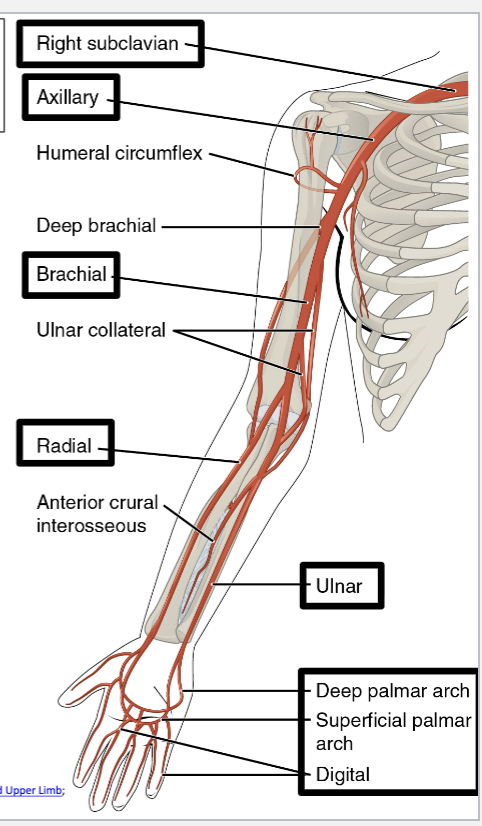
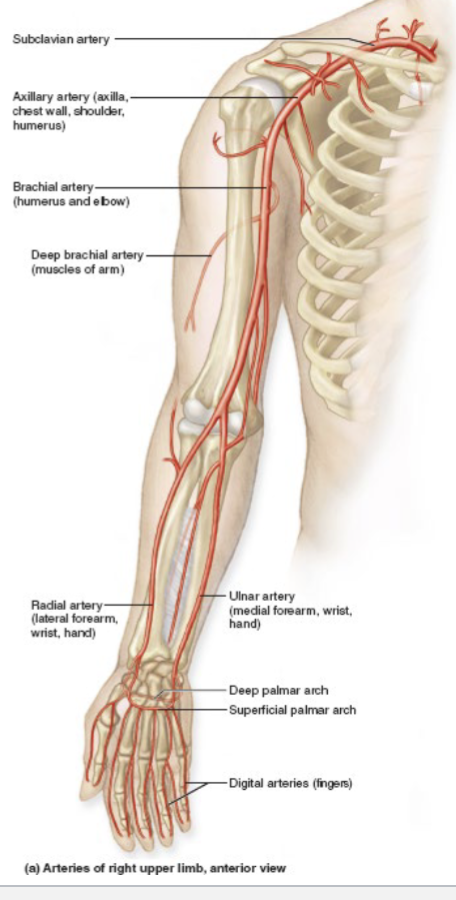
Arteries of Upper Extremity
Subclavian artery: supplies upper limb
Subclavian → axillary artery → brachial artery → radial (lateral) & ulnar (medial)→ palmar → digital
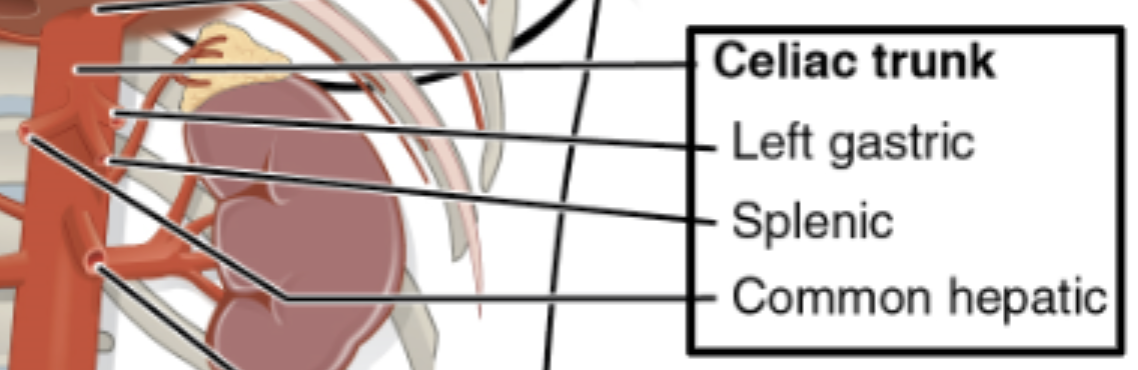
Celiac Trunk
Left gastric artery: stomach & portion of esophagus (unpaired)
Splenic artery: spleen, stomach pancreas (unpaired)
Common hepatic artery: liver (unpaired)
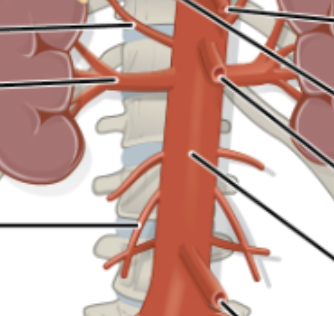
Abdominal Arteries (Superior → Inferior)
Adrenal (suprarenal) arteries: supply the adrenal glands (paired)
Superior mesenteric artery: supplies small intestines (unpaired)
Renal arteries: supply kidneys (paired)
Gonadal: testes or ovaries (paired)
Inferior mesenteric artery: supplies large intestines (unpaired)
Pelvic Arteries
Left/right common iliac arteries
Internal iliac artery: supplies pelvis & perineum
External iliac artery: supplies lower extremity

External Iliac Artery
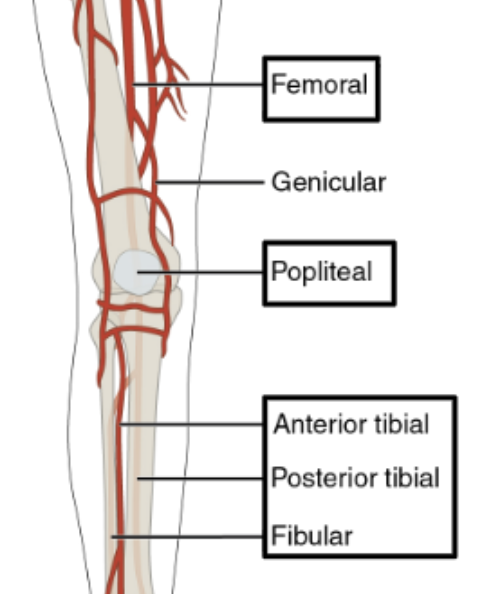
Supply to the legs, becomes
Femoral artery (near head of femur)
Popliteal artery (knee joint region),
Anterior/posterior tibial arteries
Fibular
Veins Entering the Heart
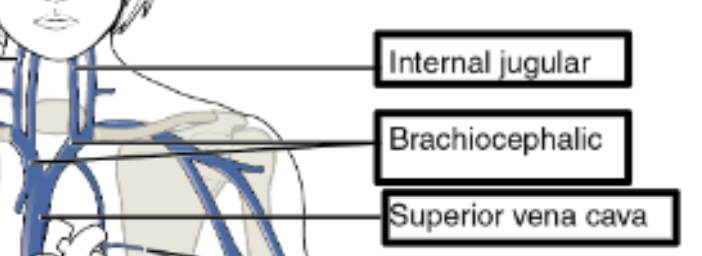
Blood returned to the right atrium through
Left/right brachiocephalic veins merge to form superior vena cava
Veins inferior to diaphragm merge to form inferior vena cava
Thoracic Region Veins
Azygous vein: drains the abdominal and thoracic walls
Veins of the Lower Extremity
Fibular/tibial veins → merge to form popliteal vein → femoral vein → external iliac vein → common iliac vein
Hepatic Portal System
Direct substances from gastrointestinal tract to the liver where it filter, process, detoxify substances
Veins of Head & Neck
Superior vena cava
External jugular
Internal
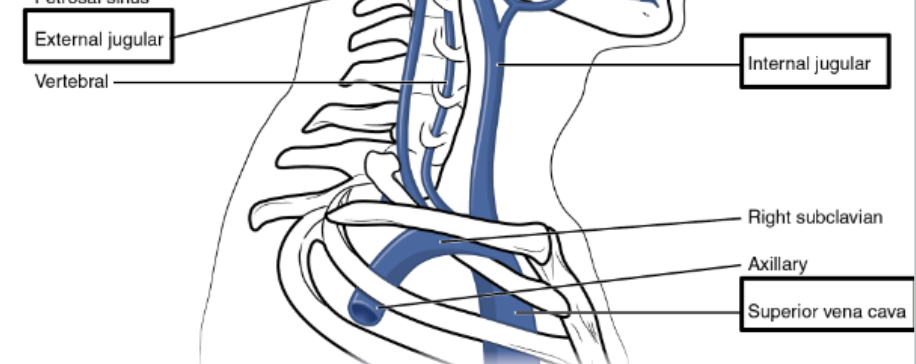
Veins of Upper Extremity (Deep)
Digital veins → palmar veins → radial/ulnar veins → brachial → axillary → subclavian vein
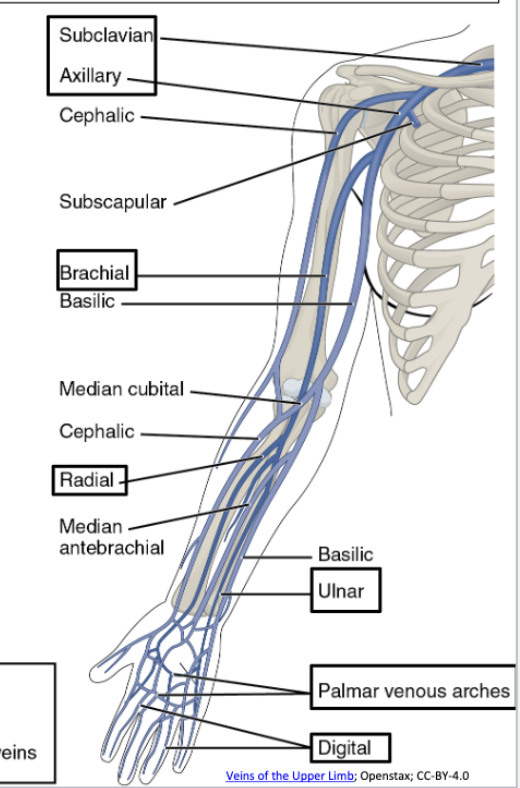
Veins of Upper Extremity (Superficial)
Cephalic vein (ceiling): joins the axillary/subclavian vein
Basilic vein (basement): joins the axillary vein
Abdominal Veins
Azygos
Inferior vena cava
Hepatic
Phrenic: diaphragm
Adrenal
Renal
Gonadal
Lower Extremity Veins
Femoral vein
Great saphenous: medial side empties into femoral
Popliteal
Small saphenous: lateral side empties into popliteal
Anterior/posterior tibial
Fibular
Pulse Pressure
PP = systolic pressure - diastolic pressure
Mean Arterial Pressure (MAP)
MAP = diastolic pressure + 1/3(PP)
Resistance
Proportional to pressure
Based on
Viscosity
Blood vessels length
Blood vessels diameter