20th Century: Art History Exam 3: Attach the Artist to the Description
 Studied by 0 people
 Call Kai
 Learn
Learn Practice Test
 Spaced Repetition
 Match
Match Flashcards
 Knowt Play
1/50

There's no tags or description
Looks like no tags are added yet.
Name | Mastery | Learn | Test | Matching | Spaced |
|---|
No study sessions yet.
51 Terms
Abramovic
-Themes in her work include:
>Endurance and Physical Limits: Explores extreme physical and psychological boundaries.
>Audience Interaction: Often involves the audience as active participants, testing human connection.
>Identity and Self: Questions the nature of identity, presence, and human vulnerability.
Ando
-Began his career as a boxer before teaching himself architecture by studying books
-Known for his use of concrete, light, and natural elements
-Architecture is characterized by a minimalist aesthetic that emphasizes simplicity and the interplay of light and shadow.
-His work often integrates the natural landscape into the design.
Basquia
-Race and Identity: Much of his work addresses his queer and African American identity and the Black experience
-Power and Oppression: His work also critiqued social hierarchies, police brutality, and systemic racism.
-Art History and Culture: Basquiat often incorporated references to classical art, contemporary culture, and symbols from African, Caribbean, and Western traditions.
-Mortality and Human Struggle: Themes of life, death, and existential struggles frequently appear, often represented through skeletons, crowns, and anatomical drawings.
-Consumerism and Capitalism: His work reflected on wealth, poverty, and the commodification of art.
-Personal Struggles: Basquiat's works often revealed his personal battles with fame, addiction, and alienation.
Chicago
-a pioneering figure in feminist art, known for her work that addresses women's history, gender, and identity.
-She founded the first feminist art program in the United States at Fresno State College in 1970.
Diebenkorn
-Transition from abstract to figurative painting and back to abstraction
-Geometric compositions, subtle color palettes, and the interplay between line and form
-Innovative blending of abstract and figurative techniques
Emin
-known for her deeply personal and confessional works, often drawing from her own life experiences.
-Her art spans various mediums, including installations, neon text, painting, drawing, and sculpture.
-Her candid, raw approach challenges traditional notions of art and has been both celebrated and controversial.
Frankenthaler
-Soak-stain technique: poured thinned paint onto unprimed canvas, allowing it to soak into the fabric and create luminous, watercolor-like effects
-Pour her paint/dye onto the canvas before it was stretched. Then, the last thing she would do is stretch the canvas, giving her control over the final composition while also delaying the composition until the final stage.
Fuller
-He coined the term "Spaceship Earth" to emphasize the interconnectedness of human life and the environment and advocated for comprehensive design principles to solve global problems
Gehry
-His designs often challenge traditional architectural norms and embrace unconventional aesthetics
-His buildings are celebrated for their innovative use of materials and bold, sculptural forms
Gropius
Guerilla Girls
-an anonymous group of feminist artists and activists
-mission is to expose gender and racial inequality in the art world and beyond, using humor and graphic design to deliver powerful messages
Hanson
Haring
-Known for his vibrant, graffiti-inspired art that combined social commentary with bold, graphic imagery, his work often features repeating motifs, such as radiant babies and dancing figures, and addresses themes of activism, social justice, and urban life.
-His work often employs a repetitive, almost cartoon-like aesthetic to communicate complex social and political messages in an accessible manner.
Hirst
-known for his provocative conceptual art, often involving themes of death, decay, and the transience of life.
-His work helped define the YBA movement, which was characterized by its use of shock tactics.
-work often explores the nature of existence, mortality, and the commodification of art.
-He frequently uses real animals, medical imagery, and pharmaceuticals to create a dialogue between life, death, and art.
-has been both celebrated and criticized for his commercial approach to art. He is one of the richest artists in the world
Hockney
-British artist
-Los Angeles significantly influenced his work
-Exploration of new technologies, such as photography, iPads, and digital painting
-Vibrant, colorful paintings, often depicting swimming pools, landscapes, and portraits
-Themes of perception and perspective
Johns
-Known for his use of familiar symbols and motifs, such as flags, numbers, and targets, which he incorporates into his work through encaustic painting and collage
-His art often explores themes of perception and the nature of symbols
Johnson
-Awarded the first Pritzker Architecture Prize in 1979
-residential building
-Glass House, completed in 1949, is a transparent, minimalist structure set in a lush landscape. The house is a single glass-walled rectangle, with no interior walls, allowing it to blend seamlessly with the surrounding environment. The Glass House goes even further in minimizing separation between indoors and outdoors.
Judd
-Known for his "specific objects," which are precise, geometric sculptures and installations that emphasize simplicity and the materiality of the work.
-His art often involves repetition and modular forms.
Kahn
-Monumental and timeless quality, often employing simple, geometric forms and a profound sense of materiality and light
-qualities of materials such as concrete and brick
-Kimbell Art Museum: designed the building with a series of barrel-vaulted ceilings, allowing soft natural light to filter into the gallery spaces.
Kelly
-Known for his hard-edge painting and minimalist style, characterized by bold colors, simple geometric shapes, and precise forms.
-pioneering work in color field and minimalist art has had a profound impact on contemporary art, influencing movements such as minimalism and abstract expressionism.
-His use of color and form continues to inspire artists today.
Kiki
Koons
-recognized for his large-scale sculptures that merge popular culture with fine art.
-His works often "challenge" traditional notions of art by using kitsch, consumerism, and banal objects, or are themselves.
-his work exploits themes of consumerism, celebrity, and the superficiality of modern culture.
-His work invites viewers to question the value and meaning of art.
Kosuth
-He challenges traditional notions of art by focusing on language, meaning, and the relationship between art and philosophy.
-"All art is conceptual in nature because art only exists conceptually."
Le Corbusier
*-Use of reinforced concrete
-His philosophy during his early career included 6 pillars, concrete floors, simple ramps/staircases, and forms raised on blocks or stilts
-Intimately flexible design for any scale or function
-The five principles of 20th-century architecture:
1. Pillar is free to rise through the open space of the structure
2. Independence of the skeleton (structure) and wall (inner and outer)
3. Free plan, non-load-bearing walls to create a free flow of space
4. Free façade, completely flexible exterior wall, just a skin
5. Roof garden, flat roof as an additional living space
Lichtenstein
-Known for his use of comic strip aesthetics and Ben-Day dots to create large-scale paintings that mimic the look of commercial printing.
-His work often features ironic and playful interpretations of popular culture.
-Takes heavy subject matters and creates them into comic strips which ads a child like look on the matter
Lin
Mann
Mori
-Reimagines iconic Western artworks by inserting his own image into them.
-His work often challenges notions of identity, gender, and the influence of Western culture on Japan.
-His art explores the idea of gender fluidity and the complexities of cultural assimilation.
-His works use humor and provocation, through elaborate costumes and digital manipulation to blend different personas and histories.
Neshat
-Her experience as an Iranian exile deeply influenced her work, which explores themes of identity, gender, and politics.
-She is known for her powerful black-and-white photography and video installations that often juxtapose the experiences of women in Islamic societies with Western perceptions of the Middle East.
-Her works combine striking visual imagery with themes of cultural displacement and the role of women in society.
Noland
-Known for his Color Field painting, characterized by the use of simple geometric shapes and bold, saturated colors.
-His work often features targets, chevrons, and stripes, emphasizing the flatness of the canvas.
-His work continues to be celebrated for its purity of color and simplicity of design.
Oldenburg
-Renowned for his large-scale public sculptures of everyday objects, rendered in soft materials and exaggerated forms.
-His work often transforms mundane items into whimsical, oversized art pieces.
-His playful and imaginative approach to sculpture has significantly influenced contemporary public art and the transformation of everyday objects into art.
Pei
-clean lines, geometric shapes, and a harmonious blend of traditional and contemporary elements. He often utilized glass, steel, and concrete in his designs.
Pfaff
-a pioneer in installation art, known for her large-scale, immersive environments that combine sculpture, painting, and printmaking.
-Her work is characterized by its vibrant use of color, organic forms, and intricate layering.
-Her work often explores themes of nature, chaos, and transformation. Her installations create dynamic, multi-dimensional spaces that challenge the boundaries between different artistic disciplines.
Piano
-Exposed Structural Elements: All functional systems (pipes, ducts, escalators) are externalized, showcasing the building's "inside-out" design.
-Color-coded systems: Blue (air), green (water), yellow (electricity), red (circulation).
-Open Interior Space: Flexible, column-free galleries adaptable to various exhibitions.
-Public Accessibility: The iconic exterior escalator, enclosed in a transparent tube, offers panoramic views of Paris.
Rauschenberg
-Known for his "Combines," which blend painting and sculpture using non-traditional materials and objects found in everyday life, bridging the gap between art and the real world.
-Influencing the development of Pop Art, Conceptual Art, and Performance Art.
-His work challenged traditional notions of what art could be.
Richter
-Encompassing both abstract and photorealistic styles, his work explores the boundaries between reality and illusion, often questioning the nature of representation and perception in art.
-Known for his innovative techniques, such as his "Blurred" and "Squeegee" paintings, where he uses unconventional tools to manipulate paint on the canvas, creating a dynamic interplay between chance and control.
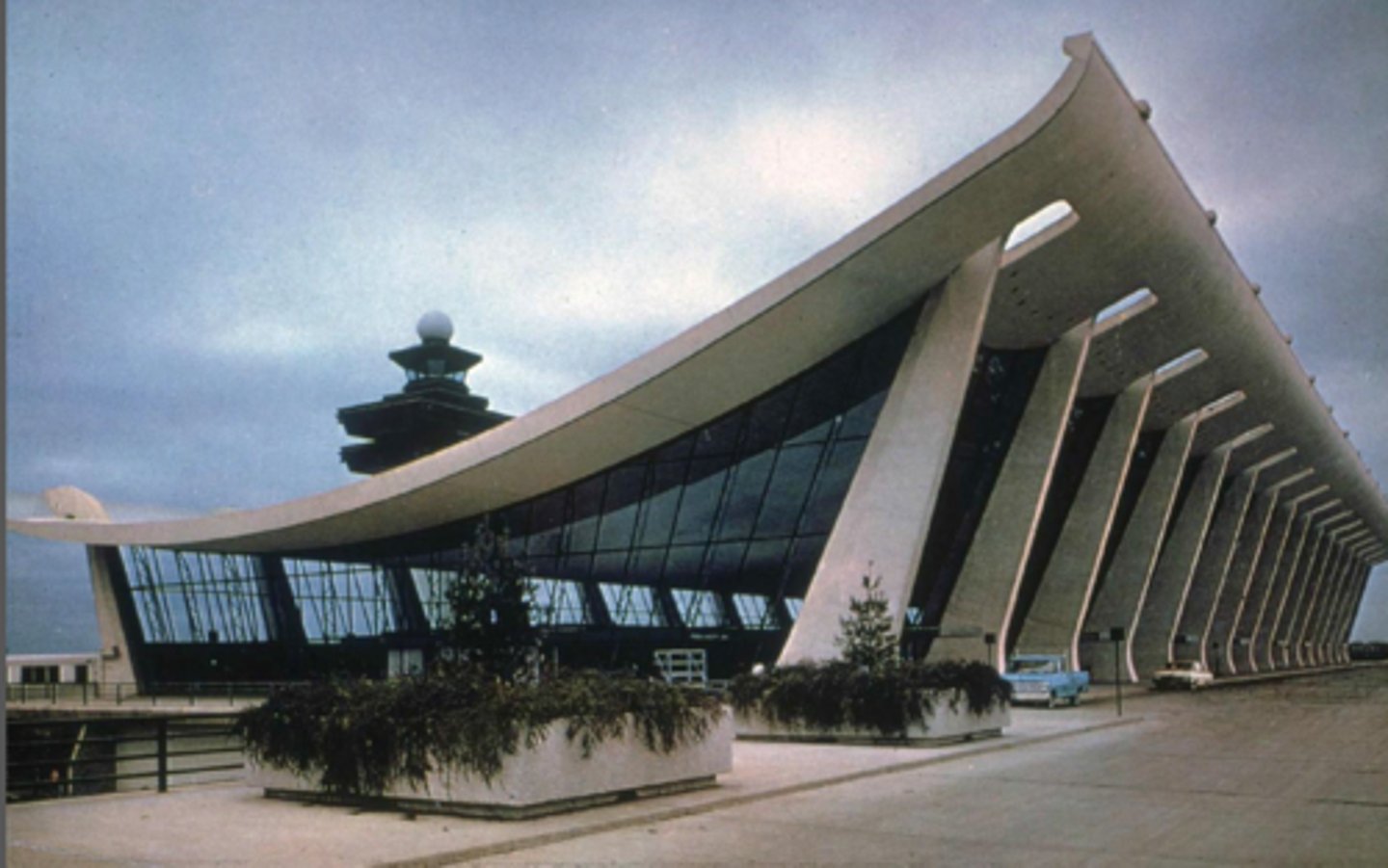
Saarinen
-Dulles International Airport transformed airport design, introducing the concept of a "mobile lounge" and creating a strikingly modern terminal.
-His design emphasized movement and flow, with a curving roof that appears to hover over the terminal like wings in flight.
-The architectural story is that he, inspired by the concept of flight, wanted the building to capture a sense of lightness and dynamism.
-His innovative approach made it easier for passengers to navigate the airport.
-Tragically, he passed away before the airport opened, but his revolutionary design influenced airport architecture worldwide.
Salle
-Renowned for his complex, multi-layered paintings that blend elements of figuration, abstraction, and collage.
-His work often explores themes of identity, memory, and the interplay between visual and narrative content.
-His paintings are known for their dynamic compositions, which often combine diverse imagery, from figurative elements to abstract patterns.
-He uses a variety of techniques, including collage and layering, to create complex visual dialogues.
Schnabel
-Celebrated for his large-scale, textured paintings and innovative use of materials.
-His work is known for its emotional intensity and blending of abstract and figurative elements.
-His art is characterized by its use of unconventional materials such as broken porcelain and fabric, creating textured, layered surfaces.
-His paintings often incorporate elements of narrative and personal symbolism, reflecting his emotional and physical experiences.
Scully
-Celebrated for his abstract works characterized by bold, geometric forms and rich color fields.
-His paintings often explore themes of structure, light, and the passage of time through a distinctive use of stripes and blocks.
-His work is known for its use of bold, block-like forms and an emphasis on the tactile quality of paint.
-His paintings often feature layers of color and texture, creating a sense of depth and movement.
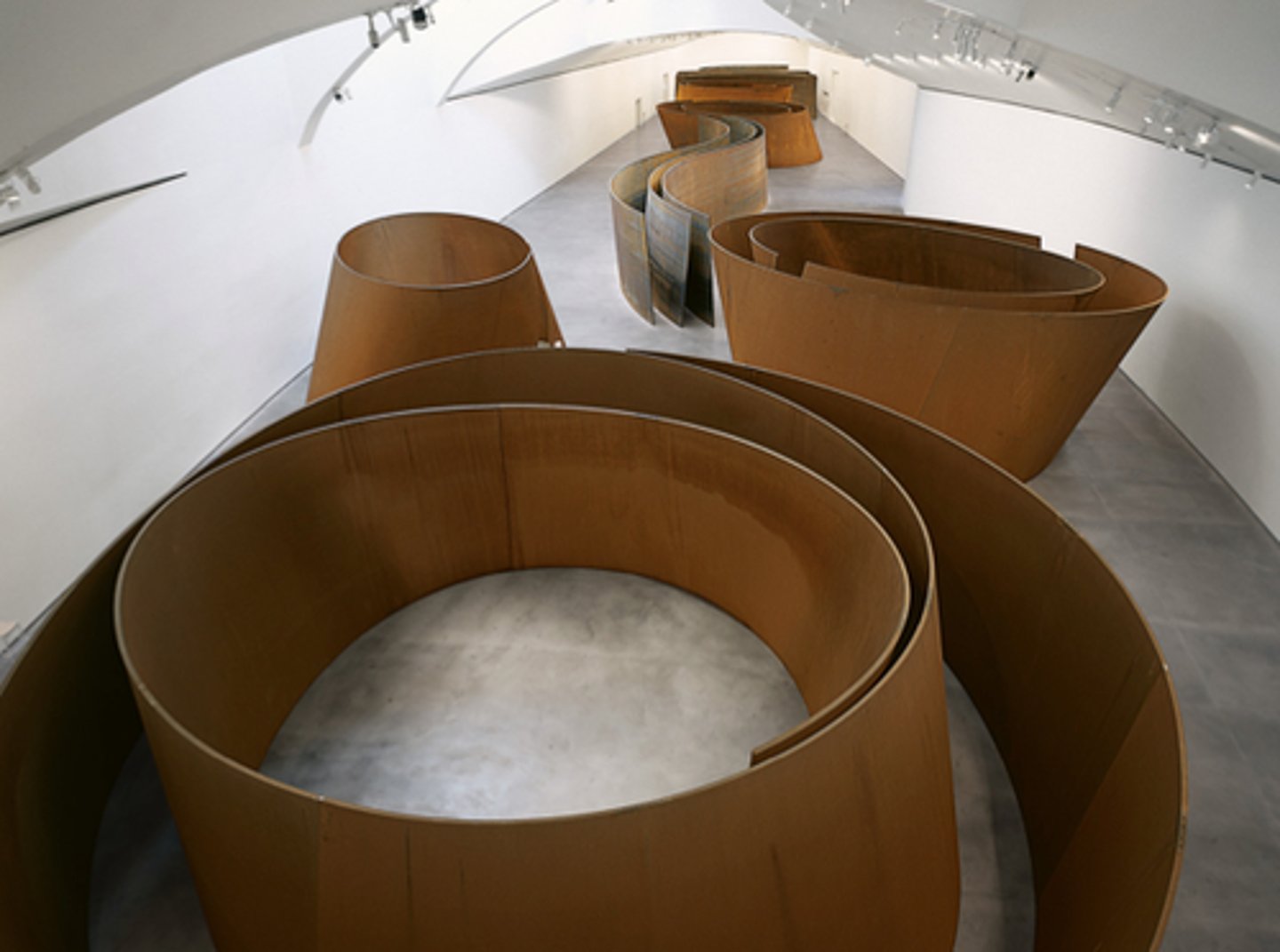
Serra
-Renowned for his large-scale, site-specific sculptures made from industrial materials like steel.
-His work often explores the relationship between form, space, and viewer experience, with an emphasis on physicality and environmental integration.
Sherman
-Renowned for her conceptual photography, exploring themes of identity, gender, and the construction of self through staged and self-portraits.
-Her work often involves her assuming various personas and roles to critique societal norms and stereotypes.
Smithson
-Best known for his large-scale earthworks that engage directly with the landscape, exploring the relationship between nature, art, and entropy.
-His works often blur the boundaries between art and environment.
-Fascinated with dirt and mirrors
Stella
-Renowned for his innovative use of geometric patterns, bold colors, and shaped canvases.
-His work spans several movements, including minimalism, color field painting, and post-painterly abstraction.
Turrell
-He trained as a pilot and used his knowledge of light and space to create immersive art experiences.
-Themes of perception, consciousness, and the sublime.
-Renowned for his work in the Light and Space movement, which explores the perception of light and space through architectural and installation art.
-His work often manipulates natural and artificial light to alter viewers' perceptions.
Ulay
-Abramović partner
-Began their walks on 30 March 1988, from either end of the Great Wall, known to the Chinese as The Sleeping Dragon. After they broke up
-He made a surprise appearance, stepping from the audience to sit and face his former lover.
van der Rohe
-"less is more"
-Minimalist and modernist designs, emphasizing simplicity, open spaces
- The use of industrial materials such as steel and glass.
-Emphasis on clarity and simplicity
Viola
-a pioneer in the field of video art, known for his immersive installations that explore themes of spirituality, human experience, and the passage of time.
-His work often incorporates slow-motion effects, water, and striking visual contrasts.
-His work is characterized by its exploration of fundamental human experiences, such as birth, death, and the nature of consciousness.
-He often draws on religious and mystical traditions, merging them with modern technology to create profound, meditative experiences.
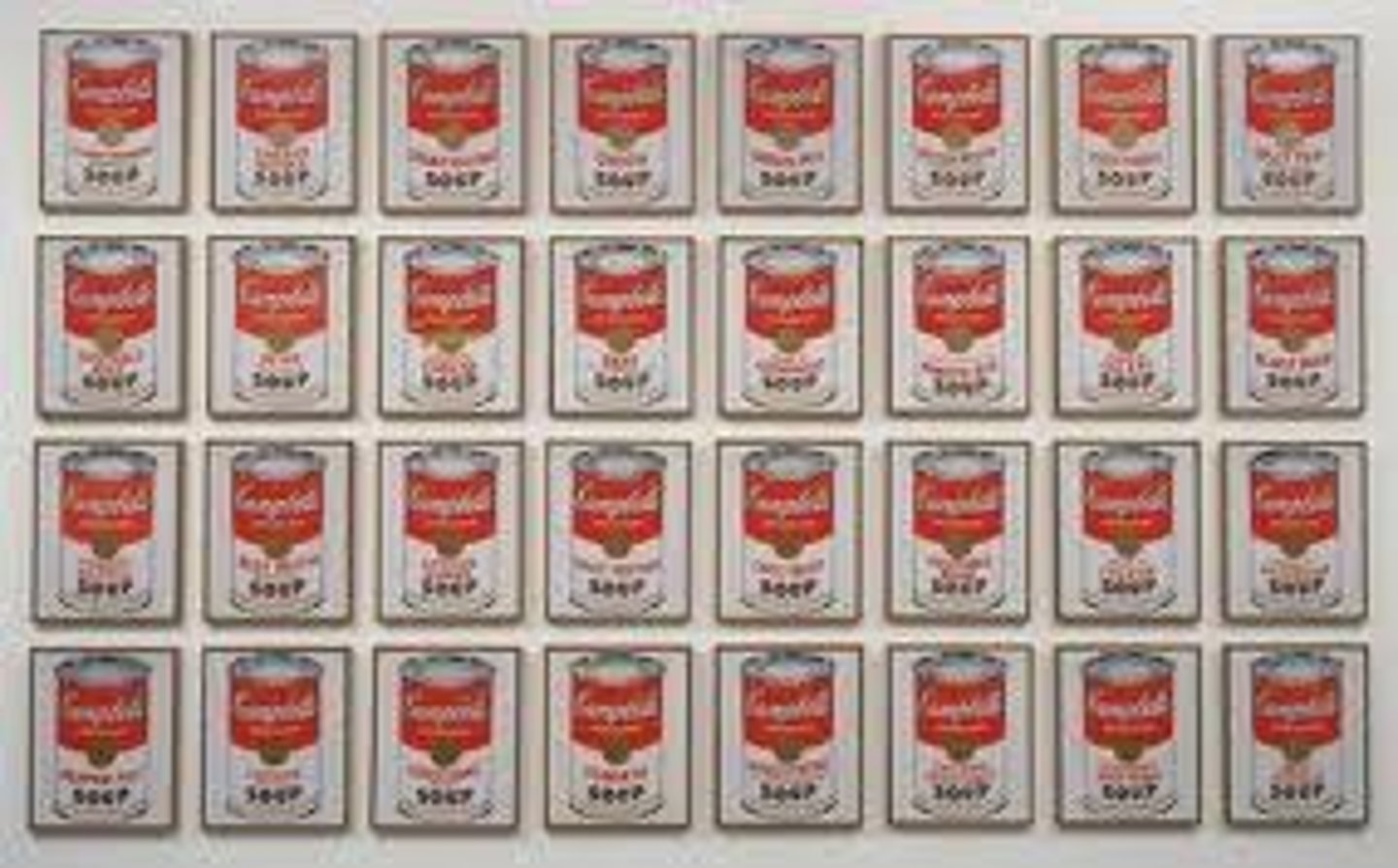
Warhol
-Renowned for his use of mass-production techniques and his focus on consumer culture and celebrity.
-His work often features repetitive imagery of iconic products and figures, employing silkscreen printing to achieve a uniform, commercial look.
-Relationship between art and popular culture and his exploration of media and celebrity
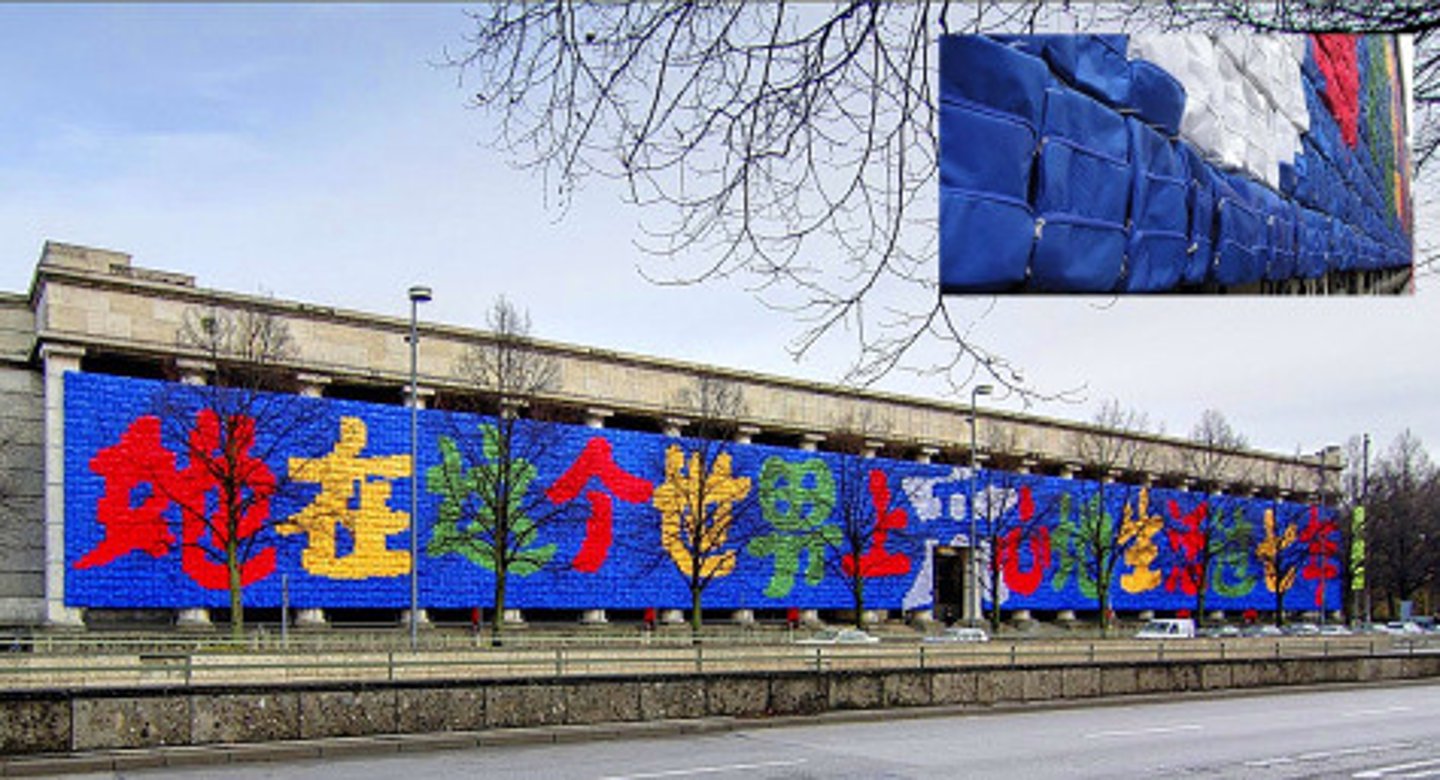
Weiwei
-known for his provocative and politically charged artworks that span various media, including sculpture, installation, and architecture.
-His work often critiques issues related to human rights, freedom of expression, and political repression.
-His art is deeply engaged with themes of political dissent, social justice, and cultural heritage.
-His outspoken activism and use of art as a form of protest have made him a prominent and influential figure in contemporary art.
Wright
-Contributions to modern architecture
-Development of the Prairie School movement
-Organic architecture, harmonizing buildings with their natural surroundings and emphasizing open interior spaces
-Productive into his 80s. Some of his best works were made at the end of his life
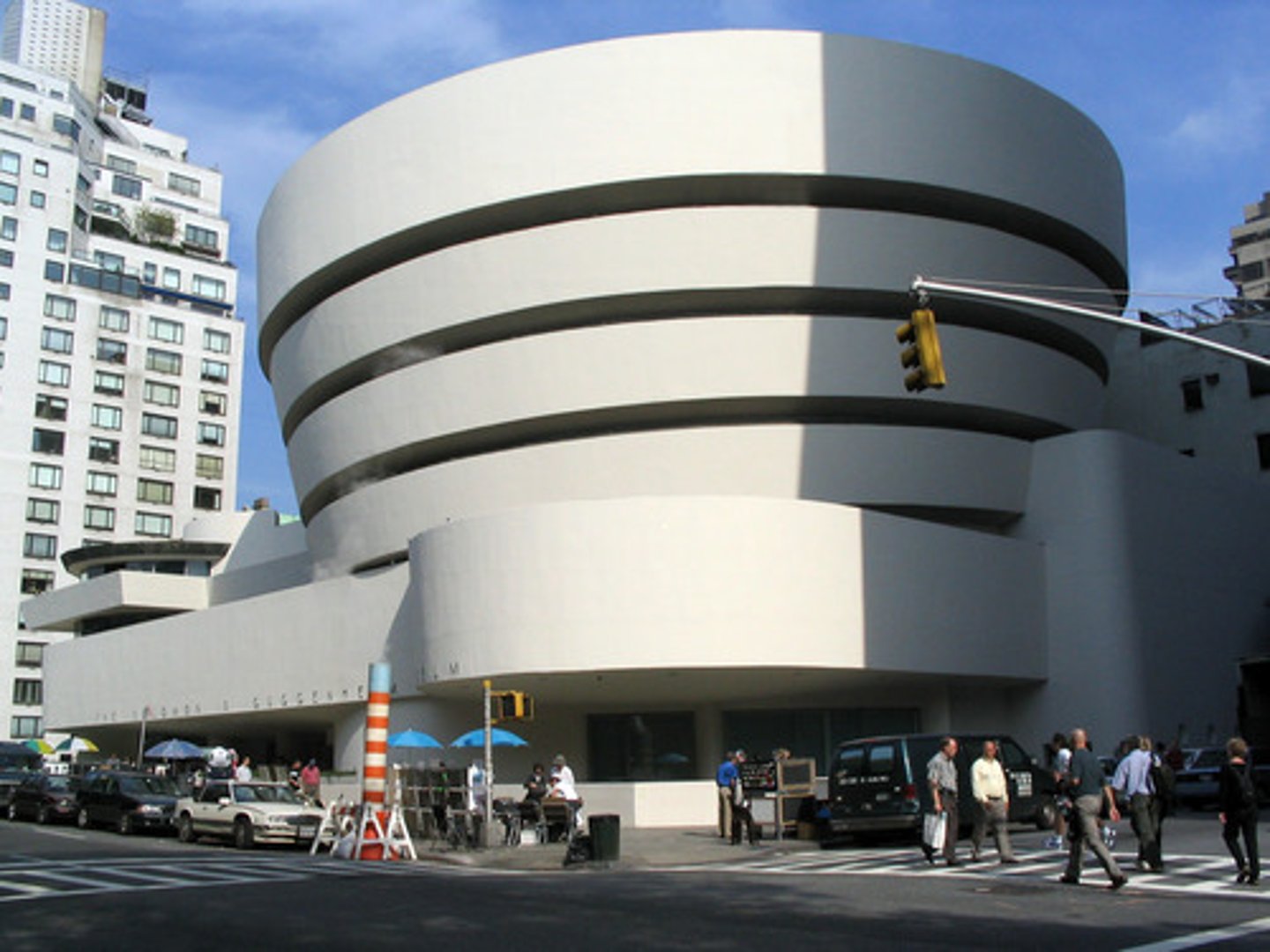
-Enjoy art in 1 continuous flow, spiral (Guggenheim Museum)