Ch.13-diversity of microbes, fungi, and protists
 Call Kai
 Learn
Learn Practice Test
 Spaced Repetition
 Match
Match Flashcards
 Knowt Play
1/38

There's no tags or description
Looks like no tags are added yet.
Name | Mastery | Learn | Test | Matching | Spaced | Call with Kai | Chat |
|---|
No analytics yet
Send a link to your students to track their progress
39 Terms
two domains
Until the 1990s, prokaryotic organisms were all grouped into the single Kingdom Monera.
The pioneering molecular phylogenetic work of Carl Woese and others resulted in the proposal that life on Earth evolved along three lineages, called Domains. Two of these domains'
- Bacteria and Archaea - are comprised of prokaryotic organisms
Though both prokaryotic, the Domain Bacteria and Domain Archaea are as different from each other as they are from the third domain, the Eukarya. Prokaryotes were the first inhabitants on Earth, appearing about 3.9 billion years ago.
At present, prokaryotes are found in every inhabitable environment on the planet
life beginnings
Prokaryotes existed on Earth for billions of years before the evolution of plants and animals. Using meteorites that have not been altered by geological processes, Clare Patterson and others have concluded the Earth is about 4.54 billion years old. The original atmosphere was lacking in oxygen and only anaerobic organisms could thrive. Within a billion years of the Earth’s formation, cyanobacteria - photosynthetic prokaryotes - evolved, introducing oxygen into the atmosphere, and allowing other forms of aerobic life to evolve.
Microbial mats
Microbial mats may represent the earliest form of life on Earth. Fossilized mats date back to 3.5 billion years ago. The first microbial mats likely obtained their energy from oceanic hydrothermal vents - fissures in the Earth’s surface that release geothermically heated water.
A microbial mat is a large biofilm, a multi-layered sheet of prokaryotes. Microbial mats are a few centimeters thick, and they typically grown on moist surfaces and held together by a gummy-like substance that they secrete.
Extremophiles
Some prokaryotes are extremophiles - able to thrive under extreme environmental conditions that would kill other organisms
Extreme Halophiles:
-live in high saline (salty) enviroments
-some tolerate high sale while others require it
Extreme thermophiles:
-live in very hot enviroments
-Geogemma barossii can divide at 121 degrees celius
Methanogens:
Use carbon dixoide to oxidie hydrogen releasing emthane as waste product
-completely annerobic
General features
All cells (prokaryotic and eukaryotic) have four common structures: Plasma membrane, cytoplasm, ribosomes, and genetic material.
Prokaryotes come in various shapes, but many fall into three categories: cocci (spherical, left), bacilli (rod
cell features
Prokaryotes are unicellular and lack membrane-bound organelles. Instead of nucleus containing multiple linear chromosomes, they have a single circular chromosome in an area of the cell called the nucleoid. Most have a cell wall outside of the plasma membrane.
The cell wall differs between Domain Bacteria and Domain Archaea and is very different from eukaryotic cell walls
Besides the structures found in virtually all prokaryotes, some also have a capsule, flagella, pili, and plasmids. The capsule is an external covering that allows the cell to attach to surfaces and protect from dehydration; flagella are used for locomotion; pili assist in attaching to other bacteria; and plasmids are smaller pieces of circular DNA
cell wall
The cell wall is a protective layer that surrounds some prokaryotic cells, located outside of the plasma membrane and giving them shape and rigidity
The chemical compositions of the walls vary between Archaea and Bacteria and between bacterial species.
Bacterial cell walls contain peptidoglycan, composed of polysaccharide chains (chains of monosaccharides) crosslinked to peptides (chains of amino acids).
Bacteria are divided into two major groups, based on their reaction to a procedure called the Gram stain.
Gram-positive bacteria have a thick cell wall consisting of many layers of peptidoglycan
Gram-negative bacteria have a thinner cell wall composed of a few layers of peptidoglycan and additional structures, surrounded by an outer membrane
Pathogenic Prokaryotes
All known pathogenic (disease-causing) prokaryotes are Bacteria; there are no known pathogenic members of the Archaea.
Pathogenic Bacteria evolved alongside humans and many significant outbreaks (epidemics and pandemics) have occurred.
Many of the large-scale outbreaks were zoonoses, appearing with the domestication of animals.
Histrical pandemics
The Plague of Athens, 430-426 B.C.
Killed ¼ of the Athenian troops that were fighting the Great Peloponnesian War and ¼ of the population of Athens.
The Plague of Justinian, 541-750 A.D.
Eliminated ¼ to ½ of the human population.
The Black Death, 1346-1361
Reduced the world’s population from 450 million to ~375 million.
antibiotic crisis
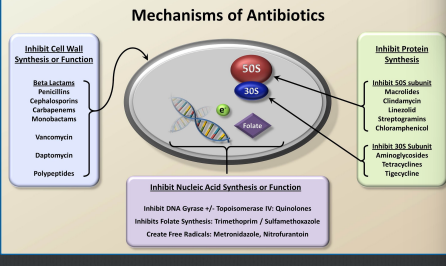
An antibiotic is a biological chemical that inhibits the growth of other organisms.
Strains of bacteria termed superbugs have evolved to become more resistant to antibiotics
Overuse and incorrect use of antibiotics results in the natural selection of resistant forms of bacteria.
MRSA
Staphylococcus aureus is common in and on the human body. A dangerous new strain, however, has recently emerged - methicillin-resistant Staphylococcus aureus (MRSA)
Actually resistant to many commonly used antibiotics and has begun to infect healthy people who live in dense groups (military and prisons) - community-associated MRSA
Among MRSA-afflicted persons (bacterium pictured above) in healthcare facilities, the average age is 68 years, while people with community-associated MRSA have an average age of 23 years
foodborne diseases
Outbreaks of bacterial infections related to food consumption are common.
It is estimated that every year 4 million Canadians get sick, 11,600 are hospitalized, and 238 die from foodborne diseases
Biomediation
Microbial bioremediation is the use of prokaryotes to remove pollutants.
It has been used to remove agricultural chemicals that leach from soil into groundwater, toxic metals from water (selenium, mercury, etc).
One of the most useful examples - using prokaryotes to clean oil spills. T
o clean oil spills such as the Exxon Valdez (Alaska, 1989, pictured left) or British Petroleum (Gulf of Mexico, 2010), bioremediation is promoted by adding inorganic nutrients that help bacteria already present in the environment to grow.
In your body
Humans, as with most multicellular organisms, are living ecosystems in themselves.
There are 10 to 100 times as many bacterial and archaeal cells inhabiting our bodies as we have cells in our bodies.
Some form mutually beneficial relationships while others are classified as commensalism, where the bacterium benefits but the human host is neither benefitted nor harmed.
The primary functions of the prokaryotic symbionts in our bodies appear to be:
• Metabolism of food molecules we can’t break down.
• Assistance with the absorption of ions
. • Synthesis of vitamin K.
• Training the developing immune system.
• Maintaining large intestine epithelial cells.
• Forming a protective barrier against pathogens.
on your body
Unlike the prokaryotes in your gut, the possible beneficial roles of skin prokaryotes have not been well studied.
The few studies conducted so far have identified bacteria that produce antimicrobial compounds for preventing infections by pathogenic bacteria.
The surface of the skin is also coated with prokaryotes. Different skin surfaces provide different habitats for different communities of prokaryotes.
Researchers are actively studying the relationships between various diseases and alterations to the composition of the human microbial diversity
Protists
-no taxonomic rank
-do not group together in phylogenies
-only shared features is being eurkortotic
General trends
The only feature that all protists share is being eukaryotic. Nearly all of them exist in some type of aquatic environment - freshwater, marine, damp soil, and even snow.
Several protist species are parasites that infect a variety of animals and plants while others live on dead organisms or their wastes.
organization
Most protists are unicellular, but some are truly multicellular while others exist as multinucleate, single cells, termed coenocytic.
Single protist cells range in size from less than a micrometer to upwards of 3 meters in some seaweeds with coenocytic cells.
cell features
Protist cells may be surrounded by just a plasma membrane or some other additional covering
Most unicellular protists are motile, using flagella, cilia, or pseudopodia (cell extensions) for movement.
Plasmodium species
Members of the genus Plasmodium must infect a mosquito and a vertebrate to complete their life cycle.
In vertebrates it causes malaria, developing in the liver and going on to infect red blood cells, destroying them with each reproductive cycle.
Of the four known species, Plasmodium falciparum accounts for 50% of all malaria cases.
trypanosomes
Trypanosoma brucei is a parasite that causes African sleeping sickness, damaging the nervous system and inevitably leading to death if not treated.
Trypanosoma cruzi causes Chagas disease in Latin America, leading to malnutrition and heart failure.
Grapes and potatoes
Plasmopara viticola is a protist plant parasite that causes a disease called downy mildew.
Grape plants that are infected with this protist appear stunted and have discoloured leaves.
The spread of downy mildew nearly caused the collapse of the French wine industry in the 19th Century
Potato late blight is caused by the protist parasite Phytophthora infestans.
Potato plants infected with the disease have stems and stalks that decay into black slime.
This disease led to the Irish potato famine in the 19th Century, claiming the lives of about 1 million people and the emigration from Ireland of at least 1 million more
Being eaten
Many protists exist as phytoplankton - masses of photosynthetic unicellular organisms floating in the water column.
In oceans, animals like baleen whales, fish, and invertebrate larvae feed directly on these populations of organisms.
Multicellular photosynthetic protists called seaweeds are an important food source for a variety of animals.
symbionts
Other planktonic protists can serve as symbionts within animals, providing nutrition through photosynthesis.
Photosynthetic dinoflagellates, a type of unicellular protist, pass on most of their photosynthetic energy to the coral polyps that house them. The dinoflagellates are called zooxanthellae and can be seen in the two pictures above as brown material inside the tentacles of the polyps
Some unicellular, non-photosynthetic protists exist in the digestive tracts of termites and wood-eating cockroaches, where they assist in digesting the ingested cellulose.
decomposers
Many protists are saprobes, organisms that feed on dead organisms or the waste matter produced by organisms.
Many types of protists called oomycetes grow on dead organisms. '
Saprobic protists have the essential function of returning inorganic nutrients to the soil and water.
This process allows for new plant growth, which in turn generates sustenance for other organisms along the food chain.
Without saprobes like bacteria, protists, and fungi, life would cease to exist and all organic carbon would be tied up in dead organisms.
Kingdom fungi
The most familiar members of this kingdom are the mushrooms, but there are many other types of fungi as well. Scientists have identified about 100,000 species of fungi, with over 1 million species thought to exist
Molecular data resolve fungi as a sister group to the multicellular heterotrophic Kingdom Animalia
Fungi are heterotrophs and as such cannot photosynthesize and instead use complex organic compounds as sources of energy and carbon.
Some fungi reproduce exclusively by asexual reproduction while others use sexual reproduction and yet others use both. Most fungi produce a large number of spores that are disseminated by the wind.
Like bacteria and protists, fungi play an essential role in ecosystems as decomposers
fungal cells
Being eukaryotes, the cells of fungi have a nucleus and membrane-bound organelles.
Cells never have chloroplasts, but many fungi display bright non-photosynthetic colours.
Pigments are associated with the cell wall, made of chitin, a compound also found in arthropod exoskeletons.
Almost all fungi lack flagella, and the only group that does have them only on the gametes
fungal body
The fungal body is usually multicellular, with the unicellular fungi generally called yeasts.
The vegetative stage is characterized by a branching network of slender filaments called hyphae.
The reproductive stage can vary and in some fungi comprise the familiar mushrooms.
A mass of hyphae from a fungus is called mycelium, usually growing on or in the material it is feeding on
Most fungal hyphae are divided into separate cells by end walls called septa.
Most fungi have tiny pores in the septa that allow for the rapid flow of nutrients and small molecules from cell to cell.
Fungi can reproduce sexually or asexually, with spores being produced in both methods.
Fungal spores are smaller and lighter than plant seeds and are produced in massive amounts.
obtaining nurition
Unlike most animals (which are also heterotrophs), fungi digest their nutrients first and then absorb them. Fungi release exoenzymes into the organic material upon which the hyphae are growing.
The enzymes catalyze reactions that break down the organic macromolecules into nutrients that are absorbed into the hyphae.
plant pathogens
Fungal pathogens have devastated crops, bringing widespread famine throughout human history
. Most cause tissue decay and eventual death of the host.
In addition to killing plants directly, some spoil crops by producing toxins while others feed off of and spoil stored crops.
animal Pathogens
-fungi attack animals directly by colonizing and destroying tissues
-animals can be oiusibed by eating toxic mushrooms or foods contamined by fungi
-additionally people who display hypersensitvity to molds and spores develop strong and dangerous allergic reactions
-a fungal infection is diffcult to treat because, unlike bacteria, fungi are eurkaroytes, antibiotics only target prokaroyotes
superfical mycoses
-most fungal infections (mycoses) are superfical (cutanenous) and rarely spread to underlying tissues
These infections are called dermatophytes or ringworms because of the red ring that they cause on the skin.
These fungi secrete extracellular enzymes that break down the epidermal protein keratin.
Predatory fungi
-in soil enviroments that are poor in nitrogen, sone fungi resort to predation of small nematodes (roundworns)
-species of the genus Arthrobotrys have a number of mechanisms to trap these worms
systemic mycoses
systemic mycoses spread to internal organs usually entering through the repiratory system
-condiocomycosis causes valley fever in the southwestern US, fungal spores in dust are inhaled and develop in the lungs
-Histoplasmosis is caused by the fungus Histoplasma capsulatum and causes pulmonary infections
decomposers
Food webs would be incomplete without organisms that decompose organic matter.
Fungi are key decomposers in all ecosystems, allowing for cycling of nutrients such as carbon, nitrogen, and phosphorus back into the environment so they will be available to other living things.
Fungi are particularly important because they have evolved enzymes to break down cellulose and lignin, components of plant cell walls that few other organisms are able to digest.
Mycorrhizae
-mycorrhizai fungi associates wirth plant roots, using their increased surface area to channel water from the soil into plant roots
-in exchange the plant supplies the products of photosythesis to fuel the metabolism of the fungus
Lichens
-are composed of a fungus (usually an ascomycota or basidiomycota) housing symbiotic photosynethetic algae or cyanpbacteria
-the hyphae of the fungus are wrapped around the photosynethetic cell
fungal-animal symbioses
The fungal mycelium of Septobasidium covers and protects scale insect colonies. • In return, the insects foster a flow of nutrients from a parasitized plant to the fungus.
Leaf-cutting ants farm fungi by cutting disks of leaves and piling them up in gardens. • The fungi digest the cellulose that the ants cannot break down. • The fungi receive leaves to decompose and the ants feed on the fungi.
Importance to Humans
Fungal pathogens can act as fungal insecticides, control populations of specific insect pests. The mycorrhizal symbiosis between fungi and plant roots is essential for the productivity of farmland. Mushrooms figure prominently in the human diet while molds are used to ripen many cheeses.
Yeast is used to ferment sugars into CO2 and ethyl alcohol under anaerobic conditions, contributing to the production of beer and wine. Yeast is also used to make breads that rise as the CO2 they produce is responsible for the bubbles in the dough. Many secondary metabolites of fungi are commercially important. Ø Antibiotics, immunosuppressant drugs, and blood clotting agents are all isolated from fungi .