biol lab 143 exam #2 vertebrate animal tissues, rat dissection, mitosis
 Call Kai
 Learn
Learn Practice Test
 Spaced Repetition
 Match
Match Flashcards
 Knowt Play
1/122

There's no tags or description
Looks like no tags are added yet.
Name | Mastery | Learn | Test | Matching | Spaced | Call with Kai | Chat |
|---|
No analytics yet
Send a link to your students to track their progress
123 Terms
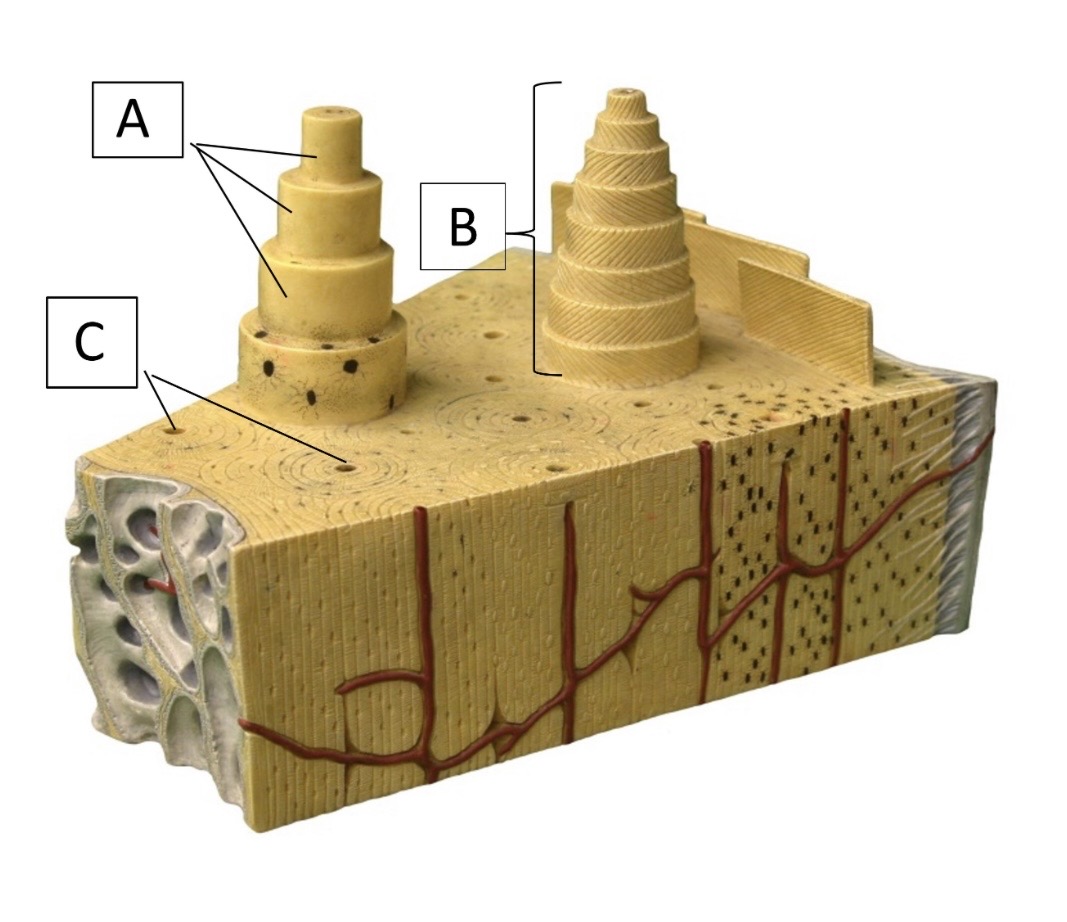
What connective tissue does the model represent?
bone
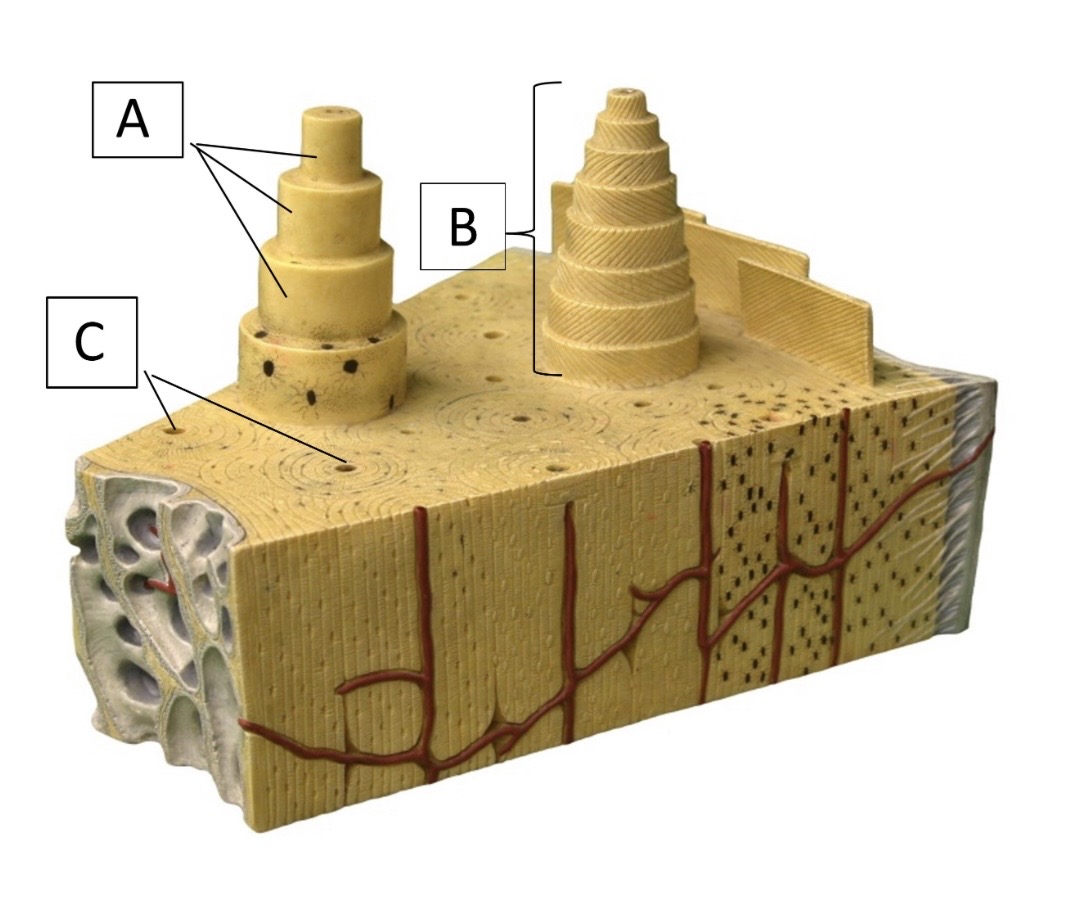
name structure A
lamella
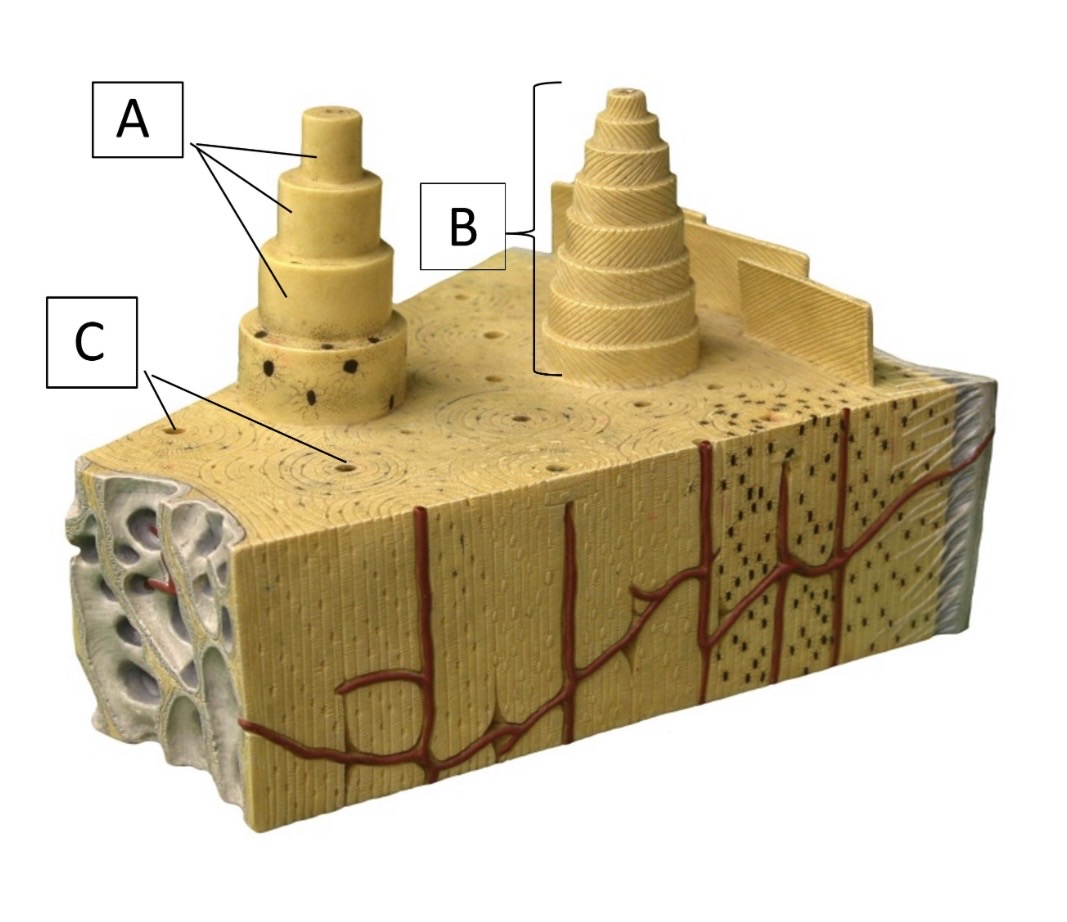
name structure B
osteon
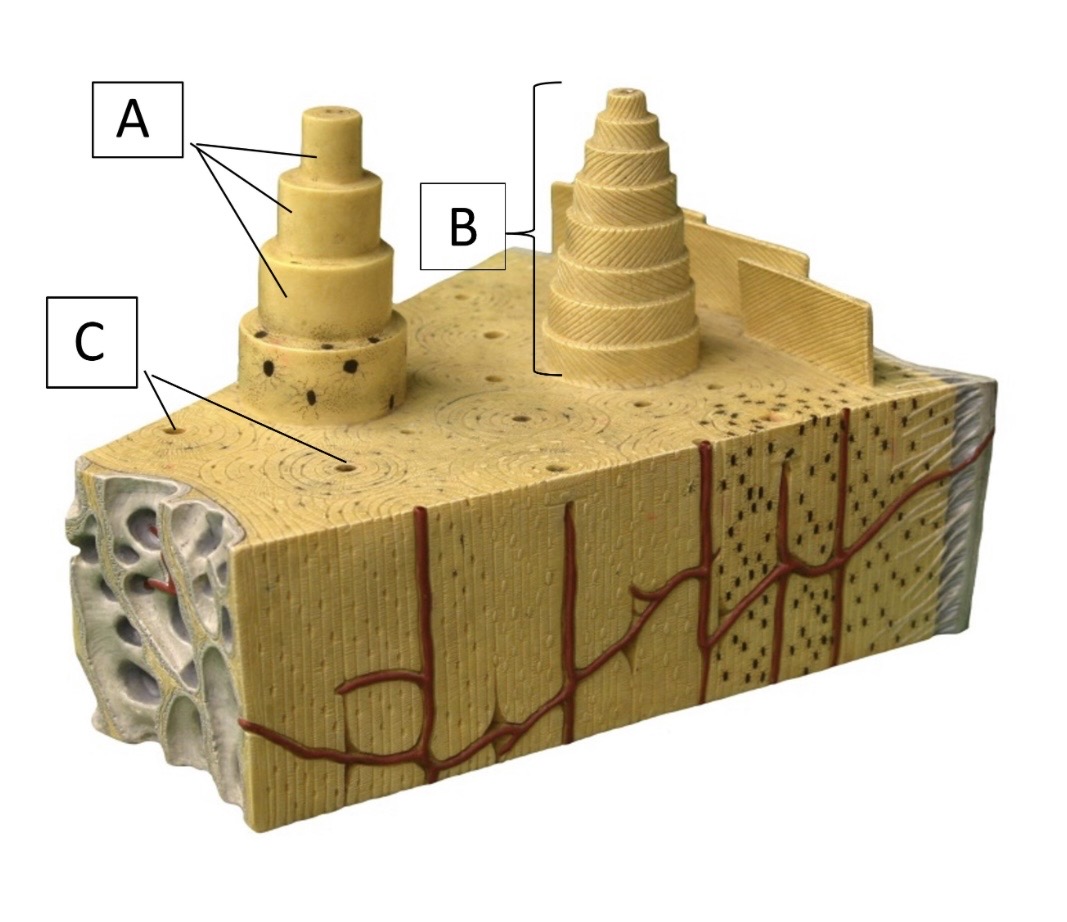
name structure C
Haversian canal
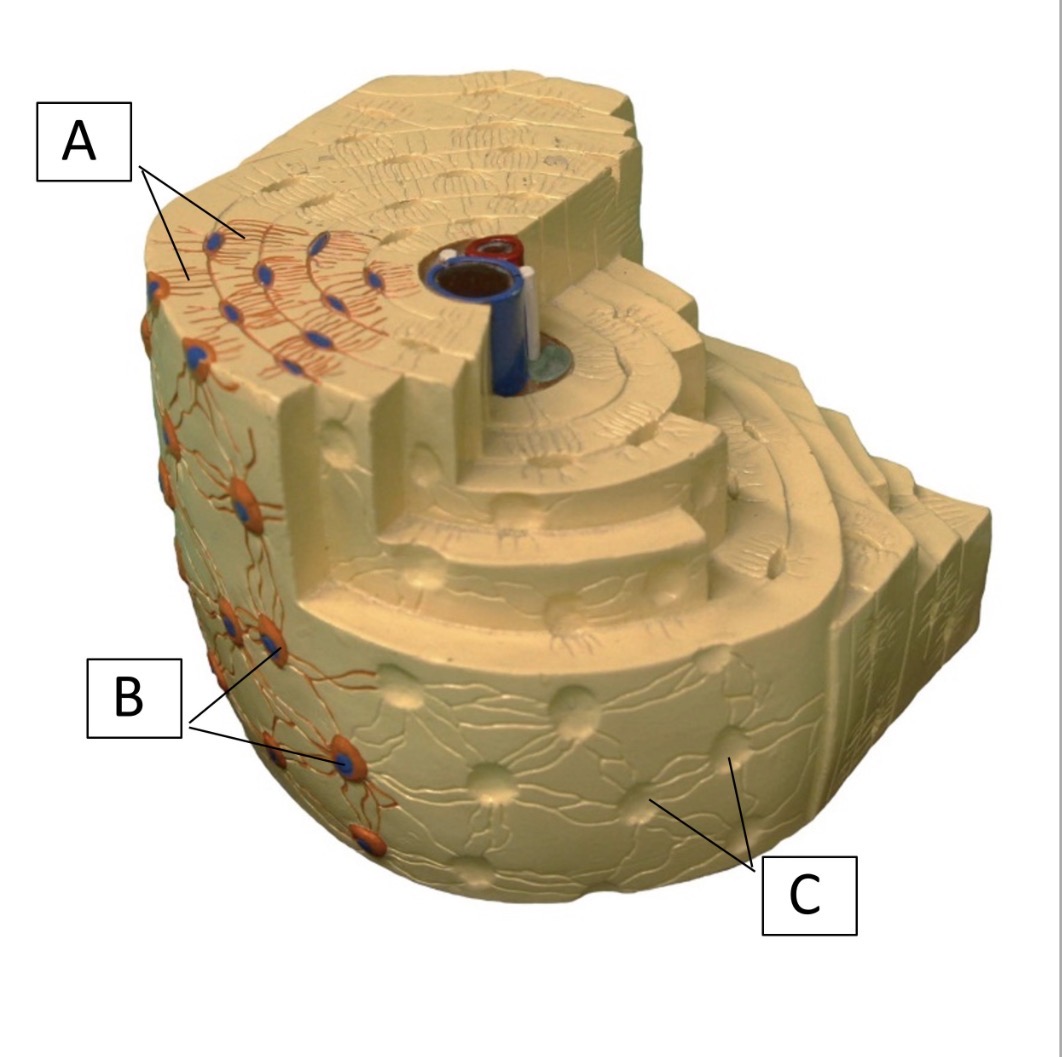
What repeating structure of bone does the model represent?
osteon
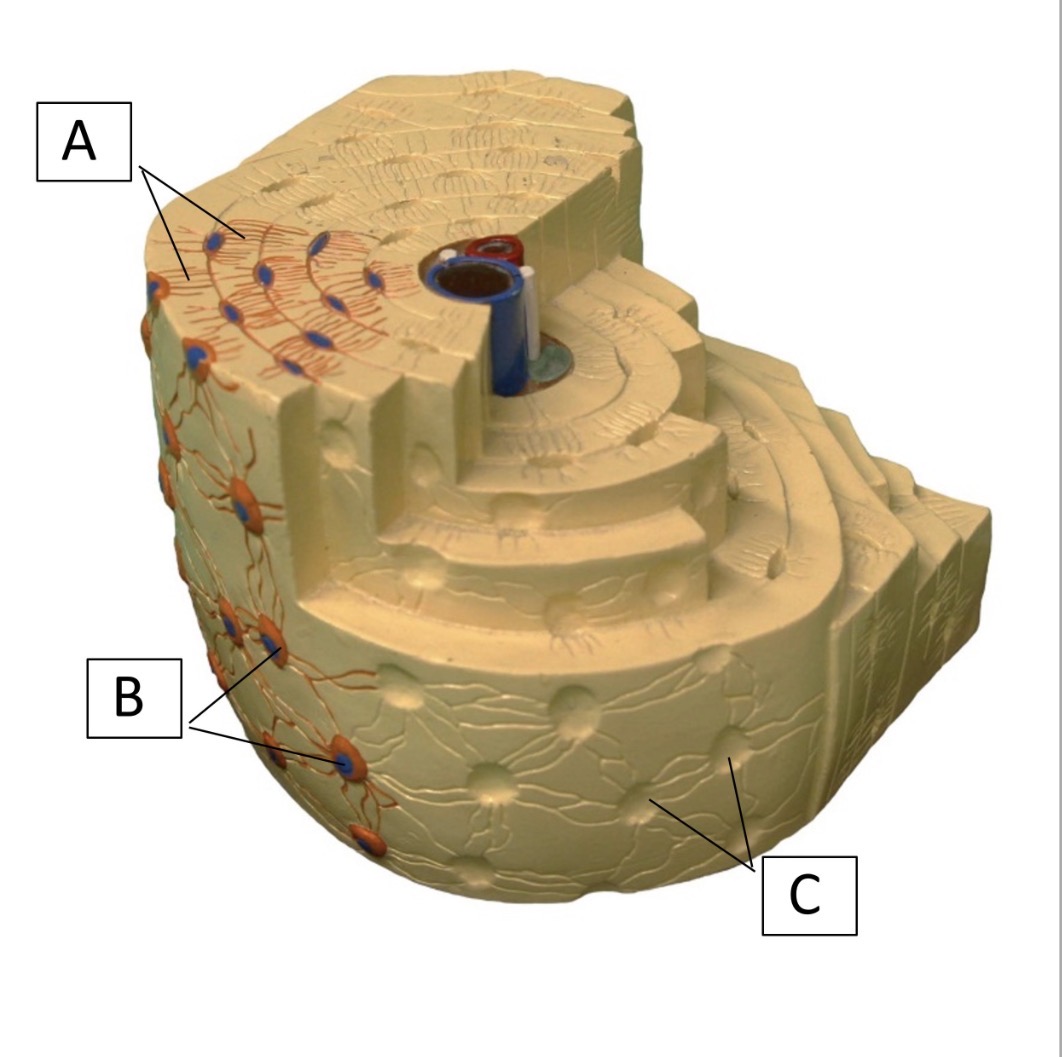
name structure A
canaliculi
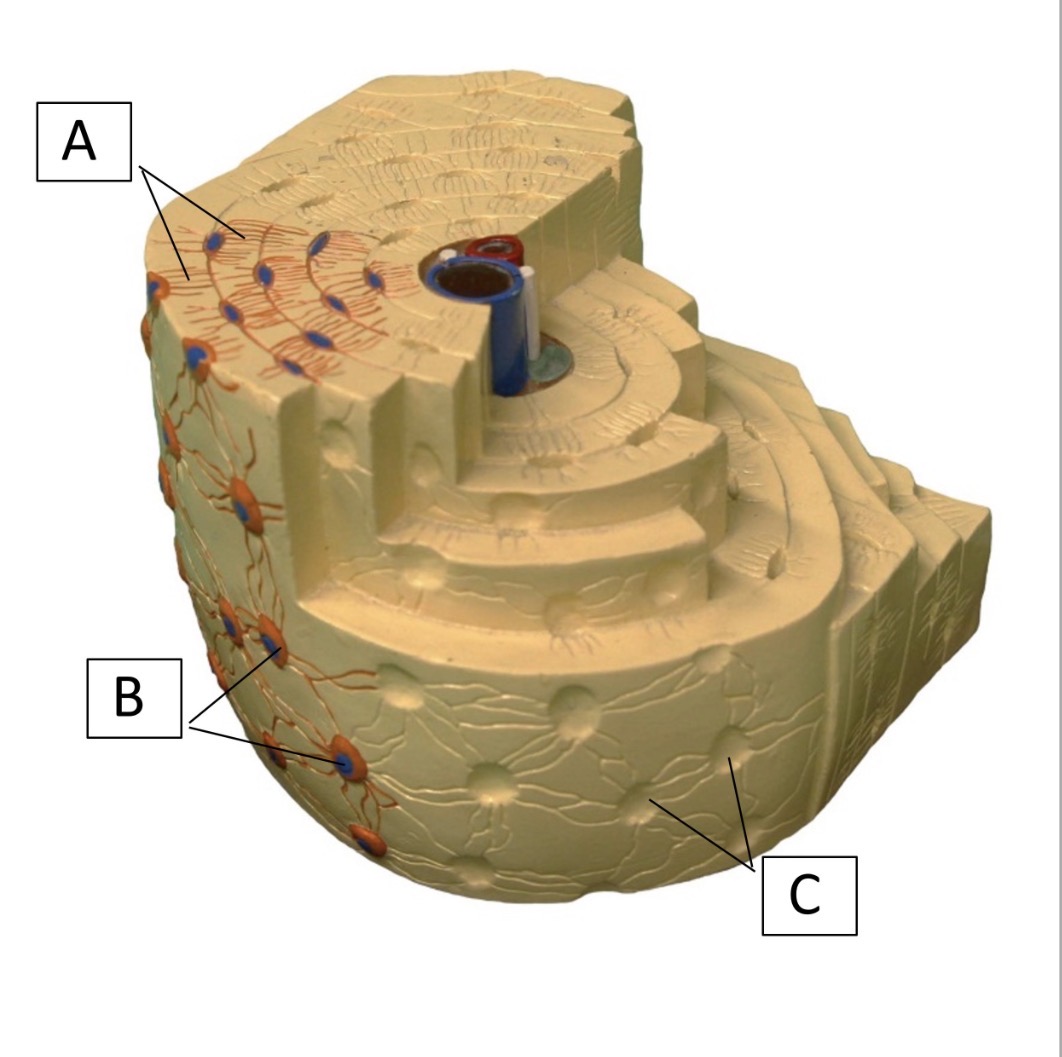
name structure C
lacuna
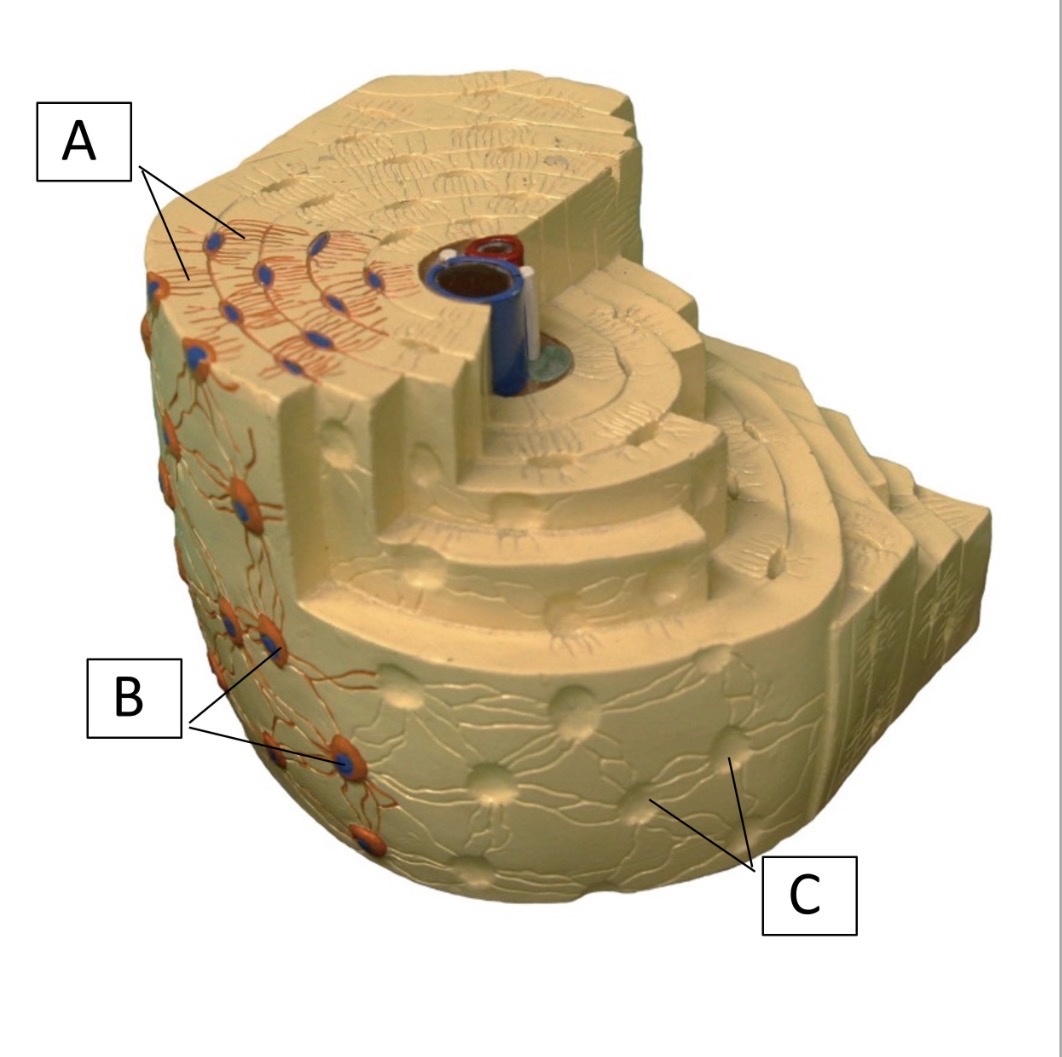
name cell B
osteocyte
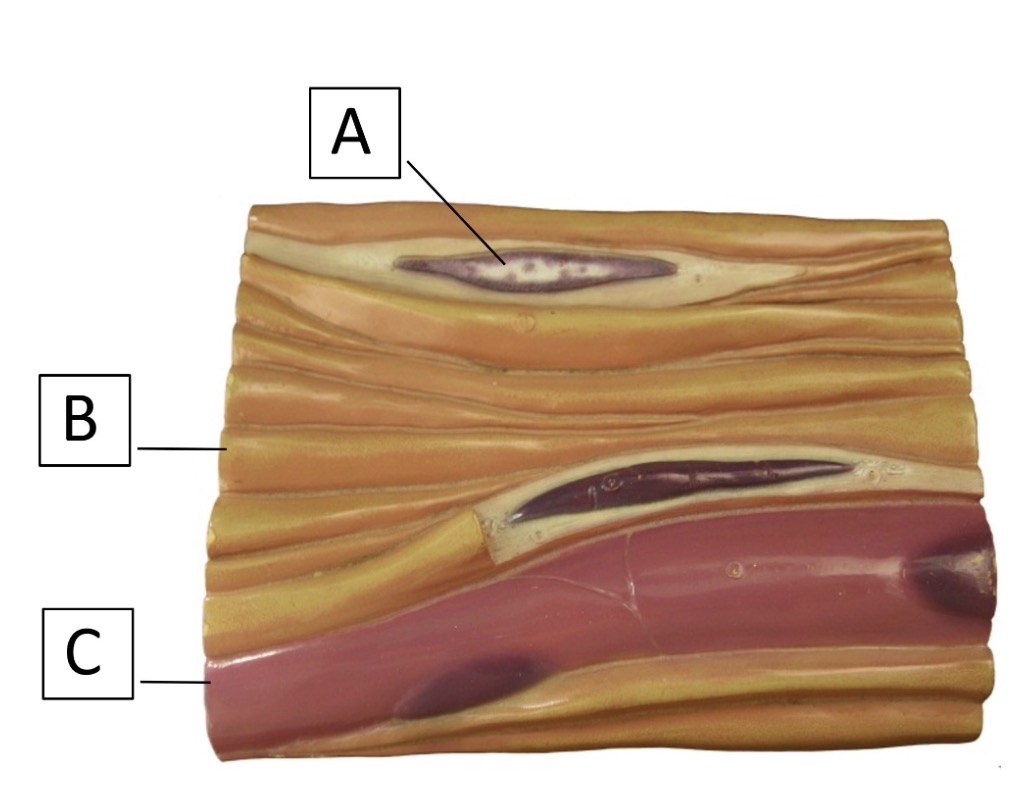
What muscle tissue does the model represent?
smooth muscle
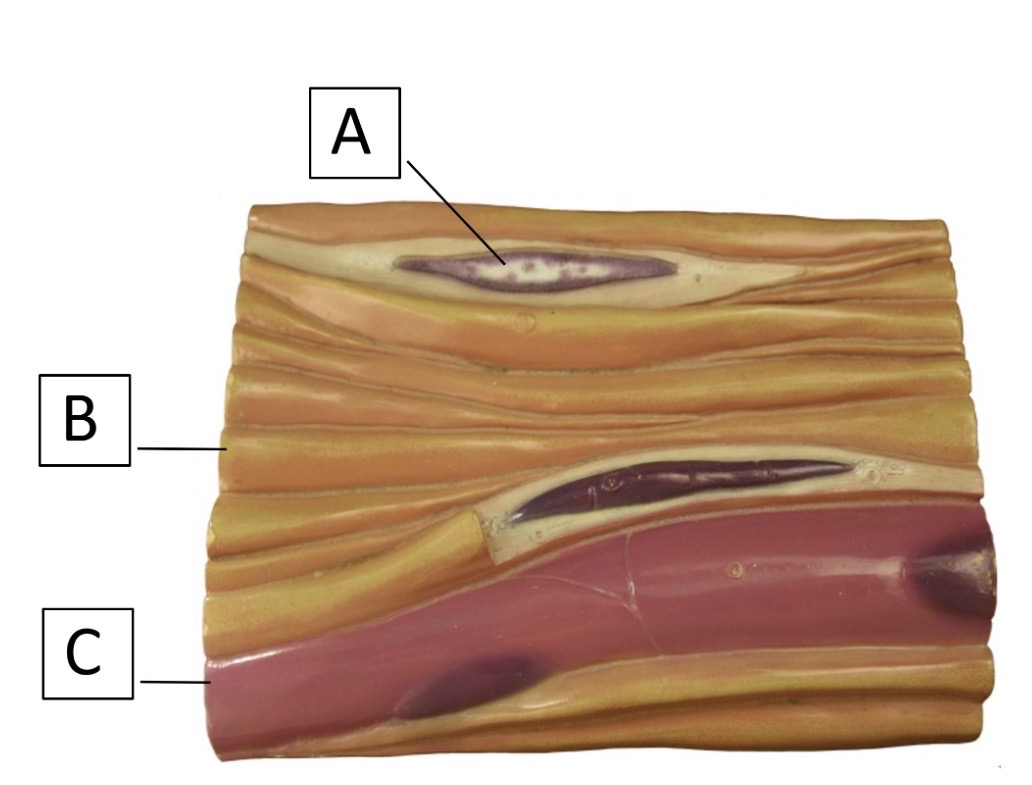
name structure A
nucleus
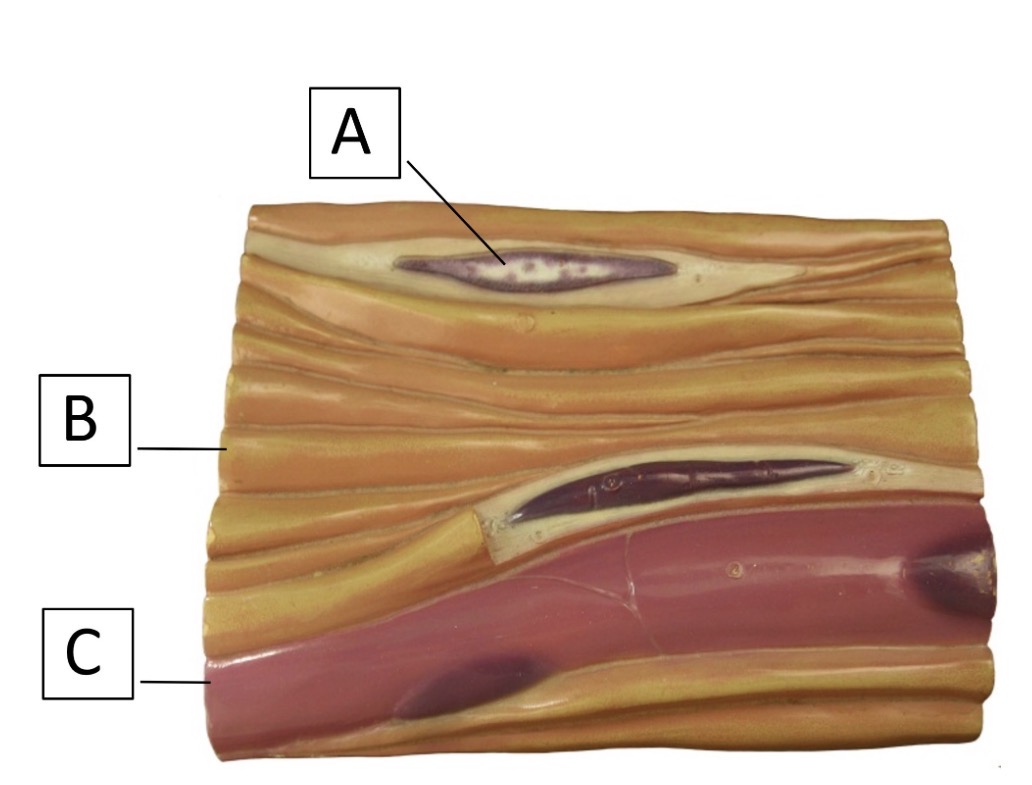
name cell B
smooth muscle cell
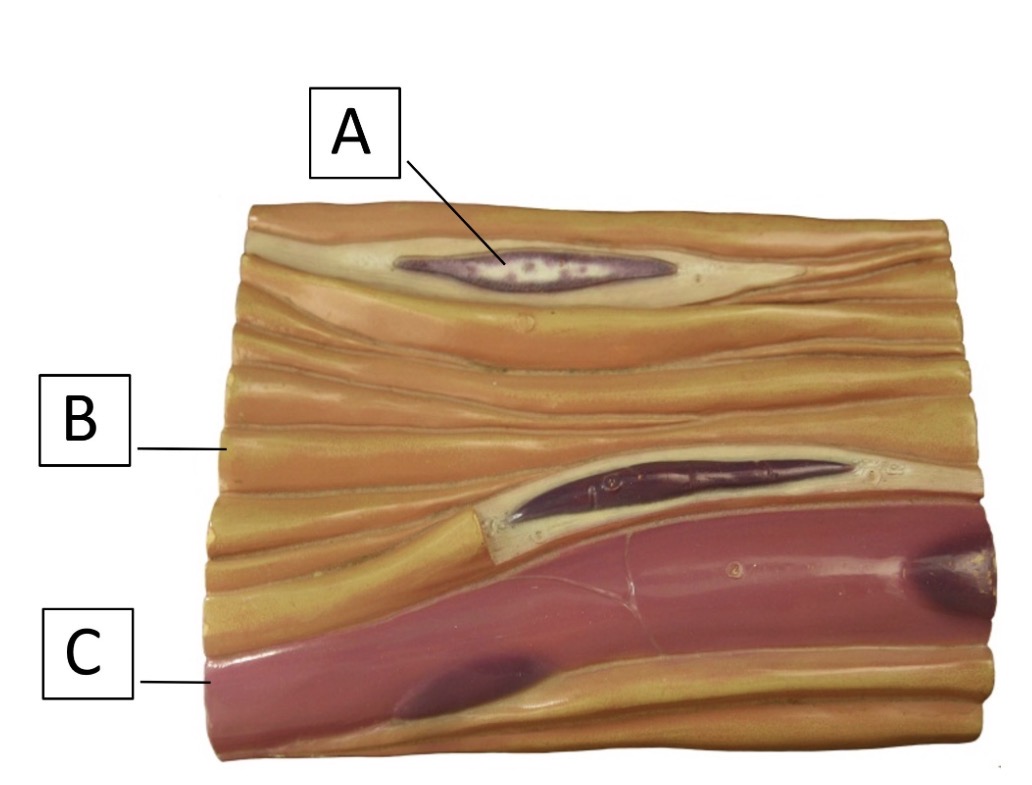
name structure C
simple squamous
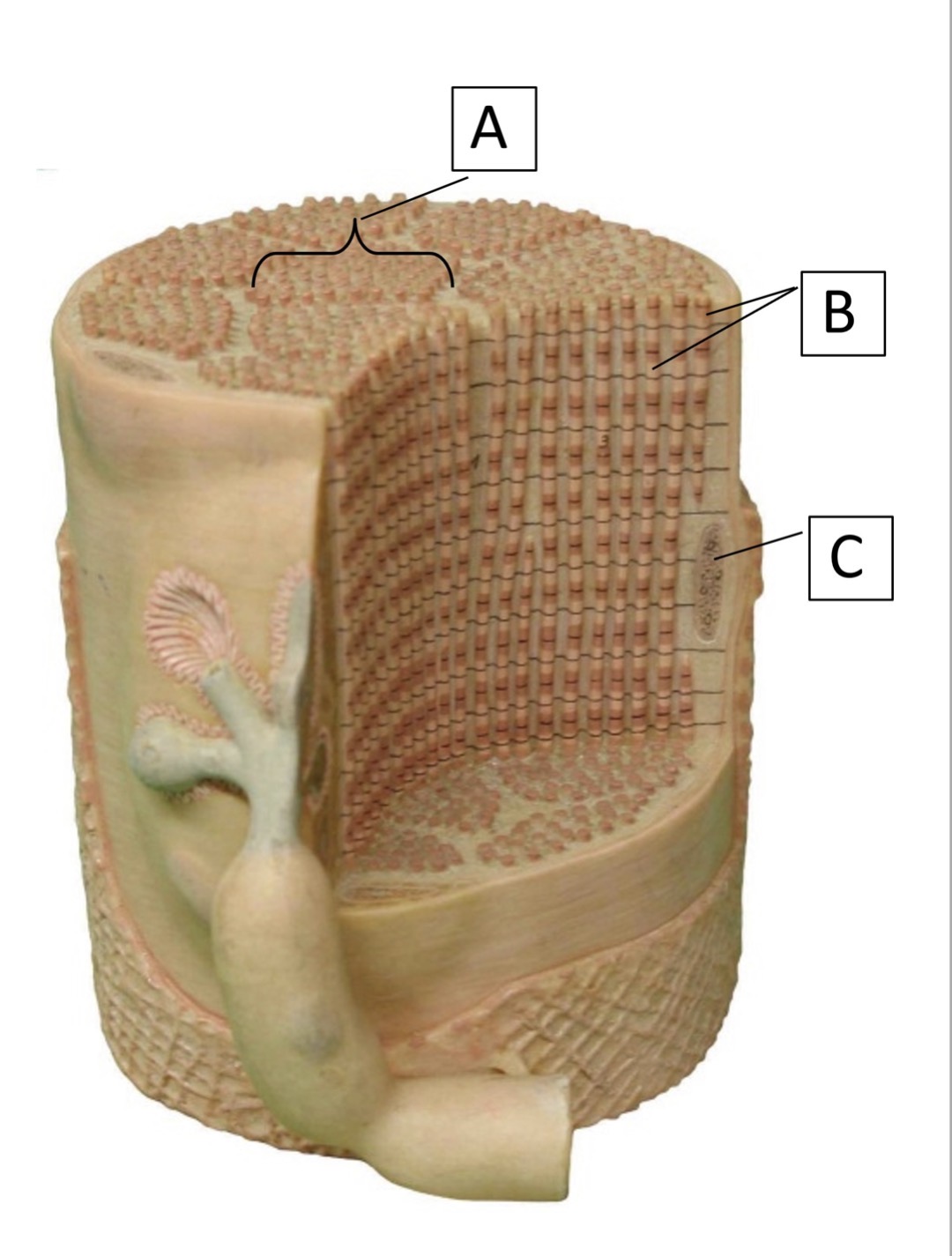
What type of muscle cell does the model represent?
skeletal muscle cell
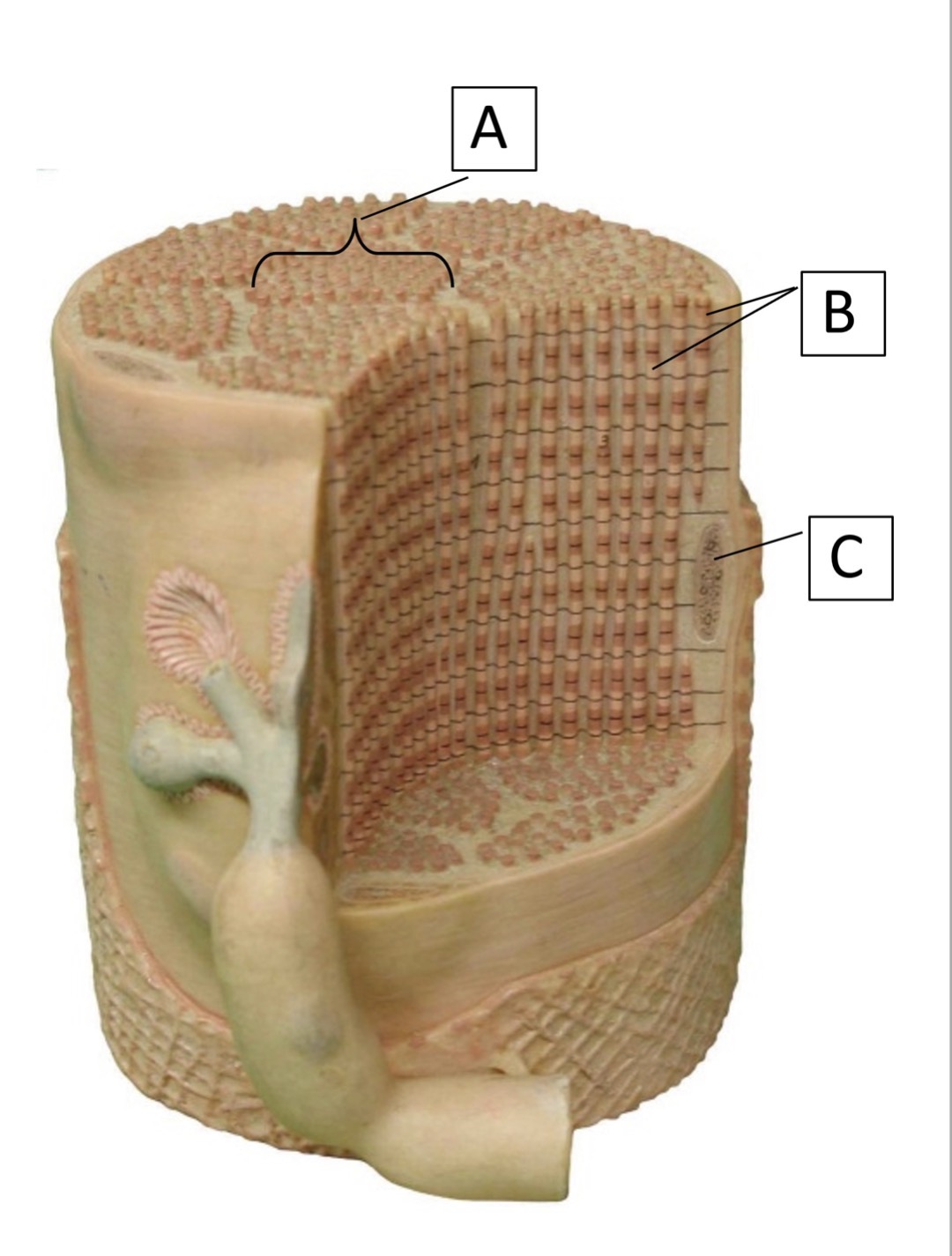
name structure A (bundle of fibers)
myofibril
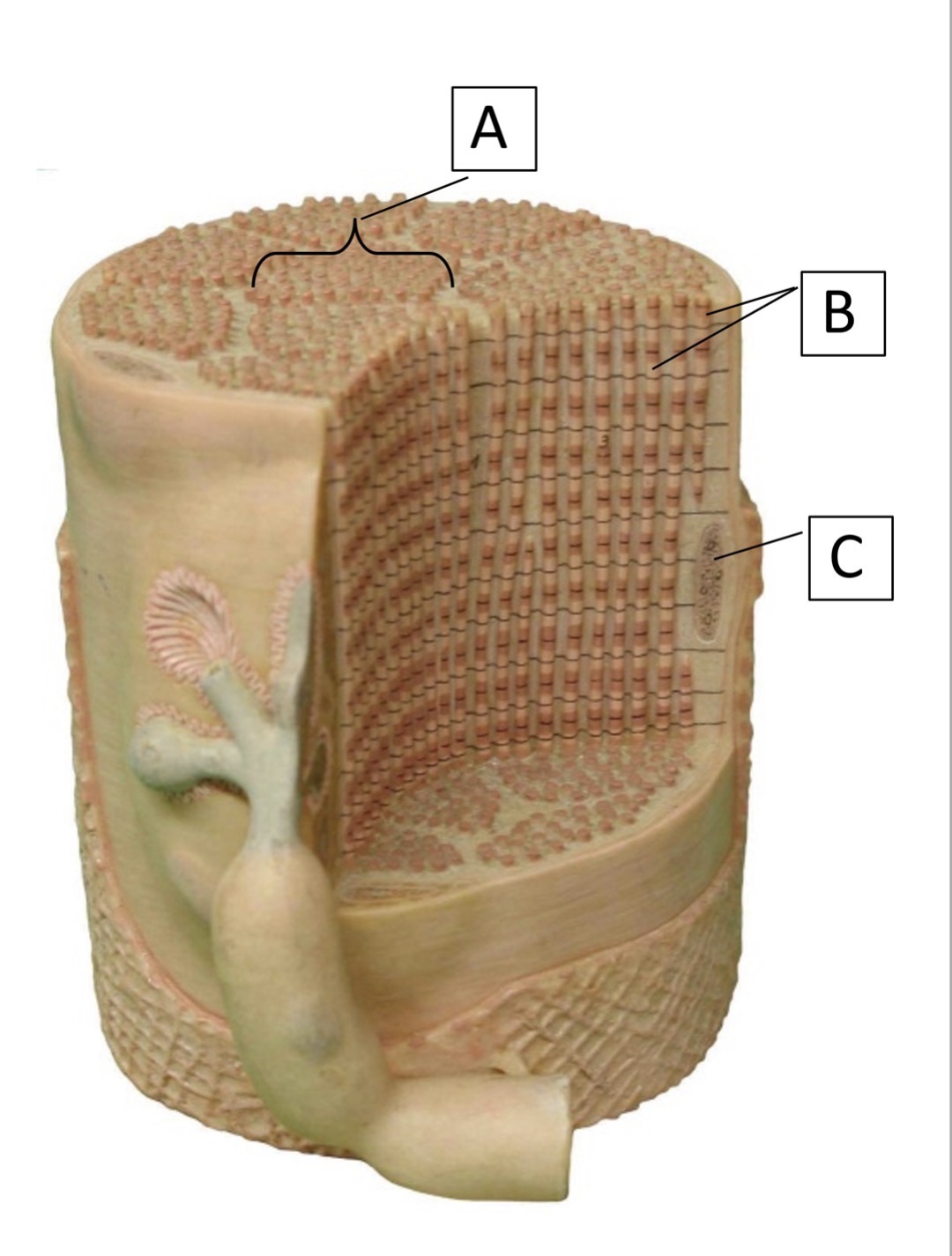
name structure B (single fiber)
myofibril
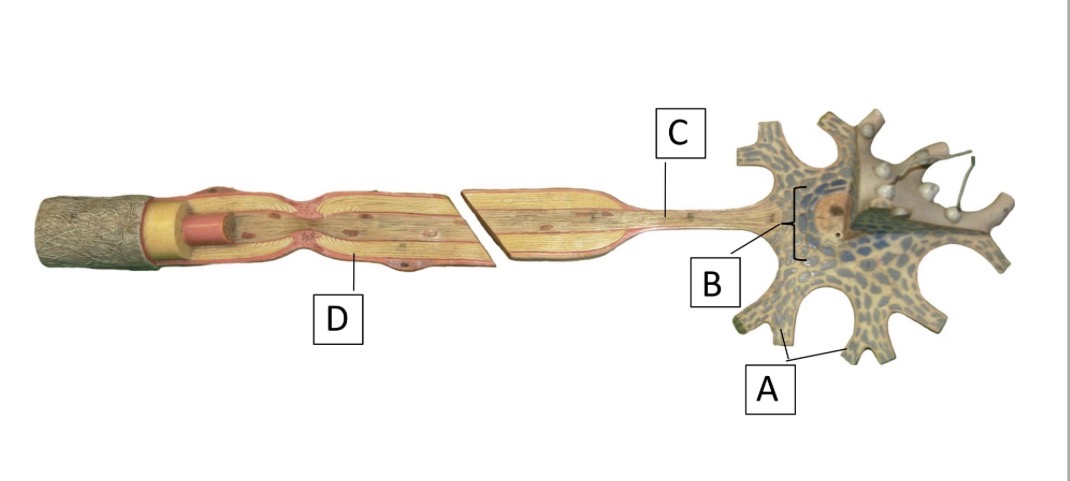
Name the cell that the model represents.
nerve cell
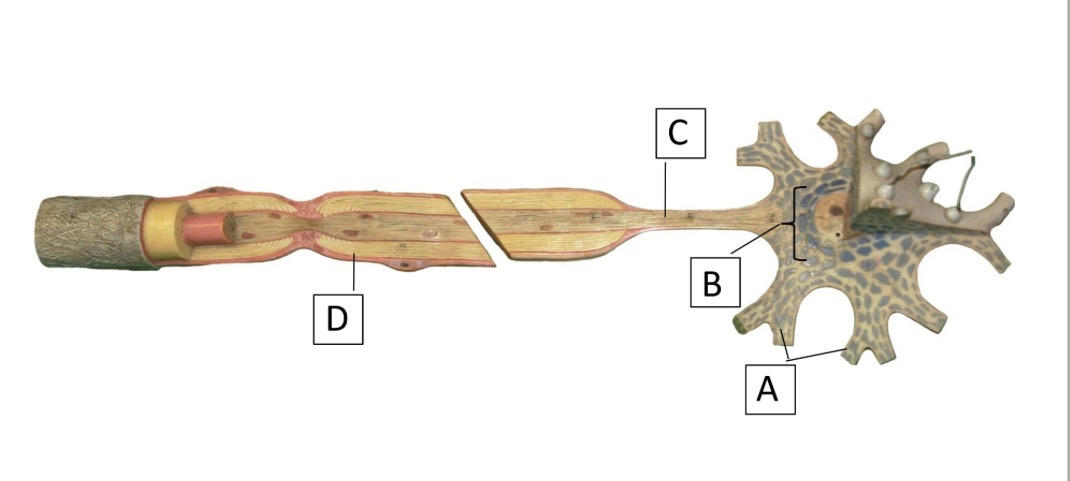
name structure A
dendrite
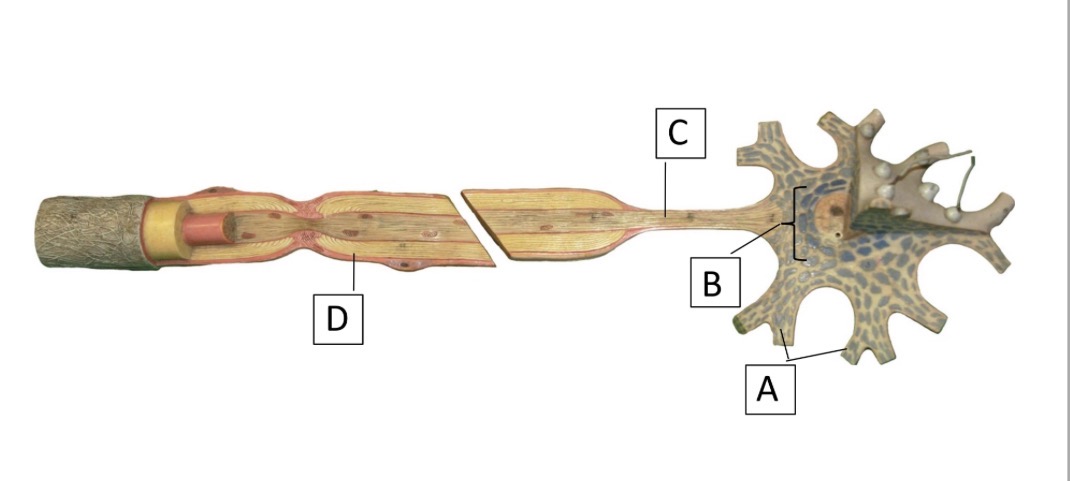
name structure B
nucleus
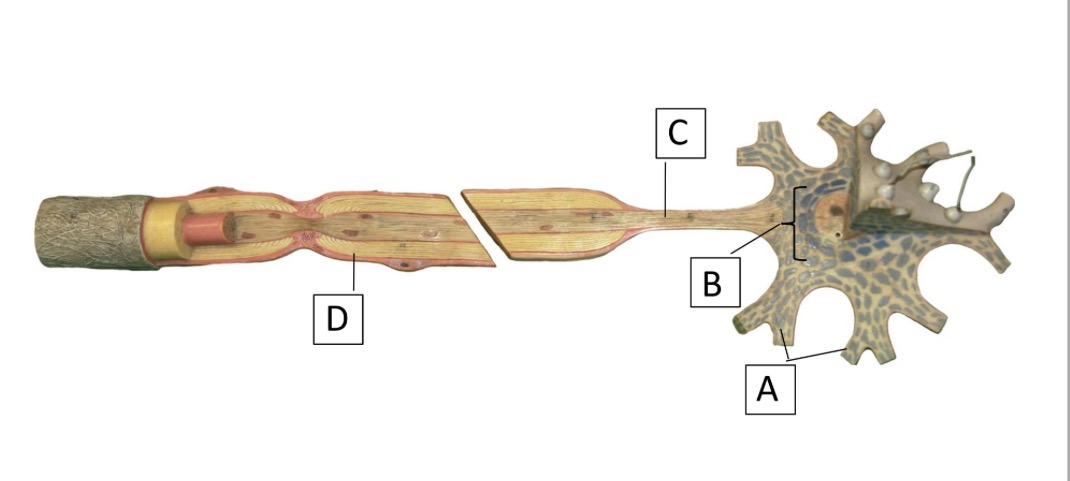
name structure C
axon
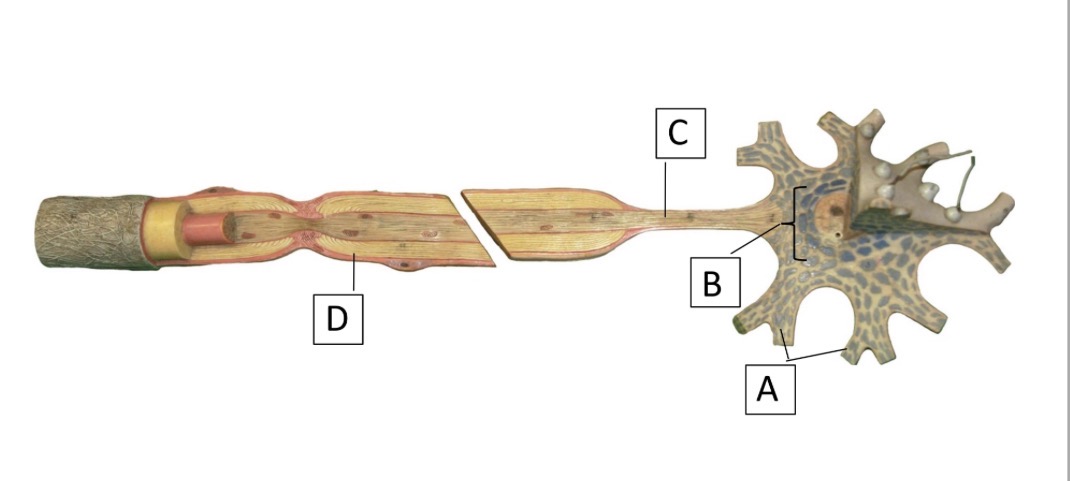
name cell D
schwann cell
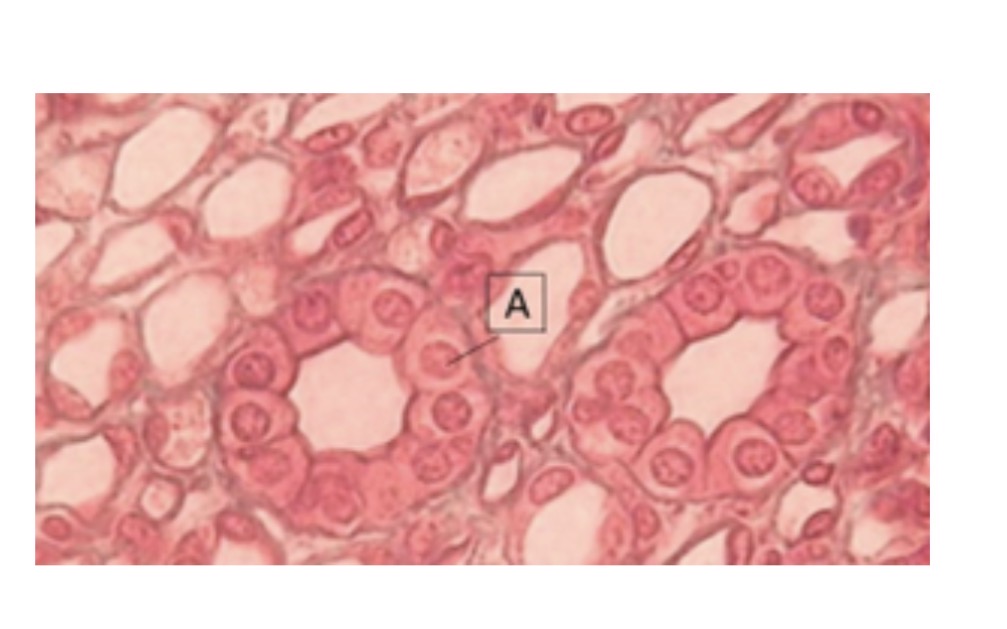
Identify this epithelial tissue.
simple cuboidal
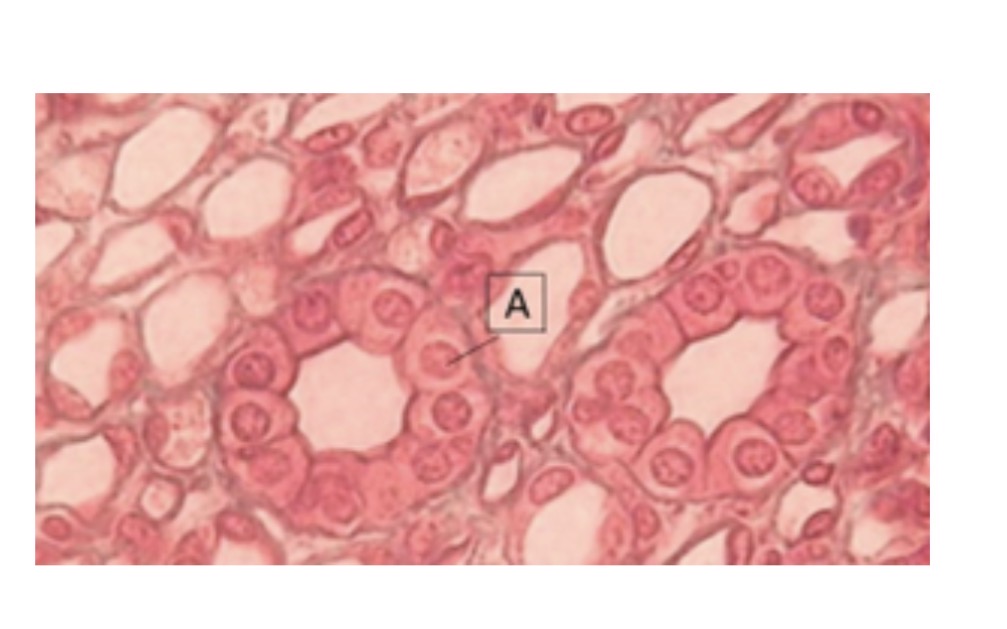
name structure A
nucleus
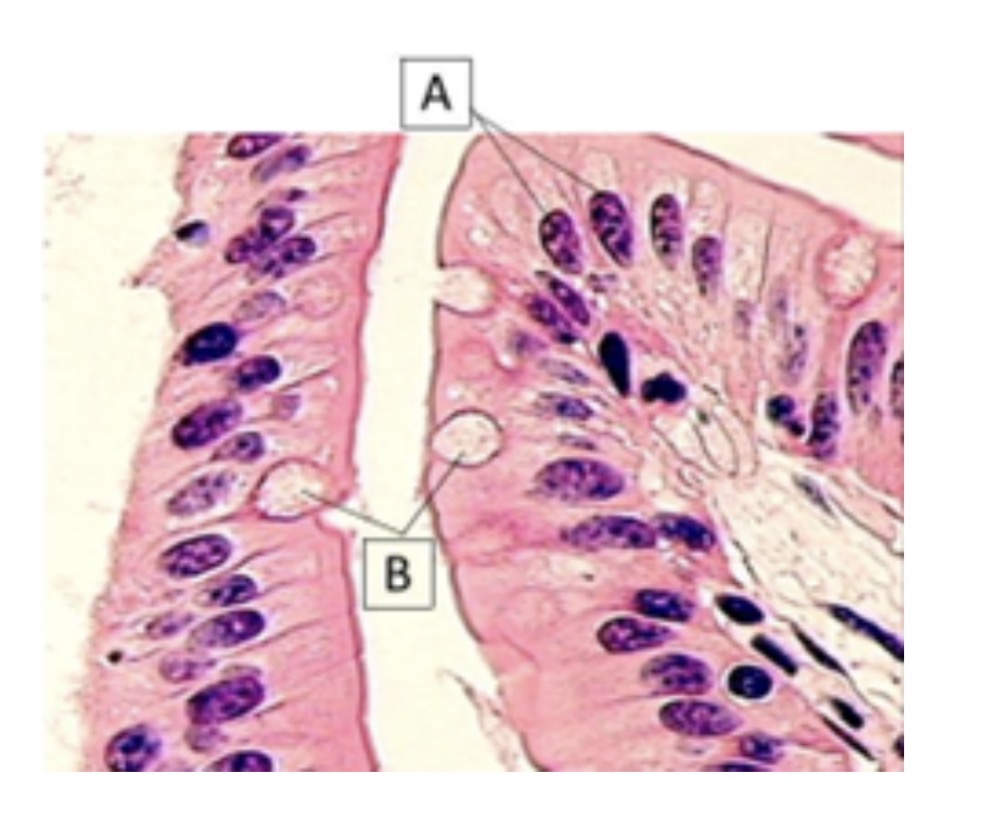
Identify this epithelial tissue.
simple columnar
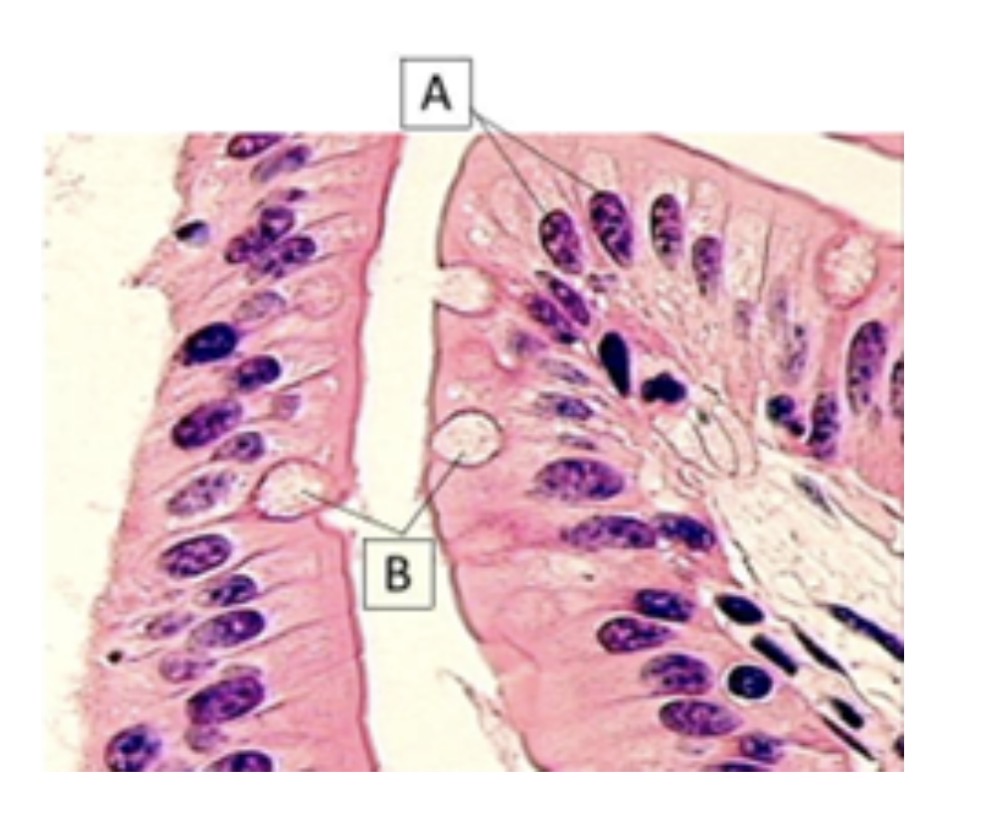
name structure a
nucleus
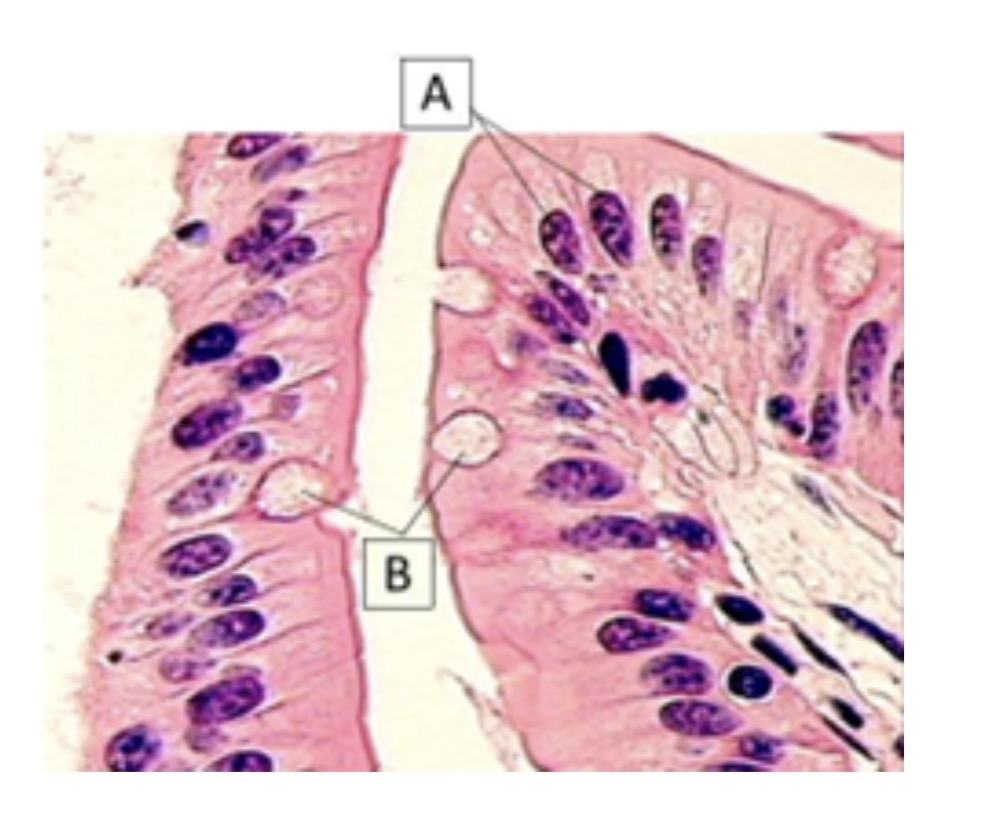
name cell b
goblet cell
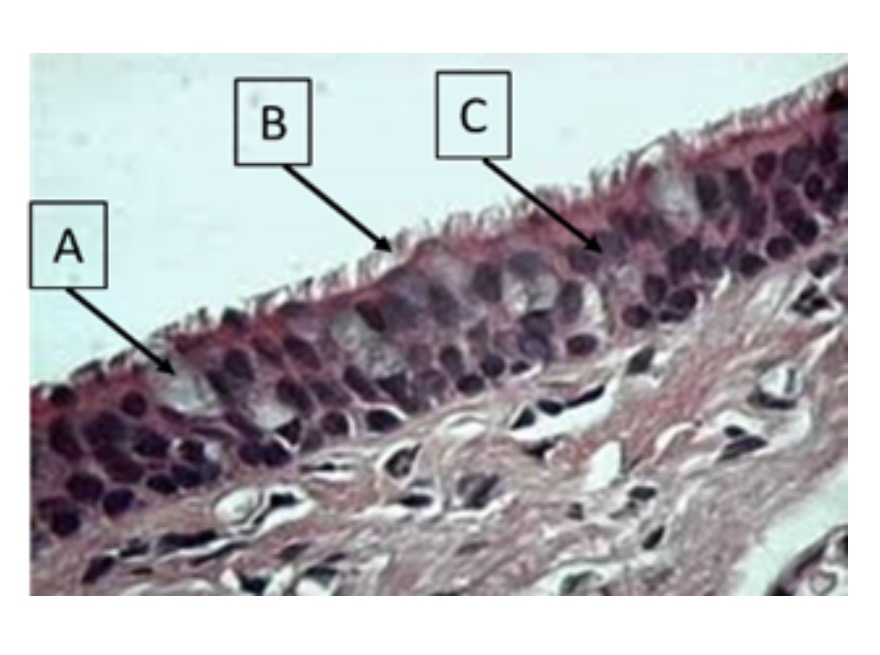
Identify this epithelial tissue.
pseudostratified ciliated columnar
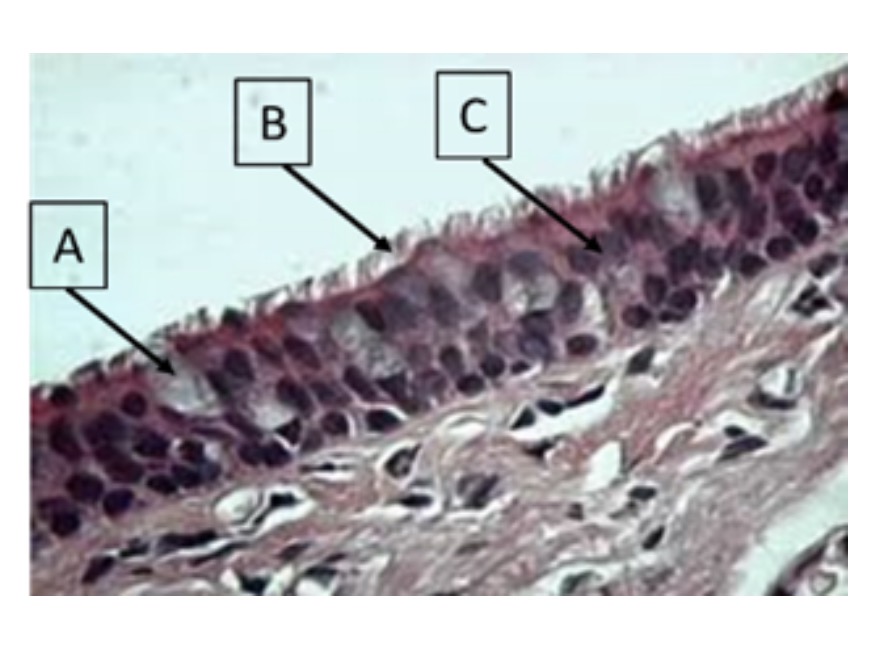
name cell a
goblet cell
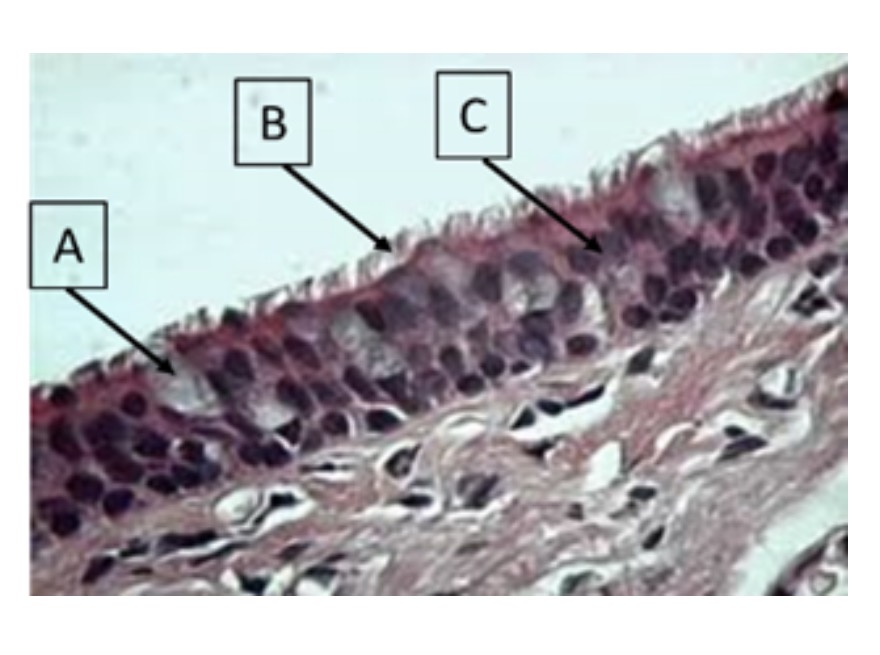
name structure b
cilia
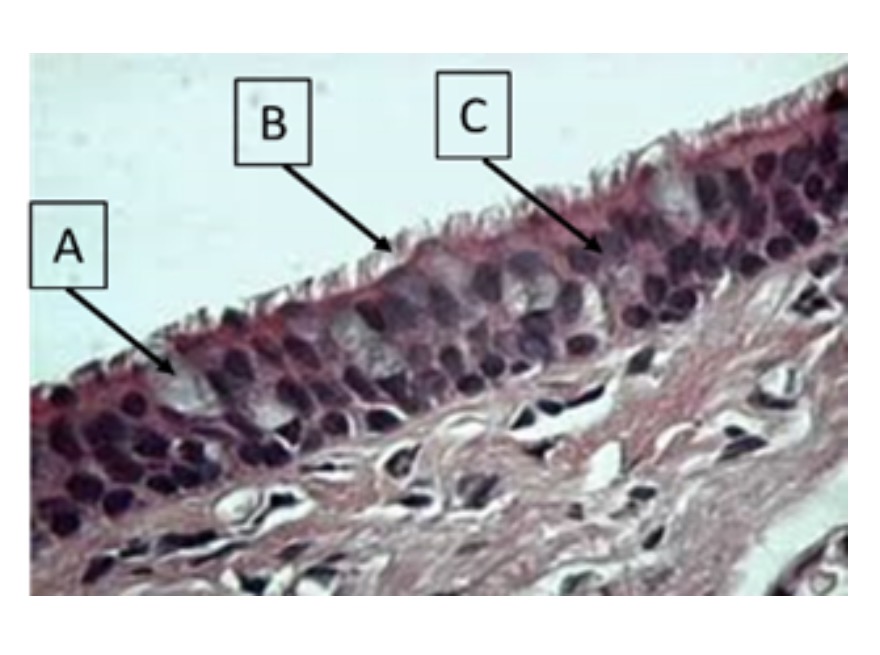
name structure c
nucleus
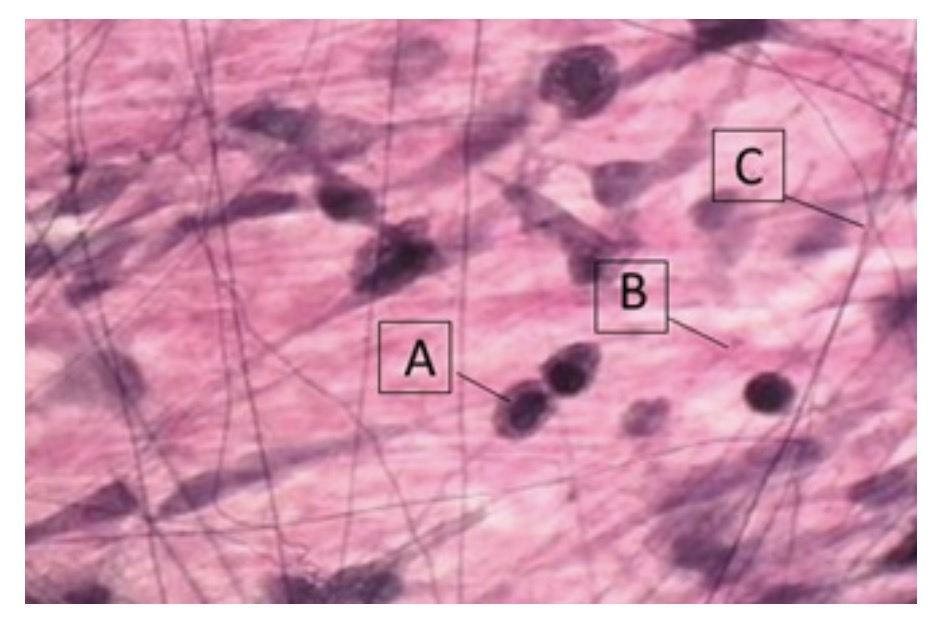
identify this connective tissue
loose connective tissue
name cell A
fibroblast
name structure B
collagen
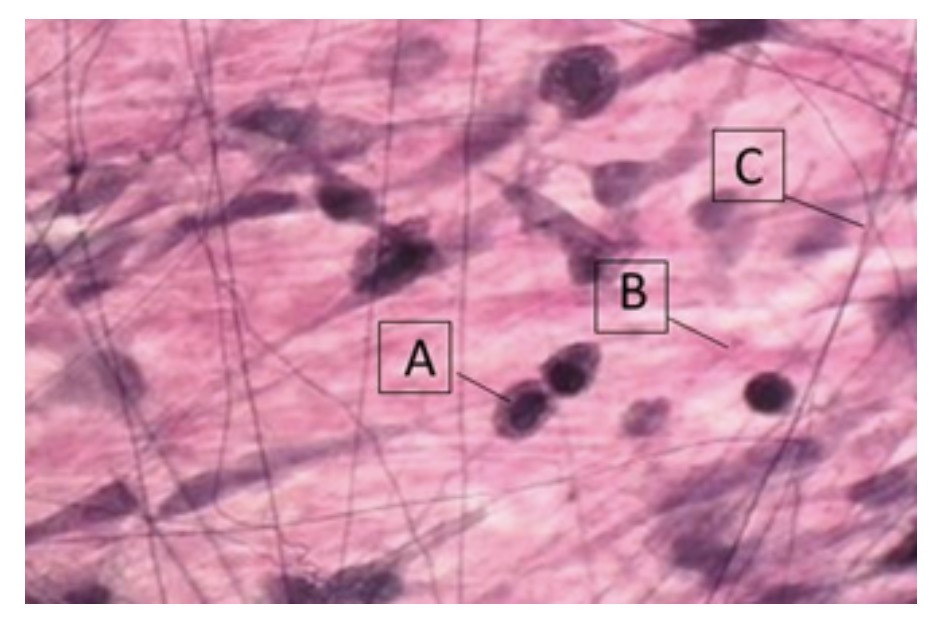
name structure C
elastic
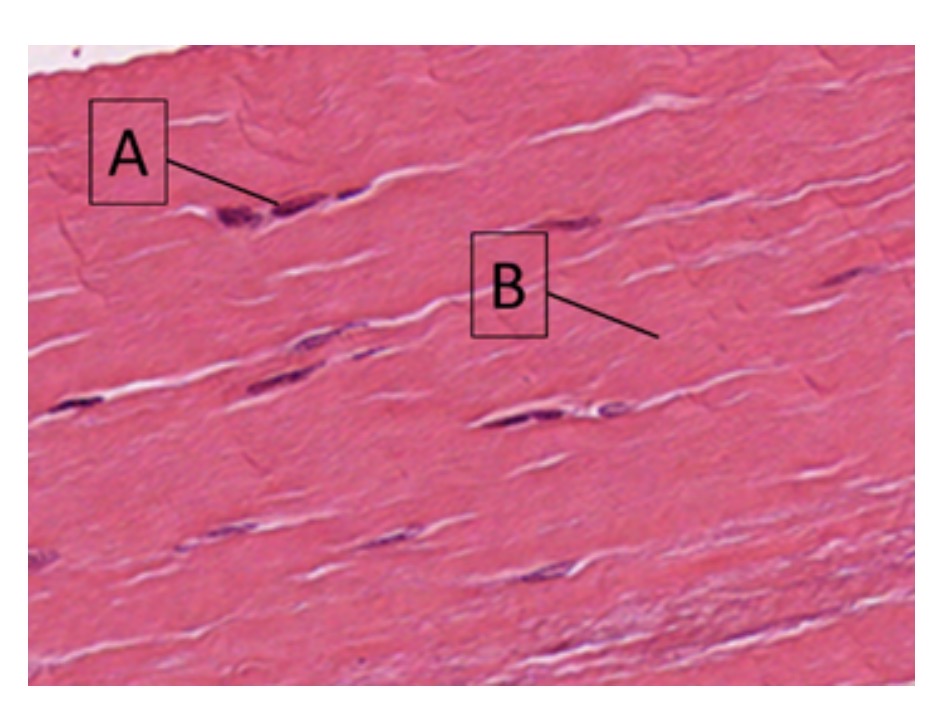
Identify this connective tissue.
dense
name cell A
fibroblasts
name structure B
collagen
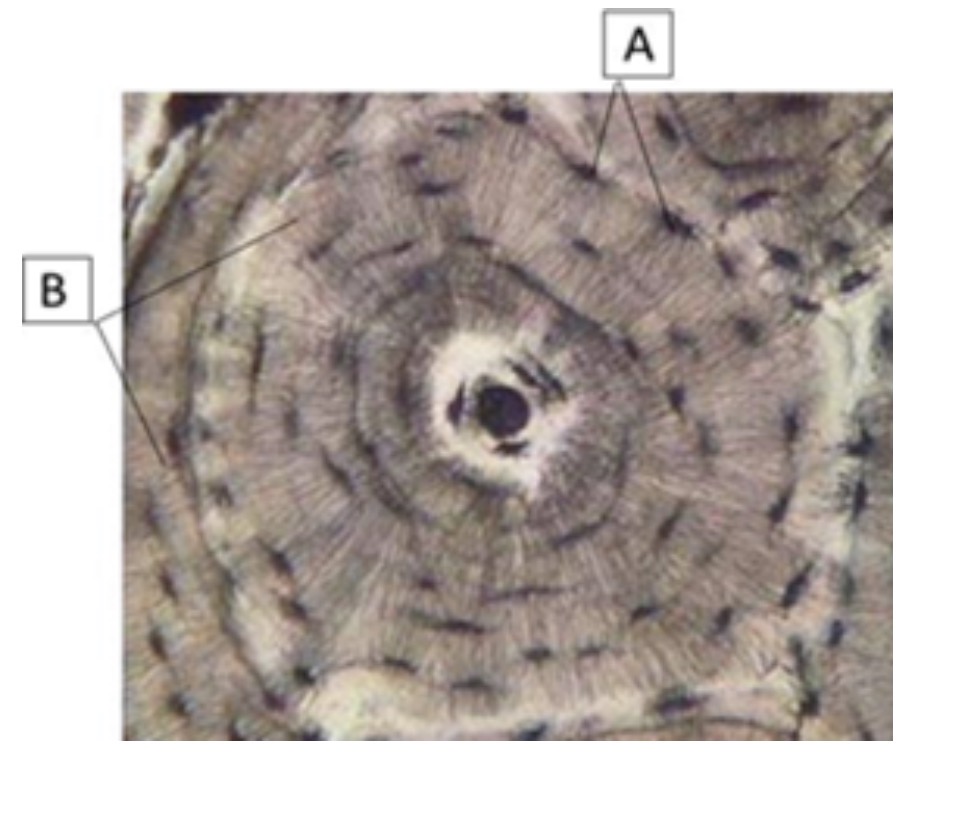
Identify this connective tissue.
bone
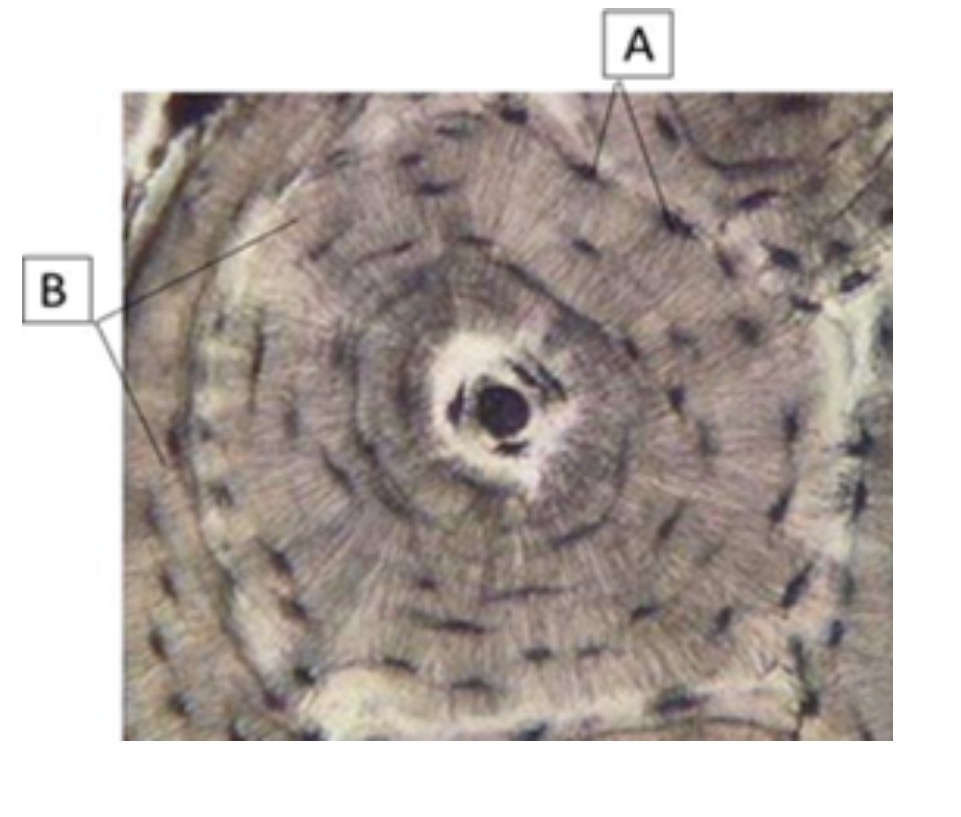
name cell a
osteocyte
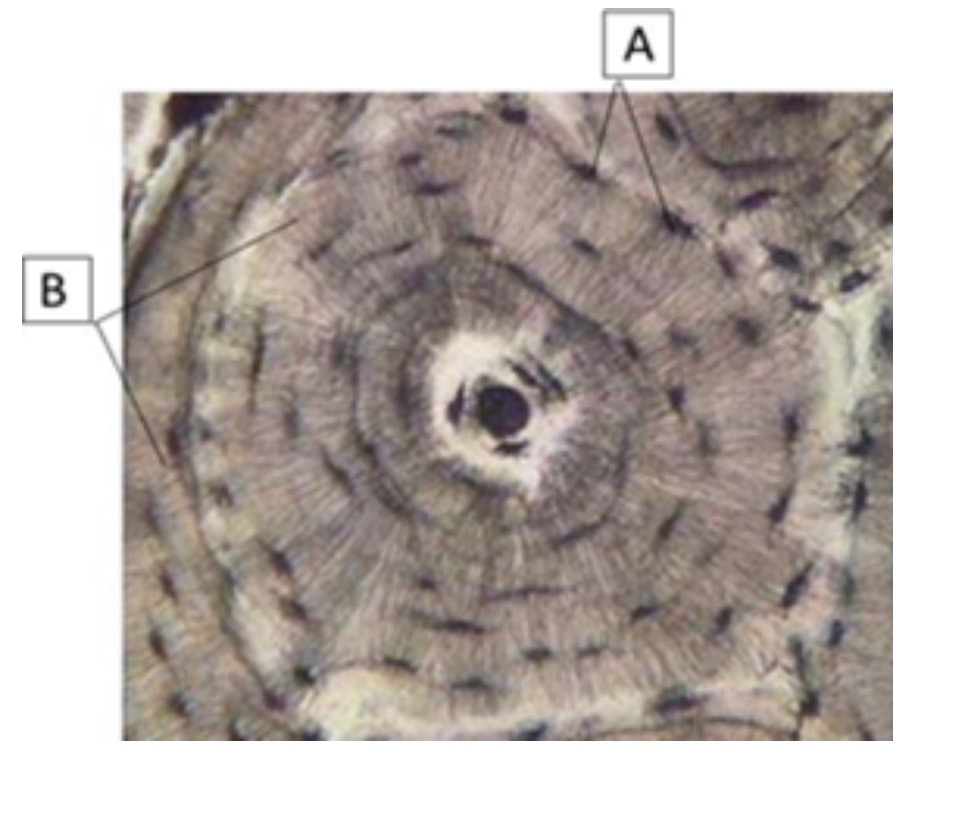
name structure b
canaliculi
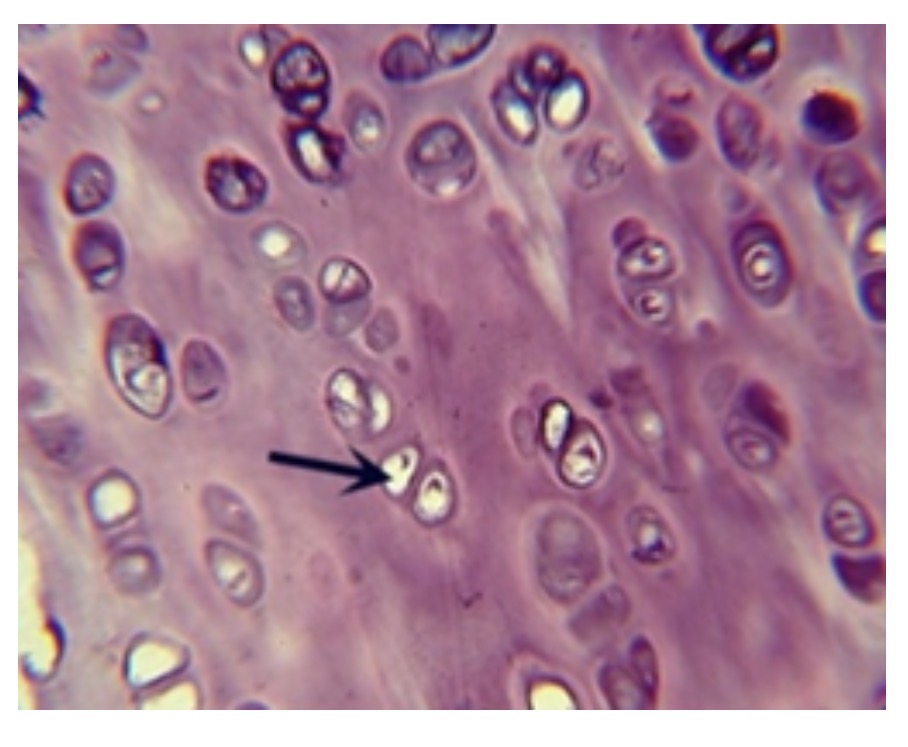
Identify this connective tissue.
cartilage
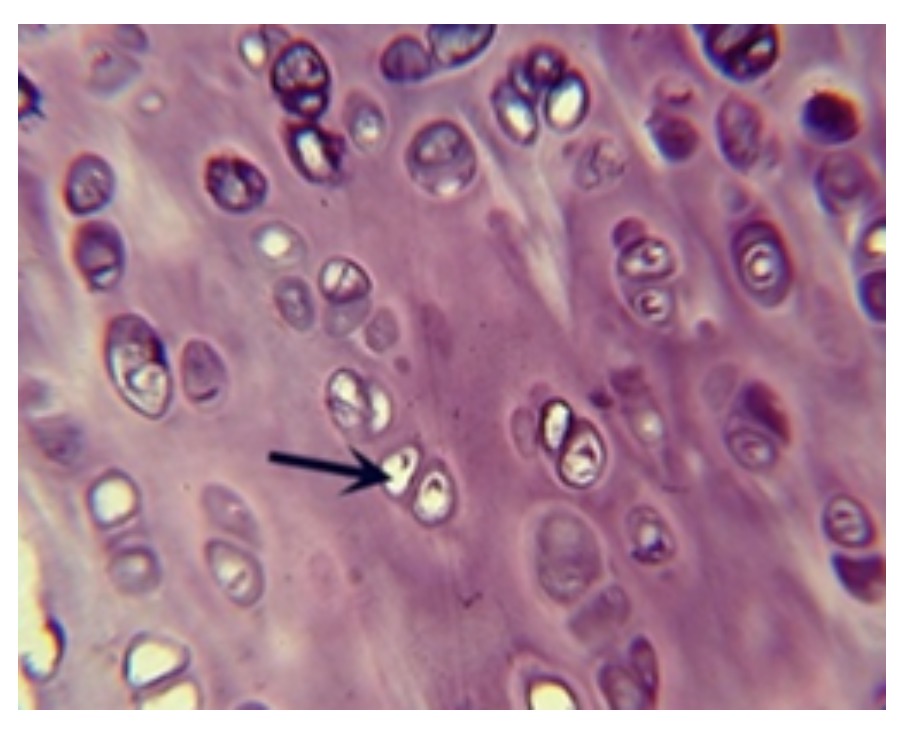
name the cavity at the arrow tip
lacuna
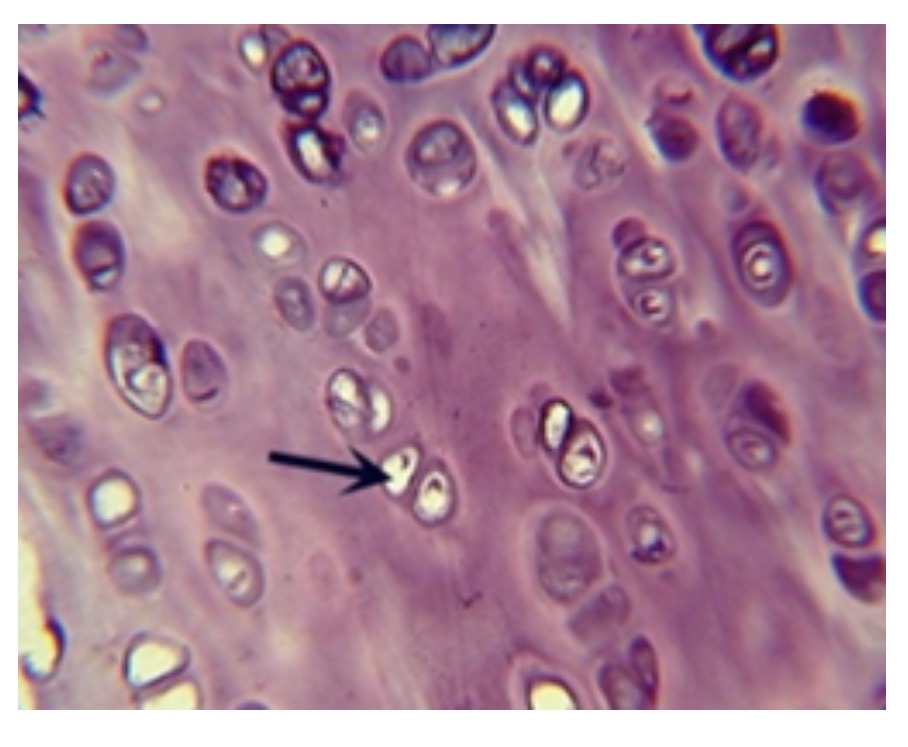
name the cell in the cavity
chondrocytes
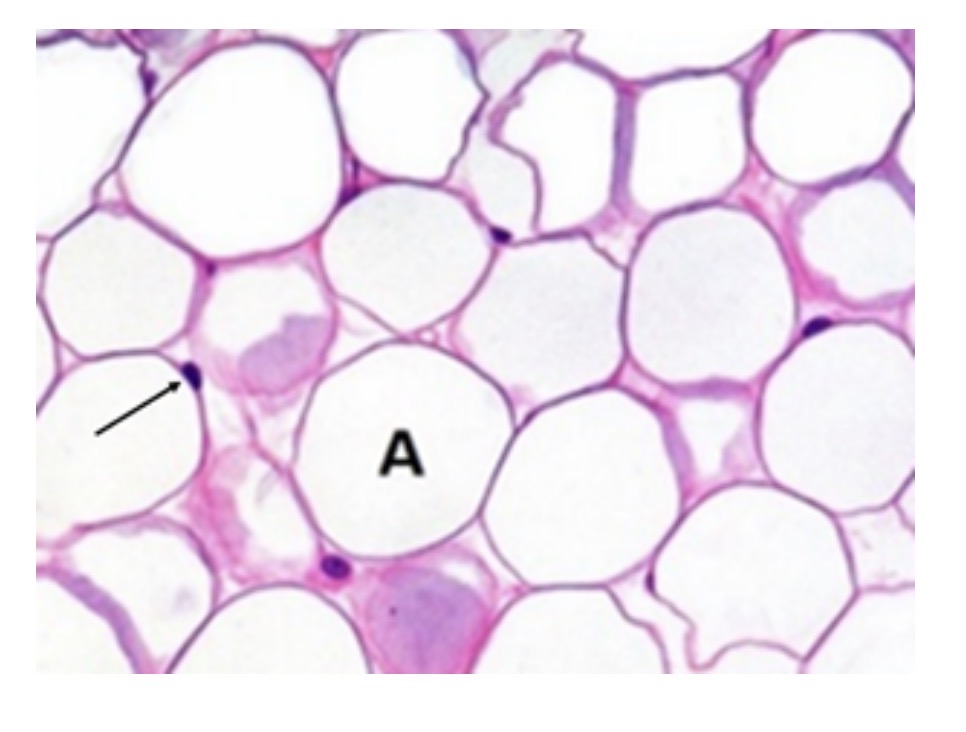
identify this connective tissue
adipose
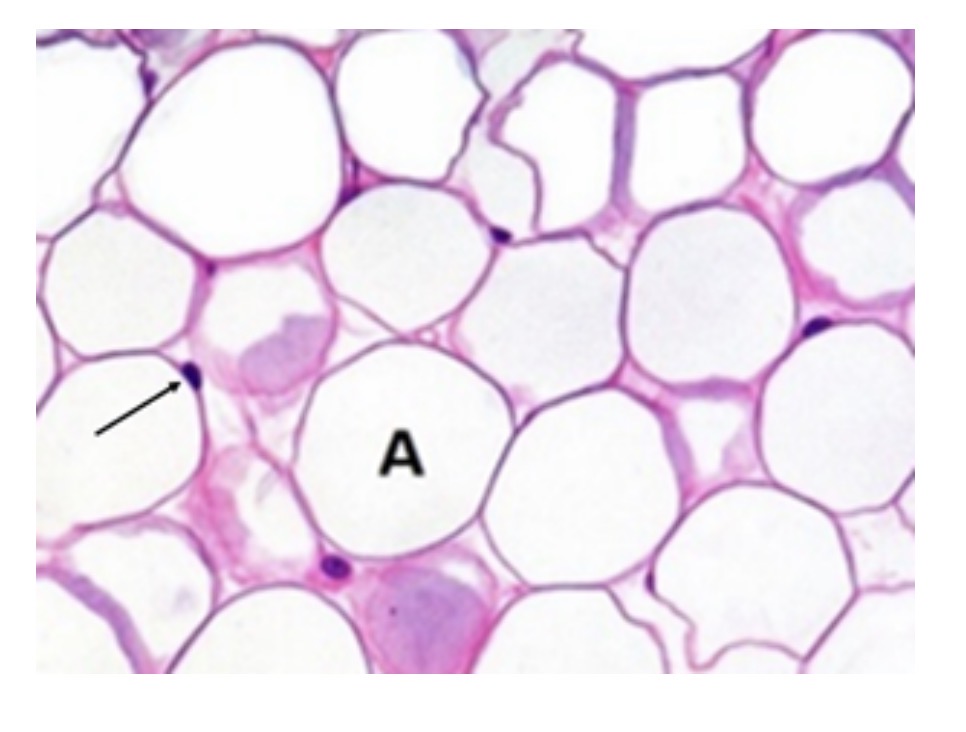
Name the macromolecule A that fills up the cytoplasm of each cell and gives the cell a white appearance.
triglyceride
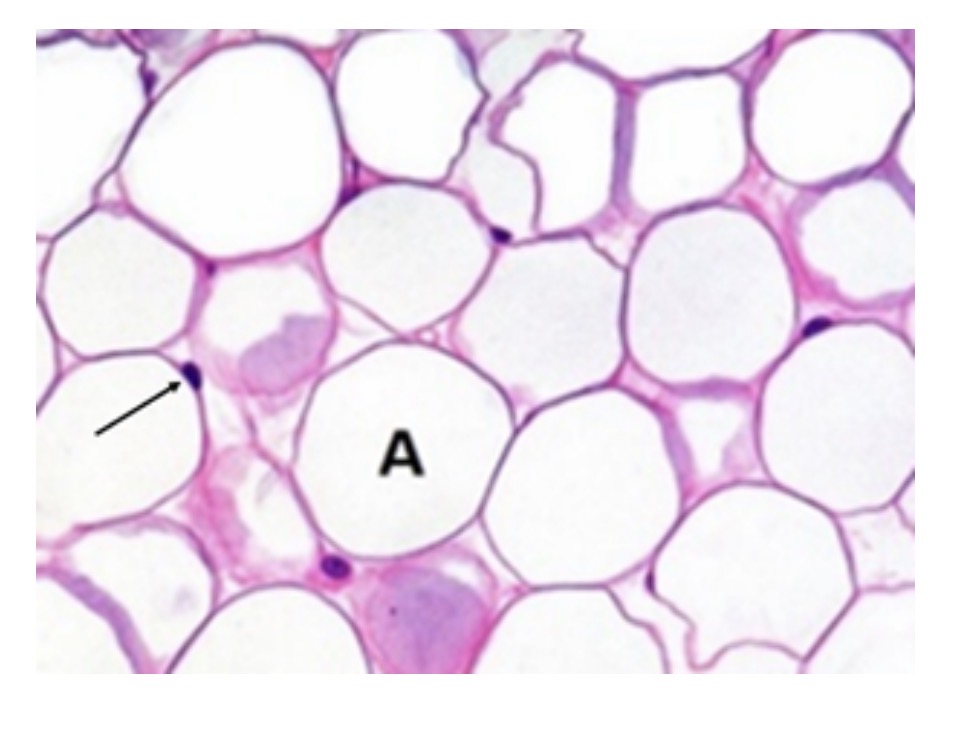
Name the dark structure (arrow tip) located at the periphery of each cell.
nucleus
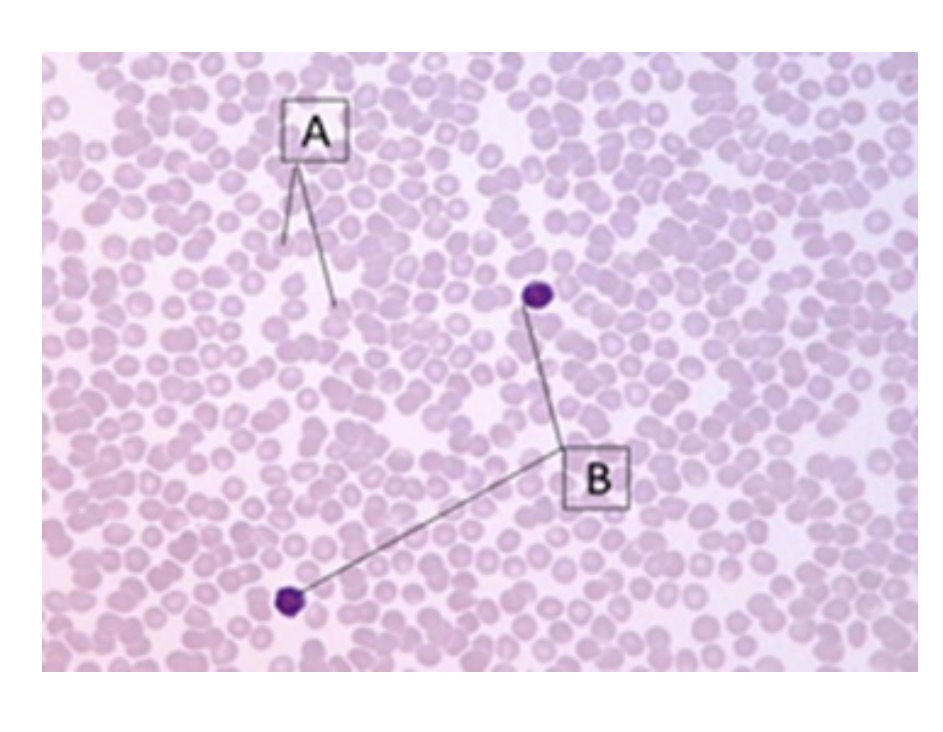
identify this connective tissue
blood
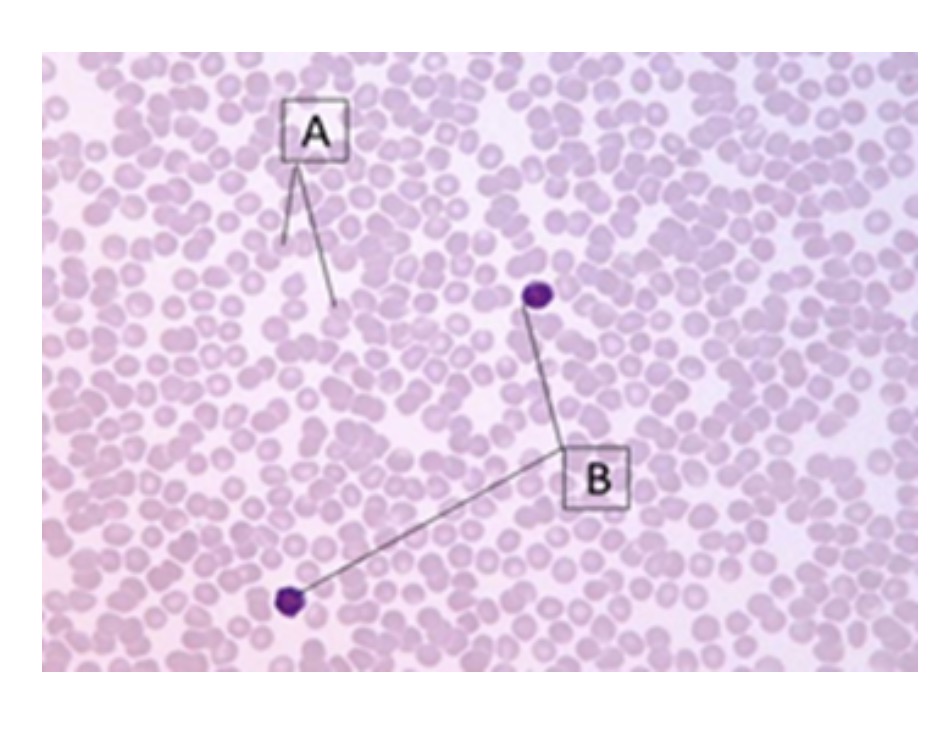
name cell a
red blood cell
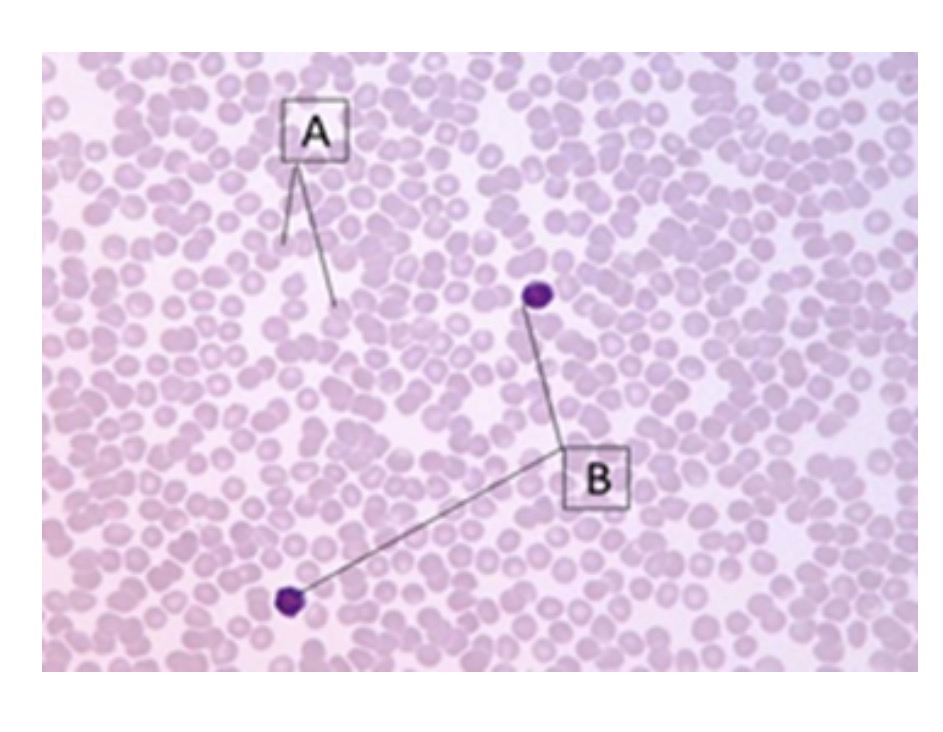
name cell b
white blood cell
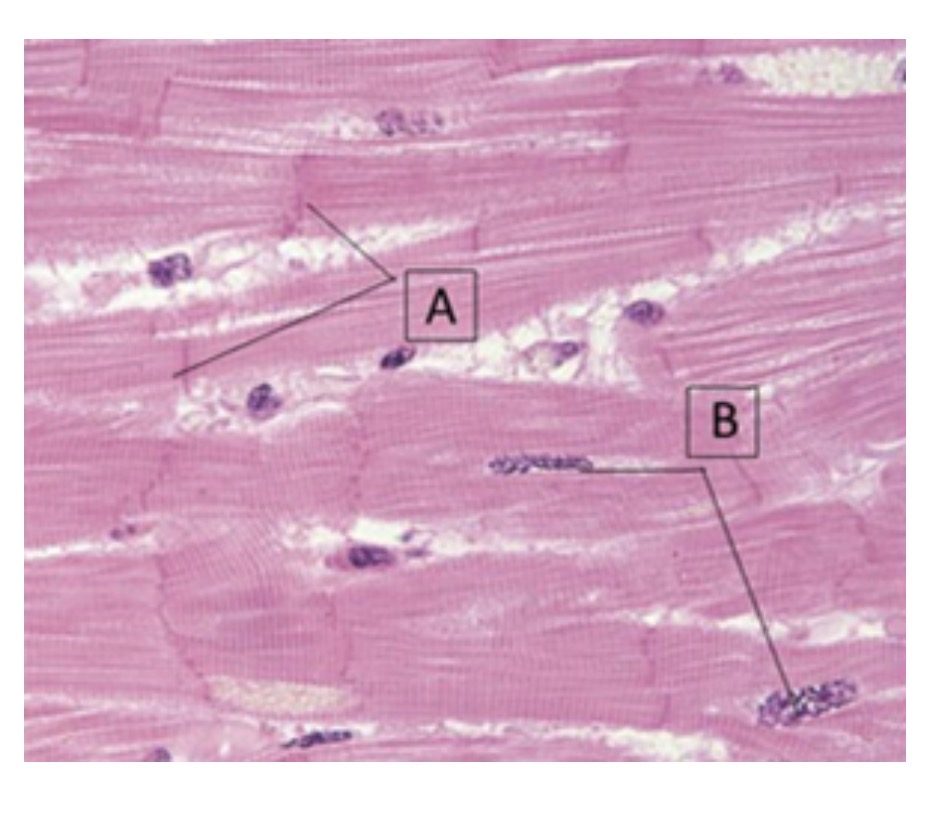
identify this muscle tissue
cardiac
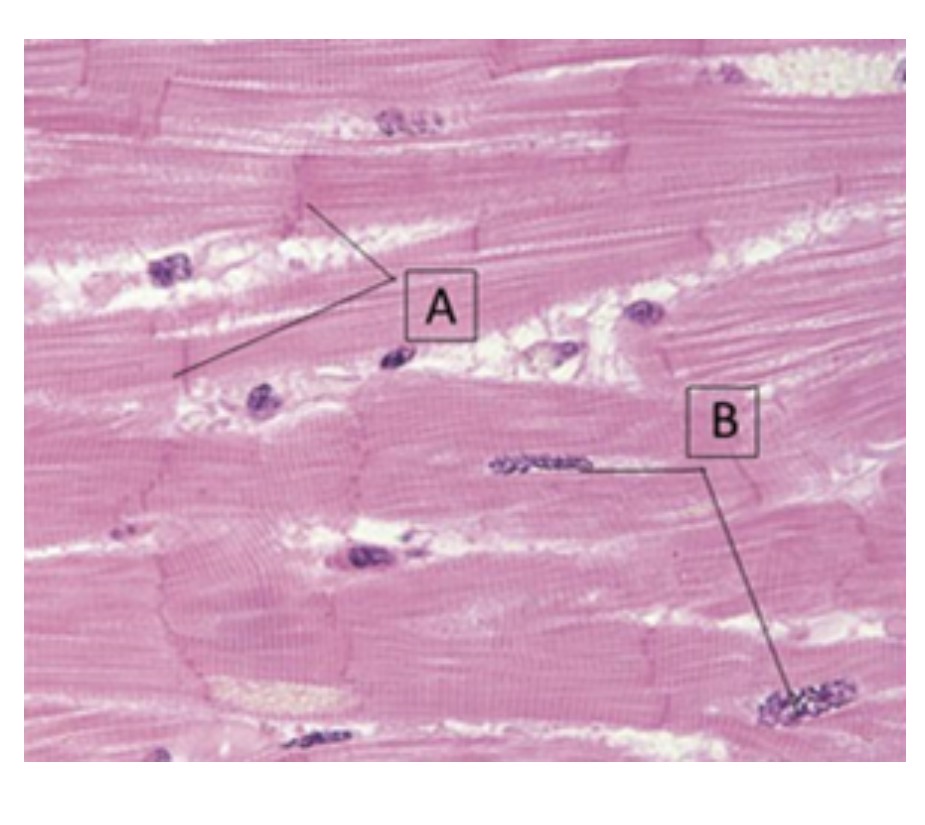
Name the labeled structures.
structure A
intercalated disc
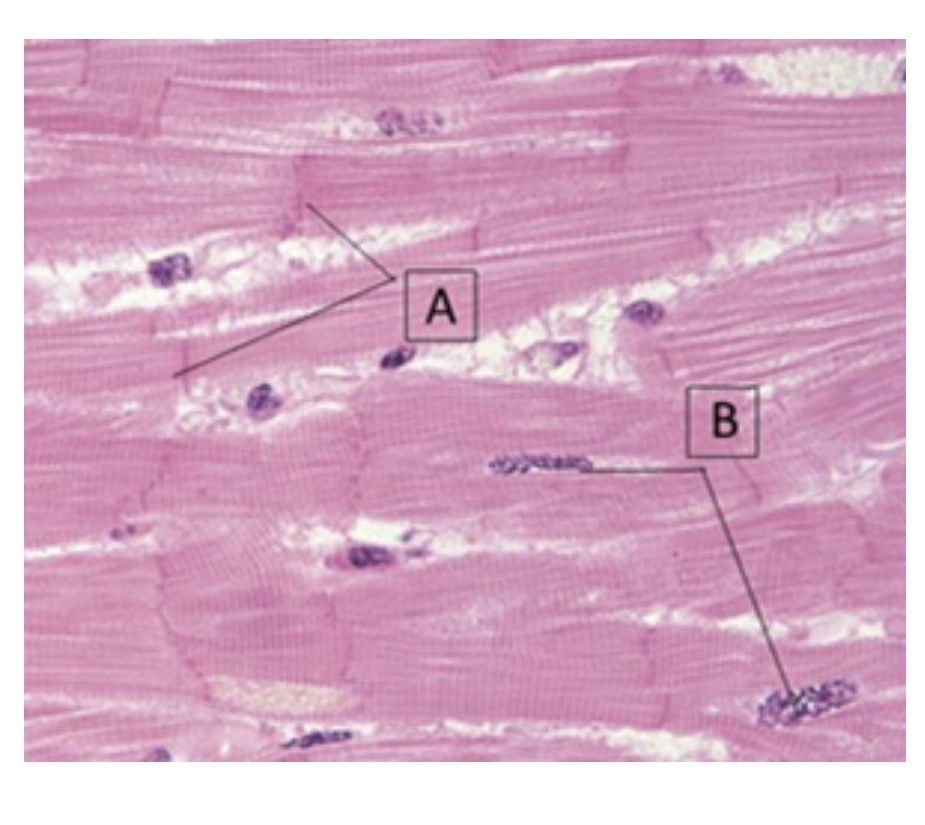
name structure B
nucleus
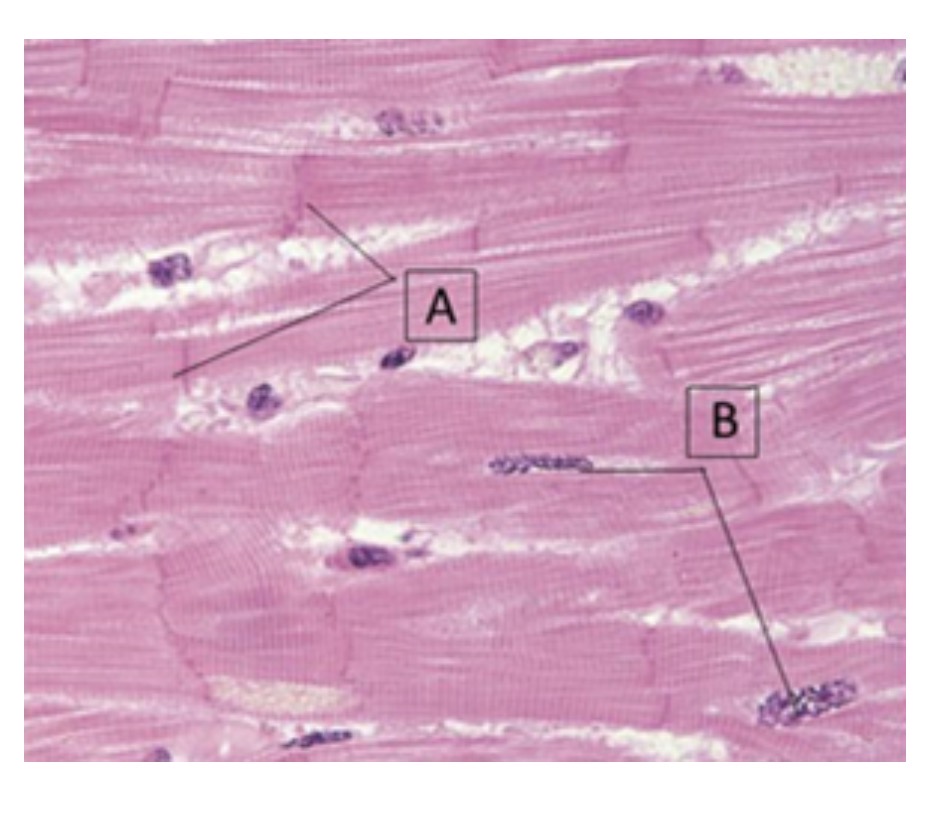
Is this muscle tissue voluntary or involuntary?
involuntary
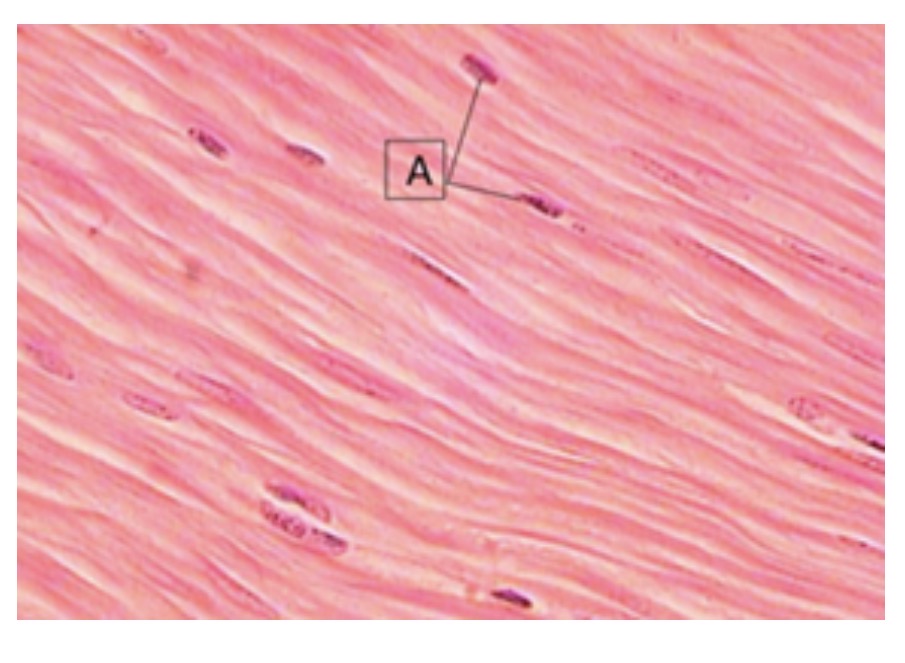
identify this muscle tissue
smooth
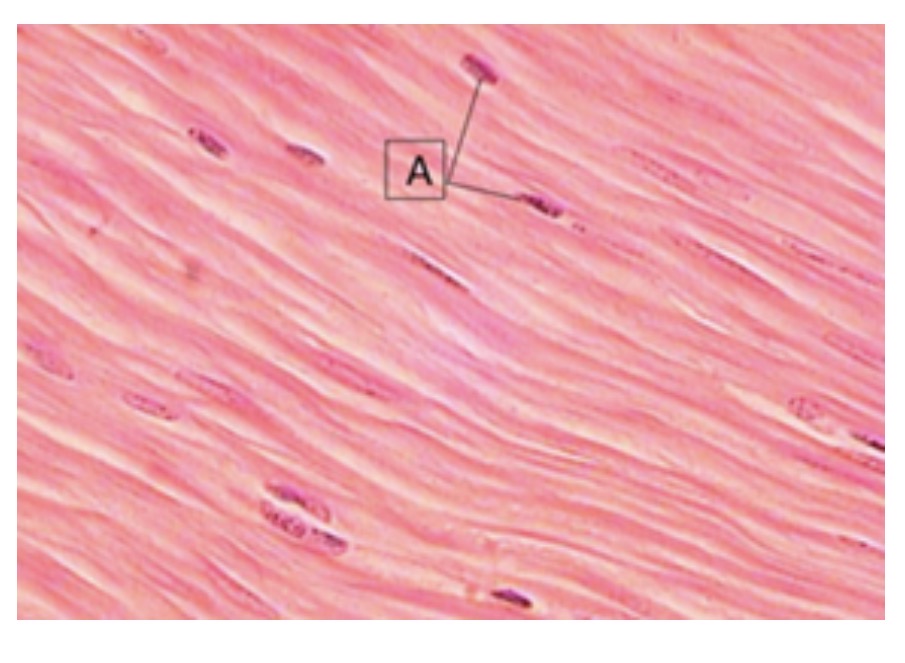
name structure a
nucleus
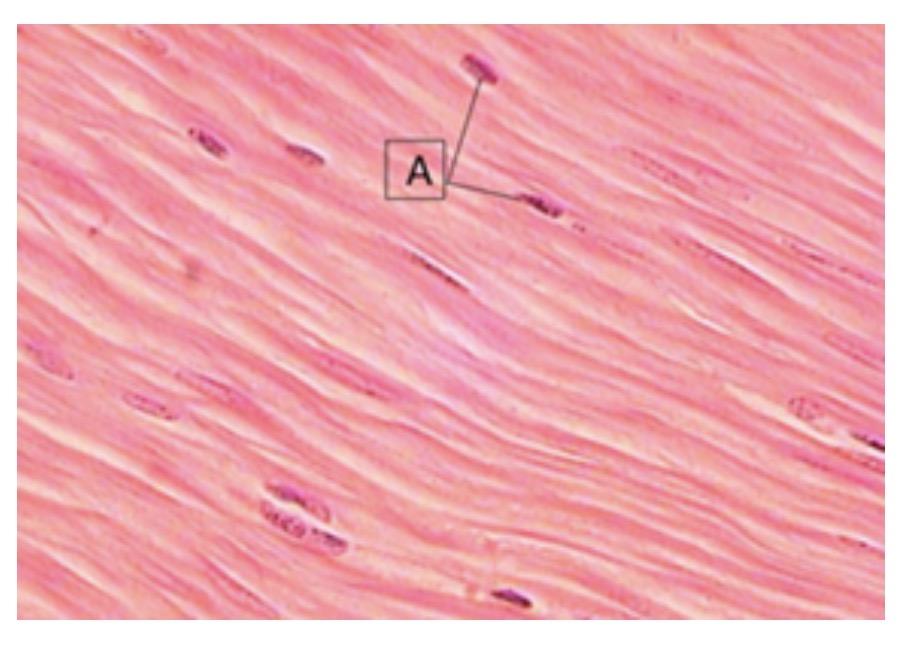
Is this muscle tissue voluntary or involuntary?
involuntary
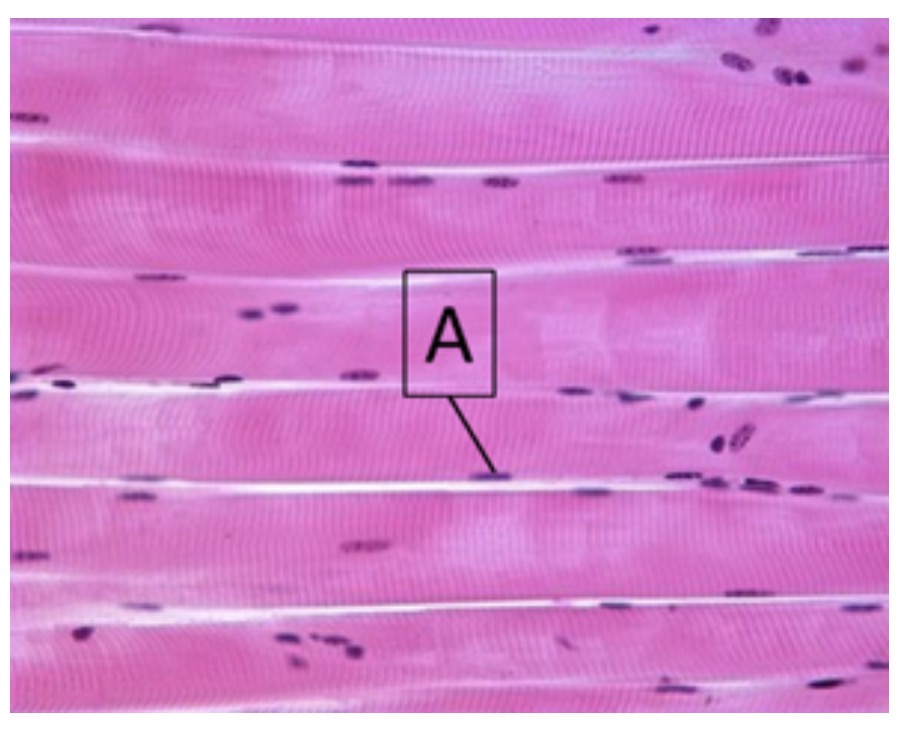
identify this muscle tissue
skeletal
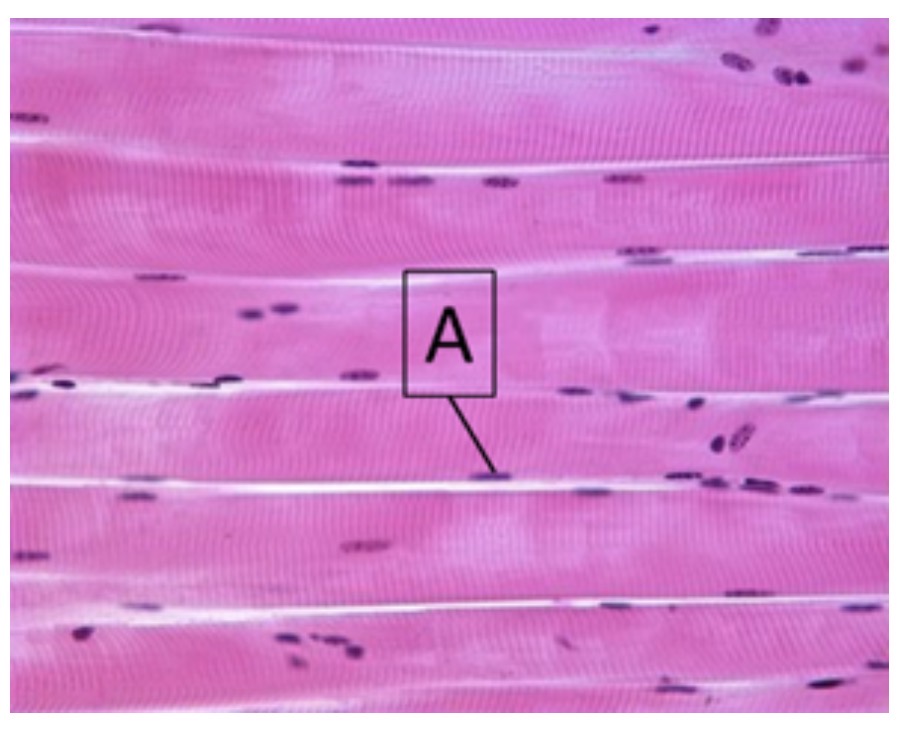
name structure a
nucleus
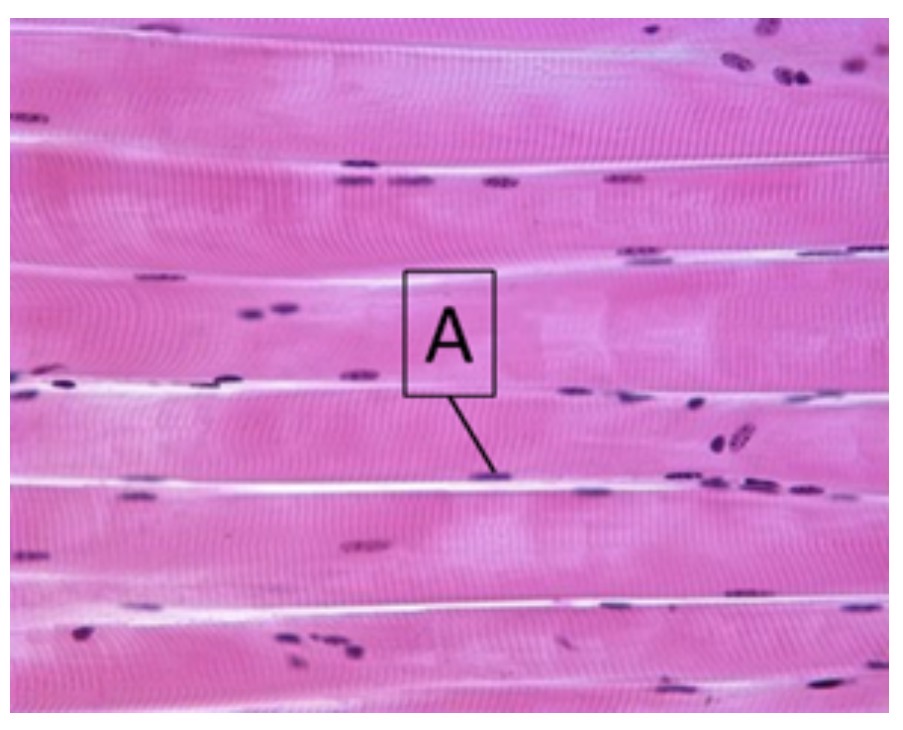
Is this muscle tissue voluntary or involuntary?
voluntary
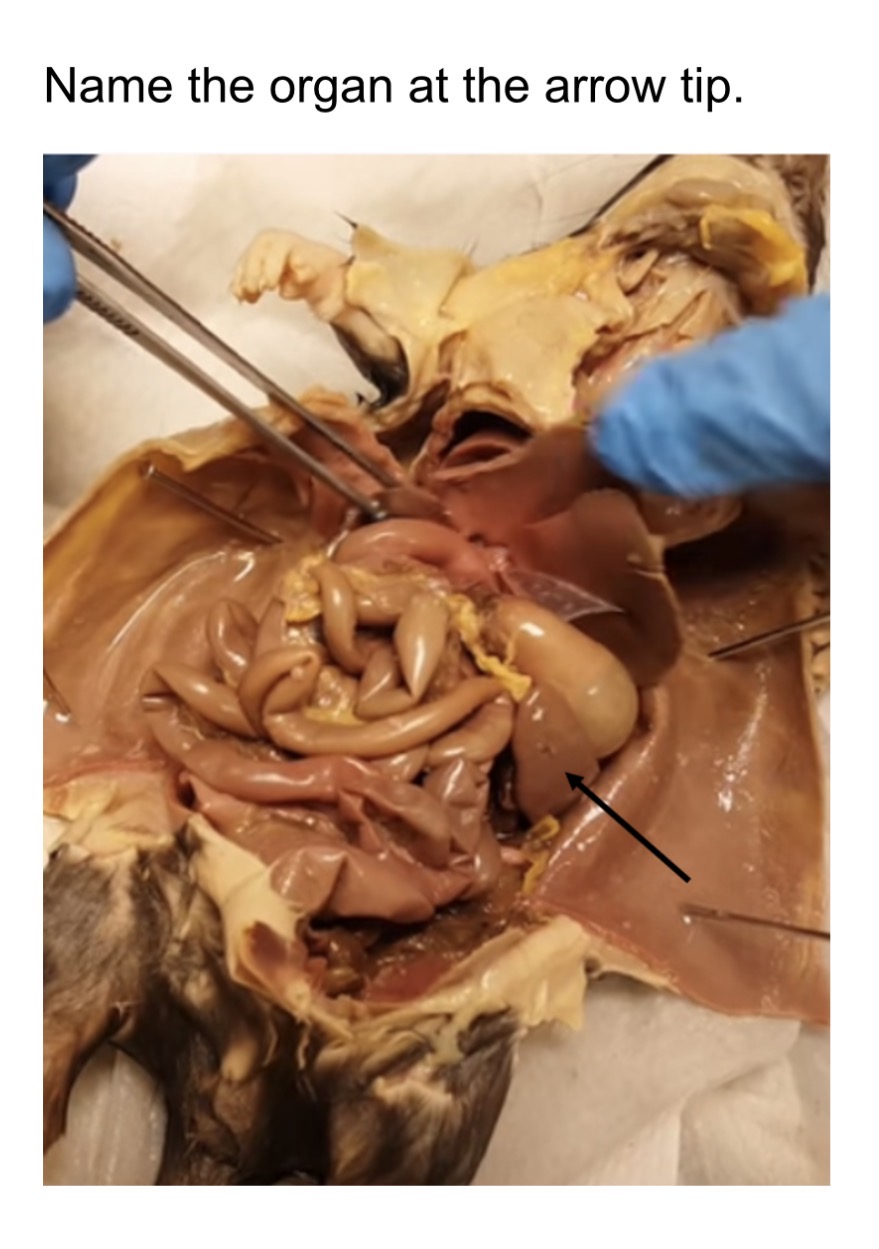
name the organ at the arrow tip
spleen
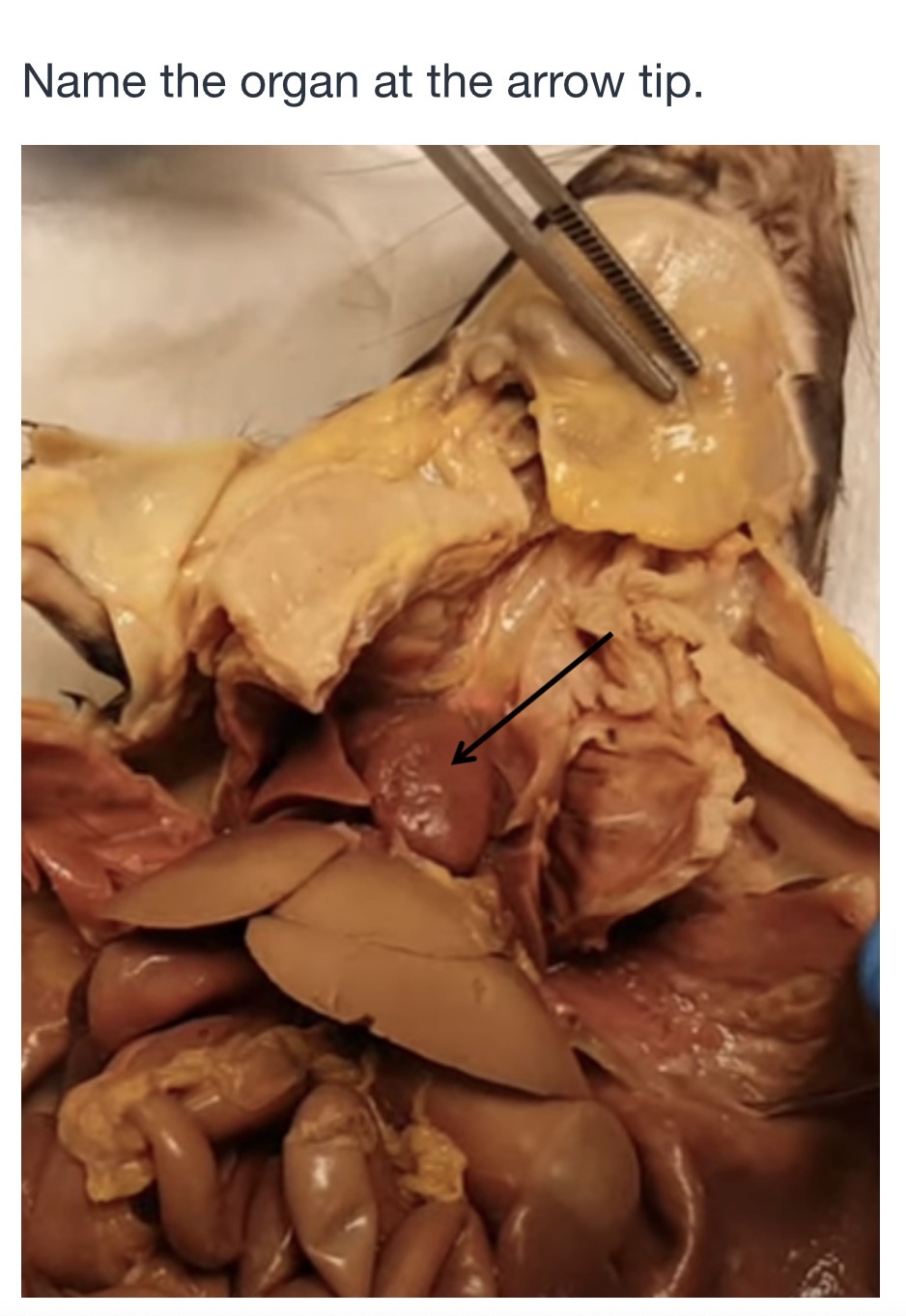
name the organ at the arrow tip
heart
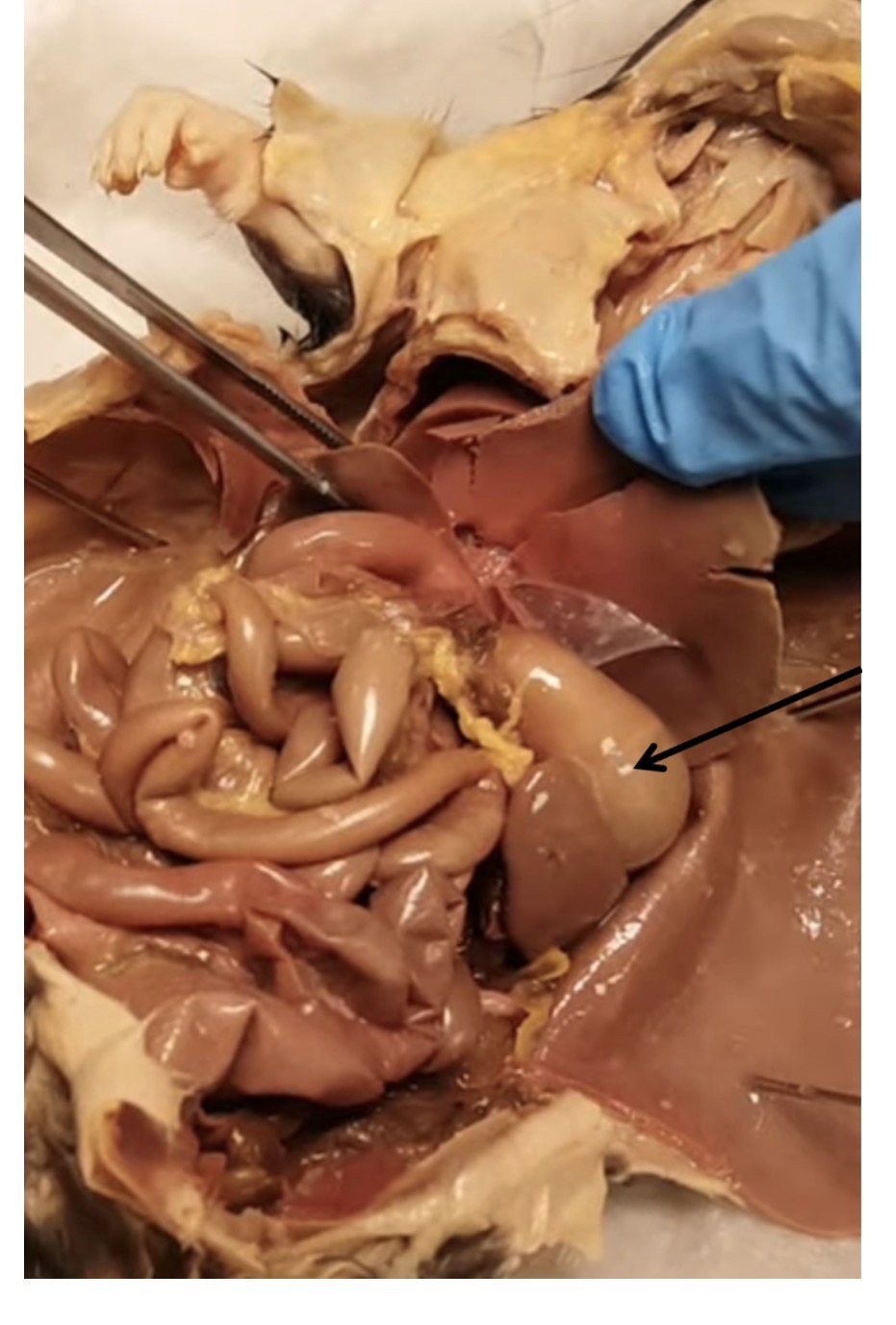
name the organ at the arrow tip
stomach
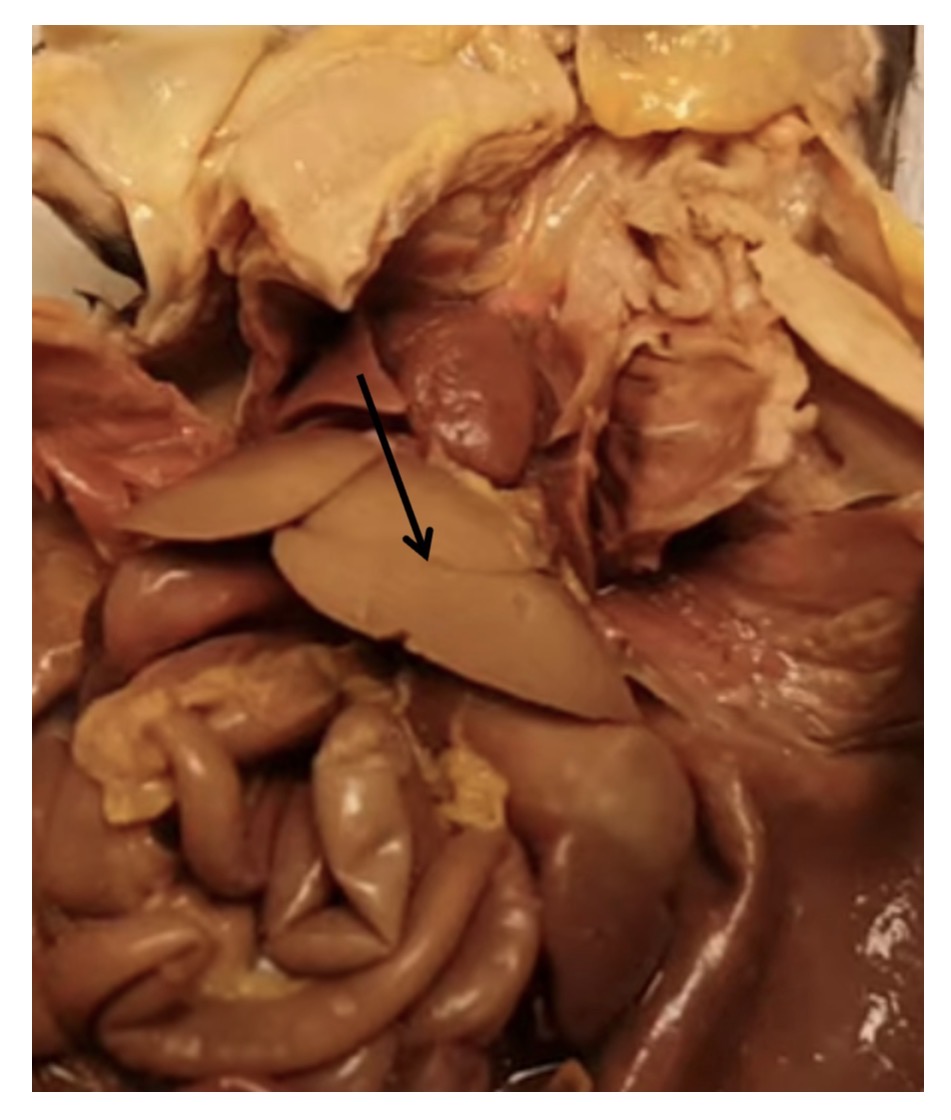
name the organ at the arrow tip
liver
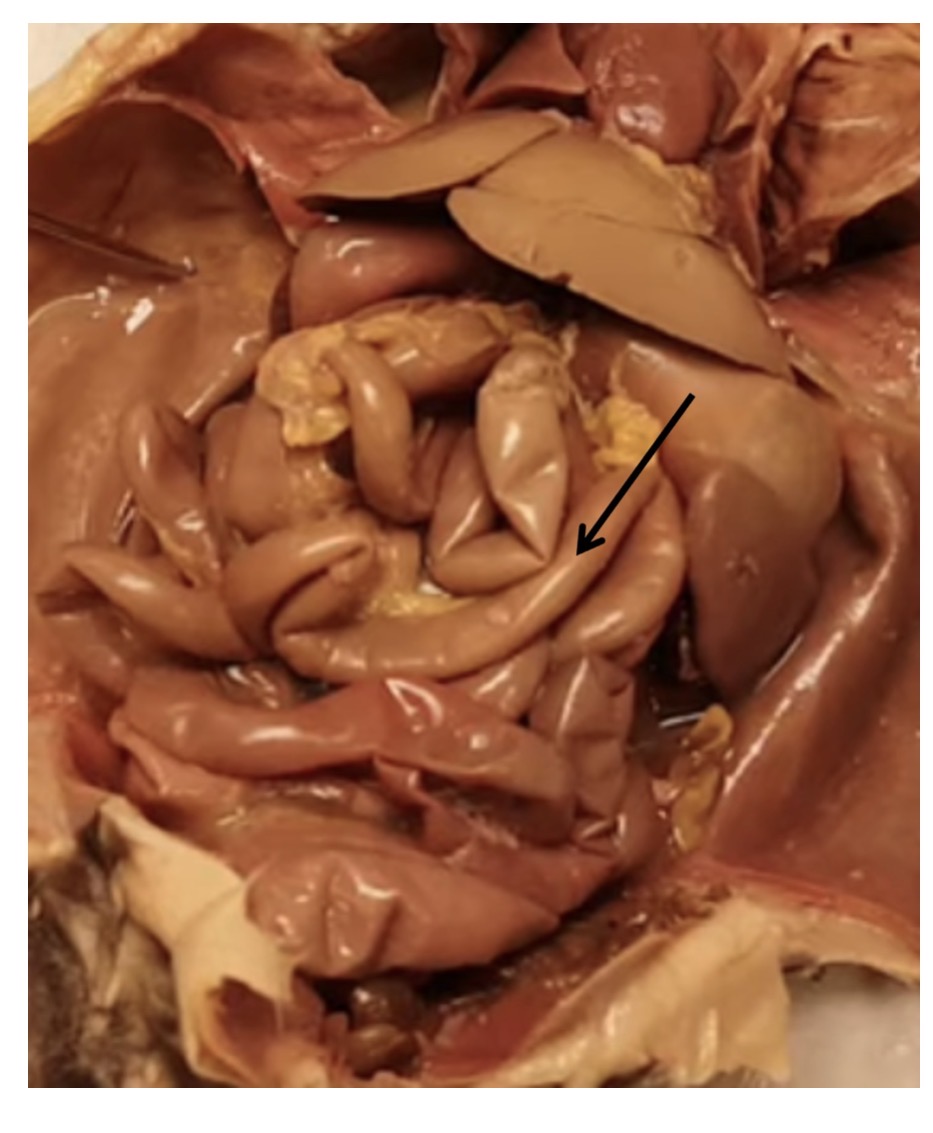
name the organ at the arrow
tip
small intestine
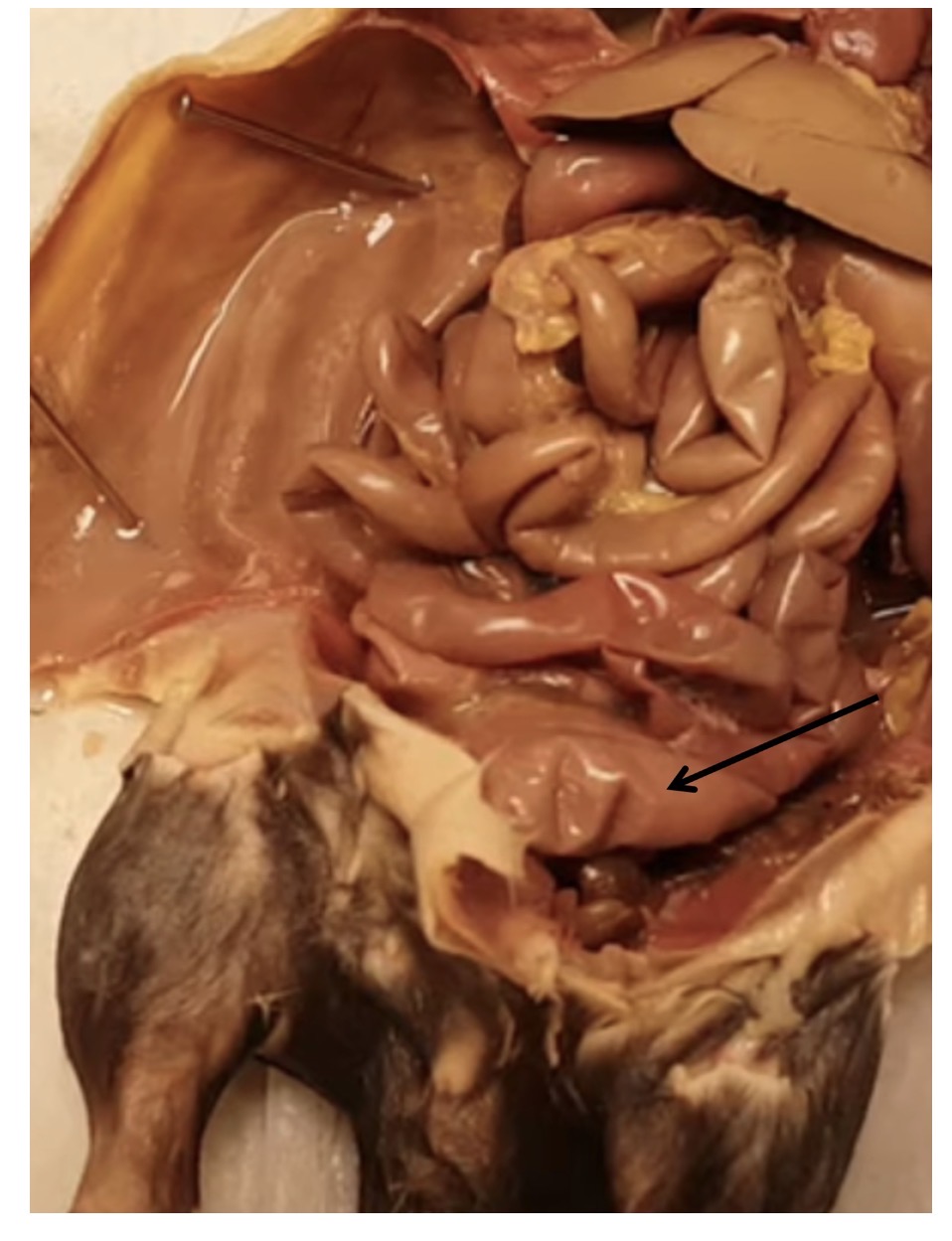
name the organ at the arrow tip
cecum
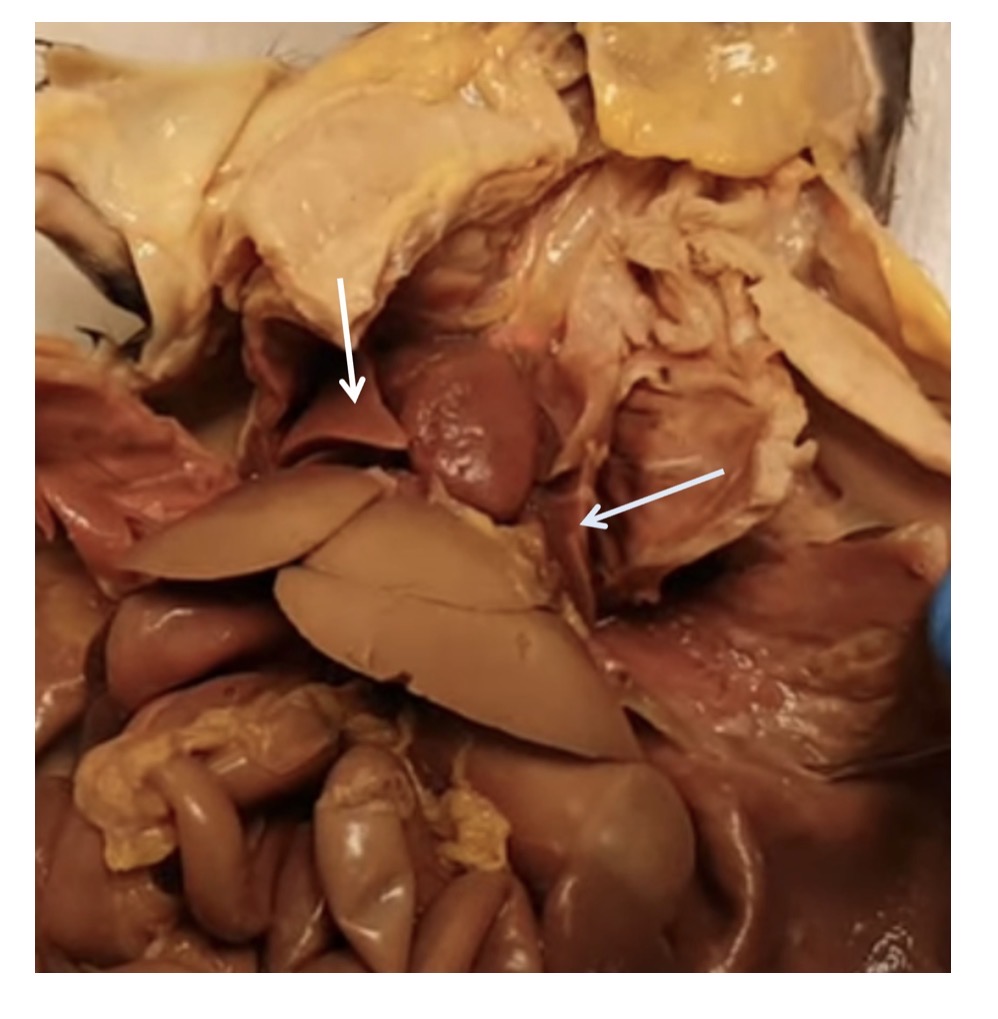
name the organ at the pointer tip
lungs
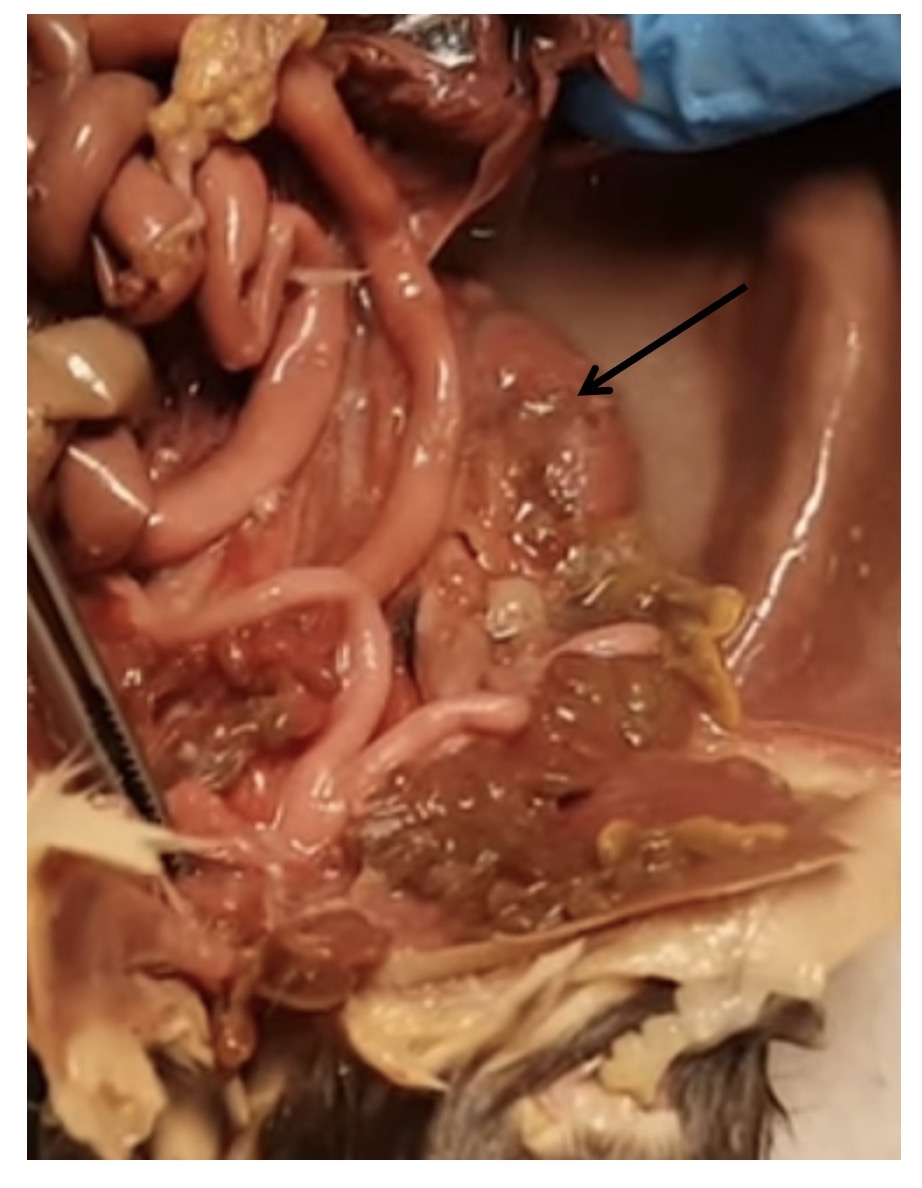
name the organ at the pointer
kidney
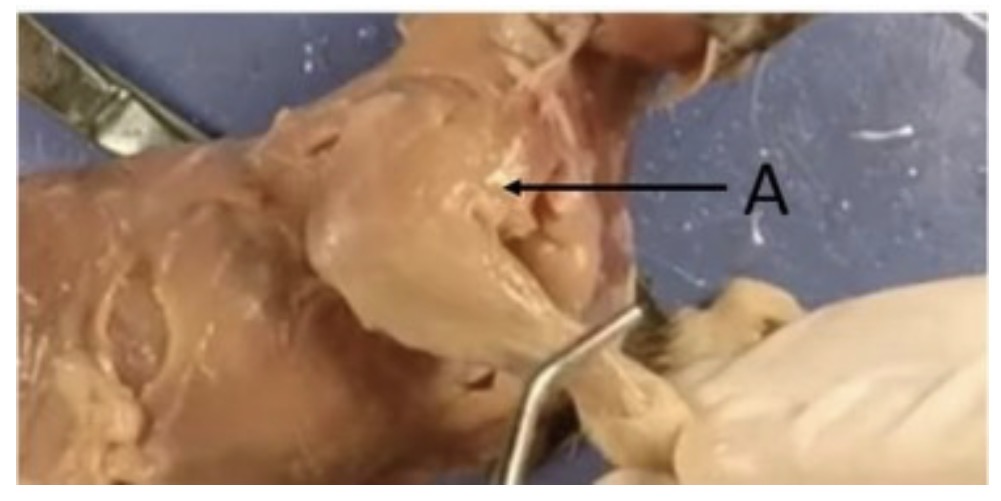
name the muscle at the pointer tip
biceps brachii
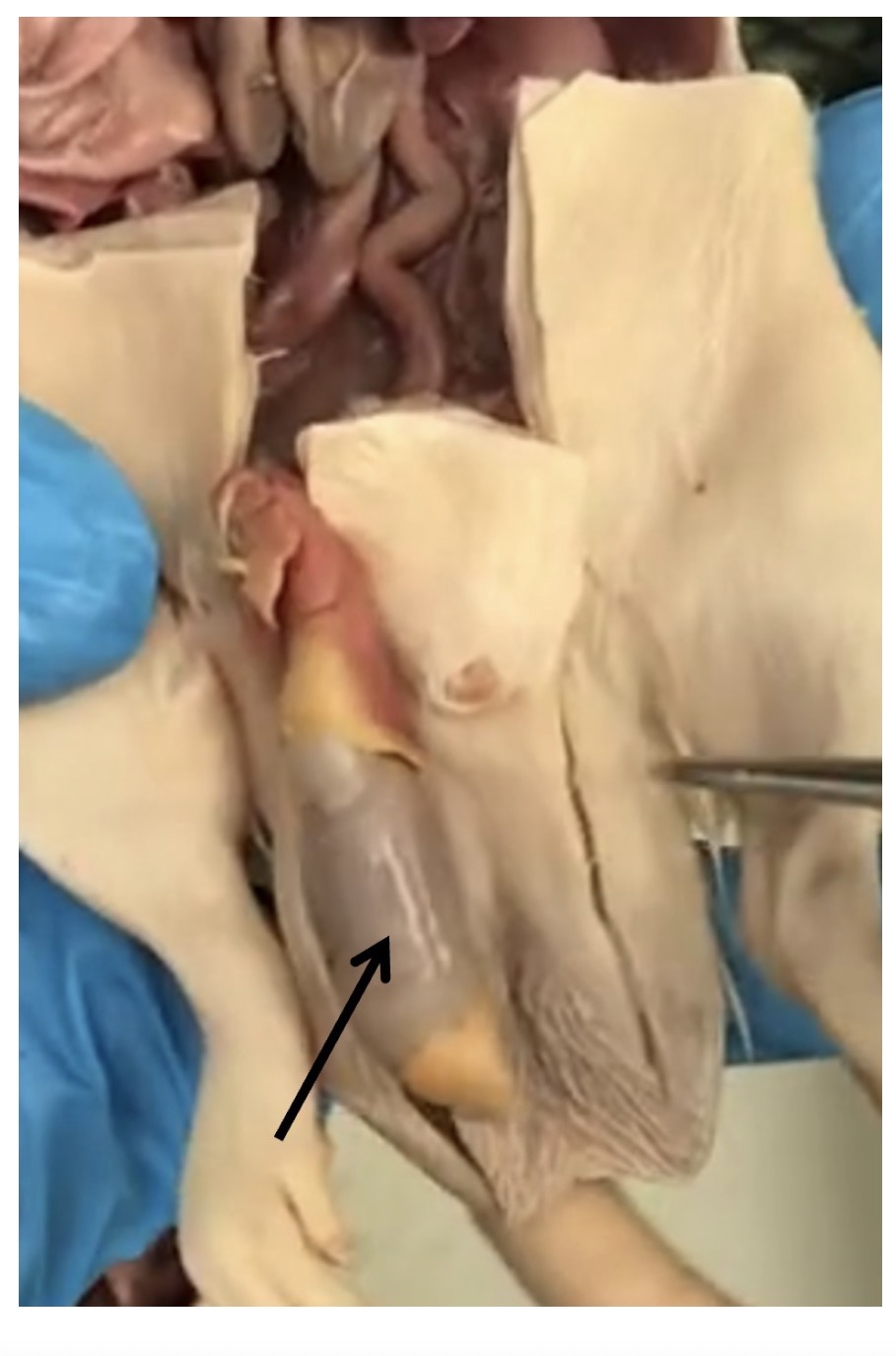
name the organ at the pointer tip
testes
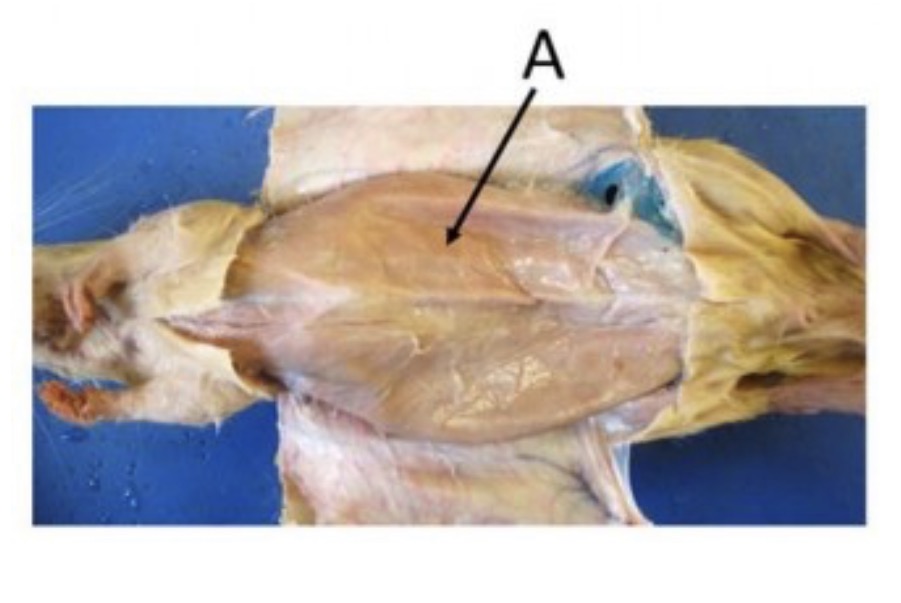
name the muscle at the pointer tip
external oblique
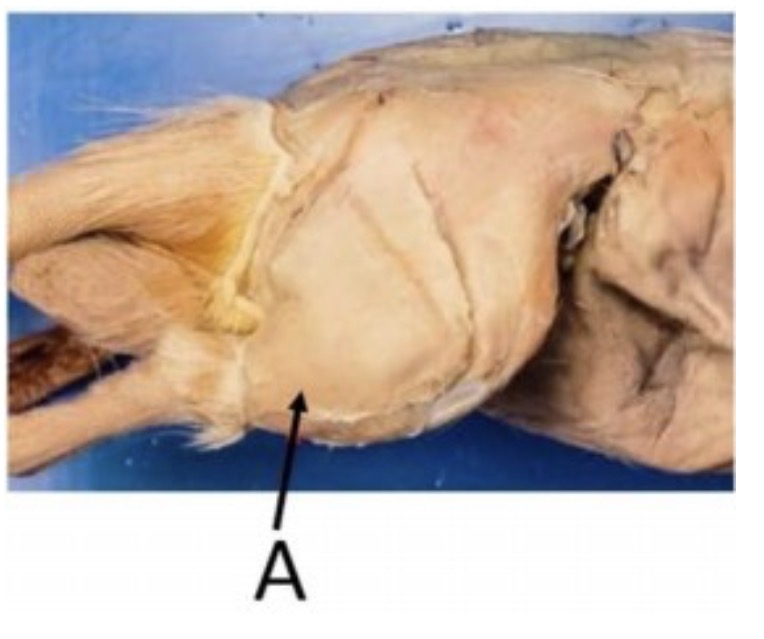
name the muscle at the arrow tip
biceps femoris
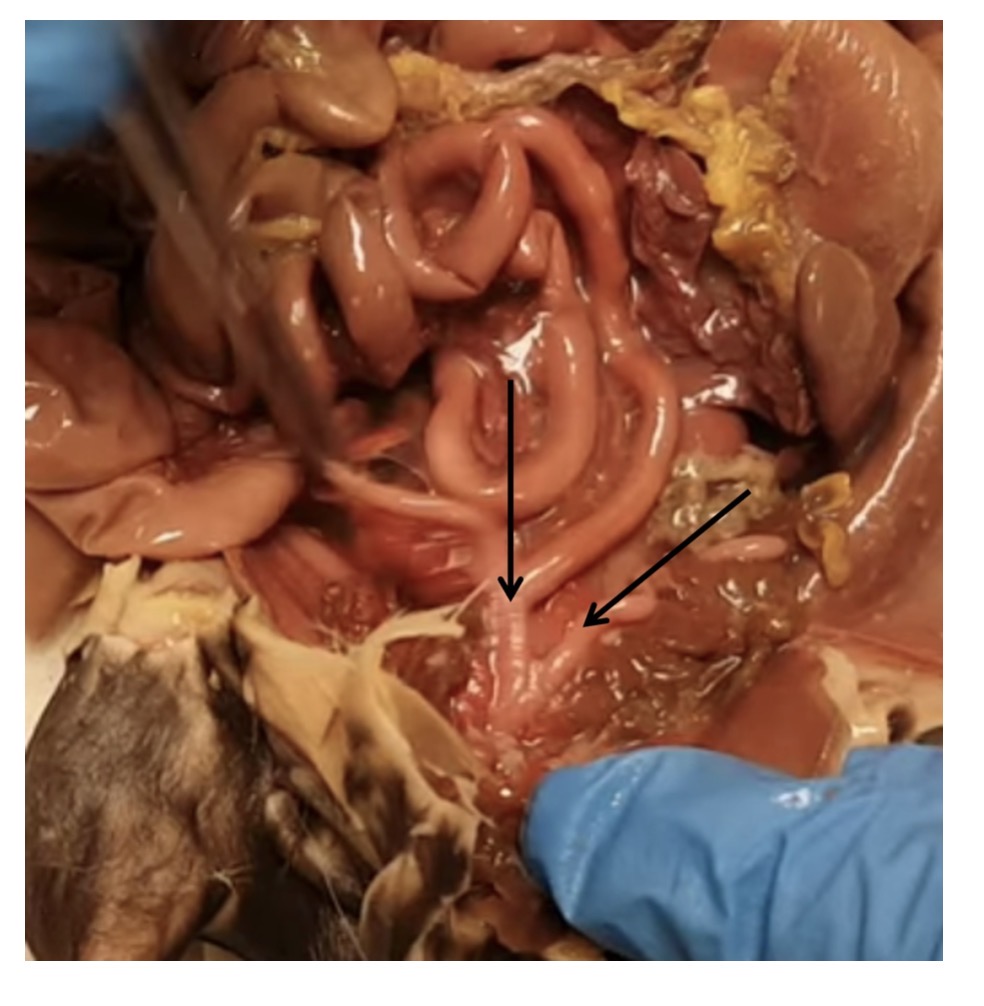
name the organ at the pointer tip
uterine horns
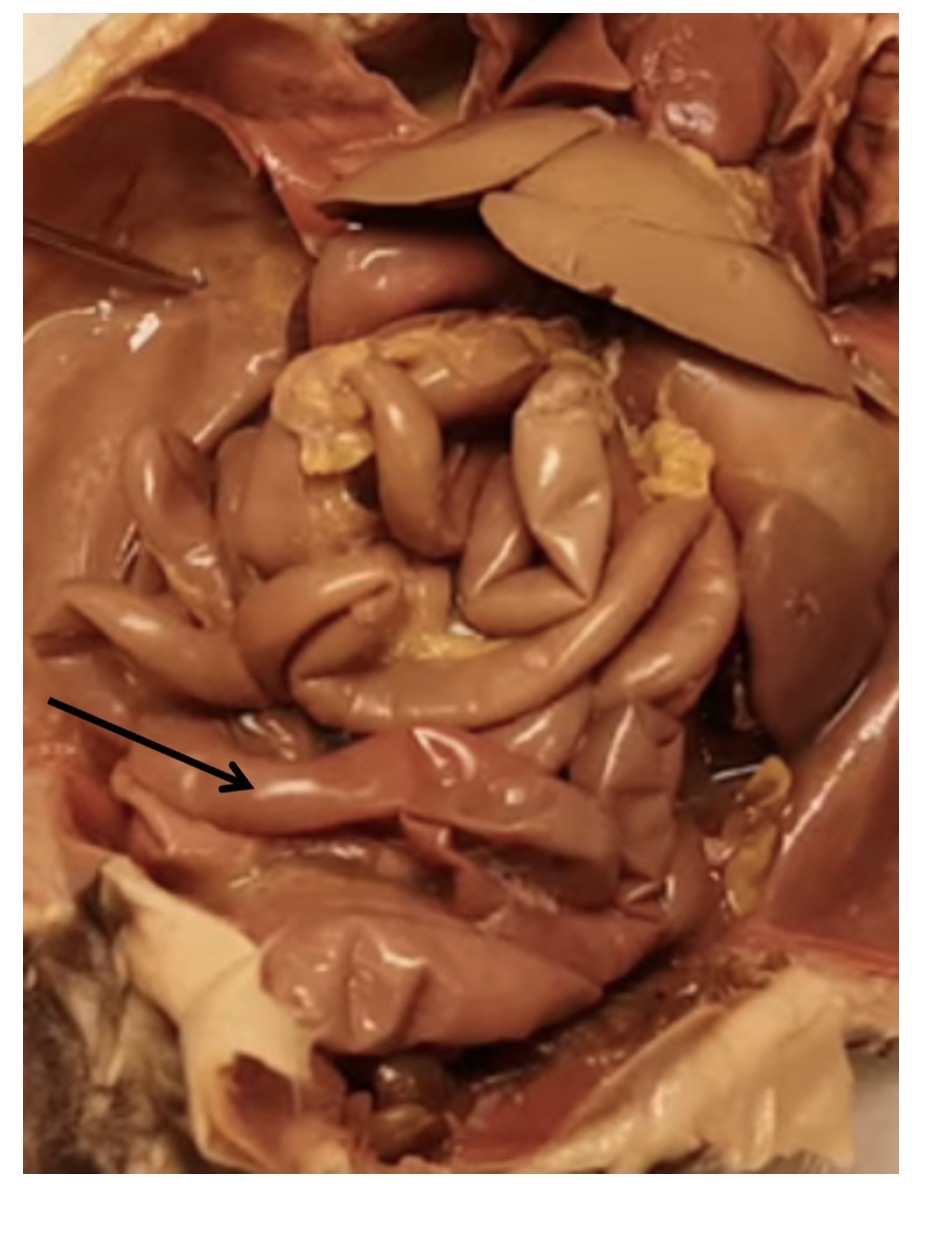
name the organ at the arrow tip
large intestines
liver
Produces bile that digests fat, stores glycogen, makes urea (main substance of urine), filters harmful substances in the blood (ex. alcohol)
liver
pancreas
Produces insulin to regulate blood glucose levels; secrete digestive juices
spleen
Forms, stores and destroys red blood cells
cecum
Contains bacteria that digest cellulose
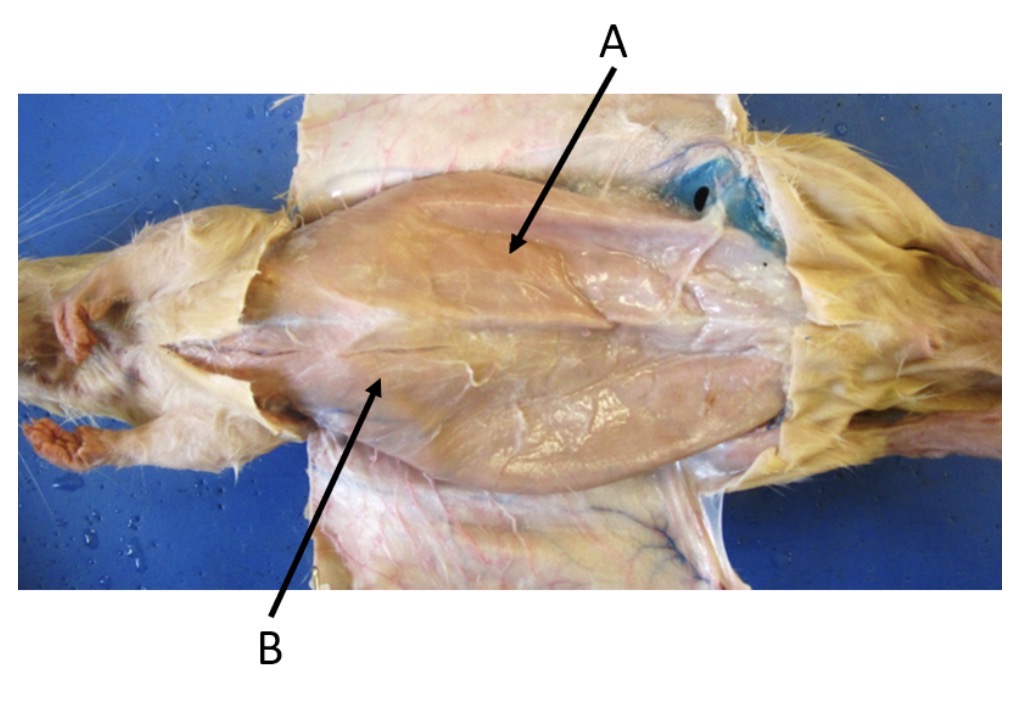
name skeletal muscle a
external oblique
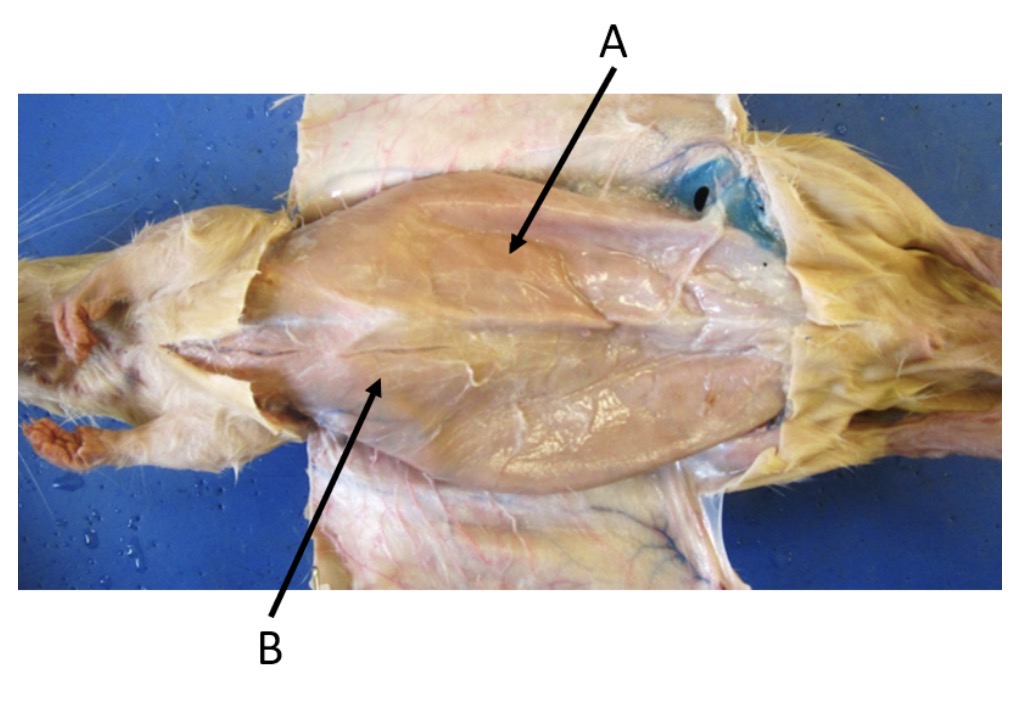
name skeletal muscle b
pectoralis major
The lungs are not muscular. What muscle helps it inhale and exhale?
diaphragm
Chambers of the heart that receive blood from the veins
atria
Pumping chambers of the heart
ventricles
Produces T-cells of the immune system
thymus gland
Conducts air to the lungs
trachea
Conducts food to the stomach
esophagus
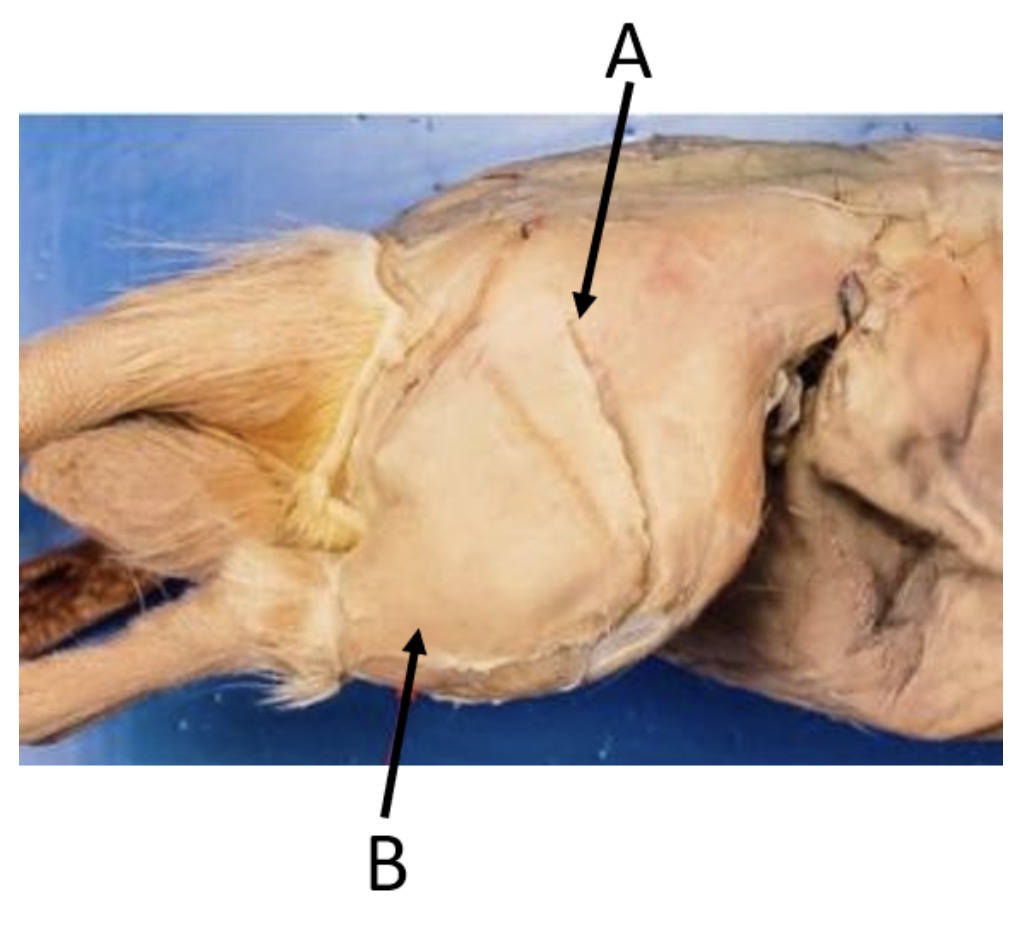
name the skeletal muscle a
gluteus maximus
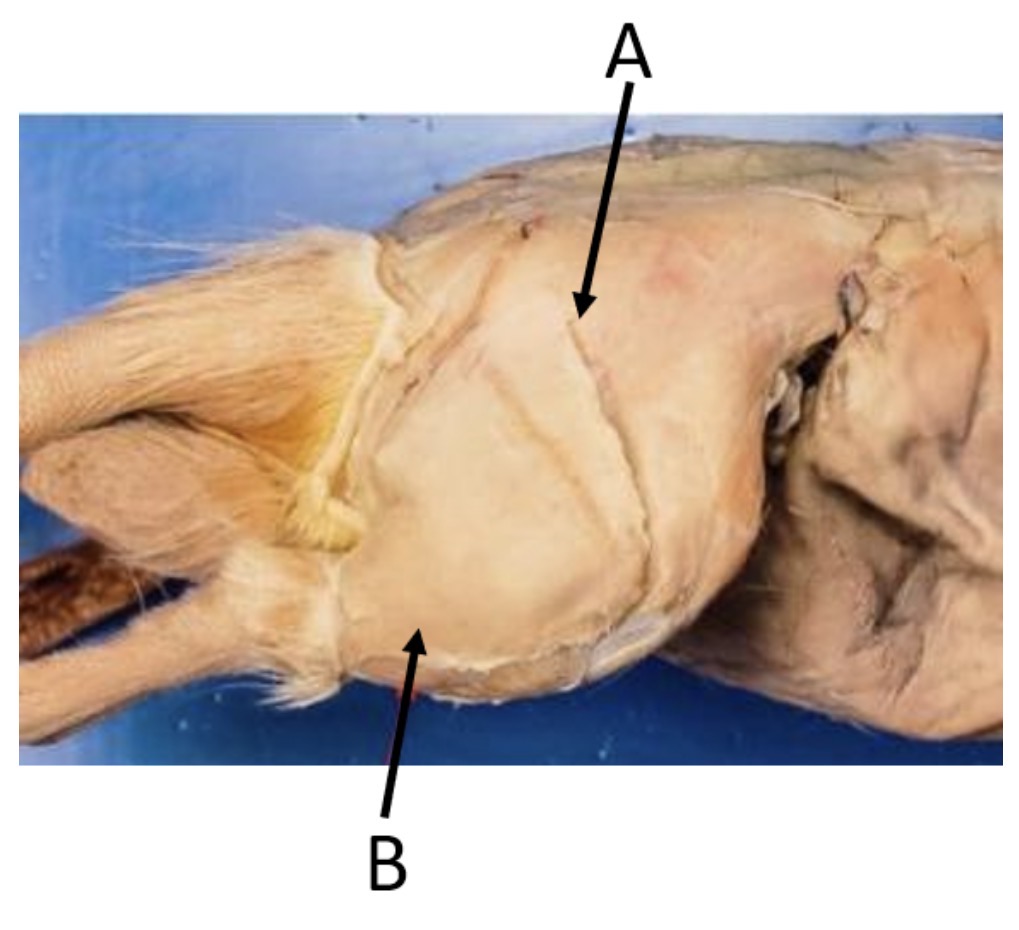
skeletal muscle b
biceps femoris
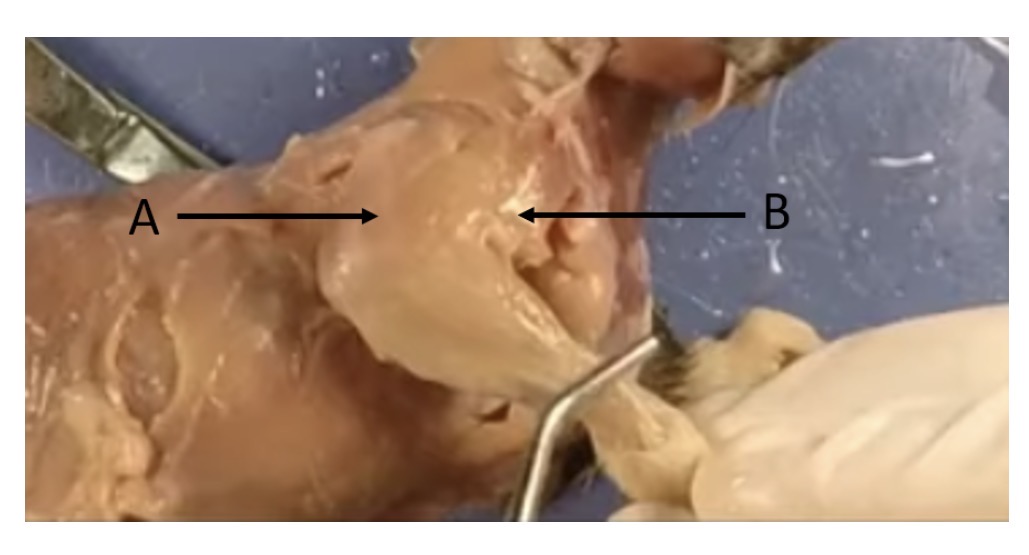
name the skeletal muscle a
triceps brachii
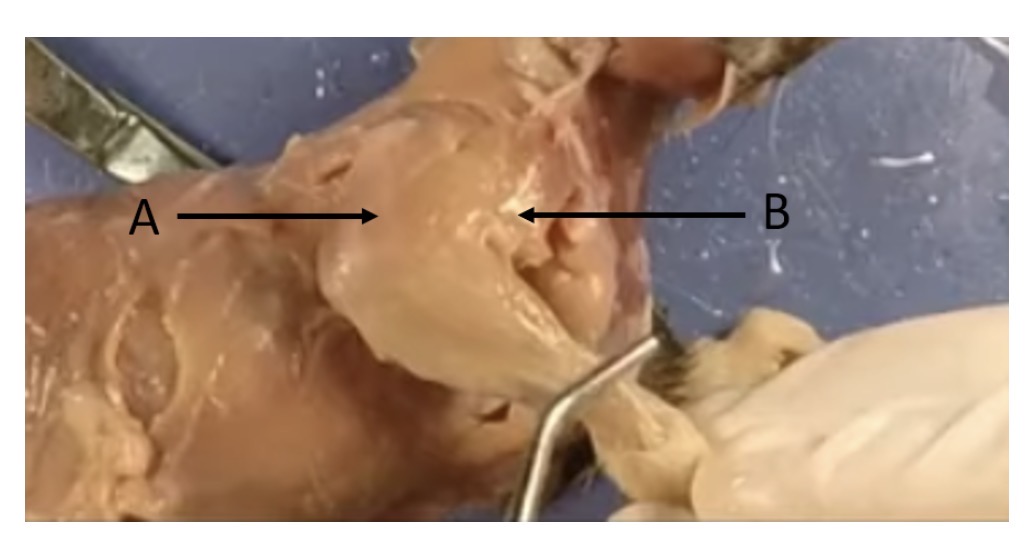
name the skeletal muscle b
biceps brachii
One of its many functions is to filter the blood and excrete waste such as urea and ammonia
kidney
Stores urine
bladder
In the male rat, the ___ mixes the sperm with semen.
seminal vesicle
In the male rat, the ___ makes sperm by meiosis.
testes
In the female rat, the ___ make eggs by meiosis.
ovaries
In the female rat, the embryo develops in the ___.
uterine horns
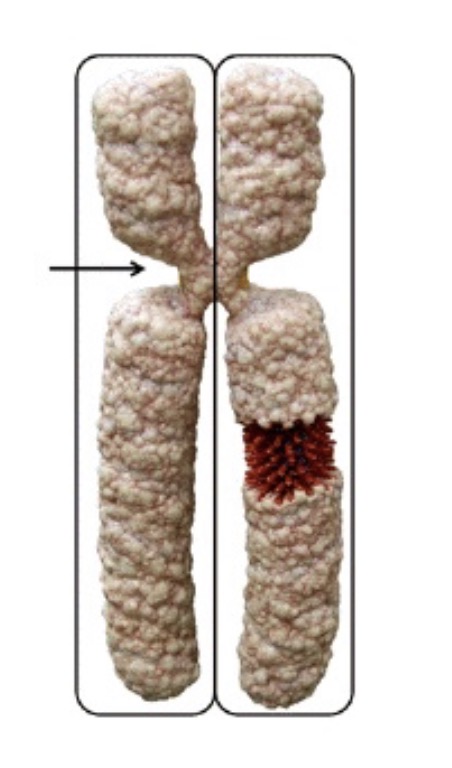
is this a replicated or non-replicated chromosome
replicated
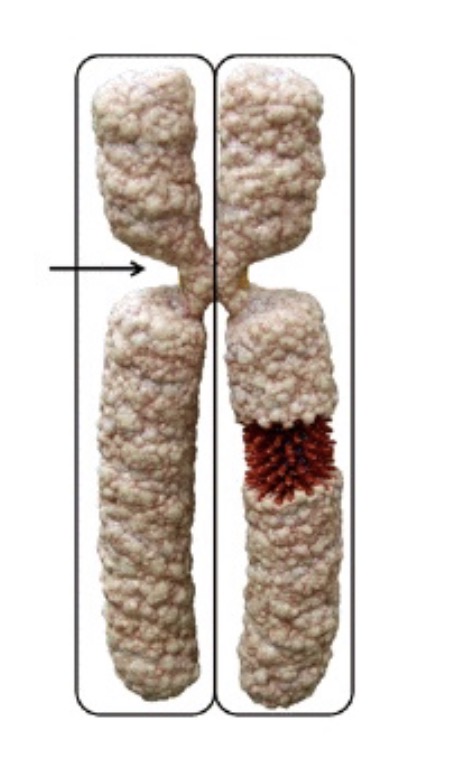
Name the two structures enclosed by a box.
sister chromatids
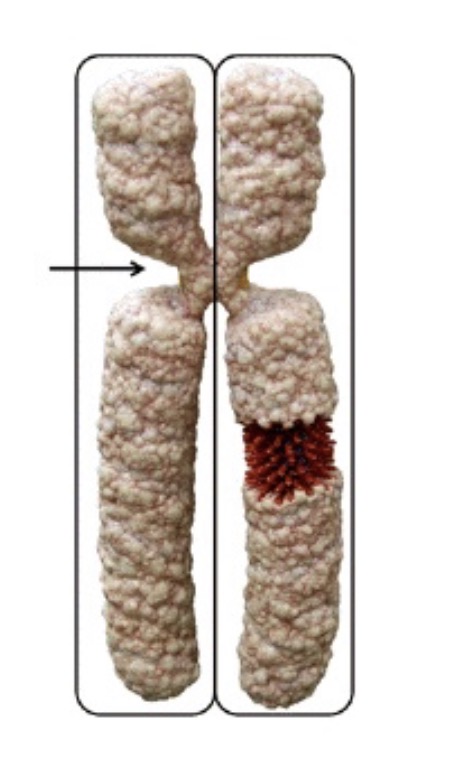
Name the protein that attaches spindle fibers.
kinetochore
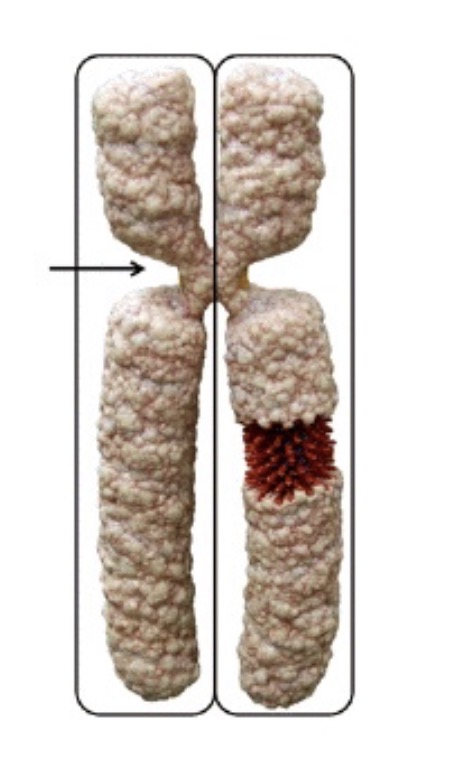
Name the protein that holds the sister chromatids together.
cohesins
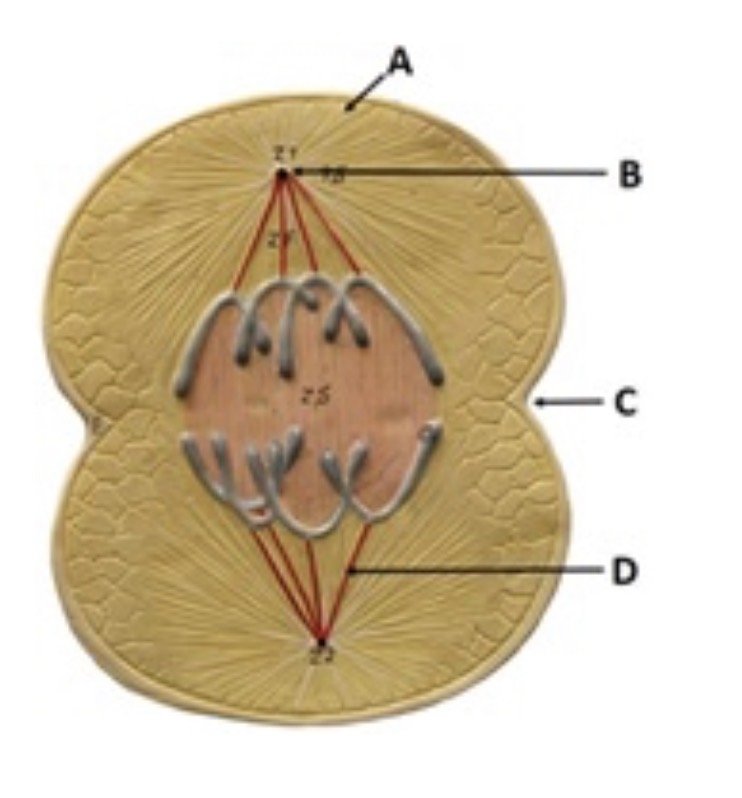
Is this a model of an (animal or plant) cell?
animal
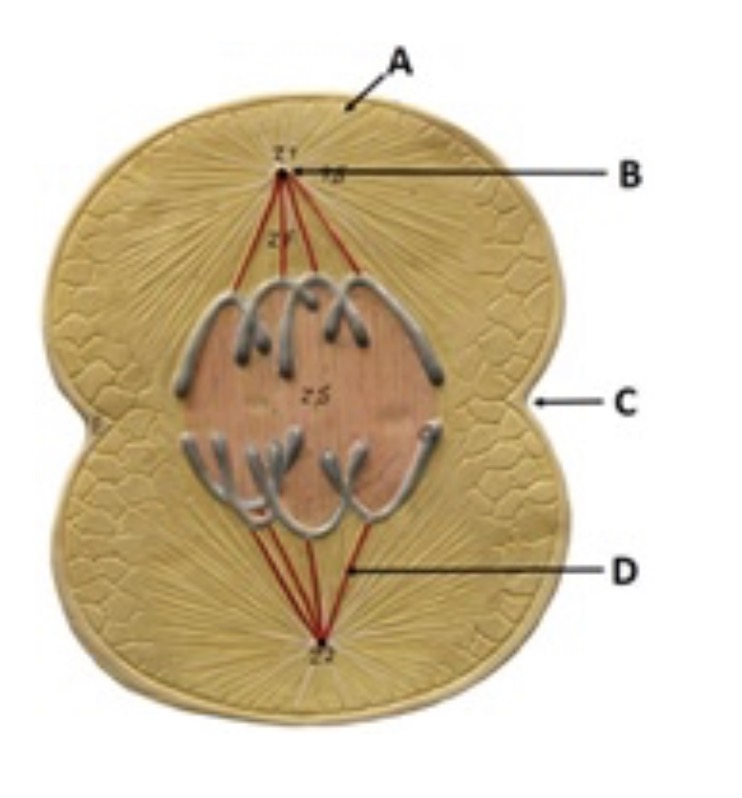
What stage of mitosis does the model represent?
anaphase