3.1.5 Kinetics
 Call Kai
 Learn
Learn Practice Test
 Spaced Repetition
 Match
Match Flashcards
 Knowt Play
1/14

There's no tags or description
Looks like no tags are added yet.
Name | Mastery | Learn | Test | Matching | Spaced | Call with Kai | Chat |
|---|
No analytics yet
Send a link to your students to track their progress
15 Terms
What must happen for a reaction to occur?
Particles must collide in the same direction & have the minimum amount of kinetic energy (collision theory)
What is the definition of rate of reaction?
The change in the concentration of a reactant or product per unit of time
What is the equation to calculate rate?

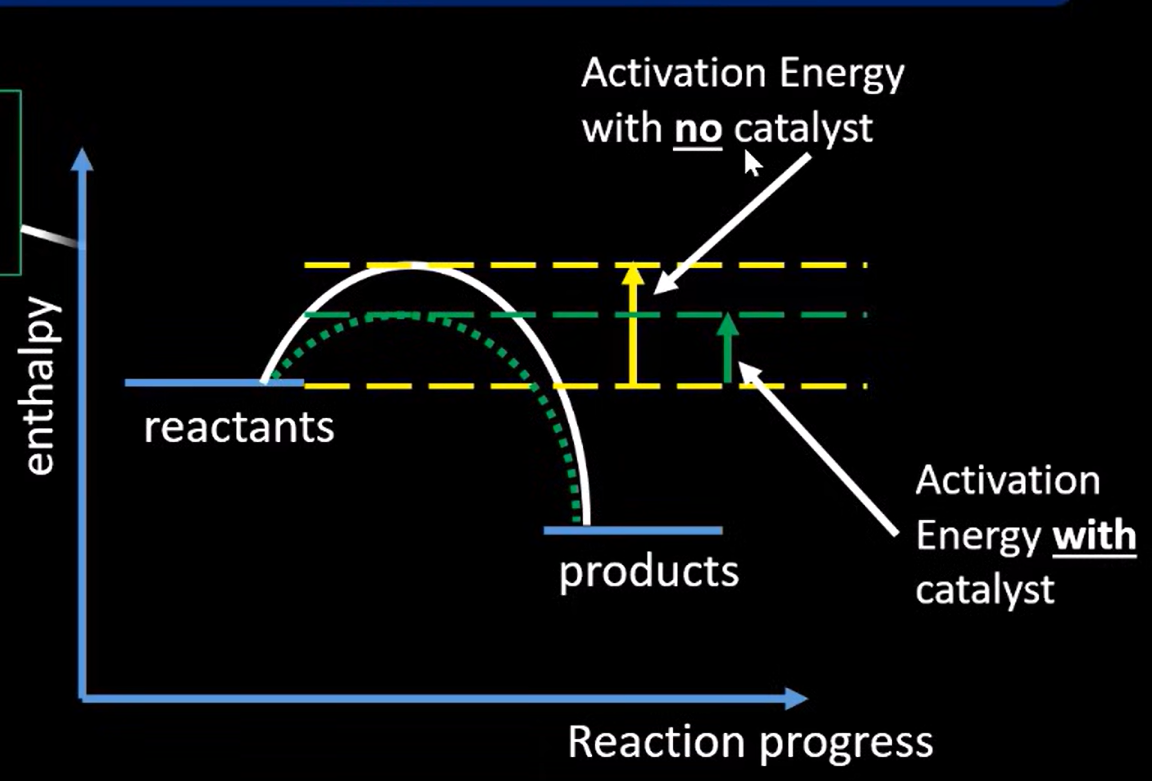
What is the activation energy?
The minimum amount of energy required for a reaction to occur
Draw a labelled energy profile for an exothermic reaction
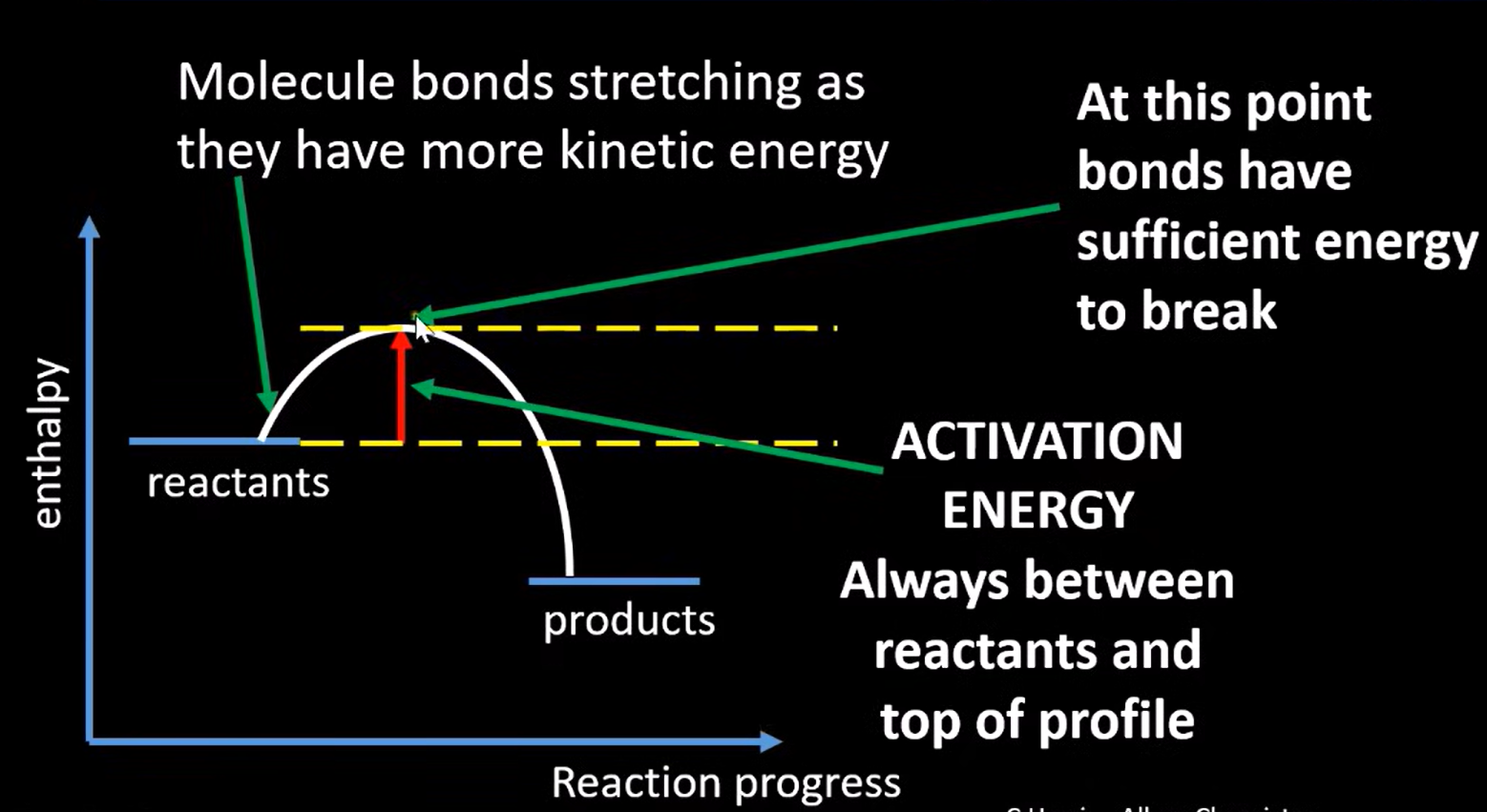
Draw & label a Maxwell-Boltzmann distribution curve
Graph starts at 0,0 as no particles have zero kinetic energy
The area under the curve is equal to the total number of molecules
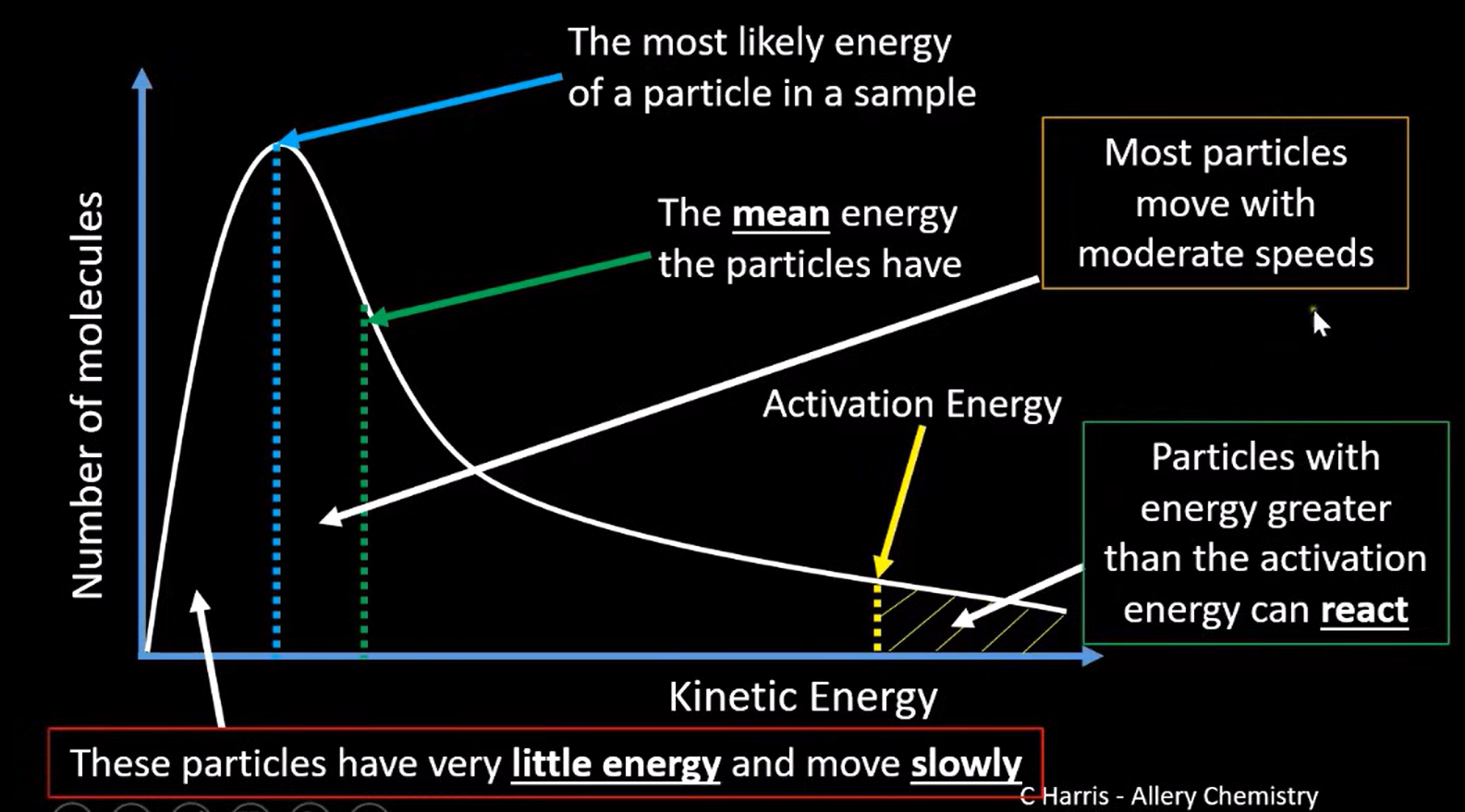
Draw a Maxwell-Boltzmann distribution curve that has been affected by an increase & decrease in temperature
Red line (increase in temperature):
a larger proportion of molecules will have energy greater than the activation energy → larger area under the curve beyond the activation energy
Blue line (decrease in temperature):
a smaller proportion of molecules will have energy greater than the activation energy → smaller area under the curve beyond the activation energy
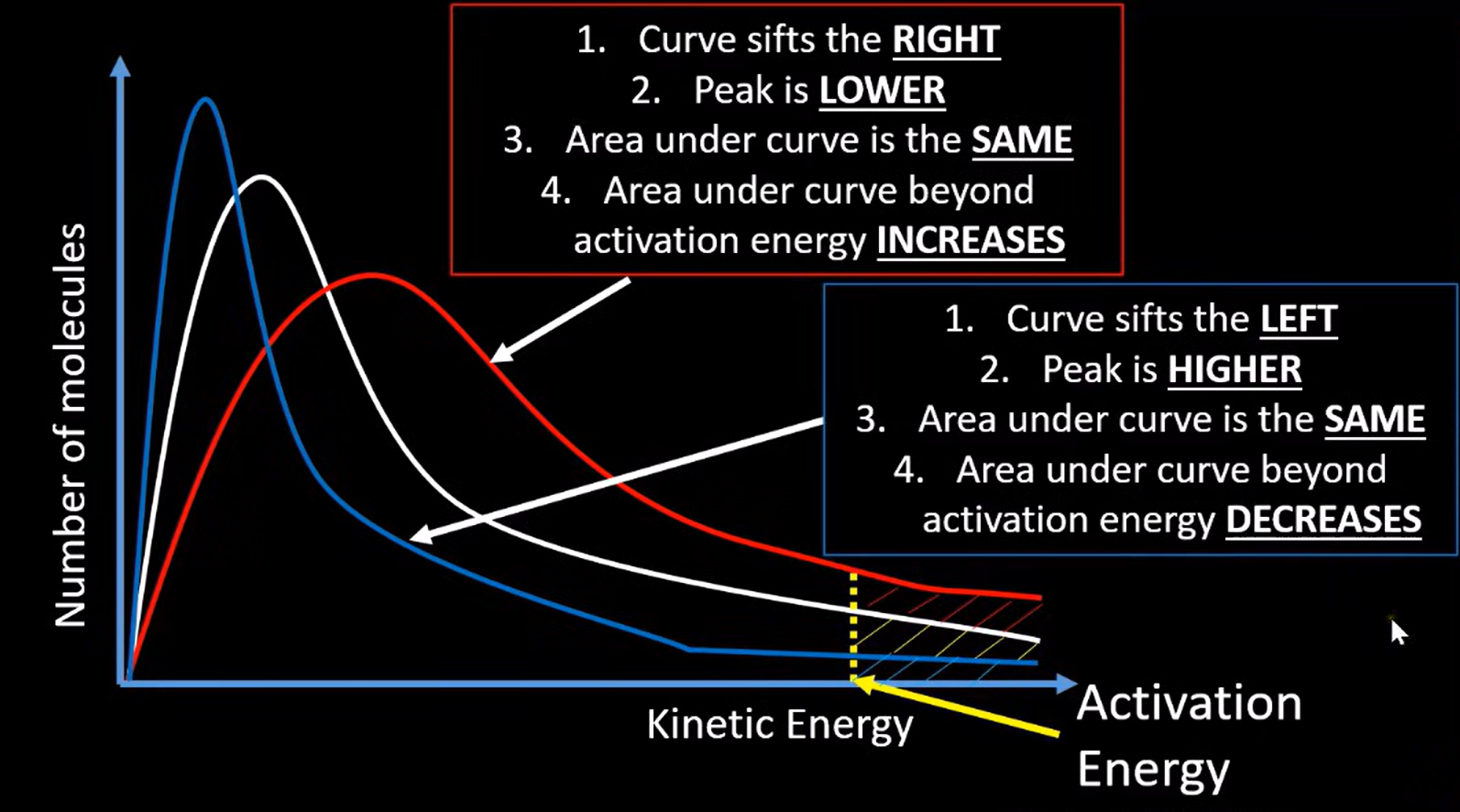
Why does a small increase in temperature cause a large increase in the rate of reaction?
Many more particles have energy greater than the activation energy, therefore a greater frequency of successful collisions
How does an increase in pressure & concentration affect the rate of reaction?
Increase in pressure & concentration increases the rate of reaction:
particles are closer together & collide more frequently
there are more chances of frequent, successful collisions & a higher chance of a reaction

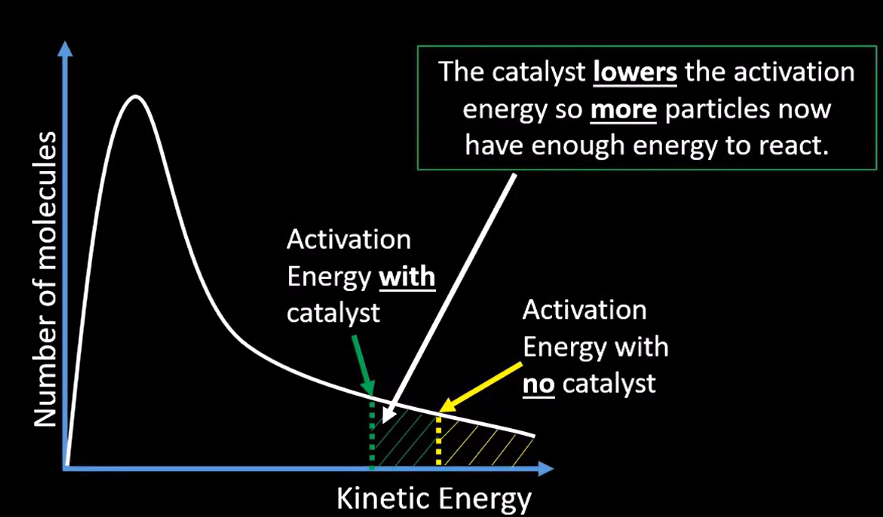
What is a catalyst?
A substance that increases the rate of a reaction by providing an alternative pathway with a lower activation energy
It is chemically unchanged (not used up) at the end of the reaction
Draw a Maxwell-Boltzmann distribution curve involving a catalyst
Draw a labelled energy profile diagram for an exothermic reaction involving a catalyst
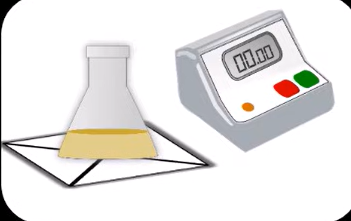
How can rate be measured in an experiment where the time it takes for a precipitate to form is recorded?
Draw a cross on paper & time how long it takes for the cross to disappear (precipitate to form):
this is difficult to know exactly when the cross disappears, so use the same observer to reduce errors
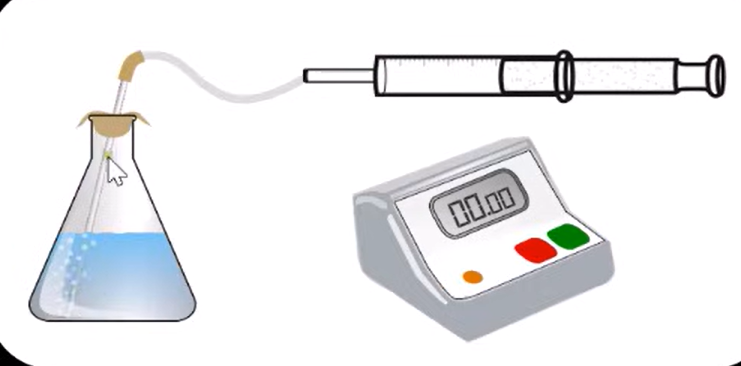
How can rate be measured in an experiment where the volume of gas produced is recorded?
Measure the amount of gas produced using a gas syringe over a specified time
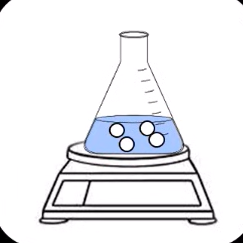
How can rate be measured in an experiment where the amount of mass lost is recorded?
Place the reaction on a balance & measure the mass loss as gas is lost → (fairly accurate method, but use a fume cupboard as gas is harmful/toxic)