002 Measuring Visual Acuity 2026
 Call Kai
 Learn
Learn Practice Test
 Spaced Repetition
 Match
Match Flashcards
 Knowt Play
1/69

There's no tags or description
Looks like no tags are added yet.
Name | Mastery | Learn | Test | Matching | Spaced | Call with Kai | Chat |
|---|
No analytics yet
Send a link to your students to track their progress
70 Terms
Why is measuring visual acuity clinically important before manipulating the visual system?
It establishes a baseline prior to any intervention or examination that could alter vision and is important for medicolegal documentation.
What are the major reasons to assess visual acuity?
Medicolegal documentation
Monitor disease progression or treatment response
Determine level of visual ability/disability
How is Snellen visual acuity written, and what do the numerator and denominator represent?
Snellen acuity is written as test distance / letter size. The denominator is the distance at which that letter (or optotype) subtends 5 minutes of arc (“foot size”).
How is logMAR M-unit notation interpreted and converted to Snellen-style acuity?
1 M-unit subtends 5 minutes of arc at 1 meter
Visual acuity can be estimated as test distance (m) / letter size (M), then converted to 20/XX
Example: 0.4 M at 40 cm → 0.4/0.4 = 1.0 = 20/20
Example: 0.8 M at 40 cm → 0.4/0.8 = 0.5 = 20/40
How do you convert Snellen acuity to decimal notation?
Simply divide the Snellen fraction.
20/20 = 1.0
20/40 = 0.5
20/100 = 0.2
What is the minimum angle of resolution (MAR)?
MAR is the inverse of Snellen acuity and represents the smallest detail the eye can resolve, measured in minutes of arc.
What are the MAR values for common Snellen acuities?
20/20 = 1 min arc
20/40 = 2 min arc
20/100 = 5 min arc
What does logMAR stand for, and what are common visual acuity equivalents?
logMAR = logarithm of the minimum angle of resolution (MAR).
Common equivalents:
20/15 = -0.1
20/20 = 0
20/40 = 0.3
20/100 = 0.7
How is a logMAR chart scored by line and by letter?
A logMAR chart has 5 letters per line, and each incorrect letter is worth 0.02 logMAR.
What happens to measured visual acuity on a logMAR chart if the testing distance is doubled?
The acuity should be about 3 lines worse.
Example: if acuity is 20/40 at 1 m, then at 2 m it should be about 20/80
(20/50 → 20/63 → 20/80).
What does cycles per degree (cpd) measure in visual acuity?
Cycles per degree (cpd) measures spatial frequency; how many alternating black/white cycles can be resolved in 1 degree of visual angle.
What cpd corresponds to common Snellen acuities?
20/20 = 30 cpd (equivalent to 1 minute of arc)
20/40 = 15 cpd
20/100 = 6 cpd
What is the quick way to convert cpd to Snellen denominator?
Use: 600 ÷ cpd = Snellen denominator
Examples:
600 ÷ 30 = 20 → 20/20
600 ÷ 15 = 40 → 20/40
600 ÷ 6 = 100 → 20/100
What is visual ability, and what is its main limitation as a measurement?
Visual ability asks whether the eye can see at all, but it does not quantify vision. It can be useful for detecting intraocular acuity differences.
What is resolution acuity?
Resolution acuity is the ability to resolve a critical element of a stimulus or pattern. It is sometimes called grating acuity.
What is recognition acuity?
Recognition acuity is the ability to identify a particular symbol.
What is preferential looking, and what type of acuity is it used for?
Preferential looking tests whether the patient looks toward the stimulus. Only one correct response is needed to move to a more difficult card. It is used for resolution acuity.
What is the two-alternative forced choice (2AFC) testing paradigm?
In 2AFC, the patient must get 3/4 or 4/4 correct before moving to a more difficult level. It is used for recognition acuity.
What is matching in visual acuity testing?
In matching, the patient points to the correct optotype using a matching card. It tests recognition acuity.
What type of acuity is measured by naming?
Naming tests recognition acuity by having the patient identify the symbol directly.
What is the general rule for clinical measurement of visual acuity (VA)?
Use the most sophisticated method the patient is able to perform. Visual acuity methods are generally considered on a spectrum from least to most sophisticated.
What are common methods of occlusion during visual acuity testing?
Examiner hand
Sticky patch
Occluder glasses
Hand-held occluder
Patient/parent hand??? Not reliable
What is resistance to occlusion (RTO), and when is it assessed?
RTO is assessed concurrently with another test of visual ability/acuity while one eye is covered. It is used to look for interocular acuity differences.
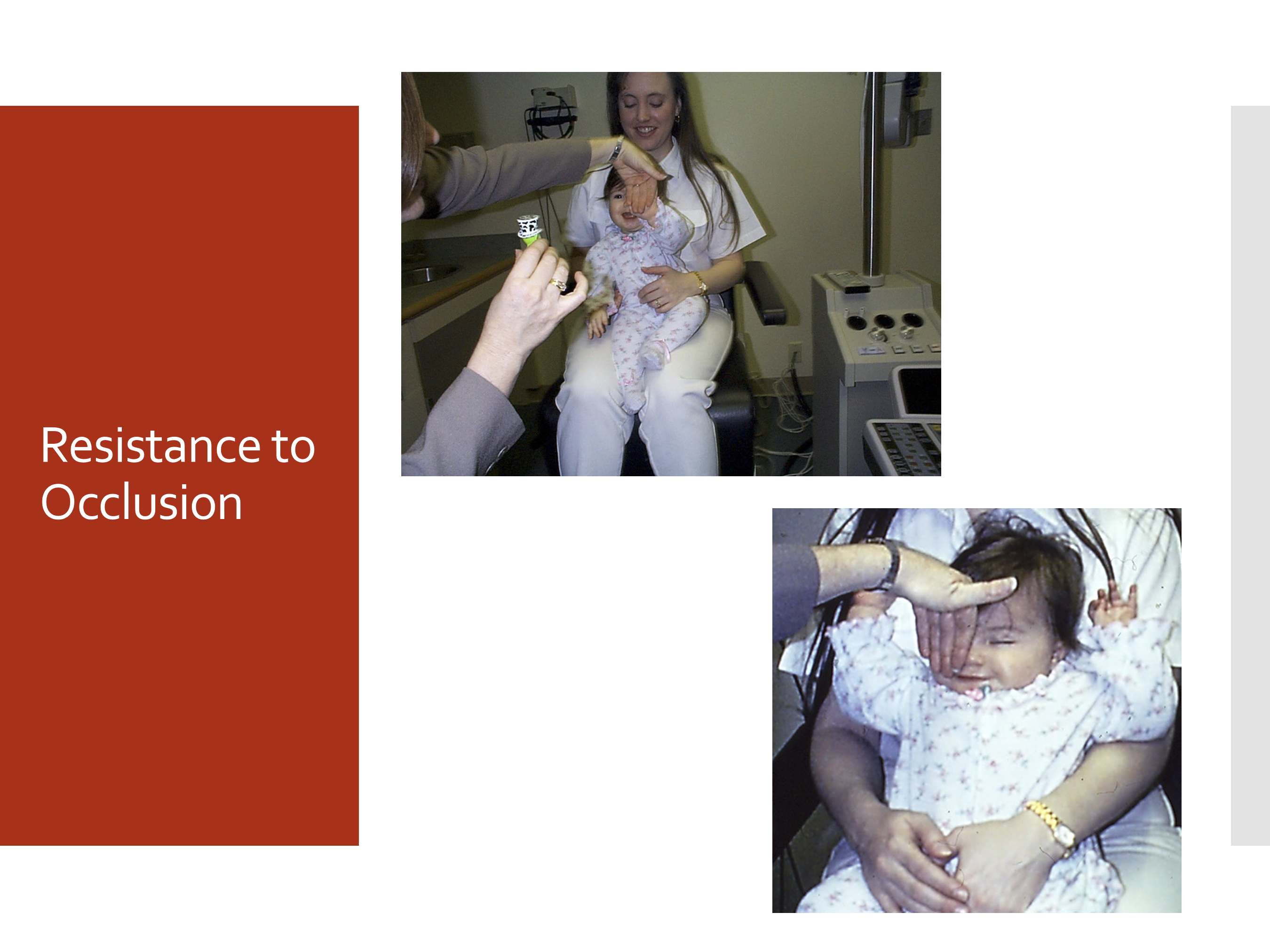
What behaviors suggest resistance to occlusion?
Cries or becomes distressed
Attempts to look around the occluder
Pushes the occluder away
Loss of fixation or interest
How is resistance to occlusion documented, and what does “objects to cover” mean?
Documentation may be:
No RTO
Equal RTO OD, OS
RTO OD or OS
“Objects to cover” means the patient resists when a specific eye is covered, suggesting that eye is likely the preferred/better-seeing eye (e.g., objects to covering right eye → likely using right eye more than left).
What does a patient’s different reaction to occluding one eye vs the other suggest?
It suggests a possible difference in visual acuity between the eyes. The patient may be relying more on one eye than the other.
What does fix and follow (F&F) assess in visual testing?
Fix and follow assesses visual ability: whether the patient can fixate on and visually track a target.
How is fix and follow tested and recorded?
Use a large bright object moved slowly 1–2 feet from the patient, test monocularly, and record the result as F&F.
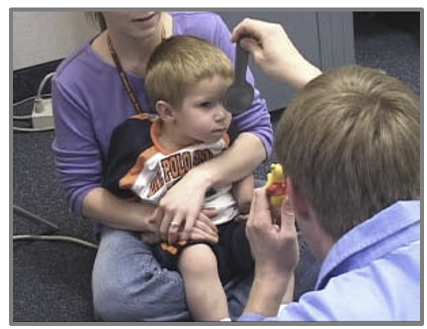
What does CSM stand for in pediatric visual assessment?
CSM = Central, Steady, Maintained fixation.
What does the “C” in CSM assess?
Central fixation, whether fixation is central (C) or eccentric/uncentral (UC).
What does the “S” in CSM assess?
Steady fixation, whether fixation is steady (S) or unsteady/poor (US). Poor steadiness may be suggested by nystagmus or inability to hold fixation.
What does the “M” in CSM assess, and what does CSM (-) imply?
Maintained asks whether the eye can maintain fixation on a moving target/object.
If fixation is central and steady but cannot be maintained when the fellow eye is covered, it is recorded as CSM (-).
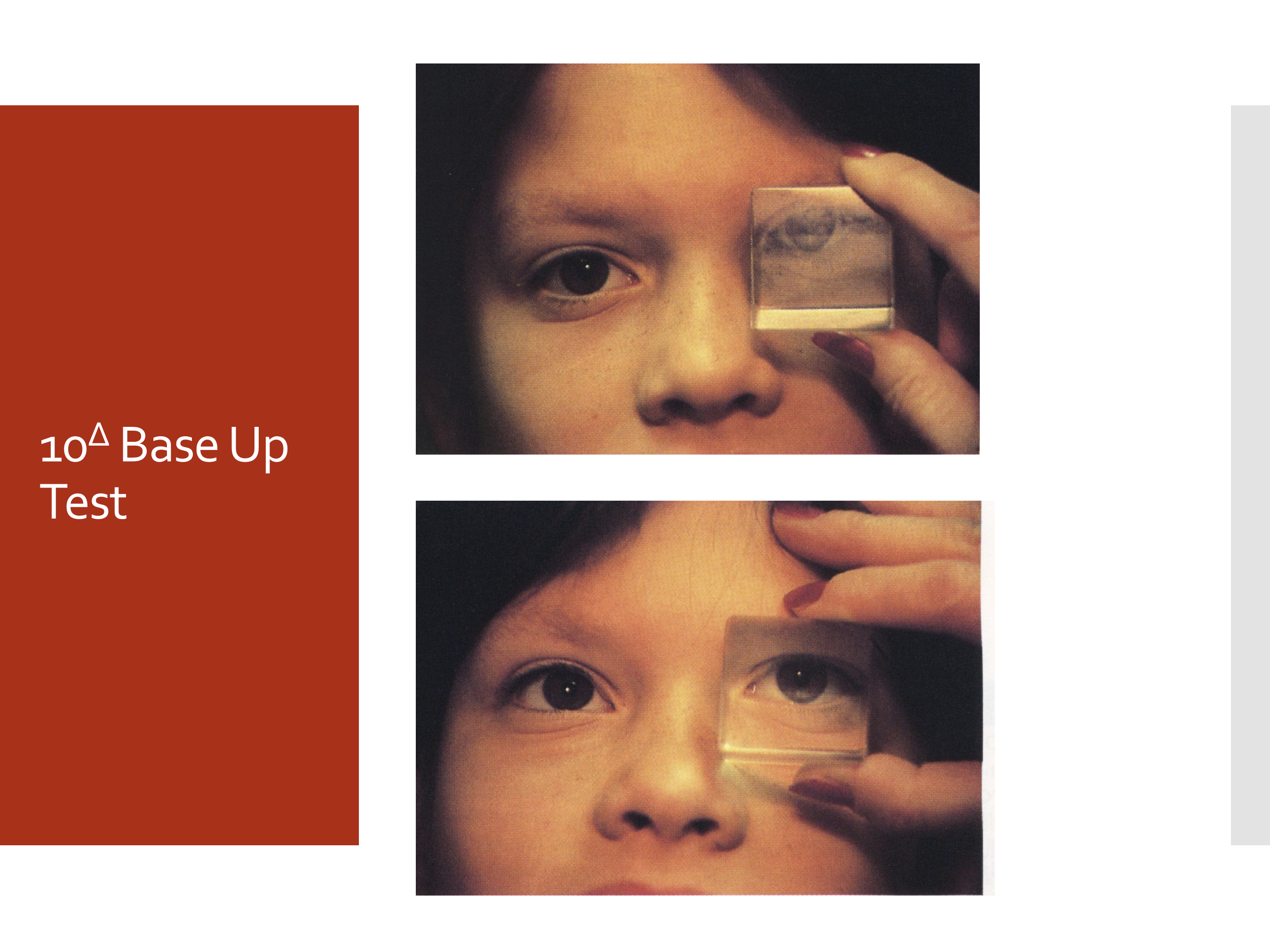
What does the 10Δ base-up (BU) test assess?
It assesses visual ability and can help detect an interocular difference in acuity.
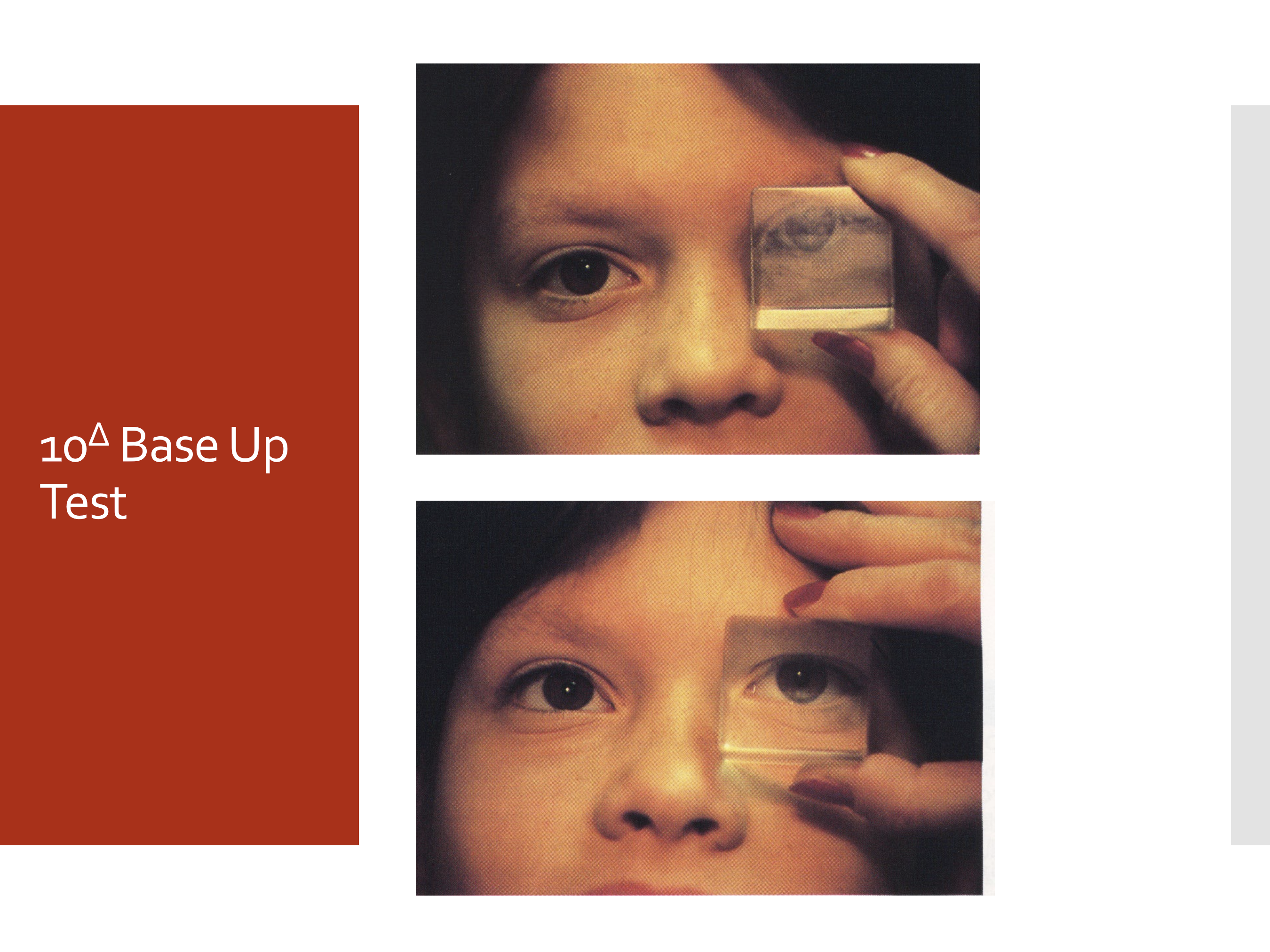
How is the 10Δ base-up test performed?
Place a 10 prism diopter base-up prism in front of one eye while the patient views a target, then compare the response when the prism is placed in front of the other eye.
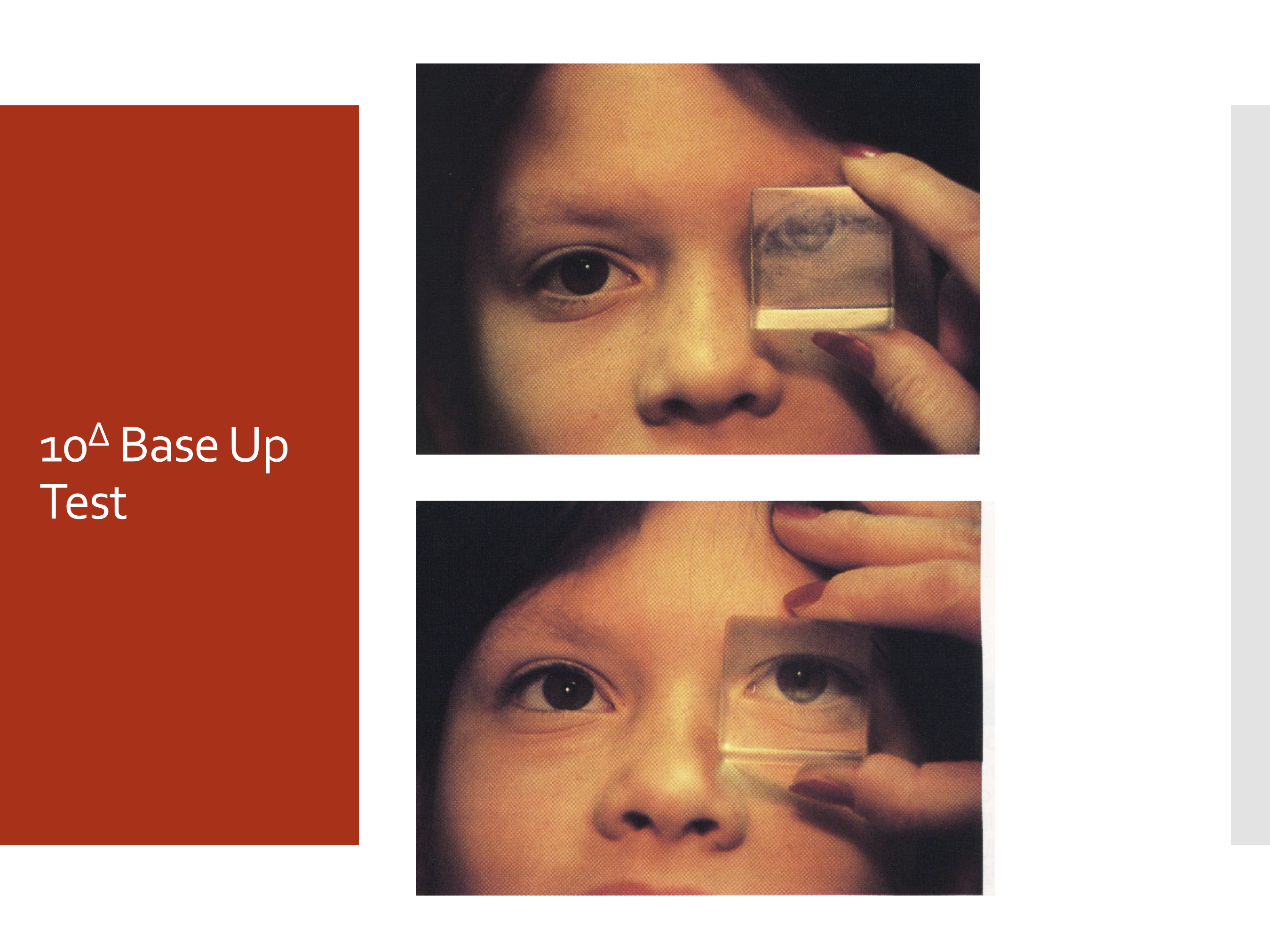
What is the expected response in the 10Δ base-up test, and what is abnormal?
Normal: the patient should switch fixation between the right and left eyes as the target is moved side to side, or at minimum the eye behind the prism makes a downward saccade to refixate the target.
Abnormal: if the patient only attends to one target or the eye behind the prism does not move to fixate, that eye may have reduced acuity.
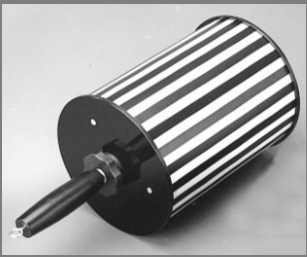
What does optokinetic nystagmus (OKN) primarily assess?
OKN is mainly a test of visual ability and resolution acuity, based on whether the patient can detect moving striped patterns.
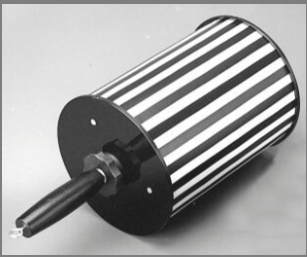
When is optokinetic nystagmus present and when does it mature?
OKN is present at birth and typically matures by 3-6 months.
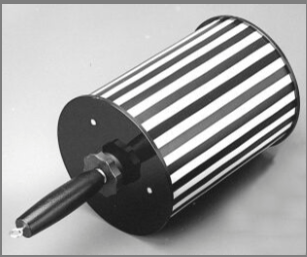
Why does the absence of OKN not necessarily mean a child is blind?
OKN is a motion-detection task, so responses may not directly reflect central recognition vision. Also, absence of OKN does not automatically mean blindness.
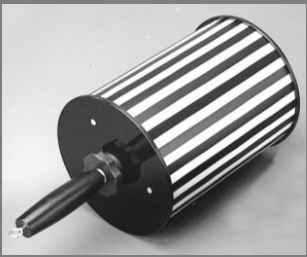
How is optokinetic nystagmus tested, and what limits its use for Snellen acuity?
The striped OKN drum is spun, and a nystagmus response should occur if the child can see the motion. Because stripe width is fixed, estimating Snellen acuity would require changing the test distance.
What type of acuity is measured with Teller visual acuity cards?
Teller visual acuity measures resolution acuity using striped (grating) targets.
What are the standard test distances for Teller visual acuity cards?
Standard test distances are 38 cm, 55 cm, and 84 cm.
What are the key testing principles for Teller visual acuity?
The tester should not know the location of the stripes
Use noise/fan card to attract attention
Start with an easy-to-see card, then flip card to confirm
Reinforce with an easy-to-see card if needed
How are Teller visual acuity results interpreted and modified clinically?
Compare the result to a norms chart
Record acuity in cpd (cycles per degree), not Snellen
Cards can be turned vertically to help assess astigmatism or nystagmus
Is Teller visual acuity a preferential looking test or a 2AFC test?
Teller acuity is a preferential looking test, not a two-alternative forced choice (2AFC) test. Patients do not need to get 4/4 correct to move to the next level.
Why can the same Teller acuity card correspond to different acuity values?
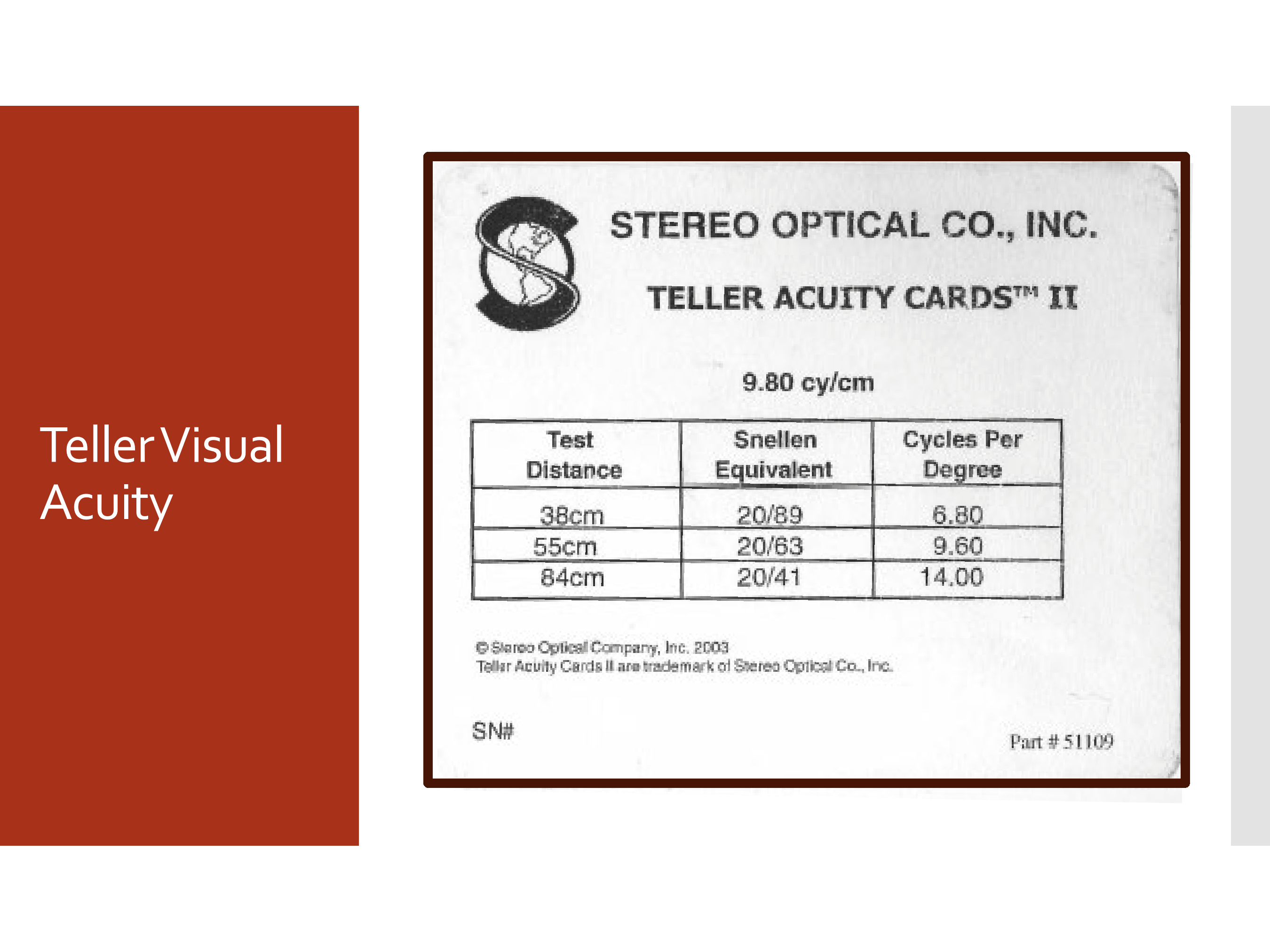
Because the acuity value depends on the test distance. The same grating card gives different Snellen equivalents and cycles/degree (cpd) at 38 cm, 55 cm, and 84 cm.
For a 9.80 cy/cm Teller card, what are the acuity equivalents at common test distances?
38 cm → 20/89, 6.8 cpd
55 cm → 20/63, 9.6 cpd
84 cm → 20/41, 14.0 cpd
How should Teller visual acuity be interpreted across age?
Compare the measured cpd to an age-based norms chart: monocular Teller acuity increases with age, so interpretation depends on whether the child’s result is normal for age.
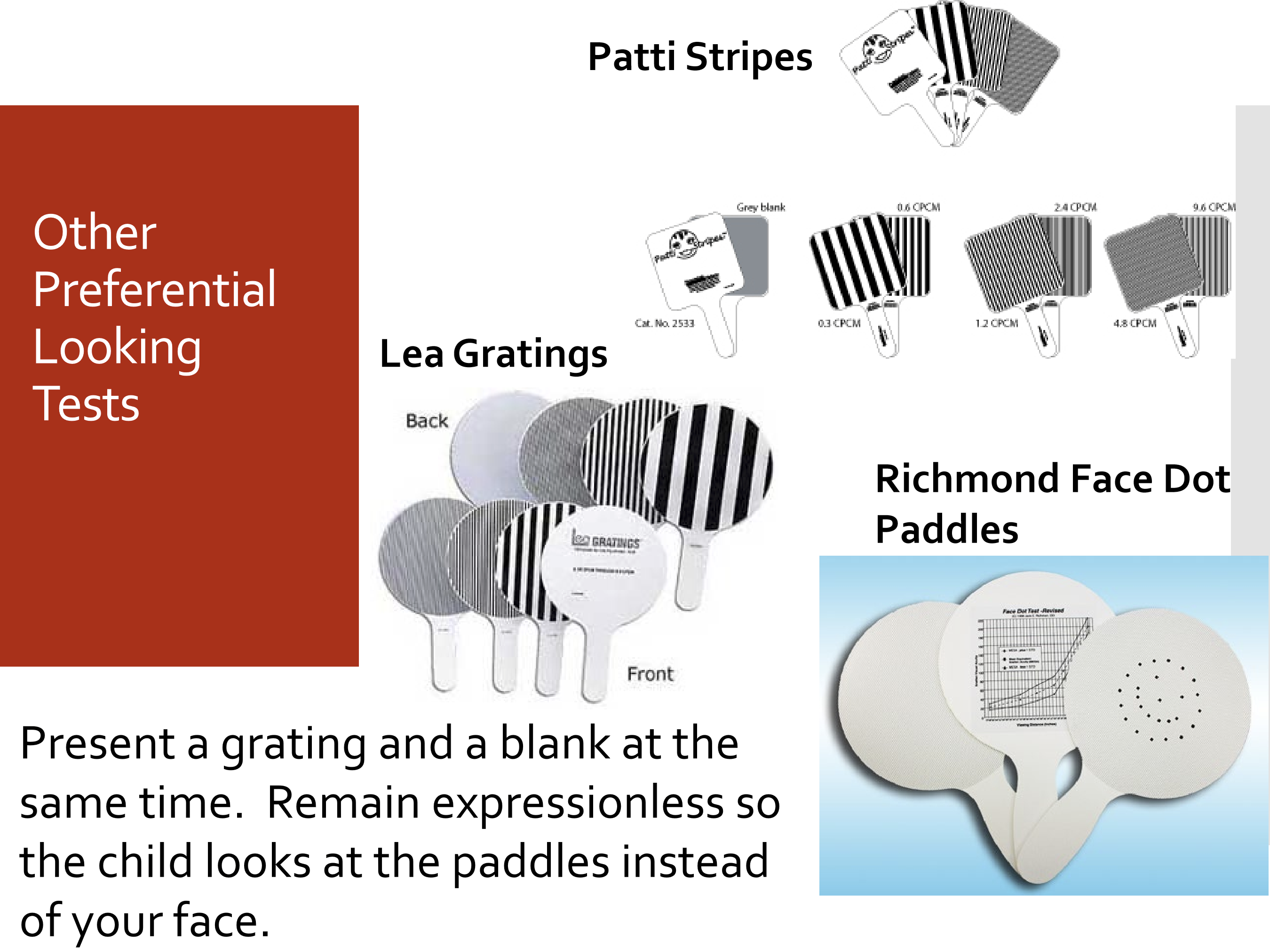
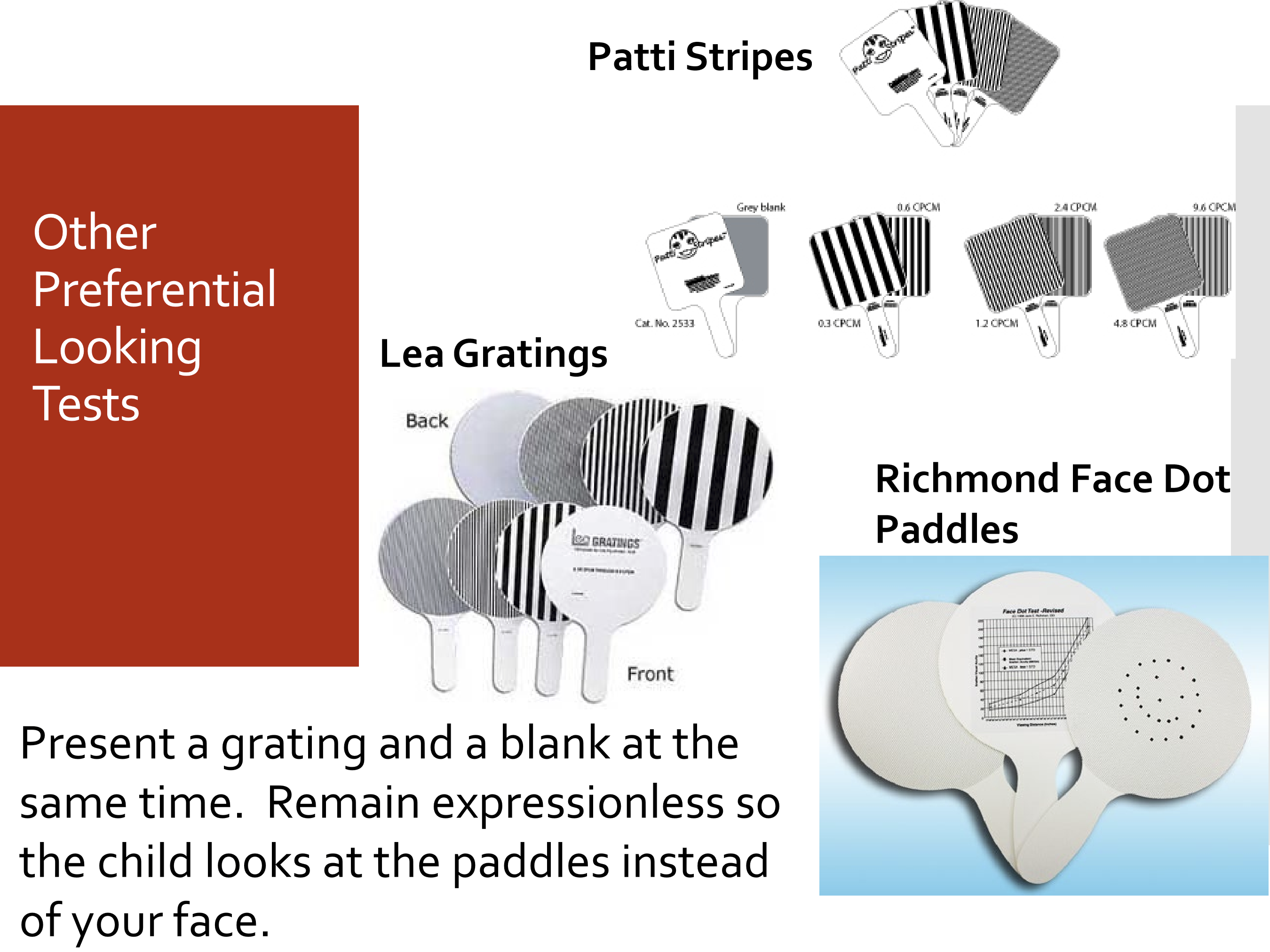
What are examples of other preferential looking tests besides Teller cards?
Patti Stripes
Lea Gratings
Richmond Face Dot Paddles
What is the general setup for preferential looking grating tests?
Present a grating pattern and a blank field at the same time and observe whether the child preferentially looks toward the patterned target.
What is an important examiner technique during preferential looking testing?
The examiner should remain expressionless/neutral so the child looks at the paddles/cards rather than using the examiner’s face as a cue.
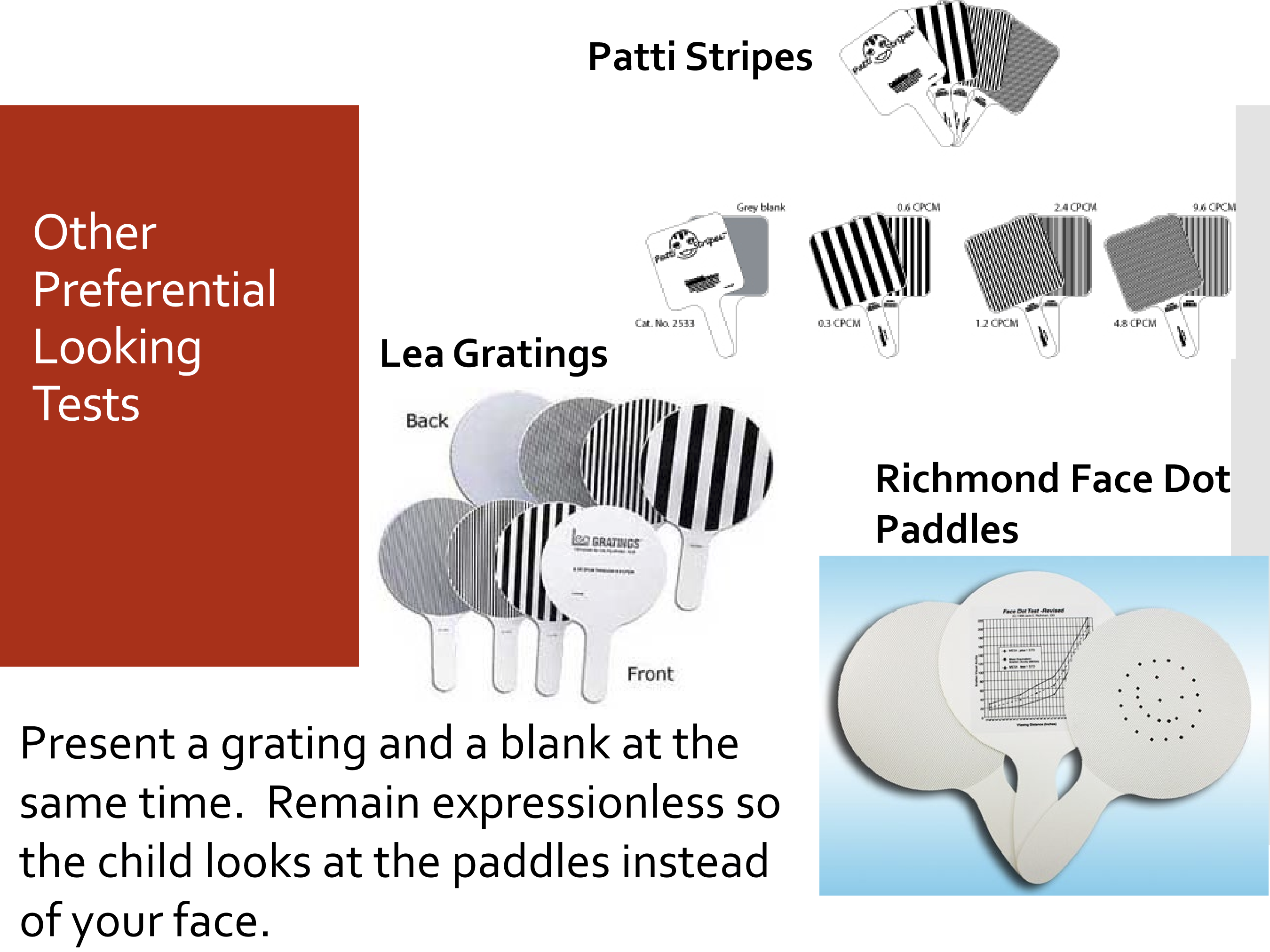
What type of acuity is measured with Cardiff Cards?
Cardiff Cards measure resolution acuity using a preferential looking method.
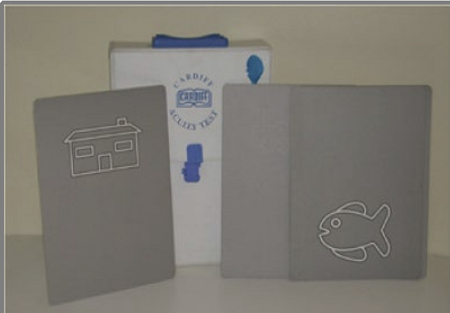
How do Cardiff Cards differ from grating-based preferential looking tests?
They use pictures instead of gratings, creating more interesting targets that may hold a child’s attention better.
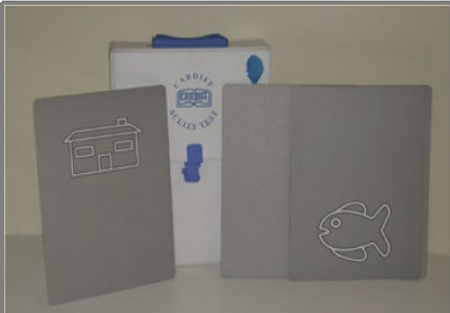
Why can Cardiff Cards be especially useful in patients with congenital nystagmus?
The examiner judges whether the patient looks up or down toward the picture target, which can make it easier to estimate visual acuity in patients with congenital nystagmus.
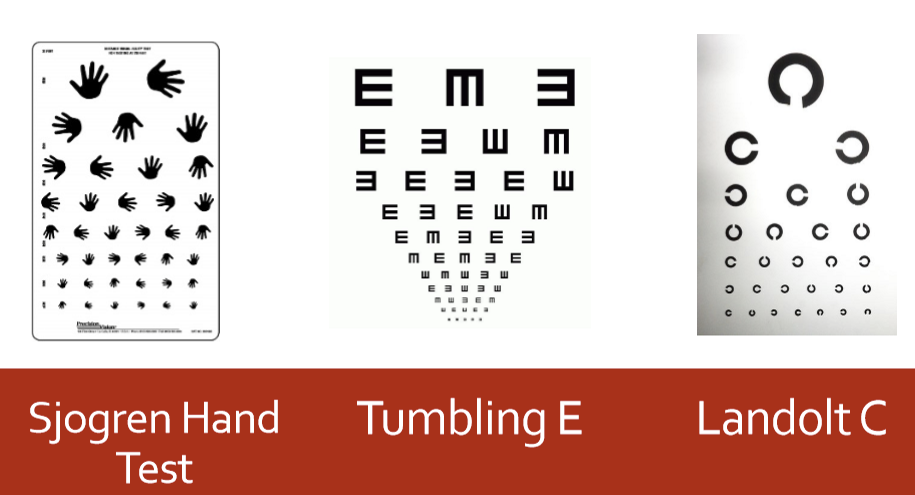
What type of acuity do the Sjogren Hand Test, Tumbling E, and Landolt C measure?
They measure resolution acuity.
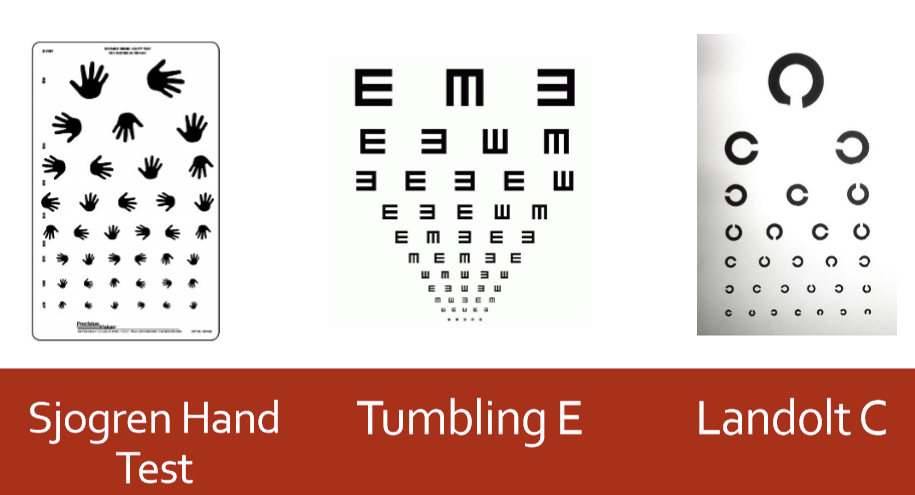
Why is the Sjogren Hand Test considered poorer than the other orientation-based acuity tests?
It is poorer because the luminance differs on each side of the target, making it a less ideal visual acuity stimulus.
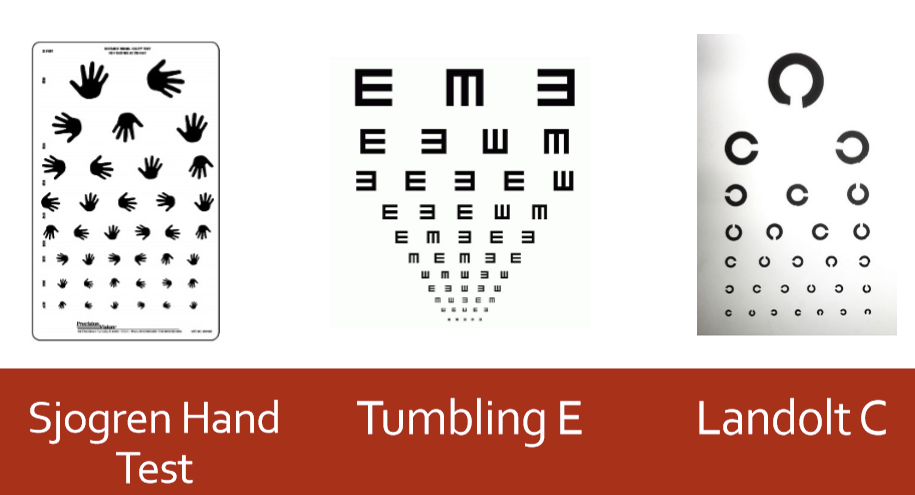
Why are Sjogren Hand, Tumbling E, and Landolt C often poor tests in preschool children?
They require laterality and directionality development, so younger children may have difficulty performing them even if vision is adequate.
What type of acuity does the Broken Wheel test measure?
Resolution acuity.
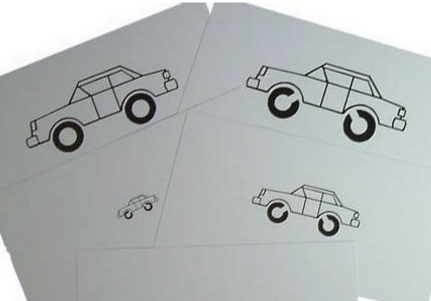
How does the Broken Wheel test simplify Landolt C for younger children?
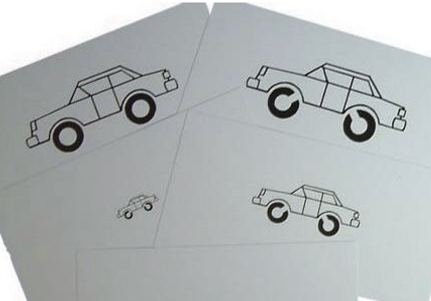
It uses the Landolt C concept but removes the need for directionality, so it can be used in younger children. It is typically done at a 10-foot test distance.
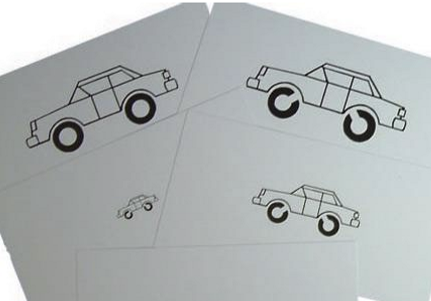
What testing paradigm is used in the Broken Wheel test?
It is a two-alternative forced choice (2AFC) test, using a question such as: “Which car has the broken wheels?”
What symbols are used in the American Optical Picture Chart?
It uses Allen figures, which are also found on many standard electronic/projector picture charts.
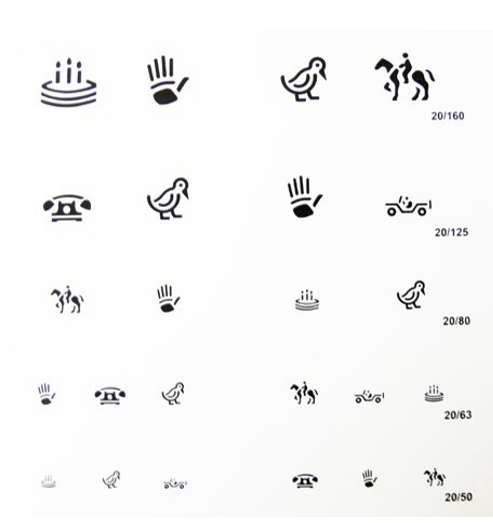
Why are Allen figures / American Optical picture charts considered poor visual acuity tests?
The symbols have unequal blur, luminance, and size, making them less standardized. In addition, projector versions may only measure acuity accurately to about 20/30.
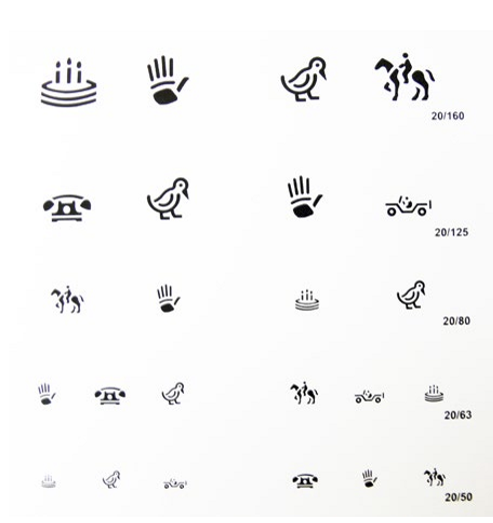
Why are Lea figures preferred over Allen figures for measuring visual acuity?
Lea figures are better standardized because the shapes have similar blur, making them a more reliable optotype set for visual acuity testing.
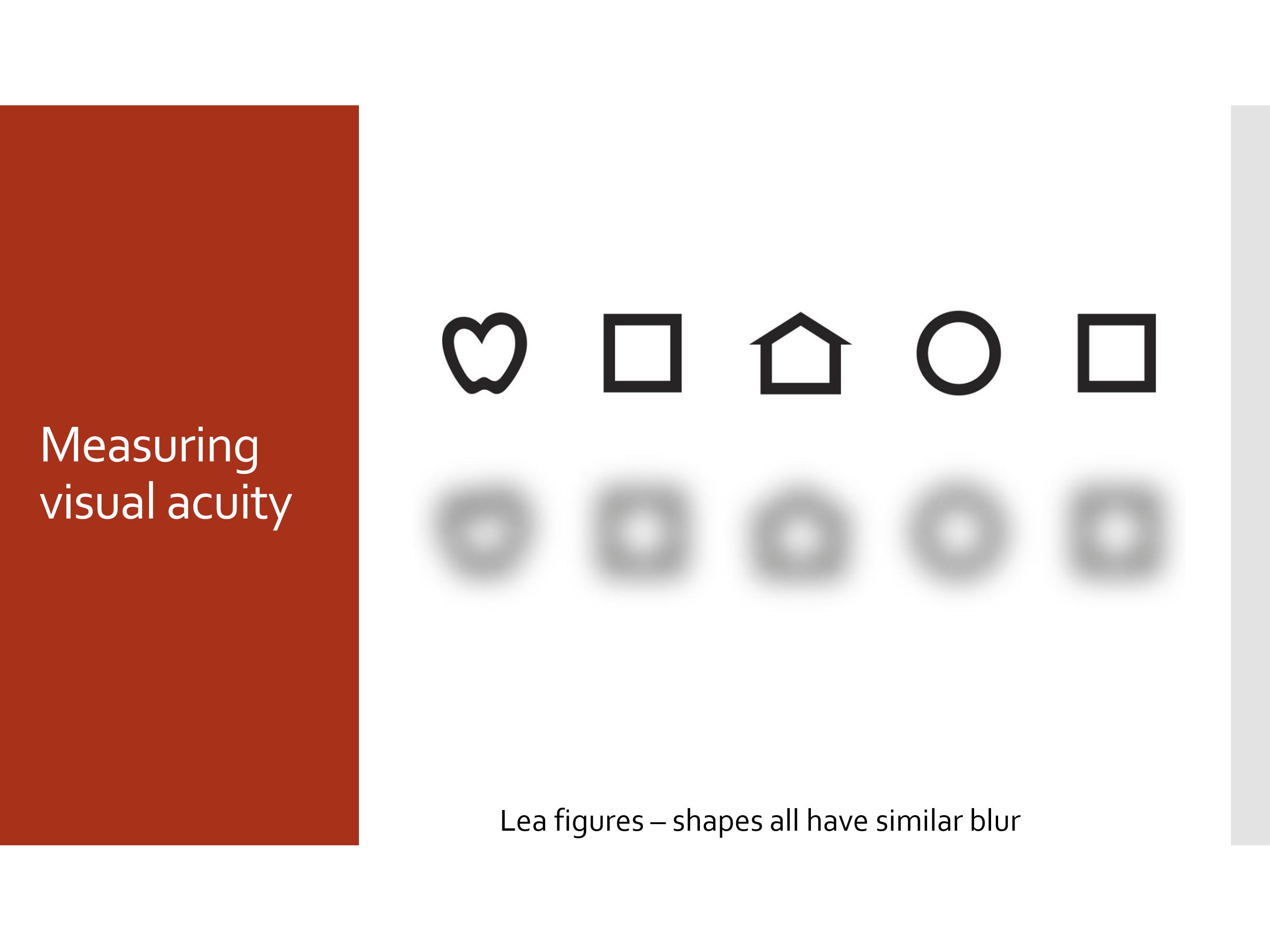
What type of acuity do LEA Symbols measure, and what response formats can be used?
LEA Symbols measure recognition acuity and can be tested with naming, matching, or 2-alternative forced choice (2AFC).
What scoring/chart format is used with LEA Symbols?
LEA Symbols use a logMAR format.
In what test formats are LEA Symbols available?
They can be used as flash cards, full charts (distance and near), crowded symbol tests, and in systems such as the Massachusetts VA test and M&S Acuity chart.
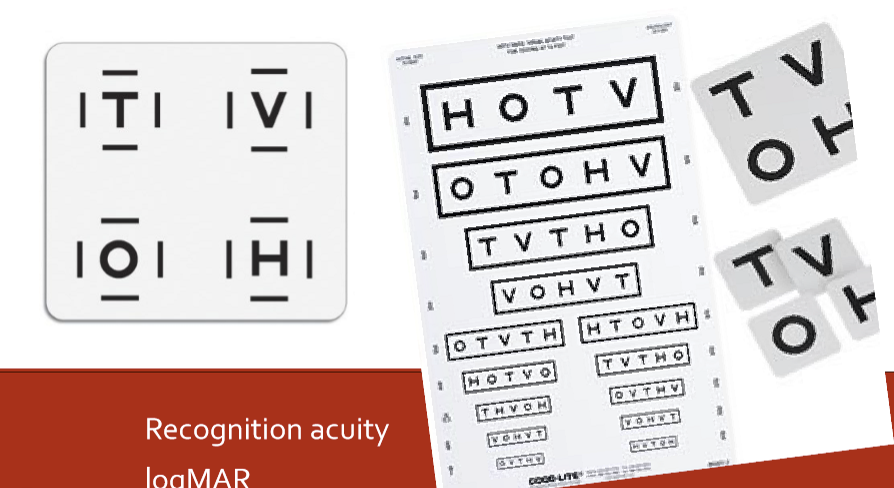
What type of acuity does HOTV measure, and what response methods are used?
HOTV measures recognition acuity in logMAR format and is tested by naming or matching (not 2AFC).
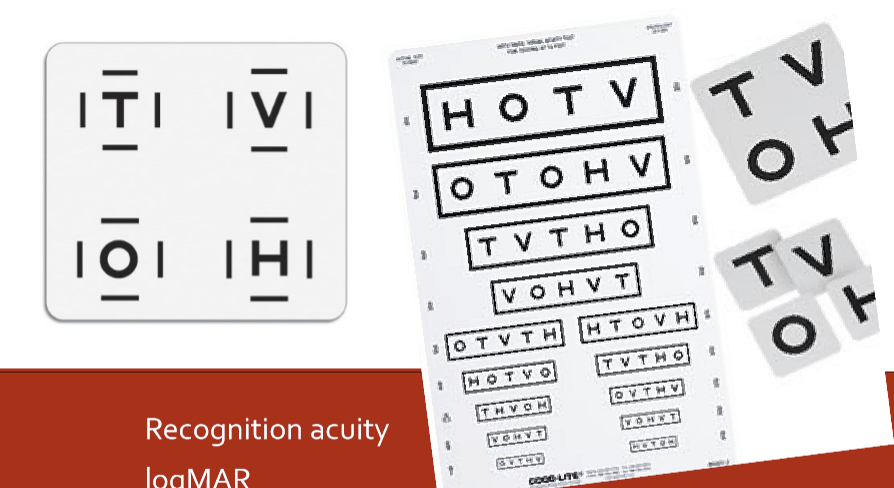
How is HOTV related to LEA Symbols, and what is its main limitation in children?
HOTV comes in similar formats as LEA Symbols (and Patti Pics), but it is often more difficult for children because it uses letters instead of pictures, even with a matching task.
What is the key principle for measuring visual acuity in amblyopia?
Testing must be standardized: use the same starting place, same stopping rule, and same chart.
What visual acuity protocols are used in the Amblyopia Treatment Study (ATS) by age?
ATS HOTV protocol → children under 7
E-ETDRS protocol → children 7 and older
What chart features are used in ATS amblyopia visual acuity testing?
Both protocols use crowded optotypes and a logMAR format.