Feed processing impacting fish
 Call Kai
 Learn
Learn Practice Test
 Spaced Repetition
 Match
Match Flashcards
 Knowt Play
1/20

There's no tags or description
Looks like no tags are added yet.
Name | Mastery | Learn | Test | Matching | Spaced | Call with Kai |
|---|
No analytics yet
Send a link to your students to track their progress
21 Terms
Type of aquafeed
Fresh (natural)feed, frozen, paste, pelleted feed, extruded feed
Pond feeds
shrimp - 100% steam pelleting
fish - shifting rapdily towards extrusion
tilapia, pangasias 90% extrusion
cage, raceways, ras: 10% extrusion
Major reasons for extrusion of fish feeds
steering pelelt quality
inclusion of high fat levels (in combinoatino with vacuum coating)
improving nutritoinal quality (e.g. reducing ANFs)
Fish extrusion set up
set up species dependent:
vacuum coater for fish species with high fat diets
salmon, eel, rainbow trout, seabasss, yellowtail kingfish
vacuumcoat absent, pangasisu, tilapia, carp
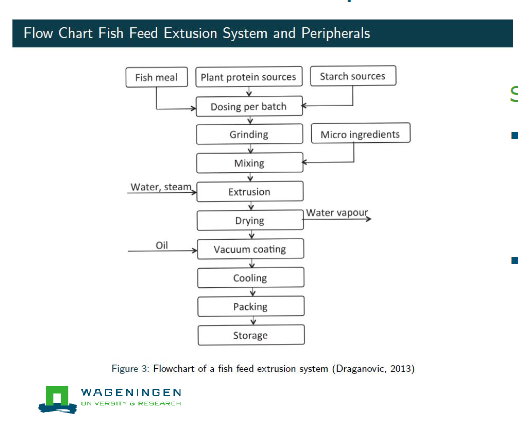
The extrusion process
mixer
preconditioner
steam and water addition
gelatinisation is starting
extruder
cooking
mixing (liquids and steam)
texturizing
die
expansion due to pressure difference
cutting
pellet quality assessment criteria
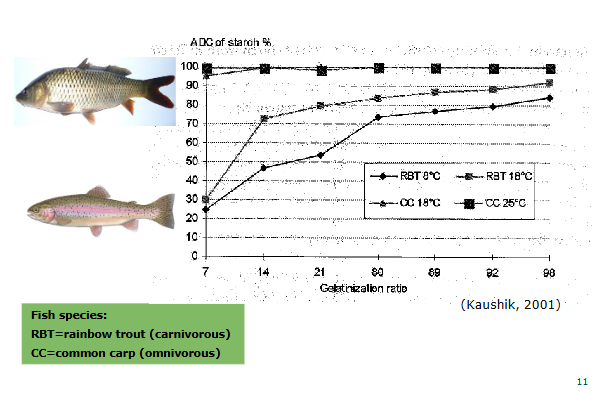
starch gelatinization
bulk density
sinking velocity (buoyancy)
pellet duarability
pellet hardness
water stability
expansion ratio
fat absoprtion
fat/nutrient leachin
starch gelatinizationS
bulk density
stoargae capcity
indicator for sinking velocity (buoyancy)
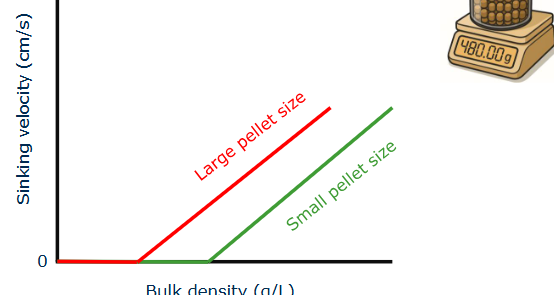
sinking velocity
should match
feeding behaviour organism (srimp vs salmon)
cultur sysme: submerge cages
floating pellets: management/control feed intake
sinking pellets
fish not willing to come to the surface
cage depth and velocity: feeding time windowf
fines in aqua feeds lead to
direct hampering gill functioning
direclty stop eat, leads to low feed intake, location in tank, water inlet
economic loss
fines are not eaten (feed efficiency)
water pollution
NH4+
Long term effect, feed intake down
impact on gill health
pellet durability
mechaically/pneumatic agitation
during transport to farm
at farm; feeding delivery system
pellet hardness
maximum force to break pellet
relation durability
hight storage bin
water stability
impacts gills, water polation, economic loss
expansion ratio
ratio diamter pellet and diameter extruder die
controlled by
heat form steam
heat from friction
viscoelastic properties mash → ingredients
linked to
oil absorption capacity
fine turning of sinking pellets
vacuum coating
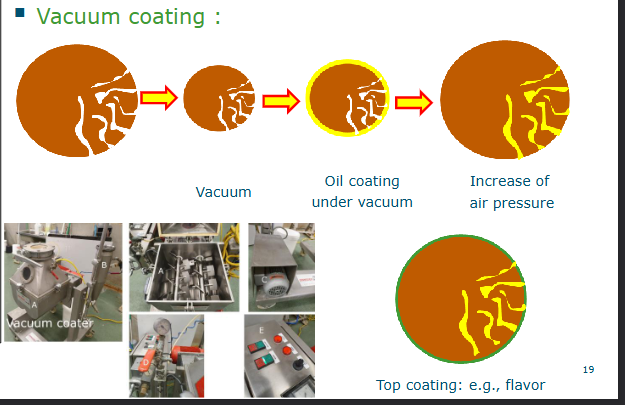
fat leakage
waste of valuable fatty acids
pellets sticking together
oil film on water → smearing equipment
correlations among physical pellet quality characteristics
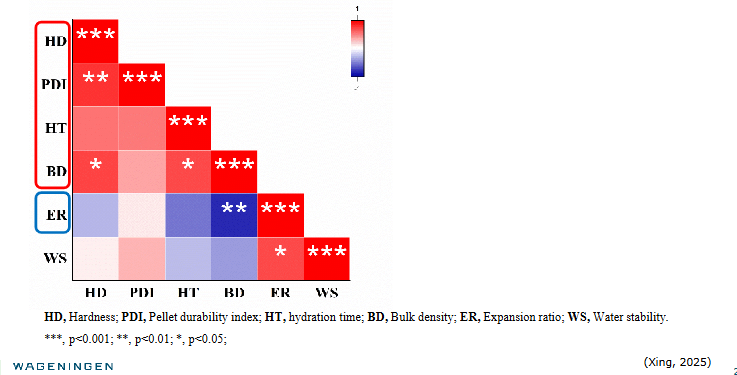
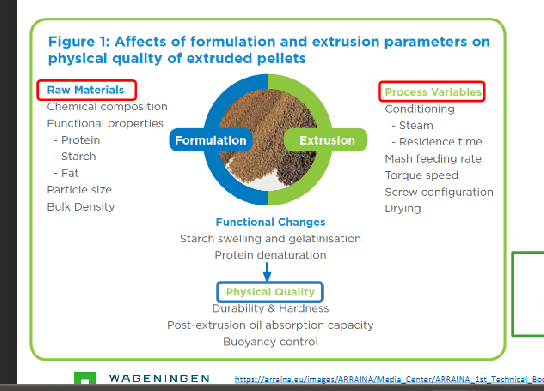
factors affecting physical quality of fish pellets
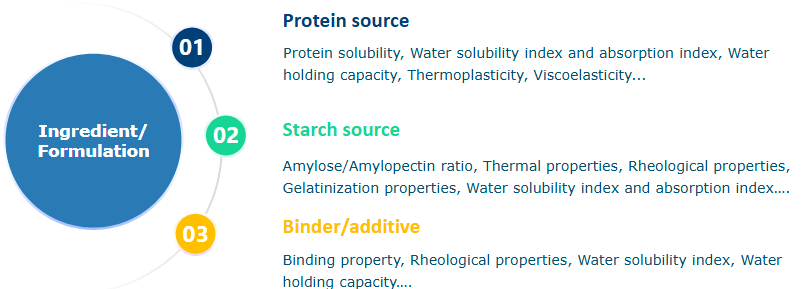
Ingredient diversification leads to feed quality variability
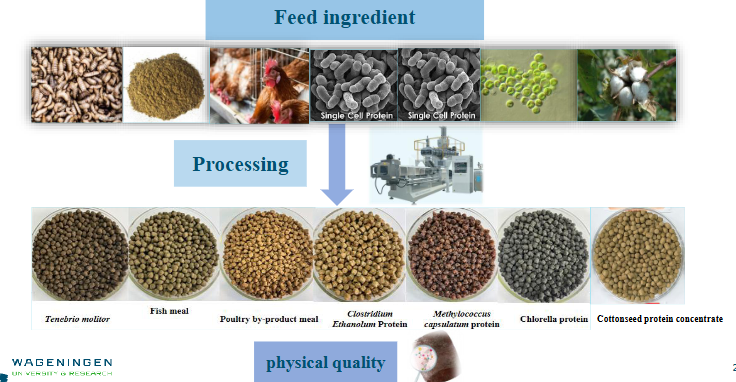
formulation → physical pellet quality
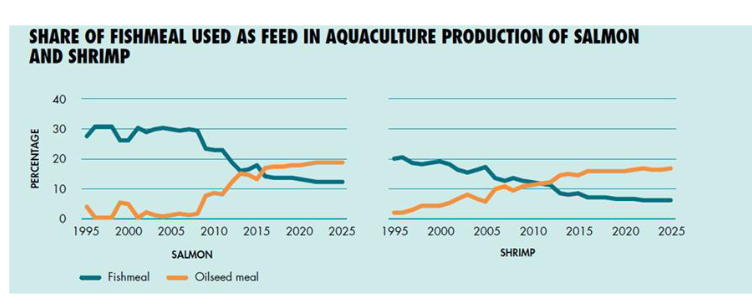
formulation - ingredient selection
ingredient functinality → functional role and processability and pellet physical quality