Carbohydrates and Lipids
 Studied by 0 people
 Call Kai
 Learn
Learn Practice Test
 Spaced Repetition
 Match
Match Flashcards
 Knowt Play
1/82

Earn XP
Description and Tags
Biochemistry
Name | Mastery | Learn | Test | Matching | Spaced |
|---|
No study sessions yet.
83 Terms
Carbohydrates
aldehyde or ketone derivatives(change slightly) of the polyhydric alcohols
cannot be hydrolyzed (broken down) into a simple form
Monosaccharides
classification of carbohydrates
monosaccharides
diasaccharides
yield 2 molecules of the same or different sugar
Disaccharides
Monosaccharides and their aldoses
Glycerose (glyceraldehyde)
Erythrose
Ribose
Glucose
Monosaccharides and their ketoses
Dihydroxyacetone
Erythrulose
Ribulose
Fructose
Sedoheptulose
Disaccharides
Enzymic hydrolysis of starch (the branch points in amylopectin)
Isomaltose
Disaccharides
Enzymic hydrolysis of starch (amylase); germinating cereals and malt
Maltose
Disaccharides
Milk
Lactose
Disaccharides
Heated milk (small amount), mainly synthetic
Not hydrolyzed by intestinal enzymes, but fermented by essential bacteria; used as a mild osmotic laxative
Lactulose
Disaccharides
cane, beet sugar, sorghum, some fruits and vegetables
Rare genetic lack of it leads to
sucrose intolerance—diarrhea and
flatulence
sucrose
Disaccharides
Yeasts and fungi
the main sugar of insect hemolymph
Trehalose
classification of carbohydrates
yield 3 - 10 monosaccharides
most are not digested by human enzymes
Oligosaccharides
classification of carbohydrates
condensation products of more than ten monosaccharide units
Polysaccharides
Polysaccharides
from Plant storage polysaccharide
starch
Polysaccharides
from the major storage carbohydrate in animals
Glycogen
Polysaccharides
from the tubers and roots of many plants; it’s not hydrolyzed by intestinal enzymes
Inulin
Polysaccharides
from the chief constituent of plants, cell walls; it is not hydrolyzed by intestinal enzymes
Cellulose
Glucose, with four asymmetric carbon atoms, can form __ isomers.
16 isomers.
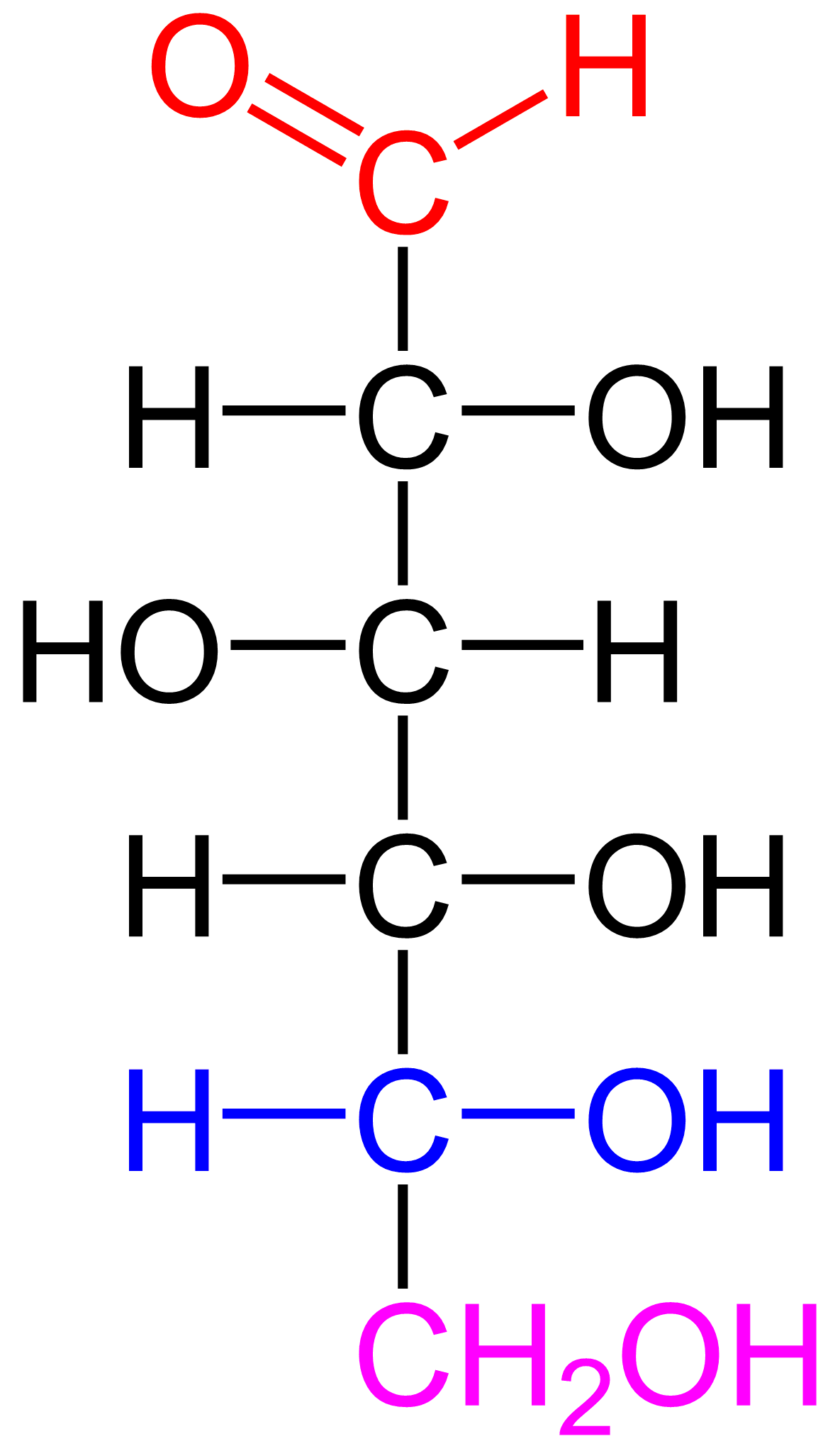
D-Glucose
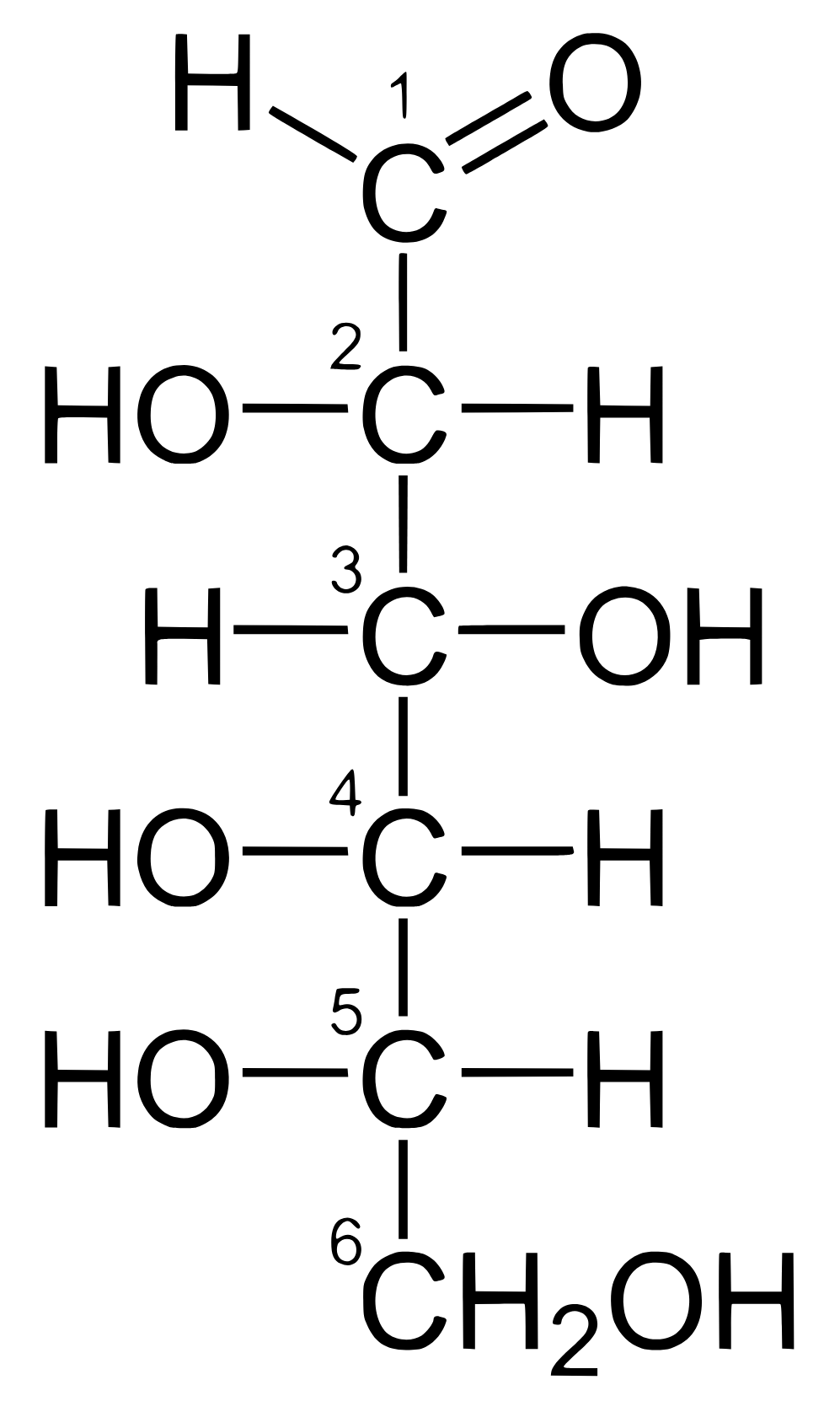
L-Glucose

Pyranose RIng ( Pyran)
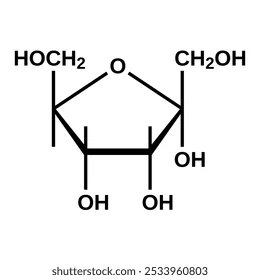
Furanose Ring (Furan)
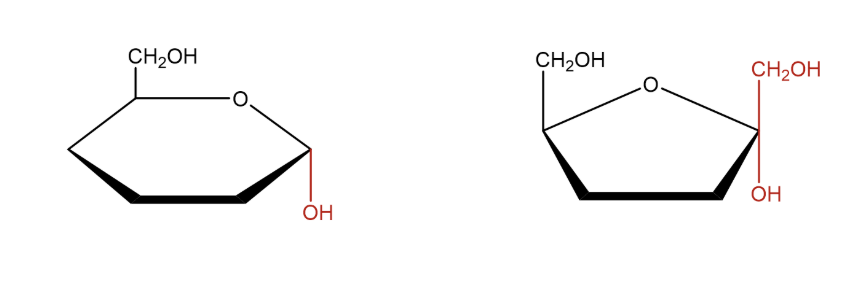
Alpha Anomers
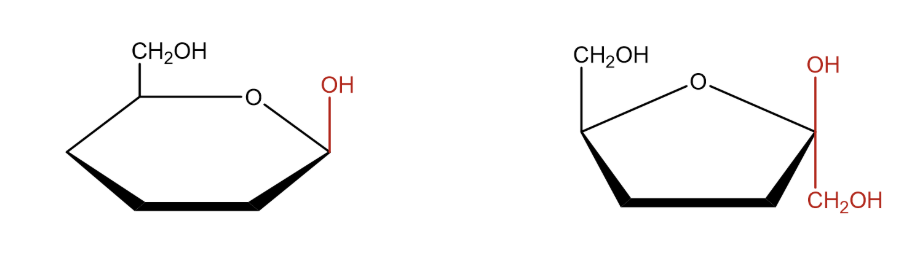
Beta Anomers
Epimers—isomers differing as a result
of variations in configurations of the
–OH and –H on carbon 2,3 and 4 of glucose
mannose and galactose are
epimers of glucose
a potential keto group in position ___ , the
anomeric carbon of fructose,
a potential keto group in position 2, the
anomeric carbon of fructose,
potential aldehyde group in position____,
the anomeric carbon of glucose.
potential aldehyde group in position 1,
the anomeric carbon of glucose.
Glycolysis
การสลายกลูโคสให้เป็น Pyruvate
Oxidation of glucose is known as
glycolysis.
Aerobic glycolysis: the dominant product in most tissues is
pyruvate
what is the condition and product of Anaerobic glycolysis
When oxygen is depleted, as for instance during prolonged vigorous exercise
the dominant glycolytic product in many tissues is lactate
Gluconeogenesis form___ by ___
Glycogen or glucose
noncarbohydrate sources
example of product of gluconeogenesis
glucogenic amino acid
glycerol
lactate
pyruvates
Gluconeogenesis pathways mainly involving the
Citric acid cycle and glycolysis
Gluconeogenesis control by
Liver (90%)
Kidney (10%)
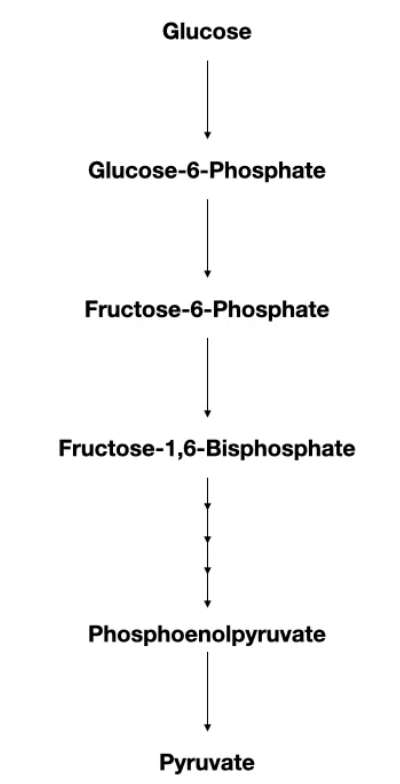
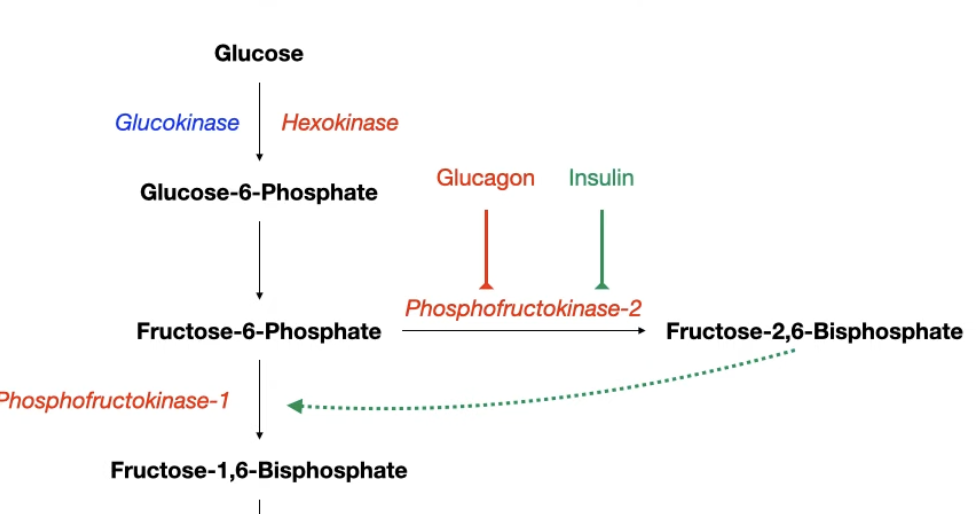
In glycolysis, what enzyme make Glucose → Glucose-6-Phosphate and what is the different ?

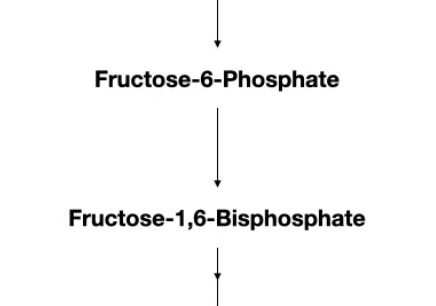
In glycolysis, what enzyme?
It’s a rate-limiting enzyme
inhibit by ATP , Citrate
promote by AMP, Fructose 2,6-bisphosphate (F2,6BP)
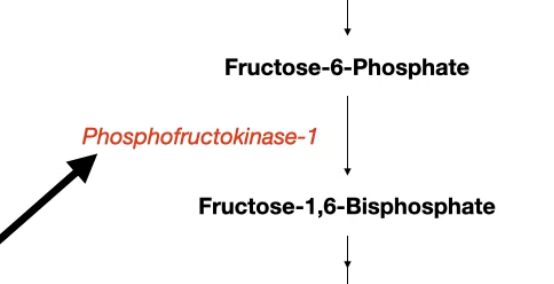

In glycolysis, this can also become ____ and be catalyzed by the _____ enzyme, and this enzyme is inhibited and promoted by ______.
The goal is to make glycolysis faster by promoted PFK1
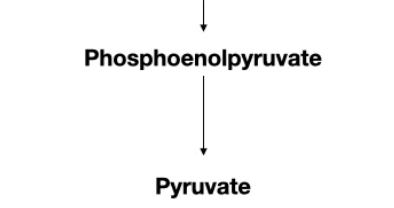
In glycolysis, what enzyme is in the last step ?
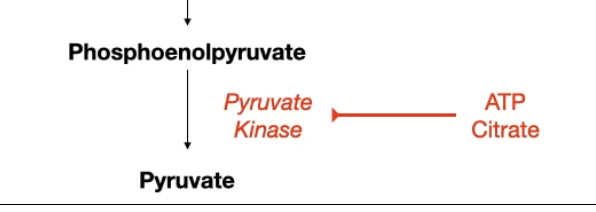
Pyruvate Kinase inhibit by ATP , Citrate
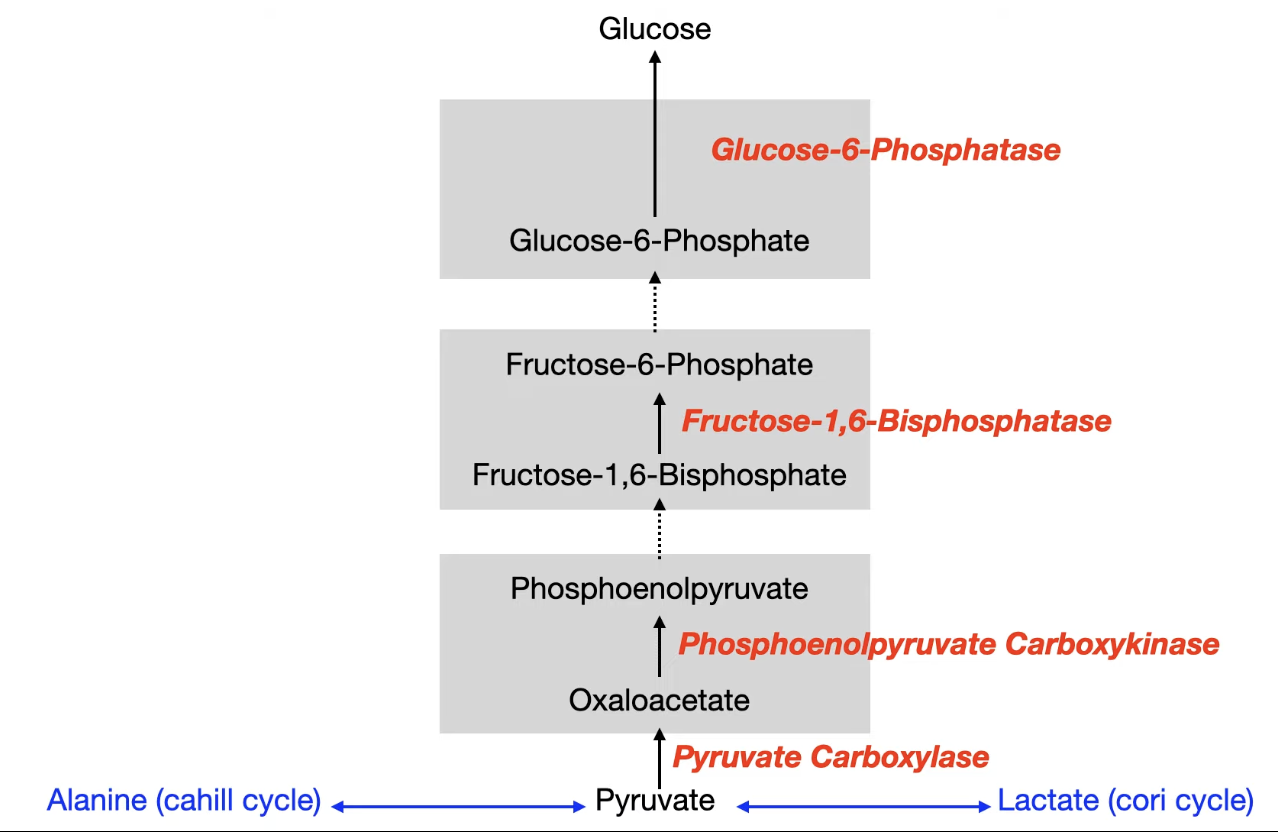
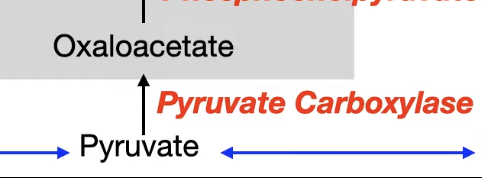
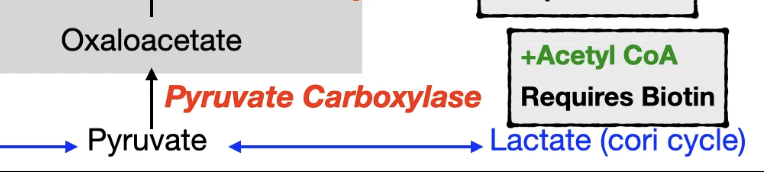
In gluconeogenesis, what does pyruvate carboxylase turn pyruvate into?
turn into oxaloacetate
it’s a first step of gluconeogenesis.
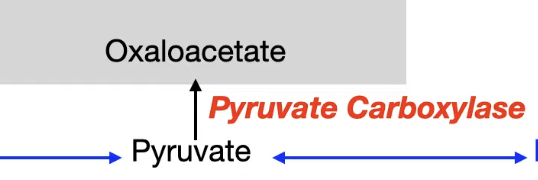
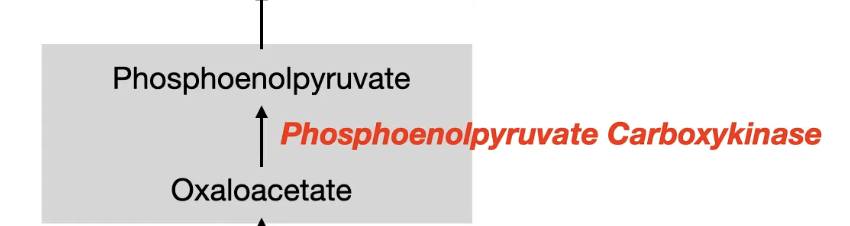
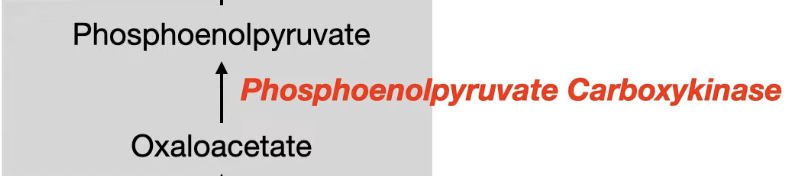
In gluconeogenesis, what is the next step after pyruvate turns into oxaloacetate?
oxaloacetate will turn into phosphoenolpyruvate by phosphoenolpyruvate carboxykinase.
In gluconeogenesis, what is the next step of fructose-1,6-bisphosphate?
Fructose-1,6-bisphosphate will tern into Fructose-6-Phosphate by fructose-1,6-bisphosphatase.
The last step of gluconeogenesis is the conversion of and by ?
The last step of gluconeogenesis is the conversion of glucose-6-phosphate to free glucose, catalyzed by the enzyme glucose-6-phosphatase (G6Pase),
what is the rate-limiting enzyme in gluconeogenesis?
Fructose-1,6-bisphosphatase
In gluconeogenesis, what is the regulation of fructose-1,6-bisphosphatase?
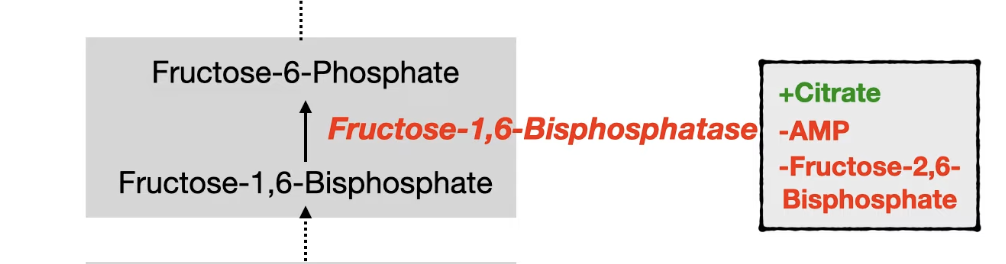
In gluconeogenesis, what is the regulation of
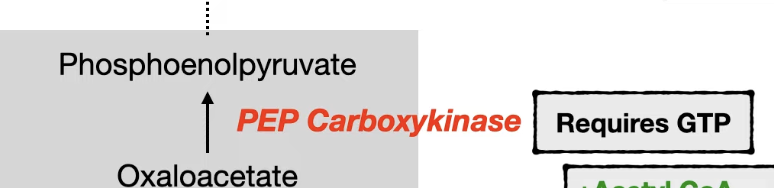
In gluconeogenesis, what is the regulation of
Pentose Phosphate Pathway does
not lead to formation of ATP
Pentose Phosphate Pathway form___ for___.
The formation of NADPH for the synthesis of fatty acids and steroids
Pentose Phosphate Pathway synthesis ___ for ____.
The synthesis of ribose for nucleotide and nucleic acid formation.
Glucose is stored in plants as starch and in animals as
Glucose is stored in plants as starch and in animals as glycogen.
Glycogen is similar in structure to ____ but _____.
Glycogen is similar in structure to amylopectin but is larger, more
highly branched, and more compact.
Glycogen storage Disease, enzyme deficiency, and Type : Glycogen synthase,
O
Glycogen storage Disease, enzyme deficiency, and Type : Glucose 6-phosphatase, I
Von Gierke’s disease
Glycogen storage Disease, enzyme deficiency, and Type :Lysosomal α 1 –> 4 and α 1 -> 6 glucosidase, II
Pompe’s disease
Glycogen storage Disease, enzyme deficiency, and Type :Debranching enzym, III
Limit dextrinosis,
Forbe’s or Cori’s disease
Glycogen storage Disease, enzyme deficiency, and Type :Branching enzyme,IV
Amylopectinosis, Andersen’s disease
Glycogen storage Disease, enzyme deficiency, and Type :Muscle phosphorylase, V
Myophosphorylase deficiency,
McArlde’s syndrome
Glycogen storage Disease, enzyme deficiency, and Type :Liver phosphorylase, VI
Her’s disease
recommendation of daily energy from carbohydratres in woman
47.7 % (203g)
recommendation of daily energy from carbohydratres in man
48.5 % (275g)
is coupled to the Na⁺-K⁺ pump,
allowing glucose and galactose to be transported against their concentration gradients.
SGLT 1
independent facilitative transporter
allows fructose as well as glucose and galactose to be transported with their concentration gradients
GLUT 5 Na+
Exit from the cell for all the sugars is via the ___
facilitative transporter.
GLUT 2
tissue location: Brain, kidney, colon, placenta,
erythrocyte
Uptake of glucose
tissue location: Liver, pancreatic B cells, small
intestine, kidney
Rapid uptake and release of glucose
tissue location: Brain, Kidney, placenta
Uptake pf glucose
tissue location: heart and skeletal muscle,
adipose tissue
Insulin-stimulated uptake of glucose
tissue location: small intestine
Absorption of glucose
tissue location: Small intestine and kidney
Active uptake of glucose from lumen of intestine and
reabsorption of glucose in proximal tubule of kidney
against a concentration gradient
in Liver what increase by insulin
Fatty acid synthesis
Glycogen synthesis
Protein synthesis
in adipose tissue what increase by insulin
Glucose uptake
Fatty acid synthesis
in muscle what increase by insulin
Glucose uptake
Glycogen synthesis
Protein synthesis
in liver what Decreased by insulin
Ketogenesis
Gluconeogensis
in adipose tissue, what is decreased by insulin or increased by glucagon
Lipolysis
glycoprotein consist of
polypeptide covalently bonded to a carbohydrate moiety.
unbranched polysaccharides consisting of a repeating disaccharide unit.
The repeating unit consists of a hexose (six-carbon sugar) or a hexuronic acid, linked to a hexosamine (six-carbon sugar containing nitrogen).
Glycosaminoglycans (GAGs) or mucopolysaccharides are long
exist at the cell surface and also in
the extracellular matrix (ECM), where they are bound
to proteins (red lines) to form proteoglycans.
Owing to the highly hydrophilic nature of
the HSGAG chains, proteoglycans have a Christmas-tree-like extended conformation.
Heparan-sulphate
glycosaminoglycans
(HSGAGs; green lines)
a highly-sulfated glycosaminoglycan, is widely used as an injectable anticoagulant
has the highest negative charge density of any known biological molecule.
It can also be used to form an inner anticoagulant surface on various experimental and medical
devices such as test tubes and renal dialysis machines.
a naturally-occurring anticoagulant produced by basophils and mast cells.
acts as an anticoagulant, preventing the formation of clots and extension of existing clots within the blood. While it does not break down clots that have already formed (unlike tissue plasminogen activator), it allows the body's natural clot lysis mechanisms to work normally to break down clots that have formed.
The most common disaccharide unit is composed of a 2-O-sulfated iduronic acid and 6-O-sulfated, N-sulfated glucosamine, IdoA(2S)-GlcNS(6S)
Heparin, also known as unfractionated heparin
constitute a family of lysosomal storage diseases characterized by deficiencies in lysosomal hydrolases responsible for the degradation of glycosaminoglycans (historically called mucopolysaccharides).
All of its diseases are chronic, progressively debilitating disorders that in many instances lead to severe psychomotor retardation and premature death. In addition, the clinical spectrum of these disorders can vary widely within one enzyme deficiency.
The mucopolysaccharidoses (MPS)