ap micro unit 1
 Studied by 6 people
 Call with Kai
 Learn
Learn Practice Test
 Spaced Repetition
 Match
Match Flashcards
 Knowt Play
1/26

There's no tags or description
Looks like no tags are added yet.
Name | Mastery | Learn | Test | Matching | Spaced | Call with Kai |
|---|
No study sessions yet.
27 Terms
scarce
resources are limited but human wants are unlimited
resources
inputs used to make goods and services
land labor capital
what are the types of resources?
land
natural resources (soil, water, minerals)
labor
human effort (physical, mental work)
physical capital
man made tools → machines, buildings to produce goods.
human capital
knowledge, skills, education → make workers productive
command economy
gov make all econ decisions (produce, how produce, who)
market
decisions made by ppl and buisnesses through supply and demand.
mixed economy
market + gov economy
property rights
legal right to own and control resources, goods, or services
allocation
way resources are distributed and assigned to uses.
Production Possibilities Curve (PPC)
graph showing the maximum possible output combinations of goods given resources and technology.
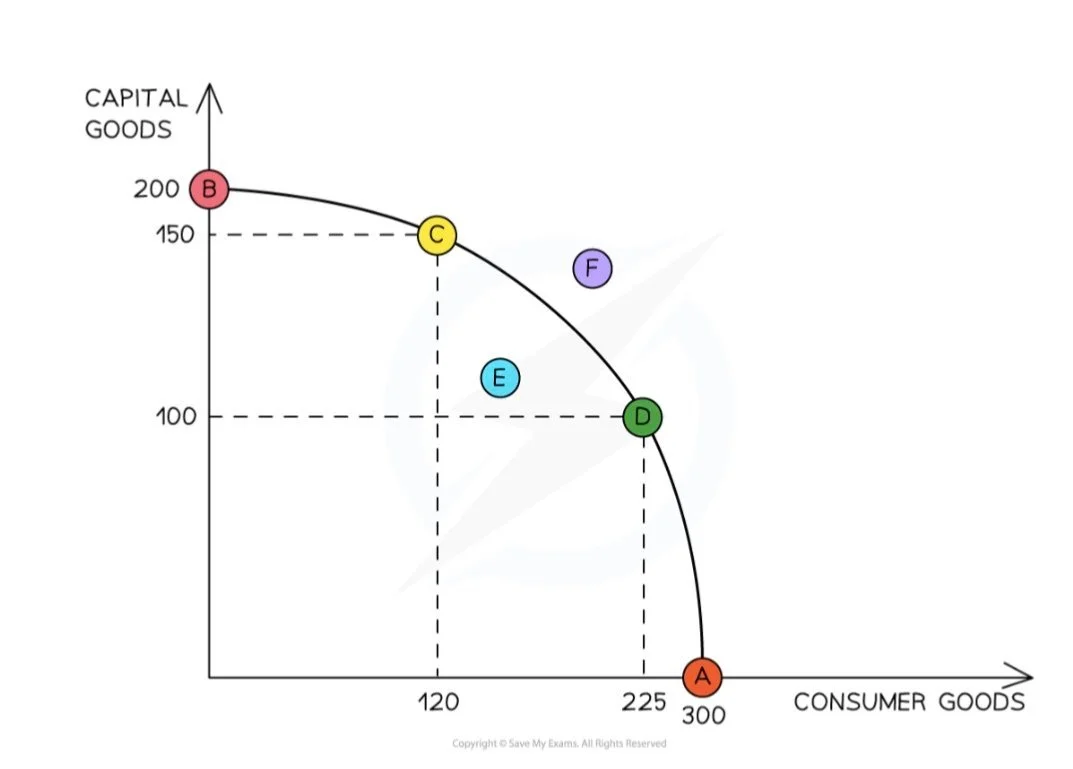
opportunity cost
What you give up to get something else (the “next best alternative” → the first choice alternative)
Absolute Advantage
When someone can produce more of a good with the same resources. → the overall of who produces more of a good (w/out considering for OC and CA)
Comparative Advantage
When someone has a lower opportunity cost of producing a good.
Terms of Trade
rate at which goods are exchanged between countries
how much of one good you give up to get another good in trade
rational
Making choices that maximize benefit and minimize cost.
Total Benefit
overall gain from consuming a certain amount of goods or services.
Utility
satisfaction or happiness from consuming goods/services.
Total Net Benefit
total benefit - total cost
Marginal Benefit (MB)
extra benefit from consuming one more unit.
Marginal Cost (MC)
xtra cost from producing/consuming one more unit.
Diminishing Marginal Utility
idea that each additional unit consumed gives less extra satisfaction.
Marginal Analysis
Comparing MB and MC to make decisions.
Optimal
The best possible outcome, where MB = MC.
Sunk Costs
Costs already paid and cannot be recovered (should not affect current decisions bc they should be based on future costs/benefits)