Week 3: Central Venous Access Devices
 Call Kai
 Learn
Learn Practice Test
 Spaced Repetition
 Match
Match Flashcards
 Knowt Play
1/10

Earn XP
Description and Tags
Central Venous Catheter
Name | Mastery | Learn | Test | Matching | Spaced | Call with Kai | Chat |
|---|
No analytics yet
Send a link to your students to track their progress
11 Terms
Purpose of Central Venous Catheters
IV therapies requiring hemodilation (high osmolarity)
>10% dextrose, hypertonic solutions that damage veins, greater than 600, >5% protein, increase electrolytes
Frequent or prolonged IV (chemo)
Frequent blood work or transfusions
Large-bore venous access required
Pressure monitoring (Central Venous Pressure or cardiac output)
Lack of alt. access
Incompatible meds/ medicated gtts
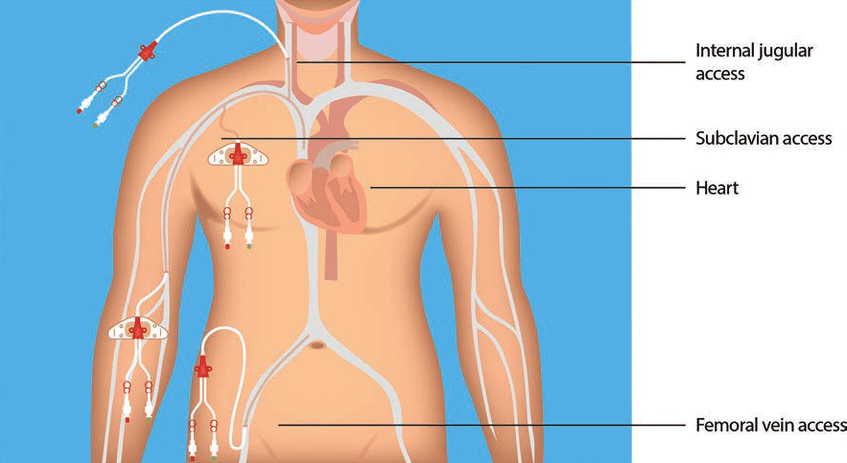
Non-tunneled
urgent situations (secured with sutures)
inserted percutaneously at the bedside → subclavian, internal jugular; need X-ray but not for femoral
Multiple lumens (2,3,4)
Short access (2-4 weeks)
Highest risk of infection (because it’s very short)
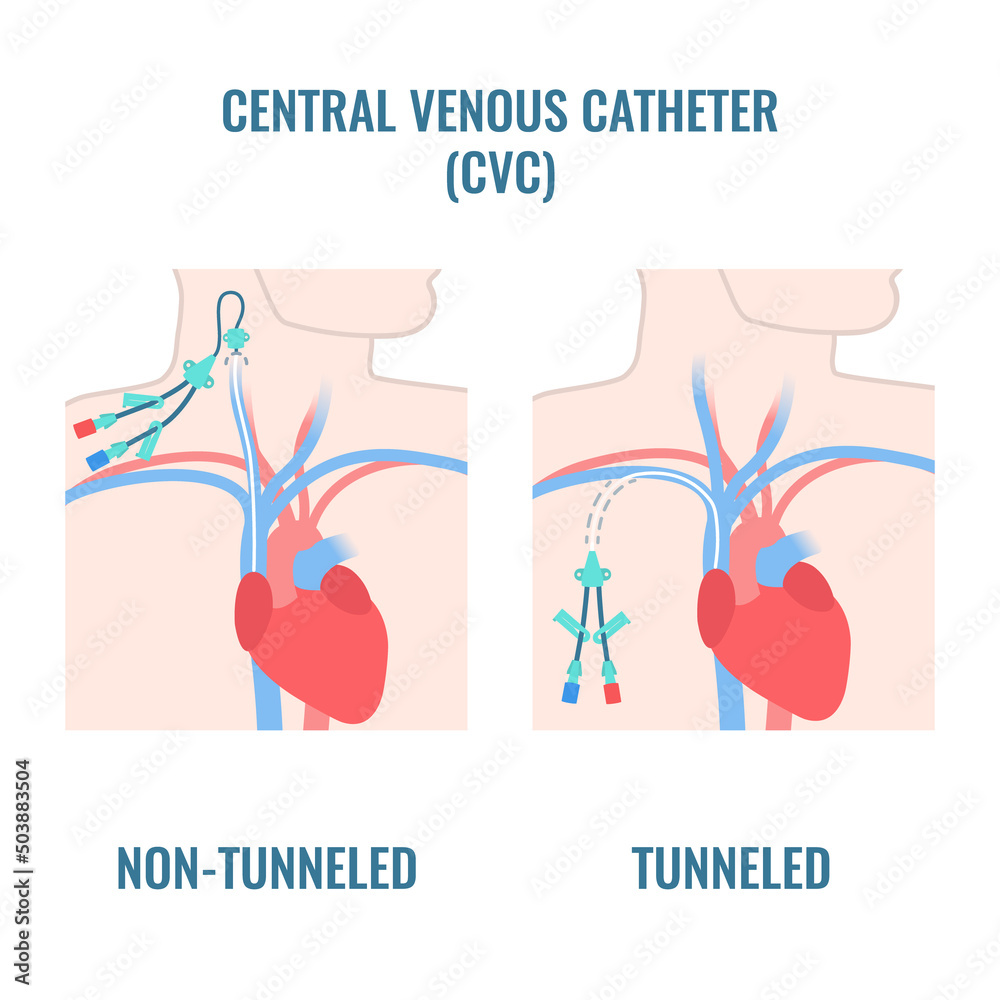
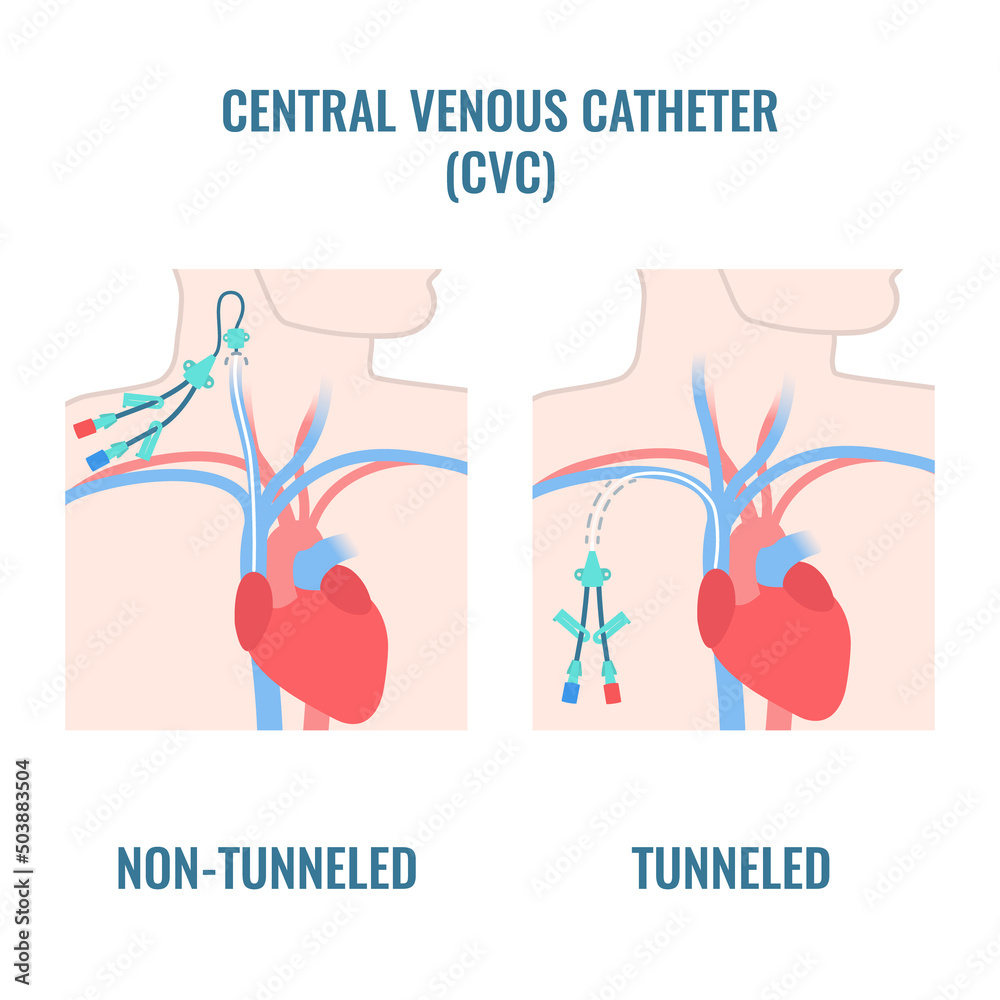
Tunneled
Requires surgical/radiological placement and removal
secured with Dacron Cuff (fibrous tissue growth to secure)
Long term use (1-3 YEARs)
Low risk of infection
“Broviac”, “Hickman” = brand names
Can palpate underskin until venous entry point
Peripherally Inserted Central Catheter (PICC)
Is most likely to hit Right Atrium (cause tachycardia, arrhythmias)
Inserted via a peripheral vein (basilic, median cubital, brachial, or cephalic)
Are recommended for all infusion therapies for up to ONE YEAR
may be inserted at bedside or in radiology under fluoroscopy
Radiographic (X-ray) confirmation of tip location is required prior to use
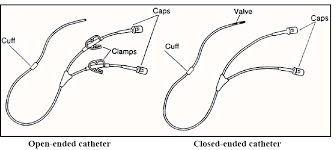
Various types — Closed or Open
→ Open - Power PICC, “Arrow” — open end, clamps (can cause turbulence with blood flow = clots, flushing with saline and heparin/anti-coagulant)
→ Closed - “Groshong”, Power PICC solo — valve end, no clamps on line (flush with saline)
Implanted Venous Access Device (IVAD)
inserted in OR
long term therapy of 1 to 3 years
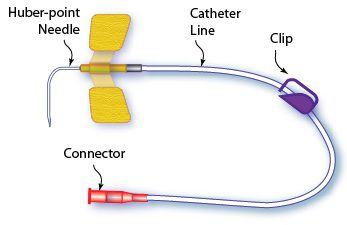
must be accessed with a Huber Point Needle (non coring)
→ if accessed, needle must be changed Q7 days
→ If not accessed, needle must be inserted and port flushed with heplock solution q30 days
→ Palpate for firm disc on chest
Dressings: Change and Assessment
Completed:
q7 days
visibly soiled
dressing peeling off
24hour post insertion
Sterile technique:
use of chlorhexidine
sterile gloves and masks for dressing change
Remember: any tape, skin closure strips or securement device applied under dressing MUST be sterile
securing device
Site Assessment
q4h when inserted — redness, tenderness, leakage
then q shift — palpate cover for tenderness, drainage, streaking
Equipment
heplock syringes x 10mL prefilled x # of connectors/lumens
caps
IV tubing to patients central line
procedural mask for you and patient
gloves
Stat lock if secured with
chlorhexidine swabs
measuring device to measure hub to insertion site
Flushing
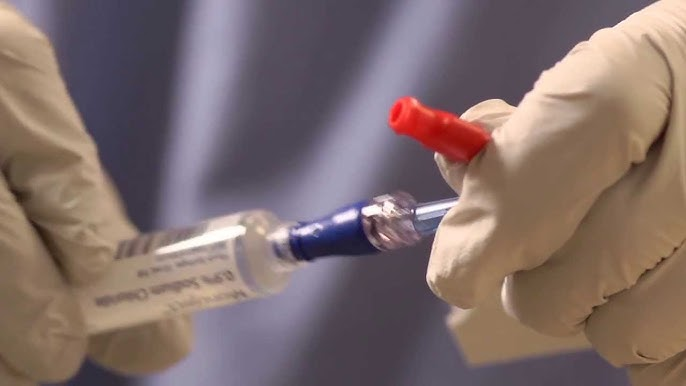
CVADs must be flushed to maintain patency
Completed under aseptic technique
One pre-filled 10mL syringe for each lumen (less than = too much pressure unless wide head)
Scrub needless connector for at least 15 seconds
Aspirate and discard any locking solution if other than NaCL 0.9%, low does Heparin or sodium citrate
Slowly aspirate for blood return
Use positive pressure with 10cc syringe
Never force flush - assess!
Locking
Locking frequency
non-tunneled CVAD = q24h
tunneled CVAD = q7 days
PICC = q24h
IVAD = q30 day when not in use
Solutions
valved catheters (closed PICC, tunneled CVAD) - NS 10mL
non-valved (open) - NS 10ml with heparin (10u/ml) 5ml OR sodium citrate 4% 3ml
AHS/CovH - may be NS only - check your unit
Key Points for Locking
not for paediatrics/neonates or hemodialysis/aphaeresis lines
Situations where heparin may still be required (in consultation): history of line occlusion, catheter infection, long term CVAD use (>3months), specialty CVADs (e.g. dialysis, aphaeresis)
Cap Connector Change
Frequency
no more than q96h but at least q7 days
prior to collection of blood culture samples from a CVAD
Procedure
prime connector using aseptic technique
scrub the needless connector/catheter lumen connection junction vigorously for min 15s
Remove connector using sterile gause/aseptic technique
Clean threads of hub if soiled
Attach new connector
Flush and Lock