Chapter 4.4: Cell Size, Shape, and Ability to Move Are Determined by Internal and External Structures
 Call Kai
 Learn
Learn Practice Test
 Spaced Repetition
 Match
Match Flashcards
 Knowt Play
1/15

Name | Mastery | Learn | Test | Matching | Spaced | Call with Kai | Chat |
|---|
No analytics yet
Send a link to your students to track their progress
16 Terms
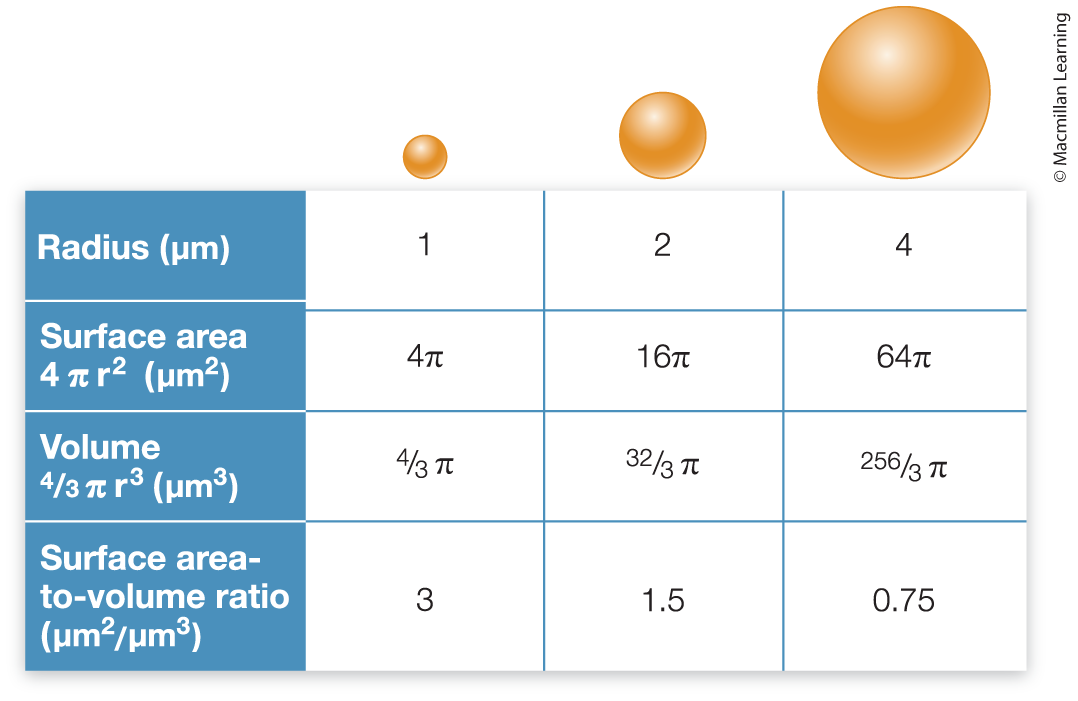
Surface area-to-volume ratio
This constrains cell size due to larger cells requiring greater surface area for materials to enter and exit the cell, if the cell remains in the same shape
Cells can change their shape or increase absorption rate to counter this
Volume
How big a cell is; movement and absorption of nutrients is aided by lower values of this
Cytoskeleton
This provides the interior structure, position, movement, and anchoring of a cell through the use of protein polymers, which generally include:
Microfilaments (smallest, made of actin)
Intermediate filaments (larger, made of variety)
Microtubules (largest, made of tubulin)


Microfilaments
The smallest protein polymer found in the cytoskeleton with potentially variable length due to continuous assembly and disassembly as a result of regulation
Important in shape changes, cytoplasm flow, and contractions such as those in amoeba pseudopodia and muscle cells

Intermediate filaments
A diverse family of cytoskeleton protein polymers with tough assemblages and a lack of dynamic instability
These act to anchor cell structures and maintain rigidity, found in skin and between tissues
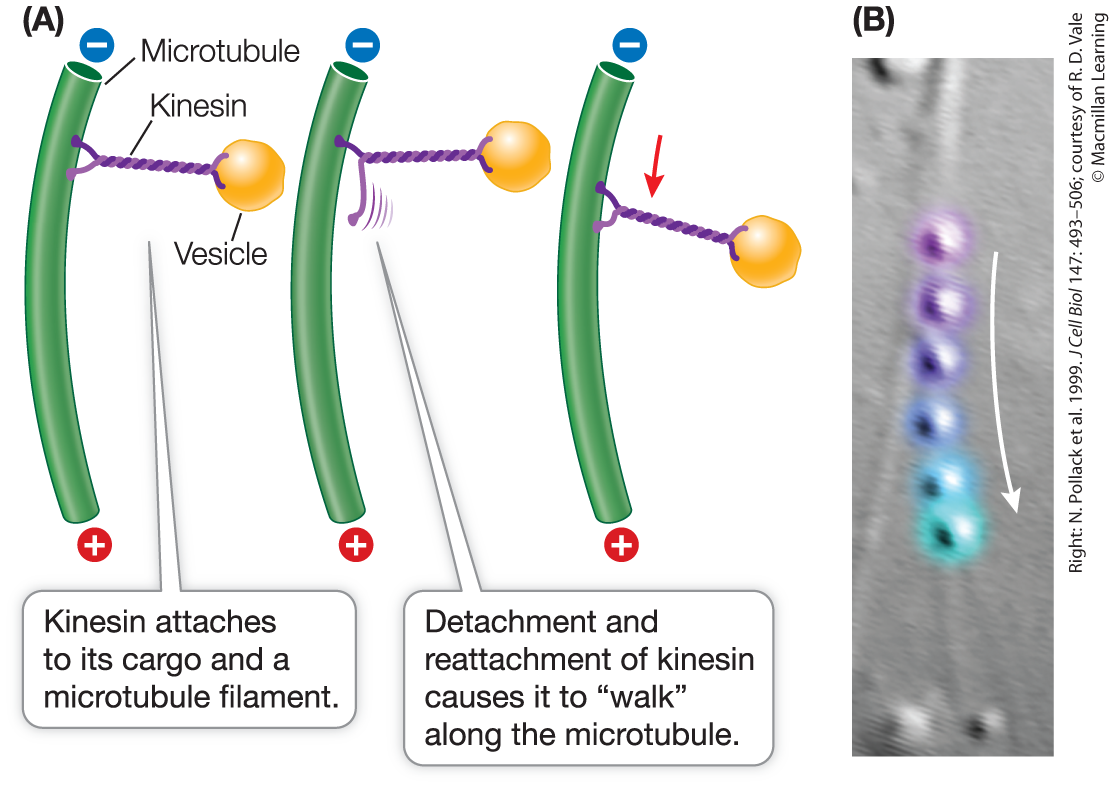
Microtubules
The longest and largest cytoskeleton protein polymer made of the protein tubulin arranged to form a hollow center
Also shows dynamic instability, but only from one side and in phases
Form the skeleton and allow movement of substances with motor proteins (powered by ATP)
Cilia
Short microtubule variants, divided into single primary or numerous motile families
Motile variants contain the protein dynein, allowing for sliding movements with a fused center pair
Primary variants are involved in cell signaling, and lack the center pair
Flagella
Long microtubule variants which (alongside motile cilia) aid movement of the cell or its fluids

Cell wall
A rigid extracellular structure that forms a tough barrier for support and protection from damage
Also allows for hypertonicity due to maintained structure

Extracellular matrix
The extracellular structure in animals, consisting of collagen and proteoglycans; it holds cells together, filters materials, and orients cell movements

Integrin
A protein that can connect the cell membrane to the extracellular matrix, holding to collagen fibers but also allowing for movement if a change is needed
Biofilm
A large aggregation of bacteria connected through an extracellular matrix; these can act in coordinated manners and contribute to antibiotic resistance

Tight junction
A cell junction that prevents substances from moving in between cells
Seen in the urinary bladder

Desmosomes
A cell junction that holds adjacent cells together for stability, but also allows for some materials to move around

Gap junctions
Channels that run between membrane pores in adjacent cells, allowing for the rapid spread of materials like ions in the heart
Plasmodesmata
A structure similar to gap junctions found in plants; these allow larger molecules like sugars and hormones to be passed around cells